Fourth of July

We hold these truths to be self-evident, that all men are created equal, that they are endowed by their Creator with certain unalienable Rights, that among these are Life, Liberty and the pursuit of Happiness.–Declaration of Independence

Cars are lined up and down the street.

People are drinking and smoking in their back yards.

Some will go see fireworks later.

Some will twirl sparklers.

The nail salon sign says, “Close 4th of July.  Happy Independent Day.”

I barely think about the Declaration of Independence.

All men are expected to read Thomas Jefferson or biographies of Thomas Jefferson.

All women are expected to read Laura Ingalls Wilder (a children’s writer).

I read aloud parts of Reporting Vietnam (Library of America) to the English class I taught.

“They lied to us,” said General Westmoreland.

There were some Desert Storm vets in the class.

There were men and women who had served prison terms for drug possession.

Laura Ingalls Wilder wouldn’t have gone down well with these students.

9/11 burned while I was teaching.

We didn’t know what had happened.

My boss, upset about the jingoism, dropped one knee to the floor and pretended to cock a gun.

“I served in Vietnam,” he said.

He used to play in a band.

I was never in a band.

I once dated the manager of a band.

Bands define us.

I don’t remember the “Star-Spangled Banner.”

I dropped one knee to the floor and recited, arma virumque cano

It’s an anti-war poem.

If I see another Civil War artefact on Antiques Road Show, I am turning off the TV.

I have never been to Gettsyburg.

There are many military crosses in the cemetery.

The U.S. went to war in 2003.

I dropped a friend who watched it on TV and thought it was entertaining.

I taught some anti-war poetry.

It doesn’t take much to impress people.

I question how independent I’ve ever been.

I barely made a living off my liberal arts education.

It took me years to realize I would never make as much money as my husband.

Love and relationships have been more important to me than money.

Most of us have married.

Betty Friedan, Gloria Steinem, Doris Lessing and Erica Jong have made very little difference.

Most women have children, but very few of my friends do.

You are supposed to do everything if you are female.

Some of us had to read and write.

We couldn’t do everything.

When the waitress told me she was joining the Army, I felt numb.

pro patria mori?

Anniversary

I reminded my husband that it was our anniversary.

“What made you think of it?”

Slightly incredulous:  ‘The date.”

Two days before the fourth.   Okay, now we all remember.

I get roses on Valentine’s Day, nothing on our anniversary.

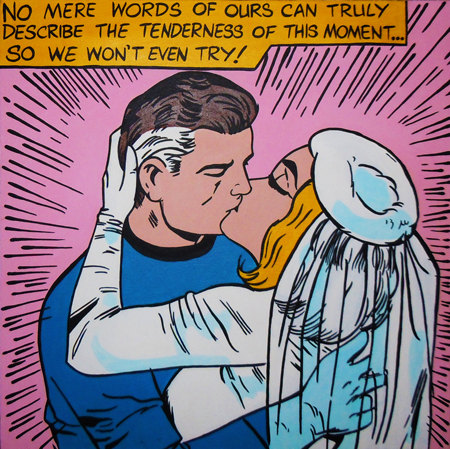
No words can describe the tenderness wedding comic bookI bought us an anniversary gift of a new novel, Andre Aciman’s Harvard Square, in case we run out of things to read.

Often we go to a restaurant to celebrate, and often it’s Red Lobster, but last night we ate a delicious salad with poached chicken, veggies, apples, and feta cheese in front of The Mary Tyler Moore Show.  (I was the chef and sous chef.)

We got married at the County Courthouse on a hot July morning.  I finished a freelance story an hour before the ceremony, not having the sense to tell the editor it was my wedding day.  Then I hopped into a skirt, a summer top, and sandals, and we rushed downtown, stopping at a copy place to fax my story before heading to the courthouse.

At least twenty couples crowded into the courtroom and sat on wooden seats like church pews.  Most were moderately dressed up, the women in dresses, the men in suits or button-down shirts and khakis; only one woman wore a wedding gown.  Judge Ralph J. Perk, Jr., the son of the Mayor whose hair caught on fire in 1972 , officiated over the group wedding.  (“That’s Ralph Perk, Jr.” we all whispered. “The son of…”) Did anyone know him for who he was himself?

There was something sweet about the wedding.  You concentrated on the words; there was not a formal party.  Everybody was happy; it’s not usually like that in court. We were one another’s well-wishers. So many people getting married!

Did  Judge Perk read out our names as he pronounced us man and wife?  Not that I remember.  There were too many of us.  But maybe.  My husband thinks he did, but he doesn’t remember, either.

Now, by the authority vested in me by the State, etc., I pronounce you to be husband and wife and extend to you my best wishes for a successful and happy married life together.

So charming! Just the words.

Some would be happy; some would have regrets and be back in court for a divorce, but for the moment everybody was thrilled.

Married in our thirties, in a photo booth on the boardwalk in Ocean City, Maryland,

Photo Booth, Ocean City, Maryland

The judge announced at the end that he only had time to be photographed with one couple per “session.”  He picked the cutest, youngest couple in the room, and his “assistant”  (bailiff?  what was he?) snapped the picture and gave them the Polaroid. Not that I had a camera, but I remember feeling annoyed, because, well, weren’t we the cutest couple?  Okay, so what, we were in our late thirties, maybe our faces were pointy now, maybe we would never be VERY young again, but it didn’t seem right that we weren’t photographed with the judge.

We didn’t have our camera with us, so we have no wedding picture.

A few months later we took the pic above in a photo booth on the boardwalk in Ocean City, Maryland.  It’s kind of dark, and was my face really that pointy? But at least we’re smiling and kissing!

Andre Aciman and Others: School Days in Literature

I enjoy novels about Yale, Brown, Princeton, the Seven Sisters schools, Oxford, and Cambridge.

But I never read novels about Harvard.  I don’t know a single person who went to Harvard.  It is the Ivy League school I consider the most elitist.

aciman-harvard-square-203x300So I am very surprised to find myself spellbound by Andre Aciman’s new  novel, Harvard Square.  It is beautifully written–I am going slowly because every word and sentence are so perfectly balanced–and it is possibly a classic about outsiders.  I’ll let you know when I’ve finished.

The narrator, a Jew from Alexandria, Egypt, is spending the summer in Cambridge.  He is lonely, has failed his comps, and his friends are gone.  He hangs out at Cafe Algiers, where he meets a contentious, politically aware Arab cab driver.

The narrator tells us:

Cambridge was a desert.  It was one of the hottest summers I’d ever lived through.  By the end of July, you sought shelter wherever you could during the day; at night you couldn’t sleep.  All my friends in graduate school were gone.

As he becomes more involved with Kalaj, the two of them earnestly discuss women and Paris, their favorite city, so very far away from Cambridge, and he becomes even more detached from Harvard. He reads and rereads seventeenth century lit for his comps, but he doesn’t believe he’ll pass. Does he like books at all?  Does he like many books at all, he wonders?

Aciman writes so gorgeously that I began to remember my university days, which, as Aciman’s narrator knows, are better when you look back than when you are there.  Here is a list of books about “school days.”  Please add your favorites!

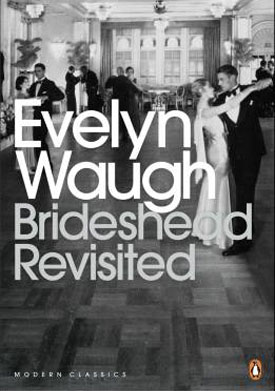
brideshead revisited waught1. The long, langorous first part of Evelyn Waugh’s Brideshead Revisited, set at Oxford and about Oxford, is my favorite university novel ever, and I know it’s yours, too.  Charles Ryder meets Sebastian Flyte one night when Sebastian, drunk, puts his head in the window of Charles’ first-floor digs and throws up.  The next day he apologizes with flowers; Charles begins to spend his days with Sebastian, eating strawberries, drinking wine, learning about art and decoration, and never thinking about work.  Sebastian is a Catholic, his family is very rich, and when Charles visits Sebastian at Brideshead, Sebastian fears he will lose his friend.  Sebastian does poorly at Oxford and his mother wants him watched:  Charles must take sides.

Tea at gunter's Haines2.  In Pamela Haines’ charming “middlebrow” novel, Tea at Gunter’s, Lucy, the narrator, occasionally accompanies her mother to Gunter’s, an old-fashioned tea room in London.  Her mother reminisces with her ex-fiance, Gervase, who was mentally shattered in the war, about Patmore, the estate where they grew up.  Later, when Lucy attends secretarial school, she has very funny adventures with the eccentric teachers.  She also meets Julia (think Sebastian’s sister in Brideshead Revisited), and before she knows it, she is involved in a whirlwind of aristocratic parties.

braided lives by piercy3.  Marge Piercy’s Braided Lives.  Much of Piercy’s remarkable novel is set in Ann Arbor, where the brilliant heroine, Jill, who grew up in Detroit, attends the University of Michigan in the 1950s with her blander cousin, Donna.  Later, in New York City in the 1960s, Jill becomes a radical, and must face the repercussions of needing an abortion before Roe v. Wade.

On my next two lunch hours I see a doctor a day.  Each gynecologist examines me, painfully, and tells me I am pregnant.  I try out my routine, including telling each of them I will kill myself.  They tell me they can call the police; they tell me I must have the baby; they charge me one ten dollars and one fifteen; they lecture me on morality.  I am late back to work both days.

night-and-silence-who-is-here-pamela hansford johnson4.  Pamela Hansford Johnson’s  Night and Silence Who is Here? is one of the  funniest academic  satires I’ve ever read.  An English playboy is offered a job at a New England college where he spends most of his time foraging for food, as there are no stores or restaurants and he can’t drive.  He is also determined to do no work.

foxybaby5.  In Elizabeth Jolly’s Foxybaby, the middle-aged heroine, Alma Porch, a writer, takes a job teaching drama at a “Better Body through the Arts Course”–an arts program with dieting– at an obscure college in an abandoned Australian town.  Very funny and strange.

6.  Charlotte Bronte’s Villette.  Lucy Snowe, the narrator, teaches at a girls’ school in Brussels in the 19th century.  She doesn’t attract the man she is in love with, but does fall in love with another man.  This is Bronte’s best book:  the realistic Jane Eyre sans Rochester.

ann-veronica h. g. wells penguin7.  Vance Bourjailly’s Now Playing at Canterbury.  A group of professors put on an opera at a Midwestern university.

8.  H. G. Wells’ Ann Veronica.  Ann Veronica, a biology student, seeks independence from her father and runs away to London, where she finds work in a biology lab to support herself, becomes involved in radical politics, and falls in love.

9.  Donna Tartt’s The Secret History.  Classics majors commit a crime.

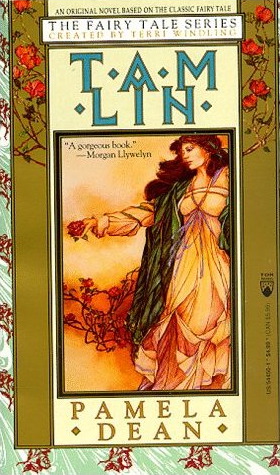
Tam_Lin_by_Pamela_Dean10.  Pamela Dean’s Tam Lin.  Pamela Dean’s novel Tam Lin, set at a small college in Minnesota in the ’70s, is a whimsical chronicle of an undergraduate education.  Part college novel, part offbeat fantasy, it is A Midsummer Night’s Dream crossed with  Donna Tartt’s The Secret History–with a dash of the ballad Tam Lin.

In Which I Read Thomas Hardy & Play Scrabble

Mayor of Casterbridge hardyThis weekend I reread Thomas Hardy’s The Mayor of Casterbridge.

Hardy’s six most dazzling Wessex novels, Far from the Madding Crowd, The Return of the Native, The Mayor of Casterbridge, The Woodlanders, Tess of the d’Urbervilles, and Jude the Obscure constitute a beauitfully-crafted chronicle of rural and town life.  Hardy’s lyrical style is so elegant that many years ago, when a famous writer asked me who my favorite writer was, I absent-mindedly said Thomas Hardy.

Our grandfathers liked him, he said.

I was mortified.  You can’t tell a famous writer you like Thomas Hardy.  You have to like William Gass or Georges Perec.

But who writes more beautifully than Hardy?

The Mayor of Casterbridge begins:

One evening of late summer, before the nineteenth century had reached one-third of its span, a young man and woman, the latter carrying a child, were approaching the large village of Weydon-Priors, in Upper Wessex, on foot.  They were plainly but not ill clad, though the thick hoar of dust which had accumulated on their shoes and garments from an obviously long journey lent a disadvantageous shabbiness to their appearance just now.

The opening is evocative of a tale, almost of a fairy tale, or a long narrative poem:  “”not ill clad” (litotes),  “the thick hoar of dust,” “a disadvantageous shabbiness.”
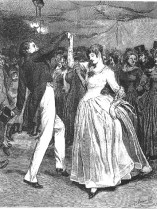
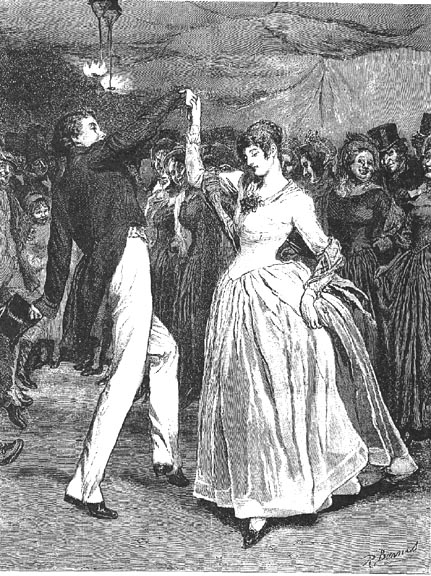
Farfrae dancing with Elizabeth-Jane

Farfrae dancing with Elizabeth-Jane

Hardy creates a beautiful ring composition in this exquisite novel about the rise and fall of Michael Henchard.  At the beginning, Henchard, a hay-trusser, has come to the large village of Weydon-Priors in Upper Wessex with his wife and child to look for work:  he gets drunk and sells his wife, Susan, to a sailor.  Many years later, when he has risen in the world as the Mayor of Casterbridge, Susan, widowed, and her daughter, Elizabeth-Jane, come looking for him.  Henchard and Susan pretend to be distant relatives and keep the secret of their original parting.   They remarry.  At the height of his powers, Henchard is a farmer as well as the mayor, but envy is his downfall when his esteemed manager, Donald Farfrae, begins to surpass him.  Donald wins the affection of Elizabeth-Jane, and later marries Henchard’s former mistress, Lucetta.  By the end, we have seen Henchard working again as a hay-trusser, because he has almost, if not quite, sold his daughter by a lie.

Novels of downfall are not the kind of thing you talk about in the back yard.   My cousin the librarian, who recently broke up with her boyfriend, chats by the hour and keeps me from reading novels of downfall.  If she can’t find me in the house, she knows I am reading in my chair by the hedge of bridal wreath.

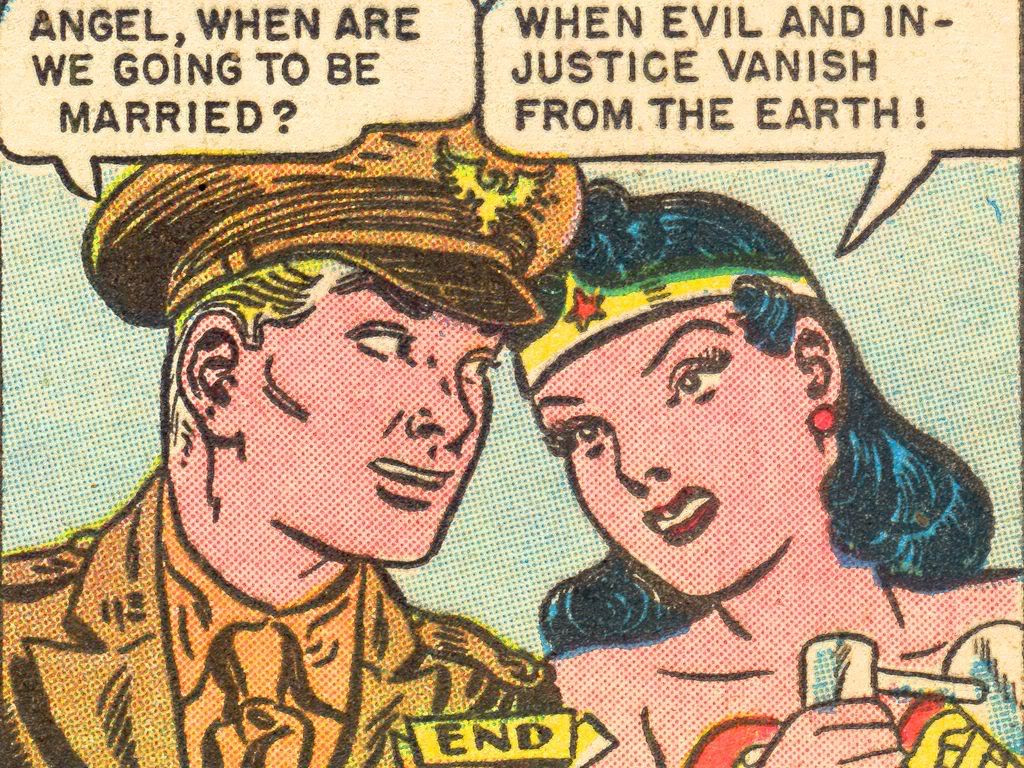
Wonder woman, when are we going to be married?

She’s just not in love with him!

My cousin cannot stand to be alone.  She is so talkative that I find it difficult to get anything done:  even if I do the dishes she is somehow in the way.  She reminds me very slightly of myself during my divorce in my late thirties.  I spent a lot of at my friends’ houses, I was very sad, and I couldn’t meet the right men:  my friends all had stories about women who’d simply put ads in a local magazine and then married orchestra conductors  etc., etc., but I didn’t believe them (nor should I have).

My cousin picked up a new man a few weeks ago, a green construction remodeler.  He is charming and sweet, but somehow we all know he is just a date.  She needs someone almost manically charming, like the super-fast-talking “internet cloud” czar, as we called him, who kept cheating on her.

“We’re here!”  She and the green remodeler have brought fried chicken and coleslaw from the HyVee.

Usually she eats at French restaurants.

We have a little picnic.

Then they bring out the Scrabble game.  They play Scrabble for hours.  They play words like zuz, an ancient Hebrew coin.  They have apparently both swallowed a Scrabble dictionary.

They also change all the values for the Scrabble letters so that everything is worth about a million points.  They play for money.  Recently I found them playing strip-Scrabble in their underwear.

“For God’s sake get drunk if you have to but you can’t sit around naked in my back yard.”

My cousin begs me to play Scrabble with them.

“Only if you let me use Latin words.”  I say this to discourage them.

They’re not wild about that, but I do allow them to double-check them in the Latin dictionary.  I practically have to teach them Latin so they will understand that the endings I put on the words are legitimate.  I am so bored that I can only stand it for about half an hour.

And then one day it’s over.

He green-remodeled her tiny house.

He wanted to move in.

She said No.

She saw her old boyfriend at the HyVee.

He was charming.

She wonders if she should get back together with him.

I say he doesn’t play Scrabble.

She says she’s sick of Scrabble.

He’s unfaithful, but I can’t say that.

It is difficult to find a good boyfriend.  Even Donald Farfrae in The Mayor of Casterbridge rushes off with Lucetta, the mayor’s former mistress; Donald is easily discouraged by an abrupt note from the mayor from walking out with Elizabeth-Jane.

“Maybe you should read some Hardy.”  Am I thinking of Tess of the D’Urbervilles, or what?

But then her old boyfriend phones her, and she looks so happy.

TO BE CONTINUED…

Colin Farrell’s Latin

I planned to do some research in the Women’s Archives at the University of Iowa Library.

The library was eerie, the first floor under construction with plastic sheets for walls and wires popping out everywhere.

The Special Collections rooms on the third floor were closed.  It hadn’t occurred to me that they would be closed on Saturday.

It was raining so hard that I didn’t feel up to leaving the library right away.

I lounged around on the fourth floor with some classical journals.  I read a few articles and reviews.  And then I came across an article that all of you will want to read, because it is very, very funny: Monica S. Cyrino’s “I Was Colin Farrell’s Latin Teacher” (Classical Journal, Feb./March 2012, Vol. 107/No. 3).

Monica S. Cyrino, a classics professor at the University of New Mexico with an interest in film, received an e-mail from a producer asking her to write a few lines of Latin dialogue for Colin Farrell.  He was playing a vampire in  a remake of the movie, Fright Night. (The film was being shot in New Mexico because of the state’s tax breaks.)

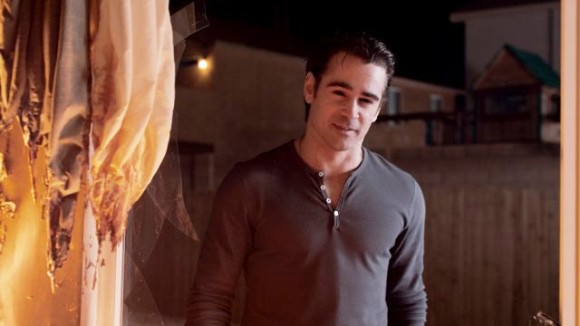
Colin Farrell in Fright NIght

Colin Farrell in Fright Night (2011)

Farrell, who is a bibliophile (one of Cyrino’s students spotted him buying poetry books at a Barnes and Noble), thought his seduction lines would be sexier in Latin.  As he dropped onto a dance floor and whisked away a teenage girl, he was supposed to say:  “You just need a taste.  You’ll see.  It can be like a dream.”

Cyrino translates the Latin with a graduate students, and is invited onto the set to meet Farrell, but there is a lot of hanging around, and since Farrell, his stand-in, and his stunt double all wear black jeans and a black shirt, it is difficult to tell one from another.

She has just reached into a cooler to get a bottle of Evian when Joy Ellison, his vocal coach, brings Farrell over to meet her.  “Nice to meet you, love!”

My hand was still stuck in the cooler.  I yanked it out and held it in front of me, dripping wet and frozen, and for a minute I was in a state of acute aporia.  Should I wipe my soaking hand on the $300 cashmere top that I had so insouciantly donned for the day?  Or should I give my cold, wet hand to Alexander the Great?

Colin Farrell, Alexander

Colin Farrell, Alexander

Colin laughingly shakes her hand.

“You’re on set all day, right, love?  Will you be here later so we can talk about the Latin scene?”

Later they go over the sexy Latin together, and he asks her if they can reverse the last two words, so the line ends with the word somnia (dreams):  Solum necesse est sapias.  Percipies.  Par ac somnia.

“It doesn’t change the meaning, now does it, love?”

And she immediately thinks he knows Latin, because how else would he know that?

“Nah, love…They stopped Latin and corporal punishment the year before I came up…and ya see how I turned out?”

All right, now here’s what I’m thinking.  He’s teasing her!  Because, honestly, if he doesn’t know any Latin, why would he want Latin in a vampire movie? How would he know about the Latin word order?

Doesn’t this sound like a dream?

(The Latin lines were cut from the film.)

Back Yard Books: Thomas Mann’s Buddenbrooks

Portrait of a woman reading by Lillian Mathilde Genth

Portrait by Lillian Mathilde Genth

I do not read beach books.

I am not at the beach.

I am reading in the back yard.

The back yard is better than the beach.

Clover, squash, bridal wreath, geraniums, tiger lilies, catnip,  peonies, cucumbers, and coleus flourish in our organic back yard.

The wind blew the umbrella off the table so I am sitting in my Adirondack chair.

Witchy and windblown, I read.

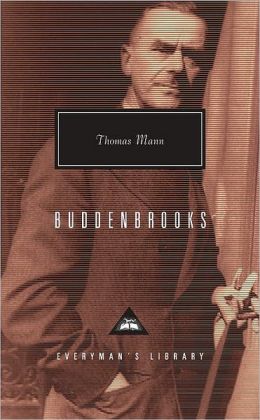
I have read several  “backyard books” this summer.  I flew through  Thomas Mann’s fast-paced 700-page classic, Buddenbrooks.

Buddenbrooks was a bestseller in its day.  It is the story of the decline of a German merchant family.

In the introduction to the Everyman edition, T. J. Reed says Mann’s complex first novel is reminiscent of the social novels of  Balzac, Tolstoy, and Flaubert.

Buddenbrooks thomas mannOne can see the resemblance between the openings of War and Peace (which I recently finished) and Buddenbrooks. War and Peace begins with a soiree where the most important people in society meet to gossip and discuss Napoleon’s war in Europe. Buddenbrooks begins with a homecoming party at the Buddenbrooks’ gorgeous house in the Meng Strasse.  The  whole family loves to entertain:  Consul Jean, his wife, Elizabeth, his parents, and their three children (who  grow up to be the main characters), stolid Thomas, witty Christian, and the mischievous girl, Tony.

Mann’s characters converse more lightly than Tolstoy’s, but his characterizations even of minor characters are superb.  Herr Jean Jacque Hoffstesde,  “the town poet, …was sure to have a few rhymes in his pocket for today…”  Herr Gratjens, the broker “was forever rolling up a scrawny hand and holding it to his eye like a telescope, as if examining a painting–he was generally recognized as a connoisseur of fine art.”  Therese Weichbrodt, the headmistress of a school, is described as a hunchback:  she “was not much taller than a table.  She was forty-one years old, but, having never set much store by external appearances, she dressed like a woman in her sixties.”

Thomas is the responsible son who takes over the business.  He is stern and inflexible, but not unsympathetic:  he cannot marry the flower girl he loves; his grain business falters when he is middle-aged;  his soophisticated music-loving wife is out of his league; their son, Hanno, is musical and sensitive; and he is very ill in his forties.

But Thomas has no empathy for others.  He tells Uncle Gotthold, who is a failure and who married a woman of a lower class:

If I had been like you, I would have married my shop girl years ago.  But one must keep up appearances….  You had too little momentum and imagination, too little of the idealism that enables a man to cherish, to nurture, to defend something as abstract as a business with an old family name–and to bring it honor  and power and glory.  This requires a quiet enthusiasm that is sweeter and more pleasant, more gratifying than any secret love.  You lost your sense of poetry, although you were brave to love and marry against your father’s will…Didn’t you know that one can be a great man in a small town?  That a man can be a Caesar in an old commercial city on the Baltic?

Resilient Tony is probably capable of helping with the business, but her career is to be marriage:  that is woman’s lot.  She  falls in love with a medical student, but her father forbids the match; he steers her to a man who looks good on paper. When they learn Grunlich has faked his financial accounts and is in debt, she comes home and gets divorced.  Later she marries a sweet, rather eccentric, badly-educated man of her choice, Herr Permaneder, with no better result.  He cheats on her, and she comes home again with her daughter.

It is all part of the decline of the family.

Their brother, unconventional Christian, loves the theater, going to the club, and back-stage women.   He cannot work, though the family does not understand this. He feels sick most of the time.   He goes to London and South America to escape the family firm, but he never lasts long at a job. He doesn’t see the need to work when the family is so rich.  Later, Thomas cuts off his funds when he learns Christian is wants to marry his mistress.

Thomas’s son, Hanno, dominates the last part of the book:  he grows up hating school, has a musical bent, and a friend who is also artistic.  His father does not understand him.

We hope throughout the novel that the Buddenbrooks will survive.

“You’re making good progress in that,” my family said several times to oblivious me, reading.

“Uh huh.”  I didn’t really hear what they said.  It’s that kind of book.  Utterly engrossing.

Are You Pretentious? What to Read with Your Glasses on

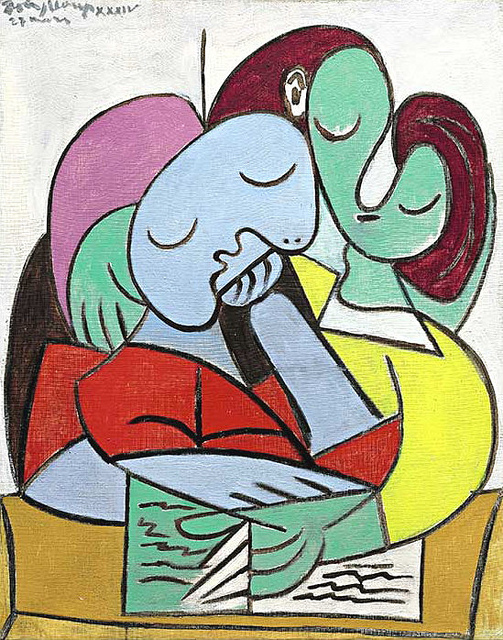
"Women Reading," Picasso

“Women Reading,” by Picasso

It’s hot outside.

I don’t care.

It’s summer.

We are the only people in the neighborhood who don’t have our air conditioner on.

I don’t want to be shut up in the house after the long, cold spring.

I am spending every possible free moment reading in the back yard at “our cafe table” under the umbrella.

My cousin, the librarian, hangs out here regularly since breaking up with her boyfriend.  Now she sits in my chair in the back yard, reads my beach book,  Saki’s The Unrest Cure and Other Stories, and drinks my iced tea in my favorite plastic highball glass.

I go in to refill her glass. When I come back, she says, “Kat, you are so pretentious!”

It seems she had scrolled through the bookmarks on my computer and didn’t at all like the sound of the TLS or Abebooks:  Depressing Russian Literature.

“What the f— is Rogue Classicism?”

I look at her through my glasses. Actually, bifocals.  I  wear my bifocals to read.  And to see.  “I’ve got Hulu.”

“Do you actually watch TV?  This stuff is about reading.”

I have not watched anything at Hulu for a long time. I do not admit this.

Chatting to a librarian is a bit like entertaining an N.S.A. agent.  She has now analyzed my bookmarks (reading, reading, reading!) and will no doubt post some of them hilariously on her Facebook page.

Shopping is far more important than reading, she says.   She wants to take me to the mall for a makeover (Lizzie Arden), to the hairdresser for some of that scrunchy silver stuff that makes highlights even in white hair, and find me something less t-shirty-and-jeans to wear.

Well, I’m not doing any of that.

Instead I will make a list of  What to Read with Your Glasses on.

Here are my Top Six, and please recommend some.

1.  The TLS is edited by Peter Stothard, author of my new favorite book, Alexandria:  The Last Days of Cleopatra.  For those looking for intellectual entertainment,  TLS is livelier than, say,  The New York Review of Books, which I tried in vain to “unsubscribe from” for many years.  The TLS covers a broad range of books:  it has  a classics section (does any review publication in the U.S. have that?), with fascinating reviews of scholarly books and Latin texts; many novels in translation are reviewed  among the  fiction and literature; and then there are the history books, art history, politics, nonfiction, criticism, autobiographies, biographies, and a crossword puzzle.

2.  The Washington Post book section, edited by the indefatigable Ron Charles, who also tweets, reviews, and makes satiric videos, is the best review section in the U.S.  Michael Dirda and Jonathan Yardley are the other two brilliant staff critics.  There are also many excellent reviews by freelancers.

3.   Largehearted Boy is a music blog that features authors’ playlists, articles about books, and daily downloads of music.

4.  Reading Copy is the  Abebooks blog.  It has book news, photos of beautiful book covers, occasional reviews, and book lists.

5.  Arts & Letters Daily from the Chronicle of Higher Education provides links to articles, reviews, and debates at other publications.

6.  At the Willa Cather Foundation website,  you can find Willa Cather  news, virtual tours of Red Cloud, where Cather grew up, and read back issues of  the scholarly Newsletter and Review.

I hope you have your glasses on!

Work & Eight Great Novels of the Workplace

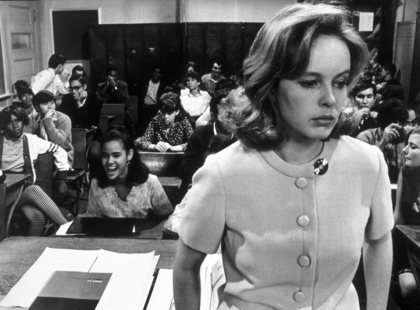
Up the Down Staircase:  A Really Bad Day in the Workplace

Up the Down Staircase: A Really Bad Day in the Workplace

According to a Gallup poll, 70% of American workers are ‘not engaged’ or ‘actively disengaged’ and are “emotionally disconnected from their workplaces’ and ‘less likely’ to be productive.

That means they don’t like their jobs.

I’m not surprised.

Women of my generation who earned liberal arts degrees from state universities didn’t think much about the looming spectre of the workplace.   The women who would be CEOs and the nation’s leaders graduated from other schools.

It was assumed we would teach.

We would teach the children of the CEOs.

We taught.

My first friend to earn a Ph.D. in English quit her job as a Visiting Lecturer after one year and went to library school.

My most brilliant friend taught at several colleges and was denied tenure.  He went to law school.

My first friend to teach at a boarding school wrote me a long heartbreaking  letter saying that she was wasting her life.  She quit to get married.

I taught for a few years, but like most of us found it so draining that I went on to other gigs.

The workplace can be an office, a factory, a store, a restaurant, an insurance company, a dot.com.

Since all of us work, have worked, or have calculated ways to work less or not at all, it is odd that work is not described in fiction more often.

Here is a  list of Eight Works of Fiction about the Workplace.  I need two more for a traditional ten, so please recommend.

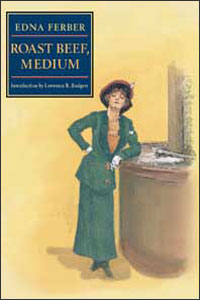
Roast Beef Medium edna ferber1. In Edna Ferber‘s brilliantly funny collections of career-woman short stories, Roast Beef, Medium, Personality Plus, and Emma McChesney & Co., the plucky heroine, Emma McChesney, is a very successful traveling saleswoman. She rises from traveling petticoat salesman – she has the much-coveted Midwest region – to partner of Featherstone Petticoats.

Sometimes when Emma is on the road, she is nostalgic for roast beef.

As Emma McChesney loitered, looking in at the shop windows and watching the women hurrying by, intent on the purchase of their Sunday dinners, that vaguely restless feeling seized her again. There were rows of plump fowls in the butcher-shop windows, and juicy roasts. The cunning hand of the butcher had enhanced the redness of the meat by trimmings of curly parsley….There came over the businesslike soul of Emma McChesney a wild longing to go in and select a ten-pound roast, taking care that there should be just the right proportion of creamy fat and red meat…. She ached to turn back her sleeves and don a blue-and-white checked apron and roll out noodles.

Nevada Imogen Binnie2.  In Imogen Binnie’s bold, if wildly uneven, new novel, Nevada (the selection of this month’s Emily Books club), the heroine, Maria, a transgender woman, works in a bookstore in New York City until she breaks up with her girlfriend and takes a road trip.  With the road trip the novel turns into a kind of Y.A. novel, but here Maria thinks about her job.

It is a bookstore, though, so she gets, like, I am looking for this book, it has a blue cover, a lot.  It’s supposed to be the worst annoying thing you can ask a book seller, but she’s into it.  People alays think they know less thatn they acutlaly do about a book.  She can usually draw it out of them and figure it out.  When did you see it?  Where did you hear about it?  Is it a happy book?  These conversations can almost be like a moment of actual human connection, except it’s basically a one-direction connection.  Maybe in another life Maria will be a therapist or a social worker or something.

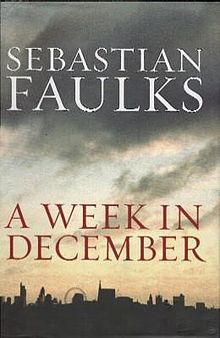
220px-WeekInDecember sebastian faulks3.  In Sebastian Faulk’s A Week in December his characters’ attitudes toward the workplace are brought into sharp relief the week before Christmas.  Jenni Fortune, an underground tube driver, loves her job but is being sued by a “jumper”;  Gabriel, a depressed lawyer, loves to read Balzac but is bored by his job;  Veals is an unscrupulous financier who likes to take phone calls in an alley; and Tranter is a freelance book reviewer interested only in bad reviews. “Crash was what he wanted:  crash and burn–failure, slump, embarrassment.”

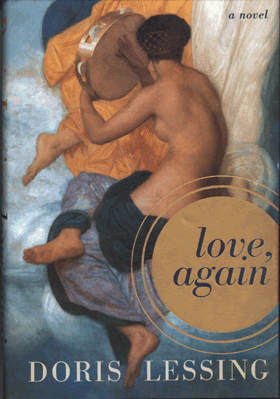
4.  In Doris Lessing’s Love, Again,  the 65-year-old heroine, Sarah, a powerful, busy playwright and manager of The Green Bird, a “fringe theater” in London, writes a play and song lyrics based on the journals and music of Julie Vairon, a French mulatto artist and composer.  When they rehearse the play in France  for a festival to be staged near Julie’s house in the woods, the atmosphere becomes romantic and enchanted; and the sexual tension is palpable.  People begin to fall in love, but the novel is also about the theater.

doris-lessing love, again5 & 6.  In William Cooper’s charming autobiographical novels, Scenes from Provincial Life and Scenes from Metropolitan Life,  the narrator, Joe Lunn, describes his work as a physics teacher in a boys’ school and a civil servant in London.

Scenes from Provincial life & Metropolitan life7.  H. G. Wells’ Kipps, a  charming fairy tale,  is the story of a draper’s apprentice whose life is magically transformed by a legacy.  Wells, who also worked in a draper’s shop, portrays  Kipps’s boredom and bewilderment during the long hours at this unfulfilling job.

His round began at half-past six in the morning, when he would descend, unwashed and shirtless, in old clothes and a scarf, and dust boxes and yawn, and take down wrappers and clean the windows until eight.  Then in half an hour he would complete his toilet, and take an austere breakfast of bread and margarine and what only an Imperial Englishman would admit to be coffee, after which refreshment, he ascended to the shop for the labors of the day.  Commonly those began with a mighty running to and fro with planks and boxes and good for Carshot the window-draper, who whether he worked well or ill, nagged persistently, by the reason of chronic indigestion, until the window was dressed.

8.   Ann Beattie’s Chilly Scenes of Winter.  Charles works as a civil servant and pines for Laura, a librarian who used to be his girlfriend; his best friend Sam is an unemployed jacket salesman.  In the ’70s, when this novel is set, college graduates were as underemployed as they are now.  Beattie understands office life.

Chilly Scenes of Winter

Mirabile Goes Southern: Elizabeth Spencer’s The Voice at the Back Door

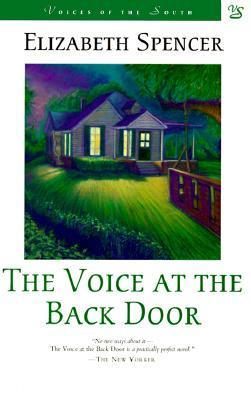
Elizabeth Spencer The Voice at the DoorThere comes a time in summer when it is too hot to go to Shakespeare in the Park and I have already been to  all the bookstores and museums.  So I sit in my Adirondack chair in the back yard and look at my new trees (there was a bird in the linden yesterday). And then I pick up a copy of Elizabeth Spencer’s The Voice at the Back Door and that is the last you will see of me for days.

This superb novel, set in Mississippi in the 1940s, is a gorgeously-written story of Southern politics, race, and romantic love triangles.  Although the Pulitzer Prize fiction jury recommended it for the prize in 1957, the board of directors chose not to grant the award that year. (Anyone who has read this astonishing novel knows how fatuous that decision was.)

The novel begins (literally and figuratively) with a sheriff’s race.  In the small town of Lacey, Mississippi,  Sheriff Travis Brevard races his car from his African-American mistress’s house on the outskirts of town to the grocery store in town owned by Duncan Harper, a former college football star.  Travis is dying, but doesn’t want to die at his wife’s house.

To Duncan, Travis looks drunk.

The dialogue is pitch-perfect.

Duncan,” he said hoarsely, “I’m hot as a fox.  Cut out that damn gas and give me a cold Coke.”

“Sure,” said the grocer, thinking that if it were whisky he would surely have smelled it by now.  He pried the cap from the bottle and offered it doubtfully.  “Travis, you don’t look good.  Let me just ring and see if the Doc’s in his office.”

Travis says he wants Duncan to take over as sheriff when he dies because Duncan is too good to “sell Wheaties.”  He adds that the chief competition will be Jimmy Tallant, a war hero who is now a bootlegger. He recalls how Duncan’s football stardom used to bring the town “up.”

I used to go all the way up to the university on weekends to see you play.  I went over to Baton Rouge too and down to New Orleans more than once.  We would all go to see you play.  Then we would come home and read about it in the paper.  They called you the fastest running back of the year.  They named you ‘Happy’ Harper.”

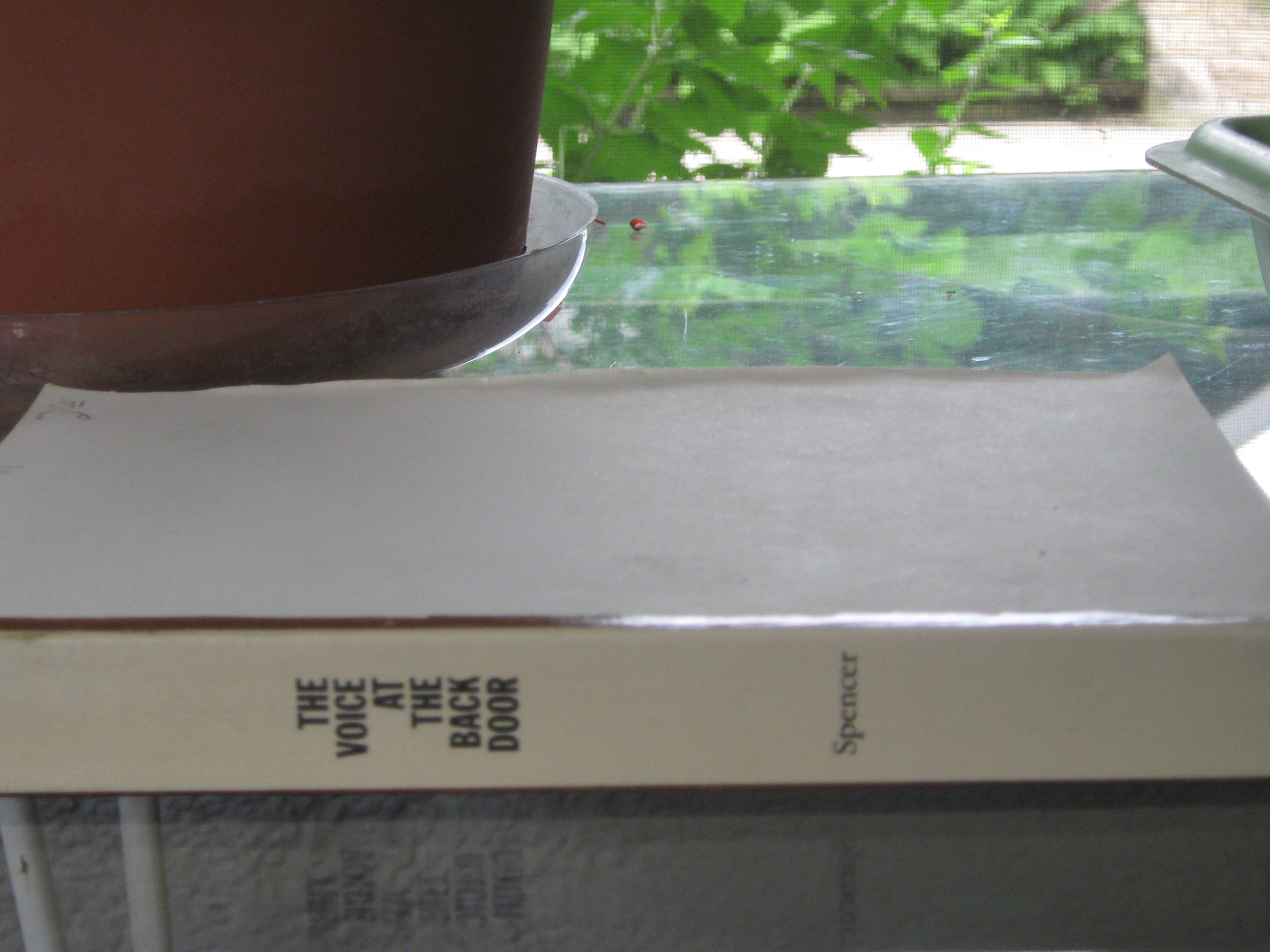
The cover fell off my book, but I kept reading.

The cover fell off my Time-Life paperback, but I kept reading.

Spencer’s bold characterizations of  Travis, Duncan, and Jimmy are stunning.   Travis is a” good ol’ boy” who turns to Duncan, shrewdly realizing that Duncan will protect the old values of the South (except perhaps on the “Negro Question,” but Travis may have also been thinking of his “Negro” mistress).  Travis dies in the store after asking Duncan to take his job.

Duncan, appointed temporary sheriff and intending to run for office, is an ethical man of letters as well as a former football star:  when there is a question after a fight about the safety of Beck Dozer, a brilliant African-American veteran of World War II whose teacher father was shot in the courthouse in 1919, Duncan claps Dozer in jail and sits beside him to make sure there isn’t another shooting.  Dozer said he had cut up Grantham, Jimmy’s bootlegging partner, with a razor after Grantham refused to sell him drink. Jimmy and some friends show up at the jail, toting guns, but they just take a snapshot:   the whole scene was cooked up between Jimmy and Dozer (who was paid hundreds of dollars) so that Jimmy could take a picture and send it to the paper saying Duncan is “a nigger lover.”

What many don’t understand is that Jimmy is bound to Beck Dozer, because Jimmy’s father  killed his father.  The two have a strange understanding of each other.

This is the kind of back-door politics that Spencer so exuberantly describes.  The back door is a literal symbol:  Dozer goes to the back door of Duncan’s house when he needs help; women go in and out the back door of Jimmy’s place when their husbands don’t know they’re there;  and drinkers also go out the back door.

Elizabeth Spencer

Elizabeth Spencer

When Spencer wants to shut down Jimmy’s bootlegging operations, Mr. Trewolla, the jailer, tells him it won’t happen.  “Don’t think you’ve cramped their style.  There’s just as much going out the back door as ever went out the front.”

The women, both at the front and back doors, are memorable. Tinker, Duncan’s tiny, beautiful, popular wife, hates politics but loves him desperately.  Duncan married Tinker because he was jilted by his lover, Marcia Mae, but half the town is in love with Tinker.  Jimmy has always loved Tinker, though he is married to Bella, his business partner’s sluttish daughter.  Marcia Mae, Duncan’s ex-fiancee, has recently come back to Lacey, a widow of a partying soldier.  She loves Duncan, but she cannot stay in Lacey:  she hates the small town; she hates the way Duncan won’t openly come back to her.  Bella, Jimmy’s wife, who has had affairs, is surprised when her baby doesn’t quite look like anybody. Lucy, Dozer’s wife,  is terrified when Dozer is accused of shooting Jimmy.

This novel is a classic:  I urge you to read it.  It reminds me very, very slightly of William Penn Warren’s All the King’s Men, only it is better-written and much more interesting.  At the Southern Festival of Books in 2001, I heard Spencer read from her collection of short stories, The Southern Woman.  I liked her very much, and I liked her cat totebag (a totebag with a cat design).

This is why we go to book festivals:  to discover writers we do not know.

And if you can recommend any good book festivals, let me know.  It’s time I attended one again.

My Cat Sent an E-Mail

I want the real life
I want to live the real life–“The Real Life,” John Mellencamp

Parody of Edward Hopper's Nighthawks

Parody of Edward Hopper’s Nighthawks

I love the internet.

An online book group I belonged to once gathered at The Southern Festival of Books.

I have done e-mail interviews.

I have written fan e-mails to favorite writers (though I think they would prefer real fan letters).

I have read blogs and international newspapers.

I have read approximately 40 books by Trollope as a longtime member of Ellen Moody’s Trollope19thCStudies at Yahoo Groups.

On the other hand, my family believes I should get offline because of the National Security Agency electronic surveillance program.

It is devastating to learn that this seven-year-old NSA surveillance program of metadata from cell phones and e-mail flourishes under Obama. According to Hendrik Hertzberg in The New Yorker (June 24, 2013), the information has not yet been used to abridge “any citizen’s freedom of speech, expression, or association,” as far as anyone knows.  But he adds,

The harm is civic.  The harm is collective.  The harm is to the architecture of trust and accountability that supports an open society and a democratic polity.  The harm is to the reputation, and, perhaps the reality of the United States as such a society, such a polity.

This is not why we voted for Obama.

The NSA surveillance may not affect us much so far, but what if a future government starts a Fahrenheit 451-style purge based on misinterpretations of the data (in Ray Bradbury’s book and Truffaut’s movie, the government favors book burnings and reports of subversion among readers and thinkers)?

There has been a kind of flatness about Obama’s presidency  It is not that he hasn’t done good:  no one else could have passed a Health Reform bill (people have tried), he got the troops out of Iraq, recognized climate change, and has supported gay marriage.

Still, there has been that shiftiness about Guantanamo.  We would have liked to see the Patriot Act revoked.

One can’t help but think the NSA agents and government subcontractors have us exactly where they want us on the internet.  Everything we do is here forever.

Most of us are boring.  I don’t have a cell phone.  My e-mail is hardly incendiary.  Three of the more riveting emails I’ve written lately?  “Have you seen Argo?”  “No, it’s not too bad out,”  and “My book hasn’t arrived.”

At my blog the “surveill-ors” can read about bicycling and novels.  Most disturbing is the fact that they will think I am a really bad writer.  If I’d only known, I would have written more carefully.  I’M JOKING!

E-mail is not the greatest invention.  I prefer to write real letters, though I seldom do it anymore.  In Nora Ephron’s book, I Remember Nothing and Other Reflections, she  wrote a funny list, “Things I Won’t Miss.” Third on the list was e-mail.

E-mail can get you into trouble.  Once I sent a personal e-mail to an entire group by mistake.  Worse, my cat once sent the rough draft of an email to my boss by jumping on the keys.  That did not end well.

And yet I love the internet.  I will continue blogging.