Friends on the Internet

The internet is is here, it can be addictive, and people are idle.

Old friends you hope to hear from don’t contact you.

Few of my “real-life” friends have Facebook pages or Twitter accounts.

Their names barely show up on Google.

My name barely shows up on Google.

It is a relief.

For years my name was out there.  If you write, and I used to write, some of your old articles are published on the internet.  As the years go by, fewer of your articles show up.  My worst essay has finally vanished.

Thank God.

There’s something about the internet.

Old friends you hope to hear from never contact you.  The people you barely knew and never think of track you down .  Troubled people email you.  People who dated you when you were thin and blonde email you.  Very occasionally someone you really liked sends a greeting.

Some people want you to write articles about them.

You write, “I’m so glad you’re doing well;  lovely to hear from you; but sorry, I don’t write anymore.”

The internet is there, it can be addictive, and people are idle.

All right, I Googled some people tonight.  I am idle.

Google can be like surveillance. Even the name of a friend who obviously didn’t want to be found–in 20 years online, her name has never appeared–recently showed up in a Google search.  Her photo and a short resume appear, probably to her annoyance, in conjunction with her workplace.   Oh, I’m relieved she’s alive.  I was afraid she’d committed suicide.  She has impressive liberal arts degrees, and I am proud of her.  She dropped out for a while, as we all did, but she survived.

“Why don’t you email her?” my husband asked.

“I couldn’t possibly.”

Often I Google an old friend and the news is sad.  He or she has died:  my best friend from high school; the first boy who ever told me I was pretty; and my favorite professor.

One of my former professors, not much older than I am, actually has a Facebook page.  I enjoyed her list of favorite movies and music, but I will not email her.  I took one class from her years ago, and she would not remember me.  It was a large class.

Famous people are often Googled or even cyberstalked.

Oh, dear, maybe I shouldn’t have sent a fan email to So-and-So?

Is that okay?

I have made some real friendships on the net,  and cyberfriends often know how to behave on the internet better than these new-old friends.

No, it is past acquaintances who are sometimes inappropriate.    Does he or she really think I would believe a lie or two or three I’ve caught?   Do I need these outpourings?  Who is he or she again?

“Honey, do we know this person who says he’s from X and knew us in So-and-So’s class?”  I call.

“Don’t open it.”

And now you know what it is to be cyberstalked.

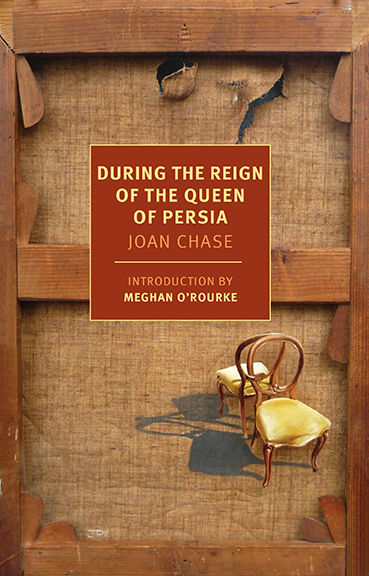
Joan Chase’s During the Reign of the Queen of Persia

Joan Chase during-the-reign-of-the-queen-of-persia-421Lately I’ve read voraciously.  I’ve read everything from classics to superb literary fiction to junk disguised as literary fiction.

Tonight I’m writing about Joan Chase’s 1983 classic, During the Reign of the Queen of Persia, reissued by NYRB.

First, let me say that Chase’s During the Reign of the Queen of Persia is magnificent.  Set on an Ohio farm in the 1950s, it tells the story of three generations of women: Gram, also referred to as the Queen of Persia, is a sharp, often rude, old woman who rose from poverty and purchased the farm when an uncle took an interest in her and gave her money.  Gram has had a hard life:  she scorns her alcoholic husband.  After she does her housework, she dismisses the demands of family and goes out with her friends to the races or Bingo.  The women  dominate:  Gram and her five daughters and four granddaughters are the stars.

Chase daringly narrates the story from the first-person plural point of view (“we” did this, “we” did that); it is told by Lil’s four granddaughters, Celia, Jenny, Anne, and Katie.  This unusual literary voice can seem excessive and fail in lesser hands (and, alas, is not quite successful in a first novel I recently read, Tarashea Nesbit’s The Wives of Los Alamos), but Chase is always in control of her pitch-perfect, lyrical storytelling. The only other writer I can think of who holds the reins so tightly in a first-person-plural narrative is Margaret Drabble in her recent graceful novel, The Pure Gold Baby.

Gradually, we unravel the relationships between the women in Gram’s tight-knit, outspoken family.  They are constantly fighting and abusive, then turn suddenly laughing and supportive.  Three of Gram’s daughters, always referred to in the narrative as the aunts, live on the farm at least part of the time:  Aunt Libby with her kind husband, Uncle Dan, a butcher, and two daughters, Celia and Jenny (two of the narrators); Aunt Grace, a former schoolteacher who often leaves her husband to return home with her two daughters, Anne and Katie (the other two narrators);  Aunt Rachel and her son, Rossie, live there until Granddad dies; Aunt Elinor, a Christian Scientist and unsuccessful actress-singer, lives in New York; and Aunt May runs a hotel.

The novel opens with a vivid description of the “arable acres” that extend from the flat Lake Erie region of northern Ohio; and  from that description of the farms on gently rolling hills the story gradually rolls into the story of family life.

We get a picture of the small town near the farm.

Our Uncle Dan had his butcher shop on that town square.  It was on the backside, beside the newsstand, beyond which the city buses loaded.  When we went inside after the picture show or from shopping at Fitchberg’s Dry Goods, we’d finger pennies out of the cup he kept on the shelf and have a round pop of colored gum from the machine while we waited for Aunt Libby to drive from our farm to pick us up.  If Uncle Dan was busy with a customer he wouldn’t say a word to us, wouldn’t seem even to recognize us, going on with his practical and patient advice to any of his familiar clientele.

There is much humor, much of it about sex.  All of the aunts have been attractive and sexy, but Aunt Libby cannot adjust to her daughter Celia’s lasciviousness.  Celia is wild, dating several boys, going too far; Aunt Libby stays up late, flicking the lights, and fights with her daughter about the low-class boys she dates.  She only approves, ironically, of the one who turns out to be bad, though perhaps not as bad as she thinks.

The younger girls spy on Celia with boys, and want what she has for themselves, and know they will have “it,” because all the women in their family do.  But family comes first.

The men in the family are weak.  Granddad, an abusive alcoholic, is loved by his daughters and granddaughters, but hated by Gram.  Escaped or probably expelled from the Amish, he courted her and won her, then was violent.  Because of the money, Gram now has complete control.  But she despises her daughters’ husbands, with the exception of Uncle Dan, and loathes Aunt Grace’s husband, Neil, a weak, hard-drinking writer.

Much of the novel revolves around Aunt Grace’s tragic dying of cancer.  Gram rages, and the rest of the family, with the exception of Aunt Elinor, a Christian scientist, have trouble understanding the point of life and death.  Grace’s suffering is terrifying.

Gram is furious.

I should have strangled her with my own hands,” she cried out once, one of the outbursts which came seemingly from nowhere and left her momentarily crushed.

There is much talk of strangling in the novel:  “Now Anne was steaming, holding back but poised, so that we thought one more thing and she would leap on her sister and strangle her to death”;  Granddad once “glared as if he wanted to strangle the horse”; and after Aunt Grace’s death Anne and Katie fight and “Anne’s hands had strangled and at first she couldn’t get her breath.”

This is not a book about an ideal family.  It is about the kind of farm family so many of us knew in the Midwest when we were growing up in the 20th century.  These farms are gone.  These people are not and were never the sanitized farmers on television.

A fascinating novel, and with a fascinating introduction by Meghan O’Rourke.  This is one of best novels I’ve read this year.

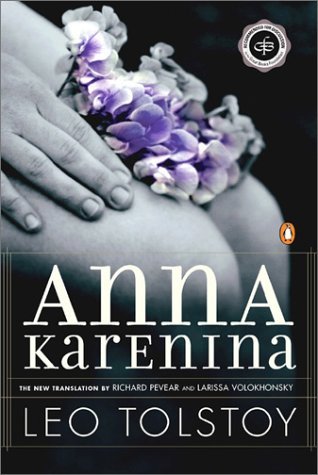
Classics We Haven’t Read & Why You Should Read Anna Karenina

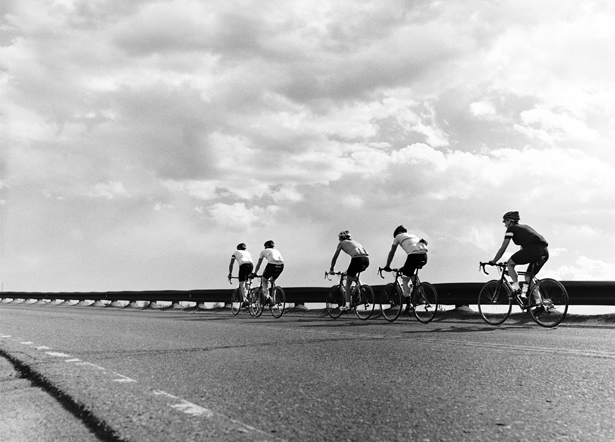
Not chatting about books, are they?

These bicyclists aren’t chatting about books, are they?

Bicyclists on a long ride are usually too busy pedaling to chat about books, but during the third hour of a mind-numbing ride into a fierce Nebraska wind, we were so bored that we actually considered the question, “What classics haven’t you read?”

What haven’t I read?  Moby Dick.  I once made it as far as Chapter 42, “The Whiteness of the Whale.” Beautiful writing, but was I just a tad bored?  A tad or two.  My husband’s laudation of Melville’s style, and even the critic Michael Dirda’s contention that Moby Dick is the Great American Novel cannot persuade me to read it.

My favorite book.

My favorite book.

My husband admits he has not read Anna Karenina.   It is one of my favorite books.

Possibly the opening lines of Anna Karenina terrify men.  He denies it.

All happy families are alike; each unhappy family is unhappy in its own way.

All was confusion in the Oblonskys’ house.  The wife had found out that the husband was having an affair with their former French governess, and had announced to the husband that she could not live in the same house with him.

Marriage, families, confusion, adultery.

In addition to exploring the consequences of men’s and women’s infidelities, Tolstoy’s novel is filled with extraordinary scenes that make this a dramatic pageturner (and, yes, I just reread it, in the wonderful award-winning Pevear and Volokhonsky translation).

FIVE SCENES WORTH READING ANNA KARENINA FOR:

1.  BEST ICE-SKATING SCENE.   Levin, a landowner, comes to Moscow to propose to Kitty.  He ice-skates with her and endearingly learns a new trick.

Just then one of the young men, the best of the new skaters, with skates on and a cigarette in his mouth, came out of the coffee room and, taking a short run, went down the steps on his skates, clattering and jumping.  He flew down and, not even changing the free position of his arms, glided away over the ice….

“Ah, that’s a new stunt!” said Levin, and immediately ran up to try it.

Although he stumbles, he skates away laughing, reminding Kitty of what a dear man he is.  Unfortunately, she thinks of him as a brother.

2.  3.  BEST ILLICIT ATTRACTION SCENE AT A BALL (OH, JANE AUSTEN, IF ONLY YOU’D KNOWN…).   Anna Karenina comes to Moscow to heal the rift between her brother Stiva and his wife, Dolly:  by chance she meets Kitty’s new boyfriend, Vronsky, at the train station. He is very attracted.  At the ball at which Kitty expects him to propose, he dances almost exclusively with Anna.

Each time he spoke with Anna, her eyes flashed with a joyful light and a smile of happiness curved her red lips.  She seemed to be struggling with herself to keep these signs of joy from showing, yet they appeared on her face of themselves.  “‘But what about him?’ Kitty looked at him and was horrified.  What portrayed itself so clearly in the mirror of Anna’s face, she also saw in him.

3. SOLACE WHEN YOU’RE DUMPED.  Kitty has a nervous breakdown when Vronsky leaves Moscow to pursue Anna Karenina to Petersburg.

Her sister Dolly tries to comfort Kitty.

Come now, Kitty.   Can you really think I don’t know?  I know everything.  And believe me, it’s nothing…  We’ve all gone through it.”

But poor Kitty has not gone through it yet.

4.  MOST TRAGIC HORSE-RACING SCENE.  Before Vronsky rides in a steeplechase race, his mother and brother object to his scandalous passion for the married Anna (they would prefer him to have a chic, light affair), and Anna tells him she is pregnant.  During the race, his mistreatment of the horse, Frou-Frou, leads to her death, and foreshadows Anna’s fate.

5.  MOST AGONIZING FALLEN-WOMAN-REJECTED SCENE.  After Anna and Vronsky live together in Europe, she refuses to believe that Petersburg society will ostracize her.  She goes to the theater, and is publicly humiliated.

He knew she had gathered her last forces in order to maintain the role she had taken upon herself.  And in this role of ostensible calm she succeeded fully.  People who did not know her and her circle, and who had not heard all the expressions of commiseration, indignation and astonishment from women that she should allow herself to appear in society and to appear so conspicuously in her lace attire and in all her beauty, admired the calm and beauty of this woman and did not suspect that she was experiencing the feelings of a person in the pillory.

A brilliant book, a tragedy, but also with many joyous scenes of love and family life (which I haven’t included here).  No one wrote better than Tolstoy.

Dancing with the Stars

Meryl Davis & Maksim Chmerkovskiy

Meryl Davis & Maksim Chmerkovskiy on Dancing with the Stars

I watched Dancing with the Stars tonight.

“That is truly a trashy show,” my husband says.

No, it isn’t.  It is one of the most charming shows on TV.  I sit down and watch it for two hours every Monday and am  fascinated by the drama–well, it’s a fake drama, but I still enjoy it– as well as the dancing.

You get to know the characters.

You get to know the dancers.

You get to know the judges.

Most of the dancers dramatically improve.

It’s not just about the dance:  there is also narrative.  Short clips of the sweaty practice sessions are shown before each dance routine. Dancers temporarily defeated by the demands of the dance let off steam by crying, leaving the room, or punching the wall. Those first steps are so clumsy that it  seems impossible that a polished dance routine will emerge.  Then it does.

I started watching the show because Meryl Davis and Charlie White, Olympic Gold Medalist ice dancers, are two of the competitors this season.  They do not, however, dance together.  The “stars” are paired with professional dancers.

The stars?  Well, yes, that part is a joke, except for the Olympians.  Quite a few of them are has-beens–this season, there are/were two washed-up sitcom  stars from the ’80s-90s, Candace Cameron Bure from Full House and Danica McKellar from the Wonder Years.  At first I thought Candace Cameron Bure was a barracuda.  (Now I think she was just anxious.)  The one who MAY have been a barracuda was Danica McKellar, a slightly better dancer who reminded me of a cheerleader.  I disliked her girl-next-door widening of eyes and jumping up and down; beneath it she seemed arrogant. She was voted off the show, and  I’m not sure it had anything to do with her dancing.

Then there’s Amy Purdy, a double-amputee who won a  Paralympic Bronze Medal in snowboarding at Sochi this year.  She dances elegantly on prosthetic legs.

The judges give their scores, but viewers also phone in their “votes.”  Sometimes the bad dancers are voted off; sometimes the good dancers.  Although Charlie White got 40 out of 40 last week and 40 out of 40 this week for one of his two dances, he was eliminated.

And this is why it is is absurd to give viewers a voice and let them call a 1-800 number and vote on who stays and who goes.  Far better to let the judges decide, as they do on Master Chef.

Next week we have the finals, and I certainly hope Meryl and Maks win.  How my vote fits in I don’t know, but that’s the way we live in America now.  Yup, I dialed that number.  That’s one vote from flyover country.  I’m voting to back up the judges’ scores, and because Meryl and Maks are the best dancers.

Bicycling without Coffee: The New Bike, Council Bluffs Trails, & Jackson Street Booksellers in Omaha

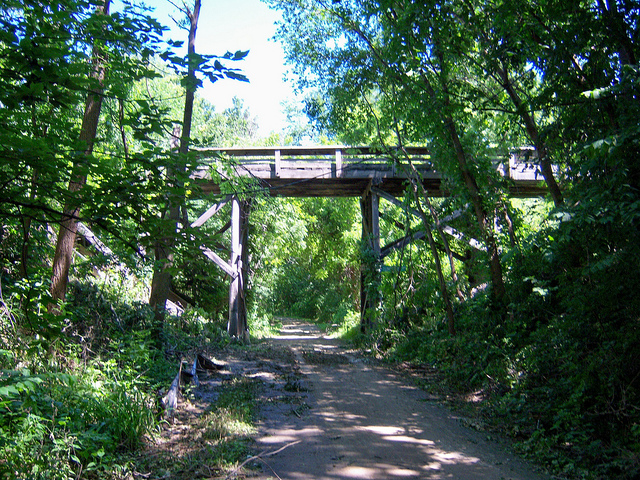
Wabash Trace Nature Trail

Wabash Trace Nature Trail

It had to be done.

It had to be replaced.

My old bicycle has had its pedals replaced, its seat replaced, its chain replaced, and probably needs a new derailleur.

It broke down.  The gears don’t work, and the chain keeps falling off.

Two days without a bike ride and I was crazy.

On Friday night, I bought a new bike.  And it is not quite as sleek a bike as my husband thought I should get.

It is a perfectly normal, inexpensive 21-speed bike.  Okay, it’s not as good as his bikes, but I need a city bike.  I ride for exercise and transportation.  I ride along streets and (usually) paved trails.

He said of a bike that cost $1,000, “Think of how many miles you’d get out of that.”

I was appalled.  I could fly to London on $1,000.

You really don’t want to have a too expensive, fashionable bicycle in a city.  Four of my bikes have been stolen over the years, three in my hometown, Iowa City, and one from an  apartment house in a big city.  In Iowa City, somebody will chop off the lock of your three-speed and ship the bike to Chicago while you’re flirting with your (future) husband at the Java House or playing hacky sack on the Pentacrest.  In big cities there is slightly less interest in bicycles, thank God.

In the small city where we now live, there are many great bike trails:  even David Byrne, formerly of the Talking Heads and the author of Bicycle Diaries, has commented on it.  And the city is beginning to develop bike lanes, which make the streets safer:  the presence of bicyclists has slowed down the traffic very slightly, so there are fewer accidents.  Cool, right?

Anyway, I  insisted this weekend that we go to Council Bluffs, where there are two great bike trails, the Wabash Trace Nature Trail, which goes 63 miles to a small town on the Missouri border, and the Iowa Riverfront Trail, which leaves from the same trailhead and goes 7 miles to the spectacular Bob Kerrey Pedestrian Bridge across the Missouri River to Omaha, Nebraska.

Jackson Street Booksellers

Jackson Street Booksellers

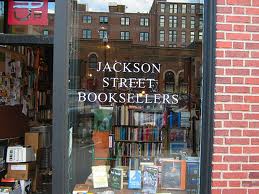
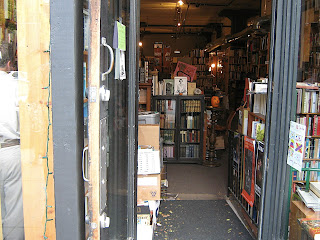
Why did I really want to go?  I wanted to go to Jackson Street Booksellers in Omaha, across the river from Council Bluffs.

Now that I’ve been to London, I can assure you that Jackson Street Booksellers is one of the world’s best used bookstores.   It is bigger than Skoob, my favorite used bookstore in London, and the collection is of course very different.  You can buy your Simenons for $1.50 or $2, Black Sparrow Press editions of Wyndham Lewis, Wright Morris, and Paul Bowles for perhaps $7, classics by your favorite authors–I picked up a book by William Howells I had never seen for $4–everything Laurence Durrell ever wrote, and many books by offbeat writers I’d never heard of.

They have something by all of my favorite writers.

Jackson Street Booksellers

I only had half an hour–my husband wanted to get going on our bikes–so I only made it through about one-fourth of the fiction books.

And here’s how he got me to leave.  “If  we ride the trail to the Bob Kerry Bridge, we can ride across the bridge and back to the bookstore.”

First we rode along the scenic Wabash Trace Trail through the Loess Hills, and then turned around and started off toward the Bob Kerry Pedestrian Bridge.  I couldn’t wait to cross that bridge and ride back to the bookstore.

But there was a very strong South wind–I had forgotten how hard it is to ride on the prairie in a wind–and though we pedaled part of the way through a beautiful state park with a lake, we also had to ride past an industrial wasteland with a power plant, and by malls.  It was getting late so we turned around.

So, damn, I didn’t go to Jackson Street Booksellers twice.

“Did you believe that?”  my husband asked, amused.

I certainly did!

Usually I also write about coffee when I travel, but I did not have a single cup of coffee.  No coffee review.

We did drink tea out of a thermos, though.  Excellent Lapsang Souchang.  I made it myself.

Why Simenon Is Slightly Out of My Comfort Zone

I am not a big mystery fan. I read two or three mysteries a year.

The French writer Simenon has never been one of my favorites.

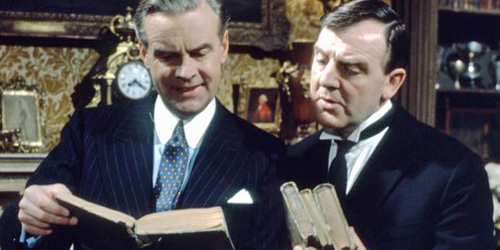
Ian Carmichael as Lord Peter Wimsey and Glyn Houston as Bunter

Ian Carmichael as Lord Peter Wimsey and Glyn Houston as Bunter

Ten years ago I went through a phase of reading British Golden Age Detective Novels, the “cozy” puzzle mysteries of the 1920s, ’30s, and ’40s.  Dorothy Sayers, Edmund Crispin, Margery Allingham, Ngaio Marsh, and Agatha Christie are among the most famous Golden Age writers. Their upper-class detective heroes are witty and charming, they pursue baffling clues, they’re either in love with women who don’t love them back or are comfortably married, and their valets are former “batmen” from the War.

The women writers are my favorites, and perhaps it’s because they introduce a tad of romance in their novels.  Dorothy Sayers’ witty hero Lord Peter Wimsey relentlessly, through three novels, pursues the chilly (and possibly gay?) Harriet Vane, a mystery writer once accused of murder who seems positively to dislike him until she sees his effect on women academics at her former college at Oxford (Gaudy Night).  Allingham’s Albert Campion, if I recall correctly, had a great love and was rejected. Of the Golden Age heroes, Marsh’s dashing Roderick Alleyn is certainly my favorite.  Roderick smoulders for his sexy girlfriend (then wife), Agatha Troy, a painter.  As for Christie, my least favorite of the Golden Age Crime Queens, her characters are stick figures.  Christie is all about the puzzle.

Anyway, I love a good “cozy” i.e., non-violent mystery, about English detectives.

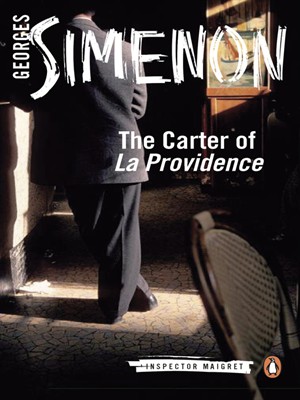
Carter of La Providence SimenonBut I have recently ventured out of my comfort zone to read Georges Simenon, the great French mystery writer.  Penguin is reissuing all of his Maigret titles, one a month.

Simenon’s books are, by my standards, police procedurals rather than cozies.  Nor have I ever been able to cozy up to Simenon’s detective, Maigret.  Simenon chooses to provide minimal background on him.

Anyway, I was delighted today to find myself completely absorbed in Simenon’s The Carter of La Providence, one of the earliest books in the series; I read it in one sitting.  But the character, Maigret, is hardly developed at all; in fact, we learn about him mainly from his reactions to the crime.

The novel begins with a description of a canal and the locks. I prefer train schedules to lockkeeping, but  gradually became interested in the characters on the barges and yachts, the carters and their horses, and Maigret.

The writing is very simple and fast, and the third-person narrative keeps us slightly distanced from Maigret.

Maigret was in a tetchy mood.  He entered the stable and from there went to the cafe or the shop any number of times.

He was seen walking as far as the stone bridge looking as though he was counting the steps or looking for something in the mud.  Grimly, dripping with water, he watched as ten vessels were raised or lowered.

People wondered what he had in mind.  The answer was: nothing.  He didn’t even try to find what might be called clues, but rather to absorb the atmosphere, to capture the essence of canal life, which was so different from the world he knew.

A woman has been strangled, and her body found in the stable of an inn by the canal.  All the clues come from Maigret’s investigation, in which he learns about the community on the canal.

The woman turns out to have been the wife of Sir Walter, a colonel and the owner of a yacht whose party consists of some glamorous, decadent people with a reputation for wife-swapping and drinking.

Did the colonel do it?  Did his friend, Marco?  Or did someone on the barge, the Providence?

There will be more corpses before the end.

It is fascinating that we know almost nothing about Maigret.  He is completely intent on the mystery, but who is he? I know from reading a few of the later books that eventually he gets married–one of the novels is about his wife–but there is nothing about that here.

Should I have started with the first book?  I never read mysteries in order.  I read what I have, or what I found at Barnes and Noble.

Julian Barnes in this week’s TLS writes that Simenon’s mysteries are literary classics, and who am I to disagree with him?

I enjoyed David Coward’s translation very much but, alas, there is a relative pronoun error on the first page.   “He had gone back into his house but had not been there long when the man driving the horse-drawn boat, who he knew, walked in.”

That should be “whom he knew,” because the relative pronoun is the direct object of “knew.”

Yes, it’s petty of me, isn’t it?  But, honestly, shouldn’t the editor know the difference between who and whom?

Get it right next time, Penguin editors, please.  I’m going to read more of these.

The First 90-Degree Day, My Mother, & Chocolate Chip Bars

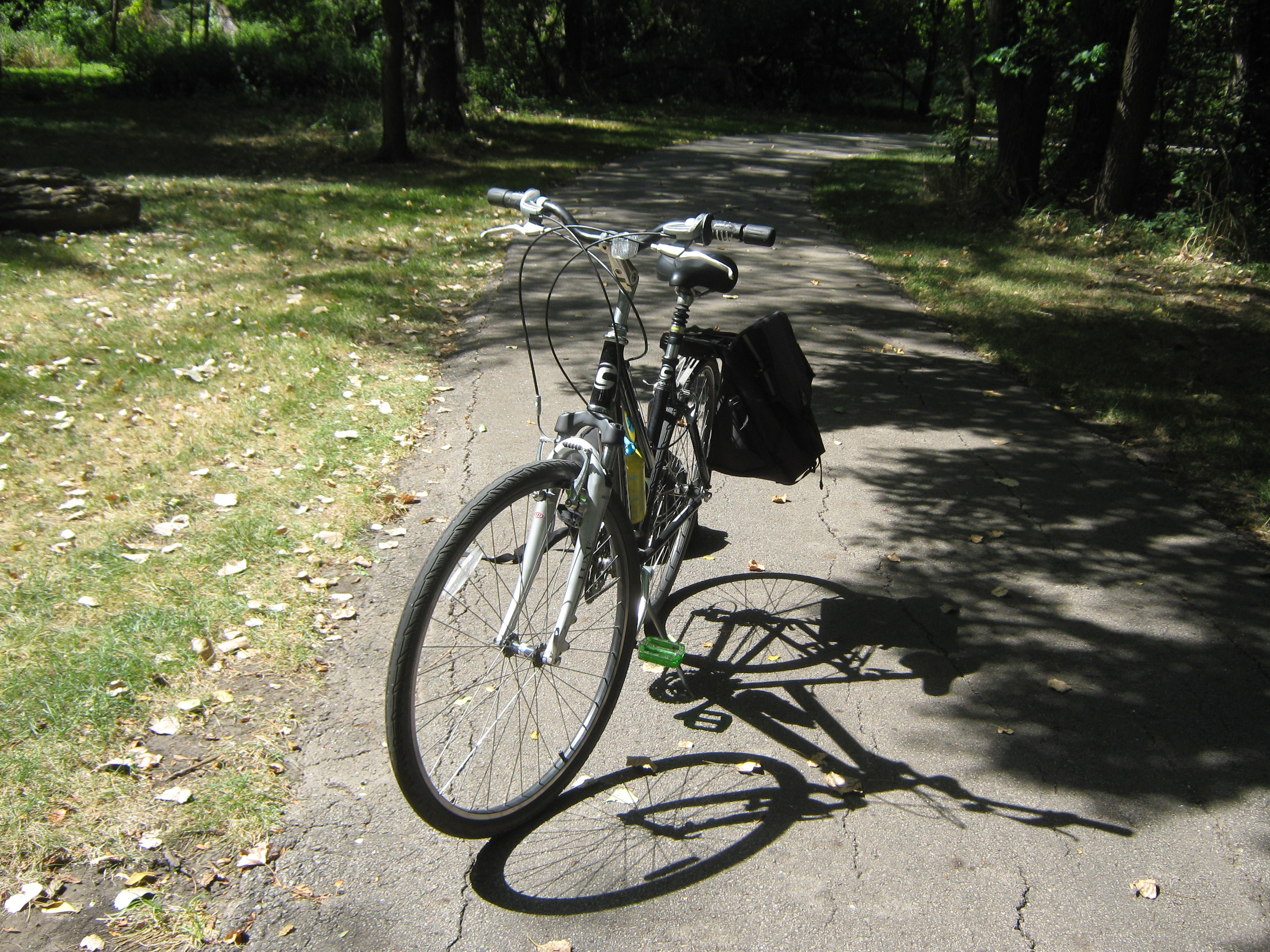
IMG_2653 my bike on trail

Wrong season, but this is the trail.

It is the first summer day.  It won’t stay like this, of course, but it’s 90 degrees.

It doesn’t feel that hot at first.

I’m on my bike.  I just had it fixed.  I glide down the long, curving hill, then pedal on the more or less flat bike trail, and, though I do have to ride up another long hill, it’s so lovely to be outdoors that I enjoy that, too.

Embrace the hills.

Then the chain clicks and snaps.  The chain falls off the sprocket.  I stop in front of a Dairy Queen to put the chain back on.  I have to fix my bike in front of a crowd of people eating ice cream.

The good news?  I got the chain back on.

The bad news? A truck blocked the driveway so I had to ride through the DQ parking lot around it to continue my path.  This is not rural America.  This is a city.  What’s with the stupid f—–g big truck blocking the sidewalk?  The driver is so high up he can see over the tallest building in the suburb, and he definitely can see me.  He doesn’t back up.   I guarantee he doesn’t need that truck in the city and there is nothing in the truck bed.

I rode on and the gears would barely change but I made it up the hills.

Why does my bike always break down when my husband’s out of town?  Women should be able to fix their bikes, right?   But the truth is I’ve never been good at fixing things.  My manual dexterity is nil.   The one time I changed a tire, it took me 12 hours.  After that I took it to the shop.

“Everything’s fine,”  I lied to my husband on the phone.  If he knew there was something wrong with my bike, he would probably drive home 1,000 miles to fix it.  Bikes are important at our house.

The bike is my main means of transportation.

Now he’s home and the bike will be fixed.

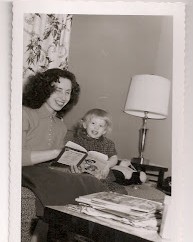
 Mom and I reading Baby Farm Animals.

Mom and I reading Baby Farm Animals.

MY MOTHER.  I’ve been thinking a lot about my mother lately.  The last time I saw her, I was clutching my bike helmet.  There I was at the nursing home, white hair flying wildly from my bike ride, unprepared for the sight of my tiny, dehydrated, dying mother.

“You look good,” she said, admiringly.  Those were the last clear words she spoke.  Her overfed children were always beautiful to her.   It was as if she wanted to give us strength for what lies ahead.  Strength, for a woman, lies in confidence about physical appearance, or so one would think by the number of times it is mentioned in our family, society, and at this blog.

I have been missing her wildly.

CHOCOLATE CHIP BARS.  As a treat for my husband, I made chocolate chip bars from the Original NESTLÉ® TOLL HOUSE® site.  They call it the Original NESTLÉ® TOLL HOUSE® Chocolate Chip Pan Cookie.

Prep:10 minsCooking:20 minsCooling:0 minYields:48 bars (4 dozen)
This Original NESTLÉ® TOLL HOUSE® Chocolate Chip Pan Cookie is more like a brownie..
Ingredients

2 1/4 cups all-purpose flour
1 teaspoon baking soda
1 teaspoon salt
1 cup (2 sticks) butter, softened
3/4 cup granulated sugar
3/4 cup packed brown sugar
1 teaspoon vanilla extract
2 large eggs
2 cups (12-oz. pkg.) NESTLÉ® TOLL HOUSE® Semi-Sweet Chocolate Morsels
1 cup chopped nuts
Directions

PREHEAT oven to 375° F. Grease 15 x 10-inch jelly-roll pan.*

COMBINE flour, baking soda and salt in small bowl. Beat butter, granulated sugar, brown sugar and vanilla extract in large mixer bowl. Add eggs, one at a time, beating well after each addition. Gradually beat in flour mixture. Stir in morsels and nuts. Spread into prepared pan.

BAKE for 20 to 25 minutes or until golden brown. Cool in pan on wire rack. Cut into bars.

These are good but super-rich!

*Note:  I don’t have a jelly-roll pan, so I used a slightly smaller rectangular cake pan.  It worked fine.

Soft Fashions & Seneca’s “Avoid the Crowd”

WHAT HAVE I BEEN READING?

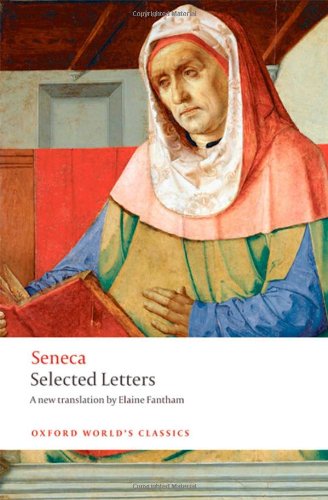
Seneca Selected LettersI’ve been avoiding the crowd, and reading Seneca on avoiding the crowd.

It started in London.

I was at Foyles (the big bookstore), and I was very tired, because I had not had coffee:  I had jumped out of bed and taken the tube to Leicester Square so I could beat the crowds at the National Portrait Gallery, the National Gallery, and possibly Foyles.

I knew there would be coffee at Foyles, so I browsed and browsed and browsed first, and found a huge selection of Latin books in the foreign language department, and ended up buying a paperback, Select Letters of Seneca edited by Walter C. Summers.

I was delighted, because I can sight-read Seneca.  I know most of the vocabulary, though not always the use in the Silver Age.

So I went into the bookstore’s coffeehouse part, no idea what floor I was on, because this is a huge bookstore, and sat down at the coffee bar with a huge cup of coffee.  And I fell into Seneca.

Here is a rough translation of the opening lines:

What do I think especially you should avoid? you ask.  The crowd.  You cannot yet entrust yourself to it safely.  I certainly will confess my own feebleness:  for I never bring back the morals I went out with.  The peace I have made by myself is thrown into disorder, that which I fled has returned.

And here is the Latin:

Quid tibi vitandum praecipue existimes quaeris? turbam. Nondum illi tuto committeris. Ego certe confitebor imbecillitatem meam: numquam mores quos extuli refero; aliquid ex eo quod composui turbatur, aliquid ex iis quae fugavi redit

lt simply made lovely reading.

The National Gallery and the National Portrait Gallery, both at Trafalgar Square, were a little less crowded in the morning (I went twice) than in the afternoon.  Still, it was very crowded, and I didn’t take notes (which I always do at museums), because it was simply too distracting.  Everybody stays for a few seconds in front of a picture and then takes off!   You end up getting joggled.   (I bought a book about the National Gallery; I suppose it beats my notes, but not really, because I like to read the art historians AND have my impressions.)

Oh, well, it was better than the crowds at the mall.  I spent $125 on a watch last time I was there, and I could have bought one for $25.  It just goes to show I get mesmerized in crowds, and not for the better.  Art books are fine, yes; expensive watches that aren’t even jewelry, no.

Another thing I love about the Seneca letter:  he quotes three philosophers on the crowd.

Here is another rough translation, followed by the Latin:

Democritus said, “To me, one man is the crowd, and the crowd is one man.”  Another man also answered well, whoever he was (the author’s identity is doubtful), when asked what was the good of so great an attention to an art that would reach a very few: “The few are enough for me,” he said, “one is enough, none is enough.”  And, excellently, Epicurus said this third thing, when he wrote to one of his colleagues about his studies: ‘I do not write these things for the many, but for you, for each of us is enough of an audience for the other.”

And the Latin:

Democritus ait, ‘unus mihi pro populo est, et populus pro uno’. [Bene et ille, quisquis fuit – ambigitur enim de auctore -, cum quaereretur ab illo quo tanta diligentia artis spectaret ad paucissimos perventurae, ‘satis sunt’ inquit ‘mihi pauci, satis est unus, satis est nullus’. Egregie hoc tertium Epicurus, cum uni ex consortibus studiorum suorum scriberet: ‘haec’ inquit ‘ego non multis, sed tibi; satis enim magnum alter alteri theatrum sumus’.

I avoid the crowd, but I am still influenced.  The culture seeps in, with its new attitudes…

And that is one very good reason to read the classics.  It keeps you up with the best in thinking, so you don’t go in for “crowdsourcing” or some horrible modern thing…

AND NOW HERE I AM ON FASHION:
Fashion:  But What If You Use Your Head?

Fashion: But What If You Use Your Head?

I am not fashionable.  I have a wardrobe of jeans and sweaters.  They’re nice jeans, mind you.  My idea of fashion is to wear black or very dark navy jeans with a cardigan sweater or what is, no doubt, an out-of-date peasant top.  I own only one dress, a black Liz Claiborne  I abandoned on the floor of the closet circa 1996.  I last wore it to an awards dinner.  I had forgotten all about this award actually, because it was kind of a fake award, awarded by a PR magazine for some deed I don’t even remember, and I didn’t get a plaque.  If I don’t have a plaque, how can I remember?  My picture was printed in the magazine instead.  My mother was the only one who liked the photo.  And I didn’t even retrieve it when my mother died last August.  In fact, I didn’t remember it until now.

So I’ve worn the sturdy jeans–not cheap jeans, mind you–for decades, and they’ve never done me harm.  Even my mother admitted a few years ago that, as far as she could see from watching The Talk and The View,  jeans were the fashion, with the addition of high heels and a nice top.  I certainly don’t have the high heels.

In the last six months, I have navigated the high fashion districts of Washington, D.C., and London in jeans.

Well, not  fashionable.  I did go to the Kennedy Center in jeans and a cardigan. But then Washington is a bit dowdy, isn’t it?   And I went everywhere in London in jeans and cardigans, though I didn’t quite go anywhere fashionable.  There IS fashion in London.

Today I was less fashionable than usual.  Have you ever had a day when you needed to wear soft clothing?

I got up today and needed to wear everything soft, but I couldn’t spend another minute in my pajamas after taking the garbage out and having a conversation with my neighbors in my pajamas.  Yes, yes, almost warm enough to garden, but not quite yet.  The snapdragons are already sold out at the neighborhood store.

When I got back in, I closed the door and really could not believe I’d had a conversation in pajamas with holes in one knee and a rather peculiar print top (llamas on it!) that never quite goes with anything.

I put on hospital scrubs and an old sweatshirt.  I just didn’t care that everything was wrinkled.  Criss-cross wrinkled, like all garments that live on the floor of the closet.

I haven’t worn these scrubs since maybe 2010.

They’re so comfortable!

Sometimes one needs a day of wearing soft clothing.

And maybe to drink a lot of water and have chicken soup, too.

What Is R.E.M. Reading?

It’s always a relief to see pencil and paper in a video, isn’t it?  There’s reading and writing in R.E.M.’s video of “E-Bow the Letter.”  Can anyone identify the book the drummer is reading?  Help!   (This is a “no-comments” blog but e-mail me at mirabiledictu.org@gmail.com if you have the answer.:))

Rereading Bronte and Austen & Modern Versions

As I grow older, there is nothing I like better than rereading the classics. If I only have three or (optimistically) four decades left, I want to go out with the Charlotte Bronte-Jane Austen party.

Jane Eyre old penguin bronteLast month I partied rather intensely with Bronte and Austen.  I reread Jane Eyre and Northanger Abbey.

I hadn’t read Charlotte Bronte’s Jane Eyre in 20 years, because I’m such a Villette devotee that I feared disappointment.

And I hadn’t been able to face Austen’s Northanger Abbey, because it is so slight.

Villette, Charlotte Bronte’s masterpiece, is Jane Eyre for adults (I have written extensively about Villette here), and it is by far the better of the two books. Indeed, the heroine of Villette, Lucy Snowe, has a more challenging time as a woman (she is sexy but too plain to attract the hero) and as a teacher has no training and must figure out both how to teach and how to discipline a class of unruly girls.  She has it harder than the plain, girlish Jane Eyre, who fulfills all our romantic dreams. Jane Eyre is Charlotte’s dream autobiography; Villette is the realistic version.

The good news? I loved  Jane Eyre.  It is a beautifully-written work of great literature, not just for teenagers.   Bronte penned a stunning, fast-paced, emotionally pitch-perfect blockbuster.

Jane Eyre is an orphan who stands up for truth–and who of us hasn’t felt like an orphan?. Her cruel aunt banishes her to a charity school, where she is forced to wear a sign that says “liar” because her vicious aunt told the lie that she was a liar.  She wins many friends at the school, and becomes a teacher, and finally lands a governess job at the romantic house, Thornfield Hall.  The owner, witty, rakish Mr. Rochester, whose love child, Adele, is her charge, falls in love with here.

Bronte’s dialogue is witty and, if not quite realistic, compelling.  Who can help but fall in love with Mr. Rochester when he jokingly compares his dog Pilot to his bastard, Adele, by his opera-singer girlfriend, Celine Varens?

But unluckily the Varens…had given me this fillette Adele, who, she affirmed, was my daughter; and perhaps she may be, though I see no proofs of such grim paternity written in her countenance:  Pilot is more like me than she.”

And Rochester presents himself as a hero:  he says Celine deserted Adele, so he took “the poor thing out of the slime and mud of Paris , and transplanted it here, to grow up clean in the wholesome soil of an English country garden.  Mrs. Fairfax found you to train it;…”

And on an emotional level, we love it that the plain, smart heroine wins the hero’s affections.

But we worry about the mad wife in the attic who constantly sets the house on fire, seeming to know that Jane Eyre is there, and exactly who she is.  The mad wife is at the center of Jean Rhys’s sequel, Wide Sargasso Sea.  I didn’t think Wide Sargasso Sea was very good when I read it years ago; I tried to reread it last month, and my original judgment stands.  But I do like the idea of it.  Anybody know any modern versions of Jane Eyre?

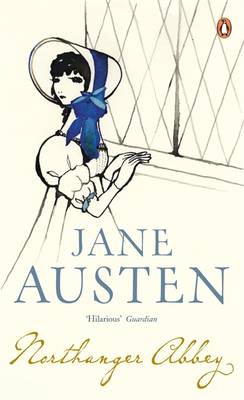
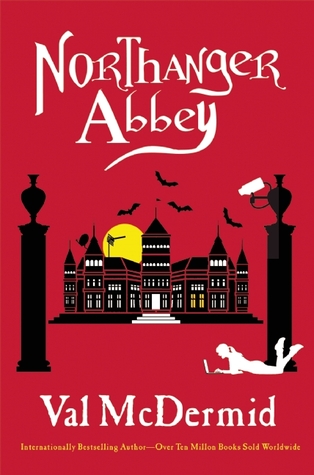
Northanger Abbey jane austenI reread Austen’s Northanger Abbey so I could read Val McDermid’s retelling, also called Northanger Abbey, the second in a series of updated Austen novels (the first was by Joanna Trollope, Sense and Sensibility).

Austen’s Northanger Abbey is thoroughly enjoyable, a novel about a novel reader so absorbed in Gothic fiction that she is constantly fantasizing about ghosts and murders.  But it is mainly the story of a likable, if ordinary and rather silly, young woman, Catherine Morland, who goes to Bath with her neighbors, and falls in love with Henry Tilney.  The difference between Northanger Abbey and Austen’s other novels?   There is no suspense; we know immediately who will get the girl, and whom the girl will get.  And the writing is uneven.

Naturally, we all fall in love with Henry, because he, like Catherine, is a novel reader.  He says,

The person, be it gentleman or lady, who has no pleasure in a good novel, must be intolerably stupid. I have read all Mrs. Radliffe’s works, and most of them with great pleasure. The Mysteries of Udolpho, when I had once begun it, I could not lay down again,–I remember finishing it in two days–my hair standing on end the whole time.”

He also teases her about writing in her journal, and predicts she will go home at night and write abouit their meeting.

Austen is always witty, and I laughed aloud as I read this.

Northanger Abbey val mcdermidI have read half of McDermid’s Northanger Abbey, and it, too, is lots of fun.  The 21st-century Cat is a fan of paranormal romances, and , indeed, at one point she wonders if Henry is a vampire.  He teases her about updating her Facebook page, rather than writing in her journal, and she spends a lot of time texting. A missed appointment has to do with Henry’s sister’s having written down the wrong phone number.  McDermid is an award-winning mystery writer, and she is up to the challenge of rewriting Austen’s lightest novel.  Don’t expect too much here, but it is charming and will certainly make  good “summer reading.”  The writer who has signed on to update Pride and Prejudice or Emma will have the greatest difficulty!