Jessica Lamirand’s Exhuming Mary McCarthy

exhuming mary mccarthy jessica lamirand coverI am a fan of the underrated novelist Mary McCarthy, and, like all McCarthy fans, am a fan of The Group, her entertaining novel about the lives of eight Vassar graduates, class of 1933.

I could not resist checking out a  book with the title Exhuming Mary McCarthy.

In Jessica Lamirand’s intense new memoir, she chronicles her four years in the 1990s at Colorado College, emphasizing her friendship with six girls who call themselves “the group” (after McCarthy’s book).   In their free time, they confide, bicker, and experiment with sex, drinking, and drugs.

Written in novelistic fashion, this memoir contains such vivid dialogue and so many well-crafted scenes that I kept flipping back to the title page to make sure it was indeed a memoir, not a novel.

Lamarind’s education at Colorado College, located in Colorado Springs, was an intense experience:  students take one class at a time in three-and-a-half-week blocks instead of semesters.  Jessica is not a perfect student:  she struggles at times, and is content with a mix of A’s and B’s. Mark my words:  this readable memoir is an important document of the education of a woman at a small Western college. Most college books are set at Harvard, Yale, Princeton, the Seven Sisters colleges, Oxford, or Cambridge.  (Indeed, It would seem to us Anglophile readers that, except in David Lodge’s novels and D. J. Taylor’s short story,  “Wonderland,” in Wrote for Luck,  there are only two schools in England, Oxford and Cambridge.)

The girls are immature when they arrive at CC, though some are more experienced than others.  As a freshman, Jessica is a sweet, kind girl who has never dated or been kissed. She brings her complete set of Anne of Green Gables  to her dorm room.  Indeed, she pays as much tribute to L. M. Montgomery as she does to McCarthy. Her ideal man is Gilbert.  She wishes a boy/Gilbert would call her “Carrots” so she/Anne could break a slate over his head and fall in love.

I share Jessica’s enthusiasm for the Anne books.  She writes,

The Anne of Green Gables series had always been my very favorite books.  From the first time I read them in sixth grade, I had been guilelessly enchanted by Anne and all of L. M. Montgomery’s other characters.  I thought Anne and I were a lot alike.  WE both daydreamed too much and then got in trouble for not paying attention.  We both made lots of laughable mistakes and were none the wiser for having survived them.  We both knew that imagination was a gift not to be wasted….  We both longed to find kindred spirits.

Jessica Lamirand

Jessica Lamirand

Jessica’s strongest bond in the group is with Sophie, another avid reader and a fan of L. M. Montgomery.  The group also includes:   Selena (a pothead who has a lot of tantrums), Aspen (a Native American who has a pet rabbit and wants to be a virgin until she marries),  Hannah (anorexic, depressive, and promiscuous), Julie (a science major), Leigh (a loud pro-choice advocate who is also, oddly, a Nixon fan and becomes a pothead), and Cassandra (a Spanish major who is balanced and loyal and remains one of Jessica’s closest friends after they graduate).

The girls seem very young:  they write about their crushes in their “Stalker’s notebook,” anxiously go to dances and ogle boys in the cafeteria, and smoke pot and drink.  Jessica does not smoke pot:  the one time she does, she is traumatized and terrified.  They also listen to a lot of R.E.M.  One of their favorites songs is “Exhuming McCarthy,” i.e., Joseph McCarthy, not Mary.

Jessica has her ups and downs.  She starts out an English major, but switches to art history.  As a sophomore, she falls in love with Malcolm, aka Thomas, an unemployed stoner and member of the Society for Creative Anachronism, who has been passed around from Julie to Hannah and now to Jessica. He is not a student, and though he occasionally works at Subway, she ends up supporting him at two jobs.  When she is seriously ill, Malcolm always leaves, saying he can’t afford to get sick.

Majoring in” boyfriend,” as I call it, is always a problem for women. I doubled in School of Letters and “boyfriend” as an undergrad, and in classics and “boyfriend” as a grad student.  If you major in boyfriend, you have to make tough choices:  you can’t be all there for every class because you have a relationship to tend.

Let me be up-front:  this really does read like a novel.  It is slightly reminiscent of Pamela Dean’s classic novel, Tam Lin, which takes us year by year through English major Janet’s life at Blackstock College (Carleton College in Minnesota).  But since I like novels, writing like a novelist is a good thing.

The group eventually splinters, and some go down the dark road of drugs, but these friendships remain a seminal experience in Jessica’s life.

I very much enjoyed this, though the McCarthy connection is unclear at first.  The most detail is given to the first year, and afterwards it is occasionally repetititious, but by the end of the book you understand why she has structured it as she has, and it is powerful.  (You have to stick it out to the end.)

Uneven, but a good read, and a historical document!

P.S.  And here is R.E.M. singing “Exhuming McCarthy.”
https://www.youtube.com/watch?v=e6pAvHqPJ4g

When in Doubt, Cook It on Medium, Bike Woes, and Biking to Indianola

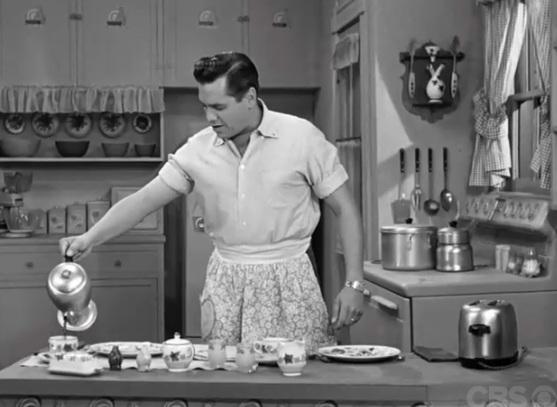
Ricky Ricardo (Desi Arnaz) cooking

Ricky Ricardo (Desi Arnaz) cooking breakfast.

My husband asked “Would you like pancakes?”

What an Arcadian beginning to Spring Break!

I was groggy.  Was I back on the commune in the ’70s? I wondered. That was the last time anyone cooked pancakes for me.   But no one was wearing overalls, listening to Blind Faith, or feeding scraps to a cute dog from the pound, so I figured it was 2015.

I was reading an article about Hilary Clinton’s private e-mail account when the smoke alarm went off.   BLEEP-BLEEP.  “Where is it?”  That is always the question.   There is hunting, there is following the loud bleep, there is climbing on a chair, and there is disconnecting.  Then there are black-crusted pancakes. They were burnt, but delicious with real maple syrup.

It was a surreal sitcom morning.

Here’s what we learned.  When in doubt, cook it on medium.  My motto:  Cook everything on medium except boiling water.  You boil that.

Bike Woes and Biking to Indianola

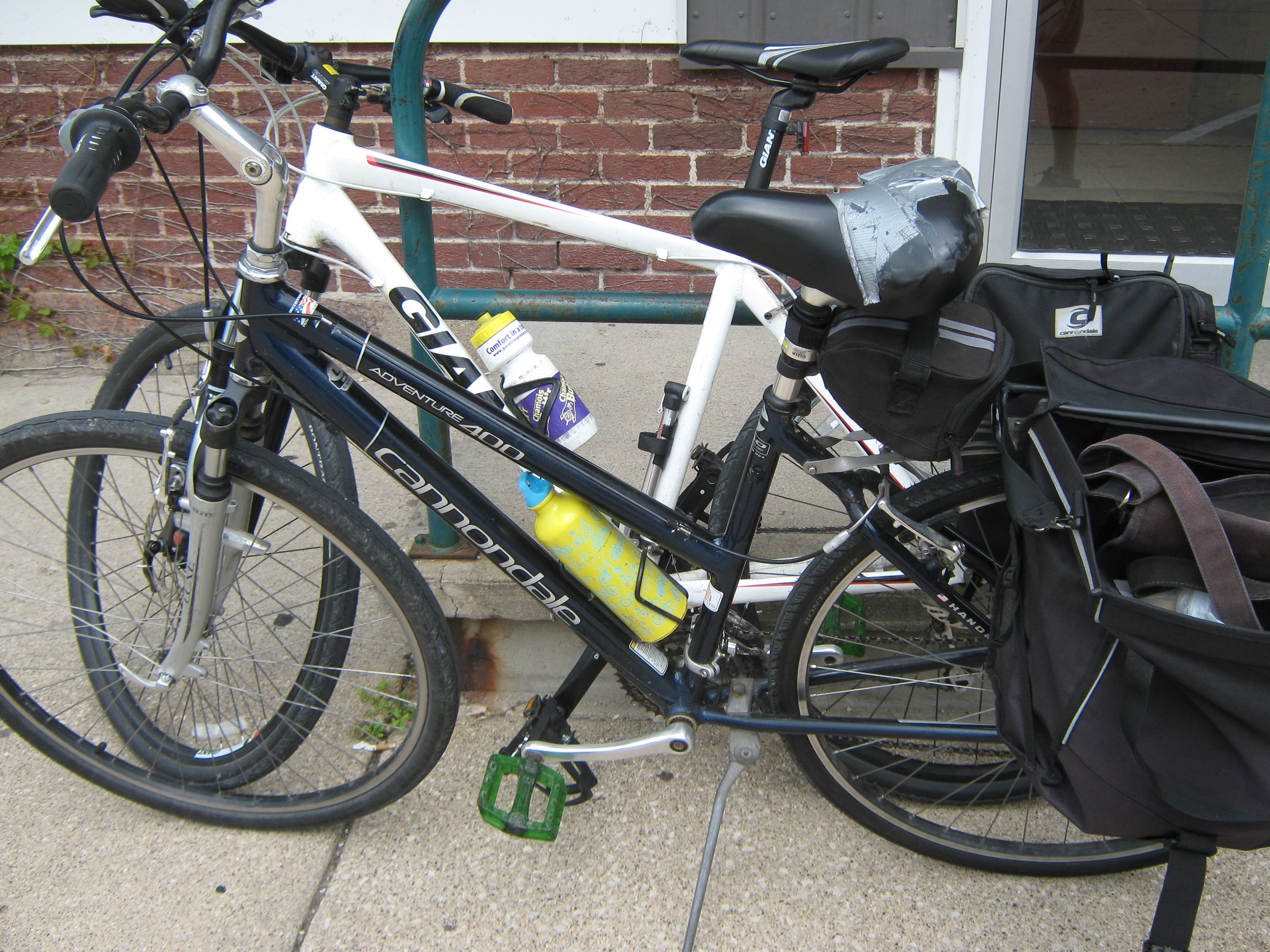
IMG_2089

My Cannondale is the one with green pedals.

The weather has been heavenly.  It was 68 degrees today.

Biking weather.

I have had a few bike woes lately.

Do you, like us, have several bikes?  A city bike, a long-distance bike, and an old back-up?  Maybe a few more in the basement?  When the back-ups break down, you know you’re in trouble.

My woes started last year when my 2003 Cannondale got creaky.  Everything had been replaced:  seat, pedals, chain, derailleur, brakes, you name it.  I didn’t like the new noise, so I bought an inexpensive Raleigh.

My husband was a little upset by the cheap Raleigh, and said I needed a better bike.  But my reasoning goes like this:  Why spend a lot of money on a bike when you can buy books?

The lovely cheap Raleigh has collapsed, less than a year after buying.   And so I am back on my Cannondale.  It creaks like mad, but it is much faster and easier to ride uphill.   And now I know:  it is the better bike.  He was right.

And so CREAK-CREAK-CREAK:  Yesterday we rode our bicycles on the Summerset Trail from Carlisle to Indianola, Iowa.  The 11-mile trail (22 miles round-trip) is VERY EASY. And that’s why you want to ride it.  Your first long trip of the year eases you into riding.  And so you ride past the wetlands with the frogs croaking and then you are in a state park with a lake.

Uncommon Grounds, Indianola

Uncommon Grounds, Indianola

If you are lazy, you can stop by the small lake (six miles into the ride) and have a picnic.  We go on to Indianola,though,  because I really, really like coffee.

You can go to Uncommon Grounds, a coffeehouse-cum-deli with great coffee, delicious sandwiches, and dessert, if you get there before 2 p.m.,  when everything on the square closes up.

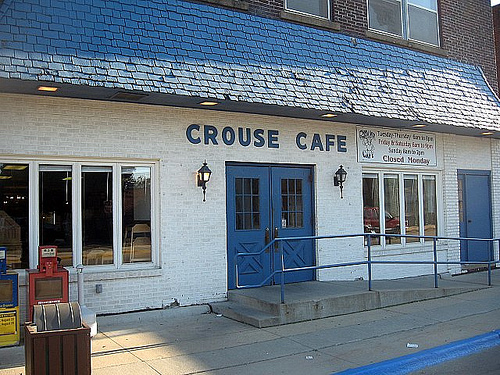
Crouse Cafe, Indianola

Crouse Cafe, Indianola

If you have a big appetite,  you can go to Crouse Cafe, which is open all day.  It has wonderful home-cooking specials like chicken with noodles, rigatoni, or catfish. I’m not sure about the coffee.

I am so happy to take a long bike ride so early. (Last year, we weren’t on the Summerset Trail till April 26:  read about it here..) No jacket, or wear just a sweatshirt–we’ve got to be kidding, right?  And the weather’s going to be nice all week.

Diverse Spring Break Reading: Katie Fforde’s Love Letters & Venedikt Erofeev’s Moscow to the End of the Line

Hahn/Cock, or, as I call it, the Blue Chicken

Hahn/Cock, or, as I call it, the Blue Chicken

Last spring I traveled to London.  I drank coffee at Costas, saw the Blue Chicken at Trafalgar Square, broke my camera while photographing a Roman tiara at the British Museum, and purchased at least 20 books during frequent visits to Skoob, Foyles, and the London Review Bookshop.

The local newspaper reports that Midwestern tourists are annoyed at having  bought expensive tickets to exotic places when the weather this spring is gorgeous right here.  (I’m staying home.)

Nonetheless, I am recommending Spring Break reading for y’all.  If you’re flying from O’Hare (and God help you if you are), your plane will be late or canceled or rescheduled and you will be there for five hours before you get on the f—g plane.  When the stewardess offers you free drinks, a disgruntled passenger will shout, “Seriously?  Just get us home.”

I hope you brought some books with you.

First up, Katie Fforde’s Love Letters.

Katie Fforde Love Letters 51QKDAFum+L._SY344_BO1,204,203,200_Do you love to laugh?  Of course you do.  Fforde writes high-end chick lit that borders on literary fiction.  I chose this novel because the heroine, Laura Horsley, is a voracious reader who works at a bookstore. Unfortunately, this bookstore is about to close.

When barracuda agent Eleanora Huckleby shows up at a client’s reading at the bookstore, she is impressed by Laura’s critical knowledge of contemporary fiction and organizational skills:  Laura organizes the readings.  And so she manipulates Laura into helping organize a new literary/rock festival  (something like Gloucester).  Laura travels  to Ireland to beg their favorite writer, Dermot, to give a reading at the festival. He tells her at the pub that he will go if she sleeps with him.   Laura is so drunk that she agrees but falls asleep immediately Technically she has slept with him, but she can’t remember if they had sex.  (They didn’t.)

To make this comedy even more delicious, Dermot is so smitten with Laura that he comes to England to teach a week-long writing course, and deviously arranges for her to be his assistant.   He insists that Laura screen the manuscripts (most are dreadful and very few  have a plot) and work as  his assistant during the course

When Dermot asks her if she understands how much a PR glitch interferes  with his creativity, the prim Laura suddenly says,

No, because, thank the Lord, I’m not a creative person.  I’m just the little Jane Eyre character who makes it all possible for you pathetic, irritating, solipsistic, up-themselves “creative people”!

Go, Laura!

Second up, Venedikt Erofeev’s Moscow to the End of the Line.

Moscow to the End of the Line Erofeev 51777J0V2NLHow do you feel about Russian satire?   This short Russian classic, written in 1969 and published in Europe in the ’70s but not in the Soviet Union till 1989,  is a hilarious-sad send-up of Russian life, literature, alcoholism, and the Kremlin. I love it so much that I intend to reread it shortly.

The hero-writer, who is coincidentally named Venedickt Erofeev, has been kicked out of his job as a foreman of cable fitters, beacause he spent his work hours drinking and graphing the employees’ drinking, and a colleague sent the graphs to headquarters.  Disgraced and drunk, Venedickt takes a train journey from Moscow to Petushki:  he says he wants to see his new lady-love and his sickly child

But he begins with the Kremlin.

Everyone says, ‘The Kremlin, the Kremlin.”  I hear about it from everybody, but I’ve never seen it myself.  How many times (thousands) I’ve walked, drunk or hung over, across Moscow from north to south, east to west, from one end to the other, one way or another, and never did I see the Kremlin.

The circular emphasis on the Kremlin in the first paragraph–it is named in the first and last sentence– anticipates the circular  journey Venya is about to make from Moscow to Petuskhi and back to Moscow–and the Kremlin.  With a suitcase full of liquor, he drinks heavily in the vestibule of the train and chats to other drunken passengers.  They often mention Pushkin, Gogol, and Turgenev (one of his and my favorite Russian writers) and in fact the passengers decide to recreate Turgenev’s First Love,  which begins with the characters taking turns turns recounting stories of their first love.

Venedikt makes some jokes about First Love.

Of course,” I added, “in Turgenev it’s a little bit different, in Turgenev, they all get together around the hearth, in top hats, holding jabots in outstretched hands.  Oh well, OK, even without the hearth we’ve got something to warm up with.  And what do we need with jabots?  Even without the jabot we can’t see straight.”

By the way, on the train he also talks to angels and Satan..

The slangy, very readable, entertaining translation is by H. William Tjalsma (European Classics, Northwestern University) . I loved it.   And I hope I’ll find something else by Erofeev at a used bookstore one of these days.

The Dream of the Summer Writers’ Conference

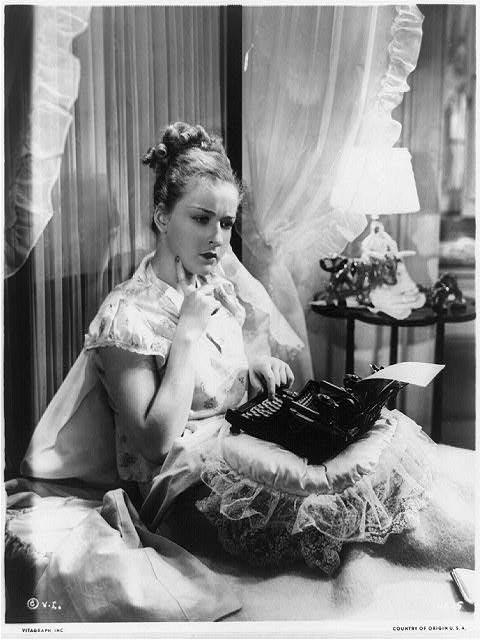
woman writing typing+womanMy Iowa Summer Writers’ Festival catalogue arrived in the mail.

Mind you, I don’t plan to enroll in any workshops, but I esteem the concept of creative vacations.

Bread Loaf Writers' Conference

Bread Loaf Writers’ Conference

Writers’ conferences are a big industry nowadays, and it could be argued that they exploit aspiring writers. Can you write a sentence? Then I guarantee you will be accepted in a workshop.  But even if most of your fellow students are mediocre, and possibly strung-out when they discover their book is not material for the next Oprah Book Club, it is still likely that 9-to-5ers or tired teachers and journalists will enjoy chatting with others about writing and even gain some constructive criticism.

There is a boom in writers’ conferences.  The first and most famous is Bread Loaf, founded in 1926, at Middlebury College in Vermont.  But nowadays one can mercilessly edit one’s poetry at a conference on a beach in Hawaii, or scribble that novel in Adirondack chairs in the Carolina mountains.

I really should get that novel out of the drawer.  I wonder where the hell it is. It might be fun to revise it and attend a workshop on Novel Craft, or perhaps Where to Begin in Fiction?

At a career crossroads a few decades ago, I went to a writers’ conference.  I  carefully honed the short story I planned to workshop:  the overeducated young heroine, who idealized the poor, found herself unhappily ensconced in an urban neighborhood where junkies smoked behind her garage and immigrants walked goats down the street.Did the teacher like the story?  No.  He hated it. He finally praised one of my stories, after I had removed all adjectives, adverbs, and, if I remember correctly, commas.

Oddly, I did learn a lot.  His tough criticism (did he have to be so brutal?) and unequivocal exercises taught us to focus, shape a plot, and ramble less.

The best thing about the conference, though, was hanging out.  The other students were fun, charming, and supportive.  We walked on the beach, jogged around campus, and tried to keep the prima of the workshop from f—-g every guy in sight.   She was such a good writer, but never published a book.  Talent doesn’t always win.

Although writers’ conferences are continuing education programs, and have nothing to do with MFA programs, creative writing programs are constantly under attack.  People are critical of what they call “workshop” fiction, though what that means I do not know, and I doubt that they could define it.  Many  brilliant writers come out of these programs.  Alumni of the Iowa Writers Workshop alone include Flannery O’Connor, Rita Dove, Charles Wright, Andre Dubus, T. C. Boyle, Jane Smiley, Alan Garganus, Michelle Huneven, Lucy Grealy, Karen E. Bender, and Paul Harding.

In the  Feb. 27 issue of The Stranger,  Ryan Boudinot’s article, “Things I Can Say About MFA Writing Programs Now That I No Longer Teach in One,” attacks MFA programs.  He dismisses the majority of the MFA students as talentless.  He writes,

I recently left a teaching position in a master of fine arts creative-writing program. I had a handful of students whose work changed my life. The vast majority of my students were hardworking, thoughtful people devoted to improving their craft despite having nothing interesting to express and no interesting way to express it. My hope for them was that they would become better readers. And then there were students whose work was so awful that it literally put me to sleep. Here are some things I learned from these experiences.

Heavens, what did Boudinot expect?  They are students, not professionals.  The MFA programs give them time to write, and some will develop their talent. Although most will not publish much (I’ve known some very smart MFAs who have simply vanished after graduating), it is not necessarily a wasted experience.  Does creativity always have to lead to publication?

Of course writers’ conferences are different from MFA progams. Students are amateurs, though some are very good.  Perhaps they are not the next Oprah book club writer, but I do know five people who have published books after attending these conferences.

And so, my philosophy is, go to the conference if you want to, if you’re stuck, or need some help, or just want to chat to people who write.  Write.  Enjoy.  And worry about the publishing tomorrow.

Mary McCarthy’s The Groves of Academe

Mary MCCARTHY Mary McCarthy is best-known for The Group, her outrageously candid, entertaining novel about eight Vassar graduates, class of 1933.  It has the funniest scene ever about being fitted for a diaphragm.

Her bad moment came when she was learning how to insert the pessary by herself…. As she was trying to fold the pessary, the slippery thing, all covered with jelly, jumped out of her grasp and shot across the room and hit the sterilizer. Dottie could have died.

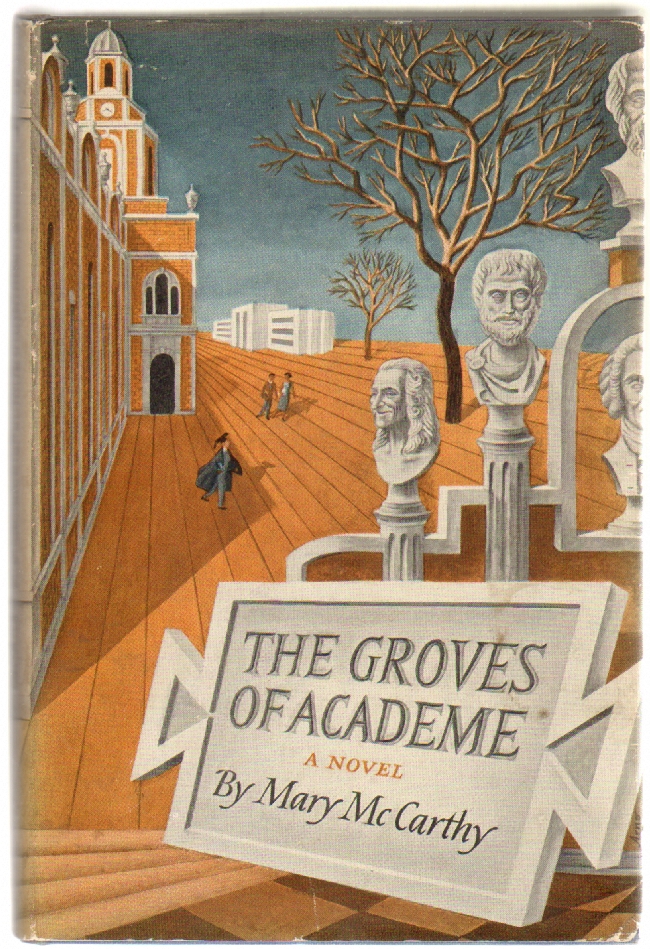
groves of academe mccarthy cool cover 12316And I have been reading McCarthy’s earlier satires, which are actually more effective than her famous women’s novel.

The Groves of Academe, a satire of an experimental college during the (Joseph)  McCarthy era, is clever, polished, and surprisingly twisted.  It was published in 1951.

If you expect Kingsley Amis’s Lucky Jim or David Lodge’s Changing Places, brace yourself:   the intellectual McCarthy generates a harrowing hilarity born of liberalism and her rejection of Catholicism. McCarthy, who was a member of the Partisan Review group in the 1930s and taught at Bard College and Sarah Lawrence College in the 1940s, takes no prisoners in her bitter skewering of academia.  Every brilliant, bitter, sinuous sentence glitters with the mix of venom, idealism, maneuvering, lying, camaraderie, hostility, and cliquishness that characterizes academic politics.

And, as if to completely discombobulate the reader, the hero is unattractive and not even sympathetic.

Henry Mulcahy, a Joyce scholar and instructor at a small “progressive” college in Pennsylvania, learns that his contract will not be renewed.  It is not a good time to be a leftist:  he was fired from a university in California because of his radical writings in The Nation.  He was hired as an instructor at Jocelyn solely because friends called in favors to Maynard Hoar, the liberal president of the college.  Hoar stood up for freedom of political beliefs; now the budget has been cut and he has decided to stand down.

Henry has a satiric view of his situation, but he knew Jocelyn was the end of the line for him and his family.

He sat down at his desk, popped a peppermint into his mouth, and began to laugh softly at the ironies of his biography:  Henry Mulcahy, called Hen by his friends, forty-one years old, the only Ph.D. in the Literature department, contributor to the Nation and the Kenyon Review, Rhodes scholar, Guggenheim Fellow, father of four, fifteen years’ teaching experience, salary and rank as instructor–an “unfortunate” personality in the lexicon of department heads, but in the opinion of a number of his colleagues the cleverest man at Jocelyn and the victim, here as elsewhere, of that ferocious envy of mediocrity for excellence that is the ruling passion of all systems of jobholders.

groves of academe paperback mccarthy 80059Seeing no alternative, Hen manipulates his friends to intercede on his behalf:  he says his wife Cathy has a severe heart condition and that any shock could kill her, and he implies that the FBI is out to get him and that Hoar has caved to pressure.   He has a group of earnest supporters, including Domna, the youngest, most loyal member of the Literature department, and Alma Fortune, the department chair, who resigns on principle.

But when they learn that Hen has lied (Cathy was ill after her last pregnancy, but isn’t now, and Hen was never a member of the Communist party), the group is furious.  Although Hen  is brilliant and popular, he is a lazy teacher, he  doesn’t take the tutorials seriously, and turns in his paper work late.  How far must they go to protect him?

McCarthy sketches a hilarious picture of the  “progressive” college.  The students have tutorials instead of classes, and major in whatever they want, even if it is Broch’s The Death of Virgil and they don’t know Latin. The faculty argues over the correct spelling of “catalogue” and whether the students should have a two-week field work period in January.  (The teachers go on vacation during field-work period).  Then there is the never-ending poetry conference where  one of the more flamboyant poets speaks on Virgil.

The majority of the students present had never heard of the  person being alluded to as the Mantuan; they supposed he was a modern poet whom their faculty had not yet caught up with–a supposition correct in a sense, as Howard Furness, maliciously grinning, remarked in his slippery voice afterwards.

Mary McCarthy and Dick Cavett

Mary McCarthy and Dick Cavett

I love McCarthy’s work, but she was a bit of a hellion.  I remember in 1980 watching the Dick Cavett Show when she called Lillian Hellman a liar. She said,  “[E]very word she [Hellman] writes is a lie, including `and’ and `the.'” Hellman sued , and the lawsuit only ended with Hellman’s death four years later.  Two great underrated American women writers at each other’s throats!  Tsk,tsk.

Thomas Keneally’s Shame and the Captives

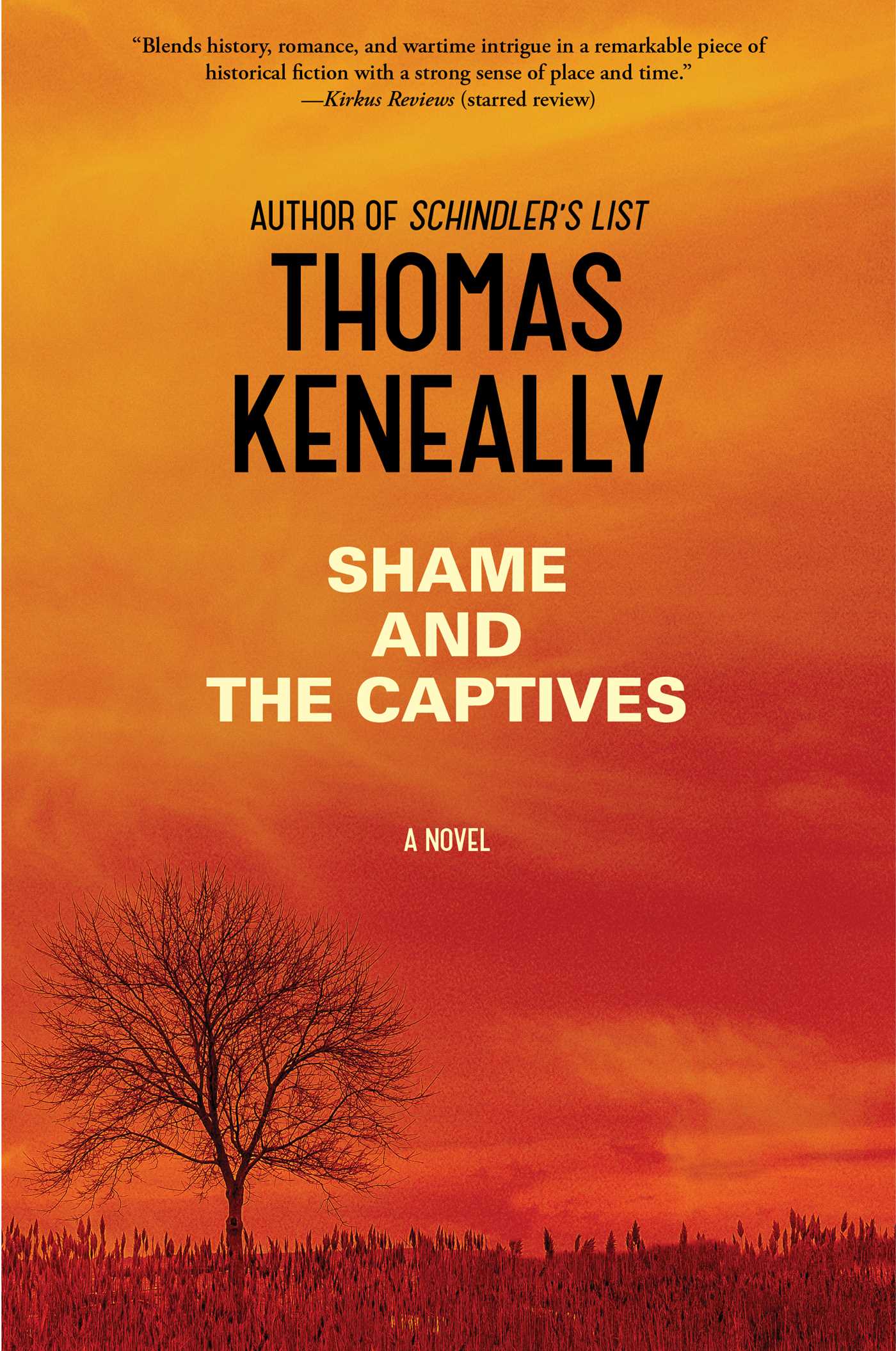
thomas keneally shame-and-the-captives-9781476734644_hrThomas Keneally’s new novel, Shame and the Captives,  is an elegantly-written, tragic exploration of the consequences of culture clash in an Australian prison-camp town during World War II.

Keneally, the winner of the Australia Council Award for Lifetime Achievement in literature this year, is a consummate storyteller, a graceful stylist, and a prolific writer of more than 30 novels.  He is best known for Schindler’s Ark, the winner of the Man Booker Prize in 1982, but my  favorite is Woman of the Inner Sea, a story of a woman who starts a new life in the Outback as a barmaid after her children die in a fire and her wealthy philandering husband blames her.

shame and the captives keneally australia 18274616In the introduction to Shame and the Captives, Keneally explains that his novel is  “a parallel account, or a tale provoked by the events” of a violent outbreak of Japanese prisoners from a prison camp in Cowra in New South Wales in Australia in 1944. (The name Cowra is changed to Gawell in the novel.)

This dramatic character-driven novel has a huge cast.  It begins with twenty-three-year-old Alice Herman, whose husband Neville has been a prisoner in Austria for two years.  She leads an uneventful life on her father-in-law’s farm. When  a truck drops off some Japanese prisoners to work on the road, she is excited and curious.  She makes lemonade for them, and hopes  some woman will be similarly kind to Neville in his prison.

Back to the kitchen she raced and fetched from a box by the dresser the remaining leftover lemons from the two trees in the informal orchard beyond th back gate.  She began to slice the fruit, squeeze it out, pour the juice into jugs, go to the ice chest, chip ice off the ice blocks, put it all in the jug, mix in sugar–a reckless amount of her ration–add water from the kitchen tap with tank wigglers in it, and stir it all up.  She did not want her father-in-law to come in and see her behaving like this, so it must be done briskly.

The theme of shame is explored throughout the novel.  Alice is desperate, sexually-starved,  and angry because she barely knew her husband before he was captured in the war.   When an Italian prisoner, Giancarlo Molisano, comes to live and work on the Hermans’ farm, Alice initiates sex with him.  Later, when he indicates his reluctance to continue the affair because of his loyalty to her father-in-law, she is angry, and it is clear that he is her captive.

The prison camp holds Japanese, Italians, and Koreans.   Tengan, a young Japanese pilot with long lashes and wide-set eyes, is so ashamed of having been captured that he dreams of killing the guards and then committing suicide. He is one of the leaders in the camp.  Many of the Japanese prisoners would rather be presumed dead than captured, and hence fail to reply to their relatives’ letters.  Sakura, a professional female impersonator, shares their belief in the shame of captivity:  when the time comes for suicide, she will don an appropriate costume.

The officers at the camp have deceptively simple lives.  Major Bernard Suttor, the commander of Compound C, spends his free time writing his popular comic radio serial, The Mortons of Gundahah. which also distracts him from fear for his son, a prisoner in China.   Old-world courtesy causes the stodgy  Colonel Ewan Abercare to make a decision with fatal consequences for more than 200 people.  Corporal Headon, an eccentric Great War veteran, is in charge of Machine Gun A, and his devotion to following the rules seems absurd until it becomes essential.

The novel does ramble a bit–there are just too many characters– but the plotting of the Japanese prisoner’s outbreak is razor-sharp.

There is no subtext:  this is a gracefully-written, disturbing page-turner.   It is a good historical novel based on real events.  If you like that kind of thing, you’ll like it.

Not my favorite, but it is very good.

E. Nesbit’s The Lark

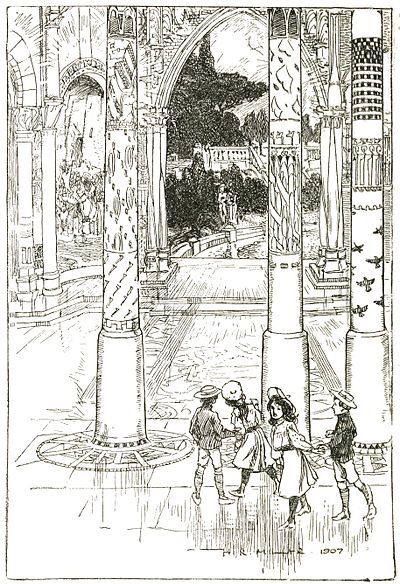
Frontispiece  by H. r. Millar to E. Nesbit's "The Enchanted Castle"

Frontispiece by H. R. Millar to E. Nesbit’s “The Enchanted Castle”

E. Nesbit was my favorite writer as a child, and my favorite book was The Enchanted Castle.

One of the pleasures of having an e-reader has been discovering Nesbit’s out-of-print adult books.

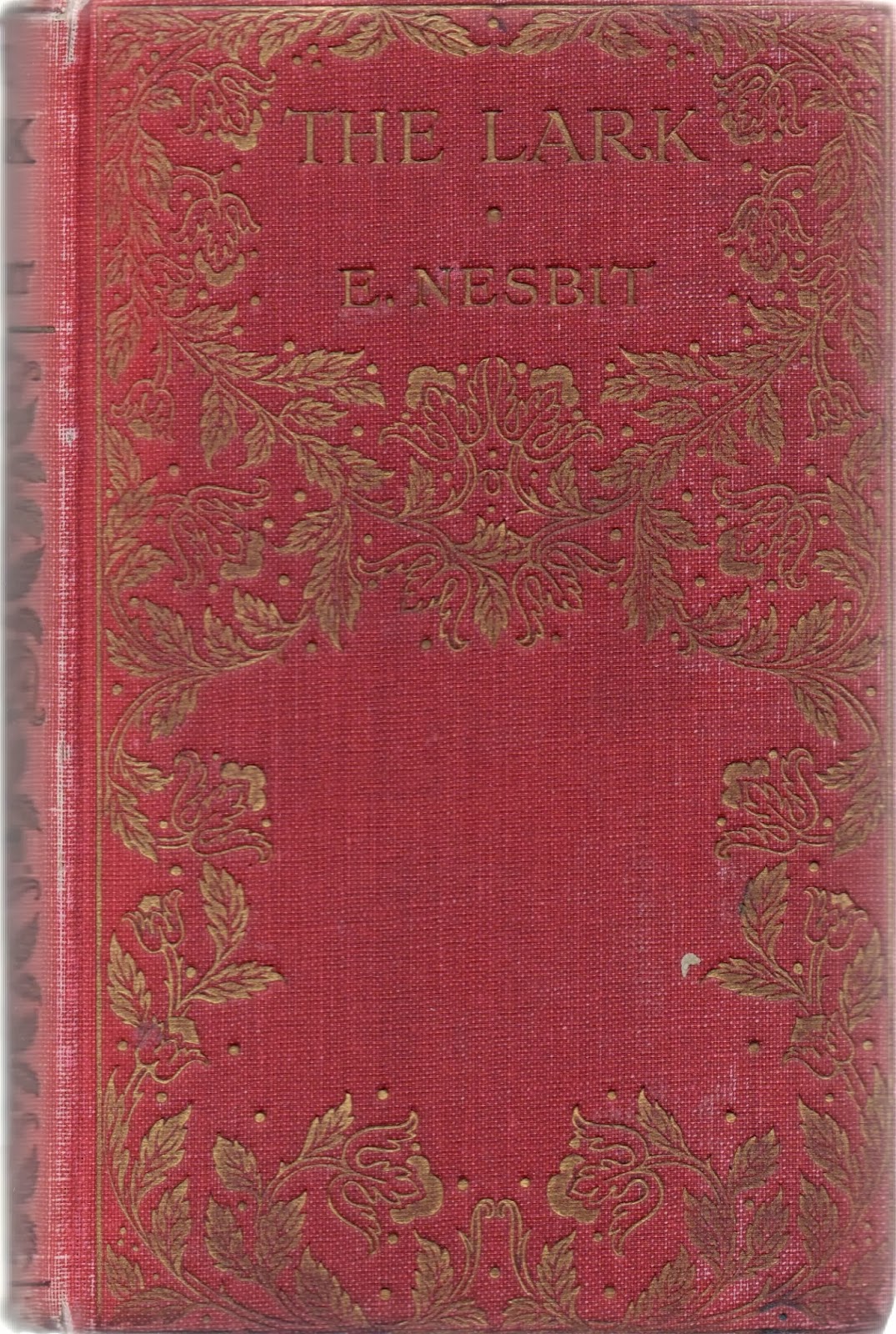
I just finished The Lark,  a delightful comedy published in 1922.

Nesbit - The lark (cover)In The Lark, Nesbit’s last book, she immediately establishes a quasi-magical atmosphere reminiscent of her charming children’s novels. She combines witty dialogue with comic sketches of work and dreamy descriptions of gardens in this compelling story of two young women struggling to make a living selling flowers from their garden.

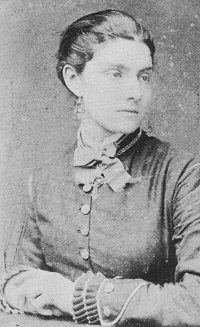
E. Nesbit

E. Nesbit

The main characters, both orphans, Jane Quested and her cousin, Lucilla,  are 15 and visiting their friend Emmeline when we meet them in the opening chapter. In the library they find a spell book, a “fat quarto volume with onyx-laid clasps and bosses,” and the adventurous Jane decides it will be “a lark” to try the spell that will reveal her true love.  (Everything is a lark to Jane.)

The novel is also a comic riff on the romance between Jane Eyre and Mr. Rochester.  Jane is looking lovely and saying her spell in the woods when Mr. Rochester, a handsome man who has missed his train, wanders by.  Their eyes meet.

Will Jane see him again?  Yes, a few years later, when Jane and Lucilla’s guardian loses their money and flees to South Africa, he arranges for them to be picked up from school and taken in a cab to a tiny charming cottage that is the last of their inheritance.  They begin to sell flowers from their garden, because it is all they can think of to do.

Before I go on, I must fill you in on E. Nesbit’s background and fame as a children’s writer.  Her adult books are little-known.

In 1963, Gore Vidal wrote an article, “The Writing of E. Nesbit,” for The New York Review of Books:

After Lewis Carroll, E. Nesbit is the best of the English fabulists who wrote about children (neither wrote for children) and like Carroll she was able to create a world of magic and inverted logic that was entirely her own. Yet Nesbit’s books are relatively unknown in the United States. Publishers attribute her failure in these parts to a witty and intelligent prose style (something of a demerit in the land of the free) and to the fact that a good many of her books deal with magic, a taboo subject nowadays.

Edith and her husband, Hubert Bland, were socialists and members of the Fabian Society.  To support her husband and five children, Nesbit wrote children’s books.  She also supported her best friend, Alice, who had an affair with Hubert, had two children by him, and became Edith’s housekeeper and secretary.  A. S. Byatt’s wonderful novel, The Children’s Book, is based on E. Nesbit and her circle.

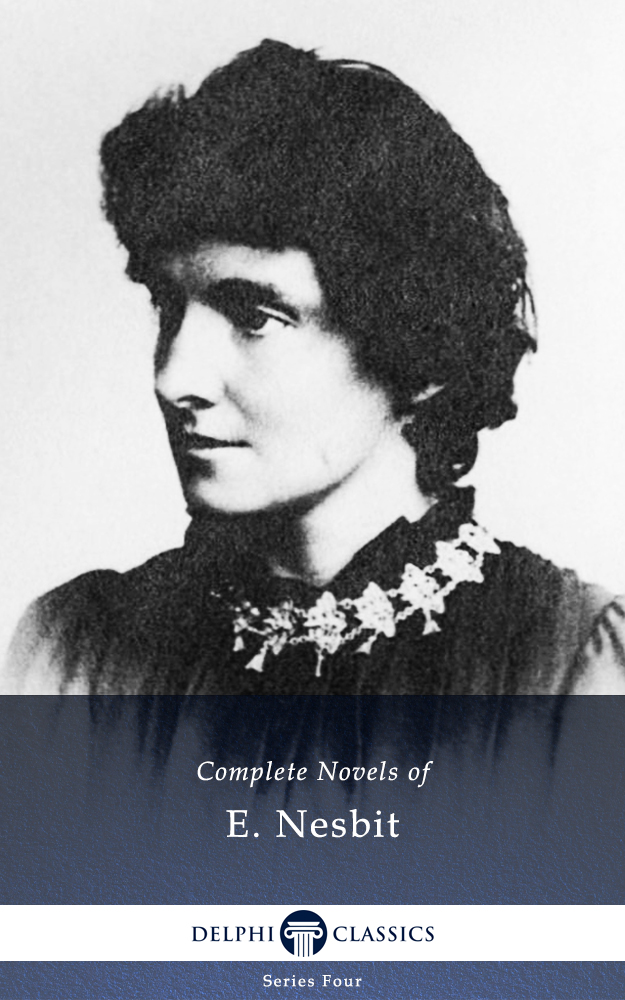
Delphi complete novels of e. NesbitIn The Lark, Jane and Lucilla have sold most of the flowers from their own garden, and wish they could rent the deserted house with a huge garden down the road. When they find the door open one day and decide to explore, Jane falls and turns her ankle.  Mr. Rochester, who is the landlord’s nephew, shows up and take the two girls home in his carriage.    He is smitten with Jane (but we knew that) and arranges for his cranky uncle to allow them to sell the flowers from his garden.  They open a shop in a shed, hire a gardener, and eventually are given the use of his house, where they take in lodgers (which is very, very funny).

One of the things I like most about the book is the young women’s inability to do math.  (That’s why I can’t open a bookstore.)

“It’s so different doing it with real money,” said Lucilla, fingering the little piles of coin on the table of the garden room, where, with two candles in brass candlesticks to light them, they were seeking to find some relation between the coins–so easily counted–and the figures referring to these same coins which all through the week they had laboriously pencilled in an exercise-book.

“I think it’s the garden distracts us,” said Jane, looking towards the open window, beyond which lay lawn and cedars bathed in moonlight and soft spring air.

I adored this book.  It is utterly charming, if a little rambling with its authorial asides (which I loved) and occasional slapstick scenes. But  I love novels about work, and though this isn’t entirely realistic–could someone please give me a garden?–I love the characters, appreciate the poetic descriptions of flowers, and the burglar episode reminds me of her Bastable books.

Alas, it is only available in the Delphi Classics e-book, The Complete Novels of E. Nesbit.  This only  costs a couple of dollars, and I urge you to try it if you are a Nesbit fan.  The Lark seems a perfect book for a print publisher to revive.

The e-reader certainly has its uses!

Junked Garage! Or the Wreck of the Linden

IMG_2929

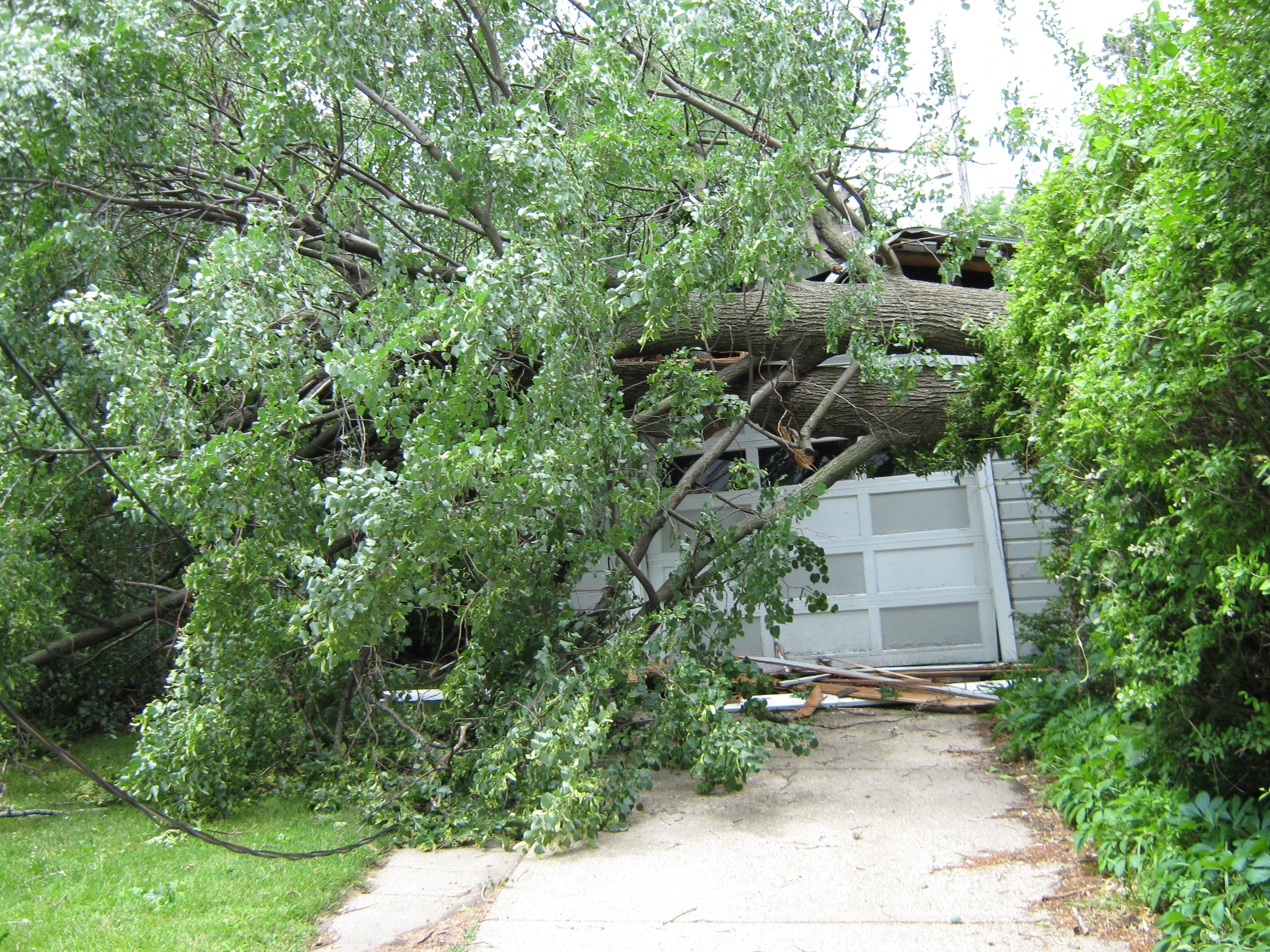
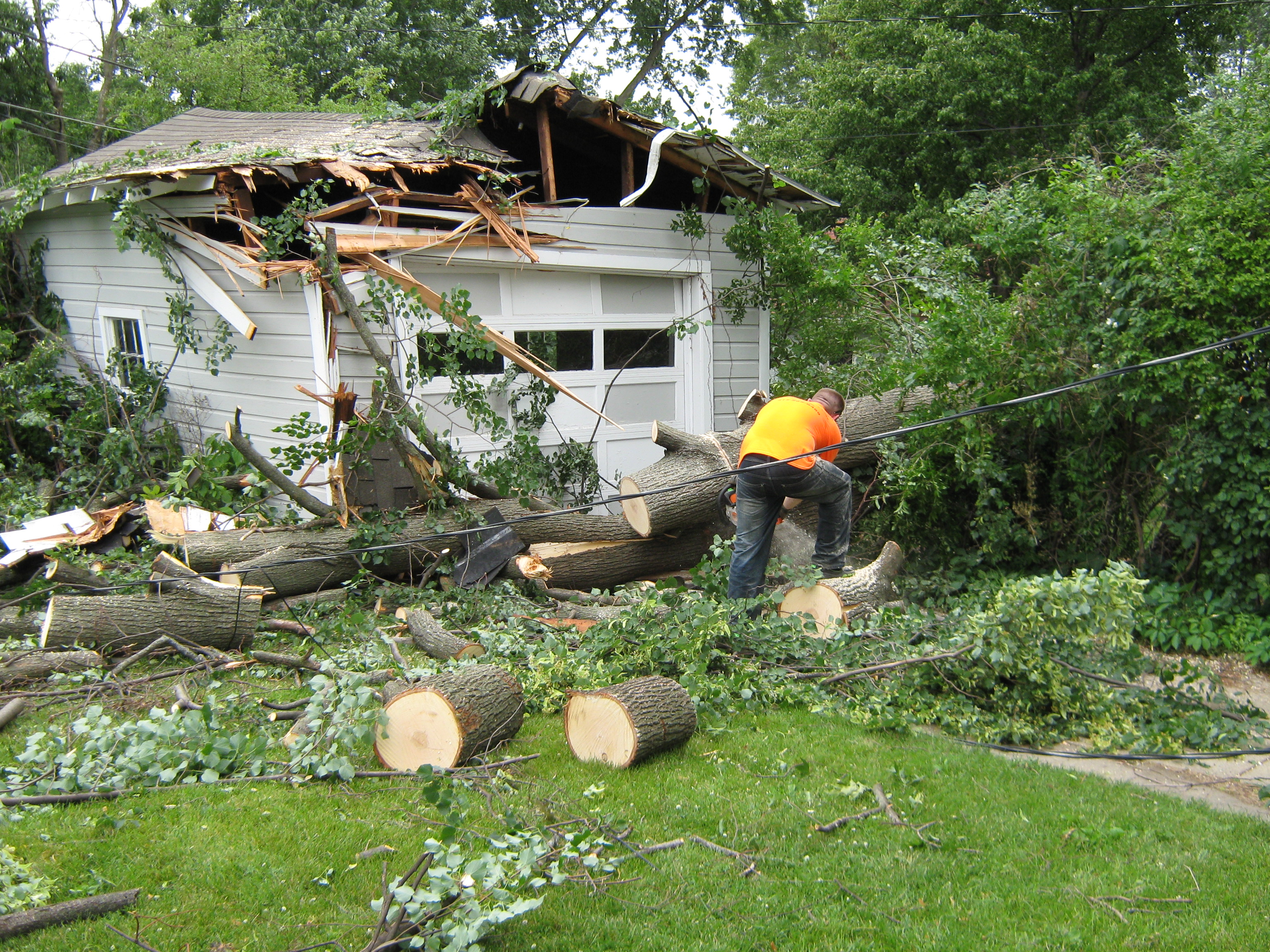
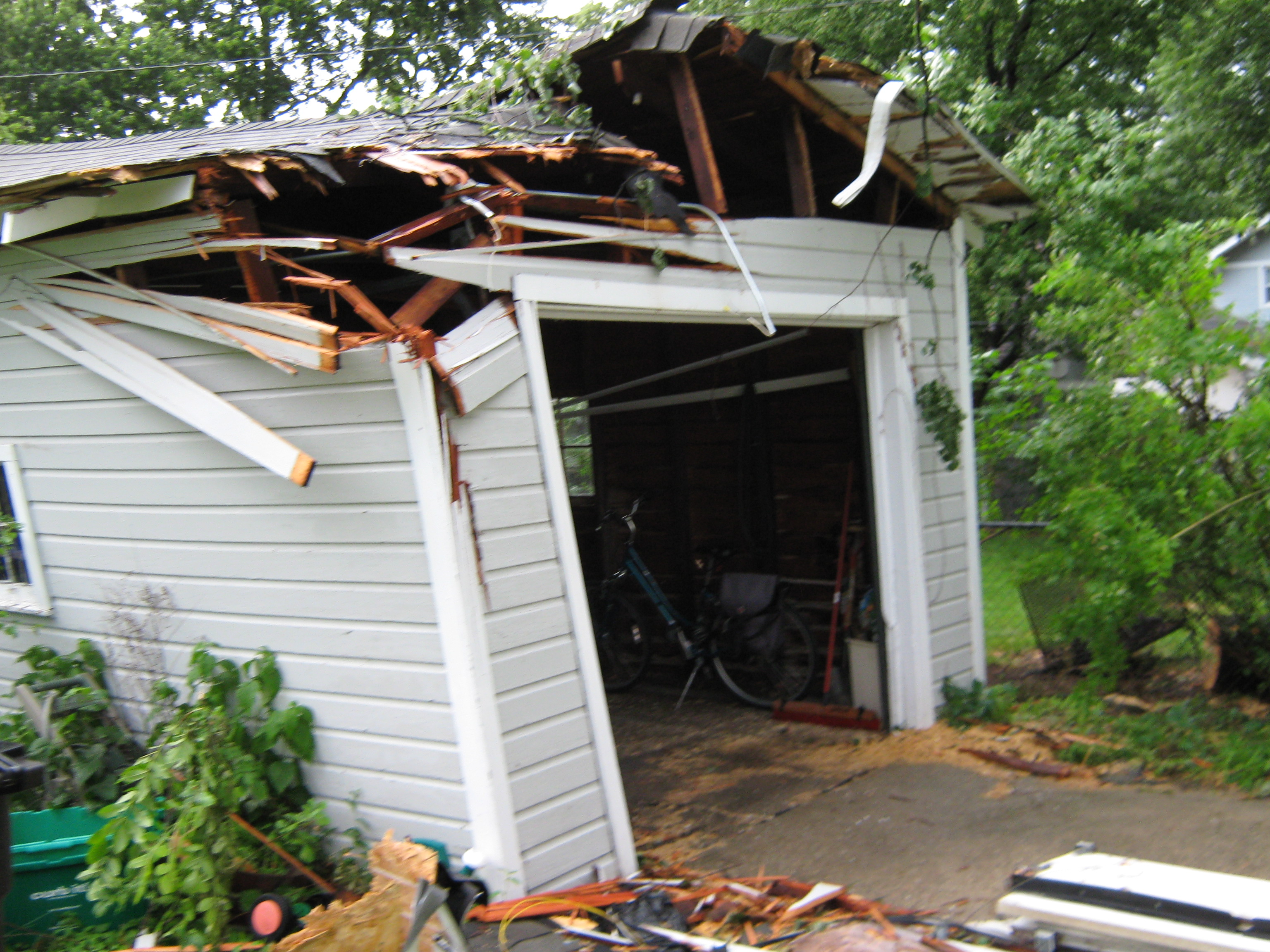
On June 17, 2014, a storm with 70-mile-per-hour winds blasted through our city.  It ripped up a linden tree and pitched it on top of our garage.

Our back yard looks magical, doesn’t it?  All that pretty green. But there is a scrunched garage beneath it.

IMG_2935We wandered outside bleary-eyed.  No power.  No coffee.  No, no, no. Nothing.

I couldn’t face reality.  I rushed to the coffeehouse.  “Two Epic Sumatras please.”

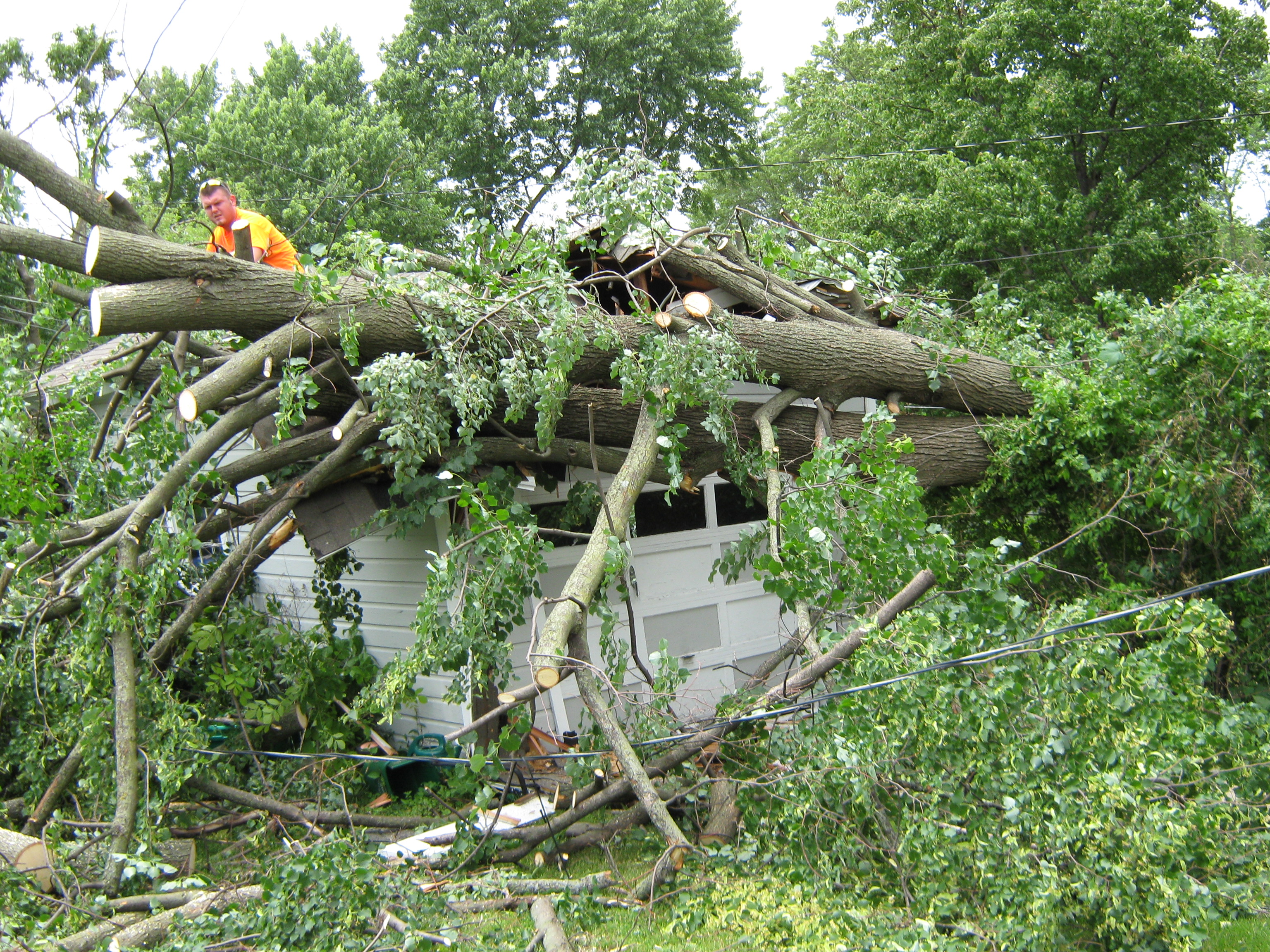
We sat down and waited for the tree guys.

IMG_2965They worked hard and fast in an emergency.

IMG_2972Trees were down all over the city, but our wrecked garage was voted “worst of the month” by the insurance inspector.

IMG_2976When the tree guys heard another tree creaking across the street, they cut it down gratis.  They were like firemen.

garage and treeWe had to look at the garage whenever we sat in the back yard all summer.  I stopped sitting in the back yard.

IMG_2988 The garage contractors finally demolished and removed the remains in August.

They began building the new garage in mid-October.

It was a very cold end of October when they finished.

Climate change, my dears.

We feel much better now that the garage is built.

And to quote R.E.M.’s “Half a World Away”:

Oh, this lonely world is wasted
Pathetic eyes, high-alive
Blind eye that turns to see
The storm it came up strong
It shook the trees and blew away our fear
I couldn’t leave it here
To go it alone, hold it along
Haul it along and hold it
Go it alone hold it along
Hold

And here’s the video:

Bookmarks & Over Book-Budget!

IMG_3024

I was very grateful to the friend who sent me these three lovely floral-design bookmarks.

I don’t know about you, but I use a lot of bookmarks.  In fact, I never throw one away.  I  have that multiple-reading thing going:  right now I am reading Nick Hornby’s Funny Girl (with a Book Depository bookmark), Leonard Woolf’s Beginning Again (with a Planned Parenthood Book Sale bookmark), and Galsworthy’s To Let (with a City Lights bookmark).

I collect free bookmarks wherever I go.

Like you,  I have amassed bookmarks from Borders, The Book Depository, B&N, and Amazon.   I have garnered free bookmarks from Prairie Lights in Iowa City, The Haunted Bookshop in Iowa City, The Ruminator (a defunct bookstore ) in St. Paul,  The Bookworm in Omaha,  Skoob in London, Howards Books (now defunct) in Bloomington, The National Gallery in D.C., The Dickens Museum in London, the Joslyn Art Museum in Omaha, etc., etc..

IMG_3028A friend of mine in North Carolina once sent me a bookmark autographed by a favorite author who happened to be reading in her town.

Shouldn’t there be a bookmark swap website?   Is there a National Bookmark Month?  Do you like bookmarks as much as I do?

Over Budget!!!  Everyone fusses about how they must stop buying books.

I am one of them.

I am way over-budget.

My extraordinary collection of boxes.

My extraordinary collection of boxes.

See this extraordinary collection of boxes?  Yes, there are books in them.

Instead of going to London or touring the UNESCO Cities of Literature, I decided to take a Reading Vacation this year.

I know, right? It was what I wanted to do.

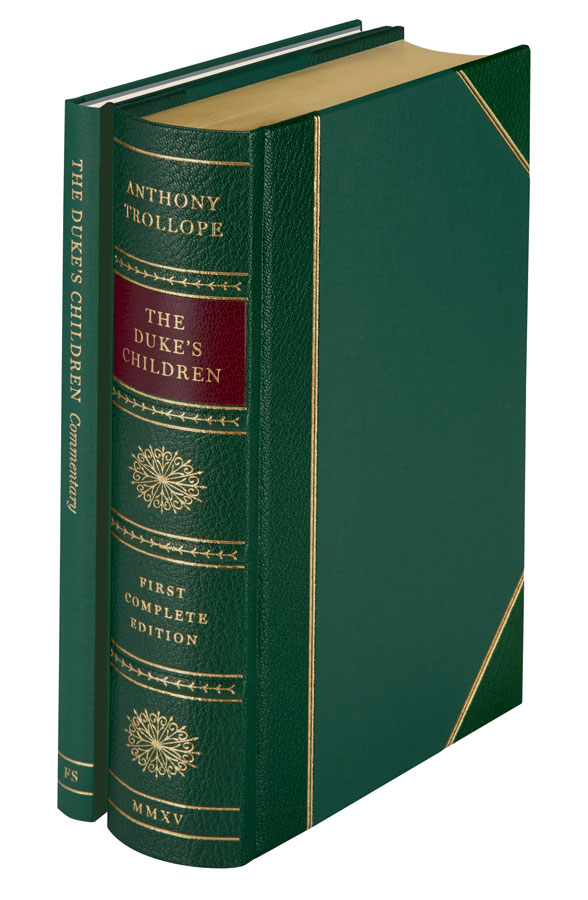
And then I Did the Thing.  I bought the Folio Society’s new expanded edition of Trollope’s The Duke’s Children (the complete text:  four volumes instead of three).

Consider it a hypomanic moment.

I was curious about the complete text of The Duke’s Children (the last book in the Palliser series, which I am rereading).

The Folio Society edition of The Duke's Children

The Folio Society edition of The Duke’s Children

And the next thing I knew I was at the Folio Society website and it was in my shopping cart.  I think I am now a member of the Folio Society.

Good God!

It’s a Lucy moment.

I can never possibly tell my husband, Ricardo.

Oh, well, maybe I can persuade a bunch of friends to go in on it with me, the way we did with Abbey Road.

Or sell it when I’m done for a profit at e-bay.

Thank God you can wear rags when you ride a bicycle.

Postettes: Turgenev’s Virgin Soil & T. H. White’s The Goshawk

Turgenev Manor House

Turgenev Manor House

I cannot write at length about every book I read, so here are quick “postettes” on two of the most brilliant books I’ve read this year, Turgenev’s Virgin Soil and T. H. White’s The Goshawk.

Turgenev’s Virgin Soil.  I have a passion for 19th-century Russian writers.  Pushkin, Gogol, Goncharov, Tolstoy…

But if I had an opportunity to meet one, I would choose Turgenev.  This charming writer of lyrical, philosophical novels sounds more down-to-earth than the others.  If I visited him in Baden-Baden, one of his favorite cities (he preferred Europe to Russia), I could wear preppy  L. L. Bean or slightly hippieish J. Jill rather than the sackcloth and ashes Tolstoy went in for.

Turgenev’s most famous novel is Fathers and Sons, a powerful story of two young nihilists, the gentle Arkady  and the scientific Bazarov,  and the divergence of politics between different generations.

IMG_3018Virgin Soil, Turgenev’s last novel, is also a masterpiece.  I recently read  Constance Garnett’s graceful translation in the NYRB edition.

In this little-known classic, Turgenev depicts the lives of idealistic Russian revolutionaries of the late 1860s and 1870s.  The radical movement, known as populism, brought together young educated Russians with the peasants as they sought to eradicate the class difference.

The moody hero, Nezhdanov, is the bastard son of an aristocrat, and is involved in a revolutionary group in St. Petersburg.  Depressed and disillusioned, he takes a job as a tutor in the country.  He soon grows to despise his upper-class employers,  despite the vivacity of the mistress of the house, Valentina Mihalovna.  And then he falls in love with their niece, Marianna,  a passionate young populist.  The two young people want to make contact with the peasants, but Nezhdavov simply cannot communicate with them.  Marianna remains enthusiastic, especially after they befriend a radical factory manager.  Other revolutionaries include a rash upper-class man who acts too precipitately and a lonely man who becomes a traitor by talking too much.  The novel combines action with philosophy and politics.

Sounds a bit like the politics of the 1960s, doesn’t it?

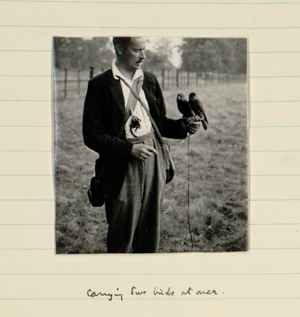
IMG_3017T. H. White’s The Goshawk.  I read this only because I have read so much about Helen Macdonald’s Costa Award-winning H Is for Hawk, her memoir of training a goshawk.  She was inspired  partly by White’s book.

The Goshawk is the story of White’s adventures in falconry, focusing on his training of a goshawk, the wildest of all hawks.

He ordered the bird from Germany..  It arrived terrified in a basket.  White named it Gos.

T. S. White: I'm not sure what the birds are.

T. S. White: I’m not sure what the birds are.

Although the writing is extraordinarily graceful, at first White’s account of the cruel training of Gos nauseated me. Only the splendid writing kept me going.  White learned about falconry from a book published in the Renaissance.  Keeping the bird awake for three to nine days until he took food from his trainer’s hand was considered more effectual than any other method.  The trainer also had to keep awake.

White explains,

In teaching a hawk it was useless to bludgeon the creature into submission.  The raptors had no tradition of masochism, and the more one menaced or tortured them, the more they menaced in return.  Wild and intransigent, it was yet necessary to “break” them somehow or other, before they could be tamed and taught.  Any cruelty, being immediately resented, was worse than useless, because the bird would never bend or break to it.  He possessed the last inviolable sanctuary of death.  The mishandled raptor chose to die.

After White got beyond the initial stages, I became fascinated.   He also discusses humane shortcuts he learned after going by the book.

He fascinatingly describes the  many pitfalls in the man-bird relationship. It was one step forward, two steps back.  White truly loved Gos, but Gos needed wildness.  It was who Gos was.

Animal stories are always sad, are they not?  This is no exception.

White is so elegant a writer, and the book is so perfectly-written that I did not  take notes in it at all. And that’s a tribute to this great classic.