The Spring Giveaway: Natasha Stagg’s Surveys & Conrad Richter’s The Trees

Surveys natasha Stagg 9781584351788It’s the Spring Giveaway!  I’m clearing space on my bookshelves again.

richter robert-mcginnis_the-trees_ny-bantam-1975Would anyone like my copy of Natasha Stagg’s stunning novel, Surveys, about a down-and-out college graduate stuck in a job giving surveys at the mall?   (I wrote about it here.)  And I also am giving away a mass-market paperback edition of Conrad Richter’s   The Trees,  the first in The Awakening Land trilogy.  This lyrical novel tells the story of a pioneer family settling in the woods of Ohio.  Sayward, the oldest daughter, must take responsibility for her siblings as one tragedy after another afflicts them  (I wrote about this remarkable novel  here:  Richter won the Pulitzer Prize for the third in the series.)  I recently replaced this 1970s paperback with a $1.50 first edition hardback.  (The beauty of the Planned Parenthood Book Sale!)

Leave a comment if you would like one or both.  The giveaway is open to Americans and Canadians (the postage is, alas, too high to send “abroad).”

And tomorrow back to my “Girlitude Week” posts!

“Girlitude” Week! When You Just Have to Read Women’s Lit

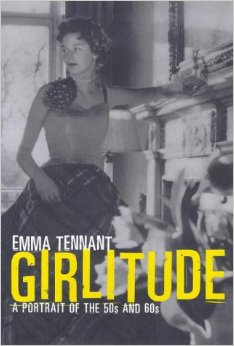
Girlitude tennant 41EAVSQVDPL._SY344_BO1,204,203,200_Why is it Girlitude Week?

It’s a whim.  I’ve long meant to read Emma Tennant’s memoir, Girlitude:  A Portrait of the 50s and 60s. I very much enjoyed her comic science fiction novel,  The Crack, in which a group of very colorful Londoners try to survive when a large crack appears in the Thames. Tennant has also written “sequels” to Jane Austen and Charlotte Bronte, which I assume pay the bills.

And I feel like a general binge on women’s books anyway, so I went to a suburban library   to check out a few novels by D. E. Stevenson.

Yes, we’re going to be thoroughly womanly around here.    My cousin the librarian, who very much sports “grrrrl-attitude,” also plans to participate in “Girlitude Week,” even though we just invented it today. She is reading Diana Gabaldon’s Outlander, a time travel-romance and loving it. And she doesn’t see why I don’t read Gabaldon too.  I have tried.  It’s very enjoyable, but…  Someday.

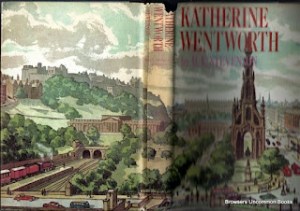
katherine wentworth stevenson 9f420818217a6ff62d0f455954538605SO WHAT AM I READING NOW?  I amdeeply engrossed in D. E. Stevenson’s charming, magical novel, Katherine Wentworth.  Katherine, a widow, struggles to raise her teenage stepson Simon and twins Deni and Daisy in Edinborough after their father dies.  Everything is going along very well until Simon gets a letter from his grandfather informing him that he is his heir.. Since he  has never acknowledged his late son Gerald’s family, Katherine distrusts him. She doesn’t think Gerald would have approved.  She is very uncomfortable on a visit to his house, and I am, too.  Katherine would rather see Simon go into business with his school friend, as he had previously planned to.  But everything will come out all right:  that is the joy  of D. E. Stevenson.

IMG_3627


MOVING FROM LEFT TO RIGHT.

Yonnondio olsen 51QIefHk7XL._SX336_BO1,204,203,200_Tillie Olsen’s Yonnondio: From the Thirties. Olsen, one of the most lauded American writers of the twentieth century, is the author  two other brilliant books,  Tell Me a Riddle, a stunning short story collection (“I Stand Here Ironing” is often anthologized), and Silences, a study of one-book authors.  She began writing Yonnondio in the 1930s and put it together from scraps of manuscript in the 1970s.  According to the jacket copy, it “follows the heartbreaking path of the Holbrook family in the late 1920s and the Great Depression as they move from the coal mines of Wyoming to a tenant farm in western Nebraska, ending up finally on the kill floors of the slaughterhouses and in the wretched neighborhoods of the poor in Omaha, Nebraska”

Laurie Colwin’s Passion and Affect, a collection of short stories.  Colwin was brilliant and funny and wrote some of the wittiest comedies of manner I have read, including Family Happiness, which I wrote about here, and her cookbook, Home Cooking, a collection of her columns from Gourmet magazine.  I reread her books at least once a year.  They are brilliant literature as well as comfort reads.

Passion and Affect Laurie Colwin 51qvYK5nAuL._SY344_BO1,204,203,200_

Janet Kauffman’s Collaborators. You are in for a great treat if you’ve never heard of Kauffman.  She won the PEN Faulkner Award for her beautifully-written  short novel, Collaborators.

Andrea is proud of her mother, a not-too-devout Mennonite, but everything changes when the mother suffers a stroke.

collaborators kauffman 9780224026130-usAnita Desai, who has been shortlisted for the Booker Prize three times,  is one of my favorite writers, I am eagerly looking forward to reading better copy desai fire on the mountain $_35Fire on the Mountain.    Alas, it is the only one I haven’t read.

The jacket copy says,

Gone are the days when Nanda Kaul watched over her family and played the part of Vice-Chancellor’s wife. Leaving her children behind in the real world, the busier world, she has chosen to spend her last years alone in the mountains in Kasauli, in a secluded bungalow called Carignano.

Until one summer her great-granddaughter Raka is dispatched to Kasauli and everything changes. Nanda is at first dismayed at this break in her preciously acquired solitude. Fiercely taciturn, Raka is, like her, quite untamed. The girl prefers the company of apricot trees and animals to her great-grandmother’s, and spends her afternoons rambling over the mountainside. But the two are more alike than they know. Throughout the hot, long summer, Nanda’s old, hidden dependencies and wounds come to the surface, ending, inevitably, in tragedy.

And I am already halfway through Maureen Howard’s complicated Rags of Time, the fourth novel in her Seasons quartet .  Stunning writing, the complicated relationship between an aging writer and the characters in her books, whom we have met in the earlier books. Intriguing and beautifully written.

rags of time howard8197912

I’ll let you know how it works our.  Expect six or more Women’s Lit posts in the next week!

Natasha Stagg’s Surveys

Surveys natasha Stagg 9781584351788

I never wrote in a diary anymore. That type of soul-baring was now reserved for the Internet, and it was packaged in many different ways not as painfully direct.”– Surveys by Natasha Stagg

Natasha Stagg’s stunning first novel, Surveys, is the Emily Books selection for April. You haven’t heard of it because (a) it will never be a Barnes & Noble Discovers pick ; (b) your independent bookstore doesn’t carry it; and (c) the author doesn’t have a Wikipedia page.

Unfortunately it is unlikely that an obscure novel published by  Semiotics(E), an imprint of MIT Press, will sell a lot of copies.  Still,  this is a very accessible novel about outsiders in the tradition of Ann Beattie’s Chilly Scenes of Winter, Jay McInerney’s Bright Lights Big City, Madame Bovary, Tamara Faith Berger’s Maidenhood, with  just a dash of the canceled TV show “Selfie” and Lena Dunham’s  “Girls.”

Real life is not  satisfying for the down-and-outer. How can it be? The narrator,  Colleen, is a 23-year-old college graduate who can’t find a job in her field (psychology).  She works at a marketing firm office at the mall, giving surveys to people who  earn a couple of dollars for answering questions about products like a new Britney Spears perfume.  And then Colleen and her co-workers must fake the results, because the marketing firm wants big numbers of people saying they like the product.

Stagg’s style is elegant but her prose is never showy.  The straightforward narrative is interspersed with pessimistic but realistic analyses of consumer society. Colleen is critical of our lives as commodities. She sees  society in the context not only of useless jobs but of products at the mall.  She tells us: “I’d applied at Victoria’s Secret, Hot Topic, Charlotte Russe, Sweet Factory, The Gap, Banana Republic, Guess, Express, The Limited, J. Crew, The United Colors of Benneton, and all the department stores, and only Forever 21, which had about fifty employees, called me back before this place did.”

Her personal life is as empty as her job.  She lives alone in a cheap apartment next door to an old man who sends her flowers and handwritten vignettes written on newsprint and then photocopied.  He writes of his love and her beauty.  He is a good prose writer, but turns out to be a peeping tom.

She observes of the first of her neighbor’s letters:

The biggest motivation of Internet communication is trying to find out what people think of you.  Everyone in the world has always wanted to know how they are perceived, and I have particularly always wondered how I appear to neighbors, since they are around me more than friends, but they are oblivious to my social life.  And here was an account, possibly written with the intention of only the writer as his audience, now copied and displayed for the person it described.  Had I somehow asked for this?

Like impecunious people everywhere, she entertains herself with drinking, drugs, and the internet.  She goes to clubs with a drug dealer, and accepts money for sex.  They think it’s funny, but the truth is she gets off on it.  And anyway she cannot afford the products the society presses her to buy. What is there for her?

The scenes of office life are vivid and fascinating, but her online life becomes more real to her as the weeks pass. She stays up all night updating her social media.  And then  she falls in love with Jim, a “semi-famous person” she meets online.  She flies from Arizona to  L.A. to meet, him  and they become suddenly a famous couple, because of their exchanges on social media platforms, which they begin to manage and plan together.  They have more and more followers every day.  And they are paid for hosting parties at clubs, being paid to stand behind the DJ at these parties in cities all over the world.

And life continues to be meaningless:  parties, hotel rooms,  drinking, and drugs.  But now she has Jim.  They finish each other’s sentences.  She is so happy.  They are  famous, in love, and have money, because their being a couple in love has been marketed to the masses online.

Online love is different from real love, as you can imagine, and they quarrel over his brief affair with Lucinda, a famous blogger/journalist whom Colleen constantly Googles.  Colleen is jealous, because she wants to be Lucinda, who is famous for her writing about women and celebrity.

Stagg’s book is edgy and brilliant and well-written. But I’ve noticed that the heroines of these smart young women’s novels are confused, directionless, lost, and even masochistic. They do not really own their  sexual identity –sex with men is usually surprisingly bad and they don’t have orgasms– yet they don’t feel they can accomplish anything of value on their own. It’s easy to see why Fifty Shades of Gray throve in this depressive culture.    Thank God I grew up during the years of Second Wave Feminism and Erica Jong’s sexual empowerment (Fear of Flying and its sequels), Doris Lessing’s fierce criticism of society and her heroines’ determination to define their own lives, Shulamith Firestone’s quite weird critique of women’s lives and sexist society, The Dialectic of Sex, and all the didactic poetry by Adrienne Rich and Robin Morgan.

Every generation has its own culture, and these small press books convey a sense of what young women feel they are missing today. Surveys is the best of these novels I’ve read.  Staggs is brilliant and talented:  I hope she writes more.

The Great, the Good, & the Light: Conrad Richter’s The Trees, Sybille Bedford’s A Compass Error, & Margery Sharp’s The Nutmeg Tree

richter the trees

Love this kitschy cover!

My reading is nothing if not eclectic.  I have recently read (a) a neglected American classic about pioneer life by Conrad Richter; (b) a well-crafted novel by the English/European writer Sybille Bedford; (c) and a light romance by Margery Sharp.

The Trees Conrad Richter s-l300CONRAD RICHTER’S THE TREES (1940).   This is the first novel in Richter’s lyrical  trilogy, The Awakening Land.  He won the Pulitzer for the last book in the series, The Town, and the National Book Award for The Waters of Kronos (which I wrote about here). Alas, the trilogy is out of print in book form, but an e-book is available.

Richter’s beautifully-written novel is reminiscent of Willa Cather’s pioneer stories.  it unfolds in a simple, third-person narrative, sometimes omniscient, other times from a single character’s point of view.  It begins with the Luckett family’s difficult  journey from Pennsylvania to the woods of Ohio.

It was the game that had fetched the Lucketts out of Pennsylvania.  Months before the chestnut burrs had begun to sharpen, Worth Luckett looked for a woods famine.  It would be like nothing since the second winter after Yorktown, he claimed. He spent so much time in the woods with nobody to talk to but Sarge, his old hound, that when he opened his mouth Jary had learned to pick up her ears and listen.  For a month he had been noticing sign.  The oaks, beeches and hazel patches would have been slim mast for bears and pigeons this year.  Deer paths lay barer than any time he could recollect of fresh droppings.  And now the squirrels were leaving the country.

This family is smart, tough, and barefoot.  Nobody ever complains.  Worth Luckett is an adventurer, and his family has to put up with it.  Jary, his sociable wife, has cancer and hates living under “an ocean of leaves” in the thick forest with no neighbors.  Sayward, the oldest daughter, is smart and quiet, the one who takes responsibility when multiple tragedies occur.  ( I’m still  recovering from a couple of the traumas.)   Genny, the second daughter, is an attractive girl who  marries an abusive man.  The middle daughter, Achsa is treacherous, wanting what Genny wants.   Wyatt, the only son, longs to grow up and go hunting like his daddy; and Sulie, the toddler,  is hilariously optimistic. After visiting a general store, she declares, “We mought even git rich and have shoes!”

When they find a place to live, Worth takes off.  He is too busy exploring and hunting  to build a cabin, and they are camping out in a lean-to.  The leaves begin to fall, and at least Jary can see the sky then.  Then she presses Worth to build the house.  They can’t winter outside in the woods of Ohio.

The “ocean of leaves” can be claustrophobic.

Down in Pennsylvania you could tell by the light.  When a faint white drifted through the dark forest wall ahead, you knew you were getting to the top of a hill or an open place.  You might come out in a meadow or clearing, perhaps even in an open field with the corn making tassels and smelling sweet in the sun.  But away back here across the Ohio, it had no fields.  You tramped day long and when you looked ahead, the woods were dark as an hour or a day ago.

Gorgeous writing, and he uses dialect in the dialogue.  Is that the difference between Cather and Richter and why readers prefer her?  Richter explains in the acknowledgements that he tried to recreate the pioneers’ “mode of speech and thought” from  research, interviews and conversations, and his own memories of descendants and neighbors of pioneers in the mountains of Pennsylvania.

A great book!  At Goodreads several reviewers say this is their favorite book, and I can see why.  I especially love Sayward, the stable center of the house in the woods.

a compass error sybille bedford 9781582431598SYBILLE BEDFORD’S A COMPASS ERRORThis sequel to A Favourite of the Gods is a good read but very uneven.  Approximately sixty pages are devoted to the heroine Flavia’s retelling of the action in A Favourite of the Gods to her lover, Therese.  Why oh why didn’t I skip thosepages?  The book was not improved by Flavia’s synopsis.

But I love the character.  Young Flavia is  alone, studying for Oxford entrance exams in a town in France, while her mother, Constanza, a divorcee, travels with her lover, Michel, a writer.  They are waiting for his divorce from his first wife, who has not lived with him for years. Constanza is excited about marrying a man she loves.  (Her first marriage was unhappy.)

Meanwhile, Flavia reads and writes essays.  And because she wants solitude, she deceives both Constanza and their friend Mr. James, writing letter that imply that she is not alone.  She has a tight routine, until an artist’s wife, Therese, notices her eating alone in a restaurant and decides it is inappropriate.  Therese invites Flavia to eat dinner with her family every night.  They become lovers.

But that is innocence, though perhaps not quite what Flavia’s mother would want.  Then  a femme fatale comes to town and seduces Flavia, and we all want to say, “No! NO!”  I won’t tell you what happens, but it is devastating.  It’s not the lesbianism, mind you; it’s the purely evil character of this seducer.

Parts of this are very good, but it is just a good read, and disappointing after A Favourite of the Gods.

margery sharp the-nutmeg-treeMARGERY SHARP’S THE NUTEMEG TREE.  Is it possible to be too light?  Sharp’s light romances have been much praised by many bloggers, but my reaction is, Why?

Several of her light comedies have recently been reissued as e-books by Open Road Media.  They are definitely fluffy airplane reads:  if only I had had Martha in Paris (which I wrote about here) on my trip to London.

The Nutmeg Tree is charming and witty, but  D. E. Stevenson and  Angela Thirkell are deep and dark in comparison!  The beginning of The Nutmeg Tree is very, very funny. Julia is singing in the bathtub, while in the other room the bailiffs are rattling the doorknob and pleading with her to pay the five pounds she owes.  Eventually she sends them to fetch a pawnbroker she knows; he buys some of her stuff as a favor and she antes up to the bailiffs.  She has just enough money to travel to France to visit her daughter, Susan, whom she hasn’t seen in many years (Susan has been raised by her grandmother).  Susan has written to her about a young man she is engaged to, whom her grandmother doesn’t approve of.  And so Julia is off to give advice.

Julia reads The Forsyte Saga, so she’ll seem like an intellectual, not understanding that it is middlebrow fiction!  And as a former actress, she can’t help being impressed by a handsome trapeze artist she meets on the boat.  Fred’s mother is seasick, so Julia takes her place in the night’s performance.

And then she is off to see her daughter’s, and there is much romance and comedy.

It’s great fun, but…there’s not much here.

Just so you know what you’re getting…it’s more an entertainment than a novel.  And that certainly has its place.