Literary References in “Blade Runner 2049” & Another Trip to the Planned Parenthood Book Sale, Fall 2017

A dead tree is emblematic in Blade Runner 2049.

Although it meant getting up at dawn, i.e., 10 o’clock, for the early show, because we didn’t want to sit with a bunch of unruly fans, we loved Blade Runner 2049, a brilliant sequel to Blade Runner.

Dekker (Harrison Ford) and K (Ryan Gosling) in “Blade Runner” 2049

It is absolutely stunning, and not just for SF fans. The cinematography is gorgeous, the bleak, dusty environment is tragically realistic  (a dead tree proves emblematic of the lost natural world), and the characters are sharply-drawn, almost human, though most are replicants, bio-engineered beings who work as servants and slaves.  As in the first Blade Runner, some replicants are villains but others are very decent, especially K (Ryan Gosling), a “blade runner” whose  job is to hunt down earlier models of replicants, who got out of control and went rogue.

K is not a fan of killing, by the way.

K is a fan of Nabokov’s Pale Fire, a book which he claims his girlfriend, Joi, an Alexa-style robot who can shimmeringly half-materialize, hates.  After she agrees, smiling, that it would be pleasant to be read to, he says mockingly, “You hate that book.”  Coincidentally, a computer who examines K for post-traumatic stress recites line of verse from Pale Fire, and K must repeat them.

Cells interlinked within cells interlinked
Within one stem. And dreadfully distinct
Against the dark, a tall white fountain played.

Anthony Lane in The New Yorker identified these lines, which otherwise (and still?) sound like nonsense.

Later in the movie, K is sometimes called  Joe. My husband points out that this is a reference to Joseph K of Kafka’s The Trial.   The reference didn’t seem entirely apt, so we’ll see the movie a second time.

We were very glad to see Dekker/Harrison Ford, who is 100% human in his acting, a relief after so many replicants.  Somebody should get an Oscar, maybe Ryan Gosling, whom I first encountered in La La Land, or Harrison Ford, who is always brilliant.

MORE ON THE PLANNED PARENTHOOD BOOK SALE.  We went back to the Planned Parenthood Book Sale on Half-Price Day.  And we did very well, in that we restricted ourselves to filling one shopping bag with books.  Usually we huff and puff as we heave boxes of books into the car.

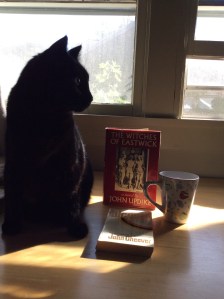
Once home, the books were inspected by various cats.  Yup, that’s a  cat considering John Updike’s The Witches of Eastwick.  I love Updike, but a quick look at a chapter in the middle has convinced me this is not his best.  I can always donate it back.

We found a copy of John Cheever’s Falconer. I love his short stories about suburban life, and am ready to try his novels.

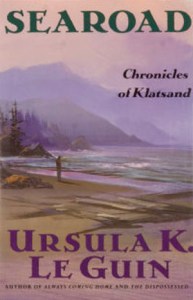
I’d never heard off Searoad:  Chronicles of Klatsand, a collection of short stories  by Ursula K. Le Guin. According to Goodreads:  “Le Guin explores the dreams and sorrows of the inhabitants of Klatsand, Oregon, a beach town where ordinary people bring their dreams and sorrows for a weekend or the rest of their lives…”   I can’t tell much from that!

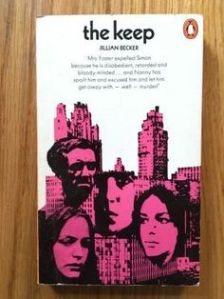
Doesn’t this 1971 Penguin, The Keep, by Jillian Becker, a South African writer, look like something on the vintage Penguin shelves at Skoob?

This never-read hardback edition of award-winning Annie Proulx’s latest novel, Barkskins,  was a great find at $4.50.

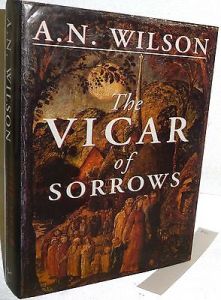
I’ve been a fan of novelist and biographer A. N. Wilson since I read his five-book Lampitt Chronicles,  so I couldn’t resist The Vicar of Sorrows for 50 cents.

I never got around to reading Leonard Wibberley’s The Mouse That Roared, but I  loved the Peter Sellers movie.

And last but not least, a cat glances at Sue Miller’s Lost in the Forest (she is an excellent writer of literary fiction) and the great mystery writer Sue Grafton’s Q Is for Quarry.

And now I need to add a Planned Parenthood Book Sale Challenge button (ha ha) to my Goodreads page.

Bibliobits: Evelyn Waugh’s “Put Out More Flags” & the Planned Parenthood Book Sale

I have long been a fan of Evelyn Waugh.  I  giggled over Vile Bodies, his satire on bright young things.  Later I became a devoted fan of his more serious work.  I especially love Brideshead Revisited (I know, some think it very bad and sentimental, but I love it), and the satiric Sword of Honour trilogy, set during World War II, which I wrote about here.

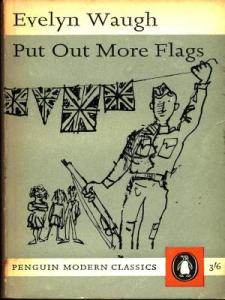
And now I have reread his brilliant novel, Put Out More Flags.  Lo and behold! I think it’s his masterpiece.  In this compelling mix of satire and realism, published in 1942, Waugh writes perceptively about the early years of the war, focusing on the various survival skills, or lack thereof, of a comical cast of upper-class characters.  Waugh resurrected some of the characters from early novels, but this book is a great introduction to them., because Waugh is firing all cylinders and has developed the characters convincingly here.

The novel begins,

In the week which preceded the outbreak of World War II–days of surmise and apprehension, which cannot, without irony, be called the last days of peace–and on the Sunday morning when all doubts were finally resolved and misconceptions corrected, three rich women thought first and mainly of Basil Seal. They were his sister, his mother and his mistress.

The conniving Basil is a charming ne’er-do-well of whom his aristocratic mother has despaired, because he ruins every opportunity and loses every job she wheedles for him from important friends.  But his loyal sister Barbara insists to her patriotic husband Freddy that  Basil will do well in the war, and her prediction is true:  it’s not that she doesn’t know he’s no good, but she perhaps has a better idea of the brutal nature of war than does Freddy.

Barbara is in charge of billeting evacuees in their village, and a thankless job it is.  She cannot persuade anyone to keep the three Connellys,  the Children from Hell, the oldest a grotesque teenager who routinely falls in love with the man of the house,  and a mischievous younger brother and sister who can wreck a house in 30 seconds.   But Basil finds a way to profit from the very awfulness of the Connolllys:  he collects a fee to take them away from the traumatized homeowners.

Basil’s mother, meanwhile, tries to persuade her friend Sir Joseph to find a place for Basil in the military.   But never mind,  Basil eventually finds a snug little niche for himself in a government agency as a spy.  He simply exaggerates conversations he hears at parties and, if there’s nothing going, makes things up.  He doesn’t think he can do any damage, but he does hurt a friend.  To give him credit, he tries to undo the damage.  Whatever you think of Basil, he is less shallow than he was in his previous incarnation  in Waugh’s Black Mischief.

And then there is Angela, his mistress, hopelessly in love with Basil, and drinking herself to death.  Will anyone be able to help her?  It seems unlikely…and yet, Basil is a different person now.

The characters are so much fun.   Anthony Silk, a gay writer, is very witty;  Alistair and Sonia Trumpington change house frequently and live in cramped quarters, mainly to keep Basil from moving in; and there are countless others.  So many others.  YOU MUST READ THIS BOOK!

The comical thing is that I know someone who was a bit like Basil.  He went to Oxford, too,  and was a bit of a charmer, but also very conniving.  Everything in America was a breeze for him, and he learned to spin straw into gold–that’s all I can say!

THE PLANNED PARENTHOOD BOOK SALE.  Yes, it’s time again.  This year there is a  strong classics section, with Penguins and Oxfords to delight the soul, but we have all those! This year I bought very cheap books–I mean under a dollar!

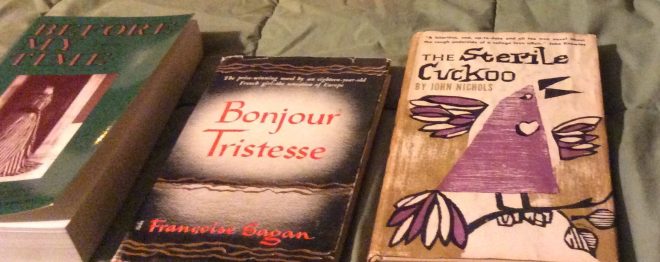
I found  Niccolo Tucci’s Before My Time, with an introduction by Doris Lessing ($3); Francoise Sagan’s Bonjour Tristesse (80 cents, a bizarre price!); and John Nichols’ The Sterile Cuckoo (60 cents, another strange price).  Did you  see the film of The Sterile Cuckoo, with Liza Minelli?  I’d love to see it again.

I am such a fan of Bess Streeter Aldrich that I visited her house in Elmwood, Nebraska.  This “reader”edition includes A Lantern in her Hand, Aldrich’s most famous novel, the sequel, A White Bird Flying, and some short stories.  It was 50 cents.

  There’s always one Virago!  I’ve never read Kate O’Brien.

Here are some old books no one wants!  Edna Ferber is the author of So Big (the Pulitzer winner) and Showboat, made into a musical; I’ve never seen Come and Get It.  Then two by Sinclair Lewis, Bethel Merriday and Man Trap; again, I’ve never heard of them.  And then The White Gate, by Mary Ellen Chase, a Maine writer who was popular in the mid-twenetieth century.

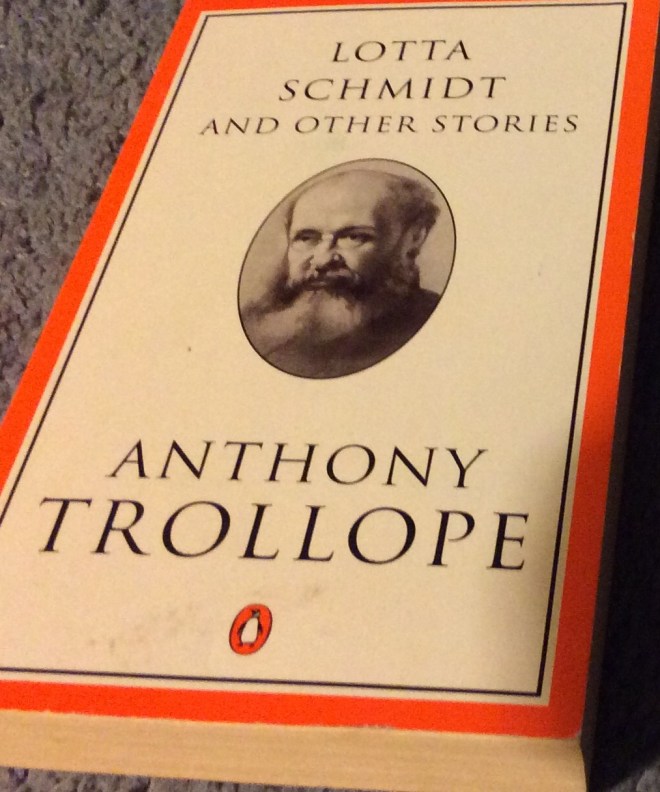
Short stories by Trollope:  how can I go wrong?

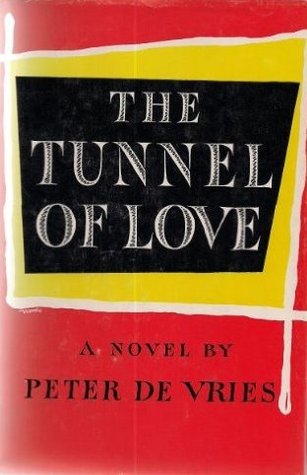
Peter De Vries really is the kind of novelist I consider a “cult” writer.  His humor is very silly and goofy, and I know people who love his work; I know others who hate it.  Let’s just say I have to be in the mood.

A good haul.  Perhaps I’ll post about the rest later!

Reading for Pleasure: Paulette Jiles’s “News of the World” & Diana Gabaldon’s “Outlander”

Sometimes, when the gloomy news is too much for us, we take a break from our lives and escape into historical fiction.

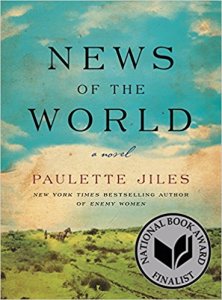
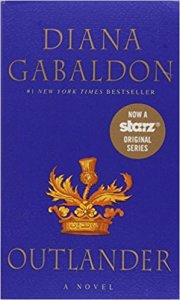
Two enjoyable historical novels recently filled the bill for me:  Paulette Jiles’s News of the World, a finalist for the National Book Award in 2016, and Diana Gabaldon’s time-travel historical novel, Outlander.  Although these rip-roaring  reads have little in common plot-wise, there is a sweetness to the main characters that we don’t often see in real life.

Paulette Jiles

Last year Janet Maslin of The New York Times listed  News of the World, a literary Western, as one of her Best Books of the Year.  It is the story of a white girl captured by the Indians who does not want to return to her white family. I am familiar with this issue through two of the award-winning Conrad Richter’s novels:  in  junior high we read Conrad Richter’s The Light in the Forest, the story of a white boy returned unwillingly to his white family and determined to return to the Indians. And this year I discovered Richter’s less well-known. but much better novel, A Country of Strangers, about a young white woman, Stone Girl, taken unwillingly from her Indian family with her  son –and then, tragically, they are not accepted by her white family.

Jiles has a unique take on the situation: the novel is set in Texas in 1870, after the Civil War, and told from the point-of-view of 71-year-old Captain Jefferson Kyle Kidd, a veteran of the War of 1812 and Taft’s war in Mexico, and a witness of the dissension caused by the Civil War.  Captain Kidd, a former printer, now makes his living traveling around northern Texas giving readings from newspapers.  On the frontier, people are starved for news, and he crafts the readings carefully, starting with hard news and ending up with exotic stories about foreign places they’ll never visit.

But his life has recently “seemed to him thin and sour, a bit spoiled,” and he is weary of people’s emotions.  And then Britt Johnson, a free black man, whose wife and children were captured by Indians and then rescued by him, asks a favor.  He offers Kidd $50 to escort a 10-year-old white captive girl, who was recovered by the U.S. Army after four years among the Kiowa,  back to her aunt and uncle in a small town near San Antonio.  The Captain is reluctant.  He knows these things don’t turn out well.  He says,

Maybe she should go back to the Indians….

Britt said, The Kiowa don’t want her.  They finally woke up to the fact that having a white captive girl gets you run down by the cav.  The agent said Bring all the captives in or he was cutting off their rations and sending the Twelfth and Ninth after them.  They brought her in and sold her for fifteen Hudson Bay four-stripe blankets and a set of silver dinnerware.  They’ll beat it up into bracelets.  It was Aperian Crow’s band brought her in.  Her mother cut her arms to pieces and you could hear her crying for a mile.

And so the Captain agrees to make the journey.  Joanna, whose Kiowa name is Cicada, is at first contemptuous of the old man. When she tries to escape and signals to  Kiowa across the river, they shoot at her, obviously unaware this white girl is one of their tribe.  The Captain saves Joanna, from this and other dangerous situations.   But, surprisingly,  Joanna saves the Captain just as often as he saves her.  When three men corner them and he runs out of ammunition, Joanna finds a substitute!

The dialogue is enchanting, conducted partly through signs, partly through the English he slowly teaches her.  She calls him Kontah, Indian for Grandfather.   And her study of English is charming and touching.  Cho-henna clepp hants.  (Joanna clap hands.)  Cho-henna laff-a.  (Joanna laugh.)  Soon she can count to 100.

Will they ever reach heir destination?

All I can tell you is the ending is unexpected.

Claire (Catriona Balfe) and Jamie (Sam Heughan), the most endearing TV couple ever.

Diana Gabaldon’s Outlander.   Is Outlander  the Game of Thrones for women?

You’ve probably read  Outlander, the first in Gabaldon’s series of time-travel historical novels, or at least seen the TV series.  I recently watched the first season on DVD and fell in love with the gorgeous scenery and the strong, intelligent heroine, Claire, and the hero, Jamie.   Aren’t  Claire (Catriona Balfe) and Jamie (Sam Heughan) the most endearing TV couple ever?

And then I turned to the entertaining, plot-heavy novel, Outlander, a kind of  Perils of Pauline for intelligent women.  The charming, beautiful Claire,  a nurse during World War II, is on vacation in Scotland with her husband, Frank Randall, a historian.  While gathering plants next to a ring of standing stones in Scotland, she is somehow transported to 18th-century Scotland, where she wakes up to see a man who looks exactly like Frank. Alas, he is not her husband, but his vicious ancestor, Black Jack Randall, a sadistic British officer. When Jamie, a young red-haired Scot with a price on his head, rescues Claire from Randall, it is  the beginning of a friendship that leads to a marriage of convenience. Claire proves herself as a healer, and makes friends among the Scots.  She and Jamie rescue one another from Black Jack Randall repeatedly.  Claire is tried as a witch!   And in one thrilling chapter, Claire actually wrestles and kills a wolf in her attempt to rescue Jamie from prison.

Claire and Jamie are in love, and they have frequent sex.   It’s charming the first time, then you get a little jaded.  But the actors’ angelically happy faces bear witness to the role of great sex in a happy marriage.

Well, it’s great fun.  I’m happy to have finally joined the Outlander fans.

A Political Mystery: Amanda Cross’s The Puzzled Heart

It rained over the weekend.   It was a good time to read a stormy classic, but I chose not to roam the rainy heath with Thomasin Yeobright and the reddleman (The Return of the Native). Though usually fascinated by Heathcliff’s romps on the rainy moors and digging up of Catherine’s grave  (Wuthering Heights), I am less so when it actually rains here.  And Faulkner’s As I Lay Dying is too grotesque:   Cash Bundren, do not ride your mother Addie’s coffin in a flooded river!

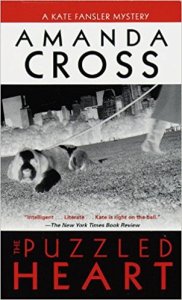
No, the classics are too life-like.  And so I picked up a light mystery, Amanda Cross’s The Puzzled Heart.

Cross’s 14-book mystery series is set in academia.  Her amateur sleuth, Kate Fansler, is a brilliant English professor, and her assistant D.A. boyfriend, Reed, helps her with cases.  In later books, she and Reed are married, and he is a law professor.  The witty dialogue between Kate and Reed puts me in mind of the repartee between Harriet Vane and Peter Wimsey in Dorothy  Sayers’s books.

The Puzzled Heart, published in 1998, is surprisingly political. It is in part about the necessity for free speech at universities, and in part about the conflicts between the far right and the rest of us (liberals, moderates, etc).

At the beginning of the novel, Kate is deeply terrified and upset. Her husband Reed has been kidnapped by a far right-wing group, and they threaten to kill him if she tells the police. She is the real target:  the ransom is to be her recantation of her feminist beliefs in an article to be published in a right-wing publication.  Naturally, she will write the article–she will do anything–but she is terrified that they’ll kill him anyway.   She confides in her best friend Leslie.

This is not the first threat she’s had, but she never thought it would affect Reed.  Leslie wants to know, How many threats, and from whom?

“Several.  I didn’t pay that much attention.  Something called the League of Right-Wing Women wrote diatribes against everything I’ve worked for.  They seemed to be in favor of sexual harassment, battering women, date rape, and child abuse.  Perhaps that’s a bit strong.  But they certainly don’t believe any of these things happen on a large scale, and saying they do is all a plot to harry men.  Leslie, I just thought they were crackers.   In addition, I thought they were probably sending these warnings to many women.  I didn’t take it all that personally. The letter last night made it very personal.”

Carolyn G. Heilbrun, aka Amanda Cross

Kate hires another friend, Harriet, a private detective, to search for Reed. The investigation involves adopting a St. Bernard puppy, crashing a fraternity, dog-breeders, and a long look at the people in Kate’s life to identify any enemies.  She does not think she has any enemies.

Yes, the far right is involved, but it is also personal.  Who hates Kate?  Is it someone in the department?  Is it someone from her past?

Another stunning academic mystery!  Very fast-paced, very well-written.

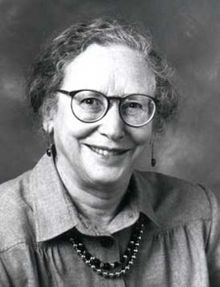
Amanda Cross is the pseudonym of Carolyn G. Heilbrun (1926-2003) , the feminist critic best known for Writing a Woman’s Life and The Last Gift of Time: Life Beyond Sixty.  She was the first tenured woman in the English department at Columbia University, and a pioneering scholar of Virginia Woolf.   She wrote mysteries under a pseudonym to protect her academic career.

Can Book Challenges Cure Internet Addiction?

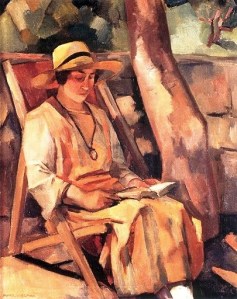
“Reading Woman” by Matthieu Wiegman

I have loved the internet; I have hated the internet. I have been addicted to the internet; I have been ineffably bored by it.  Like many readers, I try to limit my time online.  In 2015, in a  post called   “Your True Self Fries Away,” I examined the problem of blogging addiction.  I wrote:

When I began Mirabile Dictu a few years ago, I resolved to post every day. Why? I still don’t know. I enjoyed the project for the first year. I enjoyed it less last year. And then I found I was reading less because I posted so much. And that’s frightening, because posting is not, in my opinion, the same thing as writing.

It was the stats in my book journal (a Moleskine notebook) that led me to examine my habits.  It changed my reading life.  Is that hyperbole? Well, no, looking at a few pages in my notebook gave me a better picture of my reading than scrolling down a book blog with dozens of posts.   Mind you, I love blogging and I also enjoy reading e-books, but do we lose our humanity if we’re too involved with electronics?  Perhaps we need the tactile experience of writing on paper as a balance to our writing on computers.

Fewer people seem concerned about internet addiction these days:  we’re all so terrified by hurricanes, climate change, and other disasters that the internet is the least of our problems.  But the problem is still there, and in a touching article at Bustle, “A Yearly Reading Challenge Just Might Be The Most Beneficial Bookish Goal You Can Make,” Kerri Jarema writes about battling anxiety with the Goodreads Reading Challenge.  Meeting her goal at the Goodreads Reading Challenge–you type in the number of books you hope to read in a year–has helped her focus on reading books.

Jarema writes,

…if I have learned anything from my personal goals of meditation and social media detox this year, it’s that many humans thrive on singular, focused thinking. On cultivating brains and bodies that are mindful, and living in the present moment. And, actually, the yearly reading goal fits perfectly into that ethos. Because, in the end, you can only read one book at a time. And in order to reach whatever goals you set (reading or otherwise) the only way out is through.

Many bloggers organize their reading around challenges:  for instance, it’s German Literature Month in November, though who is sponsoring it I couldn’t say!    These challenges are not for me,  but Jarema’s article makes me look at them differently: I now understand now how they can help people focus.

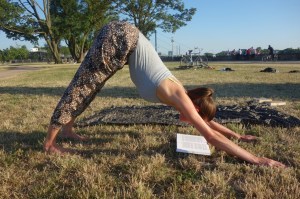
Meanwhile, disconnect, breathe deeply, and read.  And if you can do the downward dog while reading, like this blogger whose post on bookish yoga was published at Abebooks, more power to you!

When Did the “Clayhanger” Trilogy Become a Tetralogy? & the Autumn TBR

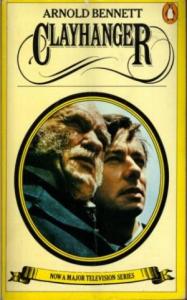
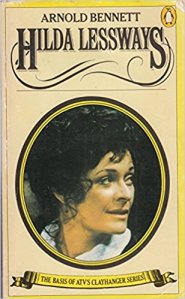
I just finished Arnold Bennett’s These Twain, the third in the Clayhanger trilogy, set in his fictitious Five Towns, based on the six towns in the Potteries district of Staffordshire where Bennett grew up.

Well, I’m done, I thought with satisfaction the other night.  I read the first two books in June 2016 and only now got around to These Twain, which was a much slower, choppier read.

Except my e-book copy (my on-the-go back-up to the paperback editions) claims Clayhanger is a  tetralogy, not a trilogy. It includes a fourth novel called The Roll-Call, which is set in London, not the Five Towns, so I’m skeptical.

I trust the information on the Penguin jacket copy and bios.  It says “The Clayhanger trilogy.” Three is a magic number.

But I did very much love the first book, Clayhanger, a bilidungsroman.   Bennett tells the story of a middle-class hero, Edwin, the bookish son of a successful printer. Edwin hopes to become an architect but goes into his father’s business because he does not want to disappoint his father.  One wonders if he’ll ever marry:  finally he meets Hilda Lessways, a charming, cultured young woman who is unlike anyone he has met.

But courtship is a rocky road when you don’t live in the same town.  In the second novel, Hilda Lessways, we see the same events from Hilda’s point of view, but Hilda’s passions lead her into the arms of George Cannon, who turns out to be a bigamist.  While he is in prison she raises their child alone, and runs a boarding house to make ends (barely) meet.  But she and Edwin meet again, and she tells him the whole story. Edwin understands Hilda’s strengths and weaknesses.  They get married.

In  These Twain, my least favorite, Arnold portrays their tumultuous marriage.   Hilda is still half in love with her bigamist first “husband,” George Cannon.  In  a harrowing scene, she actually glimpses George during a tour of the prison.   Hilda is moody, manipulative, and mercurial:  she begs Edwin to buy her a horse and carriage, then uses the carriage to take him and and a neighbor on Christmas day to a country house she wants him to buy.  That’s almost too much even for Edwin.   Near the end Arnold assures us that Edwin doesn’t mind indulging Hilda’s little foibles.  He adores Hilda, and she sometimes impulsively loves his practicality and kindness.  But can this very ill-suited couple be happy?  Who am I to say that is not the stuff of a good marriage?.

The fourth book, The Roll-Call, is the story of Hilda’s son George (Edwin’s stepson)  working as an architect in London.  Now it may or may not be good, but it’s not a Five Towns book, and is not on my priority Bennett list.

Has anyone read The Roll-Call?  What’s your favorite Bennett? Does anyone read him anymore?

Bloggers love to plan their Autumn Reading.  Well, some do.  Here are some books I’ve recently added to my TBR, though I won’t get to these this year–I don’t even have copies yet!  And some have not yet been published.

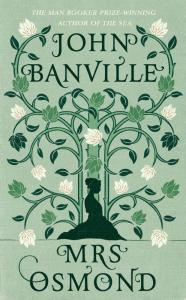
1. John Banville’s Mrs. Ormond.  Naturally I must read Mrs. Ormond, a sequel to Henry James’s The Portrait of a Lady, penned by Booker Prize winner John Banville.   Kirkus Reviews says,

Fans of John should deem it marvelously Banville-an in its observations, humor, and insight—though they may wonder at this literary diversion by a writer who already plies the pen name Benjamin Black.
A sequel that honors James and his singular heroine while showing Banville to be both an uncanny mimic and, as always, a captivating writer.

It won’t be published here till November, and, no, it’s not available from Netgalley. (I just checked.)  But perhaps I’ll find a used ARC, or will find it under the Christmas tree–put there by me.

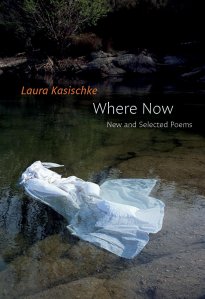
2. Where Now: New and Selected Poems by Laura Kasischke .  This was on the National Book Awards longlist, and the poems I’ve found online are breathtaking.  I don’t have a copy of this book yet–perhaps for Christmas?–but I love the following poem.

Ubi Sunt?

In the mirror, like something strangled by an angel—this
woman glimpsed much later, still

wearing her hospital gown. Behind her—mirrors, and
more mirrors, and, in them, more cold faces. Then

the knocking, the pounding—all of them wanting to be
let out, let in. The one-way conversations. Mostly not

anything to worry about, really. Mild accusations, merely.
Never actual threats. (Anyways, what could they possibly

do to you now from inside their locked, glass places?)
Still, some innocent questions on some special occasion

might bring it all back to you again, such as: Might
you simply have forgotten where you left me when you left me?

Or—Shouldn’t you be searching all the harder for me then?
Or—the question that might frighten any woman being

asked this of her own reflection (no
tears on its face, a smile instead)—How far

did you really think I’d go without you? Then—
Don’t you think that’s where you’ll find us now?

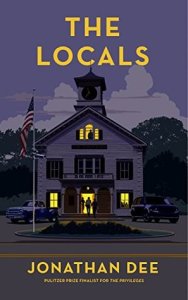
Jonathan Dee’s The Locals

I can’t keep up with the Booker and National Book Award nominees this year:  I’m reading too many stunning new books not on the lists.

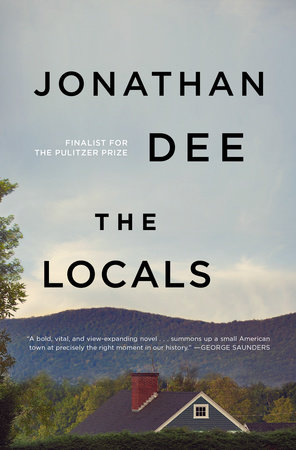
Take Jonathan Dee’s The Locals, an engrossing new novel about the impact of 9/11 on the inhabitants of a small working-class town.  I read two reviews of this fascinating novel, one good, one bad, and, reading between the lines, decided I might enjoy it.

And I’m so glad I picked it up, because I loved it. Dee’s smart, fast-paced book reminds me of the novels of Richard Russo, which so often are set in down-and-out working-class towns.   Dee is a fascinating storyteller, his characterization is vivid and varied, his dialogue is pitch-perfect, and he skillfully interweaves the stories of characters struggling to get by in Howland, Massachusetts.  He also relates the town’s politics and wobbly economy to the state of the  government at the turn of the 21st century.

It all begins with an identity theft in the aftermath of 9/11.  Mark Firth, a contractor/construction worker from Howland, is in New York to meet a lawyer about a class action suit. Naturally, all appointments are canceled, but there he is in the waiting room.  A con artist, furious at the cancellation of the appointment,  gets acquainted with  Mark and steals his credit card.

This kind of thing, unfortunately, happens all too often to Mark, who lost his life savings in a scam. His wife, Karen, who works part-time as  a teacher’s aide at a private school to pay their daughter’s tuition, has no respect for her husband, so he doesn’t tell her about the credit card.

Can Mark turn his life around?  When Philip Hadi, a wealthy financial adviser, moves to Howland, he hires Mark to do some renovations at the house and install security. Over coffee, he tells Mark that to earn  money it is necessary to think of “the big picture.” And so Mark decides the big picture is buying houses and flipping them instead of doing construction work.  He  goes into business with his brother, Gerry, a former realtor.

His brother Gerry also has problems.  So many problems.  He was fired from his job for having an affair with the real estate agency’s secretary, and fumes over his boss’s claim that the consensual sex might lead to a sexual harrassment suit. Now he sits at home writing an angry libertarian blog, which never quite takes off, but he gains a small local audience, and his thoughts on blogging are very articulate.

It was cathartic but you couldn’t let it get too cathartic. It was hard, sometimes, to decide whom you were speaking to. Gerry was anonymous—he went by the alias PC Barnum, and he called the blog Workingman’s Dread, which was a Grateful Dead reference he kind of regretted now, but you couldn’t just go changing your blog’s name if you wanted people to be able to find it in the vast steppes of the internet. More than once, he’d deleted entire posts because they’d morphed into angry rants so fringed with personal detail that a savvy local reader might have deduced who PC Barnum was. Personal exposure was something he did not want, at least not yet. Part of it was simple internet convention, but part of it was his feeling that if you didn’t have a name, to which people could attach their various judgments and preconceptions, then you were more credible as a voice, a voice of the people.

When the local government changes, you would think Gerry would be happy.    Philip Hadi volunteers to be first selectman of city council without taking a salary.  Hadi saves the local cafe with an influx of money and gives struggling Howlanders money for their mortgages. But when he begins to make decisions without informing the citizens, Gerry attacks him.   And you ask, will Gerry bring him down?

Is any character likable in this book, you may ask?  Yes, I love Candace Firth, Gerry and Mark’s unmarried sister,  an assistant principal at a local school.  She spends much of her leisure looking after their aging parents, because her mother has Alzheimer’s , her furious father refuses to help his wife, and her brothers do very little.  The TV is always on at her parents’ house now (and this virtual world is not so different from Gerry’s internet).  Candace is upset.

It was never, ever not on. She could remember being forcibly pushed outdoors, as a child, if she and her siblings got caught spending non-rainy daylight hours in front of the TV. Now it played so relentlessly it effaced whatever was outdoors, all sense of an outdoors. It used to be considered the opposite of the world, but now, in this house anyway, there was no outside world except that of the television, a world of outrage, calumny, tears and canned laughter, provocation, paranoia, sinister forces bent on taking away all you had worked for and earned, just because they wanted it, just because they said so.

When Candace has to go back into the classroom, a small incident (she is sarcastic to a mocking student) escalates into a major contretemps with the parents . She quits her job after she is told to write an apology to the student. Fortunately,  the sympathetic Hadi hires her to be the town librarian, and I love her take on libraries, though it is controversial.

You can’t get away from politics in Howland.

I could go on and on about these characters, whom I would happily have followed OUT of the book, but you must read it for yourself.  It is thoroughly enjoyable.

Willa Cather’s Prairie & “Old Mrs. Harris”

Willa Cather Memorial Prairie

In the latest issue of The New Yorker, an  essay by Alex Ross, “A Walk on Willa Cather’s Prairie,” sent me flying to the bookshelf for my Willa Cather books.  I reread these volumes regularly, because she is the best of Midwestern writers, and I deeply respond to her narratives about the isolation of small towns (no one charts the claustrophobia  better) and the adventures of occasional artistic escapees to Chicago, Denver, or New York.  Her most brilliant novels, especially A Lost Lady and Lucy Gayheart, are more powerful than the very few novels published today about the Midwest.  (Yes, Marilynne Robinson is brilliant, but is that really Iowa?)

Ross, the music critic for The New Yorker, majored in English at Harvard but did not read Cather until 10 years ago when he began to read Cather’s stories about musicians (you are most likely to know two of the novels, Song of the Lark and Lucy Gayheart). In June, Ross took his fandom further when he visited Cather’s childhood hometown, Red Cloud, Nebraska, for the opening of the National Willa Cather Center, a new seven-million-dollar complex with a museum, archives,  bookstore, art gallery, apartments for scholars, and performing arts center.   He interviewed people, listened to keynote speaker Laura Bush’s remarks, and learned that Willa Cather’s correspondence will begin to be posted online next year.

But what  really moved him about the trip?  His walk on the Willa Cather Memorial Prairie.

He writes,

In Webster County, Nebraska, the prairie rolls in waves, following the contours of a tableland gouged by rivers and creeks. At the southern edge of the county, a few hundred feet north of the Nebraska-Kansas border, is a six-hundred-acre parcel of land called the Willa Cather Memorial Prairie. Cather spent much of her childhood in Red Cloud, six miles up the road, and for many people who love her writing, and perhaps for some who don’t, the Cather Prairie is one of the loveliest places on earth. You park at the top of a hill and follow a path down to a gulch, where a creek widens into a pond. At the bottom, you no longer see traces of modern civilization, though you can hear trucks on Route 281 as they clamber out of the Kansas flats….

The prairie is lovely, if you don’t see prairie, prairie, prairie everywhere, all the time, as we do, but our favorite prairie would have to be MacKnight Prairie, owned by Carleton College in Northfield, Minnesota (which also has literary connotations:  Carleton College is called Blackstock College in Pamela Dean’s Tam Lin.)

What does Red Cloud mean to me?  My husband and I  visited Red Cloud in 2009, and the pretty little town seemed to be in a time warp, except for Subway.  In those days, the Willa Cather Foundation was located on the first floor of Red Cloud’s opera house, a lovely brick edifice built in 1885.  Our  guide was literary and knowledgeable, and I have never been on a better literary tour: it is much less commercial than the Dickens Museum in London or the tour of Louisa May Alcott’s house in Concord.

Upstairs in the theater of  the Opera House, we stood on the stage where Willa saw  touring plays, acted in a production of Beauty and the Beast, and gave her high school valedictory speech.  Next door, or a few doors down, is the renovated  Farmers’ and Merchants’ Bank, founded and built in 1889 by Nebraska’s fourth governor, Silas Garber, the model for Captain Forrester in my second favorite Cather novel, A Lost Lady.  When it folded four years alter, Garber gallantly reimbursed the lost savings of the customers from his own money.  (This, too, happens in A Lost Lady.)

The Red Cloud Opera House

But it  was only when we entered the Cathers’ small one-and-a-half-story house that I had the feeling that I was finally in a Cather novel.  So this is what it was like, I thought. The house is immediately recognizable as the model for  Thea’s house in Song of the Lark  and in the autobiographical short story “Old Mrs. Harris,”   from Cather’s last collection of stories, Obscure Destinies.   The Cathers inhabited this small space with their seven children (Willa the oldest), a grandmother, a cousin, and a hired girl. The parents slept in a small room off the pretty parlor, Grandmother in a little room with a sewing machine and a rocking chair, Willa in an alcove in the attic, the other children in three beds in the attic, and the hired girl in a small space in the front of the attic–and no one knows where the cousin slept!

Willa Cather’s childhood home.


Inspired by Ross’s article and my own memories of Red Cloud, I recently reread “Old Mrs. Harris.”  The story  was originally called “Three Women” and serialized in The Ladies’ Home Journal in 1932.  It is based on the lives of Cather, her mother, and her Grandmother Boak, who followed her daughter and her family from  leafy, beautiful Virginia to the raw prairie town of Red Cloud.

We first see old Mrs. Harris from the point of view of a neighbor, Mrs. Rosen, a well-educated Jewish-German immigrant.  Mrs. Rosen likes quiet old Mrs. Harris, the grandmother of the Templeton brood, but believes Victoria Templeton, her pretty daughter, unfairly leaves the cooking and housework to Mrs. Harris while she gads about.

Sot when Victoria goes out for the afternoon, Mrs. Rosen sneaks in through the kitchen door with the gift of a cake for  Old Mrs. Harris, who is unenthusiastic about the visit. Normally she rests in the afternoon.   And so they sit uncomfortably in a tiny room behind he kitchen: it is  part children’s playroom, part Mrs. Harris’s bedroom.  And you will see this same room in Cather’s house in Red Cloud  (It’s a town in Colorado in the story, but it’s still Red Cloud.)

It was a queer place to be having coffee, when Mrs. Rosen liked order and comeliness so much: a hideous, cluttered room, furnished with a rocking-horse, a sewing-machine, an empty baby-buggy. A walnut table stood against a blind window, piled high with old magazines and tattered books, and children’s caps and coats. There was a wash-stand (two wash-stands, if you counted to oilcloth-covered box as one). A corner of the room was curtained off with some black-and-red-striped cotton goods, for a clothes closet. In another corner was the wooden lounge with a thin mattress and a red calico spread which was Grandma’s bed. Beside it was her wooden rocking-chair, and the little splint-bottom chair with the legs sawed short on which her darning-basket usually stood, but which Mrs. Rosen was now using for a tea-table.

Throughout the story, Mrs. Rosen underestimates Victoria and her teenage daughter Vickie, who is studying for a scholarship exam for the University of Michigan.  Mrs. Rosen thinks Victoria is inconsiderate and that Vickie is flighty and will never study enough.  But we readers begin to understand the pressures faced by Mrs. Harris and the Templetons.   In Tennessee, it was taken for granted that a mother should help her grown-up daughter with her household, but in Tennessee Mrs. Harris had an elegant house and hired help (or slaves).  In  Colorado she has only one girl, Mandy, to help.  And Mandy is so good that she rubs Mrs. Harris’s feet at the end of a day.  She seems closer to Mrs. Harris than Victoria is.

The fashionable Victoria is bewildered by the social life of the town.  At a church social, a woman snubs Victoria, saying it must be nice to have someone else make the coconut cake for the social.  (Mrs. Harris made it.)  Victoria laughs, and doesn’t know what is wrong, but knows she is being slighted, and can’t understand why it matters that her mother made the cake:  Victoria was a belle in Tennessee.

Much to everyone’s surprise, Vickie gets the scholarship to the University of Michigan, but needs $300 for other expenses.  Mrs. Harris, who is sickly, fading, and suspects she is dying, musters courage to ask for the money as a favor. She is determine Vickie will get away.  Her own daughter Victoria is trapped again–she sobs and sobs when she finds out she is pregnant.  She will never be alone.   She cannot find a place in her house that isn’t overrun with children.

Vickie will get away, thank God.  But what will happen to Victoria?  That’s what we want to know.  How will she get by without her mother or Vickie?  Will she take over the household chores?

How do we get by without our mothers?  I ask myself that all the time.

Fabulous Willa Cather!  I can’t get by without her.