Time Travel: What Decade Would You Visit?

I am fascinated by time travel.  Like many avid readers of SF/fantasy, I have delighted in time travel literature both as a child and an adult.  Among my favorite time travel novels are  H. G. Wells’s The Time Machine, E. Nesbit’s The House of Arden, Edward Ormondroyd’s Time at the Top,  Connie Willis’s Blackout and All Clear, Kurt Vonnegut’s Slaughterhouse-Five, and Kate Atkinson’s Human Croquet.  And I have often reflected on where I would  go if I had a chance to travel back in time.

I would travel to the 1960s, which I was did not experience properly the first time, aside from the inevitable bell-bottoms, rock music, and excellent bookstores. My husband would prefer a trip to the 1970s, which he remembers as a mellow decade (and it was).  Mind you, we don’t want to return to our childhoods.  We want to experience life in the past at the age we are now.  And we want to reread the great literature and see the arty movies of the 1960s and ’70s.

What decade would you travel to?

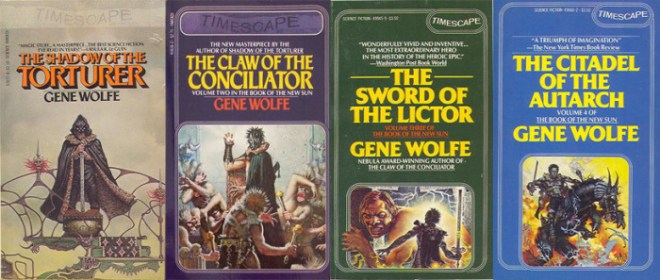
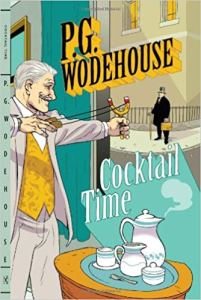
Here are some of the great books of the ’60s and ’70s :

Why the ’60s and ’70s?  The quality of life was better.  It was before the worst of urban sprawl, huge gas-guzzling SUVS,  and climate change.  In the ’60s and ’70s, people were anxious about the effect of the media on the culture, as we are today about the effect of social media. “The medium is the message,” said Marshall McLuhan in his writings about how different media shape communications. And radicals were paranoid about mass culture then.  We should be paranoid about mass culture now.

Americans were more committed to social issues, or perhaps just more articulate and better-organized:  the Women’s Movement, Civil Rights, the Anti-War Movement.  And they were more committed to environmental issues:  birth control and population control were much discussed (would it have killed us to limit family size to two children?); the first Earth Day teach-in occurred in 1970; Nixon established the EPA in 1970; the Clean Air Act was established as a federal law in 1970; and, lo and behold!  there were no plastic bags.

And perhaps best of all, the temperatures WERE more comfortable in the 1960s and ’70s.  Here is a comparison of temperatures in my midwestern hometown in July 1968 and July 2018.

Temperatures July 1-5 in 1968:

July 1:  high, 84; low, 62

July 2:  high, 79, low, 57

July 3:  high, 75; low, 51 

July 4:  high, 79; low, 57

July 5:   high, 84; low,  57

Temperatures July 1-5 in 2018

July 1:  high, 89; low, 70

July 2:  high, 84;  low, 61

July 3:  high, 90, low, 64

July 4:  high, 93; low ,73

July 5:  high, 91; low, 73

If only we could have prevented climate change!  I hope it we can fix it, but I am not sanguine at this point. Give the power back to the EPA!

Not Long Enough: Cousin Henry by Anthony Trollope

Trollope was a master of the long narrative, but he could not write a really first-rate short novel.

Mind you, Victorian writers were rarely known for their spare style, and the leisurely Trollope needs ample space to unfold his plots and reveal his astute knowledge of psychology.  He is one of the smartest Victorian writers:  his unimbellished style is so readable that we sink into his narratives unconscious of the length.  His best books, among them The Last Chronicle of Barset and The Way We Live Now, are 800 to 900 pages long.  Yet they are fast reads.

I cannot say the same of his short works, which I have found disappointing.  Cousin Henry, just 280 pages long, has moments of brilliance but it is mostly drudgery: it reads like an outline.  Sometimes Trollope develops a dramatic scene with pithy dialogue (sometimes in dialect) or enlightens the reader with a precise description of the inner workings of a character’s mind. But overall it is lackluster and uninteresting.

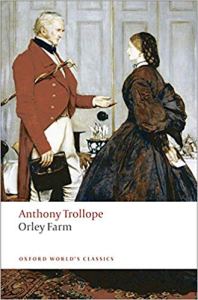
And yet it is in some ways a fitting book to read after Orley Farm (which I recently read and posted about here).  Both novels deal with dodgy wills and unscrupulous heirs.

In Orley Farm, which Trollope considered his best novel (and it is nearly a masterpiece), Lady Mason, the beautiful, intelligent heroine, forged the codicil of her husband’s will 20 years ago so her son Lucius, then a baby, would inherit Orley Farm instead of his rich older half-brother.  She was accused of forgery in court, but found not guilty.  Now new evidence has turned up, and the case will be tried again. Lady Mason is a sympathetic character, older and wiser, shattered by her trouble but hoping to hide her guilt from her son, who is now a young pompous Oxford-educated farmer.   And she is much tougher than her sympathetic neighbors and friends think she is–Trollope even uses the words “hard” and “she-wolf.”  And as more and more friends realize her guilt, they try to minimize her pain.

In Cousin Henry, we have another tangled will.  The squire, Indefer Jones,  in old age  changes his will in  favor of the male line.  He will leave the property to his once-wild nephew Henry, now a stolid clerk, instead of to his very smart niece, Isabel Brodrick, who has lived with him for 10 years.  He summons Henry from London, and when Henry comes, the squire despises him and cannot bear to be around him.  Isabel is also very rude to her cousin, whom she finds very stupid.  And so he is.  And so when Isabel goes home to visit her father, Uncle Indefer decides to change his will again in favor of Isabel.  And then he dies.

But what happened to the will?  No lawyer was called, but two tenants say they were called in to sign it.  Henry denies all knowledge of it.  But  he had actually spotted the will in a book of sermons by his uncle’s bed, and simply shelved the book.  Henry does not dare destroy the will, and yet he is uneasy and hardly dares to leave the bookroom. And the tenants and townspeople are brusque and offensive to him when he goes out, because Isabel should be the heiress.

And Isabel, the sympathetic character, is such a spitfire that she, too, is almost a caricature.  She won’t accept £4,000 from her cousin, even though that was her uncle’s intention. Trollope often writes about strong-minded characters, but Isabel, even though she is right morally, comes off as eccentric  rather than admirable. Her father and stepmother plead with her to take the money from Henry, because they are very poor and can hardly support her in addition to their young children.

The book starts out very well, and then goes downhill.  It is a very slight book.  Trollope could have written a brilliant 800-page novel on this theme, but instead he produced one of those show-don’t-tell books that I don’t care for even in the 21st century.

The Common Reader as Judge: The Golden Man Booker Prize & The Hugo Awards

Was I excited about the Golden Man Booker Prize?

No, of course not.  I was barely aware of it.

Michael Ondaatje’s The English Patient is the winner of the prize, which was established to honor the fiftieth anniversary of the Booker.   It was (sort of) determined by popular vote at the Man Booker Prize website.  There might be a point to popular vote–except it wasn’t really popular.  Literary judges chose the finalists from previous winners, one from each of the five decades:   In a Free State by V. S. Naipaul, Moon Tiger by Penelope Lively,  The English Patient , Wolf Hall by Hilary Mantel, and Lincoln in the Bardo by George Saunders.

My own “bests,” of course, did not make the shortlist:  Ruth Prawer Jhabvala’s Heat and Dust and A. S. Byatt’s Possession. My favorites never win.  But of course they already won.

I wonder: why wasn’t the Golden Booker Prize a free-for-all for fans, like the Hugo Award?  The Hugo IS determined by popular vote. Fans who register to attend WorldCon (an SF convention) nominate the books and vote for the winners at the convention.  The Golden Booker voters couldn’t have gone wrong by choosing past Booker winners.  Jolly old England is so snobbish!  What were they afraid of?

Here are some of the great Hugo classics:

The Man in the High Castle by Philip K. Dick (1963)

Dune by Frank Herbert (1966)

The Left Hand of Darkness by Ursula K. Le Guin (1970)

Jonathan Strange and Mr. Norrell by Susanna Clarke (2005)

The Yiddish Policemen’s Union by Michael Chabon (2008)

Blackout/ All Clear by Connie Willis (2011)

May I just say that these six books are the SF equals of the Booker?

Not all were keen on the Golden Man Booker.  Ron Charles, editor of the book page at the Washington Post, has incisively criticized the Nobel Prize judges, and  he was annoyed by the selection of the Golden Man Booker.  He writes,

As a system of selection, this is a curious conflation of the single expert and the wisdom of crowds — or, if you will, super elitism and mob rule. After all, each novel on the short­list was chosen by just one person (not nearly enough), and yet the winner was chosen by thousands (far too many).

Having the unwashed public pick the best novel sounds wonderfully egalitarian, but it ignores all kinds of unanswerable questions about the self-selection and legitimacy of the voters. Is it intolerably snobby to wonder how many of these 9,000 people knew anything about the books on the shortlist? And, anyhow, is the public a reliable judge of literary quality? The weekly bestseller list is, after all, a constantly adjusting contest of the public’s tastes, and it is rarely encouraging.

At his best–when he is not promoting romance novels to entice the “unwashed” public–Charles is an old-school snob, the kind we love to read in a mainstream book review publications.  Just as the rich are different from you and me, the critic is different  from bloggers and Goodreads reviewers.  I read both Charles and Goodreads reviewers when I’m looking for something to read.  I rarely agree with Charles, and I don’t here, but I enjoy his sharp critical essays.

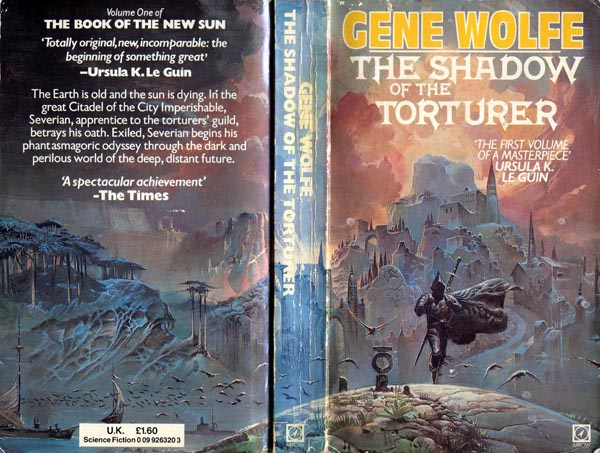
Literary Science Fiction: The Shadow of the Torturer by Gene Wolfe

The first two volumes of The Book of the New Sun, published in Shadow & Claw.

The Shadow of the Torturer is the first volume of Gene Wolfe’s award-winning quartet, The Book of the New Sun.  Before you dismiss it as  mere genre fiction, expand your mind with this excerpt from an article on Wolfe in The New Yorker, “Sci-Fi’s Difficult Genius” (April 24, 2015).

The Dark Side of Horace: Black Care Pursues Him

“Post equitem” by Sir John Tenniel

I love Horace.  His elegant odes about love, wine, and nature are syntactically complicated but charming. Readers of his most widely anthologized odes may have the impression that the author of the  phrase carpe diem (“Seize the day, “Ode I.11 ) was mellow, jolly, and thoroughly congenial.

But Horace, a veteran of the civil war in 42 B.C., is often very dark.  Critics underplay his uniquely Roman attitudes in their introductions to translations for non-Latin readers.  The classicist David West wrote, “Those who know Horace well find that of all dead writers there is none who is a closer friend, who speaks more usefully in easy and in difficult times, and none whom they would more happily sit down to drink with.”

Much as I love Horace, I never regard him exactly as a friend. I feel closer to Catullus and Ovid, because they are very, very funny, lighter in tone, and less respectful of authority.  Horace’s experience is terrifying, and his philosophy is often harsh.  Although he describes the drowsy peace on his Sabine farm,  given him by his patron, Maecenas, there is always a sense that he is still fleeing the terror and trauma of the war.  Having fought on the wrong side of the war, he knows how to keep his head down.  And he knows it was necessary to pay constant homage to Augustus in his poems.   In  his odes, he praises Augustus unctuously (as did Virgil and Ovid, though Ovid got banished anyway).

It is better to be in the middle, Horace writes, than to be too rich or too poor.  In Ode III.XVI, he  personifies Cura (“Care”) and Fames (Greed) as figures who hunt down the rich.   He writes, “Care  and Greed pursue increasing wealth.   For that reason I have shaken with horror at the thought of raising my head too conspicuously high…  As a poor man, I seek the camp of those desiring nothing and want as a deserter to leave the party of the rich.”  In his description of his flight from Cura (“Care”), he uses military language:  “camp” (castra, a military camp) and “deserter” (profuga, often used to describe fleeing soldiers or deserters).

In the first of six gloomy harsh Roman Odes in Book III, Horace personifies Fear, Threats, and Care as forces that pursue the rich as well as the poor.  “But Fear and Threats climb to the same place as the master, nor does  Black Care (or Anxiety) leave the bronze-plated trireme, and it sits behind the horseman.”

We must translate not only the elegant Latin poetry (untranslatable:  the Latin rhythms and figures of speech and word order cannot be approximated) but ourselves to a place blitzed by decades of civil war, now ruled by a dictator with a soft hand but absolute power.  The times we live in are harsh,  and I finally understand Horace’s harsh descriptions of Black Care and Fear.  In the 21st century, as Black Care pursues so many, we, too,  drink our cheap wine, live simply, and quake at the thought of raising our heads too high.

Living with Climate Change: Poetry, Science Fiction, and Nonfiction about the Environment

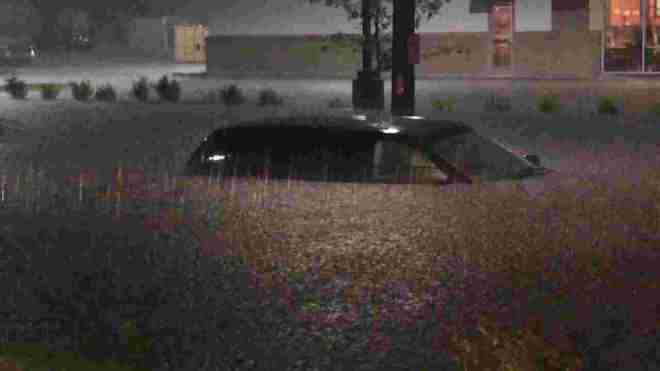
Flash flooding.

On the Fourth of July, I’m reflecting on climate change. We live in a divided America, but the issue of climate change unites us.  Everyone is against floods, hurricanes, wildfires, and 90+ temperatures.  Rah, rah.  But what can we do about it?

On Saturday night, thunderstorms caused flash flooding here.  Three hundred twenty-nine people were displaced, a duplex exploded, people had to be rescued in boats, and one man died after he got out of his van and was swept away by the flood.

We’ve had worse. Every storm is a potential disaster.   Well, if you can’t act, you might as well read.  Here are 10 great books about the environment, a mix of science fiction, nonfiction, and poetry.   And do recommend your favorites in the comments below.1. The Sheep Look Up by John Brunner (1972).  In this postmodern science fiction classic, pollution has rendered the U.S. a wasteland.  The poisoned air blows into Canada and sometimes across the ocean to Europe; everyone is sick; antibiotics no longer work; fleas and rat infestations in houses and apartment house can no longer be controlled because they are immune to poison; the acid rain in NY is so bad that you need to wear plastic outside; the water is poisoned (there are frequent “no-drink water” days); intelligence levels are dropping (lead in the air and water); a virus causes spontaneous abortion; the oceans are so polluted that people vacation in Colorado rather than California; and big businesses are profiting by selling air filters, water filters, etc.  (I posted about this book here.)

2. The Girls on the Roof by Mary Swander (2009).  Set in Pompeii (pronounced Pom-pee), Iowa, this novella in verse is the story of Maggie and Pearl, a mother and daughter who get stuck on the roof of Crazy Eddy’s Cafe during the flood of 1993. And when the corpse of Mike Fink from the junkyard washes up, they realize he was the lover of both mother and daughter.

Here is a description of Maggie in a cottonwood tree:

She dangled above the flat roof of Crazy Eddy’s,
the flood waters gurgling below.
Why me? she wailed to the wind,
the leaves and twigs brushing her face.
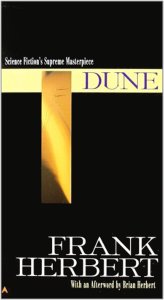
3.  Dune by Frank Herbert (1966)Dune, winner of the Nebula and Hugo Awards in 1966, is an ecological classic.  It is, to a large extent, about the politics of water. Water is the most precious commodity on the planet, though the ruling class are never dehydrated and live in luxury.  The native Fremen in the desert must wear “stillsuits” that recycle every drop of sweat and urine while they travel or work in the spice mines.  When someone dies, the water is taken from the body to be reused, because 70% of the body is water.  Plastic dew collectors save every drop of condensation for growing plants. Dangerous sand and dust storms blow up to 700 kilometers an hour and “can eat flesh off bones and etch the bones to sliver.”  There are also giant worms.  But the planetologist, who knows exactly how much water is needed to make the planet green over the next few hundred years, teaches the people how to change.  (I posted about this here.)
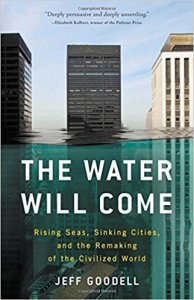
4. The Water Will Come: Rising Seas, Sinking Cities, and the Remaking of the Civilized World by Jeff Goodel (2017).  From the Goodreads book description:  Across the globe, scientists and civilians alike are noticing rapidly rising sea levels, and higher and higher tides pushing more water directly into the places we live, from our most vibrant, historic cities to our last remaining traditional coastal villa ges. …By century’s end, hundreds of millions of people will be retreating from the world’s shores as our coasts become inundated and our landscapes transformed. From island nations to the world’s major cities, coastal regions will disappear. Engineering projects to hold back the water are bold and may buy some time. Yet despite international efforts and tireless research, there is no permanent solution-no barriers to erect or walls to build-that will protect us in the end from the drowning of the world as we know it.
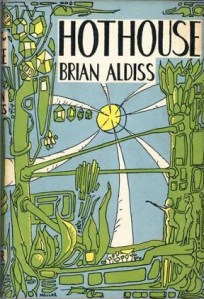
5.  Hothouse by Brian Aldiss (1961).  In this modernist SF novel, the earth has heated up in a distant future.  The sun is burning out, the cities are long gone, and the few humans left live in small tribes in trees.  Ironically, the vegetation is more intelligent than people.  And since I recently read that IQs are dropping and brains are shrinking, I’m thinking Aldiss was prescient.  (I wrote about this book here.)
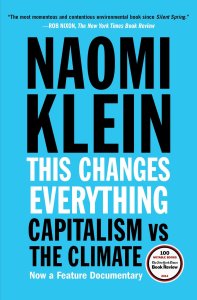
6. This Changes Everything: Capitalism vs. The Climate by Naomi Klein (2014). From the Goodreads book description:  “In her most provocative book yet, Naomi Klein, author of the global bestsellers The Shock Doctrine and No Logo, exposes the myths that are clouding climate debate.

You have been told the market will save us, when in fact the addiction to profit and growth is digging us in deeper every day. You have been told it’s impossible to get off fossil fuels when in fact we know exactly how to do it – it just requires breaking every rule in the ‘free-market’ playbook. You have also been told that humanity is too greedy and selfish to rise to this challenge. In fact, all around the world, the fight back is already succeeding in ways both surprising and inspiring.

7.  Ovid’s Metamorphoses, a collection of Greek and Roman myths in the form of an epic poem.  In Ovid’s version of the Deluge myth (Book I, lines 253-312) Jupiter’s bad temper resembles the Old Testament God’s.  Human beings are evil: therefore Jupiter will destroy the earth with a flood. (He realizes his thunderbolt might destroy the earth.) Two good people are allowed to live, Deucalion and Pyrrha, and they repopulate the earth by throwing stones over their shoulders.  Very strange indeed.  No Ark.
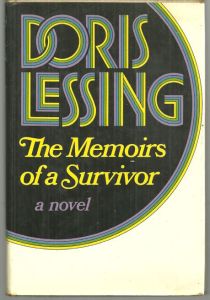
8. The Memoirs of a Survivor by Doris Lessing (1974).  A dystopian classic about societal, environmental, and psychological breakdown. The intelligent middle-aged narrator must confront the  the demise of her city, as the air worsens, supplies and food are scarce, and the media so unreliable that she walks around the city gathering information. Only the rich are still on the grid, and most of them are leaving the city which is now dominated by gangs of young people.  A stranger drops off a girl, Emily, one day in the narrator’s flat, and she is in the unenviable position of a guardian without much authority.  She travels through walls to an alternate world where she learns about her own past and an alternative future.  And together, she and Emily help each other.
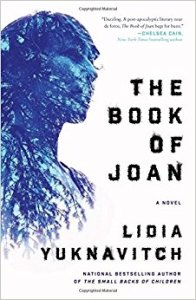
My favorite new book of the year.

9. The Book of Joan by Lidia Yuknavitch (2017).  Shelved in the literary fiction section, this haunting science fiction novel has been widely reviewed–deservedly so.  Set in 2049, it consists of the meditations of Christine Pizan, an artist, rebel, and “skin writer,”  on gender, ecology, devolution, and the dictatorship on the space station where she lives.  We also read her book about Joan of Dirt, a post-apocalyptic Joan of Arc who led the Resistance on the now devastated Earth.  The rumor is that Joan is still alive.  (You can read my post on this intriguing book here.)

10.  Fight Global Warming Now:  The Handbook for Taking Action 
in Your Community by Bill McKibben (2007). From the book description:  This is a hands-on guidebook to stopping climate change, the world’s greatest threat.

Hurricane Katrina. A rapidly disappearing Arctic. The warmest winter on the East Coast in recorded history. The leading scientist at NASA warns that we have only ten years to reverse climate change; the British government’s report on global warming estimates that the financial impact will be greater than the Great Depression and both world wars—combined. Bill McKibben, the author of the first major book on global warming, The End of Nature, warns that it’s no longer time to debate global warming, it’s time to fight it.

Classics for Non-Intellectuals: Who Is Your Favorite Victorian Writer?

The deepest book I’ve read all summer…

This summer I’ve written about effervescent classics by P. G. Wodehouse, Elizabeth von Arnim, and Patricia Moyes.  Where, you may wonder, are my rants on modern mores? Where my extravagant enthusings about Ovid’s epic? Well, the daily news is so dreadful that I now focus strictly on the light and whimsical. After skimming The New York Times, I want to quaff a Wodehouse cocktail, drink a von Arnim cup of coffee, or sip a liqueur at a 1960s party in a Moyes mystery.

Mind you, I haven’t abandoned the traditional classics. I am currently devouring (or quaffing) an 800-page Victorian novel by Anthony Trollope.

I am a mad Trollope fan.  He is, I always say, the greatest Victorian writer for non-intellectuals . He is not a master of rhetoric like Dickens, nor is he a an elegant stylist like Eliot, but he is consistently solid and intelligent. His understanding of politics, psychology, and finance is curiously modern. The best of his well-plotted novels never go out-of-date.

I am loving Trollope’s Orley Farm, a neglected novel about a lawsuit against a fascinating widow, Lady Mason, who was cleared of the charge of forging a codicil to her husband’s will 20 years ago.  She won the case, and her son Lucius, then a baby, inherited Orley Farm. Now the case has been reopened, and Lady Mason’s 60-year-old lawyer, who is half in love with her, realizes she is guilty, though he won’t admit it.  Her 70-year-old neighbor, Sir Peregrine Orme, is so outraged by the accusations and convinced of her innocence that he proposes marriage to her, hoping his own name will protect her.  Ironically, it is her Oxford-educated son, Lucius, the beneficiary of the forged codicil,  who caused the reopening of the case by revoking the tenancy of two fields long rented by Mr. Dockwrath, a lawyer.  Furious,  Mr Dockwrath reviews the legal papers in the case and digs up new evidence to get revenge.   And Mr. Mason, Sir Joseph Mason’s son by his first marriage, is eager to dislodge Lady Mason.

Orley Farm is Trollope’s Bleak House, and in a way Lady Mason is Trollope’s Lady Dedlock, though Lady Dedlock’s sin is that of having a baby out of wedlock, while Mason committed a financial crime.  Although we readers do not approve of Lady Mason’s actions, she is mostly a sympathetic character, and complex in a way that those on the right side of the law are not.  Trollope realistically describes her weariness, depression, fearfulness, and remorse, as well as her failure to act in any way that might hurt her son.  But there is a huge cast of characters, and love and marriage as well as money are at the center.

The novel is brilliant, if you can get past the first 30 rambling pages.  Trollope has a problem with beginnings, and I was dismayed by this one. But then he gets a grip, and suddenly his prose smoothes out and he fascinates us with his distinctive character portraits.   Doctor Thorne, one of my other favorites, also suffers from Bad Beginning Syndrome.

Although I know there are many, many Trollope fans out there, because we all went a little crazy during the bicentenary in 2015, we all have our own favorite Victorian writers.  Who is yours?

What to Read in a Power Outage: Pandora’s Boy by Lindsey Davis

Thunderstorms make me jittery.  In recent years, there have been epic floods and power outages. During last night’s storm, it was positively Deucalion and Pyrrha out there.

Shrieking with terror and blinded by sheet lightning, I retired to bed to read under the covers.  I was in the middle of an excellent novel, L.A. Woman by Eve Babitz (much like her book Eve’s Hollywood), when the power went out.  There we were, sitting in the dark.  And can you read a book with a flashlight or lantern?  I cannot.

And so I turned to e-books.  Mind you, there was a snag.  I used the tablet, because the e-reader needed to be charged.  And it seems that the e-books had not “downloaded” on the tablet unless I had clicked on them before the storm.

Finally I “opened” Lindsey Davis’s witty new historical mystery, Pandora’s Boy, the sixth in a series about a wisecracking female P.I. in ancient Rome.  Like Steven Saylor and David Wishart, who also write mystery series set in Rome, Davis writes pitch-perfect dialogue and her comic timing is impeccable.  She also gets the historical details right:  she was even honorary president of the Classical Association in the UK from 1997 to 1998.

The narrator, Flavia Albia, is the adopted daughter of Marcus Didius Falco (the hero of Davis’s other mystery series), born in Britain, and an “informer” (a P.I.) in Rome during the reign of Emperor Domitian.  In Pandora’s Boy, she investigates the death of Clodia Volumnia, a 15-year-old girl who socialized with a set of wild, mostly well-to-do party-goers. Apparently Clodia was poisoned by a love potion, bought by her mother from Pandora, who is ostensibly a  seller of upscale cosmetics but has  a reputation for witchcraft.  Or at least that is Clodia’s father’s theory.  The mother denies it and moves out.

The dialogue is witty and the book is great fun.  Albia interviews a diverse cast of characters, including a Stoic family with a hippie lifestyle.   I especially enjoyed her first interview with Pandora, who, of course, denies that she is a witch–witchcraft is illegal.  Born in Britain, Albia tells Pandora that she herself is a Druid (also illegal in Rome), and spins an unlikely yarn about her divination spoons.

Albia’s wit and talent for improv during the investigation are very amusing.  I love the Druid bits, especially when Albia asks Pandora if she has a skull to sell.  After blabbing the question, she realizes she has gone too far.

Now I was stuck. This kind of situation was well known in my family. There was no need of a blood relationship to inherit crazy behavior. Falco was always coming up with mad schemes that led to near-disaster; now so was I.

It seemed unlikely Pandora would keep skeletons here in her expensive bower, though there were several painted cupboards with pedestal tops, little tombs that would normally be used for vases people had never liked.

“I don’t have a skull about me at present.” Relief! Perhaps Pandora feared that to harbor human bones was unwise in a city where soldiers could bang on your door at any moment, bent on a search after a poisonous tip-off. “What do you want it for, ducky?”

“Oh, classic necromancy,” I breezed, recovering my composure. “I thought I might impress you by conducting a spirit into it. My skills are not perfect, but I can conjure a soul from the Underworld to answer questions. Be warned, though. Because I was torn from my forebears too young, I never learned the right incantation to dismiss the spirit. It’s awful if the wrong one swans into your vessel, and you are stuck with a ghastly hanger-on who won’t go home to Hades.”

Funny?  Yes!  And Albia may be the only female P.I. character in ancient Rome,  This is not Davis’s most tightly-plotted book, but it is irresistible light reading.  And it was a distraction from the flash flooding here.