Not Quite Writing on War and Peace

respect-your-readers readingThere are days when I goof around.

Not necessarily online.

I deleted the email feature from my Nook tablet. And I also closed my Twitter account.

I have a little more time now:  maybe an hour a day.

It was gray and gloomy and rainy today.

A good day to go online, you might say.

I took a walk, until it began to pour.  Then, drenched and drinking tea at home, I read.

I am absorbed in War and Peace, which I reread last spring:  you cannot read it too often.  I have so many translations on my Nook that I can switch from one to the other if the language becomes a little awkward.  This time I am reading the Pevear-Volokhonsky translation.

I read for pleasure, obviously, and know Russian culture only from novels, but one doesn’t think about War and Peace as Russian, once one grasps that the upper classes often speak French.  in other ways it seems very 19th-century European.  I know the book so well that I can skip scenes, concentrating on one set of characters or another, though I usually read straight through.  It is very hard to put this down.

I prefer the peace scenes.

When I first read WAP many years ago, I identified with Pierre, because as a young woman I talked very seriously at parties. When I read the first chapter, where poor Anna Pavlovna Scherer, a maid of honour of the empress, tries to interrupt Pierre in his earnest conversations and  get  him to chat more lightly with the groups, I had to laugh.
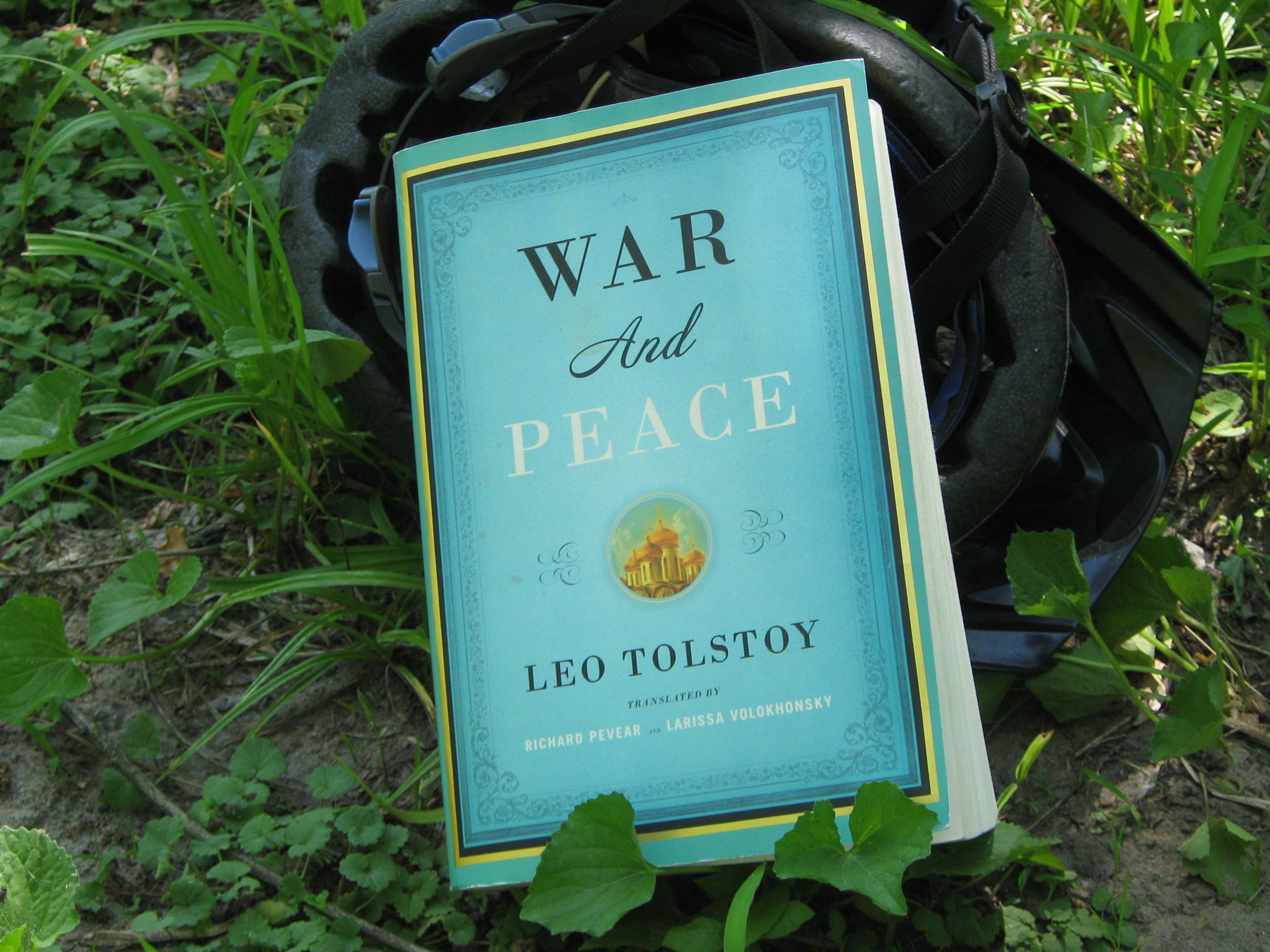
War and Peace in my bicycle helmet one summer!

War and Peace in my bicycle helmet one summer!

These days I am a little weary of Pierre, especially during the Freemason scenes.  And so this reading, for the first time ever, I identify with Princess Marya Bolkonsky, who was based on Tolstoy’s mother.  It’s not that she and I are alike, because that isn’t quite how fiction readers identify:  it’s more that I understand why she is the way she is, and why I am the way I am.  She is not socially graceful, like Tolstoy’s more sympathetic heroine, Natasha, who sings, dances, and chatters happily until she goes though a love-related depression.

Marya grows up in a serious household of intellectual men, and doesn’t think about marriage, living in the country as she does.  Her raging father makes her do math and practice piano every day.  He intimidates her, though she loves and respects him.  She is deeply religious, almost Zen (well, Christian!) in her refusal to judge others, and is also very kind to the hangers-on who live with them, like her companion, Mlle. Bourrienne.

Her brother, Prince Andrei, a discontented man married to a woman he doesn’t respect, comes home to Bald Hills before the war to say good-bye and to leave his pregnant wife, Lise, with the family.  He sneers at Lise, and practical, generous Marya points out that we all have little weaknesses, and that Lise grew up in society, so expects a social life unavailable in the country.

He also detests Mademoiselle Bourrienne, her companion.  Marya’s long laudation of Mlle., and his short response, a defense of his sister who is so devoted to her cruel father, are characteristic of them.

Mary says,

Oh, no! She’s a very dear and kind, and, above all, a pitiful girl. She has nobody, nobody. To tell the truth, she’s not only unnecessary to me, she’s even an inconvenience. You know, I’ve always been a wild creature, and now more than ever. I like being alone … Mon père likes her very much. She and Mikhail Ivanovich are the two persons with whom he’s always gentle and kind, because he’s their benefactor. As Sterne says, ‘We love people not so much for the good they’ve done us, as for the good  we’ve done them.’ Mon père took her as an orphan sur le pavé, and she’s very kind. And mon père likes her way of reading. She reads aloud to him in the evenings. She reads beautifully.”

“Well, but in truth, Marie, I wonder if father’s character isn’t sometimes hard on you?” Prince Andrei asked suddenly.

Prince Andrei is right about her father, but she will not see it.  And Mademoiselle Bourienne is disloyal to Marya, as we see later:  she makes out with Prince Anatole, the man who has come to Bald HIlls to propose to Marya, and Marya catches them.

Fascinating characters, and it is very much a character- and plot-oriented book.  It is so difficult to explain why one loves a classic, and War and Peace is simply too big to do justice to unless one breaks it down.

But I do love reading it.

I simply can’t write about it.

Carrot Chips or Chocolate Chip Cookies?

Couldn't I have just one?

Couldn’t I have just one?

Give up cookies.

There are days when I’d die for a chocolate chip cookie.

We grew up on chocolate chip cookies.

We can’t eat them anymore.

It’s a family thing.  And it’s a med thing.  All the women in my family gain weight after a certain age.

If you’re on certain meds, you gain weight.  If you have hypothyroidism, you gain weight.

Me and Linda Ronstadt.

And all the women in my family.

And if you give up running before you turn 50,,,

If only I’d continued.

My doctor isn’t concerned.

My blood pressure is low.  It’s lower than yours, I guarantee.

But fatigue, weight gain, depression, increased sensitivity to cold… you can read all about the symptoms of hypothyroidism at the Mayo Clinic.  (They sound like symptoms of other things, too.)

Personally, I’d rather do anything than take pills.  My numbers were borderline, so I resisted for a long time.  But then there came a time…

Winter is coming.

It’s the hyper-hypo weight countdown. Every day without a cookie I get closer to my goal.  Which is not to gain 10 pounds by Valentine’s Day.

I have friends who gain 20 pounds every winter and lose it during the summer.

It’s the way we live now in the U.S.

Only my mother and I thought/think I’m perfect.  I do not see the woman in my ID picture, I swear.  My husband says it looks like me.  Thanks a lot!

When I visit my friend in the Big City, she and I will do Urban Things.  I only hope my black jeans will make me look svelte.  They will not, though.

The women of my family are on a permanent diet.  Except when they give up.

An apple for dinner is the solution.  I do have to feed my family though.

And so I have turned to…

curried_baked_carrot_chips_recipeBaked Curried Carrot Chips.

There are 76 calories in one serving of baked curried carrot chips.  There are 220 calories in a chocolate chip cookie.

The carrot chips are delicious.  I sampled them for the first time today.

But what is the recipe for diet chocolate chip cookies?

Here’s the recipe for Baked Curried Carrot Chips.  They really are good.

INGREDIENTS

2 large carrots, peeled
2 tsp. olive oil
1-2 tsp. sweet curry powder (stick with less for milder chips)
Fresh ground salt & pepper

INSTRUCTIONS

Preheat oven to 350 degrees. Spray a large baking sheet with olive oil or cooking spray.
Holding onto the small end of the carrot, used a Y-shaped peeler to peel paper thin carrot strips. Try your best to make them uniform in thickness. Peel consistently from the same side of the carrot so that the strips start to widen out.

Place carrot strips in large bowl. Toss with olive oil, curry powder, salt and pepper. Transfer strips to baking sheet in a single layer; the edges can be touching, as they’ll shrink when they bake, but don’t overlap them.

Bake for 10-12 minutes or until chips are just starting to brown. Place baking sheet on a wire rack and cool until chips are crisp, about 3 minutes. Carefully remove chips from baking sheet. Eat right away or store in airtight container for up to 5 days.
Recipe from Food Fitness Fresh Air

November, Wodehouse, & What I’m Looking for

Just what we need in November!

November.

Not enough light.

I went for a walk, sipping coffee.  I wore a light jacket; I shivered. I was cross and slightly sore from a very swift walk yesterday in sneakers with insufficient padding.

Piles of leaves, darkness, people in fleece jackets, and dogs. I stopped at the Little Free Library, which looks like a birdhouse on a stick, and is actually a bookshelf  with free books you can take or borrow.

I have contributed several of the few books left.

If you want to read D. H. Lawrence’s The Rainbow, a novel by Mary Wesley, or Octavia Butler’s Parable of the Sower (which has been checked out), I donated them.

I haven’t borrowed anything yet.

“One of these days you’ll find something you’ve been looking for for years,” my husband says.

What am I looking for in dark November?  I dislike the darkness.

More time in the real world?

Well, yes, but what will I do?  Sit under bright lights?

Less online time?

I have deleted the email feature from my Nook tablet and cut Twitter.

Cook a new Mollie Katzen recipe?

I
 don’t know what I’m hungry for/
I don’t know what I want anymore–“Bittersweet Me,” R.E.M.

Do I need a book?

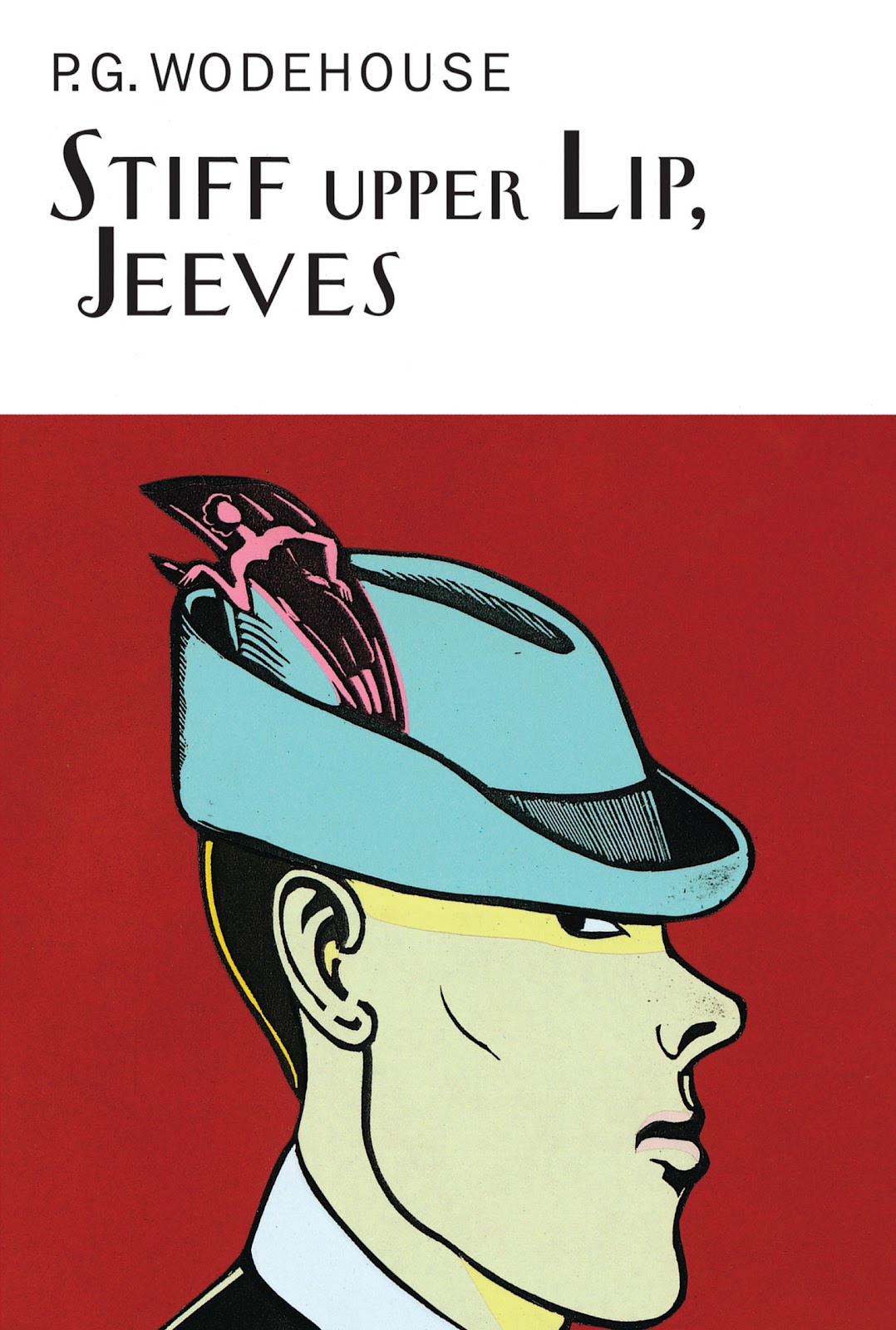
Maybe a book by P. G. Wodehouse.  In the Washington Post, Jonathan Yardley wrote a charming essay about the publication of The Collectors’ Edition of P. G. Wodehouse by Overlook and Everyman Classics.

He writes:

…what especially pleases me is that as the series nears completion, it gives no evidence of scraping the bottom of the barrel, indeed provides proof that Wodehouse’s barrel had no bottom. A couple of titles published earlier this year, “Mike and Psmith” and “The White Feather,” came out originally in the early 1900s and can be classified as apprentice work, but certainly cannot be dismissed as such because they are the work of a master in the making.

Sebastian Faulks, author of Birdsong, has written his own Bertie Wooster novel, Jeeves and the Wedding Bells. You can read the review in The Telegraph.

At the TLS, you can read Nicola Shulman’s humorous article, “Are People Getting Ruder?”, a review of Henry Hitchings’  SORRY!  The English and Their Manners. 

Her article is great fun to read.  Shulman begins:

I n the late 1960s I subscribed to a girls’ comic called Diana. It wasn’t as good as Bunty, but I remember an item it ran in the advice column, telling me how to exit the passenger door of my boyfriend’s sports car, when I was wearing my mini-skirt. This made a great impression on me despite the fact that I, like most Diana readers, was eight years old and therefore unlikely to be called on to execute this manoeuvre; and I can still pass it on. You close the legs at the knees and ankles, you raise your (bent) legs from the hips and you swivel until the whole of you is facing the pavement and your feet have cleared the base of the doorframe. Lower the legs to the pavement, lean forward, stand up.

Does this month depress you, too?  Are you reading comedies?

And here is R.E.M.’s video of “Bittersweet Me.”

Nice Women, Vamps, & Latin Poetry

Some women are nice.  Others are vamps.

I am nice.  My cousin is a vamp.

igiveandgive taintorI used to have a reputation for being not just a nice woman, but the nicest woman in the room.

That is flattering, but it is a little like being Princess Mary Bolkonskaya in War and Peace. She is so kind, religious, dutiful, and loving that she even comforts the French governess who makes out with her own blind date, Prince Anatole Kuragin.

And you have to drop everything to listen to people’s problems because for God’s sake you’re only reading.

I was rereading War and Peace and had just gotten to the chapter where Princess Mary, looking ridiculous in a fashionable dress and hair style contrived by her sister-in-law and the governess, first meets Prince Anatole Kuragin.

The phone rang.

I asked my cousin, “Aren’t you on your date?”

“Yes, but Kat, you have to come here.  I told him all about you.  ”

“He doesn’t need to know about me.

“Please, I need you.  I’m already in love.”

“I’m in my pajamas.”

“Get dressed.”

Click.

I realized that if she was talking about me to someone she had just met she was about to do something outrageous–something along the lines of good girl/bad girl, “compare and contrast,” right?–so I threw a sweater on over my pajamas/sweatpants and walked to the coffeehouse.

She rushed over radiantly when I came in the door.  “That’s him.  He’s a god.”

I stared.  “That’s not the guy in the picture!”

I had an urge to comb my hair.  That doesn’t come over me very often.

My friend Janet and I had gone through the match.com profiles for her and selected a date because she always chooses the wrong man.

“He has a Ph.D. in classics,” my cousin hissed.

I started laughing.  “No, he doesn’t.”

“Maybe not, but he has a master’s in classics.”

“No, he doesn’t.  Why am I here?”

“Because he mentioned Catullus and I don’t want to look stupid.”

I sat down at the table in my pajamas, hair uncombed.  It turned out he did know Latin, and had quoted the first couple of lines of Catullus’s “You will dine well if you bring your own” poem (in English), because he wanted to take my cousin to a cheap restaurant.

We talked a little about our old school, biscuits and gravy at Bruce’s, and the Jordan River, a small stream on our campus where everybody…

He was very slightly flirtatious in a respectful way.  “Are you sure you’re not my date?”

I beamed over my glasses.

He invited me to join his study group.  Each month somebody gives a paper, and they all read a lot of books. What could be more fun, right?

My cousin said she didn’t want to join a study group.  Wouldn’t he like to go dancing?  She looked daggers at me.

So I rose from the table, laughing.  “Well, I should get going.  So nice to meet you.”

And it was.  So polite!  So sweet!

I called my friend Janet immediately,  and we hope my cousin is nice to him, because if she isn’t, Janet wants to go out with him.

“God, I’m not answering my phone anymore,” I said.

And Janet agreed that might be wise.

Catullus 13. trans. by Leonard C. Smithers, 1894

You will feast well with me, my Fabullus, in a few days, if the gods favour you, provided you bring here with you a good and great feast, not forgetting a radiant girl and wine and wit and all kinds of laughter. Provided, I say, you bring them here, our charming friend, you will feast well: for your Catullus’ purse is full with cobwebs. But in return you will receive a pure love, or what is sweeter or more elegant: for I will give you an unguent which the Venuses and Cupids gave to my girl, which, when you smell it, you will entreat the gods to make you, Fabullus, all Nose!

Violet Trefusis’ Broderie Anglaise & the Writer’s Persona

Why aren’t you the woman of your books?”

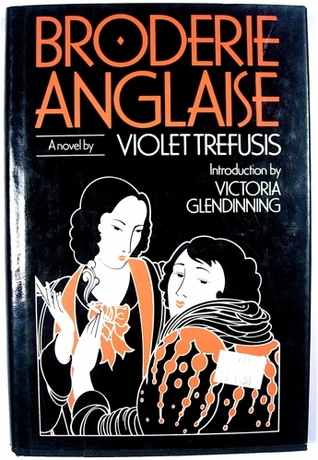
In Violet Trefusis’ Broderie Anglaise, translated from the French by Barbara Bray, 37-year-old Alexa, a novelist who lives in Oxford, is having an affair with handsome 29-year-old Lord John Shorne.  When he tells her he is going to Rome for two weeks, she knows it is “to see that Pamela.”

Broderie Anglaise by violet TrefusisHe wishes she would restrain her feelings, because it’s dull for him to deal with them.  He says,

…the least of your heroines is so much cleverer than you.”

“They’re my own portrait touched up,” she answers.

Even if we’re not novelists, don’t we understand this?

Has anyone ever asked you why you’re not exactly like the smart persona of your blogs/books/articles/comments/tweets/online discussion groups?

Once my boss wondered why I couldn’t be as buoyant as the persona of a very silly column I wrote.  The persona was of course myself, without the emotions or wandering attention that might keep me  a couple of beats behind in conversation.  Yes, I liked myself as a smart, endearing bubble-head, too.   When I wrote I had time to think of witty things that didn’t occur to me while I was talking.

Readers expect writers’ voices to be as sharp in life as in their books.  It seems naive that we should think this, when we know they spend hours shaping their prose.  I have met witty writers who aren’t at all witty in real life.  I have interviewed writers who long for nothing more than  to get away from their minders on book tour:  could I give them a clandestine bus schedule?  Or taxi fare?  Once at a dinner party, a friend said of talking to a writer, “It was just like talking to a guy,” and…well, he was a guy.  (As opposed to being a writer?)

In Broderie Anglaise, Alexa learns about storytellers’ voices. She learns that John, too, chooses what to tell, just as she chooses what to reveal in her novels.   When she finally meets Anne, a cousin he was very much in love with, she is surprsied that Anne is very different from the woman he described.

Viola Trefusis was the lover of Vita Sackville-West, who was later Virginia Woolf’s lover.  Trefusis met Woolf once.   In the novel, she recreates the triangle as heterosexual, not lesbian.  I thought John was a perfect male character. Turns out he’s Vita Sackville-West.  Alexa is based on Virginia Woolf,  and Anne on Trefusis.

Trefusis lived for years in France, and wrote novels both in English and French. You might be familiar with her light novel, Hunt the Slipper, published by Virago.

I very much enjoyed Broderie Anglaise and think it’s a better book than Hunt theV Slipper.  Perhaps I’m in the minority here, though.

Freaked Out, Getting Off Twitter, & Sven Birkerts on Technological Turbulence

The internet has ruined music for me.”–My Dearest Friend

My Dearest Friend has always been my most radical friend.  When we were young women, everyone was on the pill.  But artificial hormones were bad for us and could cause cancer, so she researched birth control methods:  the old barrier method, i.e., the diaphragm, was the best.

And so we used the diaphragm.  Which works if it’s not in a drawer.  Nor did we take hormones after menopause.  That also causes cancer.

My friend is radical in many ways. She doesn’t even have a computer, because she doesn’t think it’s smart to give away information on the internet.

Anyway, it’s more fun to write letters than email, though I don’t write letters as often as I should.

no_facebook I'm not on facebookBut here is why I love the internet: it is all about community.   I used to be fond of Book Central on AOL, and when that site closed, thought paranoiacally that it was to stop intelligent, literate people from communicating.

Because we were literate, very.  People wrote short essays on the site every day about books, not for money, but because they loved to talk about what they read. I met several of my online friends, and they were charming.  One friend had a folder of all my writing;  I myself hadn’t printed it out because it was very rough-drafty, so it freaked me out a little.   But I liked him because he decided not to go to a baseball game that day and just hung out with me instead.

Since the Book Central days, there have been a lot of changes, some good, some bad.

Everybody can write now, have a blog, or “microblog” (whatever that is), and I think that’s a good thing.  It used to be that hardly anybody got published.  Now everybody does, as the NSA knows.

Facebook:  pointless as far as I can see, and why is all your information up there?  (I don’t have a Facebook page.)

Goodreads, LibraryThing, Yahoo groups… Love the discussions, but everybody is writing shorter these days, and that makes me sad.

The worst, absolutely the worst, thing that has ever happened to the internet is Twitter.

What is Twitter for?

Marketing.

According to Wikipedia:

Twitter is an online social networking and microblogging service that enables users to send and read “tweets”, which are text messages limited to 140 characters. Registered users can read and post tweets but unregistered users can only read them.

140 characters.  No wonder literacy is dead.

I closed my Twitter account today, because it hurt my eyes to look at the short sentences. In five months I sent 62 tweets.  Actually 59, because somebody hacked my account and sent three others.  (It is closed now, so if you get any tweets from @MsMirabileDictu, it is not me.)

Coincidentally, on this day of closing my Twitter account, I read an excellent article in the L.A. Review of Books, “The Lint of the Material,” by Sven Birkerts, about changing technology.   He talks about the music industry (records to tapes to CDs to downloading), the GPS, and Google Glass.

But perhaps he writes most grippingly (a pun?) about the telephone: dial- or punch-button phones have changed to cell phones, small portable communication centers.

Like Birkerts, I am not a Luddite, but neither of us has a cell phone.

The device is so obviously fulfilling some complex compensatory function. Its uses are fluid and variable enough to fill up available interstices. Psychological pockets, gaps, interludes of idleness. Is this bad? Who can say? Better gaming and texting and surfing than any number of other occupations — obviously. On the other hand, what are the long-range effects of such efficient short-circuiting of idleness? What does all the fidgeting come to stand in the stead of? And how not to sound like another high-minded prig, not start going on about the incentive function of boredom — that we maybe need to be pushed up against ourselves, that the daydreaming boredom provokes nourishes subjective depth and invention? But these things should get said.

If we don’t have enough daydreaming boredom, we get cranky.  I stare at the screen, and what am I staring at?

And so I am cutting back on my online time. The end of Twitter today, the beginning of daydreams tomorrow.

Ray Russell’s Haunted Castles, Reading Proust, & Marilyn French

haunted castles ray russellI dislike horror.

I gave up on Stephen King’s The Shining.

I was terrified by Shirley Jackson’s The Haunting of Hill House.

They may be good horror genre books, but in general I prefer novels without ghosts or psychics.

Intrigued by the new Penguin series of the best in classic horror, however, I picked up a copy of Ray Russell’s Haunted Castles:  The Complete Gothic Stories, a collection of engrossing, but stylistically unexceptional tales.

In “Sardonicus,” the narrator-doctor, Sir Robert Cargrave, visits his former girlfriend, Maude Randall, and her husband, Mr. Sardonicus, at their castle in Bohemia.

He is one of those precise, detached scientific narrators we know from the tales of Poe and Le Fanu.  He accepts their invitation somewhat reluctantly and says amusingly of travel:

I am not–as my friend Harry Stanton is–fond of travel for its own sake.  Harry has often chided me on this point, calling me a dry-as-dust academician and ‘an incorrigible Londoner,’ which I suppose I am.  For, in point of fact, few things are more tiresome to me than ships and trains and carriages; and…the tedium of travel itself has often made me think twice before going out on a long voyage.”

He discovers that Maude is terrified of her husband, and when he meets Mr. Sardonicus, sees that the man’s lips are pulled back horrifically in “a mirthless smile.”  Mr. Sardonicus asks Sir Robert to operate on his face, though that operation has not, as it were, been approved by doctors.  It cannot end well…

The other tales are equally gloomy.  In “Sagitarrius,” an actor turns out to be demonic.  In “Sanguinarius,” a happy wife learns that her husband and her new female lover are not what they seem to be. In “The Runaway Lovers,” two lovers are put in a dungeon and horrified beyond imagination.

And so on…

There is a repellent, sadistic turn to these tales, as with so many other horror tales.

They’re for Halloween.

But I will certainly never read anything by Ray Russell again.

AND NOW ON TO PROUST.

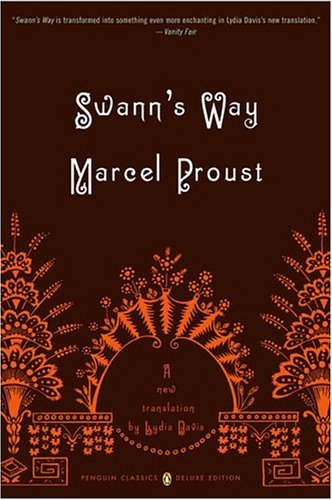
For a long time I went to bed early.  Sometimes, my candle scarcely out, my eyes would close so quickly that I did not have time to say to myself, ‘I’m falling asleep.’

swanns-way proust lydia davisYes, that is Lydia Davis’s translation of the beginning of Proust’s Swann’s Way, which I persuaded my husband to buy, because I deserve the latest translation.  I will begin Swann’s Way in November, the centennial of its publication, and  I plan to read all of Proust’s In Search of Lost Time in the next year.

Marcelle Clements, author of the excellent novel Midsummer, says in her article, “How to Read In Search of Lost Time” at Oprah.com, that we should read it quickly.

…here is the secret: Read fast. Read for plot—though you won’t understand what the plot is until the end. Don’t be frightened by the size of the novel. Critics scare readers off by talking of it as a cathedral.

Wouldn’t that be great?  Stay inside for hours…read…no distractions…get that app, “Freedom,” that keeps you off the internet.

But that is not going to happen.

I’ll be reading slowly.

It should take me at least a month to read Swann’s Way.  And then I’ll read something else, and then go back to In the Shadow of Young Girls in Flower.

DO YOU ENJOY MARILYN FRENCH?  Open Road Media has reissued four of Marilyn French’s novels and one memoir as e-books:  Her Mother’s Daughter, A Season in Hell (a memoir), My Summer with George, The Bleeding Heart, and Our Father.

French is best known for The Women’s Room, a best-selling feminist novel, which I read many years ago.  How nice that her other books are available.

I plan to read Her Mother’s Daughter while I roast the turkey on Thanksgiving:   I always read a family saga or other pop book on Thanksgiving.   One year I read Edna Ferber’s Giant. You get the picture.

If you’ve read and enjoyed anything by Marilyn French, let me know.

Why We Like Middle-Aged Heroines: Bridget Jones, Louise Bickford, and Julie de Carneilhan

Helen fielding bridget jones mad about the boyOne day a friend in her fifties, feeling confident and beautiful, walked along the beach wearing a bikini.  A young man came up behind her and then blanched when he saw her face.

“That’s when I knew I was middle-aged,” she said.

Many of us have moments like this, but we secretly remain confident, loving our crow’s feet, our gray hair, and our bodies.

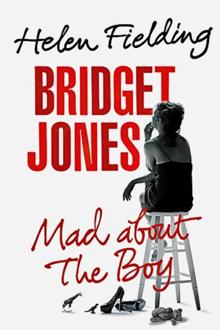
And so a lot of us are laughing aloud at the moxie of Bridget in Helen Fielding’s new novel, Bridget Jones:  Mad About the Boy.

Bridget, 51, now a widow and a single mother, is attempting to get out of the house and meet men.  It is a jungle in clubs and on Twitter and she makes many faux pas.   She tells “Leatherjacketman,” a man she meets at a club, that she hasn’t had sex in four and a half years.  And when she is on a date with a younger man, he takes away her phone so she won’t tweet the whole date.

Reviewers hate this book, and why it should be reviewed in the first place–it’s light, it’s charming, it’s not literature–I do not know.  It is not a comedy in the class of, say, Cathleen Schine’s The Three Weissmanns of Weissport, a retelling of Sense and Sensibility.  If reviewers expect Bridget to be a role model, they are not good readers.

Jen Chaney at The Washington Post says,

While parenthood and profound loss may have forced Bridget to grow up in some ways, she hasn’t grown up much. And that’s one of this novel’s key problems. Readers may expect a middle-aged woman who has dealt with such loss to have lowered her narcissism levels a tad. Not Bridget Jones . . . or, pardon me, ­@JonesyBJ.

Bridget is middle-aged, not dead.

Bridget is still in what I call the flirt zone, and that, too, is a problem for some reviewers.  One of Bridget’s suitors is 21 years younger, and of course we know it won’t last.  But, as Bridget points out, younger men like older women because they’re “refreshingly not looking to them to be bread-winners and not thinking about babies any more.”

And Bridget says of the fifties:

It used to be the age of Germaine Greer’s ‘Invisible Woman,’ branded as non-viable, post-menopausal sitcom fodder. But now with the Talitha school of branding combined with Kim Cattrall, Julianne and Demi Moore, etc., is all starting to change!

Well, Ashton left Demi…but I like Bridget’s viewpoint.

Reading about middle-aged women is empowering for those of us who are middle-aged.   Though women are believed not to age as well as men, that is probably a power thing:  we’re still doing everything we’ve always done, just as middle-aged men are.  And,  frankly, we  want to read about people our age now and then.  Young men and women can be…well…boring…if very sweet.

I have enjoyed other novels about aging women.

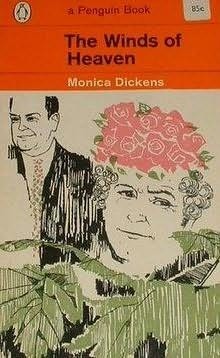
monica dickens 1 the winds of heavenIn Monica Dickens’ The Winds of Heaven, Louise Bickford, a 57-year-old widow, spends part of each year living with each of her three daughters.  (Thank God I didn’t reproduce, though I’ll probably regret it in old age.)   She spends the winter at a hotel owned by a friend who doesn’t want her.

In London, which seems unbearably exciting and sophisticated to Louise, she waits in a tea room for her daughter, wishing she were more attractive.

“Louise was always much concerned with how people were thinking of her and summing her up; not knowing that a small, middle-aged woman with stubby features and hair no longer brown and not yet grey usually goes unnoticed.”

But she does attract Gordon, a fat mystery writer, whom she meets in a tea room.  She has read his books.  They become good friends.

And Louise gradually finds herself.  This is a charming comedy-drama, not great literature, but entertaining.

Of course Colette’s Julie de Carneilhan is great literature, not a pop novel.  Julie, the beautiful heroine, in her early forties, still regrets her divorce from her second husband, Herbert.  Her brother tells her that people will talk if she goes out partying with her younger boyfriend, Coco, while Herbert is very ill.

Julie asks, “Am I expected to put on mourning in advance for a man who was unfaithful to me for eight years and has been married again for another three?”

She is bitter but deeply cares for Herbert, and has a revelation when she visits him.  This is a graceful, lyrical novel about the consequences of divorce.

I’m always interested in “middle-aged” literature.  So what are your favorite books about middle age and old age?  (And I don’t mean that book about menopause that recommends we have an orgasm a day to stay healthy.  I’m still laughing about that.)

Miklos Banffy’s They Were Counted; & Ask Ms. Mirabile

transylvanian trilogy -they_were_countedI sat around till 2 p.m. happily reading Miklós Bánffy’s They Were Counted, the first volume of The Transylvanian Trilogy.  Then I rushed outside, took a long walk in the beautiful fall light, and thought about this brilliant novel.

Count Miklós Bánffy (1873—1950), a Hungarian politician, diplomat, playwright, and novelist, wrote The Transylvanian Trilogy in the 1930s.  Set in the last years of the Austro-Hungarian Empire, They Were Counted shines with vivid descriptions of parties, balls, hunts, gambling, politics, and adulterous love. The urgency of the narrative is reminiscent of Tolstoy’s War and Peace: one reads on and on, never thinking about the length.

One of the protagonists, Count Balint Abady, is an intensely honorable politician and landowner who takes scrupulous care of his estate, camps on the mountain with his men to teach them forestry,  intervenes in a village feud with a moneylender, and takes care of his charming mother, who loves horses almost as much as she does her son, trusts Balint’s decisions, and hopes he will soon get married.  He is, however, in love with Adrienne, a brilliant woman whose sadistic husband has made her frigid.

His cousin Laszlo, a musician, is perhaps more sympathetic.  Why?  Because I frankly love the lost.  When he goes to music school in Budapest, he is a talented composer, immersed in his studies; but he is very much in love with his beautiful cousin, Klara, and after her stepmother opposes his courtship and persuades Klara to marry someone else, he becomes an addicted gambler.  And, horribly, most of the lies his aunt has told Klara come true: he falls into a relationship with Fanny, a gifted singer whose husband is old and indifferent.

They were counted banffyBanffy also fascinatingly describes Balint’s impressions of politics as a Member of Parliament.  At a Session of the General Assembly, he sees the new prefect, a lackey of the official government in Vienna, egged by students and other rioters.

From all sides there was a confused roar of shouting:  “Down with him!  Absug–away with you!  Traitor!”  Then Uncle Ambrus nudged Zoltan Alvinczy who at once raised a hand in the air.  From the back of the hall eggs started to fly, well-aimed eggs–for the students had obviously had much practice–which were chiefly directed at the school-teacher turned Prefect.  He ducked as well as he could but almost at once was struck on the forehead and yolk ran down all over his face.  He dived for shelter under the presidential table while a crowd collected round the platform with raised fists and menacing shouts.

Balint’s thoughtful reaction is typical of him.

Although Balint had shouted with the others and even raised his fists in the air, and laughed at the comicality of the scene when the Prefect had been pelted with eggs and taken refuge under the table, a great sadness descended on him as he went down the stairs and out into the street.  He thought only of the fact that an innocent man had been humiliated, and that it was callous and distasteful that everyone should think the whole affair a tremendous joke and nothing more.

Not a cheerful novel, you will say.  Yet the gorgeous writing is exactly what we need as the sky lowers and the light pales.  Better words. Does that happen to you, too?

ASK MS. MIRABILE.  My friend Janet and I are in our fifties; my cousin the librarian is 37.  She is very unhappy, and we were possibly unhappy in our late thirties, too.  It is a difficult time, when relationships grow stale, when couples know one another too well, and seek marriage counseling or divorce.

Women are not blameless, and It’s 50/50 who’s going to run off and run back or not.  We love our men friends and are not berating them.

But in the late thirties/early forties, men, if they’re inclined that way, run off with your friend, cheat with a colleague, or leave a note about a rendezvous in their pocket.

My cousin broke up last summer with a boyfriend who cheated on her.  (It was the summer of break-ups.)   And she has frantically since been going out with anyone who comes along.

My friend Janet, who very much dislikes my “drama queen” cousin, and I coaxed her into giving us her password at Match.com.  We might not have been entirely sober.  We had drunk Morning Thunder, “a charging brew of black tea and South American maté.”

We had fun, because there’s nothing at stake for us. We eliminated men on the basis of certain key phrases.   Any time a man said, “I love to take long walks,”  we crossed him off.   It is hard to find a profile of a man who doesn’t love to take long walks.  I have yet to see one of these long walks.  My cousin wears high heels.

Jason Batemen in "Arrested Development"

Jason Batemen in “Arrested Development.”

We found a man for her.  They apparently both like cricket.  (Yes, I know:  what are the odds?)  So we decided they should meet for coffee, not dinner, because dinner is too serious.  My cousin idly glanced at the profile, says she doesn’t like men with brown hair, and she can’t imagine why he would call himself an “attorney.”

“Maybe because he is an attorney?”  I guessed.

“I like the word ‘lawyer.'”

“Lawyer, attorney.  All men have brown hair,”  I said.

She doesn’t take this seriously, and who could blame her?  He might be nice; that’s as far as she’ll concede.

She wants us to go with her, but as we told her, we are not forming a book group,  we would then  get chatting about books, and the date would get lost in the shuffle.

And we have assured her many times, “Love is not the answer!’

“Whom do you love, Janet?”  she asked her.

Sighing, Janet said her mother.

“And whom do you love, Kat?”  Sighing, I pointed my finger at the man in the next room, my husband.

“Whom do you love, honey?”  we asked my cousin.

She said she loved Jason Bateman.

“And Jason Bateman has brown hair.”

“That’s not brown.  That’s Jason Batemen hair,” she insisted.

After all, it’s all just cappuccino.

Off the Grid and the “Real” ID

I’m at the Department of Motor Vehicles.

And my documents go flying out of my folder…

Birth certificate, Social Security card, proof of residence, voter registration card, a W-something form…

I lost track.

Whoops!

I gather it up again.

It was tough to get here.  It’s out in the middle of nowhere, off the interstate, off the bus grid.

I bicycle everywhere.  I don’t drive.   But you know that.

I’m not here to get a driver’s license.  I’m here to get a State ID.  Actually, it’s a Real ID now.   Everyone in the state has to get one before 2017.

A Real ID, which I’d never heard of until I got here, proves you’re not a terrorist.  That’s loosely it.  Read about it at the Department of Homeland Security website.  It’s unintelligible.

I’m a middle-class housewife.

I’m not a terrorist.

I cook vegetarian meals and read a lot.

People used to look at my birth certificate and laugh.  “Of course we’ll renew your library card.”

Now it’s all about the State ID/Real ID.

People should thank me daily for not emitting greenhouse gases.

Instead I can’t go to Canada without a passport.  I can’t get a passport without a State ID/Real ID.

It has gotten beyond ridiculous.

At the DMV we’re all sitting around looking at a giant screen waiting for our number to be called.  Most of us are getting State ID/Real IDs or driver’s licenses renewed.

It takes almost two hours.  An hour waiting, another hour getting it.  My documents are in order, my picture is taken, finally we’re done.  I’m not complaining:  the people at the DMV are very nice and very competent.

It’s the system.

Why do you have to go to the DMV if you don’t drive?  Why don’t they have an office downtown for non-drivers who need a State ID/Real ID?

And as to having to go out there to get your Voter Registration cards…

It ensures a lot of people aren’t going to be able to vote.

It is discrimination.  If you’re not zooming around the highway burning up oil, you shouldn’t be able to vote, get a library card, open a bank account…

Penalize the damned drivers!

No, I’m joking about that.

But it IS discrimination against the rest of us.

And we make a difference.