Book Groups, Best 100 Novels, GoodReads, & Yahoo Groups

In “Parks and Recreation,” a man chains himself to a pipe in Leslie’s office. After he lends “Twilight” to Tom, they (with Donna) form an impromptu book group.

BOOK GROUPS.  My cousin the librarian and I sit in the back yard.

We had Creamsicles for lunch.

She would prefer one of my tomatoes-on-pasta dishes.

I wasn’t up for it.

She is supposed to be in an office (with the cataloguers) reading Michael Chabon’s Telegraph Avenue. She is reading it on her iPad here.
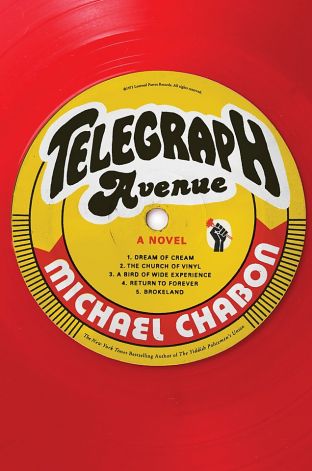
Telegraph Avenue Michael ChabonShe found out at 9 a.m. that she must substitute for the woman who leads the book group tonight.

She doesn’t have time to read the book.

It was my favorite book last year, but it is long.

“You could lead it,” she says.

I read it last December and don’t have time to prepare.

“But you could come to the group with me!”

I know that they would love it.  It would be very cute.  The librarian and her cousin!  She could be charming and chat (she is charming and  loquacious) and I could do all the work.

I am actually feeling sick today.

So, instead, I am researching Chabon for her and taking notes on reviews of Telegraph Avenue.

“What page are you on?” I ask.

“50.  Can I have another Creamsicle?”

So here’s my plan for the book group (and God help me, I might have to go along, though I’m unwell):

  • Offer everyone Darjeeling tea (which I will provide for her in a big thermos, because I have much Darjeeling).
  • Briefly introduce the book and summarize a couple of reviews.  (I will write the introduction.)
  • Show pictures of Michael Chabon on the iPad.  Pass it around.  According to Wikipedia, he turned down an opportunity to be named one of People’s 50 Most Beautiful People after The Mysteries of Pittsburgh was published.  He is indeed good-looking.
  • Mention his wife, who is also a writer, Ayelet Waldman.

That will take 10 minutes, what with the chat of the group members.

Then:

  • Explain that your style of leading a book group is to remain neutral.  You will ask questions and they will answer.
  • Read questions from the back of paperback.

Tada!  What could be easier?

100 Best Novels.  In 2003, Robert McCrum of The Observer made a list of The Greatest Novels of All Time.  It is still popular, he says.   Now he is making another list, only with novels in English, in collaboration with The Guardian.  One book will be introduced at a time over 100 weeks.

He is starting with Pilgrim’s Progress, which Meg, Jo, Amy, and Beth in Little Women liked.  (I couldn’t care less about it, though.)

But I very much like his selection of Jane Austen:  Emma, my favorite book.

He writes:

Inevitably, this list reflects educational, national and social influences. Some Scottish readers may say that we have not given enough space to the great northern tradition.Irish readers will argue about Flann O’Brien (aka Myles na gCopaleen). In or out? Wait and see. Further afield, in the English-speaking world,some Australian readers may feel short-changed. All we can say in response is that this list was compiled for a British newspaper, based in London, in 2013.

There will be debate.

Goodreads’ New Standards for Posts.  I have joined a group at Goodreads, which is good for discussions (though I haven’t had time). One problem:  first-time authors leave posts promoting their books rather than chatting about the assigned book.

As far as I know, Goodreads does not delete these posts.

Kara Erickson, Director of Customer Care, announced that they will delete reviews about author behavior at readings or elsewhere.

We have had a policy of removing reviews that were created primarily to talk about author behavior from the community book page. Once removed, these reviews would remain on the member’s profile. Starting today, we will now delete these entirely from the site. We will also delete shelves and lists of books on Goodreads that are focused on author behavior.

Is this censorship?

I once helped run a book group at Book Central (now defunct) on AOL.  It was a wonderful place to post about books, but we deleted attacks on fellow members (usually from strangers), racial slurs, gender slurs, and general hate talk.

I don’t remember deleting posts about authors, though some were negative.

Should such posts be deleted?

What do you think?

Yahoo Groups changes.  At Under the Sign of Sylvia 2, Ellen Moody has posted a fascinating piece, “The Debasement of Yahoo Groups.”
The Barbara Pym Centenary & An Academic Question

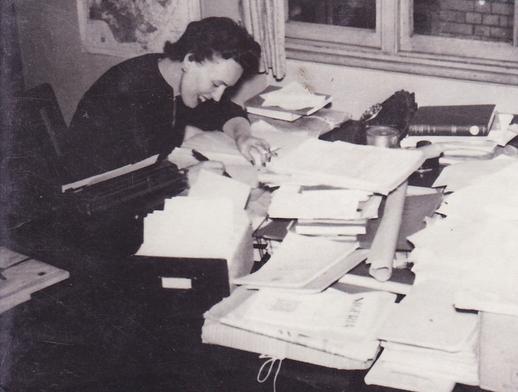
Barbara Pym at the International African Institute

Barbara Pym working at the International African Institute

It is the centenary of Barbara Pym’s birth.

I devoured Pym’s books in graduate school. In 1977  in the TLS she was named by Philip Larkin and Lord David Cecil “the most underrated novelist of the century.” Then she was “rediscovered” in the UK and published in the U.S.  I picked up a copy of Excellent Women at a used bookstore and was hooked.  I wasn’t the only one who liked Pym:  a comp lit professor and I chatted about her on smoking breaks.  The library was so dreary–no windows above the second floor–that I frequently bounded down to the smoking lounge (though I didn’t smoke), which was all windows, for a chat or a good read of a new novel.

One cannot read too much Pym.  Her writing is charming, humorous, and wry.  I read An Academic Question this week, but it’s not the only Pym I’ve read this year.

On Feb. 11, I wrote about her witty, beautifully-crafted first novel, Some Tame Gazelle. The fiftysomething heroine, Belinda Bede, muses endlessly about clothes, to my delight:  I muse more than I buy.  Though she wears “suitable” dresses and sensible shoes, her younger sister Harriet reads Vogue and insists that Miss Prior, the village seamstress, make her fashionable dresses with the latest sleeves.  They live next door to the vicarage and are constantly planning what to wear to church functions.  And, yes, their names are puns:  Bede and Prior.

On Feb. 13 I wrote about her 1978 novel, The Sweet Dove Died.  The heroine, Lenora Eyre, becomes involved with two antique dealers, an uncle and nephew, when she faints at an auction after buying a book about the language of flowers. The one is perhaps too old, the other too young:  whom should she love?

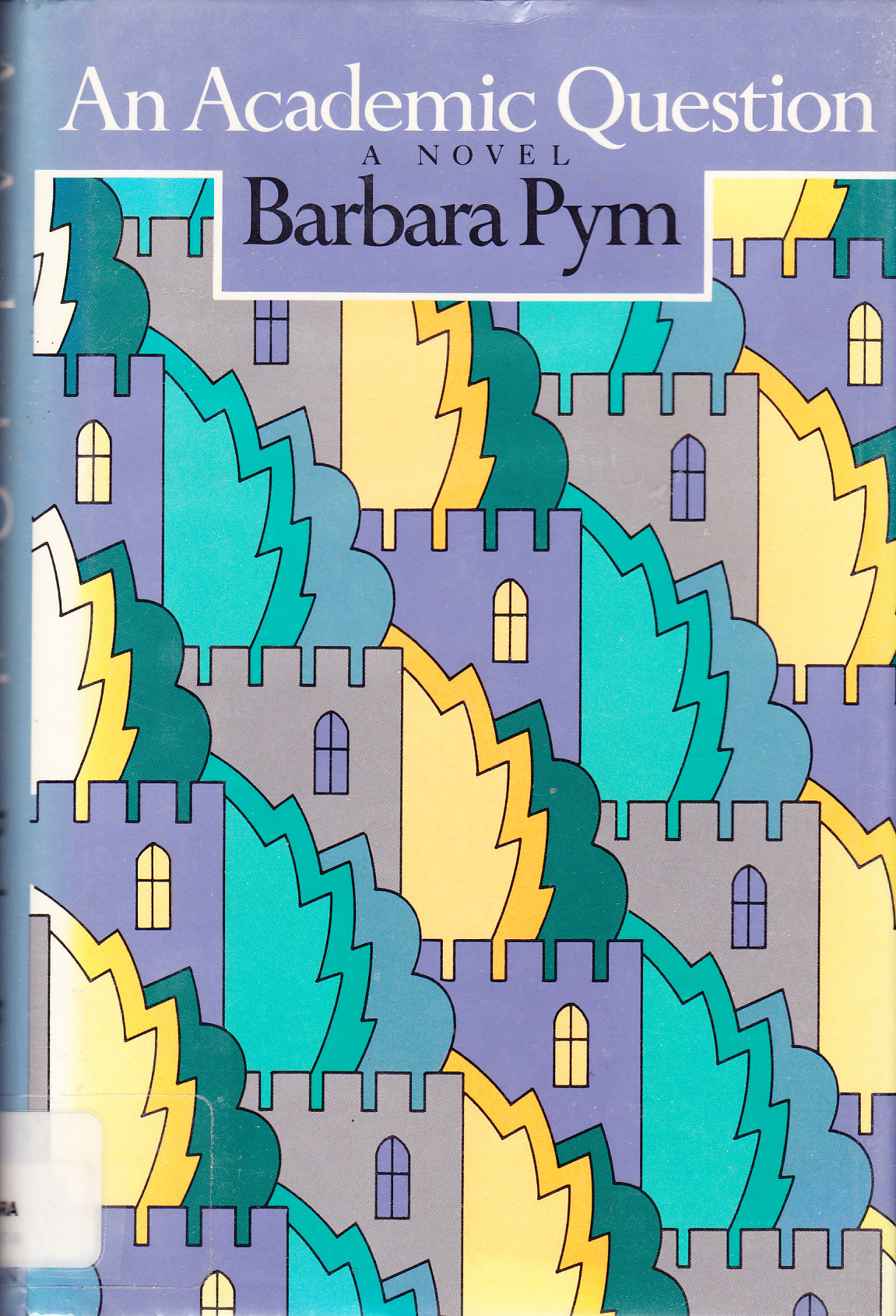
An Academic Question PymAn Academic Question, published posthumously, was edited by Hazel Holt from two drafts.  It is not quite as elegant as her other books, but it is very funny.   It was, according to a letter Pym wrote to Philip Larkin, “supposed to be a sort of Margaret Drabble effort but of course it hasn’t turned out like that at all.”

IPym’s tone is more whimsical and wry than Drabble’s, though this book is a bit like Drabble’s early comedies:  Pym, too, is writing about a woman’s facing the widespread changes of the 1960s. The narrator, Caroline Grimstone, a  28-year-old housewife married to a university lecturer, is very bored.  She knows she should get a job, but work strikes her as meaningless.  Her husband, Alan, suggests she work at the library, but she would prefer to assist her her friend Dolly at her second-hand book and junk shop.  Alan masterfully tells her that’s impossible with her education.

Caroline’s best friend, Coco, Dolly’s brother, a handsome 42-year-old man with a research fellowship in Caribbean Studies and an interest in fashion, is closer to Caroline than her sister. He has his own idea about what bored Caroline should do.  He suggests that she take a lover.

The dialogue between them is hilarious.

That’s what people do,” he said, as if I had no knowledge of the world.

“Yes, of course,” I agreed.  “But who, or whom, come to that–who is there in a place like this?”

Coco became vague.  He had nobody definite in mind and I certainly wouldn’t be satisfied with just anybody.  A distinguished writer or artist, even a member of a noble family or an exiled royal–perhaps there was no one such living in the town…

“But an exiled royal would probably be decayed and moth-eaten,” I protested, “and I want better than that.”

She takes Dolly’s more practical suggestion to volunteer to read aloud at an old people’s home.

This becomes a hilarious opportunity for her husband to steal papers from the distinguished scholar Caroline reads to.  He writes an article that becomes an object of contention between him and another scholar.

It is such a funny, funny book:  I did laugh aloud.  But it also touches on issues of the ’60s and ’70s:  the students at the university protest, and Caroline’s sister has an abortion.

By the way, if you are in Manchester in the UK, October 7, 7:30 p.m., you can attend “An Excellent Woman: A Celebration of Barbara Pym” with Louis de Bernieres, Paul Binding and Donna Coonan at The Manchester Literature Festival

Alas, I won’t be there.

Mirabile Does Fashion: Eyeliner & Ovid on Makeup

The other day I found an eyeliner pencil in my bathroom.

Who would bother to use eyeliner at my house?

I take pride in the “Latin-teacher-cum-freelancer” plain Jane style.  Although my mother and I put on lipstick before going to the mall, feminists didn’t wear makeup in my youth, except Gloria Steinem, who dated Henry Kissinger.  Since I freelance out of my home, I don’t wear eyeliner.  As for Latin teachers, they’re not glamorous.  I fondly remember being interviewed by a very plain Latin teacher who wore a wrinkly cotton dress and flat sandals from an Indian-clothing and-incense shop.  Her colleagues wore full makeup, Pappagallo dresses, and espadrilles or pumps.

Well, I had a Pappagallo suit…but I quite liked the cotton dress and sandal look.

As soon as I got the job, I wore slacks.

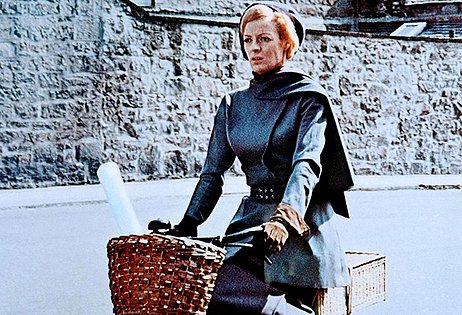
First I posted a picture of myself as a schoolmarm, but then I realized we'd all rather see Maggie Smith in "The Prime of Miss Jean Brodie"

Maggie Smith on a bike in “The Prime of Miss Jean Brodie”

Does Pappagallo still exist?

Anyway, I picked up the eyeliner yesterday.  And–this is so weird–I took off the cap and applied the eyeliner.  I accidentally made that weird  curl in the line beside the eye.  When I did the water line under my eye, it really hurt.

I immediately washed it off.

I liked the smudge under my eye look.

I washed that off, too.

I have to read.  The eyeliner hurt my eyes.

Though I could definitely use some makeup.  Something human-friendly.

But there are toxic metals in makeup that can be absorbed through the skin.

In a recent article at the New York Times Well blog, “Is There Danger Lurking in Your Lipstick?”, Deborah Blum reported that the Campaign for Safe Cosmetics (2007) and The Food and Drug Administration (2011) found lead contamination and other metals in lipstick.  A new study in May in the journal Environmental Health Perspectives reported traces of cadmium, cobalt, aluminum, titanium, manganese, chromium, copper and nickel in 24 lip glosses and eight lipstick brands.

Loreal has five  lipsticks in the ten most lead-tainted brands.

And it’s not just lipstick.

According to an article, “Beauty Secrets Mean Lead in Lipstick, Arsenic in Eyeliner,” at EMax, Environmental Defence in Canada studied 49 makeup brands.  Among the highest in metals:

Clinique Stay True makeup (Stay Ivory), found to contain arsenic, beryllium, cadmium, nickel, lead, and thallium

Cover Girl Perfect Point Plus (eye liner), found to contain beryllium, cadmium, nickel, and lead

L’Oreal Bare Naturale (mascara), found to contain arsenic, beryllium, cadmium, nickel, lead, and thallium

The metals can cause hormone disruption,cancer, neurological problems, memory loss, mood swings, reproductive and developmental disorders, kidney problems, headaches, vomiting, diarrhea, lung damage, dermatitis, and hair loss.

The "Cosmetics" poem in Ovid's "The Erotic Poems"

The “Cosmetics” poem is in Ovid’s “The Erotic Poems”

And now for something lighter.  Ovid, the brilliant Roman poet who wrote Metamorphoses, also wrote a didactic poem about makeup, Medicamina Faciei Femineae (Cosmetics for the Female Face), with some makeup recipes.  100 lines survive.

Peter Green translates the beginning thus:

Girls, learn from me what treatment will embellish
   Your complexions, how beauty is best preserved.

Please, Ovid, I want to know.

Some of them have white lead.  But this “face pack” (or mask) recipe does not.

Take imported Libyan barley, strip off its outer
Husk and chaff, measure two
Pounds of stripped grain, and add an equal measure
Of vetch steeped in ten raw eggs.
Let this mixture dry in the air, then have your donkey grind it
Slowly, taking the rough quern round; prepare
Two ounces of powdered hartshorn, taken from a vigorous
Stag’s first-fallen antlers; stir this well
Into the powdery meal, then sift the mixture.
At once through fine-meshed sieves.
Take twelve narcissus bulbs, skin them and pound them
(Use a marble block);  add them in,
With two ounces of gum and Tuscan spelt-seeds,
And a pound and a half of honey.  Any girl
Who uses a face pack according to the prescription
Will shine brighter than her own
Mirror….

Frankly, where can we get hartshorn?

Tell me of any eco-friendly, human-friendly makeup you know.

Diary of a Mad Housewife, The Adorableness of Online Life, & An Imaginary Latin-thon

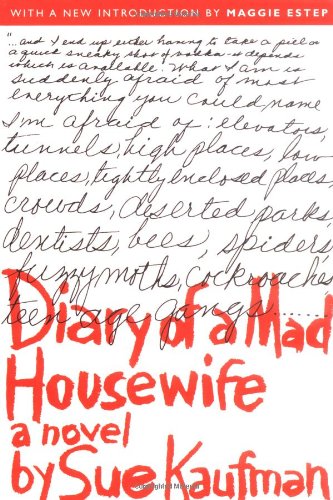
Diary of a Mad Housewife by Sue KaufmanI learned about Sue Kaufman’s Diary of a Mad Housewife from Public Radio.

“The Bookshelf,” a local program on NPR, was a favorite at our house.  At 6:30 (when I was making dinner), the classical music hosts took turns reading aloud their favorite books.  Sometimes it would take two weeks, sometimes a month. It was often touching:   I will never forget listening to Tennyson’s Idylls of the King.

The show was canceled.  Budget cuts.

After seeing the movie, I read Diary of a Mad Housewife, published in 1967.  But it made little impression.  Thanks to NPR for helping me rediscover it.

It is a small masterpiece, a kind of female odyssey of the ’60s that ranks with early Philip Roth.  Like so many American women’s books of the ’60s, it literally is small:  306 pages, as opposed to the baggy monsters.

Tina, the narrator, a Smith graduate, housewife, and former aspiring artist, keeps a diary.  Her status-conscious husband, a partner at a law firm, drags her to parties where he is obsequious to  famous artists and theater people who despise him.  Tina stands in the corner, not bothering to talk.  Once she retires to the bathroom for 15 minutes.

The marriage is ghastly, the product of her psychoanalyis.  After a small breakdown, she entered analysis with Dr. Popkin, who taught her that women want marriage and a happy home, not art.  She works as a secretary at a hospital, but does not, alas, meet any eligible men.

…I never met any of the Nice Young Doctor types Popkin had hinted I might.  I met only married or unmarried doctors who wanted just one thing and wanted it fast–a thing I wasn’t supposed to give to anyone, fast or slow, what with my brand-new Insights:  Femininity = Discretion = No Jumping Into Bed.  I was all for Femininity, but my social life got pretty drab.

Popkin suggests she join the local Democratic Club to meet men; she meets Jonathan and falls in love with his ideals, but mostly with his red suspenders, she is embarrassed to remember.

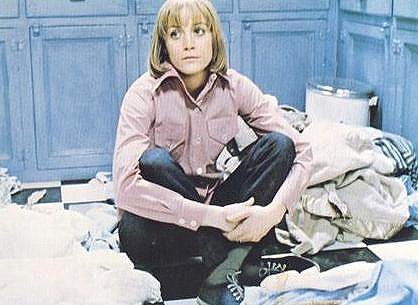
Carrie Snodgrass in "Diary of a Mad Housewife"

Carrie Snodgrass in “Diary of a Mad Housewife”

Tina is privileged.  I won’t pretend she isn’t.  She has a gem of a hired woman who comes in several days a week.

But after Jonathan complains about her neglect of the house, she hires a laundress and window washer for the day.  The laundress washes only one load of clothes and spends the rest of time eating, smoking, and attempting to steal Jonathan’s gourmet food.  (The daily woman stops her.)  The window washer is great with squeegees, but steals a few valuable items from her husband’s study.

Tina can’t cope–and who can blame her?

I’d planned to spend the day at home, doing some work myself–cleaning closets, drawers–while those major chores were getting done, but I suddenly knew I had to get out of that nuthouse, even if it was for just an hour.

She flees to the Metropolitan Museum of Art.  It’s the first time in 14 years she’s been there without the children, and it helps her to remember who she is.

The scene reminds me of my own inability to cope with “maids.”  The one time I had a maid service in, when I was getting ready to sell a house, I cleaned it thoroughly first.  I fled while they cleaned, and when I came back they had done very little.  At least I got them to dust the ceiling fans.

More on The Diary of a Mad Housewife later.

THE ADORABLENESS OF ONLINE LIFE.  The online literary life can be adorable.  I’m sure you know that.

Take Dovegreyreader’s hosting of a monthly discussion of Vikram Seth’s A Suitable Boy.  Why not read along? I thought.   Perhaps it will be interesting.

So I ordered a hardcover copy for a penny.

I came home from a bike ride to find a gigantic box on my porch.

What on earth?  I wondered

Good God, it couldn’t be a book.

It was a brick!

I opened it and…. it is a brick, with 1,349 pages of small print.

A Suitable Boy is almost as big as my big Lewis and Short Latin dictionary.  It is bigger than my copy of War and Peace.

I like to sprawl with a book.  I like to read in the supine position.

I will have to sit up.

Perhaps I’ll get the e-book.

There isn’t an e-book.

I’ll read it though.

Luv ya, Dovegreyreader, but gosh!!!???????

The next item is adorable.   It’s the 24-Hour Readathon at Dewey’s Read-a-thon.  A favorite blogger linked me there, and, though the Readathon is cute, it is insane.  On Saturday,  October 12, a group of energetic bloggers, tweeters, and Facebook-ers plan to read for 24 hours and post about it throughout the day.

I plan to spend at least eight hours on Oct. 12 knocked out on Sominex, Valerian, or  Ambien (it’s the weekend!).  And then off to the Iowa City Book Festival.  It’s the weekend!  We go outside!

This does, however, inspire me to create an Imaginary Latin-Read-a-Thon.  Yes, on Saturday, Oct. 19, we can PRETEND to read Latin poetry and post, tweet, whatever.  Only for two hours though:  I’m not insane. I mean, I might read Latin for two hours, but I won’t post about it.

Perhaps I can hunt down my old classics cronies.  One of my (former) adult ed students could translate a little Wheelock.

Now what famous classicists can I invite?  And let me just say there will be wine.

As Horace says in Latin,

Vile potabis modicis Sabinum
Cantharis…

Or, as we say in English,

“You will drink cheap Sabine wine in plain/cups..,”

I’m sure the five famous classicists I plan to invite have nothing better to do on Saturday morning than hang out online.  It is their dream.  But it’s only an IMAGINARY invitation, okay?

I will invite:

1.  Sir Peter Stothard, editor of TLS, a classicist, and author of Alexandria:  The Last Nights of Cleopatra, a memoir of his fascination with Cleopatra.

2.  Chris Martin of Coldplay, who graduated with first-class honors in classics at London College University.

3.  Victor Davis Hanson, a classicist and historian at the Hoover Institution, Stanford University, the author of many books, among them Who Killed Homer?: The Demise of Classical Education and the Recovery of Greek Wisdom, with John Heath; Fields Without Dreams: Defending the Agrarian Idea; The End of Sparta: A Novel; and The Father of Us All: War and History, Ancient and Modern”.

4.  David Meadows, a Latin teacher and ABD in Roman Studies at McMaster University who runs the great Rogueclassicism website.

5.  J. K. Rowling:  she minored in classics, and I very much liked her book, The Casual Vacancy.

So see ya on Oct. 19!  But remember, it’s imaginary.:)  So I won’t be here!

The Last Day of Summer & Viola Di Grado’s 70% Acrylic 30% Wool

Our back yard, Spring 2013.

Our back yard, Spring 2013.

Picture a woman in an Adirondack chair next to a pear tree.

I have just washed the kitchen floor.  I am taking a reading break.

I wave.

it is colder today.  I’m in jeans and a hoodie.

housewife-no-means-of-escapeMy hands are crepey from the sun and Pine-Sol.

I am careless about the sun and Pine-Sol.

I love the summer, but this is the last day of summer.

I understand perfectly what Elizabeth, the narrator of Elizabeth von Arnim’s The Solitary Summer, the sequel to Elizabeth and Her German Garden, means when she says to her husband, the “Man of Wrath,”

I want to be alone for a whole summer, and get to the very dregs of life. I want to be as idle as I can, so that my soul may have time to grow. Nobody shall be invited to stay with me, and if any one calls they will be told that I am out, or away, or sick.  I shall spend the months in the garden, and on the plain, and in the forests. I shall watch the things that happen in my garden, and see where I have made mistakes. On wet days I will go into the thickest parts of the forests, where the pine needles are everlastingly dry, and when the sun shines I’ll lie on the heath and see how the broom flares against the clouds. I shall be perpetually happy, because there will be no one to worry me.  Out there on the plain there is silence, and where there is silence I have discovered there is peace.”

We live on the plains, actually the prairie, so there is silence.  Next summer I want more silence.

This summer I’ve been sociable.  I’ve chatted endlessly, cooked 80 vegetarian meals, and biked with the “Man of Wrath” more miles than I like to count.

I am still grieving over my mother’s death.  I think about the funeral when the priest swung the censer and it broke.  A sign, don’t you agree?  That the family was broken… that the behavior needed to change… that she wasn’t at peace.

I wish I had been a pall bearer. Why didn’t I think of it?

My “Man of Wrath” is in perpetual motion, exercising mostly. His disbelief in organic food is a problem for me, a 90% vegetarian cook. He scorns my favorite cooking show,  Christina Cooks.  He muttered to Christina the other night, “Shut up about organic!”

Though our garden is organic, he refuses to buy organic vegetables.  He buys what’s cheap.  I picture the cheapest of cheap vegetables sucking up the pesticides.

And so I am plotting new ways to bring organic vegetables into our home. I’ve decided to put my book money back into my housekeeping fund.  I’ll make trips to Whole Foods and bring in a few organic greens at a time.

If only we had a co-op…

Can you believe there’s not a co-op here?

I’m even worried about the vegetables we grow.  Does the poison from our neighbor’s lawn blow/run off into our yard?

70-Acrylic-30-Wool viola di gradoMY READING LIFE I finished Viola Di Grado’s 70% Acrylic 30% Wool, translated by Michael Reynolds.

In this short, surreal novel, winter has taken over the city of Leeds. Di Grado’s hyperbolic description of winter is very funny.

It snowed all day, except for a brief autumnal parenthesis in August that stirred the leaves a little and then went back to whence it had come, like a warm-up band before a headliner.

Since her father’s death with his lover in an accident, the Italian narrator, Camelia, and her mother, a flautist, have ceased talking and developed a silent language of looks.  Camelia has dropped out of the university; her mother has ceased to work.  When Camelia occasionally goes out for supplies, “an icy muzzle immobilized my jaw and the wind whipped my umbrella inside out.”

Much of the novel is a deconstruction of emotional emptiness.  Her mother begins to take photographs of holes.  Camelia finds discarded clothing in a dumpster with sleeves on the seats of pants and shirts with underarm buttons.  She cuts holes in it.

I picked up the scissors and sent the blue sweater to 70% acrylic 30% wool hell.  I amputated cleanly the whole part that hid the breasts that Wen will never want to see.  What is there to see anyway, my bosom is an A at the most.

The relationship of language and symbols is also explored.   Studying Chinese briefly makes Camelia bloom : Wen, the store owner whose ruined clothes have been discarded in the dumpster, teaches her Chinese.   She writes ideograms on thin paper and covers the walls with them.  She is in love with Wen.

But when Wen rejects her, she has an affair with his “retarded” brother Jimmy.  She begins to fear death, because Lily, another woman rejected by Wen, apparently died.

The language is stunning, even in translation, and the comical, angry tone is inimitable.  The novel ends with a twist, and honestly I thought it too abrupt, but the language is brilliant and bold throughout.

This won the Campiello Prize for First Novel in 2011.

Oh, Come on! The National Book Award Fiction Finalists

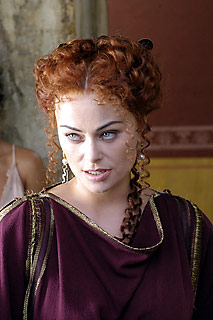
Atia (Octavian/Augustus' mother) in "Rome" (played by Polly Walker)

Atia (Octavian/Augustus’ mother) in “Rome”

When I saw the announcement of the National Book Award fiction longlist in the Washington Post this morning, I thought, Here’s something I can get behind.  But then I nearly spit out my tea.

“This is a f—–g starf—-ers’ list!  The trollops!”

Excuse the f- words. I’m watching the second season of the HBO series, Rome, and every other word is f—.  “Very British,” my husband says.  “Very HBO,” I say.  I also now call everyone a trollop, because Atia, Octavian/Augustus’s mother (played by Polly Walker), uses the t-word.

The National Book Award has long been the equivalent of the Man Booker Prize, to my mind:  I’ve never taken the Pulitzer seriously, what with their occasionally refusing to award it.  Now the NBA has a longlist-shortlist system, just like the Booker.  The poetry longlist was announced on Tuesday.  The nonfiction yesterday.  Today the fiction.

I don’t mind that my favorites of the year (see sidebar) didn’t make the longlist.  What I do mind is that there are only four writers on this list whose work I’ve never read.

Come on, give me something to work with here! I like to discover something new.

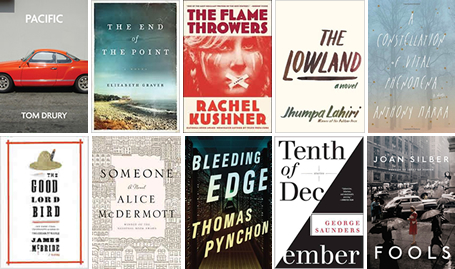
The list:

National Book Awards fiction 2013 lonTom Drury, “Pacific” (Grove).
Elizabeth Graver, “The End of the Point” (Harper).
Rachel Kushner, “The Flamethrowers” (Scribner).
Jhumpa Lahiri, “The Lowland” (Forthcoming from Knopf on Sept. 24).
Anthony Marra, “A Constellation of Vital Phenomena” (Hogarth).
James McBride, “The Good Lord Bird” (Riverhead).
Alice McDermott, “Someone” (Farrar Straus Giroux).
Thomas Pynchon, “Bleeding Edge” (Penguin).
George Saunders, “Tenth of December: Stories” (Random House).
Joan Silber, “Fools: Stories” (Norton).

I’ve read reviews of every book on this list except Pacific.

I’ve read all of Alice McDermott’s books.  I’ll read this one, too.  She won the National Book Award in 1998 for Charming Billy.

I admire Joan Silber, George Saunders, Jhumpa Lahiri, James McBride, and Thomas Pynchon (who won the NBR in 1974 for Gravity’s Rainbow).

And so there are only four I’ve never read a word of.

“Is something wrong?” a family member asked.  He had spilled coffee all over his tie so wasn’t in the best of spirits.

“They’re trollops!”  I answered.

“Trollope?”  he asked.

“The judges!”

“Trollope?”

He went out the door.  I know I will have better luck discussing this online.

The judges are:  former New York Times Book Review editor Charles McGrath (chair), Charles Baxter (a brilliant novelist and short story writer),  Gish Jen (ditto),Rick Simonson, a bookseller at Elliott Bay Book Company in Seattle, and René Steinke (a novelist I haven’t read).

Perhaps all these books are masterpieces.

Perhaps the judges have their eye on one of the few, very few, longshots.

It’s always wonderful when the award goes to someone unknown, though of course the unknowns are no longer unknown:  Lily Tuck, Andrea Barrett, Jaimy Gordon.

Perhaps the judges should develop a narrative about the writers for us so we’ll have something to care about.

MEANWHILE, EVERYONE IN THE UK is raging because the Man Booker Prize has been opened up to Americans.  They much prefer the Commonwealth, they say.

What is the Commonwealth?  one wonders.  O Can-a-da!  India, South Africa, Australia… is the “wealth” really “common”?

The Americans revolted long, long ago.  “We hold these truths to be self-evident…,” etc., etc.

There is no reason for the Booker to be open to Americans.

Americans do qualify for the Orange Prize/Women’s Prize, and often win it.

And so the Brits and I are steaming about different awards.

Mrs. Miniver, Middle Age, & Matron Clothes

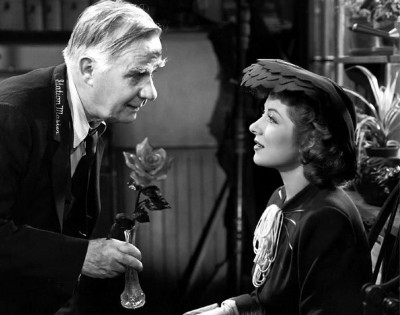
Greer Garson as Mrs. Miniver

Greer Garson as Mrs. Miniver

Mrs. Miniver suddenly understood why she was enjoying the forties so much better than she had enjoyed the thirties: it was the difference between August and October, between the heaviness of late summer and the sparkle of early autumn, between the ending of an old phase and the beginning of a fresh one.

I very much enjoyed reading Jan Struther’s Mrs. Miniver, a collection of charming columns she wrote in the 1930s for the London Times.  Mrs. Miniver is a fictional character based on Struther.  In 1939 the columns were published as a novel (you can read the entire book at this website.)

As a housewife/cook/bicycling blogger, I think it would be lovely to be Mrs. Miniver.  In the very first chapter, when she is musing about being in her forties, she comes home to a fire in the fireplace and tea laid out on the table by the servant:   “…there were honey sandwiches, brandy-snaps, and small ratafia biscuits; and there would, she knew, be crumpets.”

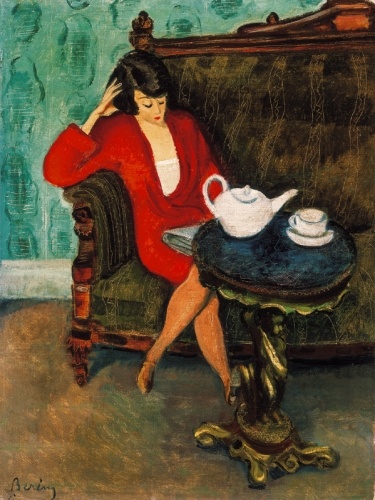
"Red-dressed Woman in a Green Room" by Róbert Berény

“Red-dressed Woman in a Green Room” by Róbert Berény

Perhaps it is easier to examine the vicissitudes of life wisely if one has servants.  She loves her three children but is not trapped by them (her oldest son is at Eton), one of her greatest problems is getting used to a new car, she endearingly buys an expensive green lizard engagement diary instead of a new hat, and she does not need romance:  she describes marriage as two crescents bound at the points, with a leaf-shaped space in the middle “for privacy or understanding, essential in a happy marriage.”

The forties…  All gone!  Mrs. Miniver had better circumstances. The fifties have been better for me.  The forties were a time of heartbreak, of working for an unstable boss, and coping with an early menopause.  For almost a year I actually missed menstruating.  Tampons.  The stain of blood on a white skirt on the bus.  (A whispered “Miss!  Your period.”)  Then there were hot flashes.   There was blushing. I refused to support the pharmaceutical companies by taking hormones (which was brilliant, since they were shown to cause cancer).

Finally, in my  fifties, I began to feel the “sparkle of early autumn” Mrs. Miniver writes about.  There is a confidence in one’s fifties, a cessation of trying too hard to please, and a willingness to try new things.

Of course you miss your younger body.

But you can, if you want, let go of:

  • dyeing your hair blond
  • baking eggplant parmesan in a small kitchen where every surface is covered with ingredients and you must move into the dining room to put it all together–probably in tears!
  • saying “Have a nice day!” to the guy who plays his drums late at night
  • pretending you will bicycle 100 miles with your husband/boyfriend/girlfriend (35 is my limit)
  • saying you’ll read James Joyce’s Ulysses
  • wanting a large leather hobo bag that costs $1,495 (throw out your TV!  That’s where you saw it.)

You will, on the other hand, need more makeup and a better wardrobe.

The Loved and Envied enid bagnold beautiful coverIs aging the last frontier for women in literature?  Certainly many honest, bold writers have written about sexuality in middle- and old age. Lessing’s The Summer Before the Dark, a novel about a woman’s coping with midlife, is one of my favorite books.  Her novel Love Again is about love at the wrong time of life:  a 65-year-old theater manager and writer, who hasn’t had sex in 20 years or missed it, falls in love with a flirtatious American actor in his twenties.  Erica Jong is the author of the memoir, Fear of Fifty.  Virginia Woolf writes about the 50ish Mrs. Ramsay in To the Lighthouse.  Elizabeth von Arnim’s Mr. Skeffington is a coming-of-middle-age story about a beautiful woman turning 50.  Enid Bagnold’s The Loved and Envied tells the story of a group of friends who are dealing with aging.  May Sarton published diaries on aging.

And of course there are many more.

Which writers do you recommend on aging?  And what are your thoughts on different decades of life?

BOOKS & MATRONS. I was recently treated with respect at Barnes and Noble.  Why?  Because I wore MATRON CLOTHES.

Some of you may remember that I bought “matron clothes” for my mother’s funeral in August.  I rushed into a department store, took a jumble of suitable tops into the dressing room, and bought the first five that fit. In my feminine top over stretchy jeans, I was  promptly served my latte at B&N in about 30 seconds.  When I bought a book, the clerk did not a smile–that would have been going too far–but there was courtesy.

The moral?  Dress up!

Who’s Anne?

IMG_2669I took notes on our Persuasion salon.

Few occasions are more amusing than the meeting of my cousin, my friend Janet, and myself to decide which of us most resembles Anne, the heroine of Austen’s Persuasion.

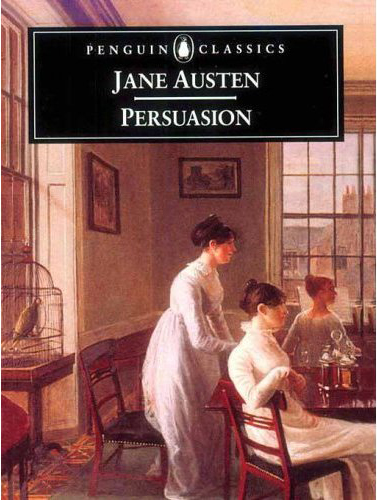
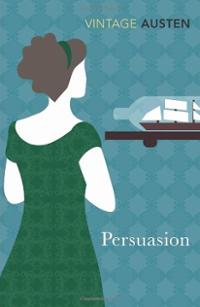
Persuasion Jane Austen PenguinMany of you have read Persuasion, and I am sure, like us, you are interested in the question of whether you are  Anne. She is the most sympathetic of Austen’s heroines.

It’s simple on the surface:  a matter of ABC, or 1 + 2.  Anne, the quiet, charming 27-year-old  middle daughter of a baronet, is not esteemed by her family, and are you as highly regarded as you should be?  Formerly very pretty, she has lost her bloom over the years, and is a bit of a Cinderella figure.  At 19, she refused Frederick Wentworths’ proposal, because Lady Russell, her late mother’s best friend, advised her to.  She regrets having parted with Captain Wentworth, her true love, and has turned down the suitor who later married her sister, Mary.

It’s all about m-o-n-e-y with Lady Russell.  (And with Jane.)

Austen tells us,

Captain Wentworth had no fortune.  He had been lucky in his profession, but spending freely, what had come freely, had realized nothing.  But, he was confident that he should soon be rich;–full of life and ardor, he knew he should soon have a ship, and soon be on a station that would lead to every thing he wanted.

Bad enough that he’s a naval officer:  he has no cash.   Lady Wentworth cannot approve such an unequal match.  We know that Jane Austen usually cannot approve such a match.

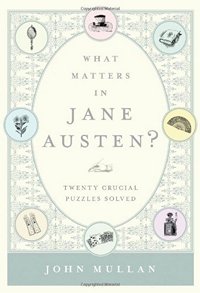
what-matters-in-jane-austen-john-mullan-2013-x-2001John Mullan says in his brilliant book, What Matters in Jane Austen?  Twenty Crucial Puzzled Solved (Ch. 13, “How Much Money Is Enough?”):

What is extraordinary about Austen is not her candour but the precision with which she shows the influence of particular sums on particular people.  Most of her major characters come with income tickets attached, not so much because the novelist wants us to notice how important money and lack of money might be, but because she wants us to see her characters noticing these things.

Unable to reduce his spending to pay his creditors, Anne’s father, Sir Walter, is persuaded to rent out his house (to Captain Wentworth’s sister and husband) and move to Bath with his oldest daughter, Elizabeth. Anne stays behind for a few months with her sister Mary (and later with Lady Russell), is appreciated by Mary’s in-laws, meets Captain Wentworth again (who now has 25,000 pounds), and is admired by two other men.

She gets her bloom back.

“I’ve got my bloom back, too, like Anne,” my cousin protests when we say she can’t be Anne.

It is a bit of a bore when someone who’s only 37 claims she has got her bloom back.  She has never lost her bloom, as Janet and I point out.

Then we remind her that she doesn’t WANT to be Anne anyway.

She wants to be Louisa Musgrave.

Louisa, who is 20, pretty and bossy, claims brazenly that she is not easily persuaded. Captain Wentworth admires her.

“It is the worst evil of too yielding and indecisive a character, that no influence over it can be depended on.  You are never sure of a good impression being durable; everybody may sway it.  Let those who would be happy be firm.

Poor Anne overhears this.

Then when they go to Lyme, Louisa is jumping off the steps and he doesn’t catch her and she is unconscious and they don’t know if she’ll recover or not… and Anne starts to look good to him again.

I don’t want to be Louisa, but what are the choices?  Having married three times, I can hardly pretend that I would have been single at 27.

Janet has never been without a boyfriend, either, or at least a date.  “How about Mrs. Clay?” she asks.

Mrs. Clay has a wayward tooth and freckles, but is charming enough that Anne’s sister Elizabeth invites her to Bath.  The daughter of Mr. Shepherd, Sir Walter’s lawyer, she is of the wrong class, and everyone is terrified that she will persuade Sir Walter to marry her.

Then there’s Mrs. Smith.  We ALL like Mrs. Smith, Anne’s old school friend.  When Anne and Lady Russell go to Bath, Anne meets Mrs. Smith, now an invalid.  Mrs. Smith makes the best of things, has a positive attitude, but also is worldly, and knows all about Mr. Elliot, Anne’s father’s heir, who wants to marry her.

Lady Russell tries to persuade Anne… but Anne is true to Captain Wentworth.

Mr. Elliot, a highly intelligent, sophisticated widower, genuinely admires Anne, but has no principles.

Lady Russell is always wrong, though she is charming and reads a lot.

The plot of Persuasion is typical of Jane:  a true man and a false man pursue the heroine (sometimes even more pursue her).  In Emma, we have Mr. Knightley and Frank Churchill (Mr. Elton doesn’t count), but Frank isn’t really after Emma at all, and Mr. Knightley, a lifelong friend, isn’t considered a beau till the end of the novel.  In Mansfield Park, Fanny loves Edmund but is pursued by Mr. Crawford, a rich, licentious young man who is suddenly struck by Fanny after she blooms into prettiness.  Eventually Edmond goes after her, too.

Captain Wentworth is the only Austen hero I like.  All three of us agree that he is very sexy.

We also like the funny details in Persuasion:  one day Anne runs into Admiral Croft, Captain Wentworth’s brother-in-law, and he is staring at a painting in a shop window.  He wonders who on earth designed this ship, which would capsize immediately.

What a lovely novel!  Anne Elliot is now my favorite Austen heroine, surely the most sympathetic of them.

And now here we have both a Persuasion playlist and a movie list.  Enjoy!

"The Lake House":  the heroine's favorite book is Persuasion.

In “The Lake House,” the heroine’s favorite book is Persuasion.

PLAYLIST

“Persuasion,” Richard Thompson

“Pretty Persuasion,” R.E.M.

“Friendly Persuasion,” Pat Boone

“Persuasion,” Santana

“Crystal Blue Persuasion,” Tommy James and the Shondells
MOVIES & TV

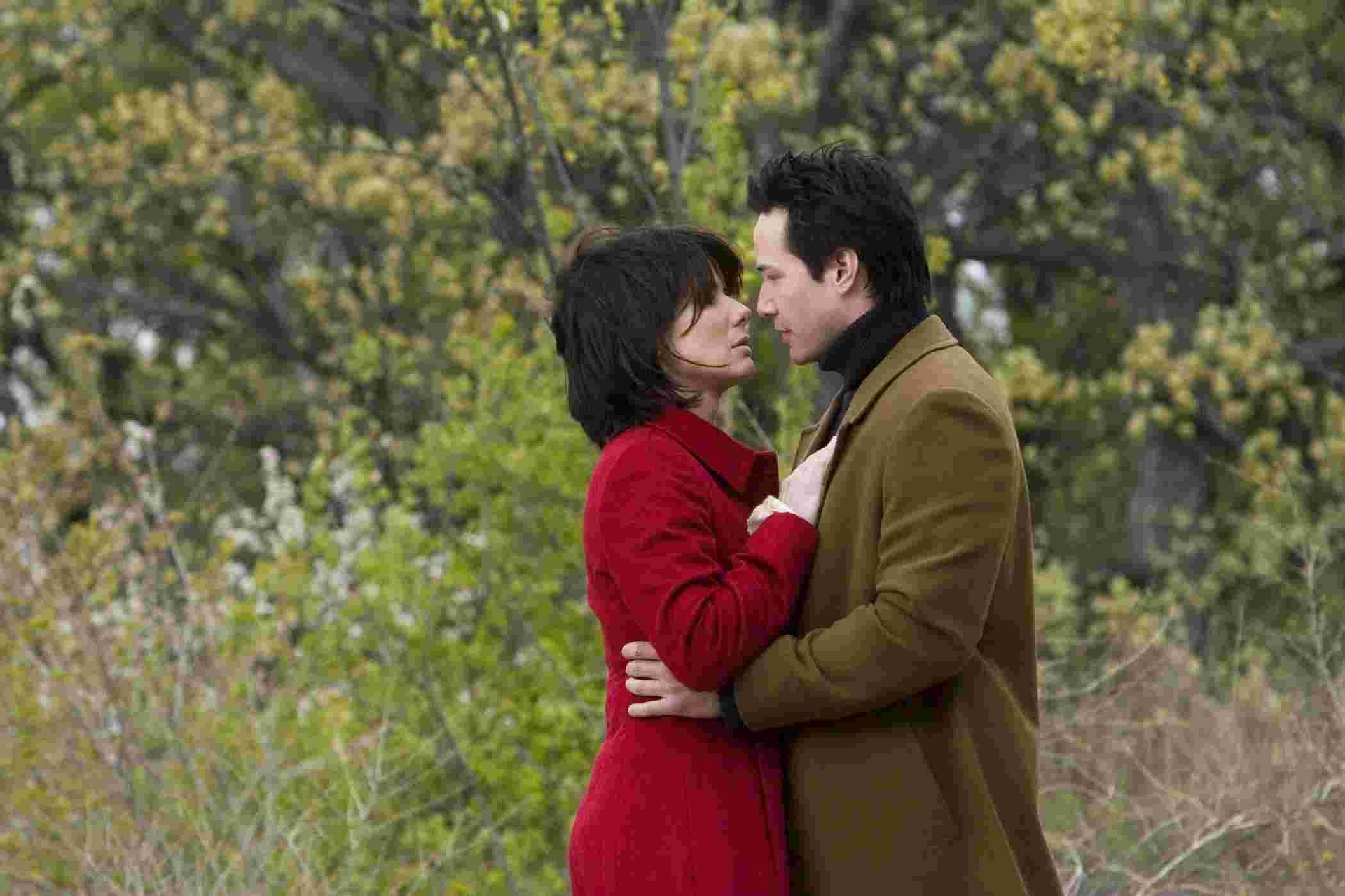
The Lake House, with Sandra Bullock and Keanu Reeves.  Actually, this is a time-travel romance, and has nothing to do with Persuasion (as I remember) but the heroine’s favorite book is Persuasion.

Persuasion (2007)
And there are many other versions of Persuasion at IMBD.

Reading Old Books, Reading New Books & Callie Wright’s Love All

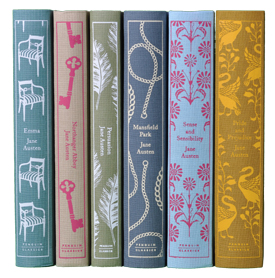
jane-austen-penguin-front setOnce a year I declare that I will read more new books.

One new book a week, I say.

When I mentioned this in a comment recently, a blogger wittily said, “And how many old books do you read?”

I do read a number of old books, don’t I?

With the exception of Penguin Classics and Oxford World Classics, I do not support the publishing industry.  I’d rather be reading Jane Austen.

The new books often sound good, and occasionally are good, but most are crap.  Life’s too short.

And I’m an Anglophile. I prefer Austen, Dickens, and D. H. Lawrence to most American writers.  I would be delighted to “sleep on Christopher Tietjens’ lawn,” except that he’s a fictional character, so does he have a lawn?  (For more on my doomed love affair with Christopher, the hero of Ford Madox Ford’s Parade’s End,  go here.)

Although I prefer English contemporary novels, too,  I have had excellent luck with new American fiction this year:  Barbara Kingsolver’s Flight Patterns, Karen E. Bender’s A Town of Empty Rooms, Steve Yarborough’s The Realm of Last Chances, and Susan Choi’s My Education.

I skip most historical novels, and read contemporary American fiction to find out what American life is like.  My life is about bike rides, books, the internet, Master Chef, cooking Mollie Katzen’s recipes, and hanging out with the cats.  But what is it like for others?  Based on fiction, it is about extra-marital affairs.  Infidelity is at the heart of three of the four aforementioned American novels.  Quite a lot of fiction IS about extramarital affairs, if you think about it.

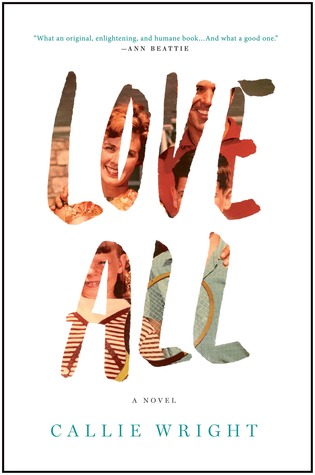
Love All by Callie WrightTake Callie Wright’s new novel, Love All, which I must admit I read because of a blurb by Ann Beattie.

Triangular relationships dominate this charming, if uneven, first novel, set in Cooperstown, New York, in the 1990s.   Hugh, the principal of Seedlings, a pre-school, is unhappily married to Anne, a chilly, almost OCDish lawyer.  But when a Seedlings student, Graham Pennington, has an accident on the monkey bars and his mother, Caroline, cannot be reached,  Hugh nervously accompanies the boy to the hospital in loco parentis.  Hugh and Caroline, an artist, bond immediately in the hospital, almost as though he is Graham’s other parent; one thing leads to another, and they have sex.  This couple seems made for each other, and we can’t help but cross our fingers for them, though that isn’t usually our reaction to infidelity.

Hugh is not the only one who has affairs.  Although Anne’s 86-year-old father, Bob, is devastated by his wife Joanie’s recent death, he had many discreet affairs during their marriage.  When a local writer in the ’60s, Elaine Dorien, published a roman a clef, The Sex Cure, about the sex lives of the town’s inhabitants, Joanie began to notice her husband’s predilections for other women.   Even Anne, a teenager at the time, read the novel and understood what was happening.  And It had a lasting effect on Anne.

It is Wright’s unadorned writing that makes the novel so readable.  She pays attention to detail, but doesn’t attempt the poeticism that some writers try too hard to achieve.

From time to time, when Joanie noticed he was staying late at work or had made Saturday plans with Charlie, she would pull the novel off her bookshelf and read a chapter or two before bed, and Bob would break off whatever insignificant dalliance he’d been involved in and return to his wife.

Even Julia, Hugh and Anne’s fifteen-year-old daughter, is in a triangle:  her two best friends are Sam and Carl.  She has a crush on handsome Sam, but cute, curly-haired Carl “likes” her.  After she  reads The Sex Cure, found under her grandmother’s mattress, she wonders if she can write something to alienate Carl.

Thinking about The Sex Cure, I opened my journal and flipped to a clean page.  All the narrow lines–between truth and fiction, want and need, friendship and love–seemed suddenly traversable:  Elaine Dorian had done it.  By the stroke of her pen, she had roiled and rippled the town with one story, a story everyone believed, so much so that she may have made it true.

There are a couple of problems with this enjoyable novel:  Wright shifts from one point-of-view to another, and she succeeds better with some characters than others.  Julia’s is the most original voice because Wright switches from third to first person narration: it allows her to tell the story less formally and more quirkily.

Anne, the cold lawyer, and her teenage son, Teddy, a jock, are stick figures.  The sections devoted to these characters are short, but the prose is very flat here, as if Wright were just getting it done.

And the ending is unsatisfying.   During a tennis exhibition between Julia and Carl, all the important characters gather.  But what happens doesn’t even quite happen.  It is an open ending.  There’s the trajectory of the ball…and the trajectory of the future.

There is some very graceful writing in Love All, and maybe next time Wright will perfect the characterizations and the ending.

If I were going to “star” it, I’d give it three out of five.  (Well, I guess I just starred it.)

Radical with a Notebook: Persuasion & The Free Little Library

She did not blame Lady Russell, she did not blame herself for being guided by her.”–Jane Austen’s Persuasion

I am the only person at the coffeehouse with a notebook.  Everyone else has a laptop.

I scribbled notes at a glass table filled with coffee beans.

persuasion-jane-austen-paperback-cover-artAlthough the Persuasion Book Club could be a full-time job–more articles have been written on Austen than I could read in a lifetime–I will not trivialize the experts by summarizing their theses.

No, I am dashing through Persuasion, loving every word of this classic, enthralled by Austen’s romance about an older heroine (the only romance Austen wrote, in my opinion).

Anne Elliot is only 28, not 40 or 50something, as I suspect many of us are. Austen never married.  Her heroines are under 30, or they’d never have a conjugal chance.

Few are as fascinated as I am by Austen’s middle-aged characters, from silly Miss Bates in Emma to Mrs. Bennet in Pride and Prejudice.  In Persuasion, Lady Russell, Anne’s late mother’s best friend, is a kind, devoted, thoughtful, if conservative, widow.   She does not marry Anne’s father, as everyone expects. Instead, she advises Anne on marriage.   Badly.

We are more liberal than Lady Russell.  Live with him, we might have said.  Men come and go:  husbands disappear in their 40s only to resurface after midlife crises, or, if we divorce them, we go on blind dates, walk out on men who make racist remarks, and indignantly trudge the three miles home in very uncomfortable shoes. Fortunately, a friend of our fix-us-up friend is so delighted by the story he asks us out…  and three months later we’re married!  (This stuff happens.)

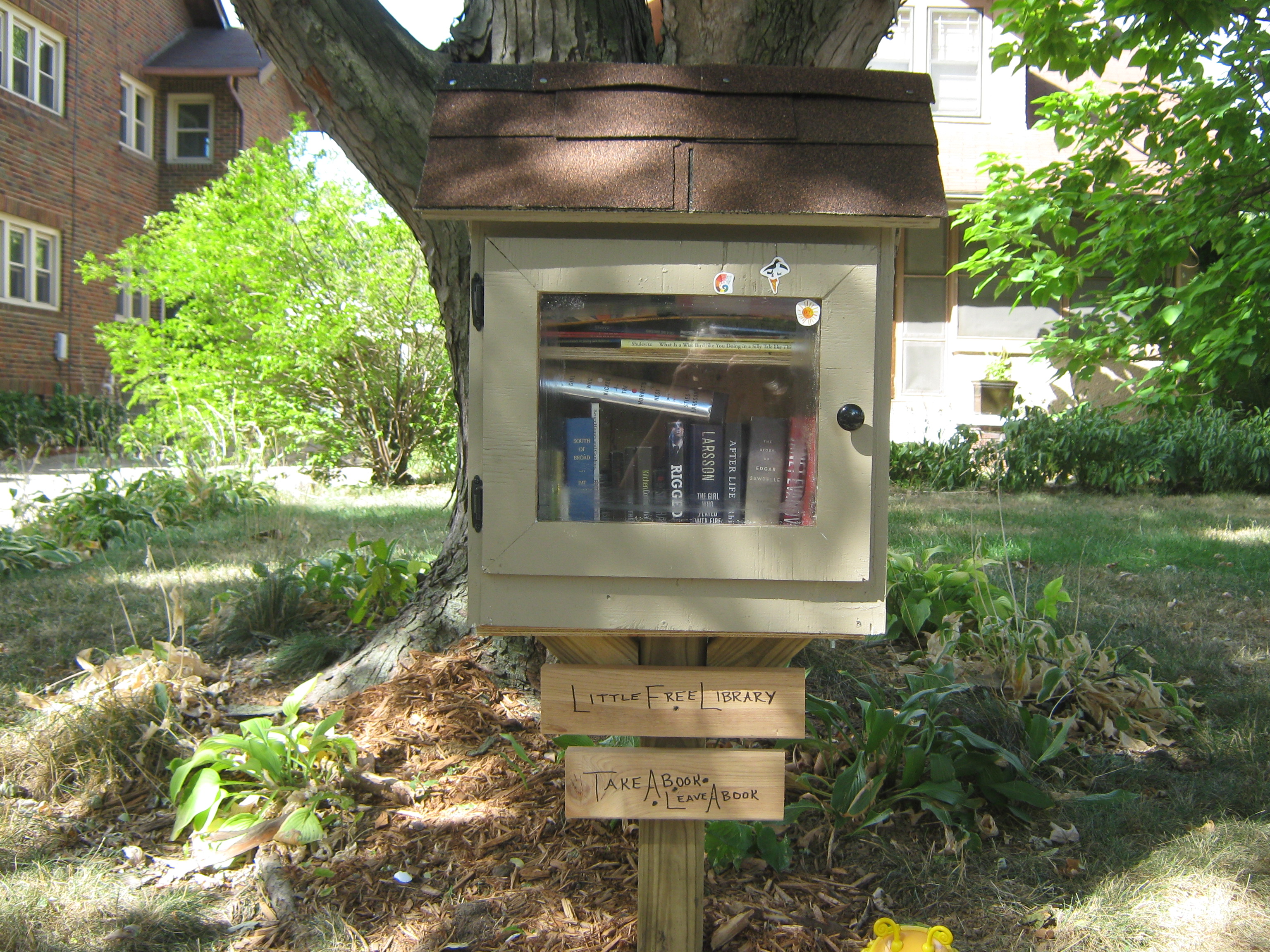
THE OPENING OF THE LITTLE FREE LIBRARY is the big event in our neighborhood this week.

It is part of a literacy movement.  You can build or order a little house-on-a-stick from Little Free Library and plant it in your yard.

Little Free Library

Little Free Library

Fill it up with old books.  Then neighbors can open the hinged window to borrow a book, or exchange one of their own for a free library book.

Little Free Library

Little Free Library

I walk down this street almost every day.  “Have you seen the Little Free Library?” everyone wants to know.

Yes, yes.

The selection could be better.  There’s  Janet Evanovich, Michael Connolly, Edward Sawtelle, Stieg Larsson.  Enjoyable books, but the only one I approved was Jack Kerouac’s On the Road.  He said, and this is appropriate:

…the prettiest girls in the world live in Des Moines.

He also praised the pie and ice cream in Iowa.

I saw the travelling exhibit of Kerouac’s scroll (the typed pages taped together) of On the Road at the University of Iowa Art Museum.  The long glass case was endless; I peered too closely and accidentally touched the glass.  The guard came.  “Don’t touch the glass.”  Okay!

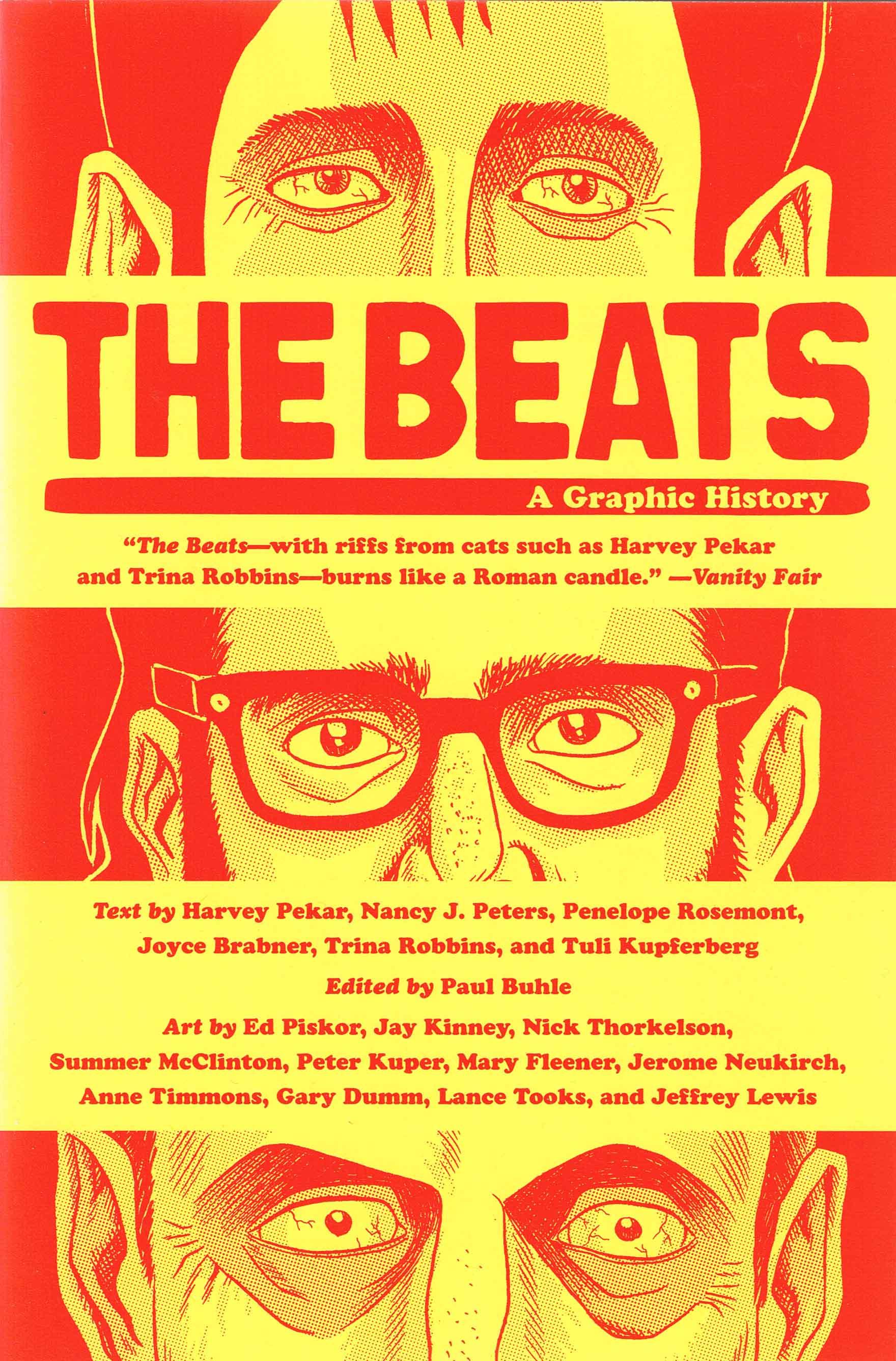
The beats pekarEverything you need to know about Kerouac can be found in Harvey Pekar’s The Beats:  A Graphic History.

We should all go on the road.

It is September.

It’s cooler.

Good road trips taken in the past:  Iowa City to Bloomington (many times),  Bloomington to Washington, D.C., (twice), D.C. to Buffalo, Buffalo to Toronto, Des Moines to Omaha, Lanesboro to Winona, Princeton to New York City.

Will I ever make it to Kansas City?

Can’t go, because I’ve been told I’d have to sit through a Kansas City Royals game.

I like baseball, but only at World Series parties.

Anyway, I’d prefer to ride my bicycle.

Too late in the season.

Tomorrow I’ll tell you about a couple of books I’ve been reading.