Mirabile Does Genre Fiction: Historical Novels, Science Fiction, &Jonathan Lethem’s Brilliant Amnesia Moon

Are you ready?

A quick blog.

7:45 p.m.

I love genre fiction.

librarian sexyIt all started when my friend, Maya, a former librarian who went back to school in classics, recommended Ursula K. Le Guin’s The Left Hand of Darkness. As a librarian, she had had a lot of free time, and science fiction was her favorite genre.

Classics departments teem with genre-loving ex-librarians, and library schools with genre-loving classicists who can’t find jobs.

And though the ex-librarians didn’t quite look like the woman in the picture, they certainly knew how to party:  on Diet Coke and popcorn, that is.

Classicists are a surprisingly unclassical lot when it comes to English literature.  You would expect them to read nothing but Sophocles and Anne Carson out of the classroom.  Instead, they recommended historical novels like Susan Howatch’s The Rich Are Different, the story of a banking family, and all the characters based on Caesar and the First Triumvirate, if I remember correctly?  which complemented our studies.
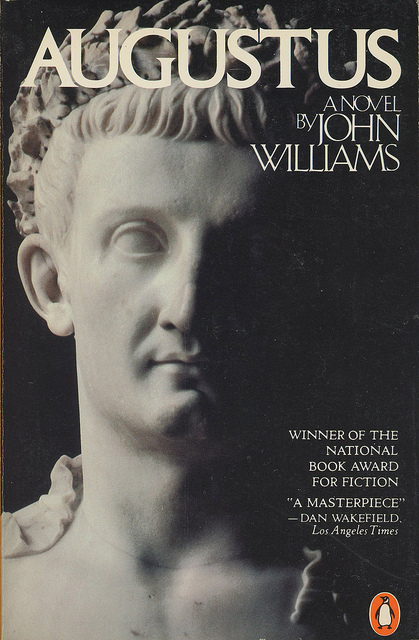
Augustus John WilliamsA better bet was John Williams’ Augustus, the National Book Award–winning historical novel by the writer now best known for Stoner, reissued by NYRB a few years ago.  But Augustus is just as brilliant, the story of Augustus’ bid for power after Julius Caesar’s murder and his dealings with the likes of Cicero and Mark Antony, some of our favorite historical characters.
Shambleau c. l. mooreThe most notable of all my classicial friends were the professors who were SF fans.  After I earned my degree, I became fair “prey” to the profs, who only had about seven women students a year, so I looked good, surprisingly good.  They were a decent lot, if clueless, with their offers of vacations in, of all places, New Jersey (they would have had a better chance with Rome, but I declined all invitations:  they were my friends and father figures).  One of them, by far the most brilliant, introduced me to the science fiction of C. L. Moore, Joanna Russ, and some other great American writers. And, by the way, the Library of America should have hired him to edit one of their science fiction books, because he could have recommended a few books by women, and we know that’s not LOA’s strong point.  (By the way, I am a big supporter of LOA, but they need to publish more interesting women’s books.)

***********************************************************************
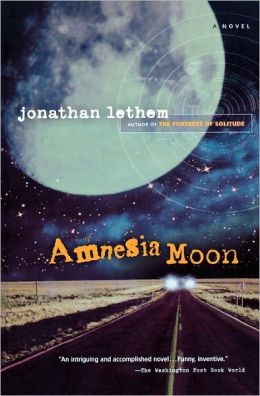
Amnesia Moon Jonathan LethemAnd now just a little bit about Jonathan Lethem, one of my favorite American literary writers, the author of Chronic City (my favorite), The Fortress of Solitude (my second favorite), and the National Critics Circle Award-winning Motherless Brooklyn (my third favorite).  I am now exploring his  1990s work, which was science fiction.

Amnesia Moon, his second novel, is surreal, funny, and sad.  Is the hero, Chaos, a survivor of a postapocalyptic world, dreaming his world, or his world real?

Chaos lives in a former cineplex in Hatfork, Wyoming.  He tries not to sleep, because he and the other residents all dream the dreams of the local despot Kellogg.  Kellogg is in charge of everything:  dreams, history, and the funky canned food he sometimes distributes.  Nobody can remember what was there before the apocalypse.

When Chaos decides to take a trip to get away from Kellogg, Melinda, a furry mutant teenage girl,  happens to be in the car.  They take off for Colorado, where they find a world of green fog, dreamed by another dreamer.  And in Vacaville, California, where their car breaks down, they find a city based on luck tests and moving twice a week to houses assigned by the government.

In Vacaville he tells Edie, with whom he falls in love, that there was a war. “Everyone remembers some kind of disaster.  But it’s different in different places.”

Then a hippie friend says Chaos needs to go back to San Francisco to see his best friend and girlfriend.  Chaos remembers little about them, but wants to know his past.  And when he starts dreaming everybody’s dreams–well, you can imagine.  San Francisco is by far the scariest place in the book.

When I read Lethem, I always wonder how he comes up with such strange plots.  His style is astonishing.  You really read him for his style.

A great book, not just great SF.

How to Plant a Tree

Our maple tree.

The stump of our maple tree.

We have an enormous back yard.

That’s one thing we like about the neighborhood:  the big yards.

The branches of a huge maple tree used to stretch the width of the back yard and make an umbrella of shade.

We sat on lawn chairs under the tree.  We ate hamburgers from the grill and Hy-Vee potato salad under the tree.  I read Angela Thirkell and Anna Karenina in our Adirondack chair (which splintered next winter when we left it outside) under the tree.

Last spring our tree was wounded.

A thunderstorm boomed and cracked.  A limb was torn off by the wind and fell across the neighbor’s driveway, extending from the garage to the street.

We called the tree service and they removed the branch the next day.

They looked at our tree.  “It will have to come down.”

I wondered, “Couldn’t we just prop it up or something?”

You see, we have had storm problems before.  A few days after we moved in, a storm tore the neighbor’s tree in half and brought it down on our roof and across our driveway.

We had to be calm.

But where was our luck?

Trees were down all over the city.  There was no power.

The power was out, the roof and garage roof were damaged, and I couldn’t cope.  The stove was electric:  I needed coffee. I rushed down the street to Friedrich’s, because their generator was working.  We live in urban neighborhoods so we can rush to urban coffeehouses in emergencies.

On the way home, carrying a Super-Grande coffee (or something), I chatted to neighbors.  Ours is a quiet neighborhood, and nobody sits on his or her front porch much.

But that day we were all outside, though some of these neighbors haven’t been seen in their yards since.  “Hi, I’m Kat.  A tree  fell on our house.”

“Oh, you live in the cottage,” one man from a Big House said.

Cottage?

“Trees fall down,” one serious man said.

“Yeah, but…like this?”

Huge branches and trees were down all over the neighborhood.

We waited till January to have our maple cut down.

St. Patrick's, 2006

St. Patrick’s after the tornado, 2006

This is the way we live now.  Storms and power outages. FEMA is here every time we turn around.   A tornado destroyed St. Pat’s church in my hometown, the church my mother attended her whole life.  When it was rebuilt, it was too far out of town for my mother to drive.  She had to make do with taking taxis to St. Wence and St. Mary’s.

And so you cope.  It’s a tree. I can plant a tree.

And now it’s spring.  There is no shade in our back yard.

It is upsetting.

So we’re going to plant a tree.

But just try the internet for information. Here’s what I’ve found out from the agricultural extension service.

There is a lot of information about rootballs and site preparation.  There is also a long list of trees, without illustrations, and a chart telling us life span, growth rate, etc.

Do you know these trees?

nannyberry tree

nannyberry tree

Hophornbeam
Black Maple
Bur Oak
Chinkapin Oak
Northern Pin Oak
Red Oak
Shingle Oak
Swamp White Oak
White Oak
Basswood/Linden
Cockspur Hawthorn
Downy Serviceberry
Hackberry
Kentucky Coffeetree
Nannyberry
Pagoda Dogwood
Shagbark Hickory
Witchhazel

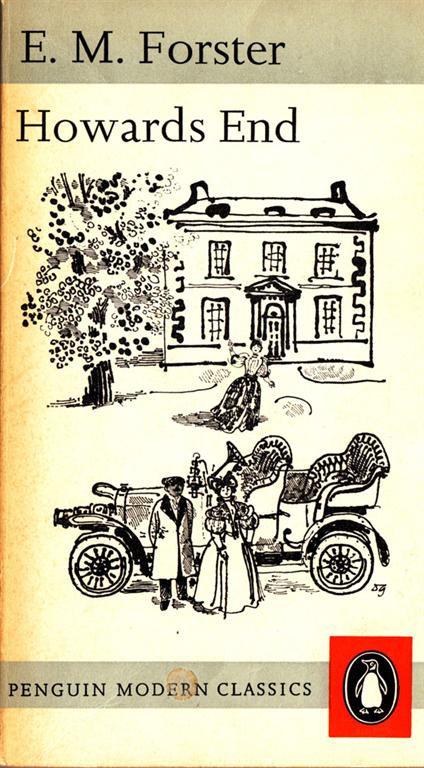
Howards EndYou know the tree I would really like?  The wych-elm tree in Howards End.

You would think a tree would last forever.

What do you bet our air conditioning bill is going to go up?

Did you ever use the book Treefinder on a hike?  That was pretty useless.

Have you got any hints about trees?

Here are some lines about trees from  J. B. Greenough’s 1900 translation of Virgil’s Georgics.

Apples, moreover, soon as first they feel
Their stems wax lusty, and have found their strength,
To heaven climb swiftly, self-impelled, nor crave
Our succour. All the grove meanwhile no less
With fruit is swelling, and the wild haunts of birds
Blush with their blood-red berries. Cytisus
Is good to browse on, the tall forest yields
Pine-torches, and the nightly fires are fed
And shoot forth radiance. And shall men be loath
To plant, nor lavish of their pains? Why trace
Things mightier? Willows even and lowly brooms
To cattle their green leaves, to shepherds shade,
Fences for crops, and food for honey yield.
And blithe it is Cytorus to behold
Waving with box, Narycian groves of pitch;
Oh! blithe the sight of fields beholden not
To rake or man’s endeavour! the barren woods
That crown the scalp of Caucasus, even these,
Which furious blasts for ever rive and rend,
Yield various wealth, pine-logs that serve for ships,
Cedar and cypress for the homes of men;
Hence, too, the farmers shave their wheel-spokes, hence
Drums for their wains, and curved boat-keels fit;
Willows bear twigs enow, the elm-tree leaves,
Myrtle stout spear-shafts, war-tried cornel too;
Yews into Ituraean bows are bent:
Nor do smooth lindens or lathe-polished box
Shrink from man’s shaping and keen-furrowing steel;
Light alder floats upon the boiling flood
Sped down the Padus, and bees house their swarms
In rotten holm-oak’s hollow bark and bole.
What of like praise can Bacchus’ gifts afford?
Nay, Bacchus even to crime hath prompted, he
The wine-infuriate Centaurs quelled with death,
Rhoetus and Pholus, and with mighty bowl
Hylaeus threatening high the Lapithae.

Giveaway: Kent Haruf’s Benediction

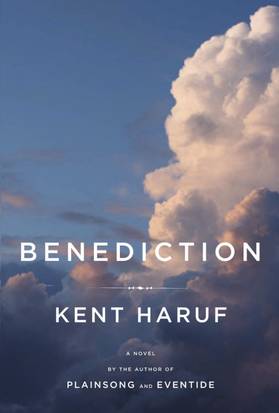
Benediction by Kent HarufI am giving away my copy of Kent Haruf’s Benediction (see review here). Set in a small town in Colorado, this deceptively simple novel, which reminds me of the novels of Willa Cather, is the story of Dad Lewis, who is dying of cancer, his devoted wife and daughter, and friends and neighbors who help out and make the last summer bearable.

I very much enjoyed this, and would be happy to pass it on to someone.

Leave a comment if you’d like it.

And if no one wants it, I’ll give it to the charity sale!

In Which I Read Contemporary Fiction & Finish Kent Haruf’s Benediction

Mirable Attempts Contemporary Fiction.

Mirable Attempts Contemporary Fiction.

I’ve been reading the classics lately.

Balzac and Bronte.  Lost Illusions and Villette.

I’ve written long, long posts.

Although there are a few, very few, outstanding contemporary American writers, I’ve struck out with almost everything lately.  I can’t even tell you how many cats died in the first hundred pages of Antonya Nelson’s Some Fun, a collection of short stories and a novella.

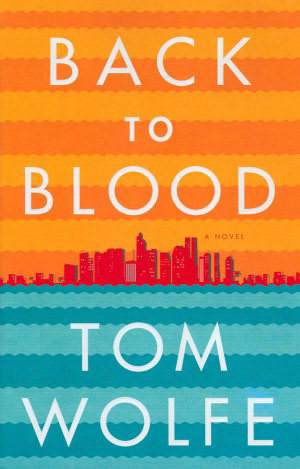
Back to Blood by Tom WolfeI started reading Tom Wolfe’s Back to Blood.  His verbal pyrotechnics dazzle, and it’s a very entertaining novel.  Set in Miami, it interweaves the stories of several colorful characters, including Edward T. Topping IV, a new editor of The Miami Herald who is reeling from Cuban-American hate mail; Nestor, a Cuban-American marine patrol officer who alienates the Cuban community after he rescues an illegal immigrant and hands him over to the Coast Guard; and Magdalena, a beautiful Cuban-American psychiatric nurse.

Some love Wolfe.  I always find him a little draining.  This 704-page novel  reads like an exceptionally vivid, long piece of new journalism. Lots of ellipses…lots of noises like Smack,  Beep, and  Click!

By the way, in the first chapter, the editor and his wife are going to Balzac’s, “the coolest of hot spots.”  Since I’ve been reading a lot of Balzac, do you think I’m meant to read this book?

If you like it, you like it.  It’s good bedtime reading.  I’m reading it in 60-page increments.  I’ll post on it when I’m finished.

Benediction by Kent HarufI finished Kent Haruf’s Benediction.  It is a simple novel, very well-written, set in a small town in Colorado, mainly the story of a hardware store owner who is dying of cancer and his family.

Dad Lewis has only a few months to live.  His  devoted wife Mary is caring for him alone, but it becomes too much for her:  she ends up in the hospital with exhaustion.

She explains on the phone to Dad,

I don’t have any pep.  That’s all.

When she comes home three days later, she calls her daughter, Lorraine, for help.

The dialogue is brilliant.  Simple one-liners mostly.  When Lorraine arrives:

Oh, Daddy.

Yeah.  Ain’t it the goddamn hell.

She took his hand and held it.  Are you in a lot of pain?

No, not now.

You don’t have any pain?

I’m taking things for it.  Otherwise I would.  I was before.  Well, you look good, he said.

Although when it comes down to it, I don’t know anyone in small towns who talks like this, the dialogue is convincing and pitch-perfect in a novel.  It could be adapted for a play.

Other characters include Berta May, their next-door neighbor, and her granddaughter, Alice, who has come to live with her because her mother has died of cancer; the new pastor, Lyle, who alienates his parish by speaking against the war in Iraq; and Willa Johnson and her daughter, Alene, two church members who visit and become like members of the family.  Alene, an unmarried, retired third-grade teacher, and Lorraine, whose daughter died, both befriend the child, Alice, because childlessness is the most heartbreaking lack in their lives.

This novel reads very, very fast.

Dad’s illness is sad and very realistically described.  Eventually he has to wear diapers and his wife and daughter clean him up.  He starts hallucinating: he believes he is having a conversation with his gay son, who ran away years ago.

My online book group on AOL read Haruf’s novel Plainsong, which, as I recall, was a big hit in the ’90s.  The characters from Plainsong are mentioned in Benediction.

I imagine Haruf’s other books are set in this part of the country, too, but I haven’t read them.

I don’t have much to say about Benediction, but it is very good.  One of those award-worthy books, but perhaps too straightforward to be remembered.

Mr. Rochester, Knightley, or Graham Bretton?

Knightley 2009

Johnny Lee Miller as Knightly in the 2009 version of Emma.

Do you read and reread Diana Gabaldon’s Outlander series because you’re in love with  Jamie?  Do you try to persuade booksellers to sell the latest Gabaldon before the publication date, as a friend of mine did?

Forget it.  You are never going to meet Jamie, because you would have to time-travel in Scotland.  And you are never going to persuade the booksellers to sell the book early.

I have read only one and a half of the Outlander books, but found them considerably more erotic (and healthier) than 50 Shades of Grey.

If you’re still in love with Jamie, you can fall in love with a romantic hero in a classic. Jane Austen and Charlotte Bronte created some of the most attractive romantic heroes in 19th-century fiction.

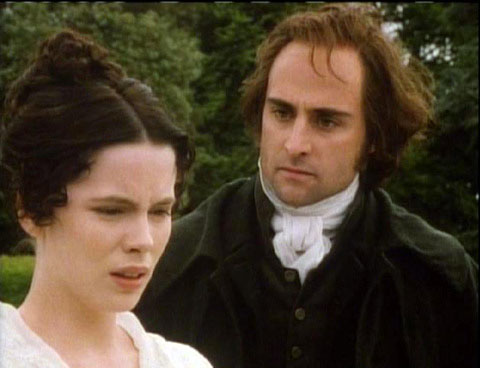
Kate Beckinsale as Emma and Mark Strong as Knightley (BBC 1996)

Kate Beckinsale as Emma and Mark Strong as Knightley (BBC 1996)

It is not that they wrote romantic fiction:  far from it. We all know Austen’s comedies about marriage and class, and Bronte’s Gothic novels.

In Austen’s Emma,  Knightley, a handsome, rich, bossy man, bullies Emma about her match-making and impetuous friendships, but on the other hand is kind, sensible, and sociable.  When Emma’s friend Harriet considers marrying Knightley, Emma is appalled. If you try to marry “up,” you’re done for.

In Jane Eyre, Charlotte Bronte  created Mr. Rochester, one of the sexiest men in literary history.  He falls in love with Jane, a  passionate governess, but  secretly has a mad wife in the attic.  Oho!  The old routine, “I have a wife in the mental hospital:  don’t you feel sorry for me?”  Only Mr. Rochester doesn’t tell Jane about Bertha.  He waits till someone objects to their marriage at the altar.

Let's marry Mr. Rochester (William Hurt) and get it over with!

Let’s marry Mr. Rochester (William Hurt) and get it over with!

In Villette, Lucy Snowe falls in love with John Graham Bretton, a witty, attractive, above average, though, alas, red-haired doctor who, alas, loves the pretty more than the brainy, but at least he is normal:  unlikely to spring a mad wife on you!  There are no mad wives, but there are nun-ghosts.

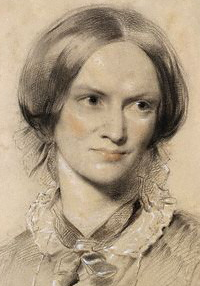
Charlotte Bronte

Charlotte Bronte

In a way, it’s a pity that the normal John Graham Bretton seems more fitting at my age, because Villette hasn’t even inspired a movie. Yet  Graham (or Dr. John, as he is sometimes called)  is reliable, smart, and likable.

But which hero is most suitable for you?  I have devised a four-question quiz to show you with whom you are most compatible.

And now for the Quiz:

1.  Which  remark would make you breathless?

A)  “I never met your likeness… you please me, and you master me–you seem to submit, and I like the sense of pliancy you impart.”

B)   “Invite him to dinner…and help him to the best of the chicken and fish, but leave him to chuse his own wife.”

C)  “Here are some flowers.”

2.  Do you prefer men who see through society women’s charms, or men who cannot?  (It probably depends on the kind of woman you are.)

A) “You should have seen her whenever I have laid on her lap some trifle; so cool, so unmoved, no eagerness to take, not even pleasure in contemplating.  Just from amiable reluctance to grieve me, she would permit the bouquet…”

B)  “My dear ___, do you think you perfectly understand the degree of acquaintance between the gentleman and lady we have been speaking of?”

C) “She’s a rare one, is she not?…A strapper, a real strapper:  big, brown, and buxom; with hair such as the ladies of Carthage must have had.”

3.  You find it romantic when:

A) You receive a long, chatty letter.

B) A man has been unable to find his ideal of women among English ladies, French countesses–but now there’s you.

C)  A hyper-critical man says you will always be his dearest.

4.  You want:

A)  to be needed.

B) to win the love of a worthy man.

C) to marry the most handsome, smartest, kindest, and most influential man in the neighborhood.

5.  You think of yourself as:

A) beautiful, brilliant, and well-loved.

B) plain and brilliant, with good friends.

C)  plain, brilliant, and friendless.

All right!  are you ready for the results?  You are simply going to have to figure out which character gets the highest percentage of your answers–or write in Jamie!

Answers:

1.  A, Mr. Rochester.  B, Knightley.  C, Graham

2.  A, Graham.  B, Knightley.  C, Mr. Rochester.

3.  A, Graham.  B, Mr. Rochester.  C, Knightley

4.  A, Jane Eyre-Rochester.  B, Lucy-Graham.  C, Emma-Knightley.

5.  A, Emma, B, Lucy, C, Jane

Okay,  two for Emma and Knightley, one for Jane and Rochester, and two for Lucy and Graham, so it looks like either Knightley or Graham Bretton will do for me!

I am Emma-Lucy!

Triangular Relationships in Charlotte Bronte’s Villette

Villette in the Mirror

Villette in the Mirror

I have read Charlotte Bronte’s Villette many times.

I am rereading it now.

To a woman of a certain age, Bronte’s Villette, an unflinching report of solitude and isolation, is more interesting than Jane Eyre.  By the time one is thirty, Mr. Rochester no longer appears romantic, and we frankly think Jane would have been better off with St. John.

We’re sorry that the heroine of Villette, Lucy Snowe, ends up with whom she does, but nonetheless we adore the book.

Here is my Villette chart.  I read it at:

Age 14:  Thought it odd.  Perhaps I would end up like Lucy Snowe.  My aunt seemed to think so…  She stressed education over romance.

Age 24:  Despite the fact that I had been married and was engaged once more, I  felt like Lucy Snowe.  I was teaching and perhaps in love with Dr. John Graham Bretton.

Age 37:  I was teaching again and rereading Villette.

Age 44: No longer thought I was Lucy Snowe, but loved the book.

Age __:  This bold novel is much tougher and yet more nuanced than Jane Eyre, and feminist readers and Bronte fans should give it another chance.

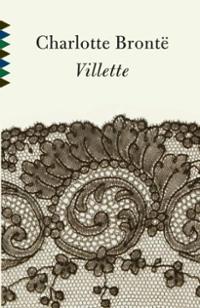
villette-charlotte-bronte-paperback-cover-artThroughout Villette, Lucy Snowe, the solitary narrator, is the invisible woman in triangular relationships.  Attachments become triangulated without her realizing it, and the men certainly do not realize it, but whenever she has a friendship with a man, there is another woman in the foreground.

When we first meet Lucy, she seems cold.   There is something almost voyeuristic about Lucy’s cold scrutiny of her godmother Mrs. Bretton’s household, though she loves her godmother.  As a teenage girl, Lucy has no interest in Graham Bretton, the handsome, lively teenage son.   But in minute detail Lucy describes Graham’s friendship with Polly, a small child who becomes passionately fond of Graham when she stays with the Brettons’ during her father’s illness. Graham teases her and behaves like an older brother, while Polly is like a tiny woman.  Lucy cannot understand the magnitude of the child’s attachment.

Lucy is shadowy.  She tells us very little about her family, and there is a Gothic mystery about her intense solitude and taciturnity.

We wonder who this woman is, who in later chapters is thrown on the world without money, and who eventually ends up a teacher at Madame Beck’s school in Villette (an imaginary city like Brussels, where Bronte taught) and meets Graham Bretton (now called Dr. John) again.

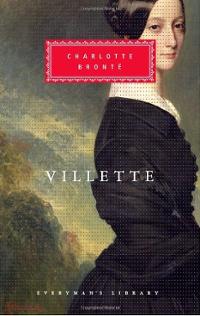
villette-charlotte-bronte-hardcover-cover-art Two people have an enormous influence on Lucy’s position  in Villette.  Ginevra, a beautiful, giddy, merciless, heartless student, whom Lucy first meets on the boat from England, tells her about the school.  She mentions that Madame Beck, the headmistress, needs a nurse for her children. Lucy ends up teaching there coincidentally, and she also coincidentally meets John, whom she does not recognize, and who helps her with the language when she needs to inquire about her luggage.

We learn that he is in love with Ginevra.

Lucy and Ginevra have a borderline-lesbian relationship.  Lucy has nothing good to say about Ginevra, and yet when both are in a school play,  Lucy, who plays a man, does her best to flirt and out-woo the other man for Ginevra.  It is partly because John is in the audience (she does not yet know he loves Ginevra) and she wants to shine, but Lucy also favors Ginevra at breakfast by trading bread for coffee, and likes her company, despite her dislike of the girl.

Lucy falls in love with John, though he does not realize it. The triangle does not affect him, because he does not know Lucy cares.   She realizes she is likely to be single all her life.  She is intelligent but not pretty or charming.

Reason tells her not to hope after she returns from a visit to the Brettons and John promises to write to her.

Lucy thinks he won’t and tells us:

This hag, this Reason, would not let me look up, or smile, or hope:  she could not rest unless I were altogether crushed, cowed, broken-in, and broken-down.  According to her, I was born only to work for a piece of bread, to await the pangs of death, and steadily through all life to respond.  Reason might be right; yet no wonder we are glad at times to defy her, to rush from under her rod and give a truant hour to Imagination–her soft, bright foe, our sweet Help, our divine Hope.  We shall and must break bounds at intervals, despite the terrible revenge that awaits our return.”

Lucy’s hopelessness is harsh, because aren’t we all madly in love in our twenties and secretly believe ourselves irresistible?  But this is Charlotte Bronte talking, and we never doubt her, because Lucy’s style is both meticulously restrained and passionate.  Lucy is a fiery woman stuck in the drudgery of teaching unintelligent girls English.

There are other triangular relationships, including Madame Beck’s rivalry for John with Ginevra, but she soon realizes it won’t work.  She is middle-aged; John is in his mid-twenties. There is another triangular relationship when  John falls for Polly, who is now a woman:  Lucy is unnoticed.  Later, Lucy and Madame Beck are earnest rivals for M. Paul.  And Lucy is visible when the man is ordinary, plain, and intelligent.

A very complicated book!

The Opposite of…

Photo on 2013-03-31 at 19.40 #2

Mirabile Interviews Her Opposite.

I have long theorized that one should never marry a man with similar literary tastes.

My first husband and I had opposite tastes, which made our marriage fun while it was fun.  He read Arthur Koestler and the Russians, while I read Dickens and Poldark.  The thing we had in common, and which I have in common with ALL my husbands, is that we love languages.  I once rushed off to study at Grace and Rubie’s (a women’s club in the ’70s; see T. C. Boyle’s short story, “Grace and Rubie’s, ” in Descent of Man) only to find I had his Russian flashcards instead of my German.

inferno pinsky danteBut all that is long ago. A few years ago, when he tracked me down on the internet via a mortifying essay which I have begged the website owner to delete–apparently it remains there for maximum humiliation–we both agreed that Robert Pinksy was a good poet.  He thinks Pinsky’s translation of Dante’s Inferno is stunning, and naturally I prefer Allen Mandelbaum’s translation.

The opposite literary tastes have been a lifelong theme.  Of course, my friends find this opposite literary problem  odd.  One says she has never picked a husband on the basis of literature.  She thinks more about whether they can dance or not.

Although today I did not get out of my  “lounge pants,” which some might call pajamas, I got quite a lot of thinking done on this question of opposites. I interviewed A Certain Kinsman, whom I shall hitherto refer to as ACK.

ACK, who has opposite tastes from mine, does not think we are opposites.  He points out that we both are fans of Gary Shteyngart, Chekhov, Edith Wharton, and Alice Munro.

But since this is an in-depth blog on opposites, requiring deep digging, I will tell you what I know.

His favorite book last year was Dave Eggers’ A Hologram for a King.  My reaction was, “Why?”  My favorite book last year was Michael Chabon’s Telegraph Avenue.   He found it very boring.

emma jane austenThe following may be deeply offensive to you, so brace yourself.  ACK is not a lover of Jane Austen.  That is why I allowed him to wear a mask and assume a different identify before I interviewed him.

“I’m just tired of hearing so much about her.  I don’t think people should spend their life on her.”

Oh dear.  I mean, who doesn’t think the opening sentence of Emma is the best sentence in the world?

I am trying to get him to read Rudyard Kipling’s “The Janeites.”

He also doesn’t care for Nancy Mitford, another of my favorite writers.

I don’t like to have to go out in the middle of the night to get her book of letters and hear at Barnes and Noble that there’s a Mitford industry.”

It is just possible I asked for that book at night.  I’m sure I needed it for something…like reading!

He also doesn’t like Barbara Pym.  “It’s a cozy read if you want a good night’s sleep.”

He doesn’t like Colette.  “I didn’t like Claudine and it’s hard in French.”

He won’t read Ursula K. Le Guin.  “I don’t like science fiction.”

Will Self-UmbrellaI have strongly recommended Will Self’s Umbrella, which is a great book, but not my kind of thing.  He was able to identify a quote from the Kinks’ “Apeman” for me on the opening page, so I know he would enjoy it.

He says, “Maybe you have to be a Kinks fan to appreciate it.”

And I agree.

But I, too, don’t care for many of the books he likes.  After I read Celine’s Death on the Installment Plan, I told him,

It made me want to jump off a bridge.”

On Faulkner’s The Hamlet I said,

I hated the guy who had the affair with a cow.”

On Moby Dick, after the chapter “The Whiteness of the Whale,” I closed the book and said,

I don’t like American literature.”

So is it a Battle of the Sexes?  He likes Faulkner, I like Caroline Gordon.  He likes Joyce, I prefer Virginia Woolf.  He likes Dostoevsky, I like George Eliot. I love Zola, he thinks he is terrible.   He likes Saramago, I like Elena Ferrante.

But to be fair, here is a list of the writers we both like:

Bess Streeter Aldrich

Willa Cather

Joseph Conrad

Dickens

Elsa Morante

Joe Queenan

Do any of you have “the opposite of” literary problem?

Balzac’s Lost Illusions

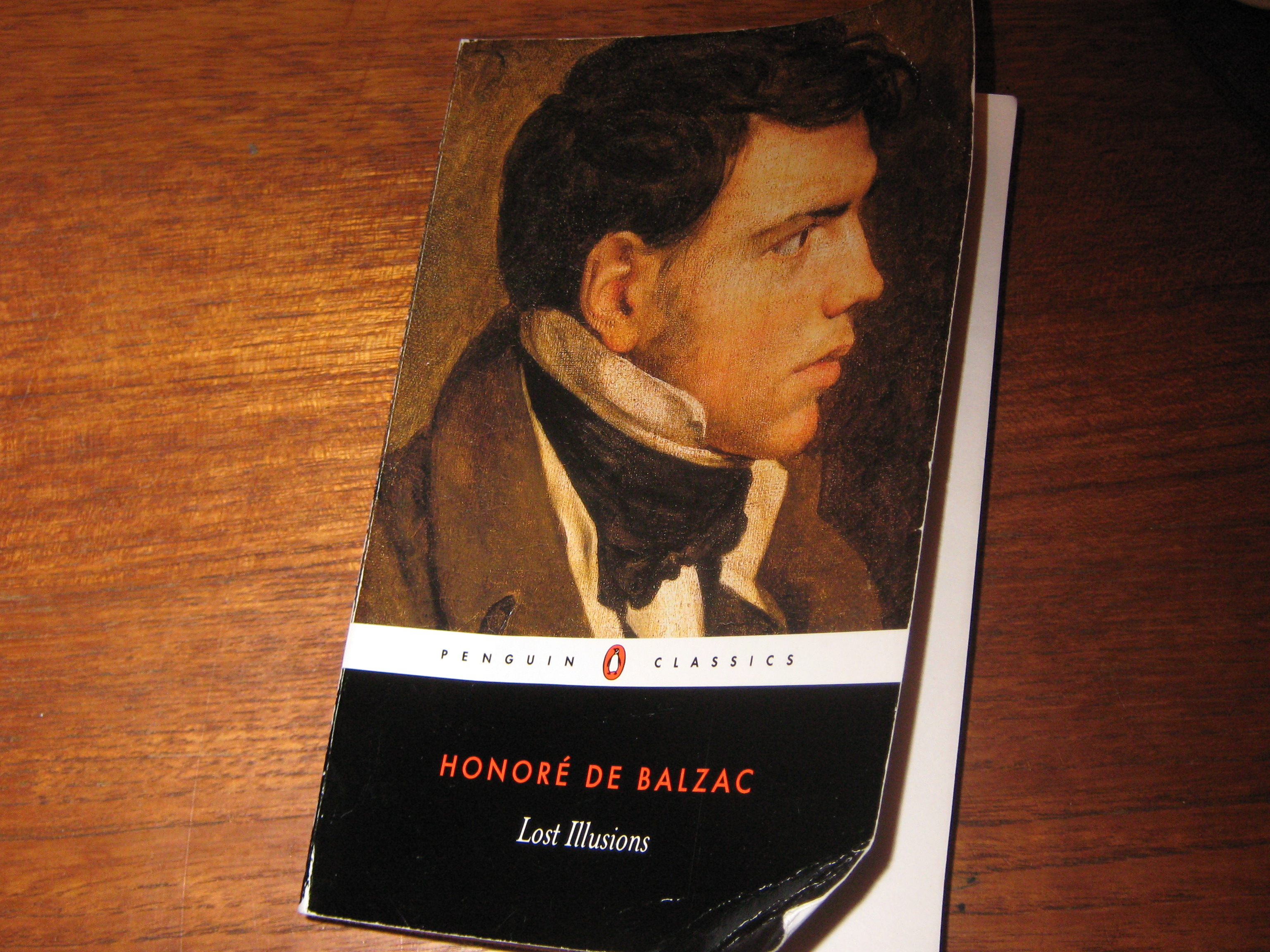
Lost Illusions Modern LibraryIf you spend all your leisure in bookstores, you probably are too fond of books.

If you spend your time hunting for the lesser-known novels of Balzac, you are probably obsessive.

There are approximately 90 novels, novellas, and short stories in Balzac’s La Comedie Humaine (The Human Comedy), a series in which Balzac portrays French society during the 19th century period of Restoration and July Monarchy.

And though most are available free in nineteenth-century translations at Project Gutenberg,  you’re lucky if you find hard copies of Pere Goriot or Eugenie Grandet in bookstores.

Perhaps Balzac is out of fashion.

Balzac was a mercilessly observant novelist whose exuberant prose, riveting plots,  and outrageous characters enthrall readers, but who also instructs  in the how-tos and perils of social climbing and commerce.

Need to know something about the business world?  Try Balzac.

Lost Illusions, one of his masterpieces, is in many ways a diatribe against publishing.

Balzac knew the printing, publishing, and writing world inside-out. In 1825, he started his own printing business and published volumes by Moliere and La Fontaine.  In 1828, the business smashed, and he was in massive debt to his family.  As a journalist and novelist, he had already learned the art of writing for money.   His friend, Auguste Lepoitevin, a hard-boiled, satirical journalist, had helped him get his start:  Balzac agreed to write several stories, which Lepoitevein would polish and sell to publishers.  (Balzac wrote three novels with Leopoitevin.)

Leopoitevin boasted that he’d given many writers their start.

Take little old Balzac–he’s one of mine!  He and I made loads of plans together!  I wrote a fair few novels with him–his worst novels, I’ll grant him that….He was like a little cannonball…”

Lost Illusions is largely inspired by Balzac’s experiences with Leopoitevin (and others like him).  The hero, Lucien Chardon, a writer, grows up in Angoulême.  He is adored by his best friend, David Séchard, a printer, who marries Lucien’s sister Eve.  The couple take out enormous loans to support Lucien, thinking he is a genius.

Lucien moves to Paris when his married girlfriend, Mme de Bargeton (Louise), a bored, romantic, wealthy woman, insists that he accompany her. But in Paris Louise drops her young lover as soon as she sees that he is  ill-dressed and too immature to flourish in high society.

Another well-read paperback.

Another well-read paperback.

Lucien, handsome, witty, and proud, also considers Louise countrified.  Abandoned and poor, Lucien becomes zealously industrious, writing a historical novel in the style of Sir Walter Scott.  His friends are other serious writers and artists, and they have brilliant, lively discussions in their garrets.

Then Lucien meets a journalist, Lousteau, who teaches him how to make a living by glib, gossipy satires and reviews.  He learns to write hyperbolic praise or witty condemnations of books and plays, according to the payment of the  publisher or theater managers.  He also receives books and theater tickets, which he sells for extra money. And he is very excited by the double-dealing, which doesn’t seem to him unethical, though he is warned by his artist friends that it will boomerang and hurt him.

By the way, there apparently were some good newspapers in Paris, but Balzac concentrates on the small journals that trafficked in satire, gossip, and scandal.  He may have had a bone to pick:  some of the journals published bad reviews of his novels.

In one of Balzac’s polemics against journalism in Lost Illusions, a group of movers and shakers in publishing and the theater discuss the corruption of journalism.  One exclaims,

Instead of being a priestly function, the newspaper…is becoming merely a trade; and like all trades it has neither faith nor principles.  Every newspaper is, as Blondet says, a shop which sells to the public whatever shades of opinion it wants.  If there were a journal for hunchbacks, it would prove night and morning how handsome, how good-natured, how necessary hunchbacks are.  A journal is no longer concerned to enlighten, but to flatter public opinion.  Consequently, in due course, all journals will be treacherous, hypocritical, infamous, mendacious, murderous; they’ll kill systems, ideas and men, and thrive on it.”

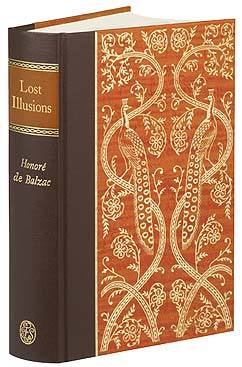
Wouldn't you sort of like the Folio edition?

Wouldn’t you sort of like the Folio edition?

Lucien falls in love with an  actress, Coralie, and they are happy  until he gambles away their money. His cruel, witty journalism has alienated so many that there is much schadenfreude among his competitors and adversaries.  The aristocrats, particularly Louise, who has been skewered in the press by friends of Lucien, are out to get him and destroy his reputation.

The last part of the novel is set in Angoulême, where Lucien finally returns.  Brilliant David, hopelessly in debt because of loans to Lucien, is a blundering businessman who spends most of his time trying to invent a new kind of paper while Eve struggles to keep the printing shop open.  Another printing shop is trying put them out of business.

Lost Illusions details the avarice and business practices that destroy poetry, novels, reportage, and reviews.  In the story of the fall of Lucien (whose fall is not unlike that of Lucifer, though Lucien is the tempted, not the tempter), Balzac records the fall of the publishing industry (as he sees it).  But money isn’t everything, and a few characters, like David and Eve, manage to escape the papery world.

Balzac, William Cooper, Howard Jacobson and the Rest of Us on Publishing

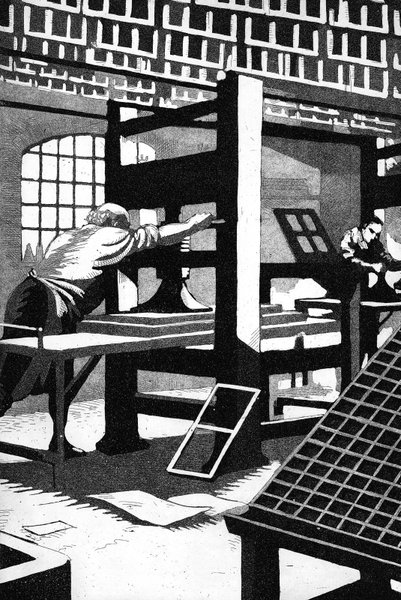
"Lost Illusions' illustration by Francis Mosley

“Lost Illusions’ illustration by Francis Mosley

Let’s allow the publishers their fatuous make-believe:  they never do read any books, otherwise they wouldn’t publish so many!”–Balzac’s Lost Illusions

Balzac, William Cooper, and Howard Jacobson have written satirically in their fiction about the publishing business.

Lucien, the up-and-coming hero of Balzac’s Lost Illusions, abandons his literary talent for the instant gratification of journalism:  publishers in nineteenth-century Paris pay newspaper editors for good reviews, and if they don’t pay up, the reviews are negative. This journalistic power seems normal to Lucien, who can grind out 30 articles in a day under pseudonyms to support his gambling habit and high-society incursions.

Joe Lunn, the novelist narrator of William Cooper’s charming 1983 novel, Scenes from Later Life, explains that the success of a book, and especially his new book, “was more likely than not decided long before it was actually published,” because advertising is as necessary as reviews and his publisher won’t advertise.

Zoo TimeGuy Ableman, the novelist narrator of Howard Jacobson’s boisterous publishing satire, Zoo Time, blames book groups, three-for-twos, and the internet for the death of reading.  His books aren’t available in bookstores, and he is arrested for shoplifting one of his own books from Oxfam.  His publisher commits suicide, depressed by the new dependence of success on “blags” and “twits.”

Over the centuries, thousands of writers have inveighed against the publishing industry.  Of the three I mention, Balzac’s accusations are the most outrageous, but the even-tempered Cooper is also cynical about the future of literature, and witty Jacobson blames the gullibility of readers as much as he blames publishers and editors for trying to market books to readers on the net.

We feel like insiders when we read novels about writers and publishers.  Aha!  So that’s how it is.

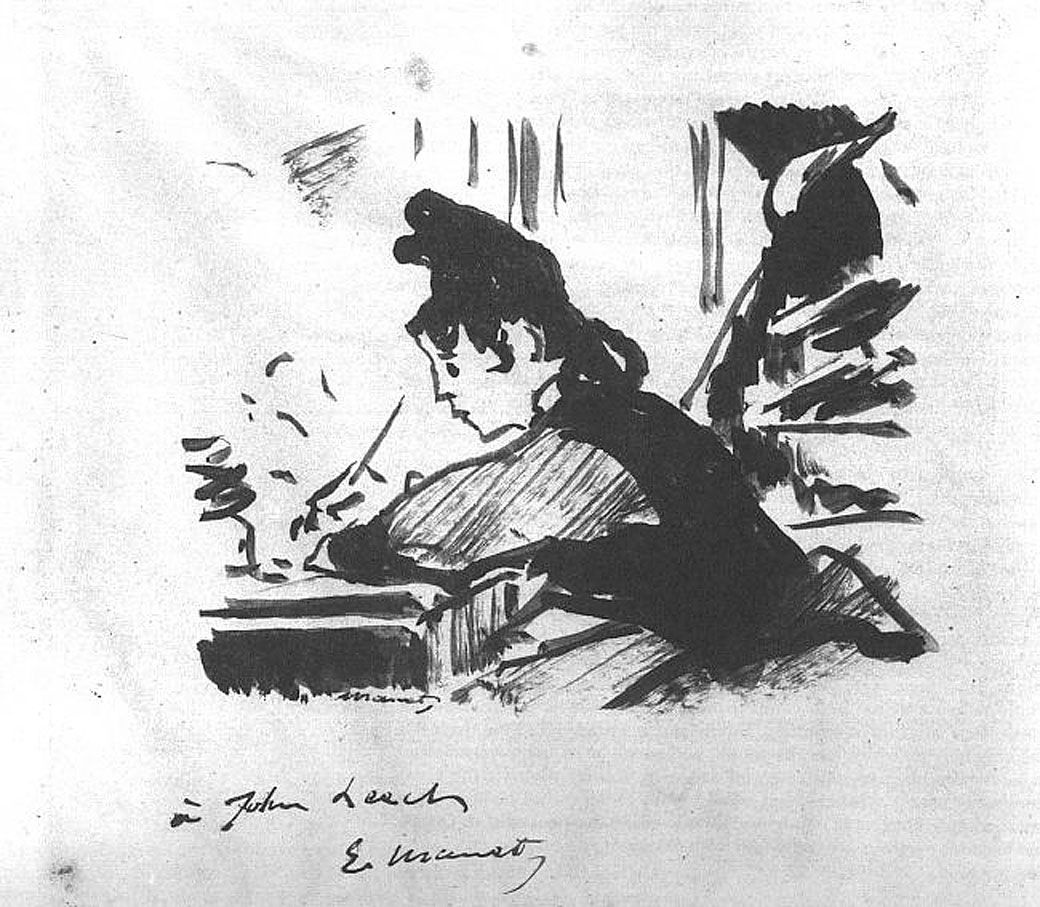
Edouard Monet Woman writingNewspapers are folding, publishers merge, e-books outsell books, writers have to tweet to sell books, and desperate literary writers invest in a “Freedom” app to keep them from surfing the internet when they should be writing.

Books are our most precious artifacts. Have they gotten worse? Perhaps yes, perhaps no.

I don’t have the faintest idea what goes on in New York and have no ax to grind, but I have struck out with a couple of new short story collections this spring, cannot imagine what my friend sees in the latest “literary masterpiece” by X, and think of permanently reverting to science fiction, a genre which “is what it is,” and which I say I like but read remarkably little of.

On the other hand, there are still Michael Chabon, Margaret Drabble, Hilary Mantel, A. M. Homes, Amitav Ghosh, and countless other great writers.  So, as Dorothy Parker put it, and this is out of context: “You might as well live.”

It is much easier in the Back of Beyond to understand the decline of journalism than to understand book publishing.  We are all witnesses to the death of the American newspaper.  And for a number of years I freelanced, so I was an insider-outsider.

It happened accidentally.

After attending a writers’ conference where the acclaimed teacher/writer forbade the use of adjectives, adverbs, participles, relative pronouns, flashbacks, and exposition in fiction, my short stories read like action-packed telegraph messages but my style was well-suited for journalism.

I began to write what I call “bubble-gum journalism.”

There was no pressure, because it was not immortal prose.

In the course of many pleasant years, I wrote charming articles about poetry slams, frozen custard, winter camping, bike messengers, birdwatching, bookstores, book-touring writers, gentrification, sculpture gardens, and farmers’ markets.

The editors were kind, if gloomy to a Dickensian degree.  Generally they were sensible, but you had to watch your back.   If they forgot to change the jokey title of your article on edgy fashions from “Courtesan Couture:  Lay Lamé Lay” to a more acceptable headline, you would find yourself apologizing to the hysterical mother of the 40-year-old woman who had worn the gold lamé tube top and hot pants to the Elton John concert.

With so many newspaper writers fired and early-retired, approximately four people now write the entire paper here.  It is said to be like the House of Borgia, without Borgias.

I love books, newspapers, and magazines and don’t think about them in terms of the publishing business.

But we will all regret it if the business kills the publications.

Let’s hope it won’t.