Five Books I’ll Never Read

We are deranged bibliophiles.  We have books in every room.   We buy them at bookstores, we rescue discarded library books, we go to sales…  Why don’t we open a bookstore?

We have too many books in our house, but can’t bear to discard them.  What if 10 years from now we need to consult Herbs and Herb Lore of Colonial America, or The Easy Russian Phrase Book?

Here are five books I’ll probably never read and why I bought them.
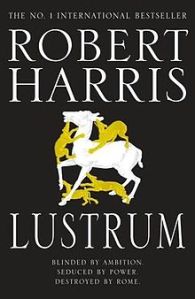
Robert Harris’s Lustrum (the American edition is called Conspirata.)   I yawned through Imperium, the first novel in Harris’ trilogy about Cicero, and yet I ordered the British edition of the second book, Lustrum, before it came out in the U.S.  Why?   Well, it was very well-reviewed, and I’m a fan of Cicero, so shouldn’t  I want to read a novel about Cicero?

I’m not fond of historical novels, with the exception of Robert Graves’ I, Claudius. After 35 pages of Lustrum, I gave up:  I found the prose clumsy and the dialogue preposterous.

“Are you a patriot, Sansa?”  asked Cicero the moment I showed him in.

“I like to think I am, Consul,” replied Sanga cautiously.  “Why?”

“Because I wish you to play a vital part in the defense of our beloved country.”

Yikes!  But just in case, it must stay on the shelf.  I might want to read a novel about Cicero someday.
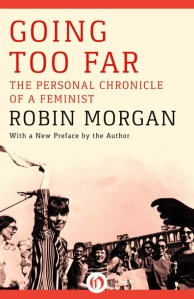
2 Robin Morgan’s Going Too Far:  The Personal Chronicle of a Feminist. Morgan is a poet, a feminist activist, and political theorist.  Going Too Far, published in 1978, often does go too far:   this collection of letters, essays and articles, which originally appeared in  Ms., The New York Times, Rat, underground newspapers, and  anthologies, is painfully evocative of the political/personal struggles of the ’70s.   I bought this  book because I wanted to understand the politics of the Women’s Movement of the  ’70s, which, for better or worse, shaped my youth. Morgan is fascinating but the radical language is sometimes harrowing and angry:  language changes very fast, and sometimes the jargon is embarrassing, though I was  used to this style in underground newspapers in those days.

Morgan is brilliant, though, and a much better writer than many of her feminist peers. (I could barely read Shulamith Firestone the first time and cannot read her at all now.)  And I  am fascinated by Morgan’s much-anthologized essay, “Goodbye to All That,” in which she chronicles her experience with a group of women taking over an issue of Rat, a male-written newspaper.  She admits Rat has always tried to be “a really radical cum life-style paper.” But at the same time

It’s the liberal co-optative masks on the face of sexist hate and fear, worn by real nice guys we all know and like, right?  We have met the enemy and he’s our friend.  And dangerous.  “What the hell, let the chicks do an issue; maybe it’ll satisfy ’em for a while, it’s a good controversy, and it’ll maybe sell papers”–runs an overheard conversation that I’m sure took place at some point last week.

Yes, I know what she means.  The language has changed, but things have changed very little for women (think politics–no, don’t, it will depress you).

Who can live on this painful level of consciousness for long? Though I may not read  Going Too Far cover-to-cover, I will certainly keep it.
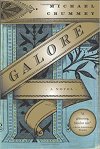
3 Michael Crummey’s Galore.  I want to read more Canadian literature.  Galore won the Commonwealth Writers’ Prize for Best Book and the Canadian Authors’ Association Literary Award.  It also got a spectacular review somewhere–I no longer remember where I read about it.

But honestly?  It is not my kind of thing. A whale is beached in a Canadian coastal town in the 18th century,  and a live man is found inside it:  he’s a kind of Jonah.   I’d discard it, but my husband thought he might want to read it.  So it is on the shelf…
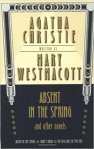
4 Agatha Christie writing as  Mary Westmacott:  Absent in the Spring and Other Novels.  I bought this hefty volume because I love Agatha Christie.  She wrote romances under the name of Mary Westmacott.  Has anyone read these?  I keep this book around just in case I’ve exhausted Christie.  I don’t like romances, alas.

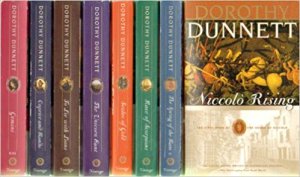
5 Dorothy Dunnett’s The House of Niccolo series.  I bought these at a library sale on 50-cent day.  Why?  Well, everyone has told me Dunnett’s Lymond series is brilliant, and though this is not the Lymond series, I couldn’t let them be pulped.  But they do take up a lot of space, so eventually I’ll give them up.  I’m giving myself a year to read at least a few chapters in one of them.
Have you, too, bought books that you will not read?  Or is this just my thing?

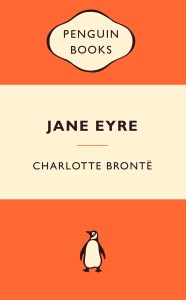
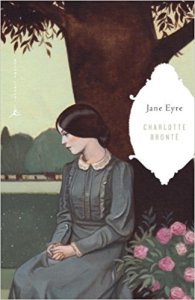
Passionate Governesses and Sexy Spinsters: Why We Love Charlotte Bronte

Illustration in Jane Eyre (Folio Society edition) by Santiago Caruso

It began with Jane Eyre. We loved her, to a woman. We were convinced that, plain though we were, except when dressed as bridesmaids or in suits for job interviews, we would marry Mr. Rochester.

Only one friend laughed–the friend who never married. (Radical feminist, or evil fairy at the wedding?) “Rochester didn’t marry Charlotte Bronte:  he married Jane.  And she’s fictional.”

Perhaps she had a point. We were twentieth-century women—what did we know about the Brontes’ chaste dreams of passion? Charlotte did not marry Mr. Rochester:  she married her father’s curate at the age of 37. Then, alas, she got pregnant and died the next year, apparently of complications in pregnancy.

Most of my friends did marry curates, or the well-educated twentieth-century equivalent, and since we weren’t rich, most of us, at one time or another, were teachers:  like Jane Eyre and Anne Bronte’s Agnes Grey, we taught the children of the rich.  As the years passed, we continued to love Jane Eyre but lost faith in Mr. Rochester.  There but for the grace of God… we said.  Think about it:  Jane married Rochester only after he was “castrated/crippled,” as  the Freudians say.   And then we read Jean Rhys’s Wide Sargasso Sea, a retelling from the point of view of Rochester’s “mad” wife, and it confirmed our suspicions of his character.

In Charlotte’s later books, things were less pat. In Villette, my favorite Bronte novel, Lucy Snowe, a plain Jane Eyre-like heroine, teaches English at a girls’ school in the Belgian city Villette (Brussels), as did Charlotte, as did I (not in Brussels), but she doesn’t get the guy, though I did. Or rather, she doesn’t get the guy she wants. He prefers someone else. And isn’t that the way it would have been for Jane Eyre, a brilliant but plain orphan governess? Only my beautiful friends, the ones who married doctors, would have attracted Mr. Rochester. (There is a pecking order of beauty.)   And beauty is so fragile.  You can be beautiful one year, get sick or unhappy, you lose sleep, and your looks fade.  Just like that.

Villette is a novel for the middle-aged and elderly  Though I appreciated it as a young woman, I revere it now. It is Charlotte’s Gothic masterpiece, a smart un-Bridget Jones study of single life, complete with ghosts, cross-dressing, and drug-induced hallucinations.

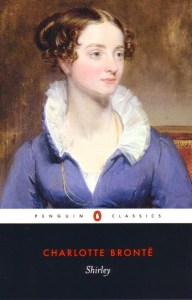
But what happens when you’ve read Jane Eyre and Villette over and over and need some Charlotte you don’t know by heart?  You turn to Shirley.   It’s the the plain Jane sister novel, albeit the only one with attractive heroines, and has never been quite weird enough to capture a huge audience in our time.

It should be called Caroline, not Shirley, I’m convinced.  Shirley doesn’t appear till page 204 in my edition.  The real heroine, to my mind, is Caroline Helstone, the blonde, delicate, intelligent young woman, who muses on, of all subjects, being an old maid.

Everyone assures Caroline she will not be an old maid. But she wants to be prepared.  She is in love with her cousin, Robert Moore, a charming, impecunious mill owner, who is determined, despite the levels of unemployment among the men,  to introduce machines into his business.  He is by turns hot and cold with her:  poor Caroline!  He flirts for a few hours then withdraws for days.   And after her uncle/guardian, Mr. Helstone, the clergyman,  fights with Robert about politics, she is forbidden to see him and his sister Hortense. Caroline wastes away—but she is not sure that Robert loved her anyway.

I love a good soliloquy, and what better soliloquy than Caroline Helstone’s musings on being an old maid?  And she is very kind and insightful about two old maids in the neighborhood, who never married because they are ugly and eccentric, and she begins to respect them and to understand their character.

Convinced that she will see Robert married to someone else and that she will never marry, she pictures herself alone and wonders how old maids live.

“What was I created for, I wonder?  Where is my place in the world?”

She mused again.

“Ah, I see,” she pursued presently, that is the question which most old maids are puzzled to solve: other people solve it for them by saying, ‘Your place is to do good to others, to be helpful whenever help is wanted.’ That is right in some measure, and a very convenient doctrine for the people who hold it; but I perceive that certain sets of human beings are very apt to maintain that other sets should give up their lives to them and their service, and then they requite them by praise: they call them devoted and virtuous. Is this enough? Is it to live? Is there not a terrible hollowness, mockery, want, craving, in that existence which is given away to others, for want of something of your own to bestow it on? I suspect there is. Does virtue lie in abnegation of self? I do not believe it. Undue humility makes tyranny; weak concession creates selfishness. …”

There’s much more of that, fascinating stuff, and such philosophizing is not so entirely unsuited to our modern day.

Much more lies ahead for Caroline Helstone .  Don’t give up on her yet!

Why Are There So Few Editions of “Shirley”?

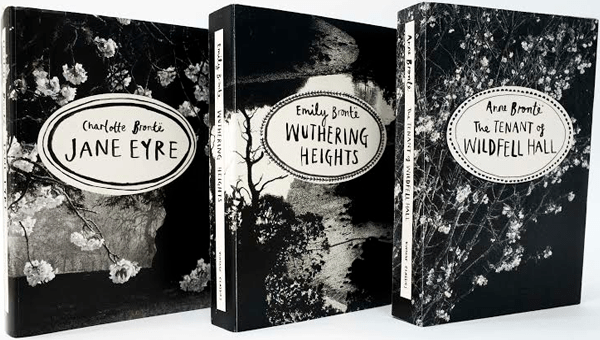
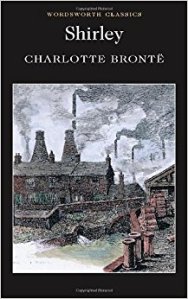
I’d love “Shirley” in a Vintage Classics edition like these.

Why are there so few paperback editions of Charlotte Brontë’s Shirley?  Doesn’t anyone read Shirley any more?

It is not a masterpiece like Villette or Jane Eyre.  Yet I love Charlotte, and it is Charlotte. I have a nice hardcover, but a paperback is better to carry in a bike pannier.  It doesn’t matter if it gets bunged around.

Mind you, I wasn’t very enthusiastic about Shirley when I reread it a few years ago.  I was binge-reading Victorian factory lit, and it was very like Mrs. Gaskell’s Mary Barton and North and South.  Earnest industrial politics, plus everybody falls in love with a mill owner!

I wrote in my book journal:

Shirley is a mess of a novel…. It is a mix of 19th-century cotton mill politics, romance, and feminist meditations.

Well, now I’m loving it. Every rereading is different. A pity I lost my cheap Wordsworth edition.  The choice is between the Penguin and the Oxford.  But I’ll have finished it by the time it gets here, so why bother?

FORTHCOMING BOOKS ON THE BRONTES.

I can’t resist new books about the Brontes. Here are two forthcoming books.

  1. The Secret History of Jane Eyre: How Charlotte Brontë Wrote Her Masterpiece  by John Pfordresher (June 27).  The description says:  Why did Charlotte Brontë go to such great lengths on the publication of her acclaimed, best-selling novel, Jane Eyre, to conceal its authorship from her family, close friends, and the press? In The Secret History of Jane Eyre, John Pfordresher tells the enthralling story of Brontë’s compulsion to write her masterpiece and why she then turned around and vehemently disavowed it.

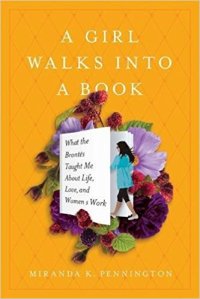
2. A Girl Walks Into a Book:  What the Brontës Taught Me about Life, Love, and Women’s Work  by Miranda Pennington (May 16)

The description says:  “How many times have you heard readers argue about which is better, Jane Eyre or Wuthering Heights? The works of Charlotte, Emily, and Anne continue to provoke passionate fandom over a century after their deaths. Brontë enthusiasts, as well as those of us who never made it further than those oft-cited classics, will devour Miranda Pennington’s delightful literary memoir.”

3. And last year I never got around to Nick Holland’s In Search of Anne Brontë.  Is it any good?

Kathy Chamberlain’s Jane Welsh Carlyle and Her Victorian World

 I love Victorian novels, but do not read many biographies.  I seemed an unlikely candidate for Kathy Chamberlain’s brilliant new biography, Jane Welsh Carlyle and Her Victorian World.  

But the biography arrived in the mail, and I was intrigued by the introduction.  Virginia Woolf called Jane Welsh Carlyle, Thomas Carlyle’s wife, one of “the great letter writers.” Like many women, my friends and I were keen letter writers before the internet, so I was fascinated by the idea of what Elizabeth Hardwick called Jane Carlyle’s “private writing career.”

Kathy Chamberlain concentrates on a very short period, the years 1843–1849, which sharpens the narrative and vivifies  our understanding of Jane’s character. Jane is in her forties, 20 years into her (possibly sexless) childless marriage to Thomas, and though they are comfortable together,  she often must endure his gloom, depression, and egotism.  In the first chapter, Chamberlain describes the morning of December 18, 1843, at the Carlyles’ house in London.  She borrows novelistic techniques, setting a realistic scene and using quotes from the letters as dialogue. She introduces Jane, describes her dress, hairstyle, and pastimes.

As always in a thrifty Victorian household, much sewing needs to be done (clothing, not yet available ready-to-wear, is far cheaper when made and repaired at home), and the woman, Jane Welsh Carlyle, has resigned herself to tackling her basket of work today.  She would rather do the darning herself than hire a sewing girl to come in–such a nuisance to have a stranger girl around the house and underfoot.  Besides, residing in close quarters with a single servant, and a most eccentric one, is problematic enough.  Her maid-of-all work is busy just now with the baking–a faint fragrance of gingerbread rises from the kitchen below.

Then Carlyle enters in his long plaid dressing gown and throws his Oliver Cromwell manuscript in the fire, saying he must start over.  How would you like to live with that while you’re darning his socks?  One of Jane’s witty lines is:  “Cromwell must come to an end, or he and I will come to an end.”

Jane Carlyle was witty and popular, and knew many writers, among them Elizabeth Gaskell, Thackeray, Dickens, John Stuart Mill, Tennyson, Emerson, Geraldine Jewsbury, Harriet Martineau, and Margaret Fuller.  Everybody loved Jane and competed for her attention.  Indeed, men fell in unrequited love with her, and in one case that almost alienated her close friend Geraldine Jewsbury.

It is no wonder she was popular with writers.  She was a passionate reader. She and Thomas were both touched by Dickens’ A Christmas Carol, which inspired Jane to think more about the poor, and, at Thomas’s insistence,  to give two parties that Christmas. She also loved Charlotte’ Bronte’s Shirley:  she said she and Charlotte “must have been much together in a previous state of existence.”   She was infatuated with  Ludwick Tieck’s now forgotten historical novel, The Roman Matron, or  Vittoria Accorombona, set in Italy during the Renaissance, with a creative, philosophical, independent heroine who hates the thought of marriage.

As so often, husbands and wives do not always care for the same books. Naturally, Thomas doesn’t admireTieck’s book: he enjoyed it, but call it as untrue as opera.  Jane wrote, “And you do not like my beautiful Vittoria!–Oh what want of taste!”

Jane’s witty style reminds Chamberlain (and me) of Jane Austen.  But Jane disliked Austen, calling her books “washy waterygruel.”  In one hilarious letter, however, she writes about a scene in  life that reminds her of  a scene in Persuasion.  A gentleman she had noticed at an inn passes her admiringly in a public place.

He looked at me, but said nothing–and a minute or two after I saw him also drive past the window.  Some twenty minutes after; I started myself, in a little gig, with a brisk little horse, and silent driver–Nothing could be more pleasant–than so pirring thro’ quiet roads in the dusk–with the moon coming out–I felt as if I were reading about myself in a Miss Austin novel!

Among her closest friends were the Italian revolutionary Giuseppe Mazzini and the novelist Geraldine Jewsbury.  Jane was very altruistic, befriending people with money problems and helping them find jobs. She had a long ambivalent friendship with a German translator, Miss Amely Bolte, for whom she found governess jobs.   But Amely often got on Jane’s nerves, staying in their spare room for too long between jobs.

Richard Plattnauer, another  German friend, had a nervous breakdown at a vegetarian commune and ended up in an asylum.  Jane consulted a doctor,  visited him at the asylum, and eventually arranged for him to come home with her .  His bipolar mood swings were hard to cope with, in the days before medication, but she took care of him until she could arrange for him to return to his family in Germany.

Although the Carlyles were comfortable together, there were marital problems.  Thomas became a little too close to Lady Harriet Baring, who had her own salon.

A writer in her own right, Jane led a full life.

A fascinating biography! And you can read Jane’s letters online.

A Lost Psychedelic Fantasy of the ’60s: Joan North’s The Whirling Shapes

“We’ve moved into a place, mode of being–call it what you will–where imagination is extremely powerful. That’s what I keep trying to drum into your thick heads.”  Aunt Hilda looked rather cross.

Is it a children’s book?  Is it an adult book?

That, so often, is the question when we revisit a beloved  book from childhood.

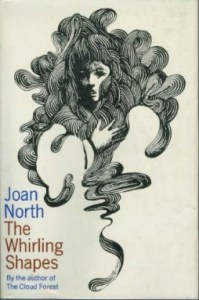
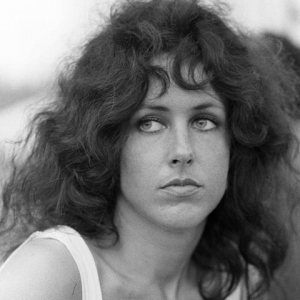
Mind you, it took me a long time to return to Joan North’s The Whirling Shapes, a great forgotten English fantasy novel of the ’60s.  (I forgot it, too:  it’s out-of-print.)   Published as a children’s book in England in 1966 and in the U.S. in 1967, it is a quintessential ’60s book, right down to the gloomily psychedelic cover:  the unhappy white face surrounded by the black coils reminded me of Grace Slick of the Jefferson Airplane.

During my Jefferson Airplane years, I found a copy of The Whirling Shapes during study hall, where I did very little except ask for library passes, since I had no intention of studying in public.  Studying, such as I understood it, was done in my room, listening to records. The Whirling Shapes was one in a long line of fantasies that shaped my imagination, including all of E. Nesbit (generously subsidized by my mother, since the library had few of her books), Ray Bradbury’s The Martian Chronicles, Tolkien’s Lord of the Rings, L’Engle’s A Wrinkle in Time, Michael Moorcock’s Elric books, Kurt Vonnegut’s Cat’s Cradle, C. S. Lewis’s Space trilogy, and John Christopher’s Tripods trilogy.

Grace Slick resembles the cover image of TWS!

A recent rereading of The Whirling Shapes was delightful.   In this strange, minimalist portal fantasy,  the mid-twentieth-century soul is threatened by conformity and all things mechanical.  If you don’t pay attention, you lose who you are.  It’s a psychedelic cozy catastrophe, where the mind can be a portal.

This inner-space fantasy has a multi-generational cast.  It begins traditionally, with the appearance of an outsider.   When Liz, the 14-year-old heroine, comes to live with relatives at 21 Arlington Crescent in London while her mother is in a sanatorium, she finds Aunt Paula and Uncle Charles pleasantly insignificant, but her boy-crazy cousin Miranda and the eccentric anthropologist Great-Aunt Hilda, who lives in the flat upstairs, inspire her affection.

There are mysteries:  a  brightly-lit house on the heath occasionally appears at night (only Liz can see it).   One night she goes outdoors and struggles to reach it, but just as she is about to arrive she finds herself back on the stoop of the house at Arlington Crescent with Aunt Hilda looking over her.

When Liz tells her she saw the house, Aunt Hilda says she knows.

“I’m responsible for it.  I imagined it and it came,” said Aunt Hilda, offering her the plate of cookies.

Liz took one as though hypnotized.

“I did it the night you arrived,” said Aunt Hilda.

Liz bit the cookie dazedly.  “I don’t understand.  Did you say you imagined it?”

Aunt Hilda went over to her desk, opened a drawer, and took out a small object wrapped in a white silk handkerchief.  She unraveled the handkerchief to disclose an oval piece of wood somewhat the size and shape of an egg; this she gave to Liz.

“I did it with the help of that,” she said.

“That” is a piece of wood from the sacred tree of the Dingas, known as the Tree of Dreaming True.  (The Dingas are a tribe Hilda’s great-grandfather studied:  North has her bit of humor with the name.)  And Aunt Hilda is very afraid that, since the power of thought is real, she may have opened a pathway into an unknown world.

And she has.  Sinister whirling shapes are released through the mind of her nephew, James Mortlake,  a melancholy artist who wanders into the portal house.  When James disappears,   a thick fog encircles the house on Arlington Crscent, and the whirling shapes threaten to dissolve human beings.  To conquer the whirling shapes is now the responsiblity of  the intergenerational extended family, including Miranda’s boyfriend, Tom, a poet and medical student.

The style is simple, but North waxes lyrical in a series of surreal episodes near the end.  And there are some surreal  ’60s-ish poems, written by Liz and Tom, interspersed with the text.

No vampires or Harry Potter to fit today’s Y.A. market, but I do think it could be reissued and do well as a crossover fantasy novel.

North wrote two other novels, too, The Cloud Forest and The Light Maze. They are also out-of-print, but perhaps I shall find them.

More Midwestern Lit

Everybody loves Midwestern Lit:  it’s a pity there isn’t more of it.

Commenters on yesterday’s post made valuable  recommendations, and I came up with seven more.

First, recommendations from the commenters:

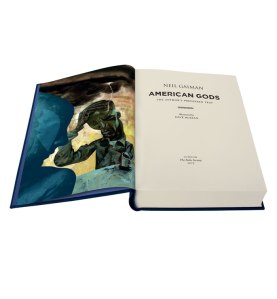
Lory of The Emerald City Review: “Willa Cather’s books are all so wonderful…  I’m also fond of Thornton Wilder, and his novels The Eighth Day and Heaven’s My Destination. And of  course there’s American Gods by Neil Gaiman, with its memorable scenes in a “perfect” midwestern town.”

Nancy:  “You can’t go wrong with Willa Cather. My personal favorites are O Pioneers, Death Comes for the Archbishop and The Song of the Lark.”

Stephanie:  “I would recommend: all of Wendell Berry’s Port William fiction (set in Kentucky), nearly anything by Willa Cather and Louise Erdrich, and Jessamyn West (specifically The Friendly Persuasion and Except for Me and Thee).  I’m going to feel very negligent if I don’t add William Maxwell’s So Long, See You Tomorrow and They Came Like Swallows.”

And more recommendations from me:

Merle Miller’s A Gay and Melancholy Sound.   The narrator of Miller’s brittle novel is Joshua Bland, a former quiz kid from New Athens, Iowa. It begins with drinking and misery: think Revolutionary Road meets Something Happened and Main Street. In the late 1950s, Joshua, now a successful Broadway producer, is on the verge of suicide, shattered because his wife Charley has left him. And so he tells his life story on a tape recorder.  Miller, a writer, editor, and gay activist, grew up in Marshalltown, IA, as did the actress Jean Seberg.  Their hometown did not appreciate them in their lifetime.

Larry Woiwode’s What I’m Going to Do, I Think, winner of the William Faulkner Foundation Award for best first novel, and Beyond the Bedroom Wall, a stunning novel about the Neumiller family, whom he also writes about in other books.

Bess Streeter Aldrich’s A Lantern in Her Hand, a remarkable pioneer novet set mostly in Nebraska, with a strong heroine, Abby Deal; and the sequel, A White Bird Flying, about Abby’s granddaughter, Laura, a teacher and aspiring writer.

Faith Sullivan’s out-of-print 1985 novel, Mrs. Demming and the Mythical Beast.  This should be a cult class if it’s not.  In this  partly realistic, partly fantastic women’s classic,  Sullivan tells the story of Larissa Demming, an artist in her late 40s. Although friends think her husband, Bart, a professor, is adorable, he’s actually stiff and dull, shut up all summer in his study writing, unsupportive of Larissa’s art.  During a summer alone in Belle Riviere, Minnesota, Larissa sketches, paints, joins an ecology campaign, and opposes her investment banker daughter’s wedding.  She also has a picnic with Pan, who has a major impact on her life.

Sister Carrie by Theodore Dreiser. A naturalist  classic, this story of the struggles of a small-town girl, Carrie Meeber, to find success in Chicago, is a fast read but very depressing.

Are Midwesterners Defensive? My Top 8 Midwestern Novels

Are Midwesterners defensive?

We’ve all been there.  The “flyover states” don’t exist for New Yorkers and Californians.  To hear our friends on the coast talk, Midwesterners live in desolate boarded-up beauty parlors side-by-side with truck-driving rednecks armed with crossbows,  or perhaps at that desolate crossroads in the crop-dusting scene in North by Northwest.  A friend in an Eastern city informed me that Midwesterners think nothing of driving hundreds and hundreds of miles to stores or movies.  (She once flew to Chicago; that is the source of her expertise.)  I was astonished: I live in an unusually pretty small city, where commutes are so short that people may drive less than they do elsewhere. And I don’t drive at all: it’s an environmental choice.

I thought about this Midwestern culture gap as I  read an essay in the Literary Hub by Amanda Arnold, “Why Literature and Pop Culture Still Can’t Get the Midwest Right.”

Arnold is defensive about the Midwest, as only a very young person can be, and writes that the region struggles to assert its identity and is misunderstood. And she is concerned about the dearth of Midwestern literature and “a conversation” she would like to have:  she interviewed Mark Athitakis, author of The New Midwest: A Guide to Contemporary Fiction of the Great Lakes, Great Plains, and Rust Belt.

Arnold reveals her prickly desire to please in the first paragraph.

When they ask, I tell people that I’m from the Midwest. Indiana, I’ll say with a playful, nasal intonation if badgered further, though I don’t typically expect a follow-up question. Only on the rare occasions when explicitly asked “but what city?” will I offer up my hometown: Fort Wayne, which I describe as a small place where “there’s not too much,” despite it being the second largest city in the state.

It takes time to “own’ your new territory and it does take time to make peace between what you know about a place and what others think they know.  And I do agree that few books are set in the Midwest. I wonder if more pop fiction than literary is set in the Midwest. The inequity doesn’t bother me, and I don’t demand fair representation, but the paucity may account for the disproportionate thrill of reading about any place I recognize.  To narrow it down, my  impression as a lifelong reader is that at least 90% of American novels are set in New York.  (That must be off, no?  Statistics will  doubtless disprove that wild theory.)  Raised on New York literature, I have an entirely imaginary vision of the glittering city I haven’t visited in decades.  My New York is based on the books of Tess Slesinger, Dorothy Parker, Jonathan Lethem, Erica Jong, Sue Kaufman, Philip Roth,  John Updike, Dawn Powell, Paula Fox, and more.

There is some excellent Midwestern literature, though

Here is my Top 8 List of Midwestern Novels.

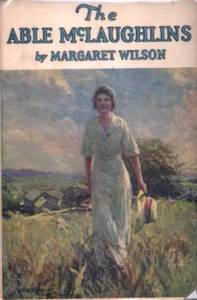
1 Margaret Wilson’s The Able McLaughlins, winner of the Pulitzer Prize in 1924

Set in Iowa during and after the Civil War, this compelling novel has both a protofeminist theme and a philosophical bent. It centers on a family secret.

Wully McLaughlin, a Civil War soldier at home on leave, is anxious and ill when he meets Chirstie McNair, the beautiful daughter of a parsimonious neighboring farmer. With someone to love and fight for, Wully faces the terrors of war again, but when he returns for good, something has happened. Chirstie will barely look at him and even threatens him with a gun. The secret is that Chirstie has been raped.  The novel is about what they do about it, and how they heal.

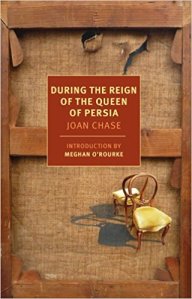
2 Joan Chase’s During the Reign of the Queen of Persia (1983), winner of the Hemingway Foundation/PEN Award NS Janet Heidinger Kafka Prize

First, let me say that Chase’s During the Reign of the Queen of Persia is magnificent. Set on an Ohio farm in the 1950s, it tells the story of three generations of women: Gram, also referred to as the Queen of Persia, is a sharp, often rude, old woman who rose from poverty and purchased the farm when an uncle took an interest in her and gave her money. Gram has had a hard life: she scorns her alcoholic husband. After she does her housework, she dismisses the demands of family and goes out with her friends to the races or Bingo. The women dominate: Gram and her five daughters and four granddaughters are the stars.

You can read the rest of my post here.

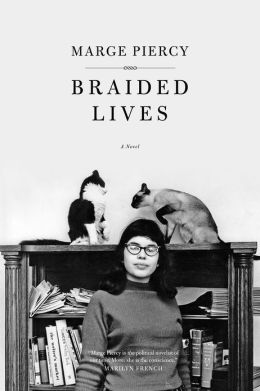
3. Marge Piercy’s Braided Lives (1982)

Piercy, a feminist poet and novelist, is a bold, inventive storyteller whose fast-paced work appeals to a wide range of women readers.  In Braided Lives, set in Detroit, Ann Arbor, and New York, Piercy tells the story of Jill, a successful poet and radical abortion rights activist who, having survived the age at which her palm-reading mother predicted she would die, is looking back at her younger self….

As young women at the University of Michigan in the 1950s, Jill and her friends must confront the demands of school, work, and sex, and the expectation that they will receive their “Mrs.” degree. This earthy novel is reminiscent of Mary McCarthy’s The Group, a sexually explicit novel about eight Vassar graduates in the ’30s. But unlike The Group, Braided Lives describes the lives of working-class students.

You can read the rest of the post here.

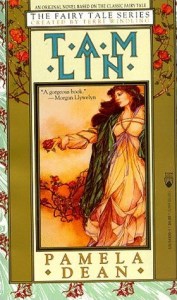
4. Pamela Dean’s Tam Lin (1991)

Pamela Dean’s novel Tam Lin, set at a small college in Minnesota in the ’70s, is a whimsical chronicle of an undergraduate education. Part college novel, part offbeat fantasy, it is A Midsummer Night’s Dream crossed with Donna Tartt’s The Secret History–with a dash of the ballad Tam Lin.  One of my favorite books.

You can read the rest of the post here.

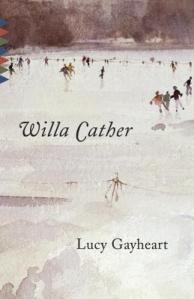
5.  Willa Cather’s Lucy Gayheart

I love this novel partly because of the lyrical prose, and partly because it describes the struggles of a young woman to transcend the narrowness of a small Midwestern town through music.

Divided into three parts, the novel vividly chronicles the brief life of Lucy, a graceful young woman and piano student who suffers a terrible loss and then is lost herself. The first-person plural narrator of the opening chapter tells us that Lucy is dead and still missed, remembered by the people of her hometown, Haverford, Nebraska, “as a slight figure always in motion, dancing or skating, or walking swiftly with intense direction, like a bird flying home.” But this narrator, describing her absences from Nebraska, doesn’t quite see her as the ardent young woman she is.

You can read the rest of the post here.

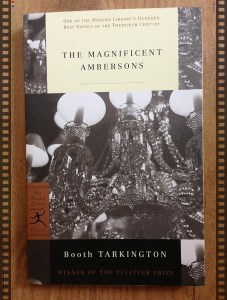
 6. Booth Tarkington’s The Magnificent Ambersons won the Pulitzer in 1919.

The Magnificent Ambersons is a small masterpiece. It’s not so much the style, which is very plain, as the development of the parallel themes of the decline of a wealthy family who dominated a midwestern town with the rise of the automobile and urban sprawl. It very radically connects the popularity of the car to the desertion of once wealthy neighborhoods in the inner city.

You can read the rest of the post here.

7. Martha Bergland’s A Farm under a Lake

I absolutely loved this book and plan to reread it soon.  From Goodreads:  “Home health care nurse Janet Hawn agrees to drive her latest client, a silent Alzheimer’s patient named May, from Green Bay, Wisconsin to her daughter’s house in northern Illinois. Janet and her husband Jack, an out-of-work salesman, grew up on neighboring farms in Illinois, and on the long drive through familiar territory, Janet reflects back on her childhood and courtship and tries to figure out where her life took a wrong turn.

8. Louise Erdrich’s A Plague of Doves.

Exquisite linked stories depict the lives of generations of several families affected by a racist lynching of Native Americans who have been blamed for the murder of a white family near the Obijwe Reservation in North Dakota in 1911. Laced with magic realism and poetic dexterity, the tales are gorgeous to read; Erdrich jumps back and forth in time. The novel begins with a short sketch, a kind of prologue, “Solo,” a bleak description of the crime, shocking and puzzling us for several chapters.

Read the rest here.

And do let me know your favorite Midwestern books.  I have so many!

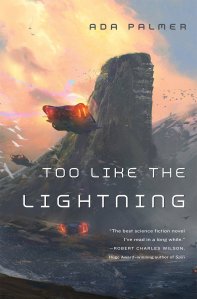
Great Genre Fiction: Ada Palmer’s Too Like the Lightning

First, let me say that I love genre fiction.  Not all genre fiction:  just the very best.  And Ada Palmer’s Too like the Lightning, a science fiction novel set in a utopian future world whose culture is based on eighteenth-century philosophy, is one of the best. This elaborate novel, categorized as SF, has much to interest readers of literary fiction. Believe me, it is the first time I have raced through a book with multitudinous references to Diderot, Rousseau, Voltaire, and de Sade.

Palmer’s background is eclectic.  Not only is she an SF geek, she is an assistant professor at the University of Chicago and a historian who specializes in the Renaissance, early Europe, and the Enlightenment.  Her first book was  Reading Lucretius in the Renaissance (Harvard University Press).

And now she has moved on to science fiction.  Let’s talk about Too Like the Lightning.

It’s complicated.

The narrator, Mycroft Canner, is a convict. He is a brilliant man, sentenced for life to be a servicer, meaning he must work on call for anyone who needs his services.  Sometimes he works in sewers, other times he works as a political consultant. We do not learn exactly why he has been punished until we are well into the book,  and it is a shocker.   But whatever he did, he eloquently records, in the language of the Enlightenment, the events that transformed the world in 2454.

He begins with “A Prayer to the Reader”:

You will criticize me, reader, for writing in a style six hundred years removed from the events I describe, but you came to me for explanation of those days of transformation which left your world the world it is, and since it was the philosophy of the Eighteenth Century, heavy with optimism and ambition, whose abrupt revival birthed the recent revolution, so it is only in the language of the Enlightenment, rich with opinion and sentiment, that those days can be described. You must forgive me my ‘thee’s and ‘thou’s and ‘he’s and ‘she’s, my lack of modern words and modern objectivity. It will be hard at first, but whether you are my contemporary still awed by the new order, or an historian gazing back at my Twenty-Fifth Century as remotely as I gaze back on the Eighteenth, you will find yourself more fluent in the language of the past than you imagined; we all are.

Do you love it?  I do.  But if you don’t, you will be happy to know that much of the book is written in simpler language, and the rules of language are explained.  Gendered speech is forbidden, though Mycroft frequently breaks the rule and uses “he” and “she” for the pronoun “they” (ouch!) the people use instead.   The dialogue combines English,  translated Chinese and French (she makes the English sound a bit like those languages), and, what I like the most, some of the characters speak Latin.  The lovely thing?  This is the only book using Latin, with the exception of Peter Stothard’s The Senecans:  Four Men and Margaret Thatcher (I wrote about it here)  and of course scholarly books, I have read without Latin errors since 2015.

At the center of the book is a political plot that threatens to unravel many well-kept secrets.  The maverick Mycroft and Carlyle Foster, a Sensayer (a cross between  psychologist and a metaphysician), are employees of a powerful household  protecting and hiding  Bridger, a philosophical boy with a frightening ability to animate inanimate objects.  (My favorites are the toy soldiers, especially the Major.)  Mycroft and Carlyle are devoted to him, and the household protecting him–among them Thisbe (who makes “smelltracks” for films), and Cato, a fanatical science teacher at a museum–are all in the family business of managing the flying “cars” and traffic–and recognize that he needs shelter.   But their business and the safety of Bridger are  jeopardized when a high-profile theft is committed in their “bash'” (household).

World-building is a big part of this novel, and it is complicated.  “Hives” have taken the place of nations:  people from all different backgrounds define themselves by their talents rather than geography or race:  they choose to become humanists, Utopians, Masons, and several other categories that make no sense out of context.  What happens when somebody steps outside of the box–I mean far, far out of the box–in a peaceful world?  Havoc is created.

Here is a quote from  Palmer’s  history blog, Ex Urbe, that also sheds light on her novel.

All my projects stem from my overall interest in the relationship between ideas and historical change. Our fundamental convictions about what is true evolve over time, so different human peoples in different times and places have, from their own perspectives, lived in radically different worlds with radically different rules.

A very enjoyable read!  Very brilliant, very complicated.  And there’s a sequel.  That’s  on my list.

A Homebody’s Memoir: You Can’t Wear Fuchsia Sweatpants

Why not write a book? It seemed like a good idea.  For three days I’d worn the same fuchsia sweatpants, because my husband was out of town. I was sitting on the couch with the cats, rereading Barbara Pym’s No Fond Return of Love, when I realized that the heroine, Dulcie Mainwaring, an indexer, never wore fuchsia sweatpants, and if I wanted to write, I must get dressed.

I dragged my typewriter out of the basement. But what would I write?  I decided on a bibliomemoir. They’re popular and not too cerebral, and though I’m fairly bright, I’m basically a lightweight.  I  don’t have a gimmick or a grief to overcome: Phyllis Rose (The Shelf: From LEQ to LES: Adventures in Extreme Reading) read all the books on a library shelf; Nina Sankovitch (Tolstoy and the Purple Chair) read a book a day after her sister died; Will Schwalbe (The End of Your Life Book Club) discussed books with his dying mother; Rebecca Mead (My Life in Middlemarch) was madly in love with Middlemarch; and Robert Dessaix (Twilight of Love:  Travels with Turgenev) retraced Turgenev’s footsteps in Russia and Europe and meditated on the writer’s influence.

No,  I didn’t have high aspirations, but I had a cause.  You might say the Republicans, writers of dreadful tweets and enemies of the NEA, inspired me to raise my standards.  A disappointed Democrat, I’d upgraded my reading  to maintain the tenets of civilization. Yup, I wrote  in my notes: “Read classics to uphold tenets of civilization.”   And, in a cute little notebook from England, I’d taken a lot of notes.

To organize the notes I had literally to rip out pages, shuffle, and spread on the floor.  As I looked at the pages  I cheerfully meditated on principles of organization: (a) the importance of being “Ernest,”  mixed with  (b) the  glee of being lightweight.   I’d recently read a very disparate bunch of writers:  Pushkin, Barbara Pym, Margaret Drabble, Catherine Aird, Trollope, E. Nesbit, Ada Palmer, Valerio Massimo Manfredi, and Ovid…

Whom to write about and whom to cut?  Oh, well, write ’em up and then figure it out.  “I’ll think about that tomorrow” (Scarlet O’Hara).  I typed happily most of Day 4, wondering if  Bess Streeter Aldrich or Conrad Richter was the best, most neglected regional writer.

And then I ran out of paper. I called my cousin Megan, who came by with a pack of paper and carry-out. While we heated  the pizza, she skimmed two very short “chapters”—she approved of the pages on Agatha Christie, but said I must cut the Ovid  because it reminded her of horrible Mrs. Westcott’s Latin class, which her mother made her take, and she still had nightmares about something called hyperjump. (“Hyperbaton,” I corrected.)  I listened absent-mindedly as I organized my vitamin pill caddy, because writers who type on typewriters need to fortify body and brain with many, many, many vitamins and herbal and botanical supplements, as well as packets of a fizzy orange energy drink I keep next to the Morning Thunder tea.

When I got up from the table, Megan informed me that I had a hole in my black stretch pants.   Dear Reader, those stretch pants were all that stood between me and a life of reading novels on the couch (very Oblomov).  The fuchsia sweatpants were as comfortable as pajamas–too comfortable.  Well, I changed back into them until Megan went home, and then  did a load of laundry at midnight.

As soon as the jeans dry I’m ready to type on.

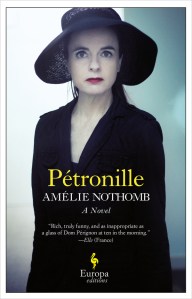
Pétronille by Amélie Nothomb

Pétronille is a pitch-perfect short novel, and, that’s the author on the cover, Amélie Nothomb, a popular Belgian writer whose award-winning books have been translated into 25 languages.

The daughter of a Belgian diplomat, Nothomb grew up in Japan, China, New York, Laos, and Burma, and now lives in Paris.  Her work is new to me, but Nothomb is a celebrity:  she is famous for wearing black hats and writing a book every year since 1992.  And she often is a character in her own books.

In  Pétronille, the narrator, Amélie, a 30-year-old novelist, is a champagne connoisseur who explains that intoxication is an art, and that fasting enhances the experience of drinking champagne.  Drunk on champagne, she sees and hears jewels tinkling and animated by a serpentine crawling.  Her observations are exquisitely weird.

As they approached me, I could feel their metallic chill.  I felt the rapture of snow; I would have liked to bury my face in this frozen treasure.  The most hallucinatory moment was when the palm of my hand actually felt the weight of a gemstone.

Each sentence is crystalline, and her  musings are as sharply observed as those of the lyrical American writer Elizabeth Strout.   But her love of champagne makes her wish she had a drinking companion.   Then at a book signing in Paris, she meets Pétronille, a fan with whom she has corresponded.  Twenty-two-year-old Pétronille looks so young that Amélie mistakes her for a teenage boy. But Pétronille wins her attention when she gets rid  of a paparazzo who disrupts the reading:  she grabs him by the scruff of the neck and drags him outside, much to the gratitude of the stupefied booksellers.

Would  Pétronille make a good drinking companion?  Amélie wonders.  She invites her to La Gymnase, a seedy cafe.   Pétronille, the daughter of working-class communists, is a seasoned drinker, but is far from the perfect companion.  She is snide about Amélie’s upper-class origins, but she appreciates champagne.  And she is eloquent on her love of the bad boys in Shakespeare, and the ghastliness of her two years spent teaching French in Glasgow. Pétronille amuses but goes too far:  during a brief walk outside the bar,  she stops to pee between two cars.  Amélie is appalled, gives up the idea of a drinking companion, and forgets about Pétronille.

But a few years later Amélie finds a copy  of Pétronille’s first novel, Honey Vinegar, which she reads in one sitting and loves. It is a riff on the theme of Henry de Montherlant’s The Young Girls, in which an author receives love letters from female readers and somehow finds ways to triumph and reject their love.  In Pétronille’s novel, the readers devour the writer. She wonders how Pétronille, a debut novelist,  knows about the behavior of female readers.  And then Amelie attends Pétronille’s reading:  this time she is the fan.   Now they are equals.

After the reading  Amelie teases her.

I took her to the Cafe Beaubourg, where I was a regular.  I apprised Pétronille of the fact that the establishment did have toilets.

“You can be so old hat!” she said.

At first, their friendship is supportive. In London, after Amelie is humiliated by a punk fashion designer  she interviews for a magazine, she invites Pétronille to join her in London. They visit the British Museum, separating so each can see the exhibits that interest her, and meet in  “Mesopotamia” before going out tor fish and chips in Soho.

Then the book takes a macabre turn.  Pétronille becomes weirder, tougher, and wilder. She continues to write and to look like a 15-year-old boy, but her  life takes a dark turn.  She cannot support herself by writing, so she participates in drug trials for money and gets ill from side effects.  Amelie cannot persuade her to quit and get a job:  Pétronille would rather risk her life than work regular hours.

Amelie is like the more successful big sister, trying to help Pétronille find her way.  But things don’t always work out between sisters.

Very weird, very enjoyable.  Really gorgeous writing, translated by Alison Anderson.