Kazuo Ishiguro’s The Buried Giant

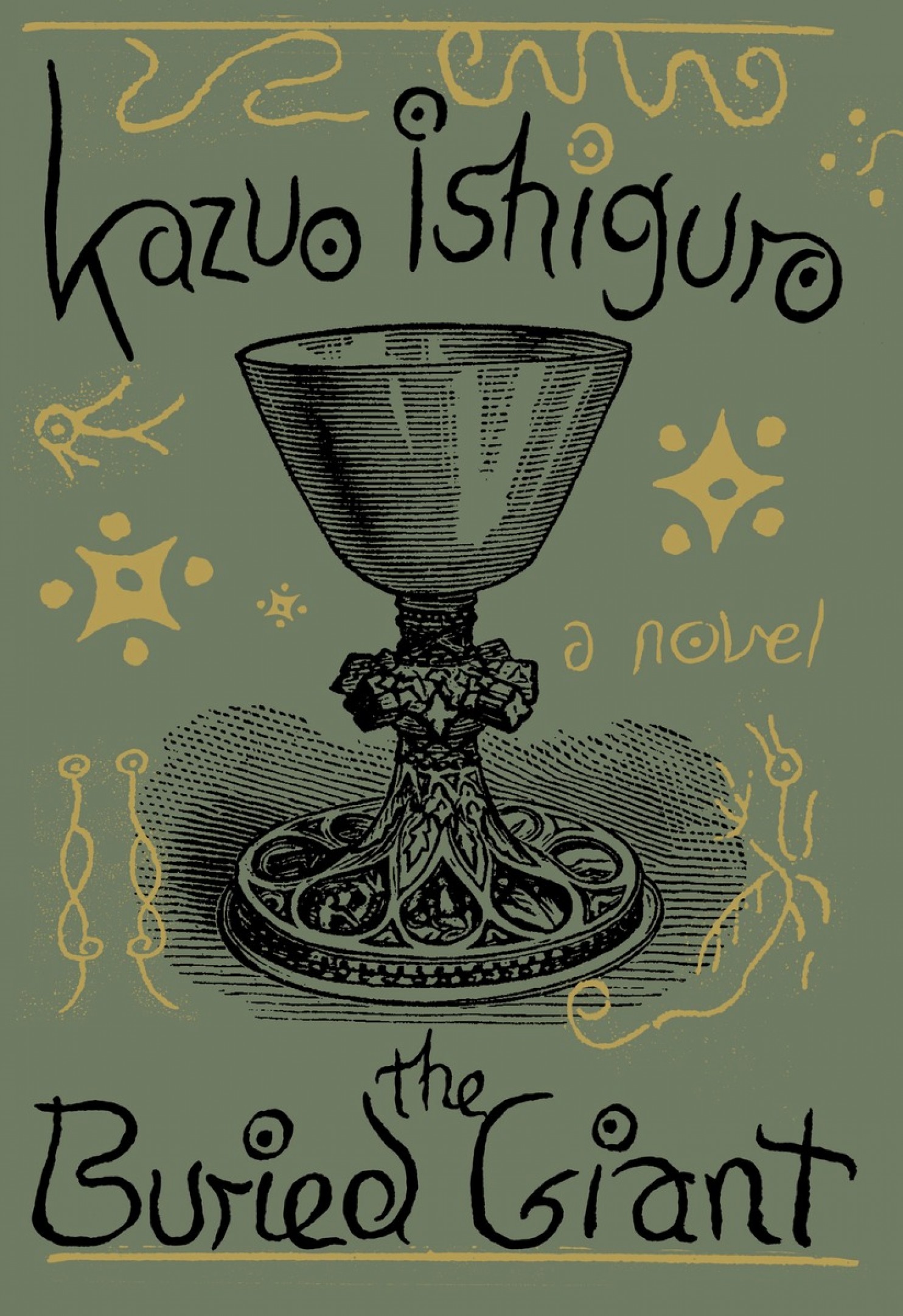
The Buried Giant Ishiguro.BG.jacketI have been long been a fan of Kazuo Ishiguro, the author of the Booker Prize-winning The Remains of the Day.   His latest novel, The Buried Giant, is another masterpiece. Set in a post-Arthurian mythic world, this literary novel is elegantly crafted and emotionally disturbing.  Oddly, it has generated controversy among science fiction fans and the writer Ursula K. Le Guin.

Ishiguro’s poetic, rhythmic narrative slowly unfolds in the shadowy reality of a post-war England inhabited by Britons and Saxons in a mist of forgetfulness  They cannot remember what happened yesterday in their villages, let alone during the wars in King Arthur’s time.. They barely remember who they are.

Important questions are asked about memory and forgetfulness.  Is it better to remember painful things, or to forget?

The two main characters, an elderly couple, Axl and Beatrice, are regularly taunted by the villagers for being slow and denied a candle because they are so old.  Axl cannot quite remember the past. He and Beatrice have separate memories.   He cannot remember even if they had children.  Beatrice remembers a son.

Ishiguro’s omniscient narrator says aside,

You may wonder why Axl did not turn to his fellow villagers for assistance in recalling the past, but this was not as easy as you might suppose.  For in this community the past was rarely discussed.  I do not mean that it was taboo.  I mean that it had somehow faded into a mist as dense as that which hung over the marshes.  It simply did not occur to these villagers to think about the past–even the recent one.

Axl and Beatrice decide to leave their village (and no wonder!  what a ghastly place) and travel to visit their son.  On the journey, they meet a woman who has been separated from her husband by a tricky boatman (i.e., like Charon, who rows the dead to the Underworld) .  The boatman rowed her husband across to the island of the dead, promising falsely he would take her next. She does what she can to torment the boatman, because she wants to be with her husband.  Later, Ishiguro brings us back to this episode.

On their journey, they meet a Saxon warrior, Wistan, who has saved a child kidnapped by ogres.  The child, Edwin, now has terrible bites on his chest, and the  villagers want to stone him  Are the bites by vampires?  No, they are not. But they are horrifying.

And so Wistan saves the boy and they travel with Axl and Beatrice.  They meet Gawain, the knight of Arthur, who has been trying to kill a dragon for many years..  They learn that the enchanted breath of the dragon has caused the mist of forgetfulness.  It was a spell designed by Merlin

Wistan, who wants to kill the dragon, too, does not trust Gawain.  The two are almost equal as warriors.  Gawain tries to discourage Wistan.   Both think they recoginize Axl from the past.  Eventually Axl himself has vague memories of a battlefield.

There are some truly eerie scenes.  Monks want to kill them, but they find their way through a tunnel built over human bones while Wistan fights a whole army single-handed in a terrifying tower..

When we learn that Gawain wants to save the enchanted dragon for some reasons we cannot altogether reject, we listen.  We know we are heading toward tragedy.  Is it indeed dangerous to remember so much?   And is remembering worth the price?  There is a price.

Most reviewers recount the whole plot of the novel, and usually I tell more, but I do think most of this depends on surprise.  SO READ THE REVIEWS LATER!

The novel has been controversial.  There have been  misunderstandings about genre.  Ursula K. Le Guin, the great science fiction writer who has grown increasingly querulous in recent years about literary trends (and many, many other things),  labels Ishiguro’s novel a fantasy, and does not think it is a good one.  (It’s not a fantasy, so what can I say?)

At my public library Ishiguro’s novel has categorized as science fiction, and, yes, is on the new science fiction shelves.  Mind you, this is not a national trend:  Barnes and Noble (and probably everyone else)  knows it belongs in the literature section.  But  fewer readers at my library will stumble across the book in the SF ghetto.

Ishiguro himself has said he does not consider it fantasy. He said in an interview with the New York Times in March that this novel about memory was inspired partly by the medieval poem, Sir Gawain and the Green Knight.  Ishiguro says,

I don’t know what’s going to happen.  Will readers follow me into this? Will they understand what I’m trying to do, or will they be prejudiced against the surface elements? Are they going to say this is fantasy?”

What can I say?  I loved the book.  And it is not science fiction/fantasy, though I love genre fiction.  It is not swords and sorcery, nor Arthur and Merlin.  No one but Ishiguro could have written it.
Do We Need Footnotes?

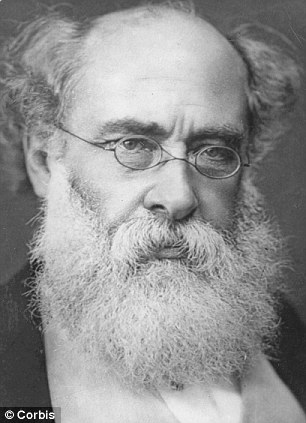
Anthony Trollope

Do we need footnotes in Trollope’s novels?

In Jo Walton’s What Makes This Book So Great, she is adamant about her loathing of footnotes.

In Chapter 94, she writes,

I once got into an argument on a Trollope mailing list with people who like footnotes.  (I hate all footnotes not written by the authors.)  The people I was arguing with maintained that they needed footnotes to understand the story, because Trollope wrote expecting his readers to know what a hansom cab was and to understand his jokes about decimalization.  I argued that they’d either figure it out by context or they didn’t need to.

I have had this same comical argument many times.  Mind you, I enjoy footnotes.  They are an art, though often of interest mainly to scholars. When I have time on my hands, I’ll skim footnotes.

But even when a footnote is necessary, it is often too protracted.  I  have gleaned everything I know about England in the 19th century from reading many, many, many novels, and I am often too involved in the story to stop.  How many times have I interrupted my reading to skim long footnotes on the history of Corn Laws or Corn law repeal, not only in Trollope, but in George Eliot, George Meredith, and Charlotte Bronte?  So far, Trollope hasn’t required me to take a test.

And sometimes the footnotes are a bit dippy.

For instance, in Trollope’s He Knew He Was Right (Penguin), Note 1 in Chapter 3 tells me that the Acrobats (a club in the novel), may have been “the Garrick, originally in King Street, a block away from Pall Mall.”

The Dover edition (left) doesn’t have footnotes, but it’s fine with me.

Jo Walton says she tries to find editions of Trollope without footnotes.

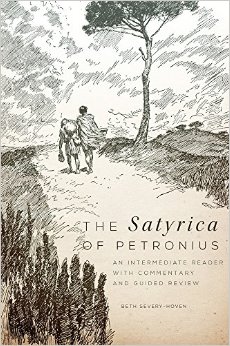
One must have notes to read Satyrica.I admit, there are times when you need footnotes.  If you read the extant fragments of Petronius’s Satryica (formerly known as the Satyricon), you rely on notes.

We have only fragments left of this risque Roman novel. Only one manuscript (in very bad shape) survived to the ninth century:  The monks did not go out of the way to copy it, and I admit there is much that might not appeal to them:  men losing their boyfriends to other men, buggering, rites of priestesses of Priapus, and witches attempting to cure the hero’s impotence.

This irreverent, sometimes obscene, masterpiece was written by Petronius Arbiter, Nero’s arbiter of taste. It is probably (so scholars hazard) a Menippean satire (a long work of prose mixed with verse) of the first century A.D.  (Some are not sure that Petronius the author is the same as Nero’s Petronius.)   The longest chapter extant, “Trimalchio’s Dinner Party,” inspired F. Scott Fitzgerald’s The Great Gatsby and Fellini’s movie Satyricon.

If you have time to read only a bit of this, I recommend “Trimalchio’s Dinner Party.”  It requires the fewest footnotes.  Trimalchio is a hilarious, kindly, vulgar millionaire, a freedman who started as an accountant.  He pisses in gold chamber pots, washes his hands with wine, dries his hands in slaves’ hair, serves gourmet dishes shaped like the Signs of the Zodiac, and has acrobats jumping through flaming hoops during dinner.  Yes, like Gatsby, he’s nouveau riche.

During dinner, when an accountant  interrupts to read  to Trimalchio about the day’s happenings, Trimalchio is shocked to learn there was a fire in the gardens at Pompeii..

Hold it,” Trimalchio said, ‘when did I buy any gardens in Pompeii?”

“Last year,” the accountant told him, “that’s why they haven’t been entered in the accounts yet.”

Trimalchio blew up.  “Whatever properties’ve been bought, if I don’t get told within six months, forget it.”

petronius-satyricon-folio1This excerpt is from Frederic Raphael’s lively translation (only available through the Folio Society, alas, but now out of print and hence cheap on the internet):

Petronius’s Latin is odd, using vocabulary rarely used, and as you can imagine, one needs the notes.  But I am laughing as I read the Latin.   The guest Seleucus philosophizes on death after a friend’s funeral.

My translation?

We walk around inflated bags.  We are less than flies.  Nevertheless, flies have some virtue; we are not more than bubbles!

Yes,we are not flies but bubbles!

What to Do When It’s Hot, Part 2: Reading Barbara Trapido at the Coffeehouse & Shades of Green

Prairie grass on the coffeehouse patio.

Prairie grass on the patio at the coffeehouse.

My friend Janet and I biked to the coffeehouse.

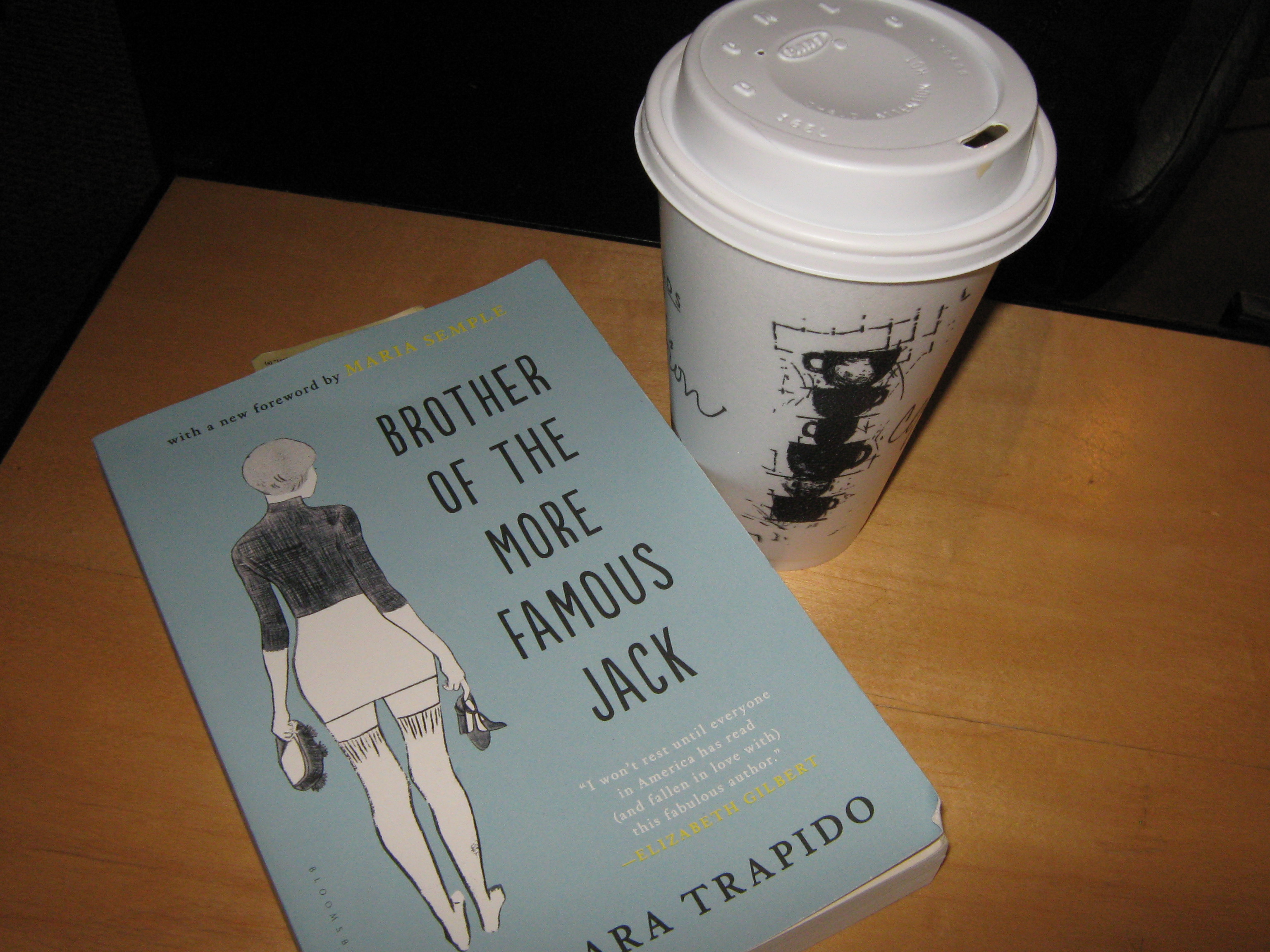
And then we got out our “girl books” to read,  because we were hot and tired.  I am reading Barbara Trapido’s Brother of the More Famous Jack, and she is reading Elizabeth Taylor’s The Soul of Kindness.

Photo of book and coffee drink.

Photo of book and coffee drink.

The winner of the  Whitbread Special Prize for Fiction in 1982, Brother of the More Famous Jack came up as a recommendation at a couple of online sites.  It has a foreword by Maria Semple, author of Where’d You Go, Bernadette?  Semple is a Trapido enthusiast.  She found the book at a library sale.  She has corresponded with the author.  She writes, “The first page was so charming it made my chest ache.”

It is slightly reminiscent of the early novels of Margaret Drabble (The Millstone, etc.).  The heroine, Katherine, a very pretty  girl who loves fashionable clothes and gets picked up by a middle-aged bisexual man at the bookstore, has applied to a university in philosophy.  The philosophy professor, Jacob Goldman, is very amused by her. He asks her what she reads.

Somewhat to my retrospective embarrassment, I remember telling him, among other things, that I thought Wordsworth had possibilities, that dI thought Jesus Christ had been a Utopian Socialist and that I didn’t like the sex in D. H. Lawrence.

It continues like this–very funny. When her bisexual friend John takes her to visit the Goldmans  for the weekend, it is awkward–she hadn’t realized it was her professor’s house.  But then she falls in love with the whole family:    Jane, the wife, always pregnant, would rather garden than clean; her oldest son, Roger, is a brilliant, moody musician; Jonathan, the next son, is a rebel who reads Finnegan’s Wake, Vogue, and comic books; Rosie is nine and gets on her mother’s nerves; and then there are the twins.

Katherine falls in love with Roger, but he is cold and controlling.  He criticizes what she reads, pretends to his parents he isn’t in a relationship with her, and occasionally snubs her when visits him at Oxford.. Eventually she realizes that he doesn’t love her so much.

Well, I won’t tell you what happens because I’m not done myself, but may I just whisper, Italy?  And the back tells me that she visits the Goldmans 10 years later.

I love the book!

And I don’t remember Elizabeth Taylor’s book, but I read it years ago and she is excellent.

Shades of Green.  It is the time of year when the shades of green change.

It is July 19, and the green is now silvery and the leaves are sagging and a little blowsy.

The green's a little blowsy now.

The green’s a little blowsy and worn out now.

I love summer.  I love rushing out of the house coatless.  I love the fresh green, and I love the worn-out green.  But how did it get to be mid-July?

I must enjoy the rest of the summer!

When It’s Hot: Do’s and Don’ts

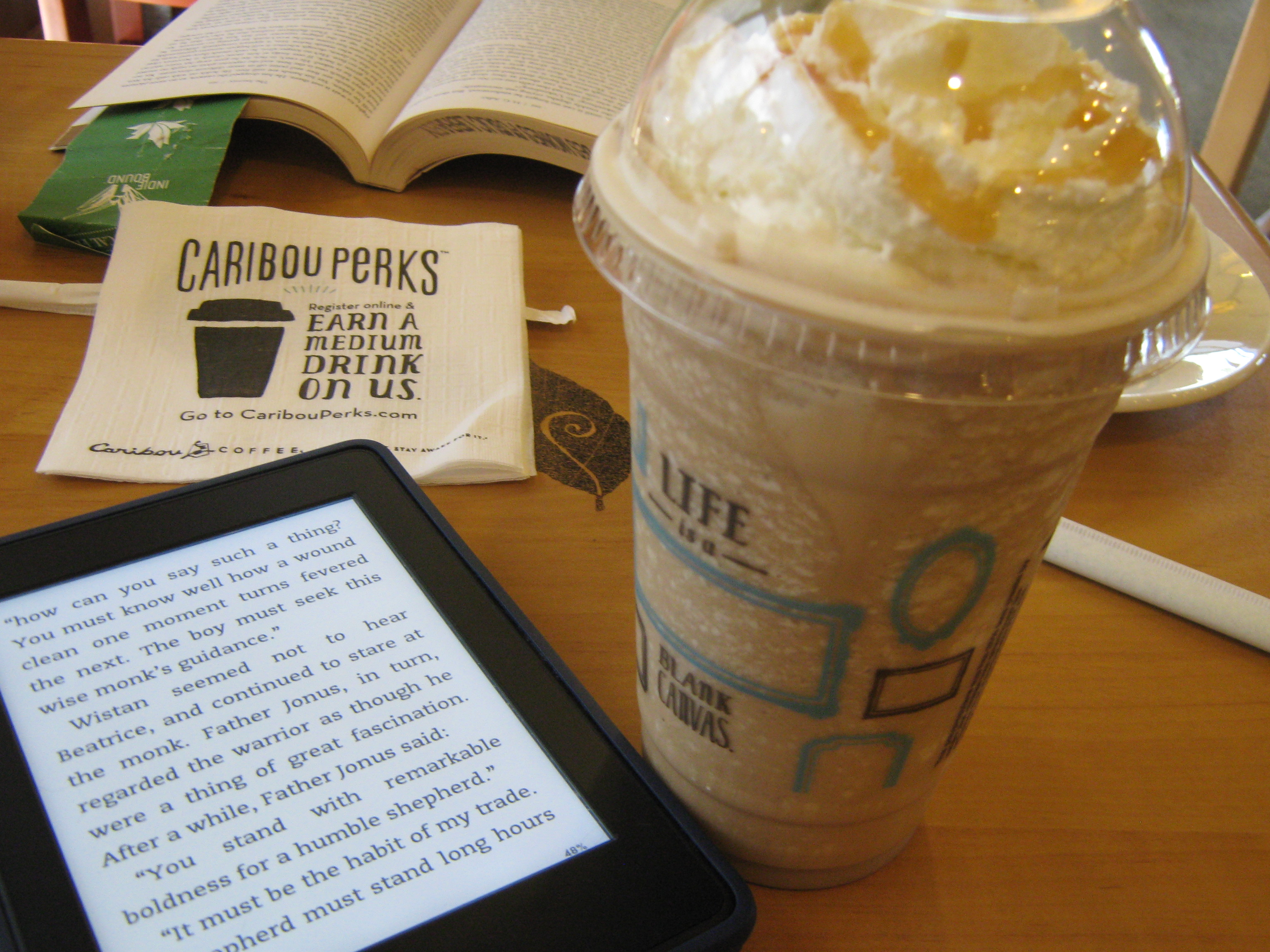
IMG_3205 Do.  Go to a coffeehouse and have a cold coffee drink.  Take a picture of your e-reader and cold drink.

IMG_3199Don’t  bicycle on this lovely grassy dirt trail.  It is a tough ride on this surface even when it’s medium hot.  Today the canopy of leaves will not cool you off.

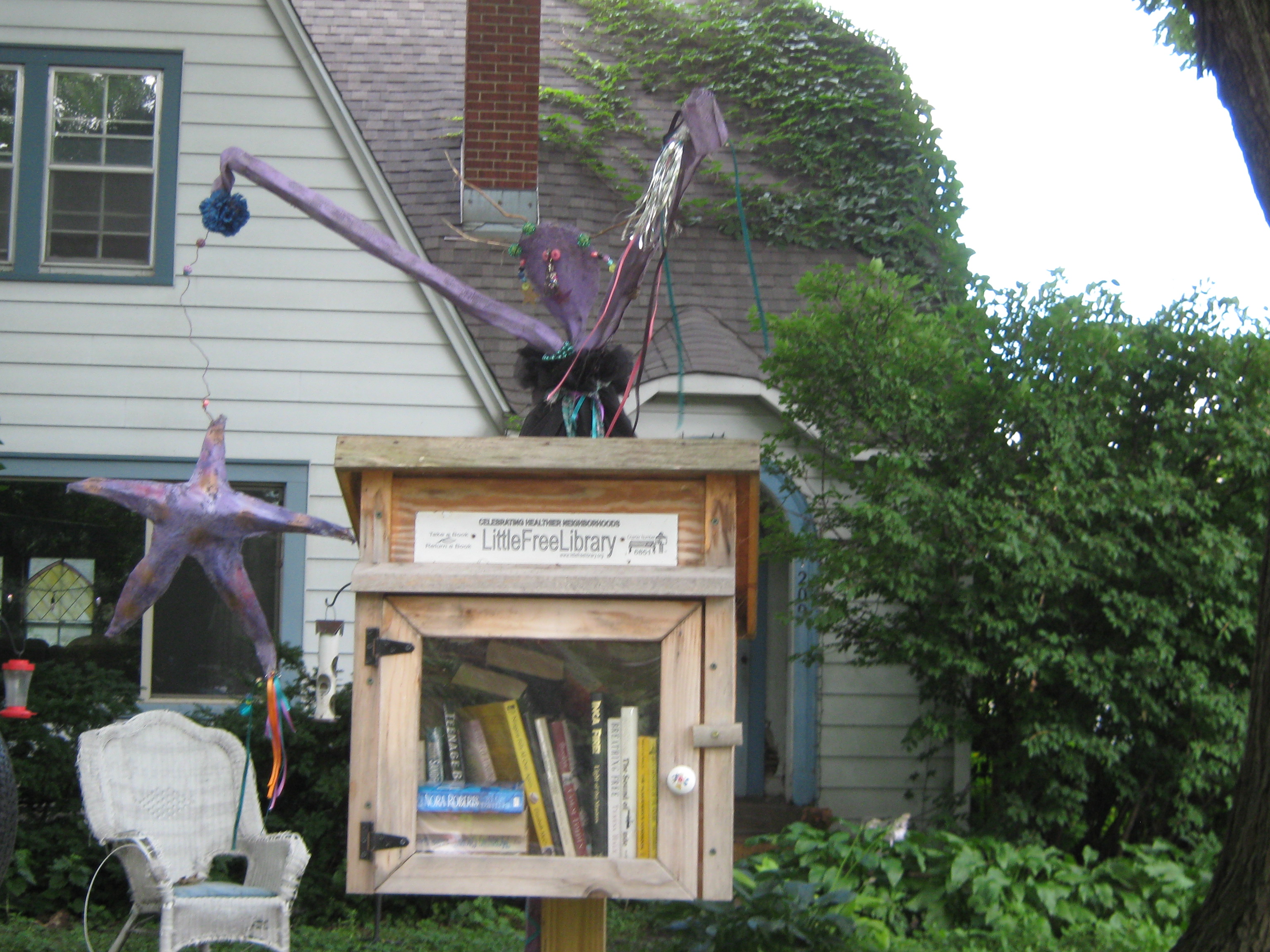
IMG_3209Do.  Stop at a Little Free Library. It takes no energy.  You’re bound to find something, even a summer thriller.

IMG_2077Don’t water your outdoor plants till night.  The water is smokin’ hot in this heat.  (And, no, these plants aren’t mine.  I do have some, though.)

troll on booksDo turn on the air conditioner and take a book off your TBR pile.  An ancient troll doll stands on top of my Top Three in Progress :  George R. R. Martin’s Clash of Kings, Russian Short Stories from Pushkin to Buida, and Jhumpa Lahiri’s The Lowland.

Enjoy the 90-degree weather!

The Dover D. H. Lawrence Reader & Rereading Sons and Lovers

Sons and Lovers D.H. LawrenceI am a fan of the Dover Reader anthology series.

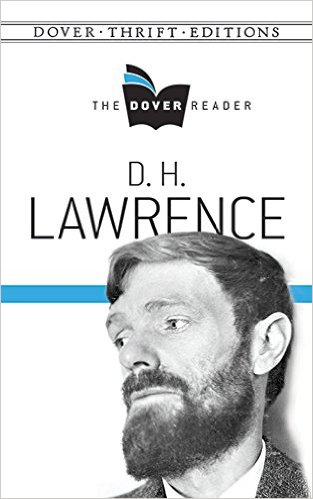
The Dover D. H. Lawrence Reader ($6) is an anthology including the complete text of one of my favorite novels, Sons and Lovers, the superb short stories, “The Prussian Officer,” “Odour of Chrysanthemums,” and “England, My England,” poems, and the essay, “Psychoanalysis and the Unconscious.”

Dover D. H. Lawrence Reader 41WpGZGkDzL._SX311_BO1,204,203,200_I recently reread Sons and Lovers, Lawrence’s elegant autobiographical third novel, a study of Lawrence’s parents’ marriage, of the too-strong bond between Lawrence and his mother, and his attempts to break away with other women.

Lawrence is one of the most brilliant, lyrical writers of the 20th century, and his explorations of the relationships between men and women are spot-on.  I very much admire his sympathetic portraits of strong women characters:  in this novel, there are Mrs. Morel, Paul’s mother; Miriam, Paul’s religious, thoughtful, bookish friend, and Clara, a suffragette who has left her husband.  And of course Paul, a charming man with a sense of humor who is also a painter, fascinates all three.

In the first chapter, “The Early Married Life of the Morels,” we meet Mrs. Morel, the bright, quick, pretty middle-class woman who is 31 years old and has been married to a coarse, handsome coal miner for eight years.  She loved him deeply,  but he is unreliable, often takes a drinking holiday, and squanders their money.  She is in charge of the house, but being alone with the children and housework is tedious.   She is very attached to her oldest son, William, who is very excited about a local fair.  She allows him to go alone, and later takes her toddler, Annie; he eagerly gives her a gift of egg cups painted with roses.   She feels heavy and hot, because she is pregnant.

Marriage has not fulfilled her.  Her sexy husband too often stays out late.

She went indoors, wondering if things were never going to alter.  She was beginning by now to realise that they would not.  She seemed so far away from her girlhood, she wondered if it were the same person walking heavily up the back garden at the Bottoms, as had run so lightly on the breakwater at Sheerness, ten years before.

Despite her brooding, she is a great mother to her children.  She has two more, the artistic Paul, and the cheerful youngest son, Arthur.  The children dislike their father, who is unreliable and sometimes drunk.  The intelligent William defends their mother against Morel’s violence.  Mrs. Morel is proud of William, a clerk who studies Latin late at night and teaches at the night school.  She is  desolated when he moves to London and falls in love with a superficial, pretty young woman.  After he dies of a sudden illness, Mrs. Morel transfers her affections to Paul.

Lawrence brilliantly describes Paul’s work day in his early teens as a junior clerk in Nottingham at “Jordan and Sons–Surgical appliances.”  He soon enjoys his tasks, from writing invoices to wrapping up prosthetic limbs, and on his breaks likes to visit and sketch the women working downstairs.   They are all fond of him, especially Fanny, the sweet hunchback who organizes the group purchase of paints for his birthday.

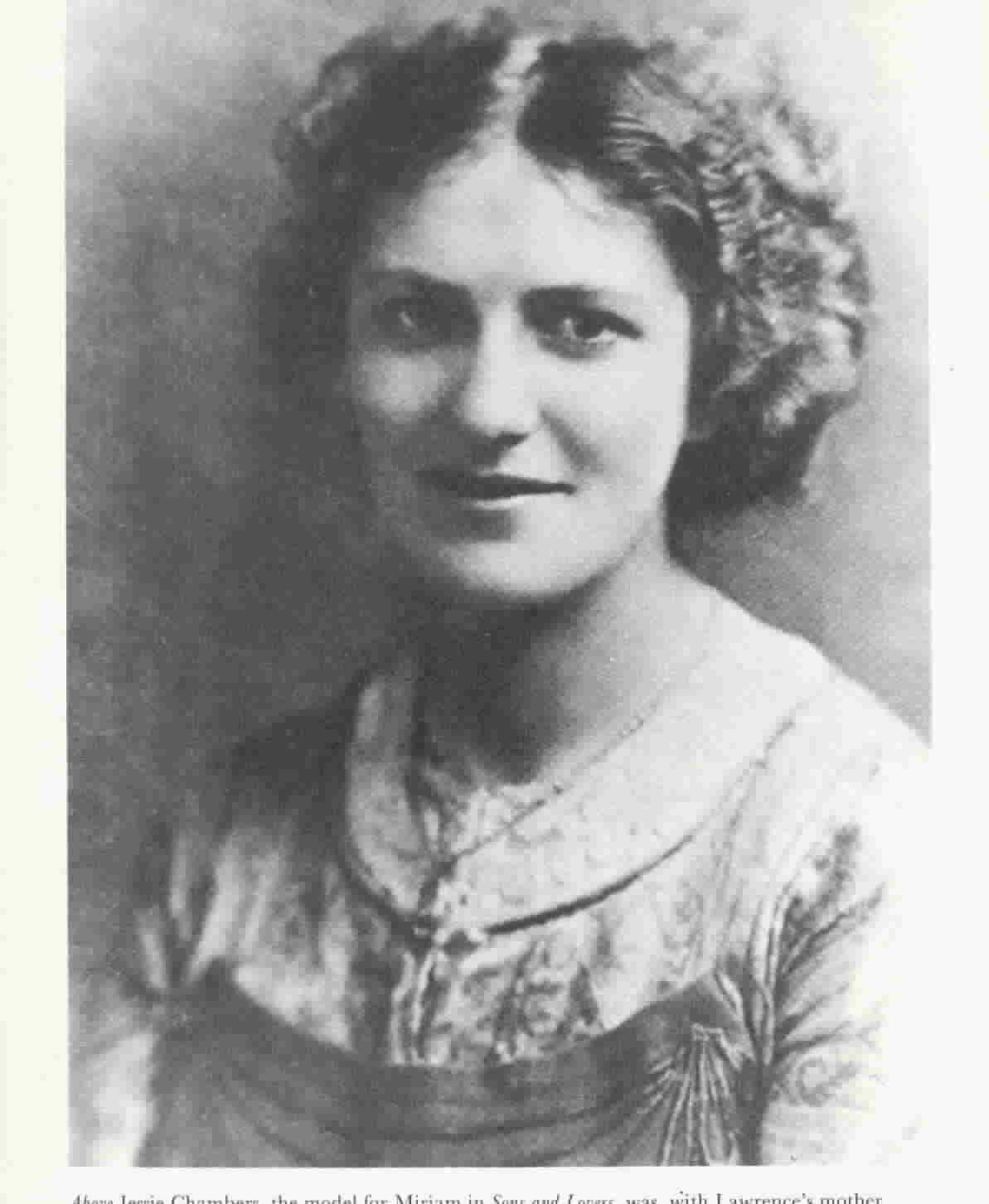
Jessie Chambers (Miriam)

Jessie Chambers (Miriam)

Paul loves women, but none can compare with Mrs. Morel, who very much dislikes his first girlfriend, Miriam, an intense, religious, farm girl who loves books a much as Paul does.   Miriam is based on Lawrence’s first girlfriend, Jessie Chambers, who had a strong influence on his writing and gave suggestions for the early draft of Sons and Lovers.

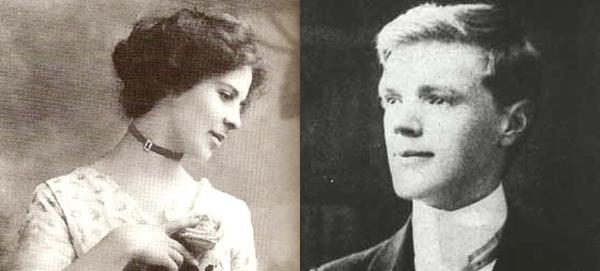
Paul and Miriam meet once a week at the library, sometimes go to chapel together, intensely discuss books, and tramp through the fields and woods admiring beautiful flowers.  Miriam and Paul are well-suited intellectually, but Miriam is afraid of sex (and, let’s face it, she is hardly fixed up for birth control).  Ironically, years later, she loves him so much that she does have sex with him.  After a few weeks of this, he drops her, and moves in on Miriam’s friend, Clara, a statuesque married young suffragette whose breasts and shoulders are beautiful. Clara is all sex, just as Miriam is all spirit.  (Clara was based on Louie Barrows, to whom he was briefly engaged.)

It’s the old madonna/whore thing, I know.

Louie Barrows and D. H. Lawrence

Louie Barrows (Clara) and D. H. Lawrence (Paul)

When Mrs. Morel is diagnosed with cancer, this is devastating to Paul, Annie, and their younger brother, Arthur.  She is terribly ill, and she hangs on and on.  The morphia does not really relax her.  They cannot believe that she takes so long dying.  Eventually Paul and Annie decide to dump a fatal dose of morphia into her drink.   She complains that it tastes bitter;  it still takes a few days for her to die.  Mrs. Morel’s death enables Paul to break with Clara, who has already begun to bore him. She will go back to her husband.   But what will the future hold for angry, lonely Paul?

Miriam thinks she might have a chance to win him back.

Oh, why did he not take her?  Her very soul belonged to him  Why would not he take what was his. She had bourne so long the cruelty of belonging to him and not being claimed by him.

But Paul does not want her much.  He will not follow his mother to death; norw Mirism to spirituality; nor Clara to the end of sex.

This is a brilliant, intense, poetic, often frustrating novel.  Lawrence gets the difficult relationships just right, but Paul wants just the right blend of emotion and sexuality.  He cannot find it.

The ending is ambiguous.

Lawrence has an unfortunate reputation for sexism, but I don’t read it that way.  Lawrence draws characters who are fascinating, flawed, and ambivalent about sexuality.  Who gets what he or she wants?  Rupert and Ursula in Women in Love.

Sons and Lovers is one of Lawrence’s most brilliant novels.  I also very much admire his short stories and poems.

Dorothy Sayers’s Have His Carcase

Have His Carcase Dorothy Sayers 246231This is my year of rereading Dorothy Sayers.

I have always loved Sayers.  During my student days, after decoding the rants in dialect of the chorus in the Oresteia,  I would dash home from the library and curl up with my BBC-influenced leisure reading.  I was introduced to Sayers by the Lord Peter Wimsey TV series with Ian Carmichael.

(Isn’t it time for some Lord Peter Wimsey remakes?)

This year I have reread two of my favorites, Sayers’s masterpiece, Gaudy Night, an investigation of a poison pen at a women’s college, and The Nine Tailors, a mystery involving jewel theft and bell-ringing.

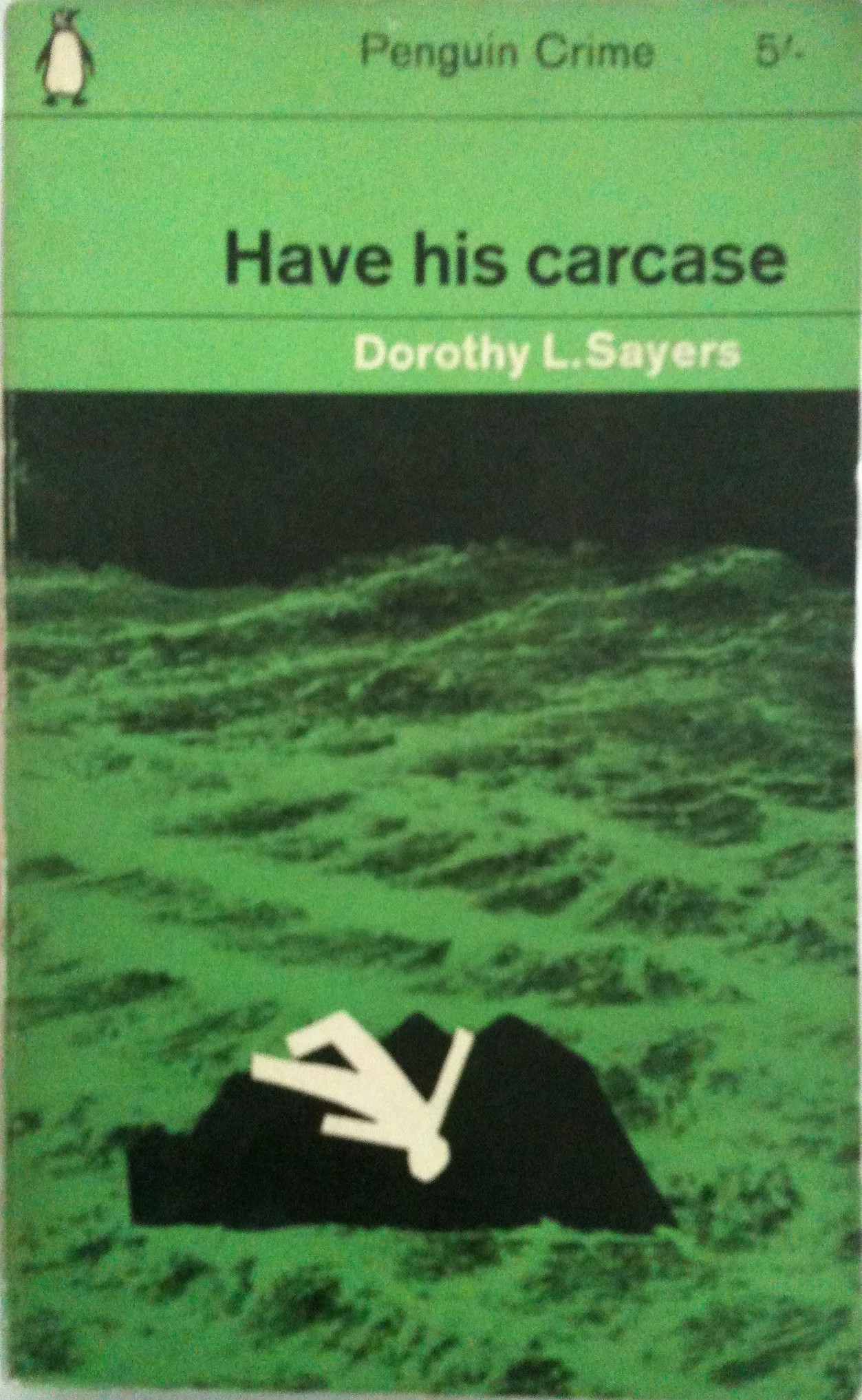
Sayers old penguin have-his-carcase-fc-e1291037992311And so I decided to try one I hadn’t read in decades, Have His Carcase.  It is a brilliant comedy about identity and disguise that ends with a powerful exposition of the waste of an innocent life by murderers who may or may not be called to justice.

First a few words about the main characters:  the hero of the series, Lord Peter Wimsey, is an Oxford-educated amateur sleuth who amuses us with witty banter while he dabbles in solving crimes.  He often seems sillier than he really is, in the affected style of a P. G. Wodehouse character. This novel also stars Harriet Vane, a mystery writer who was tried and acquitted of the murder of her lover.

Usually Lord Peter is too busy for a love interest, but in four of the novels, Strong Poison, Have His Carcase, Gaudy Night, and Busman’s Holiday, Sayerstraces the development of Lord Peter’s relationship with Harriet Vane.

Harriet does not return his love because she feels irritatingly obligated to him for finding the evidence that saved her life.  At the beginning of Have His Carcase, she blithely has evaded Lord Peter by taking a solitary walking tour.

This opening paragraph shows Sayers at her best.

The best remedy for a bruised heart is not, as so many people seem to think, repose upon a manly bosom.  Much more efficacious are honest work, physical activity, and the sudden acquisition of wealth.  After being acquitted of murdering her lover, and, indeed, in consequence of that acquittal, Harriet Vane found all three specifics abundantly at her disposal; and although Lord Peter Wimsey, with a touching faith in tradition, persisted day in and day out in presenting the bosom for her approval, she showed no inclination to recline upon it.

But life is never easy for Harriet.  On a deserted beach she finds the  corpse of a man whose throat has been cut.  She takes photographs because she is afraid the tide will wash it away.  (It does.)  It takes her hours to walk to a village store where there is a phone (after walking miles out of her way to farms that turn out not to have phones), and after reporting the crime to the police, she telephones her favorite journalist, knowing it will be good publicity for her next book.   And then Lord Peter comes immediately to help investigate (and also to save Harriet’s reputation, because again she looks like the murderer).   The police think the death is by suicide.

The victim turns out to be the Russian-born Paul Alexis, a harmless professional dancing partner at a hotel. He was engaged to a wealthy middle-aged woman who was living at the hotel, though whether he really considered himself engaged or was just humoring her is uncertain. (Many suspected the latter.)   She believed that Bolsheviks had killed him.  And his former girlfriend, another professional dancer, says that he bored her with stories about his grand relations in Russia.

The puzzle is almost impossible to solve, and three of the suspects are wanderers who appear again and again with and without beards, dyed hair, and dark glasses.  Who is in disguise, and who is not?  There are some unlikely twists and turns, but they seem more and more realistic as Sayers moves on to the horrifying finish.  You have to read to the end–I can’t tell you!

Under the Radar: Do You Prefer Reality or Reality-Based Journals?

The New Orleans French Quarter is more dramatic than historic downtown Winona, Minnesota

The New Orleans French Quarter is more dramatic than historic downtown Winona, Minnesota

My cousin has an idea for my blog.  She thinks it should be more dramatic.  She says  I should  incorporate scenes of what she calls ” bawling, bellyaching, and bellowing” into my  autobiographical comedy.

“You turned off the ‘like’ button,”  she says.  “You’re writing for nobody.”

I turned the off the ‘like’ button off because I think it’s silly.  I rarely cry or scream.  “I am writing for nobody.  It’s a book journal with reality-based diary entries.”

“People want gardens and cute pictures.  And more personal information.”

“I have no personal information.”

Since I refuse to  photoshop pictures of my bedraggled geraniums, or of my cousin standing behind me making rabbit ears, she suggests I eschew reality altogether.   “You should write massively untrue stuff about yourself and the books you read.”

Well, strictly speaking, that might spice things up. Instead of writing about going to Winona, Minnesota, where I actually went, I could pretend to go to New Orleans, where I have never been.  I could trawl information about New Orleans from Anne Rice’s Lestat books and  Shirley Ann Grau’s The House on Coliseum Street.   Vampires and Gothic Southern women:  it could work!

But if I wrote my blog thinking of only imaginary readers and statistics, and I had to invent New Orleans instead of chronicle Winona, I would be bored and resentful.  . I record just enough personal information that I can look back a year from now and know what I was doing.

My cousin isn’t so worried about her personal information.  As a librarian, she knows it’s all out there anyway. She bets  she can write a blog driven by  personal information and rehab anecdotes that will be twice as popular as my most popular post (about Lawrence Durrell’s The Alexandria Quartet.)

I don’t doubt it.

She will write about what it’s like to be a professional woman who does  not have it all .

She shrieks, “I don’t have any of it!  I don’t have friends, I don’t have money, I don’t have a boyfriend…   And I’ll recommend books I haven’t read!”

“You do that anyway.”

“And I’ll write about rehab.”

“You do that anyway.”

Though she is a librarian, she seldom reads books: she prefers to read about them at Kirkus Reviews and Library Journal.  But many of her colleagues do far worse work than she: they have catalogued Doris Lessing’s last novel, Alfred and Emily, as biography, and declared Caroline Blackwood’s Booker Prize-shortlisted novel, Great Granny Webster, a children’s book.

One must be true to one’s own tone.  My bookish readers don’t expect too much.  A book, a bike ride, a short trip:  that’s all we’ve got!

Angelica Gorodischer’s Kalpa Imperial

Kalpa Imperial Angelica Gorodischer 41ltT36E3JL._SY344_BO1,204,203,200_Angelica Gorodischer’s Kalpa Imperial is a remarkable  novel.

First published in 1983 in Argentina and in 2003 in the U.S.,  it is a stunning mix of realism and the surreal.  It is breathtakingly lyrical, with long, running sentences that can go on for pages.  Set in “the greatest empire that never was,” it is stylistically a cross between Italo Calvino’s stories and Herodotus’s The Histories.    Gorodischer’s strange book is a collection of legends, geography, and (invented) stories of emperors and common people.  It also has traces of a Homeric epic, which at one point mischievously satirizes the Iliad and the Odyssey.

Each story begins with a storyteller who knows, or at least shapes, the story. The storyteller will say, “I’m the one who can tell you what really happened, because it’s the storyteller’s job to speak the truth even when the truth lacks the brilliance of invention…”

The first sentence of the novel begins,

The storyteller said:  Now that the good winds are blowing, now that we’re done with days of anxiety and nights of terror, now that there are no more denunciation, persecutions, secret executions, and whim and madness have departed from the heart of the Empire, and we and our children aren’t playthings of blind power; now that a just man sits on the Golden Throne and people look peacefully out of their doors to see if the weather’s fine and plan their vacations and kids go to school and actors put their hearts into their lines and girls fall in love and old men dies in their beds and poets sings and  jewelers weight gold behind their little windows…

The episodes are partly comic, partly tragic.   In “Concerning the Unchecked Growth of Cities,” the emperor Drauwdo points at a map and commands that a city be built there.   Then he forgets about it.  His descendents have no idea there is a city there.   And at first it is a poor city:  “There were more suicides than schoolmasters, more drunks than mathematicians, more cardsharp than musicians…”  But then a sculptor moves in, followed by artists and writers.  Years later, the  emperor Mezsiadar III the Ascetic, who spent “so much time and so much energy in doing good that he succeed in doing as much harm as twenty emperors…” of evil habits, is suspicious of art and destroys it.

angelica gorodischer goroIn “Portrait of the Empress,” a rich merchant’s wife cures the emperor of his illness with magic stones, becomes his advisor,  and makes governing “not a heavy legacy but a vocation, an adventure.”  She becomes the empress.

“Down There in the South” is my favorite:  the story of Liel-Andrassador, a rich usurer who  becomes a fugitive after he kills a well-connected royal gambler who accused him of rigging the game, which he had done. After many adventures he reaches the South,  where he finds philosophy, wisdom, and a new name.  How he becomes an emperor is surprising.

Gorodischer, considered one of the best science fiction and fantasy writers in Argentina since the 1960s, said in a 1989 interview in Bomb Magazine that life in Argentina was surreal.

We are a people with a bad memory, a people hostile to memory. Old houses, the national library, the national archives—we destroy the very things that constitute our country’s memory. The country lacks an abiding urge to accumulate, safeguard and circulate reliable documentation. The crucial task of the writer here is to remember, to try to remember. Not that we should all literally note down facts and events. But memory is inscribed in a literary text in a process I don’t think anyone really understands.

There are obviously parallels between Kalpa Imperial and Argentina, though I certainly cannot expound on Argentine history

Translated by the award-winning science fiction writer, Ursula K. Le Guin, Kalpa Imperial was published by Small Beer Press in 2001.

Vacationing in Winona, Minnesota, & The Great River Shakespeare Festival

Winona, Minnesota

Winona, Minnesota

Vacationing in Winona, Minnesota, may not sound ideal.

Yet it is.  This beautiful college town, located on the Mississippi River, has scenic bluffs, twin lakes, wide bicycle lanes, a riverfront park,  a historic downtown, the Blue Heron coffeehouse (which serves local, organically grown food), and even two bookstores.

But we really come for The Great River Shakespeare Festival (June 24-Aug. 2).   Great acting, great directing–and the plays are indoors, in a lovely auditorium on the Winona State University campus. There are free concerts on the Green afterwards (with food trucks)

Beatrice (Tarah Flanagan) and Benedick (Christopher Gerson) in

Beatrice (Tarah Flanagan) and Benedick (Christopher Gerson) in “Much Ado About Nothing”

This year we saw Much Ado About Nothing.  I expected little–a light comedy.

Yet Much Ado is not so light:  it is both hilarious and chilling; witty and suspenseful.  We laughed at the banter between Benedick (Christopher Gerson) and Beatrice (Tarah Flanagan), the brittle couple who cannot quite fall in love because of their sharp tongues.

From Act 1, Scene 1:

BENEDICK
118 What, my dear Lady Disdain! are you yet
119 living?

BEATRICE
120 Is it possible disdain should die while she hath
121 such meet food to feed it as Signior Benedick?
122 Courtesy itself must convert to disdain, if you
123 come in her presence.

And so the flippant, harsh teasing goes on.

And yet they come together, by the comical plotting of Don Pedro (Andrew Carlson), who manages to tie up their love up neatly with a bow.  With the help of the much nicer, duller romantic couple,  Hero and Claudio, the men and the women separately talk loudly about Benedick and Beatrice’s love so Beatrice and Benedick can overhear.

But that is not all. There is a  gruesome turn to the plot , when  the prince’s evil brother, Don John (Robert Ramirez), breaks up Hero and Claudio, by persuading the men that Hero is a wanton.

Claudio devastatingly confronts Hero at their wedding and says she is a slut he will not marry.  All the women know Hero is innocent.

Naturally, it all works out.  We knew it would.  But there is the serious trope of Hero’s feigned death. (Love and death!)   The Friar, who believes Hero’s insistence that she knows no man but Claudio,  decides the men should be told that she died  because of their accusations. (She is, of course, alive.)  This trope also occurs, only tragically, in Romeo and Juliet, which you can also see at GRSF this summer.

One thing we like about The Great River Shakespeare Festival is that, though there has  been some turnover, many of the actors are here every year and are now coming into the starring roles–and doing beautifully.

In 2009,  we saw a production of The Tempest with Tarah Flanagan as Ariel, Christopher Gerson as Caliban, and  Michael Fitzpatrick (the witty, sophisticated Leonato in Much Ado)  as Stephano.  We have seen them grow as actors.  They are all superb.

If you stay in Winona for a few days, you must also check out the Root River Trail (east of Winona).  If you start in Lanesboro, a historic town on the bluffs with antique shops and restaurants, you can have dessert in Whalan at World’s Famous Pies.

A lovely place for a short vacation!

Rereading Doris Lessing’s Children of Violence Series: A Proper Marriage

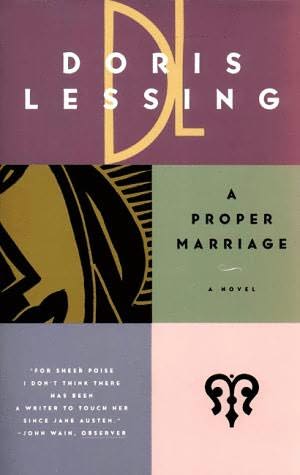
Doris Lessing A Proper Marriage 6a00d8341c674653ef012876eeae79970cDoris Lessing is my favorite writer, and I like periodically to reread her work.  I have decided to reread the Children of Violence series.  I am starting with the second volume, A Proper Marriage.

Many of you know these as the Martha Quest books.  Indeed, that’s how I usually refer to them.  But Martha and her generation are indeed children of violence:  Martha’s father fought in World War I and her mother was a nurse who met him in the hospital; Martha and her peers come of age at the beginning of World War II.   The first four novels are set in Africa; the last in London.  Lessing grew up in Southern Rhodesia and then moved to London, and the series is autobiographical.

Martha is a rebel.  In the first novel, Martha Quest, she escapes her parents’ farm and begins to live on her own.

 A Proper Marriage opens after 19-year-old Martha has impulsively married Doug Knowell, a cheerful man who represents everything bourgeois she has stood against, a man who likes to party.  They go to sundowner parties and dances every night.  There is much looking in the mirror: her friend Stella likes what she sees; Martha, who is getting fat, does not.  She is cross, does not know why she married, did not even have a wedding night, because their drunken friends pursued them on their honeymoon.  Annoyed with herself, she goes to her Communist friend’s commune and asks him to let her live there.  She goes home and decides wryly she had done the predictable thing a woman does after her marriage:  tried to escape.  She and her friends, Stella (whom she does not like), and Alice, a nurse, chat about abortions.  Martha assumes she would have an abortion.  But when Martha discovers she is pregnant, and probably was pregnant when she married,  she suddenly goes into baby-clothes-making mode, as does her friend Alice.  It has solved her life (she thinks).  Only for a short time, though.

As Martha’s father says, he supposes in this mad world that it doesn’t matter much if one girl ruins her life.

Her mother, on the other hand, who gave up her nursing profession to live on a poor miserable African farm, is delighted that Martha, whom she has always disliked, is trapped.

Martha thinks about marriage a lot.  “The situation was, as she jauntily and bleakly put it, unsatisfactory.”
And so she turns to literature and psychology.  She kneels in front of her bookshelves.

Words.  There must surely be some pattern of words which would neatly and safely cage what she felt–isolate her emotions so that she could look at them from the outside.  For she was of the generation who, having found nothing in religion, had formed themselves by literature.

How many of us have felt this, even though we are not of Lessing’s generation?

It is an amazing novel, much better than I’d remembered.  Lessing really comes into her own with the fourth and fifth books, Landlocked and The Four-Gated City,  which she wrote after her experimental novel, The Golden Notebook.   She wrote the Children of Violence series over two decades, Martha Quest (1952), A Proper Marriage (1954), A Ripple from the Storm (1958), Landlocked (1965), and The Four-Gated City (1969).

It is a stunning series.  I’ll be blogging periodically about my rereading.