Semi-Canonical: Rosamond Lehmann’s The Weather in the Streets & Shirley Jackson’s We Have Always Lived in the Castle

IMG_3175I recently read and very much enjoyed two semi-canonical novels, Rosamond Lehmann’s The Weather in the Streets (1936) and Shirley Jackson’s We Have Always Lived in the Castle (1962). Lehmann’s is a love story; Jackson’s is a horror novel.

Wendy Pollard, author of a recent biography of Pamela Hansford Johnson (I interviewed Wendy here), is also the author of a book on the reception of Rosamond Lehmann’s work.  And so I decided to reread Lehmann: I have a few of her novels in the ’80s American Dial Press Viragos with black covers.  I began with The Weather in the Streets, which is a sequel to Invitation to the Waltz (which I haven’t read yet, but I have the e-book).
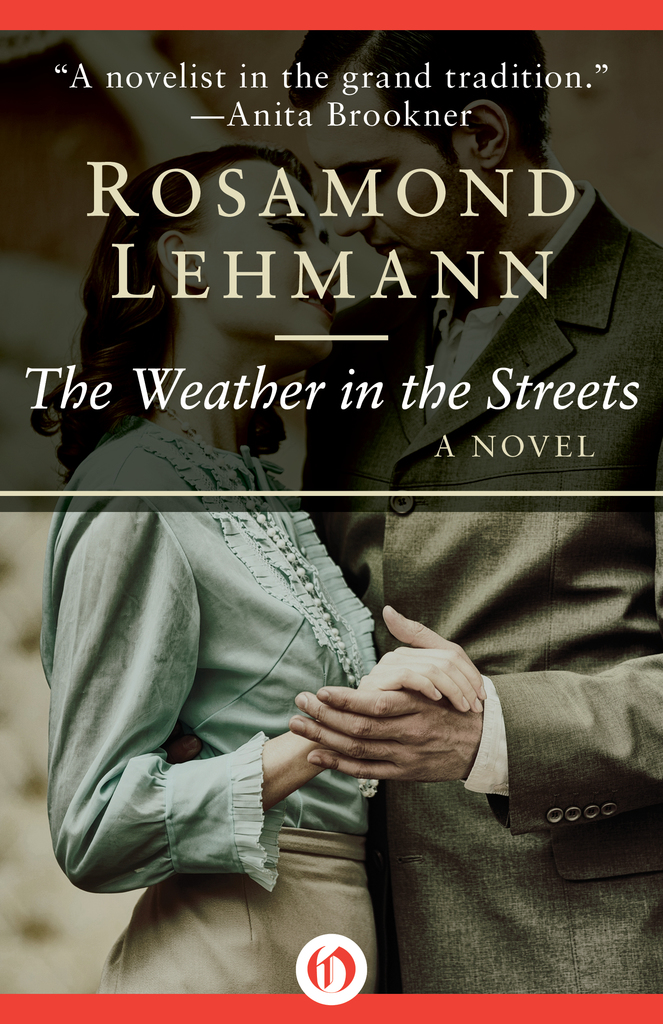
Open Road Media e-bookThe Weather in the Streets is a poignant, unsentimental chronicle of an adulterous love affair from a woman’s point of view.   The  impoverished heroine, Olivia Curtis, is separated from her husband, but sees no point in divorcing him. She has many artistic friends and  works for low wages for Anna, a photographer.  She lives in a room in her cousin Etta’s flat and sometimes goes hungry.   One weekend, traveling on the train to visit her sick father in the country, she meets a former neighbor, Rollo, who is now a wealthy, unhappily married man working in the City. He says he’ll telephone her.

1930s telephone 4201There are many emotions we all recognize, such as the agony of waiting for the telephone. Lehmann presents Olivia’s emotions by a page of stream-of-consciousness.  She was undoubtedly influenced (says I)  by Dorothy Parker’s  short story “A Telephone Call” (1930).  Take a look at the Parker first.

I must stop this.  I mustn’t be this way.  Look, suppose a young man says he’ll call a girl up, and something happens, and he doesn’t.  That isn’t so terrible, is it?  Why, it’s going on all over the world, right this minute.  Oh, what do I care if it’s going on all over the world?  Why can’t the telephone ring?  Why can’t it, why can’t it? … You damned ugly, shiny thing.  It wouldn’t hurt you to ring, would it?

Parker’s narrator is more vulnerable than Lehmann’s reserved Olivia, but  that may be the difference in tone between Parker’s first-person singular and Lehmann’s third-person singular. Here is an excerpt from the cooler, possibly older Olivia:  (by the way, the dot-dot-dots-dots are Lehmann’s punctuation, not my ellipses.)

The telephone rang, faint to her ears:  someone inquiring, Kate would answer.  It couldn’t be Rollo:  not yet.  Not ever, of course.  Rollo would think about ringing up, sometime tomorrow maybe; and then he wouldn’t do it.  Because nice men don’t like to get mixed up…. Rollo was undoubtedly in the category of nice men, broad-minded.  They are on their guard….
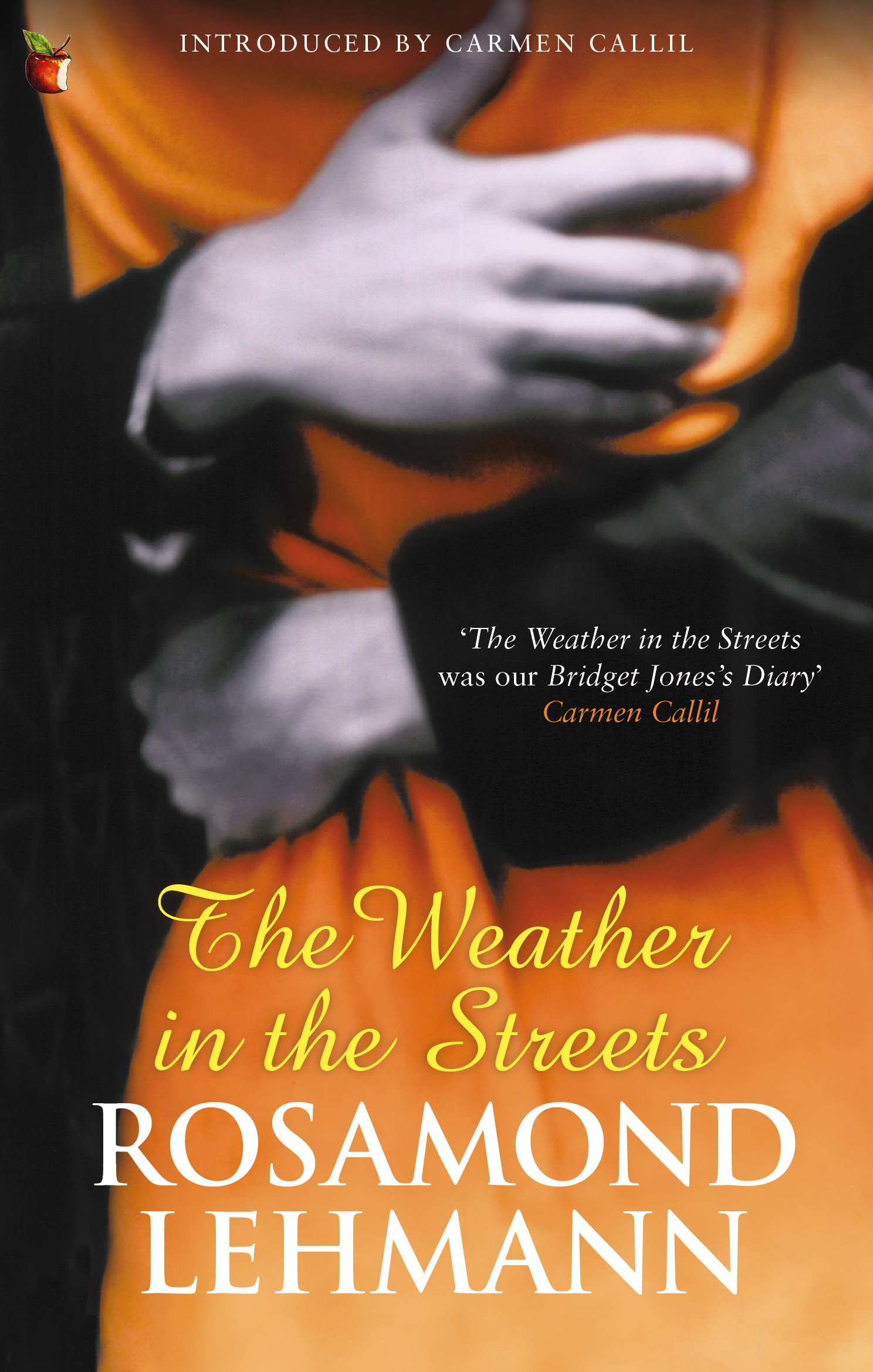
lehmann weather in the streets virago 81zqtt9uwpLOlivia expects little.  But she and Rollo embark on an affair and fall in love.  They spend some nights together, get away for a few weekends, and once go away for longer.   His wife is an invalid.  They move in different social circles.  Olivia reads about his wife in the society pages. Olivia is usually alone.

There are some very rough patches in their relationship.  He disappears for a summer. Olivia  has an abortion.  Will she stay with him?

The book seems entirely modern.  Young women are very vulnerable in love, yet are experienced by their late twenties.  Where are all the men? I must say, it is senseless (and I mean SENSELESS!) to have an affair with a married man.  But one can see Olivia trapped in a very small  society.  Whom can she love?

Fascinating, very good in parts, occasionally a purple patch, but not often.
Shirley Jackson 220px-WeHaveAlwaysLivedInTheCastleShirley Jackson’s We Have Always Lived in a Castle is a clas-SICK!  It is a horror take on Dodie Smith’s I Capture the Castle.  Smith’s novel is narrated by the benign, humorous Cassandra Mortmain, an aspiring writer who lives in a dilapidated castle with her eccentric family. The narrator of Jackson’s novel, Mary Catherine Blackwood, lives only with her sister in the large country house because her family is dead from arsenic poisoning.

When she introduces herself, she talks about overdue library books and it seems cozy. But there are warnings that she is quite weird.

I have often thought that with any luck at all I could have been born a werewolf, because the two middle fingers on both my hands are the same length, but I have had to be content wi;th what i have.  I dislike washing myself, and dogs, and noise.

When Mary Catherine, nicknamed Merricat, goes shopping in the village, she has to run a gauntlet.  The villagers make rude remarks and the children yell,

Merricat, said Connie, would you like a cup of tea?
Oh, no, said Merricat, you’ll poison me.
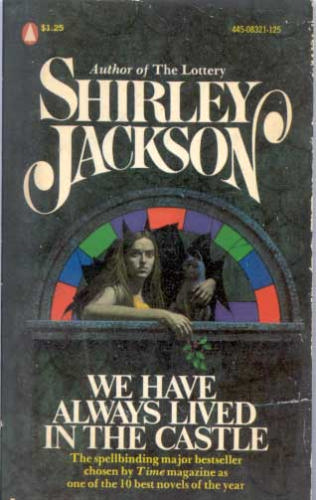
old paperback we-have-always-lived-in-the-castle1We do have a certain sympathy for Merricat, and especially for Constance,  her older sister, who was tried for murder and acquitted. But  Merricat’s point of view is… shall we say odd?

And when a man comes for an extended stay, Cousin Charles, Merricat is furious.  We suspect the truth from the beginning…

Beautifully written, funny, horrible, and perfect.

This novel appeared in a volume of Shirley Jackson’s writing in a Library of America edition.  So she in the  canon?  Well, she is in the women’s canon, at any rate.

Jackson wrote several novels, but I am only familiar with We Have Always Lived in the Castle and The Haunting of Hill House.  Are the others any good?  They’re not in my LOA edition.

Exhausted by the Nightstand!

If I had this house, I wouldn't need a nightstand!

If I had this  kind of shelving, I wouldn’t need a nightstand!

I am, yes, exhausted by books.

Not by reading books, but buying books.

On the nightstand, just in case I feel like reading them, are 17 books.  Do I plan to read all 17 at once?  One wonders.  The cats do not like the stack at all.  They are fond of jumping up on the nightstand.  The nightstand is actually a chest of drawers.   They jump up on the chest and nudge the books off the edge with their paws.

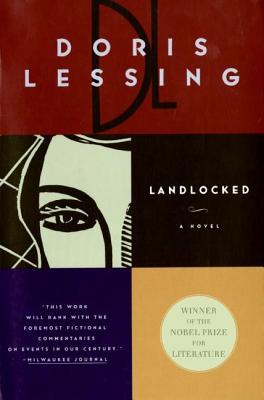
Lessing landlocked 328419I am already in the middle of five other books.  (Reviews to follow!)  So do I have time for 17 more?  Yes, I would dearly love to reread Doris Lessing’s Children of Violence series, but after looking at a few pages of A Proper Marriage , I realized that I should skip to her fourth novel, Landlocked, in which Martha Quest becomes disillusioned with the Communist movement in South Africa during World War II.  Landlocked is a masterpiece.  At my age, I need the masterpieces.

The guy on the cover looks as though he's wearing a Star Trek uniform!I  cannot understand why I purchased Mary Renault’s The Charioteer, described on the Vintage edition as “a bold, unapologetic portrayal of male homosexuality during World War II.”  I am not sure I need another gay classic:  I already have two of Radclyffe Hall’s books on a “sub-nightstand.”  After Virago reissued The Charioteer a few years ago,  a reviewer at the TLS raved about it,  and, if I remember correctly, considered it a classic.   If I could get past the first chapter, maybe I’d agree.  N.B. Doesn’t the guy on the cover look as though he’s wearing a Star Trek uniform?  Is this a novel about a gay Trekkie?

Grau Th eHouse on Coliseum Street 13577050I thought  the former Washington Post critic Jonathan Yardley had recommended Shirley Ann Grau’s Pulitzer-winning The Keepers of the House, but it turns out he was lauding The House on Coliseum Street.  Oh, damn, I bought the wrong book!

music at long verney warner 51tBSNUFFlL._SY344_BO1,204,203,200_I discovered Sylvia Townsend Warner’s Lolly Willowes at a used bookstore when I was in grad school, and went on to enjoy many other of her books. I adore Kingdoms of Elfin, her dark collection of whimsical fairy tales. Somehow I have never read The Music at Long Verney, another collection of stories. Will I finally read it this summer?

Imagine 13 more…

Shall I shelve my 17 books?  It gets ridiculous.

What do you have on your nightstand?  Is yours as useful (ha ha) as mine?

Historical Novel Summer: From Tolstoy to Jean Plaidy to Gore Vidal & More

Sometimes I feel like indulging in a truly trashy historical novel summer.

Even writers of the most literary historical novels spin tales about sensational events and larger-than-life characters.

wolf hall bring up the bodies hmantelAnd why not?  There is nothing more fun than hanging out with historical characters.  Take the Tudors.  I love the Tudors.  A few years ago, after much protesting and resistance,  I finally read Hilary Mantel’s Wolf Hall.  I was intrigued by her story of Thomas Cromwell, the Chief Minister/lackey of Henry VIII. And do I get Booker bonus points if  I read the sequel, Bring Up the Bodies?

murder most royal plaidy 51gFaxck1VLThen there is Jean Plaidy.  Yes, I like to go from the high to the middlebrow.  I have enjoyed Jean Plaidy’s  Tudor series, which consists of nine novels.  Jean Plaidy was a pseudonym of Eleanor Hibbert, who also wrote Gothic novels under the name Victoria Holt. As Plaidy, she penned historical novels about the Tudors, the Stuarts, Catherine De Medici, the French Revolution, and more.

Heyer the convenient marriage 0-373-83445-4On the other hand, I might prefer to devote myself to the Regency romances of Georgette Heyer.  They are witty, well-written, and well-plotted, and the heroines are spunky gals who live for more than marriage.  Some of them gamble and hang out with rakes.  And I do adore going out in public with a novel with a cover like the pink edition of The Convenient Marriage.  It gives everyone the wrong idea.  All right, I admit Sourcebooks has reissued Heyer’s books with more respectable covers.

Derby Day Taylor AmericanIf you like pseudo-Victorian novels, you will enjoy D. J. Taylor’s historical novel, Derby Day, which was longlisted for the Man Booker Prize in 2011.  Set in Victorian England, this entertaining novel describes the double dealings and crimes revolving around a horse favored for the Epsom Derby. In the prequel,  Kept, Taylor peppers a traditional narrative with a fictional diary of George Eliot’s, the musings of a mad woman in an attic, the double-dealings of out-of-pocket Londoners who turn to crime,  and The Great Train Robbery.

war-and-peace-briggs-bigMy favorite historical novel is Tolstoy’s War and Peace.  Forget the length:  War and Peace is a page-turner. The plot revolves around Russian life at the beginning of the 19th century, during the Napoleonic wars and the French invasion of Russia.  It has all the elements of the most entrancing fiction:  romance, elopement, gambling, parties, balls, aristocratic society in Moscow and Petersburg  fortunetelling, battles, and the fall of Moscow.

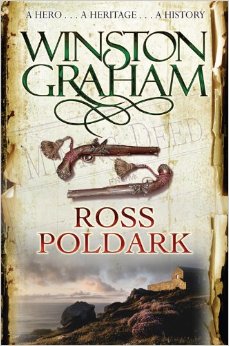
ross poldark graham 51NbqPxH4XL._SY344_BO1,204,203,200_The  BBC remake of Poldark  will be shown on PBS  starting this  Sunday.  It is based on the first two books of Winston Graham’s Poldark series, Ross Poldark and Demelza..  The hero, Ross Poldark , a veteran of the Revolutionary War (on the Brisish side),  returns to Cornwall to find his father is dead and his girlfriend engaged to his cousin.  Though brooding and disappointed, he is dashing, passionate, radical, brave, and a proponent of social justice–every woman’s ideal.  And we all adore Demelza, the scruffy girl in boys’ clothes whom he saves from a fight at the market and many years later marries.  There is also much detail about the mining business and the lower classes.

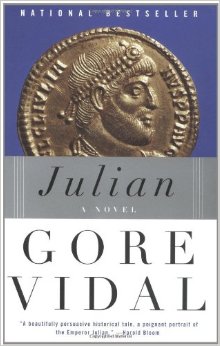
Julian Gore Vidal 51WlI3fKjjL._SY344_BO1,204,203,200_Gore Vidal’s Julian  is a stunning take on Julian the Apostate, the fourth-century emperor who tried to stop the spread of Christianity.

Augustus williams productimage-picture-augustus-436John Williams is best-known for Stoner, but he won the National Book Award for his brilliant novel, Augustus, about Julius Caesar’s heir , who became arguably the most powerful Roman emperor.  The novel is told in letters, despatches, and memoirs.

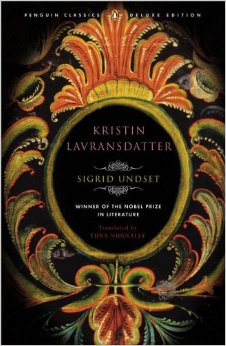
Kristin Lavransdatter 516HWD3P20L._SY344_BO1,204,203,200_Nobel Prize-winning Sigrid Undset’s Kristin Lavrandatter is one of my favorites, a trilogy about a woman in medieval Norway who, after a youthful passion, marries her rakish, charming, but careless lover and struggles to manage his neglected household  and raise her children as good Christians.

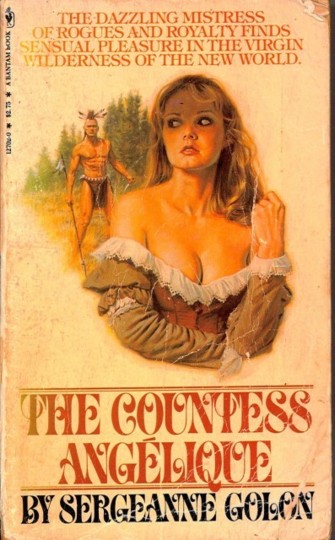
Have you ever seen a trashier cover?

Have you ever seen a trashier cover?

Sergeanne Golon’s best-selling Angelique series, recommended by a librarian friend long ago, cheered me up during a ghastly week in a cabin that had no running water, electricity, or indoor plumbing.  To quote Goodreads, this French series “begins in 1648 during a time of insurrection, terror and revolt in a divided France….[Angelique] is one of the most irresistible heroines in the history of fiction. Her stormy adventures have taken her from the gutters of Paris to the harems of Africa to the silken prison of a King. Angelique has loved, intrigued, hated and fought her way into the hearts of million of readers all over the world.”  Unfortunately, these old paperbacks are very expensive–and out of print–so I have no idea if they are as good as I thought they were.  (On a par with the Poldark books.)

Tolstoy’s “The Death of Ivan Ilyich”

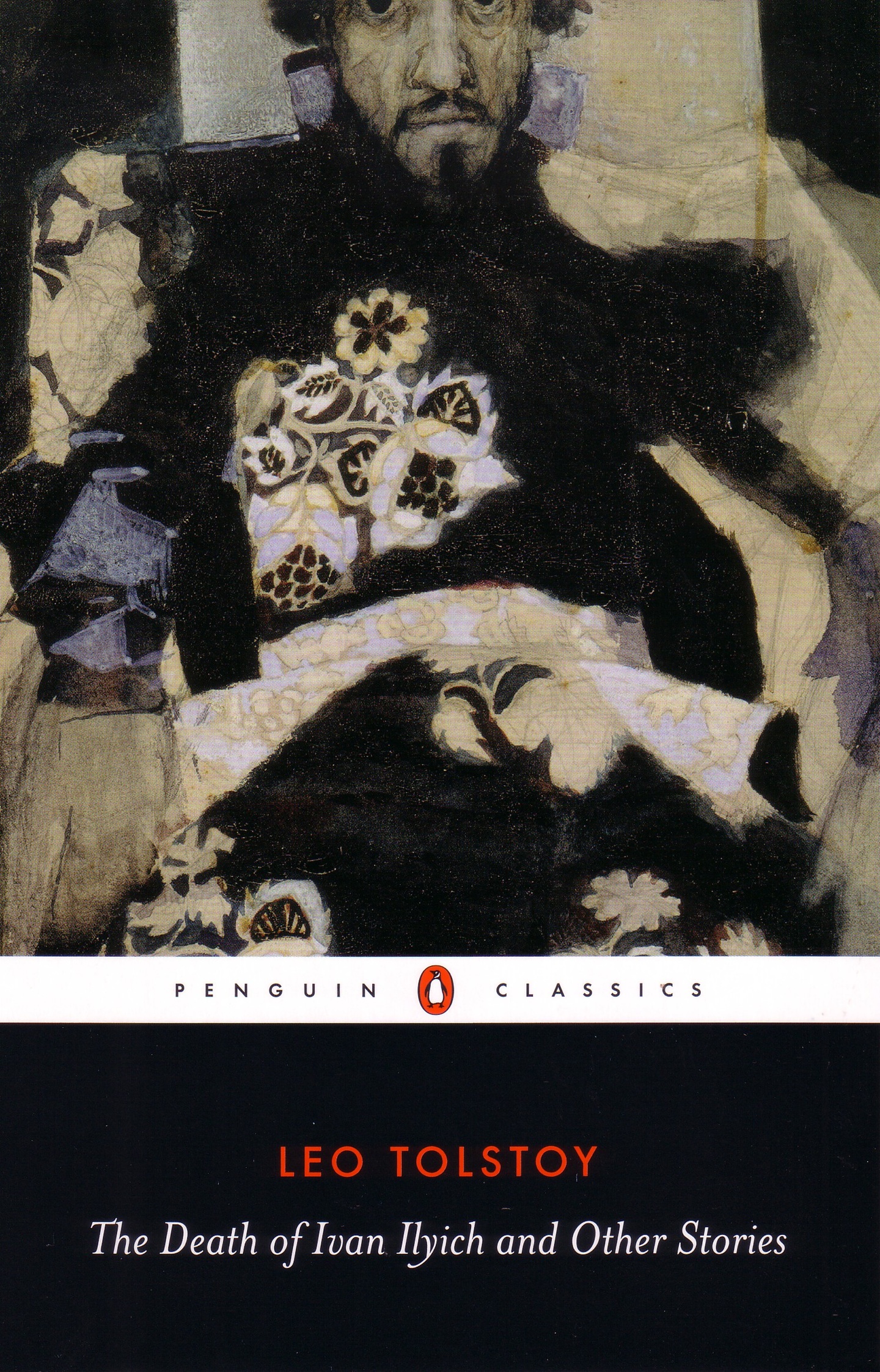
Death of Ivan Ilyich tolstoy 9780140449617

I am always reading something by Tolstoy.  I love Anna Karenina, but War and Peace  is a masterpiece.  I now limit my rereadings  of it to once a year.

I must make do with Tolstoy’s short stories for a while. Anyway, I have not read all the stories.

In the Penguin edition of The Death of Ivan Ilyich and Other Stories,  translated by Ronald Wilks, Anthony Briggs, and David McDuff, “The  Death of Ivan Ilyich” is a grisly masterpiece.  It is both satiric and incredibly grim.

Divided into chapters, it  begins with the end.  Anthony Briggs writes in the introduction that it is a very unusual story.

…we are barely a hundred words into the narrative when we are told, ‘Gentlemen!   Ivan Ilyich is dead.’  So much for suspense. At no stage in the succeeding pages are we going to entertain doubts about the protagonists’ fate, which has been settled and sealed.

The structure is a ring composition.  It begins with and ends with Ivan’s death.

In Chapter 1, Ivan Ilyich’s colleagues learn from the newspaper that Ivan has died. Nobody is emotionally affected.  They start immediately thinking about how it can benefit themselves:  can they get a promotion?  can they get their brother-in-law the job?

And that is how society is:  brutally shallow.

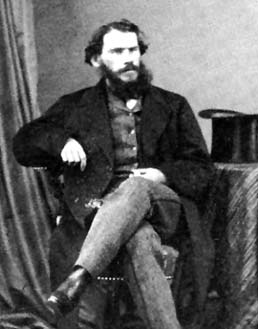
Tolstoy

Tolstoy

All the characters in Ivan’s social circle care about the same things. They furnish their houses the same, they make the same conversation, they have the same opinions.  No one deeply cares for anyone else.   Even Ivan’s wife and daughter do not care much for him.  His long illness, with its intense pain, has been vaguely diagnosed by the doctors as a floating kidney or colitis. For his family, it is a drag on their social life.

His daughter Liza says, “I’m sorry for Papa, but why do we have to suffer?”

He tries to deny that he is dying, because it could not be happening to him.  He goes to work every day–he is a judge–until he begins to lose his concentration.

According to Anthony Briggs’s introduction, the story was based on  a true story.  A judge who lived near Tolstoy in the town of  Tula died of stomach cancer.  The judge sentenced people to very harsh punishments.  Tolstoy wondered how he could go home and enjoy his life.

Tolstoy tells the story of Ivan’s life.  It is a simple story of a successful man.  He graduated from law school and qualified for the civil service.

His career started in the provinces, where he had affairs, played cards, and married a pretty woman.

…it did not take Ivan Ilyich long to arrange a lifestyle that was as easy and agreeable as the one he had enjoyed at law school.  He did his work, pursued his career and at the same time discreetly enjoyed himself.

He does not have enough money, he and his wife think, so he goes to Petersburg, and through connections, gets a job as a judge for five thousand pounds a year. He buys a big house and arranges it all to his own taste before the family arrives.  He tracks down antiques, rugs, and plants and shows the upholsterer how to hang the curtains.  Ironically, all the accoutrements he acquires make Ivan look exactly like every other person who wants to appear richer than he is.

And while he is on the ladder to attend to the curtains, he slips and falls and bumps his side on a window knob.  He tells his family,

It’s a good job I’m athletic.  Any other man would have killed himself, but all I did was bruise myself a bit here.  It hurts when you touch it, but it’s getting better.  It is only a bruise.”

That is the beginning of his death.  He complains of the pain in his side and a funny taste in his mouth.  The doctors cannot make a definite diagnosis, though they sound authoritative. The medicine doesn’t help. He can no longer play cards.  The opium makes him sicker. Tolstoy does not say that he has cancer.  But the pain, the screaming, implies that he does.

He begins to wonder about his life.  “What if I really have been wrong in the way I’ve lived  my whole life, my conscious life?”

We are with him to the moment of his death.

This story is so realistic, and even modern, in its depiction of the doctors’ failure to diagnose and treat difficult illnesses that it is difficult to read.

Of course Tolstoy being Tolstoy, there are also spiritual problems.

The translation by Briggs is seamless.  He is one of the best Russian translators today.  I love his War and Peace (though I also love the other translations of War and Peace.).

The End of the Conversation

Lily Dale

Nobody likes my astrological chart.

I am slightly psychic.

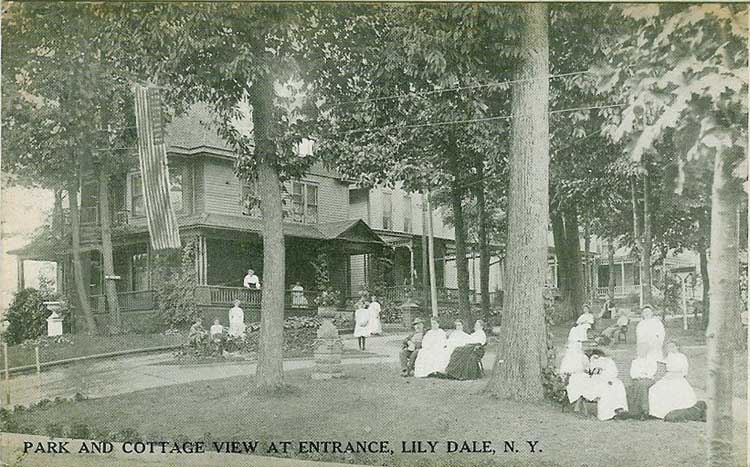
I should live in Lily Dale, New York, a town of psychics, spiritualists, and mediums.  It is where the Fox sisters lived.

“Get me out of here,” I said when we drove through there

A very literary classics professor once gave us a handout of excerpts from English literature.  We had to identify styles, i.e., the running style, the periodic style, and the pointed style.  I also scribbled the names of the authors in the margins:  Virginia Woolf, Henry James, F. Scott Fitzgerald,  etc.

“How did you know that?”  None of his students had ever identified the authors.

“I read.”

It was like identifying a favorite song (except I am tone-deaf, so I can only do this with language.)

My fellow classics students did not read novels.  They read about archaeology and history.

In my free time, I read novels like mad.

I have always had an affinity for language.

Knowing Latin, a language of ghosts, can be eerie.

It makes you intuitive.  Words are arranged differently.  Nobody knows how it sounded.

And so it has happened that I have conversed with my mother’s ghost to exhaustion for two years.

There was an odd event at the funeral.  The priest shook the censer as he walked around her coffin.  The rope broke and the incense burner and bells flew off and crashed.

Nobody talked about it at the burial service.

It was her poltergeist.  It only appeared once, thank God.

I kept trying to imagine what had happened to her. Why was she here every day?  What did she want me to remember?  Why, why had she said the sixties were the best time of her life?  Was she so unhappy?  Was she too alone?  After the sixties: husband gone, her mother died, working at a job that gave her a heart condition (housewife was the ideal job for her), collecting things, watching  too much TV, years of playing Bridge, aging, getting sick, then clapped in an assisted living facility which couldn’t take care of her,  landing in the hospital three times, an eventual intercession to get her into a safe place.

The sixties were such a short time.

And so I’ve gone over it again and again.

So many scenes, good and bad.  Picking up apples in the yard, sitting on the stoop in the shade of the willow tree, laughing, going to movies, shattered by divorce, then becoming brisk, our attempts to converse as we got older.  We went to movies because we both liked movies.  (She fell asleep at Pollock; laughed at Bridesmaids.)

There were some sad times at the nursing home.

She was happy, though.  But she would rather have had the married life.

She said (says) it was all good.

I  recently put plastic flowers on her grave.   She preferred plastic. Once, when she was very old, she tugged her cheeks up like a facelift and said, “See how good I’d look?”

I  am not making fun of her at all.

The women in our family suffer.

It is a plastic culture.  She knew that.

Her ghost left me.  She knows I know who she is.

What a long, strange trip it’s been.

Like all things, this leads to Jerry Garcia and The Aeneid.

The Aeneid, Lines 893-899, translated by Dryden

Two gates the silent house of Sleep adorn;
Of polish’d ivory this, that of transparent horn:
True visions thro’ transparent horn arise;
Thro’ polish’d ivory pass deluding lies.
Of various things discoursing as he pass’d,
Anchises hither bends his steps at last.
Then, thro’ the gate of iv’ry, he dismiss’d
His valiant offspring and divining guest.

Catalogues, Ruined by Classics, & Literary Award Burnout

Sears Catalogue 1968

Sears Catalogue 1968:

I love the summer.

Summer is the relief we feel when we shed thick coats and boots. We sit outside, walk, bicycle, go camping (ugh), rent a cabin (better), or stay in a lovely hotel (best).

Winter is cabin fever and going to the mall. We disembark from the bus with the other puffy-parka-clad stragglers, and begin to sweat. We drink a gigantic coffee and try on sweaters and wonder if anyone still eats Maid-rites and end up buying blankets and Yaktrax.

Summer is the end of mall rat season. Instead of being a mall rat, we do what little shopping we do via catalogues or online.

I have always loved mail-order catalogues, which have historically been a  lifesaver on the prairie. The first Sears catalogue was published in 1888. Catalogues provided a wider selection of goods than general stores for farmers and others in remote locations.

We loved the Sears catalogue at our house.  We circled everything we wanted for Christmas.  My mother was an ardent shopper in  department stores, but she also ordered clothes from Sears and Montgomery Ward.  It was very exciting.  Would that plaid jumper fit?  And how about those rather odd ’60s psychedelic pink and lime-green mini-dresses my mother ordered for me?

amazon_boxI am fond of catalogues and online stores.  Without leaving the house, you can order books, black-out curtains, tables, towels, pans, fine china….everything.

Ruined by Classics and Unable to Read Award Winners & Nominees.

I am ruined by classics.

Here is what has happened.

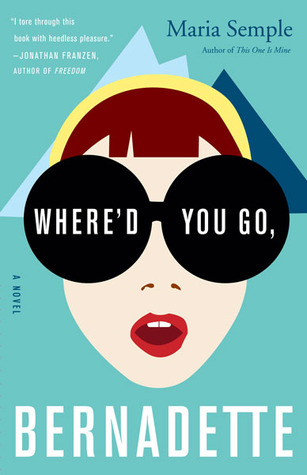
large_baileys_women_s_prizeYou cannot really go back and forth between Chekhov’s stories and, say, Maria Semple’s Where’d You Go, Bernadette?, which was longlisted for the Bailey Women’s Prize last year.

I do not know if Chekhov was nominated for any prizes, but guess which writer is better?

Semple’s novel is both enjoyable and dismaying.  Bee, the teenage narrator, arranges a mix of emails, reports. and letters  in chronological order to figure out why and where her mother Bernadette disappeared.  I like Bernadette’s voice best.  Her emails, reminded me slightly of E. M. Delafield’s The Diary of a Provincial Lady.  But there is a little too much here of the crazy neighbor’s emails.  And it essentially reminds me of a Y.A. book.

Now I realize that politics are involved in these prizes, though as I have said elsewhere, I DON’T WANT TO KNOW ABOUT IT.  I intend to avoid all articles this year that are likely to spoil the charm of the literary awards.

Oddly enough, reading Semple’s novel (not many pages to go) has made it impossible for me to go on to  Ali Smith’s How to Be Both .

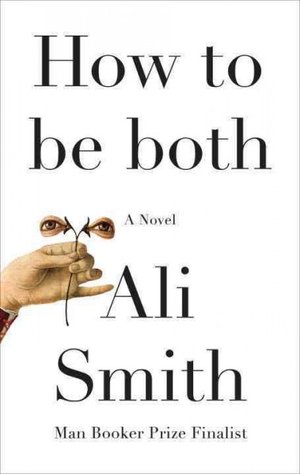
How to Be Both Ali Smith 9780375424106_custom-66420141237c01275ebff57053eea17dc3e26d7f-s300-c85Smith’s How to Be Both won the Baileys Women’s Prize this year.  It is divided into two stories, one set in the present and the other in the Renaissance.  Half of the books have been printed with the present narrative first, and the other half with the Renaissance narrative first.  In my e-book, you are simply given a choice.

I chose the part set in the present, because it looked easier.

Smith’s writing is elegant, but oddly I am finding echoes of Maria Semple’s books.  In both books, a teenage narrator has lost her mother.

So I am simply going to have to start over with Smith’s book later.  I just can’t read it right now.

Perhaps it is a classic, but I cannot judge at this point.

I am put off by the opening of the Renaissance section, which seems to be a poem containing such extravagant phrases  as “Fathemotherplease spread/extempore”…

I’ve read so many classics that I need to go to literary rehab so I can appreciate this.

Or perhaps Semple’s book really IS better.  I’ve read 275 pages, but am not finished yet.

Where'd You Go, Bernadette?  Maria Semple 13526165

Late for Heaven Ali’s Mary Hocking Week: In Which I Read Hocking’s The Very Dead of Winter

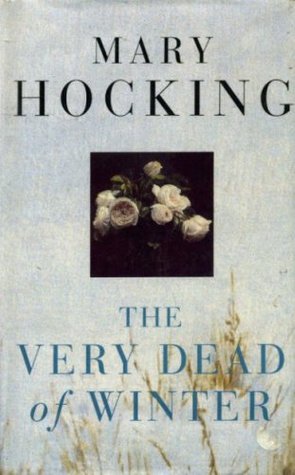
The Very Dead of Winter Mary Hocking 657931I missed Heaven Ali’s Mary Hocking Reading Week, June 1-7.

Due to disorganized calendar-keeping.  I galloped through Hocking’s short novel, The Very Dead of Winter, and am posting a week late.

I do like Hocking, and I read three of her novels in 2013, A Particular Place, Good Daughters, and An Irrelevant Woman.  I wrote here::

Mary Hocking’s irresistible novels have been compared to Barbara Pym’s.

Is she like Barbara Pym? Well, no. I find her sharp, gracefully-written fiction more like the tart novels of Penelope Lively crossed with the family sagas of Elizabeth Jane Howard.

The Very Dead of Winter was a slow starter for me, and at first I thought, Oh dear, I can’t read this.  Hang on:  it gets better.  I was very moved by the powerful ending.

In the very dead of winter,  Florence and her daughter Anita arrive to spend Christmas in a cottage in the woods owned by Florence’s hippieish sister, Anita.  (Some think she is a witch.)  Florence’s husband Konrad is dying, and he is already installed in an upstairs room.  Their son, Nicholas, a world traveler and explorer, has also arrived.  There is a mystery about a wooden sculpture in Konrad’s room:   soon it becomes clear that Konrad has a closer relationship to Sophia than anyone knew.

And so they are a tense family group.

Florence is flamboyant and insensitive.  She can’t face it that Konrad is dying, and barely goes into his room.  The care of Konrad falls between Sophia and Anita, who loved her father much more than she loves her mother.

Mary Hocking

Mary Hocking

Because of her flair for dramatics (she belongs to the drama club at home), Florence insists on giving a huge Christmas party in a blizzard.  Despite Anita’s warnings about salmonella,  she makes a huge batch of eggnog and poisons the neighbors  A few escape, those she deemed worthy of whisky.  Florence loudly tells people how much she hated Konrad’s paintings, their violence, and the loud colors.  A handsome middle-aged neighbor, Thomas, asks her if Konrad wasn’t known for his colors?  She is gobsmacked.  Could Konrad have exhibited his paintings without her?

Restless Anita is deeply unhappy with her life.  She is an educational psychologist with a handsome boyfriend who lectures on education.  On his way to the cottage, he gets stuck in the blizzard, and leaving his car behind is  run over by a sleigh.  She isn’t surprised that a widow is taking very good care of him.

While she is pulling apart from her boyfriend, Nicholas is falling for one of Sophia’s neighbors, Frances, a beautiful young woman who takes care of Thomas and his grandson, Andrew.  Thomas’s son committed suicide, and his wife Margery died.  Frances feels obligated to stay.

Does this seem unnecessarily complicated?

It doesn’t become clear immediately why we need to know so many characters, but they are tied together by Sophia and Konrad.

This is not Hocking’s best book.  Would I have gotten past the first tangled pages if I hadn’t read three other of her books?  No.  But it is very good, if you stick it out to the end.

Here are links to Heaven Ali’s four recent Mary Hocking Week blog entries.  She has read much Hocking, and there are other entries about her as well.

https://heavenali.wordpress.com/2015/06/01/mary-hocking-reading-week-starts-here/

https://heavenali.wordpress.com/2015/06/03/a-time-of-war-mary-hocking-1968/

https://heavenali.wordpress.com/2015/06/06/the-hopeful-traveller-mary-hocking-1970/

https://heavenali.wordpress.com/2015/06/08/mary-hocking-reading-week-roundup-and-giveaway-results/

Rediscovering Boredom: Why Eliza, Komako, and I Need Social Media

SElfie Even Hell Has Two Bars 0

On “Selfie,” Eliza (Karen Gillan) and Henry (John Cho) find a phone connection at the end of a phone-free weekend on their boss’s country estate.

Boredom is good for you, they say. Social media overstimulate and rewire our brains. At The Huffington Post, Michael Harris wrote:

To rework an old Jean-Paul Sartre line: If you’re bored when you’re alone, you’re in bad company. Boredom itself isn’t a sign that you need some distraction; it’s a sign that you’ve grown addicted to distractions and you need to develop a rich interior life. “

Certainly social media can be addictive. I ruthlessly lock up my tablet during the day so I don’t spend too much time online.

Karen Gillan and John Cho in

Karen Gillan and John Cho in “Selfie” (a canceled sitcom)

My favorite TV show last fall, “Selfie” (cancelled in November), was an updated version of Pygmalion. It revolved around the problem of unconnecting from social media and connecting socially. Eliza Dooley (Karen Gillan), a sexy pharmaceutical saleswoman, spends her days taking selfies and updating Instagram and social media. She has millions of followers but no friends. Henry Higgs (John Cho), a strait-laced marketing rep, teaches her manners after she discovers no one likes her.

Eliza learns cyberstalking is a “don’t” in friendship, and, instructed by Henry, begins to ask people, “How do you do?” But a relationship is a two-way street: Henry discovers Facebook is crack.

There has to be a middle ground, the writers of the cancelled show seem to conclude. In the episode, “Even Hell Has Two Bars,” Henry and Eliza spend a weekend on their boss’s country estate with no cell phone connection. At the end of the episode, after a reaffirmation of their friendship, a look of calm appears on Eliza’s face as she discovers her phone is working again. Henry looks wistfully at her, but then he too becomes absorbed in his phone.

Don’t we all know that calm of reconnecting on the internet?

I don’t have a cell phone, though.

One of these days we’ll all have to carry one as part of a government ID. program. Shades of Gary Shteyngart’s Super Sad True Love Story.

Meanwhile…

Is boredom so wonderful?

Yes, probably.

On a hot summer day, I rediscover boredom.

Temperature: 95 degrees

Humidity: 31%

Air conditioner: off

Fan blowing: one

Pitchers of iced tea in the refrigerator: two

I decide not to go outside.

Just an old-fashioned day at home, I say, sneaking on to the internet four times.

But you know, it is nice on a hot day to sit and read. I have chosen a Japanese novel, Kawabata’s Snow Country, for its coolness. Set in a mountain town with a hot spring, it describes the relationship between Shimamura, a married man, and Komako, a woman who learns to be a geisha. She loves him, but Shimamura is cold and insists that many of her activities are a waste of time.

Komako keeps a detailed reading journal, cataloguing every novel and short story she has read since she was fifteen.

You write down your criticisms, do you?”

“I could never do anything like that. I just write down the author and the characters and how they are related to each other. That is about all.”

“But what good does it do?”

“None at all.”

She has no one to talk to about books in her small town. The words pour out as she tells him about her reading. He observes, “There was something lonely, something sad in it, something that rather suggested a beggar who has lost all desire. It occurred to Shimamura that his own distant fantasy on the western ballet, built up from words and photographs in foreign books, was not in its way dissimilar.”

With social media, Komako would have connected to others about books.

Perhaps she would read less, though. We do a lot of clicking online.

There is good and there is bad in our 1984 world.

Below you can watch the scene from “Selfie” in which Eliza and Henry find their phone connection.

http://abc.go.com/shows/selfie/video/VDKA0_819yw3ni

Minae Mizumura’s A True Novel

A True Novel Minae Mizumura coverI have been rereading the Brontes this summer.

I just read Minae Mizumura’s A True Novel, a Japanese retelling of Wuthering Heights, which won the Yomiuri Prize For Literature in 2002.  The translation by Juliet Winter Carpenter was published in 2013.

It is the most elegant new novel I’ve read this year.

If you haven’t read Wuthering Heights, you are missing out on the most poetic Gothic romance and poetic family saga ever written.  It is not just a love story:  it is defined by its complex structure.  There is a frame story:  Mr. Lockwood, a  tenant, has a horrific encounter with his rich landlord Heathcliff,  and later hears Heathcliff’s long story from Nelly Dean, the housekeeper.   Here is a recap:  Catherine Earnshaw grows up with Heathcliff, an orphan, at Wuthering Heights, but after Catherine’s brother Hindley inherits the house, Heathcliff is treated as a rustic servant. Cathy tells Nelly Dean, the housekeeper, that she loves Heathcliff but it would degrade her to marry him now.   And so Cathy  marries Edgar Linton, a gentleman, and Heathcliff disappears to make his fortune. The next generation suffers, money or not.

Like Wuthering Heights, Mizumura’s A True Novel is narrated at two removes from events (or actually three, since we are conscious of the writer crafting the novel). The author, Minae Mizumura, reflects in the long prologue (one third of the first volume) on “how to take ‘a story just like a novel’ and turn it into a novel in Japanese.”

Minae, a character in her own novel, ponders the difficulty of transferring an English novel to Japanese culture.  The structure of the Japanese language is so different from European languages that even the abstract idea of a “subject” is foreign.   There is, for instance, no equivalent to the personal pronoun “I” in Japanese.

Minae is creating a novel from an oral tale of doomed romance related to her by a young Japanese man, Yusuke Kato, who heard it from Fumiko, a maid at the summer cottage of Taro, a Japanese billionaire.

During her short teaching gig at Stanford, Minae is sought her out by Yusuke because he wants to  talk to her about Taro, whom she knew slightly.  One stormy night, he tells her the story of Taro’s doomed love for a privileged woman named Yoko.  Yes, Taro is Heathcliff to Yoko’s Catherine.

Minae asks herself why tell another love story?

The story I was told on that stormy night was merely one of many love stories already told a thousand times.  Why turn it into yet another novel?  there was only one answer I could think of:  it recalled the translated Western novels I had encountered as a girl, especially one that never failed to make a disturbing impression on me every time I read it, a literary classic set on the wild Yorkshire moors and written more than a hundred and fifty years ago by the Englishwoman E. B.  Indeed, it was only my intimate acquaintance with this book that made me recognize that Taro’s tale had the makings of a novel.

Minae explains that very quickly her work starts to diverge from Emily Bronte’s.

“It …. had to follow the inner logic of the Japanese language and interact with countless Japanese texts of the past, all the while maintaining a keen awareness of the small place the language occupies in a world dominated by English, an awareness inescapable to someone writing in this day and age.

After the prologue, which is also a brief autobiography of Minae, she switches to the third person and tells the story from  Yusuke’s point of view.   During a summer when he stays at a friend’s cottage, he gets lost on his bicycle and has an accident, and finds himself at a dilapidated cottage owned by this eccentric tycoon.  The maid, Fumiko, befriends him, and lets him sleep in the shed. That night he sees a girl–the ghost of Yoko.   Later, Fumiko tells him that Taro was so in love with Yoko that he has taken to sleeping in the shed, hoping to see her.  Yusuke hears the whole story from Fumiko, who traces her genesisfrom poor farm girl to prosperous maid in the house of Dr. Utegawa, his beautiful wife Netsue, ,the doctor’s mother, Mrs. Utegawa, and Yoko, the youngest daughter.

How did Taro get involved with the family?

In post-war Japan, Taro Azuma, an orphan, was mistreated by the aunt and uncle who had reluctantly taken him in.  But he is saved by the fact that his great-uncle works as a handyman for the doctor’s family next door, and he is has constant contact with the grandmother and Yoko, the privileged girl next door.  In fact, the grandmother hires him ostensibly to help around the house.  but in reality, she makes sure he eats well, has clean clothes,  and does his homework.   Like Heathcliff and Catherine, Taro and Yoko become best friends and fall in love, but Yoko, like Catherine, believes it would degrade her to marry him.

In the second volume, Fukimo continues the story of the complicated relationship between Yoko and Taro when he returns with money.

This is a gorgeous book.  I couldn’t put it down.

I hope I can find some more of her work in translation.

Dickens’s The Old Curiosity Shop

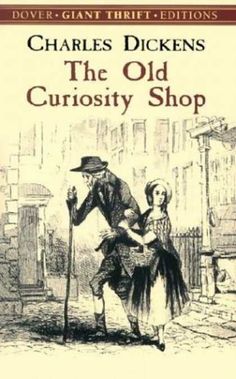
old curiosity shop dickens 6ec4c34b098945a4ac6efe5a4c954faeIt took me one and a half years to read Dickens’s The Old Curiosity Shop.  On Jan. 28, 2014, I blogged after 200 pages:

I love Dickens, but …couldn’t get past the wax works.

(The main characters, Little Nell and her grandfather, briefly travel in a caravan with Mrs. Jarley and help her with her waxworks show.)

I am a fan of Dickens, especially of his dark final novel, Our Mutual Friend.

But his fifth novel, The Old Curiosity Shop, is a strange blend of darkness and sentimentality.  It was  hastily scribbled for a literary magazine, Master Humphrey’s Clock.

The good news:  The scenes, though plotless and often pointless, are extremely vivid.

The bad news:  The characters are caricatures. The portrait of the child heroine, Little Nell, is mawkish.  Little Nell was created out of Dickens’s excessive mourning for his wife’s 17-year-old sister, Mary Hogarth, who lived with them and who he claimed in a letter to his friend Forster “died in his arms.”  Dickens wore her ring for the rest of his life.

The plot of The Old Curiosity Shop, such as it is, is the disturbing flight of Little Nell and her grandfather.

Little Nell, a very responsible 13-year-old child, takes care of her gambling Grandfather, the owner of the Old Curiosity Shop. He has been bankrupted by a savage dwarf, Quilp, and is now imprisoned in the shop.   Quilp has a weird fixation on Nell, whom he repeatedly terrifies by teasing her with the question if she will be his next wife.  (Quilp does have a pretty wife.)  Nell and her grandfather go on the lam.  They take refuge with kind people along the way, and, most interestingly, with showbiz types, including a pair of Punch and Judy puppeteers and Mrs. Jarley, who owns a waxworks display.  Quilp tries to track Nell and her grandfather, but fortunately the Single Gentleman is also looking for them.  Who will find them first?  Quilp or the Single Gentleman?

Quilp, nell, and grandfather 4The most sympathetic and interesting character is Richard Swiveller, a friend of Little Nell’s dissipated older brother.  Swiveller, though easily manipulated, and placed by Quilp as a clerk to a corrupt lawyer, Sampson Brass, and his tougher, smarter sister, Sally Brass, is very kind and has a good sense of humor.  Dick Swiveller helps an orphan child, who is a kind of shadow of Little Nell, and  nicknames her the Marchioness.  The Marchioness, the Brasses’ maid, has been imprisoned in a kitchen and starved, and Swiveller sends out for food and teaches her to play cards.

The novel ends with several deaths.  I won’t tell you whose, but it really is monstrous.

Fortunately my favorite character survives.

Aldous Huxley said it best when he criticized Dicken’s “really monstrous emotional vulgarity.”

The history of Little Nell is distressing indeed, but not as Dickens presumably meant it to be distressing: t is distressing in its ineptitude and vulgar sentimentality….  Mentally drowned and blinded by the sticky overflowings of his heart, Dickens was incapable, when moved, of recreating, in terms of art, the reality which had moved him, was even, it would seem, unable to perceive that reality.

I love Dickens, but this one is a disappointment.

In his later novels, Dickens  develops some of the character types from The Old Curiosity Shop into slightly more rounded, sympathetic characters, i.e., the malicious dwarf  is transformed in David Copperfield into  Miss Mowcher, the coy but essentially kind dwarf manucurist, and Little Nell becomes Jenny Wren in Our Mutual Friend, a smart, saucy, crippled child who takes care of her drunken father and supports them as a dolls’ dressmaker.  Jenny takes no nonsense:  her alcoholic father is more manageable than Little Nell’s addicted gambler grandfather.

Jenny Wren and her alcoholic father.

Jenny Wren takes no nonsense from her alcoholic father.