Mirabile Reads Virgil

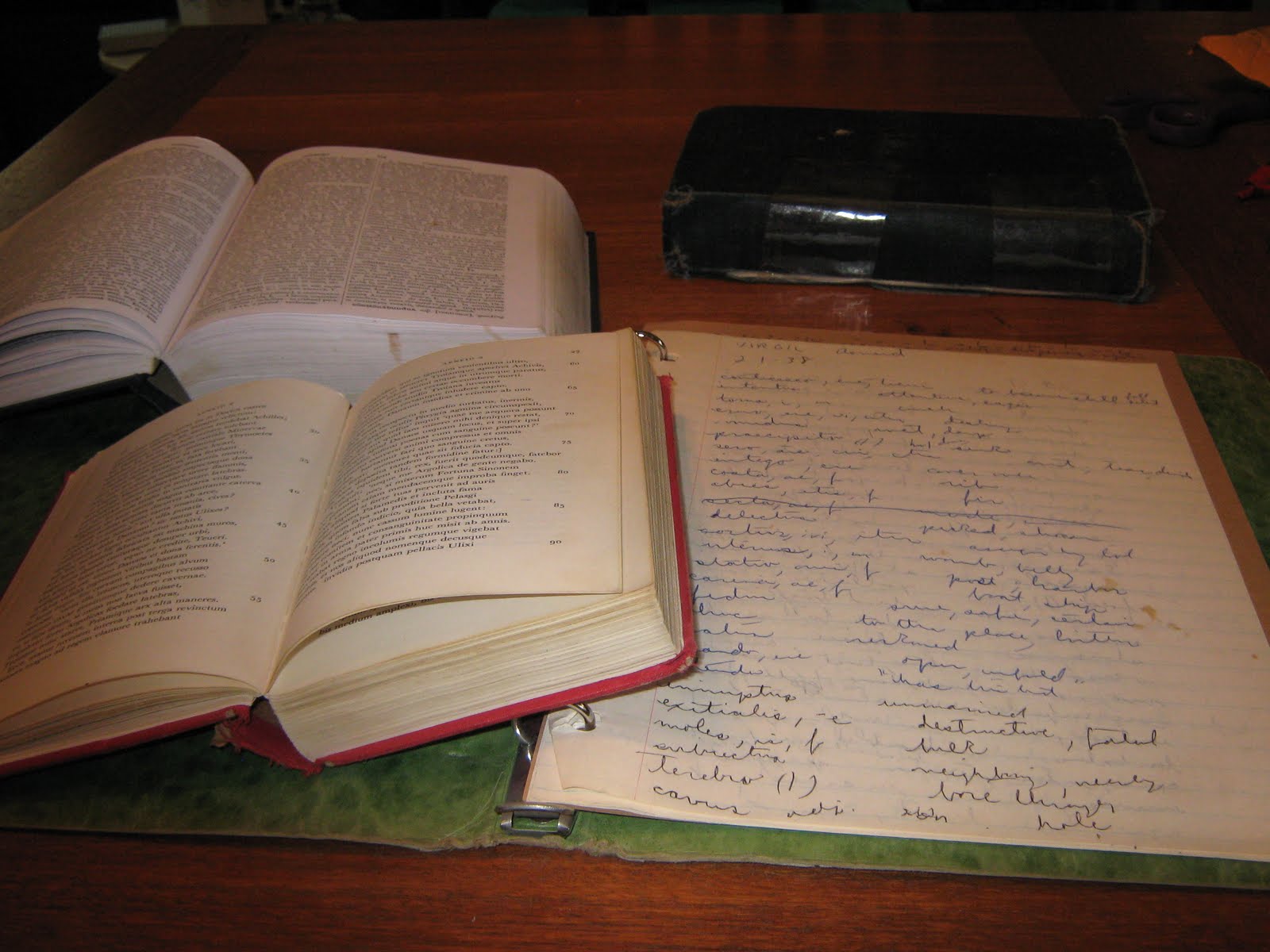
Reading the Virgil with text, dictionary, and grammar.

Old photo of Virgil’s Aeneid, Williams edition, and notes.

Reading Virgil is a joy.

I was happy when I came to Book XII, line 239, and recognized the allusion of the verb serpit to the serpent imagery in Book II.

 …serpitque per agmina murmur.

“…and the murmur snakes (creeps) through the army.”

Y0u spent a week, perhaps it felt like years, studying Book II with Ms. Mirabile, who expounded on the serpent and flame imagery (from Bernard Knox’s famous essay) and possibly xeroxed the essay for you AT HER OWN EXPENSE.  Did you reread The Aeneid later at the beach, as the great Cecil Wooten advised Ms. Mirabile’s generation, who strongly recommended it to you?

Well, I did.  But then I MIGHT be Ms. Mirabile.

Back to the serpent imagery in Aeneid Book II: the Greek Sinon (think “sinuous”) persuades the Romans to bring the wooden horse into Troy; then serpents strangle the priest Laocoon and two sons after he warns the Trojans against Greeks even bearing gifts; and the flames of Troy flicker like serpents.

IMG_2287In Richard Tarrant’s commentary for the new Cambridge edition of Aeneid, Book XII, he details the use of serpit in Latin literature. If you’re a student, you can skip most of the philology and use the notes for translation.

serpere can mean:  creep, crawl; move slowly, creep along; grow imperceptibly, make way stealthily, spread abroad, increase…

In Georgics, III, 468,Virgil warns us to cut the disease  (or “mischief”) with a knife

…priusquam

dira per incautum serpent contagia vulgus.

…before the dire infections snake through the unsuspicious herd (or through the heedless people).

Cicero uses it in Pro Murena, 45:

Serpit hic rumor.

“This rumor (snakes) gets abroad.”

I very much enjoy reading these notes.  Would everybody?  No, but if you don’t have time for the history, the manuscript criticism , and so forth, you don’t have to read all of them.

You have to be a little bit crazy to want to curl up with Virgil and a dictionary, but some of us still do it.

David Bamber as Cicero in "Rome"

David Bamber as Cicero in “Rome”

NEXT UP:   Anybody want to join my Cicero group?  I’d be astonished if you did.  Perhaps I’ll read Pro Murena.

Or you can just watch the miniseries, Rome, if you can’t face Pro Murena. David Bamber plays Cicero.

SPRING BREAK traditionally arrives during spring.  Of course we have only had spring here in the Back of Beyond since global warming.  Some years back, I waited for a train in Chicago on a freezing March day, the river dyed green, and a parade marching through snowy downtown.  That was spring.

This year, that was spring again.  It was cold.

Here is what I did to celebrate the advent of spring.

Kevin-McKidd-as-Lucius-Vorenus-Ray-Stevenson-as-Titus-Pullo-rome-16609042-600-399

Ray Stevenson as Titus Pullo and Kevin McKidd as Lucius Vorenus

I watched the miniseries, Rome.  I love Mark Antony (who could not? he’s very funny) and the evil Atria (Octavian’s mother), but of course am especially drawn to the two ordinary soldiers who are off-center yet at the center of quotidian life, Lucius Vorenus and Titus Pullo.

I TURNED THE THERMOSTAT UP.  We’ve all known since Jimmy Carter’s presidency that we should keep the thermostat down and wear a sweater.  But it was so cold last week that I left the heat at 60 at night.
It was just a Spring Break thing, but I certainly felt better.

Let’s get that solar power going so we can all be warm indoors!

Moving & William Cooper’s Scenes from Later Life

OK, this wasn't us.

OK, this wasn’t us.

Moving is arduous.

We all have our stories.

The keyboardist (or drummer?) for John Cougar Mellencamp helped us move a desk from a garage sale in return for our helping him move a chair.

We left the desk in Indiana because we couldn’t squeeze it out the door again.

Later, I acquired a big wooden desk that was similar.

The first time we hired professional movers, the young men complained about the stairs, the books (“What’s in here, bricks?”), and the heavy desk.  One of them, who was really raging about the books,  sublimated by vengefully lecturing me on my inadequate polishing of the desk.

Okay, I tried polishing after that.  I knew I would have to move again.  I wanted happy movers.

Next time we moved, we hired wonderful movers who endured my frantic continued packing while they loaded the truck and caught a panicky tortoiseshell cat  who dashed out of the basement.  They drove cross-country with a truckload of furniture and books and not only delivered my desk (and books)  intact , but somehow kept our big plants alive in the dark truck.

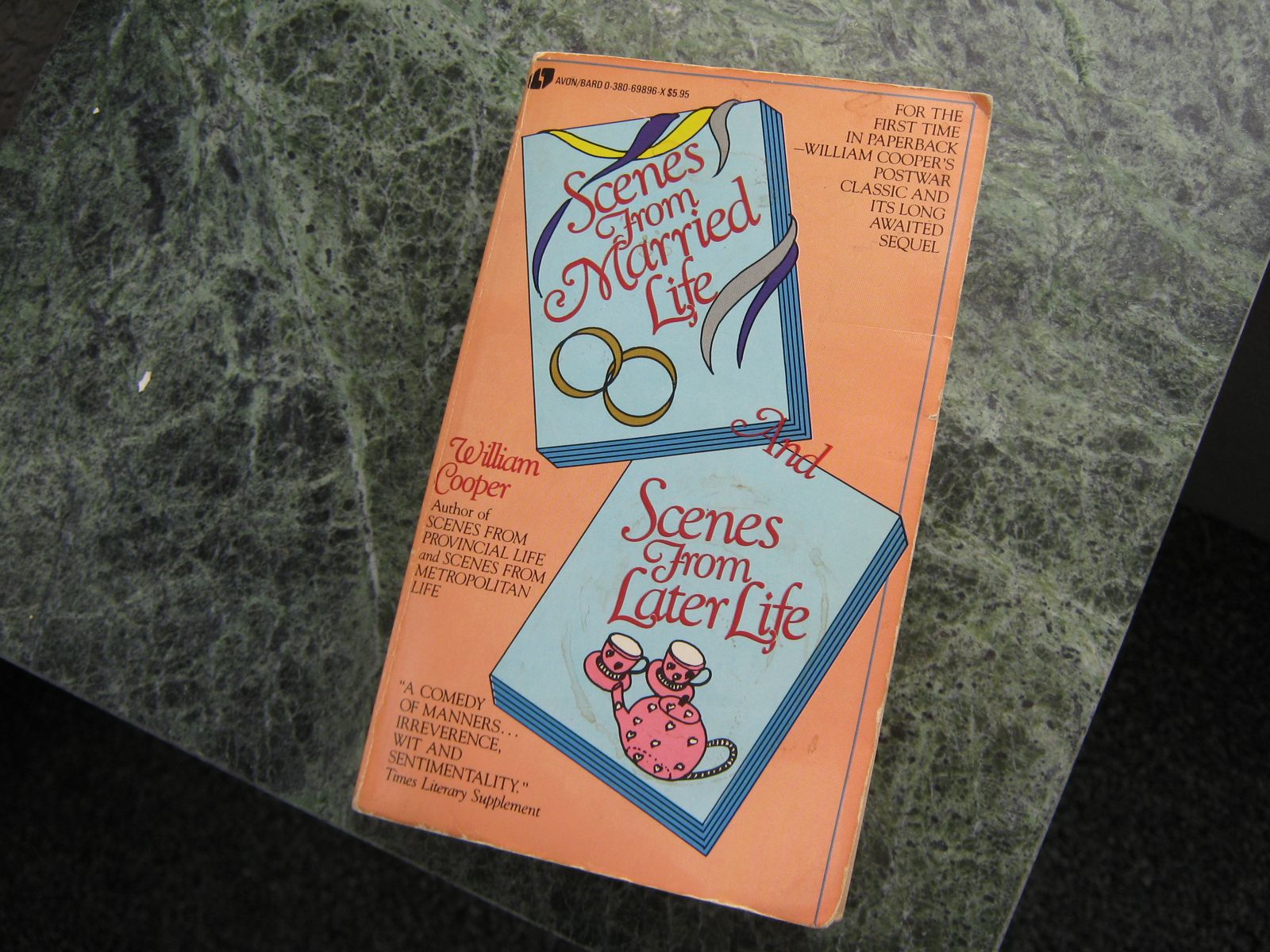
Scenes form Married Life and scenes from later life by william cooperIn William Cooper’s charming novel, Scenes from Later Life, the fourth in his series about writer and civil servant Joe Lunn, Joe is preparing to retire, and he and his wife sell their house.  The description of the movers made me laugh, though Joe is exasperated by their incompetence.  If Joe had had to move my huge desk, he would have been thrilled with  movers.

They came half an hour late, having been drinking tea at a caff on the main road.  They were in possession of a pantechnicon with scraps of old carpet lying on the floor and containing a huge number of tea chests partially filled with crumpled newspaper.  There were four men; one, older than the others and smelling rather more strongly, appeared to be the foreman.  He assured us that though they were starting half an hour late they would finish early.  Early, if you please!  It was immediately obvious that they were going to achieve that desirable end, when the house resounded with the noise of our chosen pieces of furniture crashing against the bannisters and hanging onto door-posts on their high-speed way to the pantechnicon.”

I can visualize this so clearly.

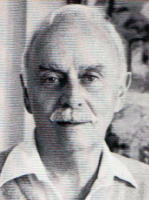
William Cooper

William Cooper

Then there is the problem for Joe of  redecorating the new flat.  The boiler has been boxed in by the kitchen carpenters so no one can light  the pilot light, the sink is installed too far away from the dishwasher, the chairs are upholstered with the wrong material…and it never stops.

We have never redecorated, though we did get some rewiring and painting done.  I don’t remember ever seeing the electricians:  were they little mice nibbling the wires?  The painters spent quite a lot of time here, and I learned their names.  I would say, “Hello,”at the horrid hour of 7 when they showed up, then dash out on my bicycle and hope they would be gone by the time I ventured home.  I wanted to avoid conversations with Michelangelo or Fra Angelico about their smoking breaks. Yes, somebody smoked inside, possibly everybody, and there were always cigarettes in the toilet.  Here’s what I learned from a friend many years ago: if you have maids or workmen, get out of there, because they will never do anything the way you want it done anyway.

Cooper’s charming novels, which I’ve read recently, are unassuming, thoughtful, and funny:  Scenes from Provincial Life, Scenes from Metropolitan Life, Scenes from Married Life, and Scenes from Later Life,  There is nothing the narrator Joe Lunn doesn’t talk about as we follow him through different stages of life:  sex, bachelorhood, work, money, marriage, old age and death.  Scenes from Later Life is the last of the four but not the best:  it is, however,  a quietly observant, stylish portrayal of the effects of aging.  I coudn’t make myself read this fourth novel until my own mother was in a nursing home, because I didn’t want to dwell on this phase of life.

The novel begins with a trip to his mother’s nursing home.

My mother said, ‘Tell me how old I am!’

I said, “I’ll tell you how old you are if you want me to.  But you do know how old you are.  And you know you know.  In fact ten minutes ago you told me.”

There’s an underlying misery in these exchanges with his mother.  He makes the same statements again and again.  Every time I see my own mother, she asks, “Is that how old I am?” It’s as though, traumatized by leaving the house she lived in for 50 years, she cannot bear what she sees.  She is usually lucid, though.

Joe experiences the trauma of moving to a flat now that he is aging.  He  has arthritis and needs a cataract operation, but he still has a warm, sexy relationship  with Elspeth, who is 15 years younger.

There is quite a lot of sadness in this novel. Joe’s friend, Robert, another civil servant/novelist, has spent most of his time alone since his wife was diagnosed years ago with schizophrenia and is in a private institution.  Poor Annette!  I loved her character in Scenes from Married Life.

But William Cooper/Joe keeps the novel from getting sentimental.  This is the way things are:  the men accept them.  They seem to know there is so far and no farther one can push, though the women of the novel (and women like me) always think more can be done.

And here’s a John Cougar Mellencamp video (since I mentioned him above).

New Tolstoy Translation & Willa Cather’s Letters

Doug told us about Mary Beard’s blog, A Don’s Life.

Doug, a fedora-wearing bookseller who died of prostate cancer last year, was an aficionado of history who introduced us to all kinds of blogs we’d never heard of:  did you know, for instance, that there’s a Diary of Samuel Pepys blog?  During a brutally long weekly class (two hours), he was happy to scribble book titles and internet sites on the board so I could sit down for a few minutes.

Beard, a professor of classics at Cambridge, is the author of The Fires of Vesuvius: Pompeii Lost and Found, which I brought to class one day.

Doug was enthusiastic about her work.

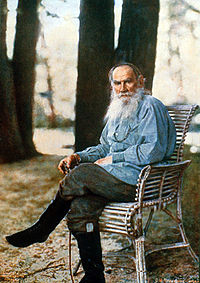
Tolstoy

Tolstoy

I don’t always read her blog,  but recently she mentioned that Peter Carson, her late editor, had translated Tolstoy’s Death of Ivan Ilych and Confession for Norton. She is writing the introduction.

I am not familiar with Carson’s work, but I love Tolstoy.

I regret that I have been unable to take the “Tolstoyevsky” class–Tolstoy and Dostoevsky–at the University of Iowa.  (It would require extensive traveling)

Beard writes of her introduction:

Don’t worry, I am not getting above myself. There is also to be a more specialist essay from a Russian expert. My job is to set the scene  — and also to celebrate, and discuss, Peter’s role as translator (on which I have quite a lot of interesting stuff). All the same I thought I needed to do a bit more background work on books concerned and their author. Up to now, my knowledge of Tolstoy has been like many people’s I imagine: that is to say, some familiarity with War and Peace and Anna Karenina, and rather less interest in the spiritual, pacificist, social reformer that came later — in the period when both Ilych and Confession were written.”

I’m looking forward to it.

Willa Cather News.  On April 16, Random House will publish The Selected Letters of Willa Cather, ed. by Andrew Jewell and Janis Stout.

I am off to reread Willa Cather to prepare for the event.

And I’ll be selling my books in order to buy this one, because I must admit I have spent all my book money for the year.

Look at this gorgeous cover photo of Willa on the prairie.

Willa Cather Selected Letters

Jonathan Lethem’s Girl in Landscape & Pamela Sargent’s Venus of Dreams

Jonathan Lethem

Jonathan Lethem

Jonathan Lethem, one of my favorite writers, and, indeed, one of the best American writers, wrote science fiction before he made a giant leap to literary fiction and won the National Book Critics Circle Award in 1999 for Motherless Brooklyn, a novel about a detective with Tourette syndrome.

I love Lethem’s 21st-century novels, but admit I haven’t read his science fiction, partly because the guys in my SF book group (which, alas, dissolved) didn’t like literary SF.  They objected to anything by Ursula K. Le Guin, Kurt Vonnegut, or Philip K. Dick (and Lethem edited the Library of America editions of Dick’s books).

“If you go back to ‘the classics’ you’ll find they’re dated,” said the bright but opinionated garret-dwelling SF writer who chose most of the books.

He flatly preferred books by John Ringo, with cover art featuring half-naked women bearing swords (execrable), and Sharon Lee and Steve Miller’s space operas (those I quite liked).

When Lethem’s strange, haunting 1998 science fiction novel, Girl in Landscape, showed up at the used bookstore for $2 a couple of weeks ago, I had to read it.

Girl in Landscape lethemIn Lethem’s post-apocalyptic Brooklyn, the sun is so bright that windows are “sealed layers of glass, darkened to blunt the sun.”  Caitlin Marsh takes her three children to deserted Coney Island so they’ll know what the ocean is like before they leave Earth to live on the Planet of the Archbuilders.

Her young sons are frightened by the sky, and the ocean has been fenced off because so many people committed suicide there.

But disdainful 14-year-old Pella knows her mother used to swim here, and that it means something to her. But she doesn’t quite understand, and she can’t help looking at the three scars on Caitlin’s arms where skin cancers were removed.

Caitlin says,

Don’t you think arms are brave?”  She pistoned her right arm back and forth….  “They just go on, they never once get tired or give up or complain….  It’s the same arm I’ve had all my life, the same skin and muscles.  It just goes pumping on into the future.  Brave.”

When Caitlin dies of an aneurism, their father, Clement, a politician who has lost an election, takes them to the planet anyway.  Most of the Archbuilders, the colonists of the planet who had changed the weather with viruses and then became subject to the viruses, left the planet long ago:  their descendants are a strange unambitious, languid people who dream a lot, speak many languages enigmatically, and send their souls into “household deer,” shadowy creatures who skim through houses and spy.

Although most people from Earth take drugs to keep from catching the Archbuilders’ dreamy virus, Pella’s family has chosen to assimilate by not taking the drugs.  Pella dislikes the hippie-ish culture, but soon gets the virus and spends much time dreaming and running around the settlement as a household deer.

Furious Pella is strangely attracted by the inflexibility of Ephram, a stern, self-sufficient farmer and colonialist who soon discredits Clement’s politics, holds a witch hunt against an artist, and demonizes the Archbuilders, claiming they are sexual deviants and child molesters.

The neglected children of an alcoholic are also mesmerized by Ephram.

Think a very, very dark A Wrinkle in Time crossed with The Crucible and you will get a glimmering of what this is like.

Be brave like an arm, Pella thought, but she didn’t say it.”

According to Wikipeida,  Lethem was also influenced by the movie, The Searchers, which I haven’t seen.

This is one of those novels that may be too literary for science fiction readers and too SF for literary readers.  I recommend starting with Lethem’s literary masterpieces, Chronic City and The Fortress of Solitude.

Venus of Dreams by Pamela SargentPAMELA SARGENT’S VENUS OF DREAMS.  This well-written, if sometimes plodding, novel about the colonization and terraforming of Venus would have been popular with my SF group:  it’s long, it’s straightforward, it’s chronological, and it’s logical, too.   I very much enjoyed it.

Sargent tells the story of Iris Angharads, the daughter of the matriarch of a farming clan in a futuristic Lincoln, Nebraska.  In this odd Midwestern culture, the women stay in their communes and are powerful, and the men are nomadic.  Iris educates herself via computer, encouraged by her grandmother, Julia, and discouraged by her mother, Angharad.  Education is frowned on and mocked in Lincoln:  it might take Iris away, and indeed it does.

Iris marries, Chen, a technician who gets her pregnant, but she is emotionally cold, sexually promiscuous, and embarrassed by him.  When they both end up on Venus, Iris’s highly political ambition divides them.  Raising their child is problematic:  Iris doesn’t spend time with him.  Chen is by far the more likable of the two, and the one with the strong emotions.

Much of this novel is sociological, documents are mixed with narrative, and  we learn Earth is ambivalent to the Venus project after selling the dream.

Alas, I don’t have much to say about this book, because I read it a while ago, but it is a very good read and I look forward to the other two novels in Sargent’s Venus trilogy.

This One Goes Out to…

My old boyfriend.

Literally old.

Okay, in the prime.

Frankly I wasn’t expecting anybody I know here.

But how did you know…?  You recognized that?

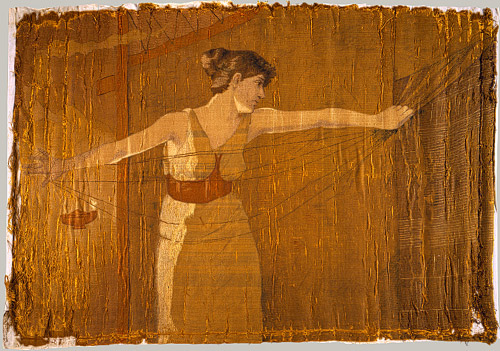
Penelope-Unravelling-her-Work-at-Night-Dora-Wheeler-1886

“Penelope Unraveling Her Work at Night,” 1886
Dora Wheeler How did you know?

Oh, no…really?

I recommend the Robb biography.

And so you’re on that island.

I’m here with the suitors, superheroes, and samurai.

No, I’m not that keen on The Odyssey.

My role is crap.

20 years of weaving.

The Iliad is a better poem.

No, you wrote your diss on that?  Did you really have to go through two generations of professors?  No!

Did you know he died?  He wasn’t that bad.

Well, I quit.

No,  I wouldn’t have lectured on that, either.

They ruined the department.  It’s all films now.

Yes, I remember that.  Crab soccer.

Dissent!

In Thunder Bay?

That diner?

Where were the eggs?

The guitar…

That time with the lyrics…  I thought it was, You know what I mean.

Meet me at the…

No, this is what I feel.

Comment again sometime.

Here’s  R.E.M. in the rain.

Paperbacks or Hardbacks?

Sir Allen Lane, founder of Penguin

Sir Allen Lane, founder of Penguin

Lately I’ve read a lot of paperbacks.

When you read Balzac, you want a nice paperback. You want a Penguin or Oxford (or whatever you can find).

You are going to spend a lot of time with each novel.   You want to get comfortable. You want to enjoy the look and feel of it.   You want to be able to stuff it in your purse or read it lounging on the couch.  You want to be able to read it at meetings while everyone else is playing on his or her phone.

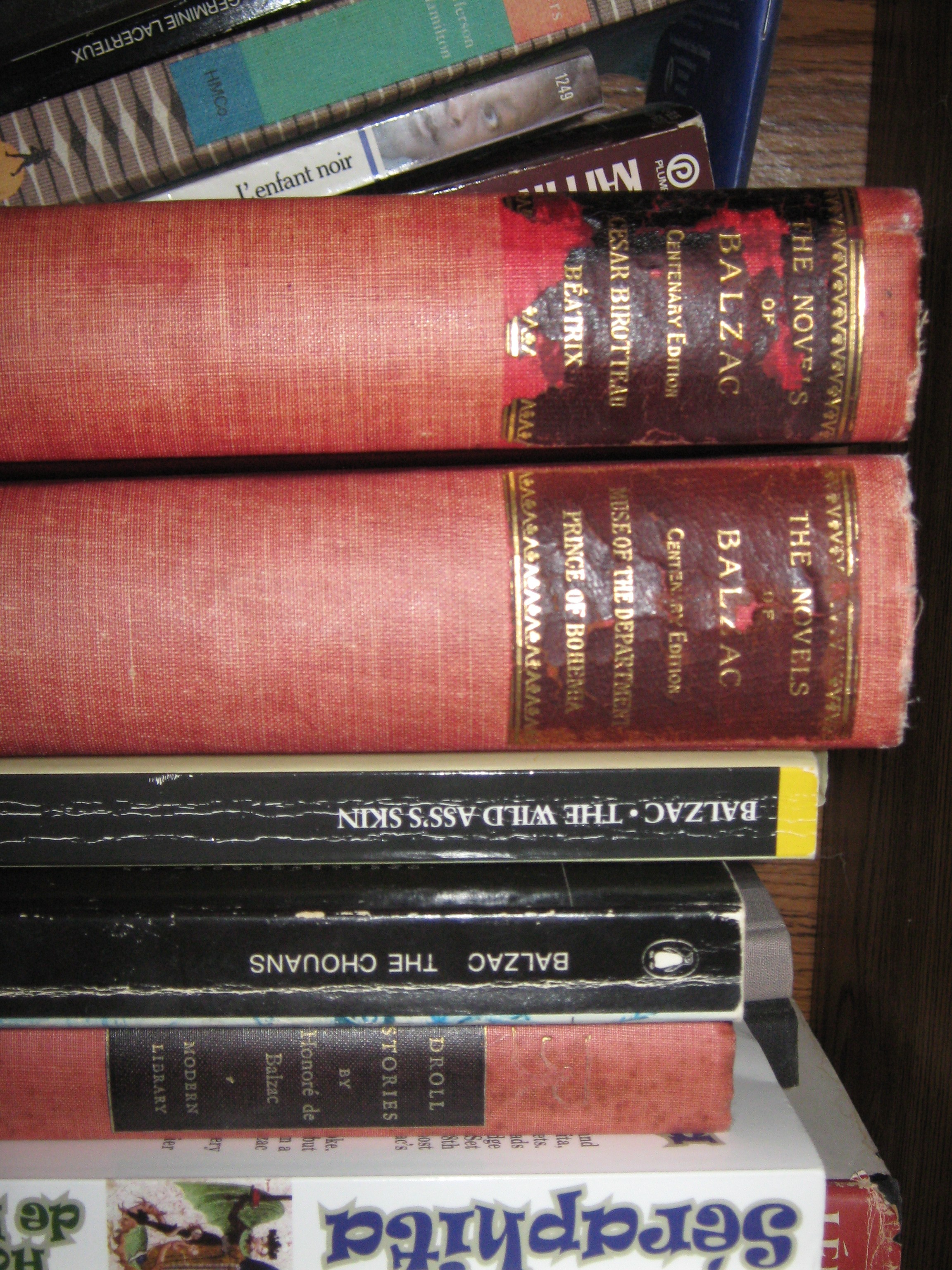
You don’t want something that weighs a ton, like the two hardcovers (top) pictured below.

IMG_2298

You have to sit at a table with these.

I weighed one of them and it is approximately 2 pounds.

I picked up these Balzac hardcovers for $2 each.  They were published by A. L. Burt Company in New York, with the prefaces by George Saintsbury, who commissioned the first translations of Balzac in the late nineteenth century.  There is no copyright, but the title page says “Centenary Edition.” They’re slightly foxed, corners bumped, etc.  It was a Balzac desperation move.  I couldn’t find these in paperback.

I have found my other  Balzacs in paperback.  Penguins, Modern Library.  If only our Modern Library College Edition of Eugenie Grandet didn’t have that marginalia!  A family member wrote all his notes in the margins because he didn’t bring his notebook to class.  Everything is organized:  circled, underlined, notes.

I replaced it.

I was a little upset when I found highlighting in a used copy of Balzac’s A Murky Business.  But there wasn’t THAT much highlighting, and I remembered, Wait, I’m not rich.

Oh, dear.  Perhaps I have Balzac’s collecting habit after all.  He spent 100,000 francs in three years buying antiques.  I’ve spent–well, not that much!–collecting a few Balzac paperbacks.

I used to take extremely good care of paperbacks so I could sell them.  Long ago, when I had my first job (posh, but paid nothing), I sold books to used bookstores so I could buy more books and, yes, tampons.  It was no big deal, but now I think back and laugh.

Now I’m having a fling with paperbacks.  I read them in the bath.  I read them in bed.  I read them in the kitchen.  Occasionally a coffee stain appears.

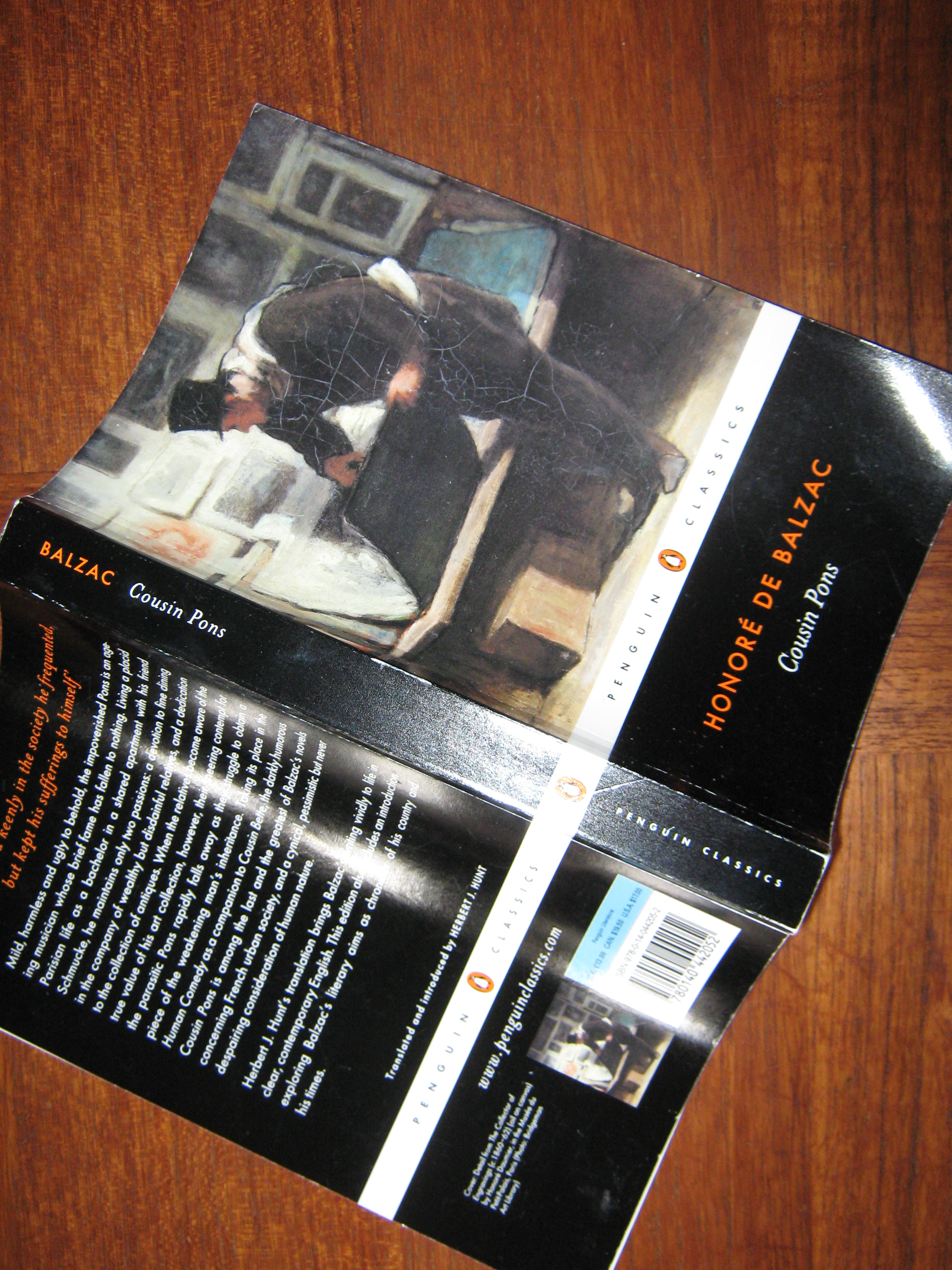
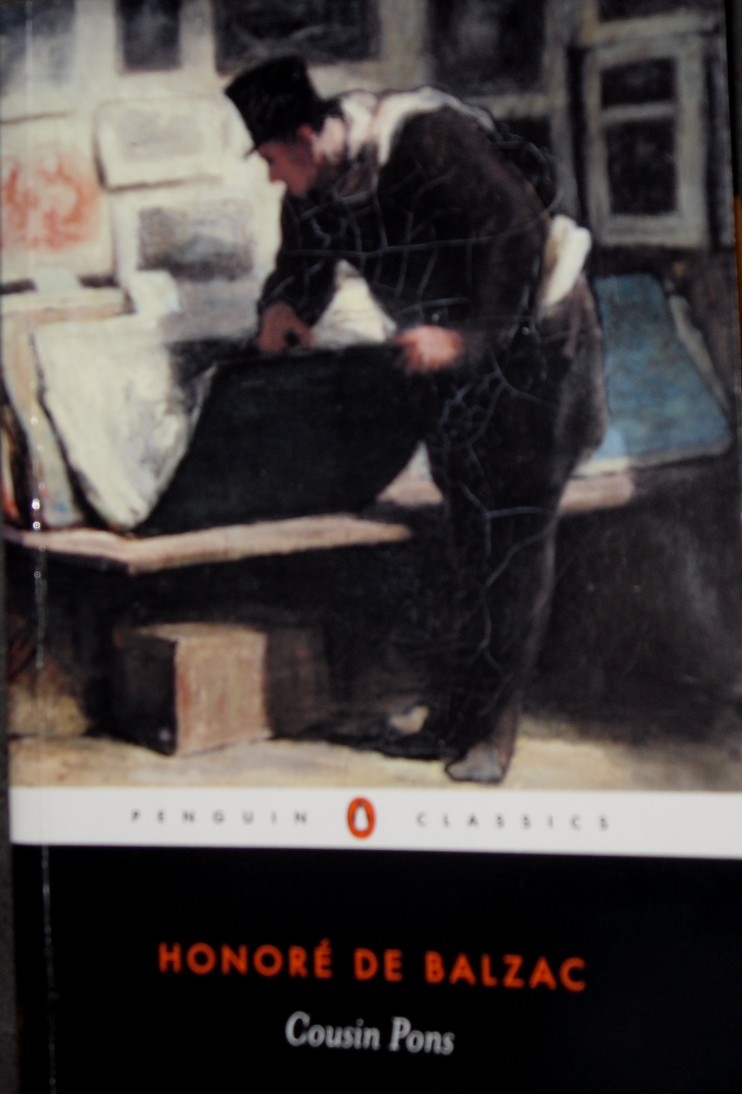
This is what a typical Balzac looks like after a few days.  Poor Cousin Pons!

IMG_2299

Are you scandalized?

Yours doesn’t look like this.  I know.  You’re not supposed to splay them open.

This is no longer Mint Condition, or Like New. It is a Good Reading Copy.  Certainly it is a better reading copy than many I buy online, but I couldn’t possibly call it anything else.

In 2010, Smithsonian Magazine ran an article about the history of paperbacks, mainly about Penguin.   In the 1930s, Sir Allen Lane had a brainstorm: while waiting for a train from Exeter to London, he could find nothing to read except pulp fiction or magazines.  So he decided to publish paperbacks classics, mysteries, and literary fiction. He founded Penguin in 1935.  Among the first books he published were Hemingway’s A Farewell to Arms and Dorothy Sayers’ The Unpleasantness at the Bellona Club.

Goodness, if I could only find those at train stations now!

I’ve spent a life with paperback books.  I’ve purchased most of Hardy, Kurt Vonnegut, Adrienne Rich, Aristophanes, Agatha Christie, Jane Austen, and Janet Evanovich in paperback at:  Iowa Book and Supply, Howards, Second Story Books, Prairie Lights, Christopher’s, Jackson Street Booksellers, and many used bookstores whose names I don’t remember.  There are also the online bookstores.

Why paperbacks?  The joy of the Norton editions with the great notes.  The great introductions to Penguins.  The great pop fiction without introductions:  Ngaio Marsh and the Poldark books.

I read hardcovers and e-books, too.  Used hardcovers are sometimes cheaper than used paperbacks.  E-books are often free.

I love paperbacks.

I could have a Year of Paperbacks challenge.  Read nothing but paperbacks!  I’m satirizing online life just a little.  I love it, but, you know, I don’t do challenges.   I read what I want to read.

Which do you prefer:  hardcovers or paperbacks?

Balzac’s Cousin Pons

Never become a collector.  You would be selling yourself to a demon as jealous and demanding as the demon of gambling.”–Balzac’s Correspondence, V 93

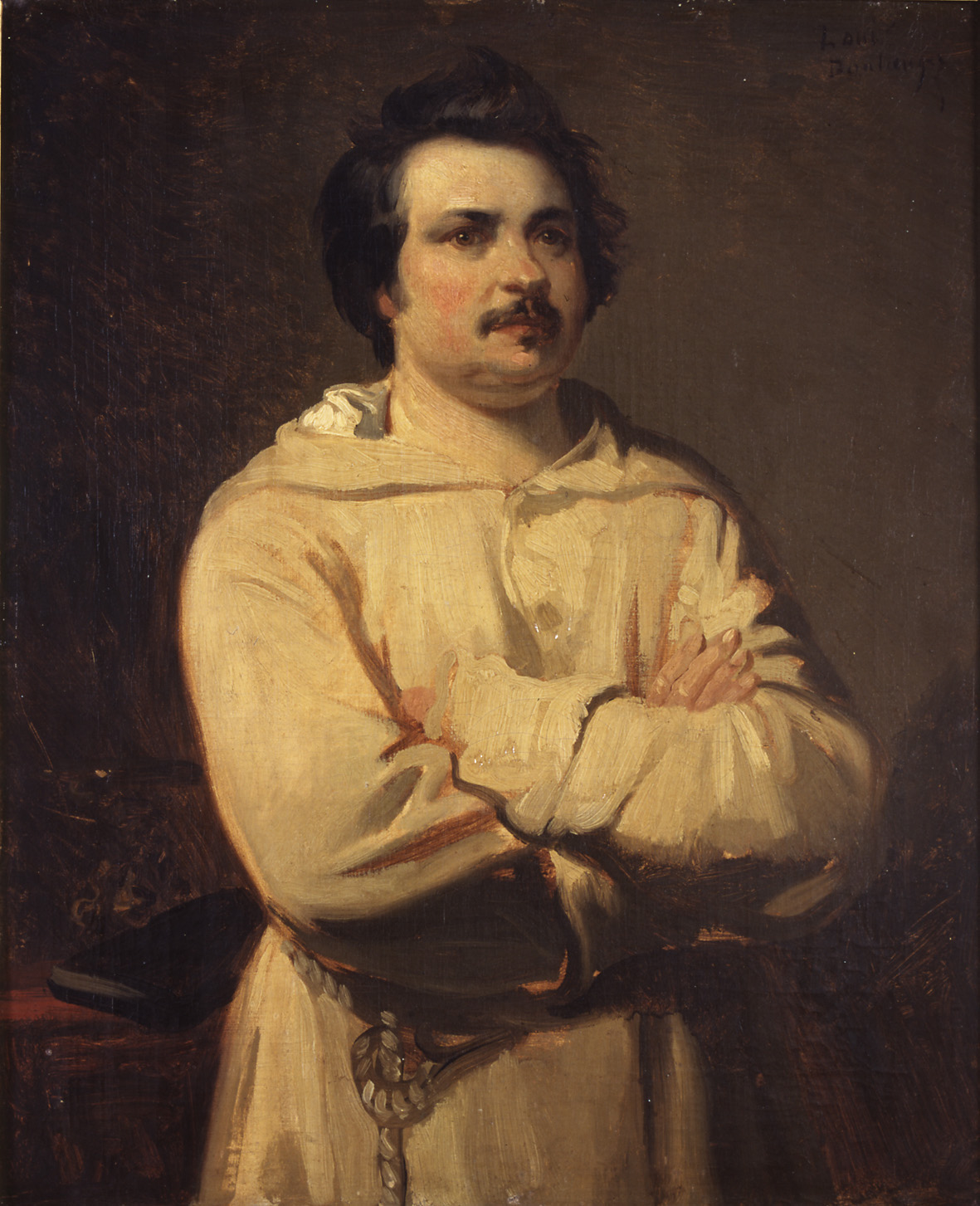
Boulanger_Portrait_d_Honore_de_Balzac

Portrait of Balzac, by Louis Boulanger

Balzac had reason to warn collectors.  He was addicted to collecting antiques, and knew of what he spoke when he wrote one of his last masterpieces, Cousin Pons, in which an obsessed collector spends all his money on old paintings and ornaments.

Much to the chagrin of Balzac’s beloved Eveline, whom he finally was able to marry in 1850, he spent 100,000 francs in three years on antiques. He said it was a nest egg for her, but the collection was a variety of shopping mania.  And he misidentified the value of several of his antiques, due to cheating dealers and his own imagination.

Some of you, like Balzac and Cousin Pons, are real collectors.  I’m sure you have New York Chippendale armchairs, Chinese vases, and engravings by Albrecht Durer.   As for myself, I prefer cheap furniture intended for vacation cottages to objets d’art so I have more money for books (reading copies, not rare editions.)

Herbert J. Hunt translated many of Balzac’s novels for Penguin, and his translation of Cousin Pons, the only modern translation I could find, was done in 1968. (Why doesn’t someone in the 21st century translate Balzac?)  I found Cousin Pons, the second volume of Poor Relations and a companion to Cousin Bette, utterly absorbing and incandescent, and didn’t even stop to put asterisks in the margins.  Pons, the hero, is a lovable musician in his sixties who has two vices:  he is an antique collector and a gourmand. He knows all the antique shops in Paris and can identify treasures and bargain slyly with the dealers; but he also is a parasite who dines every night with rich relatives (to whom he isn’t really related) and friends.  Balzac’s vivid description of Pons is both humorous and endearing:  he is a complete innocent, who has no idea of the politics of society, and whose gourmet sensibilities are his only real sin.

I wish I had read Balzac when I was young: perhaps I would have understood social politics.  Balzac’s depictions of the cruelty, shallowness, and greed of high society are appallingly apt.  Poor Pons is mistreated by a powerful, ruthless rich woman who dislikes him and decides to destroy his reputation.  But the poor are just as cruel as the rich.

As Pons gets older, his friends and relatives value him less:  his  “cousin,” Madame Camusot, known as Presidente, is the wife of the rich President of the Royal Court of Justice in Paris.  She and her 23-year-old daughter, Cecile, whom no one wants to marry, deceive Pons one night, saying they have an urgent summons when they want to get rid of him before dinner.  They laugh at him when he overhears the maid joking about it.  Poor Pons, who has given a Watteau fan to Madame Camusot, is devastated.  He stops dining out.

Balzac Cousin PonsPons shares an apartment with his German friend, Schmucke, another musician, and I would think they were gay, except that Balzac makes a point of their utter innocence.  Schmuck is thrilled when Pons stays home for dinner with him.  He agrees to go “prick-a-pracking togezzer” (bric-a-bracking together) to compensate for Pons’ giving  up of dining out.

Here is what Balzac says about Schmucke:

It needed all the motive force of his friendship for him to avoid breakages in the drawing-room and study given over to Pons for his art collection.  Schmucke was wholly devoted to music:  he composed it for his own pleasure, and he gazed at all his friend’s baubles as a fish supplied with a complimentary ticket would gaze at a flower-show in the Luxembourg gardens.”

When the President of the Court discovers Pons has made the gift of the valuable fan to his wife, who is ignorant of who Watteau is, he makes “Presidente” and Celia apologize.  But Pons makes a mistake:  he introduces a wealthy man to the family as a potential  fiance for Celia, and after the suitor rejects her, the Presidente destroys Pons’ reputation by saying Pons had done it maliciously.

Everybody cuts Pons, and he gets ill, but news of his valuable collection gets out.  Suddenly parasites  like Madame Cibot, the portress, who cooks and does laundry for the two men, want to get mentioned in his will.  Antique dealers want his things, Pons’s doctor and a lawyer get involved in the scheme to deceive him, and “Presidente” also finds out about it.

I love Balzac’s descriptions of the theater where  Pons is the conductor of the orchestra and Schmucke is the pianist.  Balzac is a dazzling social historian.

His lively prose, pitch-perfect dialogue, and brilliant portrayals of all kinds of characters had me racing through this as though it were a best-seller.

I love the classics, but never fear, I do have a couple of contemporary novels in the works.  One day I’ll write about one or the other of them.

Four Links: Carole King, National Woman Suffrage Parade, Edward Phillips Oppenheim, & Roman Historical Novels

It is Women’s History Month.

I have done nothing to celebrate it.

I am not reading any histories of suffragists or the new biography of Margaret Fuller, though those are important.

Instead I am thinking about Carole King, one of the best, most successful, and influential American singer-songwriters.

King’s memoir, A Natural Woman, is on my TBR.

Here is a link to her website.

And here is a video of Carole King singing, ” (You Make Me Feel like) a Natural Woman.”

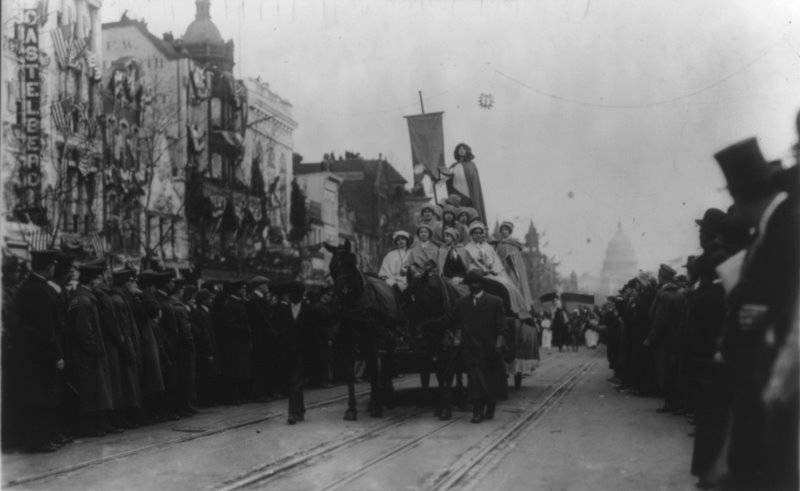
2.  Below is a photo of The National Woman Suffrage Parade, 1913, “the first civil rights parade to use the nation’s capital as a backdrop.  “Read about it at:  http://womenshistorymonth.gov/

National Woman Suffrage parade

3.  Do you ever feel like going to manybooks.net just to see what books are featured?

Today I found The Profiteers by Edward Phillips Oppenheim, who was a popular writer of genre fiction and thrillers.

Here’s an excerpt:

a tall, pale, beautifully gowned woman who had detached herself from a group close at hand turned towards them.

“It is Lady Dredlinton,” Kendrick whispered in his ear.

“Then I will only say,” Wingate concluded, “that Lord Dredlinton’s commercial record scarcely entitles him to a seat on the Board of any progressive company.”

Well, possibly I won’t read it, but how nice that it’s free if I want to.

4.  I forgot to tell you yesterday to beware the Ides of March yesterday, so I hope instead you will enjoy this list of The 50 Best Historical Novels for a
 Survey of Ancient Roman History.

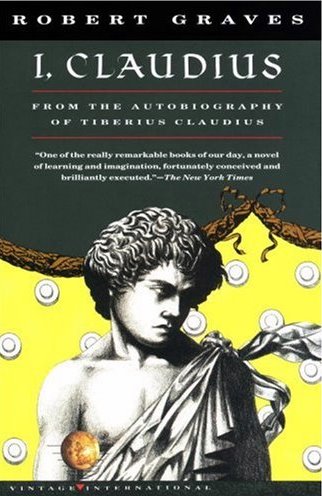
i-claudiusIt includes Steven Saylor’s Roma, Robert Graves’s I, Claudius, Evelyn Waugh’s Helena, Colleen McCullough’s Masters of Rome series, and several books I’ve never heard of.

Dead Writers Don’t Read Blogs

Dead writers don’t read blogs.

It’s a joy to write about Balzac, who doesn’t care what I say about Louis Lambert, a novel that hasn’t been translated into English since the 19th century.

And he has the “Freedom” app, whereby he is barred from the internet for up to eight hours a day (in the Underworld).

And he is also dead.

But I do have to tell you something funny about the living.

See this picture?

Last Year's Booker Judges Charmingly Plant Trees.

Last Year’s Booker Judges Plant Trees.

Last year’s Man Booker Prize judges were planting trees in Leicestershire with the Woodland Trust.

It was confusing, because I couldn’t figure out WHY last year’s judges were planting trees.  Why not THIS year’s judges?

The 2012 judges already read over 100 books twice or something.

So I did some research and discovered they are the fifth panel of judges to plant 12 trees, which somehow represent the 12 books longlisted for the 2012 prize.

It looked like a terrible day for it.

My husband told me the third guy has the best form. That’s Bharat Tandon, a lecturer at the University of East Anglia and the author of two books on Jane Austen.

dan-stevens downton abbey

Dan Stevens is Downton Abbey

But I was wondering:  Where was Dan Stevens?  Stevens, the actor who played Matthew on Downton Abbey, was one of the Man Booker judges last year.

At first I was hopeful that he was the one with the best form, but Tandon can obviously beat everyone at gardening.

I read that Stevens wasn’t there because he was “working in America.”

So here is my idea for Stevens’ Booker PR in the U.S.

A storm wounded and destroyed our maple, and we have to plant a new tree.  I’m sure Stevens would love to plant a tree in (our) nation’s capital.

Oh, well, this isn’t the nation’s capital.  BUT HE WOULDN’T ACTUALLY HAVE TO KNOW THAT.

We could eat bacon cupcakes and deep-fried Twinkies-on-a-Stick.  Honest to God, you can get them here.

Then we could ride our bicycles to Madrid (pronounced Mad-rid, with the accent on “mad”).

And even if Dan Stevens were here, no one would believe he was Dan Stevens.

We don’t recognize famous people.  We’re reserved Midwesterners.

Obama often comes to our city (we’re a caucus state).  And Bruce Springsteen came here with Obama.

But we only recognize Obama and Springsteen.

Blue Woman & Balzac’s Louis Lambert

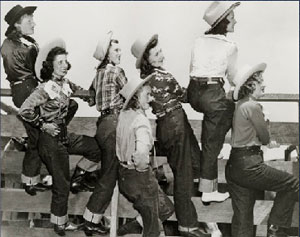
women in jeans

Wash-and-Go Blue Jeans.

Years ago I wrote a story called “Blue Men,” in which the narrator falls in love with a blue man.  I was thinking of Druids.

It is probably in a box somewhere.

I thought of it today when my legs turned blue.

I went on a walk in the snow.  When I took off my boots, I found Druidical blue shadows above my ankles.

I then read the label on my new jeans and it SAYS the color may run.

Now wait.   I dashed into a store and bought the first jeans that fit, expecting them to last for years.  I paid $80.  Does one have to pay $100 for good quality now?

My last pair of jeans a decade ago was cheap and the dye never ran.

The label also suggests I should wash the jeans separately.  Waste of water.

Too late to take them back.

I am now a Blue Woman.

louis-lambert-honore-de-balzac-paperback-cover-artBALZAC’S LOUIS LAMBERTThis tragic autobiographical novel, one of Balzac’s Études philosophiques (“Philosophical Studies”) in La Comédie humaine (“The Human Comedy”), is the story of a tanner’s son who becomes a philosopher.

I am in the total immersion school of reading Balzac.   Reference books?  I don’t have any.

I know little about Swedenborg’s Heaven and Hell, which comes up a lot in Louis Lambert.

This 1832 novel, narrated by “the poet” (Balzac), is the story of Louis Lambert,  a brilliant man with a photographic memory.  The narrator meets him at school and later writes his “intellectual biography.”

The novel begins with Louis’s childhood. At the age of five, after Louis reads the Bible, he walks around town borrowing books.  When he is ten, his mother sends him to live with his uncle, a priest, and study to be a priest to evade conscription.  He reads most of the books in his uncle’s huge library,  “derived from the plunder committed during the Revolution in the neighboring Chateaux and abbeys.”

On  holidays Louis doesn’t want to buy sweets: he goes out every day into the woods with his books and a loaf.

From that time reading was in Louis a sort of appetite which nothing could satisfy; he devoured books of every kind, feeding indiscriminately on religious works, history, philosophy, and physics.  He has told me that he found indescribable delight in reading dictionaries, for lack of other books, and I readily believed him….  The analysis of a word, its physiognomy and history, would be to Lambert matter for long dreaming.”

College de Vendome

College de Vendome

When he meets the Baroness de Stael on a walk, she is impressed that he is reading Swedenborg’s Heaven and Hell, and sends him to the High School at Vendome (Balzac’s alma mater) to free him of serving the Emperor or the Church.

The teachers expected a prodigy: they beat him for doing poorly in his classes.  Instead of doing homework, Louis hangs out with the narrator, and writes a Treatise on the Will (as did Balzac at school).  The teacher takes it away, selling it to a grocer to wrap food, he suspects.

When Louis is an adult, he has trouble coping in Paris.  Part of the novel is epistolary:  a long letter to his uncle explains his interest in philosophy and despair over the materialism; then letters to a woman he falls in love with.

Even in the 19th century translation of Clara Bell, the writing is rich and romantic, the philosophy fascinatingly interwoven with the story.

If there is a newer translation, I have been unable to find it.

Shouldn’t someone have translated all of Balzac for Penguin?