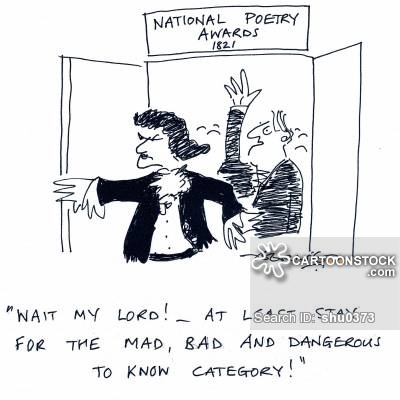
The Art of Bad Poetry

‘Wait, my Lord! At least stay for the mad, bad and dangerous to know category!’

It is National Poetry Month, and I am musing on bad poetry.

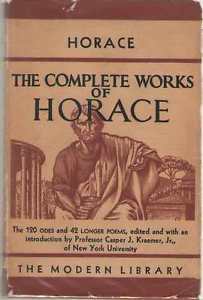
In Ars Poetica (The Art of Poetry), Horace’s charming guide to classical poetry, he traces the history of the genre and explains the elements of writing good poetry.  He also fulminates against inept poets who lack natural talent or knowledge of the art.

The difference between sports fans and poetry fans, he explains, is that sports fans know that they are unlikely to become professional athletes, while every poetry reader believes he can be a great poet.  Although Horace expresses this sentiment elegantly in Latin hexameters, it doesn’t quite come across in English.  Here’s my rough prose translation.

If a man does not know how to play, he refrains from military sports on the Campus Martius,
And if he is unskilled at sports, at ball, the discus, or the hoop, he doesn’t participate,
lest the crowd of spectators laugh at him.
And yet a man who knows nothing dares to fashion verses!

I did laugh.  It is so true:  everybody’s a poet/novelist/critic!

I used to belong to a poetry group. It was fun and therapeutic.  Only one of us, and it was not I, had talent.   Some thought they were as good as our prima, who’d published a few poems in little magazines, but honestly they (we) had a long way to go.  And there was not much grumbling, because our prima was likable, as is so often the case.

What does one do at a poetry group meeting?  Well, we ate homemade cake, gently critiqued each other’s poems, and sometimes did poetry-writing exercises.  (N.B.  There are good poetry exercises on Tuesdays at Poets & Writers.)  We also attended the readings of the few brave who read on Open Mic nights at the coffeehouse.  The great thing about Open Mic nights is that nobody can tell if your poetry is good or bad if you’re a good actor !

Part of what we like is playing the role of poet:  Horace hated that!  He thought it was absurd to pretend to be a poet by neglecting one’s appearance, not bathing, and growing a beard.  Obviously he didn’t know female poets, who spend a lot of time on hair and clothes!

Anyway, here is a poem about poems by Octavio Paz, translated by Eliot Weinberger.  (I hope Horace would approve.)

Proem

Octavio Paz, 19141998

   At times poetry is the vertigo of bodies and the vertigo of speech and the vertigo of death;
the walk with eyes closed along the edge of the cliff, and the verbena in submarine gardens;
the laughter that sets on fire the rules and the holy commandments;
the descent of parachuting words onto the sands of the page;
the despair that boards a paper boat and crosses,
for forty nights and forty days, the night-sorrow sea and the day-sorrow desert;
the idolatry of the self and the desecration of the self and the dissipation of the self;
the beheading of epithets, the burial of mirrors;    the recollection of pronouns freshly cut in the garden of Epicurus, and the garden of Netzahualcoyotl;
the flute solo on the terrace of memory and the dance of flames in the cave of thought;
the migrations of millions of verbs, wings and claws, seeds and hands;
the nouns, bony and full of roots, planted on the waves of language;
the love unseen and the love unheard and the love unsaid: the love in love.

Syllables seeds.
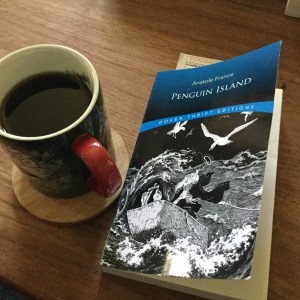
Drinking Coffee While Reading Books: Penguin Island & The Confessions of Young Nero

Welcome to “Drinking Coffee While Reading Books,” a  new column at Mirabile Dictu. Here is an opportunity for me to chat about books without writing a full-length post.

And so here goes!  I AM JUST FINISHING:

The  Nobel Prize-winning French novelist Anatole France’s Penguin Island, a whimsical satire published in 1908.  When we passed this hilarious novel around in school, I chortled over it.  Now I am astonished by the radical lampooning of politics, which I took for granted the first time.

The history of the Penguins begins when the nearsighted monk, Mael, baptizes a group of penguins he mistakes for humans.  The Lord and the saints have a comical theological debate about the muddle.

When the baptism of the penguins was known in Paradise, it caused neither joy nor sorrow, but an extreme surprise.  The Lord himself was embarrassed.  He gathered an assembly of clerics and doctors, and asked them whether they regarded the baptism as void.

And the Lord decides to change the penguins into humans.

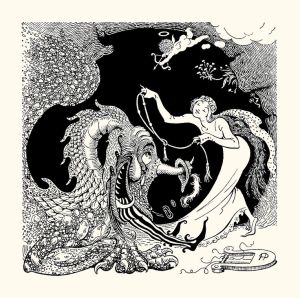
The historian narrator’s distance from these comical bird-people makes this feel like a charming fable.  He starts with the origins of myths and legends, and how they become  history.   Perhaps the most influential legend is the story of the Eve-like Orberosia, a slut who feigns virginity to “defeat” a dragon (her lover has worn a dragon costume so as to steal chickens with impunity).  She is later deemed a saint, with a cult that goes in and out of fashion.  I laughed at the tactics and strategies of Orberosia and the later characters, but as the book goes on the Penguins become more believable and politics become  horrifyingly realistic:  there is even a satire of the Dreyfuss Affair, incited by prejudice against Jews on the part of the Christian clergy and the government.

Very witty and sometimes prescient.    A must-read!  Dover has reissued it in an attractive paperback, with the original illustrations.

AM ALSO READING:

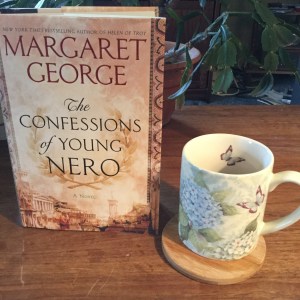
The popular historical novelist Margaret George’s The Confessions of Young Nero.  I have a weakness for historical novels set in ancient Rome, and this one is well-written, fast-paced, and fun. As George says in the Afterword, “This novel is my mission to rescue a gifted and remarkable young ruler, who was only sixteen when he became emperor, from what historian David Braund… calls ‘the extensive fog of hostility, which clouds and surrounds almost all the historical record on Nero…'”

Fascinating!

On Not Ruining Writers’ Days & Other Literary Links

I often complain about the internet, but I have recently read some smart essays online.

I was particularly interested in an essay by Chad W. Post at Three Percent, “Thinking About Book Reviews.” He begins by saying he did not much like Clarice Lispector’s second novel, The Chandelier, recently published by New Directions in a translation by Benjamin Moser.  And Post’s reactions serve as a preamble to an essay on the purpose of book reviews.

Post asks whether reviewers of books in translation should hype books.

I think this is a commonly held belief—especially when it comes to reviews of translated books. There are so few opportunities for most of these titles to get any ink-time, so what’s the point in writing about a subpar book that you don’t really like? These opportunities should be maximized by drawing attention to wonderful books that are masterfully translated. If reviews are supposed to bring readers to particular books, shouldn’t we use this opportunity to direct the curious to the masterpieces out there?

Furthermore, what is gained—for the translation profession as a whole—by shitting on a translated title? Just don’t write/tweet/say anything! There are so many good books out there deserving of attention, not to mention all the great translators doing amazing work—so just write about those.

And then he replies to himself (and the reply is in italics):

But is that really what criticism is? How can the translation profession really improve if these books aren’t ever criticized? Translators, not to mention readers of international fiction, can gain a lot from seeing what works, what doesn’t work, witnessing the mind of a sharp reader in action.

I certainly agree with him on the issue of hype, which applies to all reviews, whether of books in English or translation.  Are we under pressure to  hype?  I seldom post about books by living writers these days, because (a) most new books I read are mediocre to bad, and (b) I don’t want to ruin a writer’s day.  (Reviewing was easier before the interactions on the internet.)

American and English literature seem to be in a slump these days.  If I listed all the new books I have abandoned after reading half we’d be here all day.  New books in translation seem to deal with more significant issues:  is that possible?  I loved Minae Mizumura’s A True Novel, a brilliant Japanese retelling of Wuthering Heights, which won the Yomiuri Prize For Literature in 2002.  (I wrote about it here.)  But I can’t think of any American or English novel I’ve read in this class lately.

But reviews are problematic anyway.  Hype?  Not hype?  New books?  Old books?  What do you think?

OTHER LITERARY LINKS:

At The New Yorker, Karen Russell writes about Joy Williams’ recently reissued second novel The Changeling.

Like Ovid, Shakespeare, Toni Morrison, and God, Williams is interested in metamorphosis, in the “monstrosity of salvation.” Her astonishing second novel, “The Changeling,” first published in 1978, follows Pearl, a young mother on the lam. Pearl’s drink of choice, too, is gin. In the book’s first sentence, she is in a bar, “drinking gin and tonics” while holding “an infant in the crook of her right arm.” Significantly, the booze precedes the infant. His name is Sam; he is two months old. We seem to be in a world of crushing sameness: parking lots and pretzel logs, homogeneous retail. It’s a costume the novel wears for about a paragraph and a half, then shrugs off with a spectacular gesture…

The American Scholar has re-posted a brilliant 2007 essay by Charles Trueheart on Lawrence Durrell’s The Alexandria Quartet

Speak the name Lawrence Durrell, as I have been doing recently, and you will have little trouble prompting the title of his masterwork, the four-novel cycle he called “The Alexandria Quartet.” Yes, everyone read it back when. Or some of it. Justine . . .Balthazar . . . The well of memory tends to run dry about there, leaving only the wistful fragrance of the little remembered but not quite forgotten.

Yet half a century ago, when Justine appeared, it elicited a rush of critical superlatives that announced the birth of a literary classic. Almost at once the novel established an outlandish reputation for Durrell, previously known for a precocious first novel and some sublime travel writing. He was confidently placed in the big shoes of Joyce, Proust, Henry Miller, and D. H. Lawrence, among other modernist forebears. “The novel may indeed be dying,” declared the critic Robert Scholes, “but we need not fear for the future. Durrell and others are leading us in a renaissance of romance.”

ENJOY THE LINKS!

The Future Is So Far Away: Why Do We Buy Too Many Books?

In 2012, Gabe Habash, author of the novel Stephen Florida, wrote an amusing article for Publishers Weekly, “The Wonderful and Terrible Habit of Buying Too Many Books.” One weekend, as he browsed at bookstores in Brooklyn, he bought four books he wasn’t looking for.

He writes, “… you could call this either a habit of mine or a problem of mine. Either way, one thing it is is a pattern, something that repeats itself, that exists in its very repetition…”

According to Habash, who read several posts and online articles about book clutter, compulsive book buyers cut back or stop after they trip over stacks in their home libraries, or have some similar troublesome occurrence.  Then they  weed their “library’s duplicates and never-will-reads or already-read-and-didn’t-really-likes.”

Does this sound familiar?  It does to me. After a stack of books, toppled by an oversized Folio Society edition, fell out of a bookcase in January, I began my desperate weeding, giving away books I’d  already read.  My goal?  To weed the equivalent of two bookcases and have one book-free room.

I try to buy only books I will read. I spend less time in bookstores now.   On my trip to London, I bought very few, by my standards.  At Oxfam?  Nothing in the fiction, nothing in nonfiction, a very few in the literature section.  I found myself wishing I had gone instead to the London Review Bookshop, with its tables of interesting new books. But even the ten books I squeezed into my suitcase and shopping bag seemed superfluous when I got home.

My home library is better than most bookstores.  I was surprised to realize that.  But sometimes books are mere commodities–good for their (or our) time, but not for long.  Are those stacks of the new Kristin Hannah, the latest Richard Powers, or the new Meg Wolitzer, which has been so hyped that I’m leery, going to be read in 10 years?

The future is so far away.

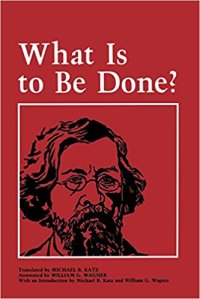
What Is to Be Done? by Nikolai Chernyshevsky

I wrote in one of my notebooks:  “If Nikolai Chernyshevsky had not written What Is to Be Done?, Tolstoy could not have written Anna Karenina .”

What was the source of that statement? Probably a critical essay on Anna Karenina.  It nagged at me for years. But I must admit, the clunky look of my Cornell University Press edition of Chernyshevsky did not attract me.

But this spring I finally read What Is to Be Done?, and  not only did I see similarities between Chernyshevsky’s radical Utopian novel and Tolstoy’s psychological masterpiece, but between What Is to Be Done? and most of the late 19th-century Russian novels I have read.  In the introduction to Michael R. Katz’s translation of What Is to Be Done? (Cornell University Press), Michael R. Katz and William Wagner write:

If one were to ask for the title of the nineteenth-century Russian novel that has had the greatest influence on Russian society, it is likely that a non-Russian would choose among the books of the mighty triumvirate—Turgenev, Tolstoy, or Dostoevsky. Fathers and Sons? War and Peace? Crime and Punishment? These would certainly be among the suggested answers; but . . . the novel that can claim this honor with most justice is N. G. Chernyshevsky’s What Is to Be Done?,” a book few Western readers have ever heard of and fewer still have read.

Chernyshevsky wrote What Is to Be Done? in prison. He asked permission to write fiction in prison, and the novel was published in 1863.    It treats the subjects of the sociopolitical essays he was imprisoned for:   collective ownership, free love, scientific education, cures for poverty,  and other philosophical and political questions.

And, as you can imagine, a novel based on politics has its strengths and weaknesses. Most of the characters are well-drawn, but occasionally we have stick figures who recite ideas.   And at one point, Chernyshevksy describes the economic principles of a sewing collective in such detail that he even includes accounts–needless to say, I skip over anything with numbers.  But the plot, about a feminist heroine who loves two men and founds the sewing collective workshop for impoverished women, is rapid-paced and fascinating. Can you imagine a Utopia that works? It’s a nice change from dystopian Y.A. novels.

What’s more, Chernyshevsky’s narrative techniques seem almost modernist.  A narrator frequently interrupts to question our assumptions and to berate the so-called “perspicacious reader,” whom he finds to be just the opposite.  And even the elaborate structure of the novel seems modernist, or do I mean post-modern? There are actually two bizarre chapters before the preface, regarding a suicide.  And the novel contains four surreal dream sequences, in which the heroine progresses in her personal and political understanding with the help of a beautiful goddess:  she even sees a future world where everything is made of light-weight shiny aluminum!

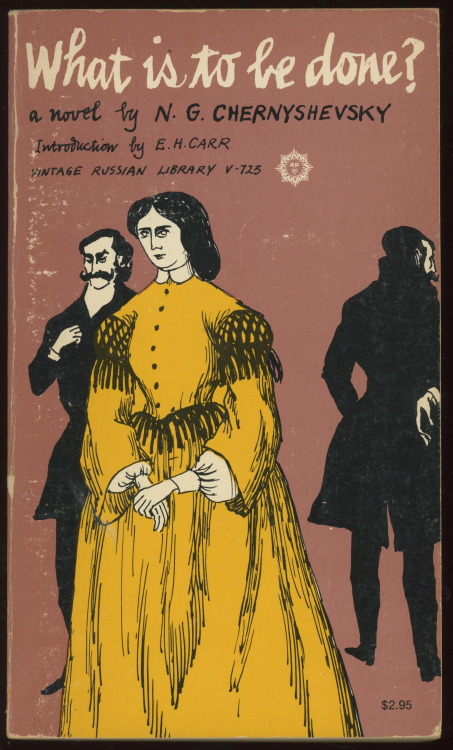
I love Edward Gorey’s cover design!

But without the playful women characters at their parties and winter picnics, the novel would be dry.   The heroine, Vera Pavlovna, may be a type who represents radical beliefs, but she also is smart, passionate, and believable.  When we first meet her, she is a well-educated but stifled young woman living at home. Her  father, a none-too-scrupulous clerk and apartment house manager ,  doesn’t mind pocketing extra money, and her domineering mother runs an informal pawn shop out of their home.  Her mother is trying to marry off Vera to the well-to-d0 ne’er-do-well owner of the house, but he wants to seduce, not marry Vera; and Vera refuses to marry a cad.

Fortunately, she falls into conversation with Dmitri Sergich Lopukhov, a medical student and her brother’s tutor.  Not only do they discuss politics and their reading of radical books and tracts, but they fall in love.  He attempts to find her a governess job, so she can leave her oppressive parents, but the attempt ends in failure:  the most liberal of the employers decides not to hire Vera because, by the law,  Vera is her parents’ property and they could sue.  And that is when Lopukhov decides to marry her.  He realizes that she cannot survive with her parents.  She is contemplating suicide.

Vera blooms with Lopukhov.  In their poor few rented rooms, Vera insists on an unusual arrangement:  they have separate bedrooms, and cannot enter them without one other’s permission.  Vera believes that people who stay in love are those who don’t see each other all the time, and never see each other at their worst.  And it is true that their romance blossoms–for a while.

But what happens when Vera falls in love with Lopukhov’s best friend, Kirsanov?  Will the n0vel turn into Anna Karenina?  Well, no.  The characters are radicals, and they have progressive ideas about love and marriage.  And “extraordinary man,” Rakhmetov, who represents the ideal revolutionary, encourages Vera to continue her unconventional love and work. But the plot takes a bizarre turn that I did not anticipate.

Tolstoy is not the writer most influenced by Chernyshevsky, who, by the way, was responding to Turgenev’s Fathers and Sons and to Herzen’s novel, Who Is to Blame?  But I am such a fan of Anna Karenina that I will make a few observations anyway.   Vera and Anna are both married heroines who fall illicitly in love:  Vera makes a second very happy marriage, but Anna becomes an outcast for living with her lover, Vronsky. As in What Is to Be Done?,  we see several characters  In Anna Karenina involved with social reforms. The  landowner  hero, Levin, is enthusiastic about agricultural reform and wants to create a kind of co-op for the peasants, who are not interested.  He cannot even get them to plant the wheat when he orders it done, let alone understand any kind of profit-sharing.  And so we have Tolstoy’s realism, contrasted with  Chernyshevsky’s idealism.

Really worth reading and lots of fun!  It made me look at the Russian novel differently.

Who are the Edith Hamiltons of the 21st Century?

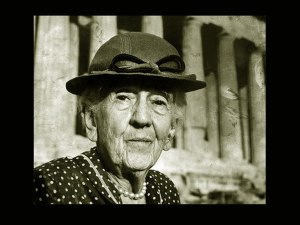
Edith Hamilton

Who is the Edith Hamilton of the 21st century?

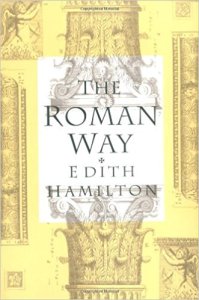
Last November, Donna Zuckerberg wrote an article in the TLS about Edith Hamilton, author of The Greek Way (1930) and The Roman Way (1932), two popular books that inspired millions of readers, among them Robert F. Kennedy, to appreciate Greek and Roman culture. Edith Hamilton was out-of-date when I studied classics in the late 20th century: a professor warned us against Hamilton’s sentimental translations of Greek tragedies.  “Perhaps he was jealous,” a friend later suggested.

But at the (low-paying) posh schools where I taught Latin for a few years after finishing grad school, I sometimes let my students sit and read bits of  The Roman Way (there were old copies in the classroom) after the rigorous exams that jangled their nerves.  They enjoyed The Roman Way, and what’s more, they understood it.  And that is the point, isn’t it?

And so I was wondering as I mused on Edith Hamilton, Who are the popularizers of classics today? I came up with three names.

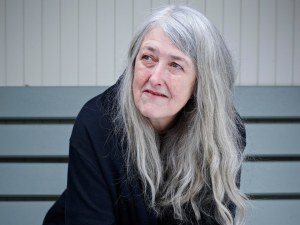
Mary Beard

1.  Mary Beard, a classicist, professor at Cambridge, critic, and the author of several best-selling books, including Women & Power: A Manifesto and SPQR:  A History of Ancient Rome, is a celebrity.   She is the classics editor of the TLS,  a star of a BBC documentary on Pompeii and a series  on Rome, author of the popular blog “A Don’s Life” at the TLS, and a reviewer at the New York Review of Books, the LRB, and the TLS.

Her books are well-written, intelligent, and clear.  She is known for asking questions about accepted versions of Roman history. She is also often interviewed about politics and controversial issues on TV and the radio in the UK.  And she manages to be both popular and scholarly: that is a feat!  Is she the 21st-century British Edith Hamilton (only she gets respect)?

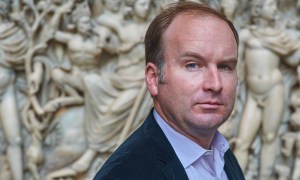
Bryan Doerries

2.  Bryan Doerries is the founder of Theater of War and the co-founder of Outside the Wire,  two  groups that give dramatic readings of plays for soldiers, prisoners, and health professionals. He also translates Greek tragedies.

I admired Doerries’s All That You’ve Seen Here Is God, a collection of his “versions” of four tragedies:  Sophocles’ Ajax, Philoctetes, The Women of Traxis, and Aeschylus’s Prometheus Bound.

Doerries explains that he is not interested in literal translation, though he starts with the Greek text.   He writes that he is trying “to build a bridge between the ancient and contemporary worlds.”

He writes,  “Tragedy is an ancient military technology, a form of storytelling that evokes powerful emotions in order to erode stigmas, elicit empathy, generate dialogue, and stir citizens to action.  When you plug a tragedy into a community that is ready to receive it, the story does what it was designed to do.  Like the ancient Athenian audience in the Theater of Dionysus, the war-hardened Marines who gathered [at one of Doerries’s productions] knew the plays, not as representations of war and its aftermath, but as lived experience.”

His translations are spare and accessible, and the traumas of the heroes are vivid and moving to the military audiences.  What a brilliant approach!  I wrote a longer piece about his book here.  He has also written  The Theater of War: What Ancient Tragedies Can Teach Us Today– on my TBR.

And so he is a 21st-century Edith Hamilton!

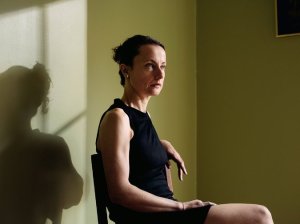
Emily Wilson

Emily Wilson, a professor of classics at the University of Pennsylvania, was the first woman to translate Homer’s Odyssey into English.  She is the author of several other books, among them The Greatest Empire: A life of Seneca and Translations of four tragedies of Euripides, in The Greek Plays, Modern Library: Bacchae, Helen, Electra and Trojan Women.

Wilson was the subject of a profile in The New York Times Magazine last fall after the publication of her translation of the Odyssey.  And isn’t that unprecedented? Amazon was sold out of Wilson’s Odyssey after the profile was published.  I know, because I tried to buy it.

So is she a new Edith Hamilton?

Naturally, there are many, many brilliant classicists, but few manage to be both popular and scholarly. Do let me know any of your favorites.  Or if there are celeb popularizers/translators in other languages–French, Russian, German, Italian, you name it!–let me know.

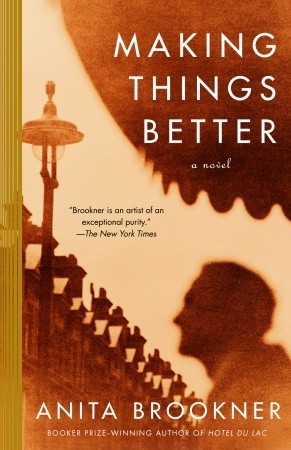
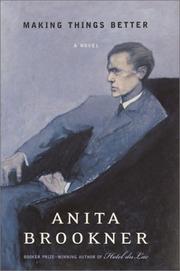
Making Things Better by Anita Brookner

In a recent essay in the New York Times, “In Praise of Anita Brookner,”  Rumaan Alam wrote, “Reading is an intellectual exercise (and as a writer, I can claim it as work) but I binge only when writers offer me pleasure. It’s less graduate seminar than love affair. I endorse this immersive way of reading, especially when it comes to Anita Brookner.”

I am a fan of the Booker Prize-winning Anita Brookner. Her style is elegant and graceful, and I admire her dry humor.  Most of her heroines are single, but it doesn’t matter if you’re single or married:  you can identify, at least on occasion, with the emotions of her solitary heroines. I especially love The Rules of Engagement (which I wrote about here), a novel about two childhood friends who reconnect after they are widowed. They become doubles, much to the narrator Elizabeth’s chagrin.

And so, mesmerized by the New York Times,  I went to my bookcase and took out my copy of Brookner’s 2002 novel, Making Things Better.  It is a perfect novel, but it is relentlessly grim.

The Jewish narrator, 73-year-old Julius Herz, is an uninteresting hero, and yet every detail of his day is made interesting by Brookner.  He has been dutiful, always lived with his parents, and devoted his life to “making things better” for his family.  After they left Nazi Germany and came to England, they lived like mice.  He and his father worked in a music shop. When their employer-landlord asked them to leave the big flat for a tiny flat above the store, they obeyed, but Julius’s wife moved out.  And now he has retired, and the time goes slowly. He takes walks, sits in the park, reads Thomas Mann’s Death in Venice (he prefers Buddenbrooks).  visits the National Gallery, and goes to bed very early.  He enjoys his routine.

He has never had a great passion, though he and his wife had good sex. And now, quite suddenly, he falls in love with his new neighbor, Sophie, a beautiful young financial advisor.  When he accidentally lets her know–a slip of old age, a blurring of boundaries–it is disastrous. He does not understand quite what sexual harassment is.  He goes into hiding,  curtains closed, emotions shut down, leaving the flat only after she has gone out, and feeling hunted.   The lease on his flat is running out.  Could he escape to Switzerland and live in a hotel with his cousin Fanny, who rejected him long ago?  And he realizes, finally, that he has lived his whole life as an exile.

He remembered, almost with impatience, the humble gratitude he had felt when he first took possession of the flat, the amazed delight with which he had furnished it, added to it, his timid pride at being a householder. Now that very timidity saddened him.  He saw that he had lived his life as if it were under threat, as if he still bore the marks of the original menace and of the enormity that might have been his. This, he was convinced, made transience the only option, exile, impermanence, the route indicated for him so long ago.  And it had taken a lifetime for him to understand this!  At last he would take his place in history.  In making his home in a country famed for its neutrality he would be obeying ancestral impulses.  In that direction lay the safety he might yet come to desire.

Making Things Better is brilliant and Thomas Mann-ish, but I miss Brookner’s humor.  And yet why should I expect humor?  This is truly one of the saddest novels I have ever read.

I do love Brookner, but it might be good to drink some cocktails with  little umbrellas in them to cheer you up while you read this.

Wild Poets in Horace’s “Ars Poetica” (“The Art of Poetry”)

Why do we think poets are mad, wild, and disheveled?

Did it begin with Horace?  I have been reading Horace’s  Ars Poetica (The Art of Poetry), a  witty guide to the history and composition of classical poetry.  A little more than halfway through this charming didactic poem, Horace mocks unkempt Roman poets who affect madness. Horace’s hexameters are labyrinthine and his expression of thoughts so interwoven with abstruse ancient culture that English translations are unclear without notes:   if you don’t read the Latin, good luck to you.   Here is my rough, mostly literal prose translation of this passage, with notes in parentheses.

Because Democritus [“the laughing philosopher”]  believed  talent was a luckier advantage than [knowing] the wretched art, and excluded sane poets from Helicon [a mountain sacred to the Muses], most poets do not bother to cut their fingernails, nor their beards; they seek seclusion and avoid the baths.  For a man will obtain the esteem and name of poet if he never entrusts his head– which couldn’t be cured of insanity in the three Antyricas (three towns where hellebore, used to treat insanity, was grown]–to a barber.

This satiric passage seems very modern. Certainly we have met our share of disheveled poets at poetry readings, though I mostly see professor poets these days. Some modern translations of this passage, however, make it more difficult than it already is.   In Smith Palmer Bovie’s 1959 translation, he substitutes Swiss psychiatrists  for the three Antyricas towns where  hellebore grows.  He writes,

For surely the name
And the fame of the poet will attach itself to that dome
Which has never entrusted itself to the shears of Licinus,
Which trips for treatment three times as many
psychiatrists
As even Swiss harbors have failed to set straight.

Bovie’s translation is clever but too coy for my taste. Swiss psychiatrists in a Roman poem composed in the first century B.C.?  I  finally remembered “dome” used to be slang for “head.”  But it was only after I read the Latin that I realized Bovie was trying to update the Latin passage  for a 20th-century audience.

Are modern poets mad?  Certainly  many have had depression or manic-depressive illness (bipolar disorder):   Edgar Allen Poe, Edna St. Vincent Millay, Ezra Pound,  Robert Lowell,  Sylvia Plath, Anne Sexton, to mention a few.    Some believe madness is part of creativity. Personally, I think it must have hindered their work.  Think of how brilliant they would have been without that pain.

Who are your favorite mad poets?  And what is your theory?   Does madness enhance or obstruct creativity?

In Praise of Free Ebooks: Two by Monica Dickens and One by Howard Spring

‘It was a real scroller. I couldn’t put down my screen.’

A headline caught my attention last month at The Guardian: ‘Ebooks are stupid’, says head of one of world’s biggest publishers.”  Arnaud Nourry, CEO of Hachette Livre,  told a publication in India:  “The ebook is a stupid product. It is exactly the same as print, except it’s electronic. There is no creativity, no enhancement, no real digital experience.”

What a confusing description of the e-book!  If it’s “exactly the same as print,” why is it “stupid”?  The gist of the article is that e-books are unprofitable for publishers.

I love books, but I also love e-books.  Personally, I think the e-reader is a very “smart” product. We now enjoy access to out-of-print titles for free in e-book form at the Internet Archive.

Here are three stunning free e-books you can download at Internet Archive!  Monica Dickens and Howard Spring are two of my favorite middlebrow authors.

Two by Monica Dickens.

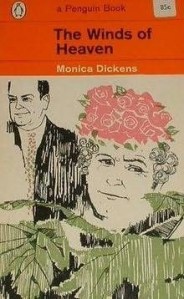
The Winds of Heaven by Monica Dickens, a brilliant novelist and memoirist.

The heroine, Louise Bickford, a  57-year-old widow, is a superfluous woman.  She is unwanted, shunted from one daughter’s house to another’s. Her winters at  a friend’s hotel are equally stressful, because her friend moves her out of a nice room into an inconvenient  corner for the sake of a customer.  And then one day in London,  Louise is at a tea room and meets Gordon, a kind, obsese man who writes her  favorite pulp mysteries.  Their friendship inspires her to become more independent.  It takes time:   her daughters will not let her apply for a job at a department store.  The book is charming, realistic, and comical!

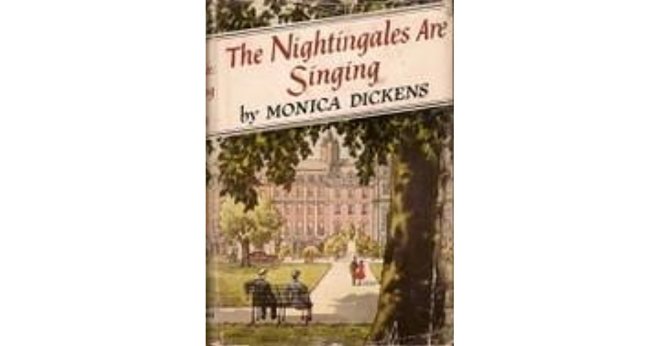
The Nightingales Are Singing by Monica Dickens.  Set in post-war London and Washington, D.C., this fascinating novel is part domestic comedy, part  analysis of a marriage.  The unmarried 34-year-old heroine, Christine, head saleswoman of the  book department at a department store, is known as “the estimable Miss Cope.” She “moved calmly about the alleys between the bright new paper jackets, knowing that book customers liked to take their time, unlike the thrusters who stampeded through the Notions with never a moment to spare.” She finally meets a man, an American naval commander who wants to marry her.  He gives her family much-appreciated food that Americans have access to.   Christine does not particularly like him but she does not want to end up like Aunt Jo, a spinster.  In Washington, D.C.  she must adjust to her  husband’s conservatism and a new culture.

Parts are screamingly funny.  When they move to a new house, Christine gets scammed by a charming vacuum cleaner salesman, but she insists  to her husband that the vacuum is first-rate.  She takes sewing lessons from a woman who cannot thread the machine. The marriage has ups and downs, sometimes comical, sometimes very sad.  Dickens has written an insightful domestic novel.

One by Howard Spring.

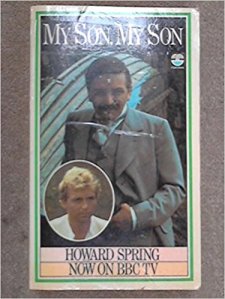
My Son, My Son by Howard Spring.  The Welsh writer Howard Spring wrote several spellbinding novels. In his brilliant, partly-autobiographial novel, My Son, My Son,  he explores the influence of a successful writer’s poverty-stricken childhood on his later relationships–especially the bond with his golden, tragically ruined son, Oliver.

In clear, simple prose, Spring relates this heart-rending story of filial love, success, and ruin.  The narrator, William Essex, is looking back at his life. His childhood was Dickensian:  his mother took in washing;  Bill was taunted and beaten up when he picked up the laundry bundles. When he is 12, a  minister, Mr. Oliver, teaches him to read and gives him a job. When Bill commences work as an office boy, he meets the most  faithful friends of his life: he rooms with the O’Riordans, who read Dickens aloud after dinner, and their son, Dermot, an Irish radical patriot who has never been to Ireland,  dreams of making handmade furniture as beautiful as that of William Morris.  Eventually, Bill marries for money and becomes a writer.  But when Dermot carves wooden toys for Bill’s son, Bill suggests they go into the toy business together.   And so both men make a fortune, and at the same time have time to perfect their arts, Bill in writing and Dermot in furniture-making.

Bill and Dermot want their sons to help them fulfill their fantasies, but Bill spoils Oliver, who becomes a liar, cheater, and general ne’er-do-well.  Dermot raises his son Roray as an Irish radial and perversely ships him to Ireland when he is in teens.

This well-written, well-crafted fast read creates a believable world–and, yes, it makes you cry, so be prepared to wallow!

Ursula K. Le Guin’s Rocannon’s World & No Time to Spare

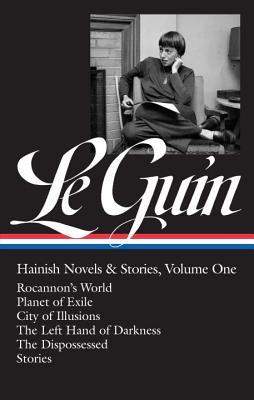
Last year the Library of America  published two volumes of Ursula K. Le Guin’s Hainish stories and novels. I was not familiar with  her early work:  I began reading her in the 1990s.  My favorite of her books is The Birthday of the World and Other Stories.  I also admire her famous novel, The Left Hand of Darkness.

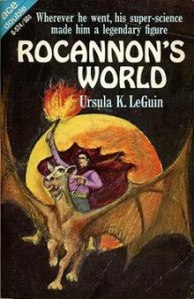
I recently finished her first novella, Rocannon’s World, a simple, endearingly awkward effort that does not, I must stress, presage her later brilliance.  It is an uncomplicated swords-and-sorcery fantasy, albeit with an anthropologist hero, primitive races in need of the future’s help, and a queen who wastes years traveling in a spaceship to recover a stolen necklace. It isn’t a bad book; it’s just not something I would ordinarily read.   If you don’t know her work, you should start with two of her SF Classics,  The Left Hand of Darkness, which won  the Hugo and Nebula awards in 1970, and The Dispossessed (both in this volume). And then you’ll understand what she tries to do in her first book.

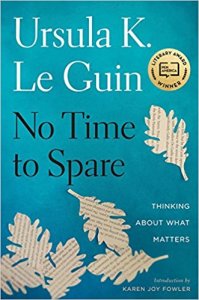
I also recently read her last book,  No Time to Spare:  Thinking About What Matters, a collection of writings from her blog. She writes in the preface that she was inspired to write a blog after reading Jose Saramago’s blog, which was published in the U.S. as The Notebook.

Some of her blog entries are brilliant.   In the first blog, “In Your Spare Time,” she  asks questions about aging, the future, and the bland prevarications of the Harvard establishment.  She writes analytic answers to an alumni questionnaire she received from Harvard before the 60th reunion of the class of 1951. Le Guin graduated from Radcliffe, which is affiliated with Harvard, but Harvard sent the silly questionnaire.  She points out how shallow the questions are.  Question 12 asks how her grandchildren have done, “given your expectations.”

Actually, I don’t exactly have expectations.  I have hopes, and fears.  Mostly the fears predominate these days.  When my kids were young I could still hope we might not totally screw up the environment for them, but now that we’ve done so, and are more deeply sold out than ever to profiteering industrialism with its future horizon of a few months, any hope that coming generations may have ease and peace in life has become very tenuous, and has to reach far, far into the dark.

She comes right out and says what she thinks, not softening it.  She can sound a bit cranky, as she summarizes her political views in the coded language of sociology–and I don’t always agree with what she says–but what she says is always thought-provoking.

She is incensed by the imprecise language on the questionnaire, and what she sees as right-wing assumptions.  And then there is the lack of knowledge about old age.  She writes,

But it was Question 18 that really got me down. “In your spare time, what do you do?  (check all that apply).”  And the list begins:  “Golf…”

She asks, Do people in their eighties have “spare time”?   She writes about how people nowadays are programmed to be on a treadmill of activities, but her  generation grew up with time to read, write, and daydream. She says her time is fully occupied:  she embroiders, writes, shops for groceries, cooks, washes the dishes, construes Virgil, and reads Krazy Cat.  She says Harvard relegates her writing of poetry and prose to “a creative activity.”  As more and more of her time is devoted to body maintenance, an aspect of aging that none of us likes to think about, she finds Harvard’s questions absurd and infuriating.

“The Sissy Strikes Back” is also about aging.  She paints a realistic picture of what aging really entails:  it is not “You’re as old as you feel.”  There is pain,  arthritis, the slowing down, needing rides to the grocery store, and luck and money may or may not prolong life: it is not about positive thinking or fitness.

She writes many charming blogs about her cat, Pard.  If you’re a cat person, you’ll love them!  I loved them.  She finds the constant repetition of the word “fucking”  in movies and books boring. Proverbs like “You can’t have your cake and eat it too” make no sense to her.  She also rages about the lowering of educational and moral standards.

Since our betrayed public school system can no longer teach much history or reading, people may find everyone and everything before about twenty-five years ago unimaginably remote and incomprehensibly different from themselves.  They defend their discomfort by dismissing people before their time as simple, quaint, naive, etc.  I know Americans sixty-five years ago were nothing of the sort.

I agree with so much here.  She is eloquent: I kept marking pages with post-its.  In “About Anger,” she admits on a personal level to jealousy, hatred and fear. She says anger is a mixed blessing in political activism:  necessary but nursed too long it can be destructive.  She hopes “our republic survives this orgy of self-indulgent rage.”  She thinks that the “prolonged ‘festival of cruelty’ in our literature and movies is an attempt to get rid of repressed anger by expressing it, acting it out symbolically.”  (It makes her sick and scares her.)

Her writing is sharp, not quite as polished as her essays, but that’s the nature of the blog.  These are quick, pointed, interesting, and always astute. I