Reluctantly Subscribing to Intellectual Book Review Publications

I recently subscribed to  The New York Review of Books and The Times Literary Supplement (TLS).  Mind you, I didn’t want to.  I wanted to buy a new set of dishes at Target.

But it seems I should “invest” in such publications if I want to “hold the line.”

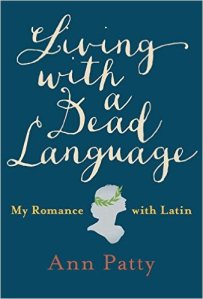
With a few exceptions, mainstream book reviews seem to be going down. Critics say everybody’s a critic:  well, they still need to do their job.  Formerly reliable book pages (The New York Times, The Washington Post, etc.) are occasionally still brilliant, but have acquired a new nervous tone, like a homecoming queen smiling too hard as she coaxes votes from the hoi polloi (οἱ πολλοί). As newspapers fold, editors try to attract a new audience:  they waste space on romances, Stephen King, and “pastel lit” (otherwise known as chick lit”).  God help me, Emma Straub’s Modern Lovers is the fluffiest of beach books, and I read it because Michiko Kakutani reviewed it, and  The Washington Post actually reviewed Ann Patty’s error-riddled Living With a Dead Language:  My Romance with Latin, an inconsequential, poorly-written memoir of her auditing of Latin classes, consultation of “laminated SparkNotes,” and shallow observations on Roman literature. My husband and I, who are both Latinists, refer to Patty, a former New York editor who discovered V. C. Andrews,  as “the new Lucia.”

And to think New York editors blame Amazon for their problems!

All right, so I can breathe again.  The TLS , The New York Review of Books, and The New Yorker are holding the line.

In the “N.B.” column in the TLS (June 15, 2016), J. C. writes about George Gissing.

Some weeks ago, we made a modest suggestion to the editors at Penguin Classics: to publish George Gissing’s disguised memoir The Private Papers of Henry Ryecroft (1903) in a single volume with Morley Roberts’s memoir of Gissing, The Private Life of Henry Maitland. Roberts’s book, published in 1912, nine years after Gissing’s death, is itself an act of disguise. It uses fictitious names for well-known personages – G. H. Rivers for H. G. Wells; Schmidt for Gissing’s friend Eduard Bertz – and for books: for Paternoster Row, read New Grub Street; for The Unchosen, The Odd Women. Distracting at first, this habit eventually has a certain charm; Roberts’s biography is as much a work of the imagination as Gissing’s autobiography. Hence our proposal to Penguin to compensate for its past neglect of Gissing. So far we haven’t heard back.

Oh, what a good idea! I could do with a Penguin set of Gissing.   I recently started Gissing’s brilliant novel, Born in Exile, which novelist and critic D. J. Taylor has said is his favorite book.  I was only able to find a used Everyman paperback, and the print is too small.  I’ve had to turn to the e-book.

And The New York Review of Books (June 23, 2016) is also doing its job.   Daniel Mendelsohn’s brilliant article, “How Greek Drama Saved the City,”  examines the difference between theater in ancient Greece and the modern U.S.  Here is an excerpt from Mendelsohn’s essay:

At the climax of Aristophanes’ comedy Frogs, a tartly affectionate parody of Greek tragedy that premiered in 405 BCE, Dionysus, the god of wine and theater, is forced to judge a literary contest between two dead playwrights. Earlier in the play, the god had descended to the Underworld in order to retrieve his favorite tragedian, Euripides, who’d died the previous year; without him, Dionysus grumpily asserts, the theatrical scene has grown rather dreary. But once he arrives in the land of the dead, he finds himself thrust into a violent literary quarrel. At the table of Pluto, god of the dead, the newcomer Euripides has claimed the seat of “Best Tragic Poet”—a place long held by the revered Aeschylus, author of the Oresteia, who’s been dead for fifty years.

A series of competitions ensues, during which excerpts of the two poets’ works are rather fancifully compared and evaluated—scenes replete with the kind of in-jokes still beloved of theater aficionados. (At one point, lines from various plays by the occasionally bombastic Aeschylus are “weighed” against verses by the occasionally glib Euripides: Aeschylus wins, because his diction is “heavier.”) None of these contests is decisive, however, and so Dionysus establishes a final criterion for the title “Best Tragic Poet”: the winner, he asserts, must be the one who offers to the city the most useful advice—the one whose work can “save the city.”

Today, the idea that a work written for the theater could “save” a nation—for this was what Aristophanes’ word polis, “city,” really meant; Athens, for the Athenians, was their country—seems odd, even as a joke. For us, popular theater and politics are two distinct realms. In the contemporary theatrical landscape, overtly political dramas that seize the public’s imagination (Arthur Miller’s The Crucible, say, with its thinly veiled parable about McCarthyism, or Tony Kushner’s AIDS epic Angels in America) tend to be the exception rather than the rule; and even the most trenchant of such works are hardly expected to have an effect on national policy or politics (let alone to “save the country”). Such expectations are dimmer still when it comes to other kinds of drama. The lessons that A Streetcar Named Desire has to teach about beauty and vulnerability and madness are lessons we absorb as private people, not as voters.

By the way, last fall I wrote a blog entry on “Filthy Jokes in Aristophanes.”  (It is NOT intellectual!  That’s why I need the NYRB.)

Do you have any observations on good, bad, or indifferent book reviews?  Are they “going down?”  Favorite publications?  Favorite blogs?  I know I’ve asked this before.  I need to add some new American blogs to my blogroll! Some of my favorites have quit.

Too Cozy? Not for Me!

After I was hospitalized for an infectious disease cured by trial and error by a smart team of doctors, I was very weak.  I could barely walk from my apartment house to the corner. Kind friends brought casseroles and books. They also gave me a  lot of cozy mysteries.

My friend Ann introduced me to Lilian Jackson Braun’s  charming series, The Cat Who books. The hero, Jim Quilleran, a prize-winning reporter who has left the big city to live in Moose County, solves crimes with the help of his two Siamese cats, Koko and Yum Yum.  Well, the cats don’t help much, but the books are very funny.  Braun wrote 29 novels and three collections of stories between 1966 and 2007.

Lilian-jackson-Braun-Cat-Who-Books-QwilleranMy fondness for cozies has continued since my illness. Sure, I love Golden Age detective fiction, but since 2000 I have also read a slew of trendy new series by women about amateur sleuths who own their own business.  Who knew that female owners of bookshops, tea shops, coffee shops, knitting shops, bakeries, herb shops, and inns investigated so many murders?    Some  are better written than others–I enjoy Lorna Barrett’s Booktown series, Laura Childs’ Tea Shop series,  and Susan Wittig Albert’s China Bayles series–but I love the details about their shops as much as I do the mysteries.  You don’t read these for the style.

I should warn you:  these are very, very, very light.  Perfect to read in a heat wave.

Book-clubbed-MEDI have recently read a couple of titles in Lorna Barrett’s Booktown series.  The heroine, Tricia Myles. owns a mystery bookshop in a small tourist town in New Hampshire.  Her sister, Angelica, a chef, is also in the book business: she owns a cookbook store and a small restaurant, Booked for Lunch.

Lo and behold! Trish finds a lot of dead bodies. And she can solve a crime faster than the police chief (whom she has dated somewhere in the series:  I am not reading them in order).  And you’ve got to love her employees, Pixie, a former prostitute, and Mr. Everett, a retired 77-year-old man whose wife runs a charitable trust.

I started the series in medias res with Book Clubbed.   In the opening paragraph, Barrett introduces the heroine and manages to capture the mood of a slow winter in New Hampshire.

For once the winter weather seemed to be cooperating, meaning that unless any unforeseen complication arose, Tricia Myles, owner of the mystery bookstore Haven’t Got a Clue, would get a lot more accomplished on that particular Saturday in February.  No ice, or snow, and though the sun had not yet made an appearance in Booktown, otherwise known as Stoneham, New Hampshire, the skies were due to clear before lunchtime–hopefully bringing plenty of book-buying customers with it.

Tricia and Angelica have an appointment to look at a private book collection, but Angelica, also president of the Chamber of Commerce,  is late:  she is busy arguing with the cranky secretary, Betsy, who is complaining about having to use the public restroom.  Betsy storms out to take out the trash, and a few minutes later they hear a commotion upstairs.   They find Betsy strangled and crushed by a bookcase.

Nobody liked Betsy, who lived by Robert’s Rules of Order.  And it turns out she was a hoarder and embezzler who also kept incriminating dossiers on everybody in the Chamber of Commerce. Turns out Betsy is a millionaire.  Where did the money come from, and who killed her?

There are also cats on the covers of these books. That’s why my husband thinks I read them.   Tricia’s cat is called Miss Marple.

Lorna Barrett is not Simenon.  I hope I’ve made that clear!

Anthony Trollope’s Rachel Ray & Soho Passport to Crime Series

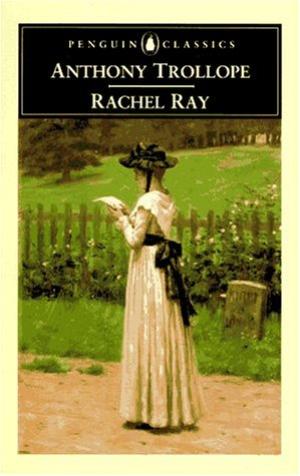
rachel ray trollope penguin 9780140434101-us-300There is one way to cope with the excessive heat: get up early in the morning.

I’ve heard of morning:  sunrise, dew on the grass, and rabbits and squirrels nibbling on grass blades. I stayed up so late the other night rereading Trollope’s Rachel Ray that I considered staying up to see the dawn.

Well, I didn’t make it, but at any rate I loved Rachel Ray. 

When people talk about Trollope, they concentrate on the six-book Barsetshire series and the six-book Palliser series.  Well, I adore both series, but the standalones don’t get the respect they deserve. So I was pleased last year when Adam Gopnik did mention Rachel Ray in his article, “Trollope Trending,” in The New Yorker.

The fun of Trollope lies in his endless multiplicity: people who like “Rachel Ray” turn to “The Three Clerks,” and fans of “The Three Clerks” ask their friends about “Orley Farm.” Yet, beyond saying that his writing feels like life, it’s hard to say just how he works his magic—and a little digging shows that a sense of Trollope as a slightly guilty pleasure has been around since people started reading him.

rachel ray trollope 9780192818096-us-300You don’t hear much about Rachel Ray.  Published in 1863, it is a charming, utterly absorbing novel about love, business, gossip, good beer vs. bad beer, jealousy, politics, and the clergy.  The editor of the magazine that commissioned it rejected the serial because he was offended by Trollope’s lampooning of religion and the clergy.  Rachel Ray was published as a two-volume novel but not serialized.

We all like Trollope’s smart heroines, and Rachel is one of my favorites.  Because of her kindness and beauty, she attracts Luke Rowan, a handsome, smart young man who has moved in with the Tappitts, owners of the local brewery. He has inherited a partnership in the business, but Mr. Tappitt is trying to shut him out.  Luke has a radical idea: why not make good beer as opposed to cheap bad beer?  Tappitt is in a rage and says Luke will ruin him.

The road is not smooth for Rachel, either: women disapprove of her relationship with Luke.   Miss Puckett, a pious spinster, spreads the gossip that she has seen Rachel and Luke walking together at night. Rachel’s older sister,  Mrs. Prime, a minister’s widow, is furious and tells Mrs. Ray, their mother, another widow, about Rachel’s immorality.

You’ve got to love witty Rachel, who says, “Oh, Dolly, do not speak with that terrible voice, as though the world were coming to an end.”

Eventually Mrs. Prime leaves home and moves in with Miss Puckett because of Rachel’s insistence on attending a ball at the Tappitts and her friendship with Luke.

Anthony Trollope

Anthony Trollope

Rachel is a good friend of the Tappitt sisters, Augusta, Martha, and Cherry, but at the ball Luke dances with her repeatedly, even though she tries to discourage him.   Mrs. Tappitt  is furious because she wants Luke to marry Augusta and starts a campaign to destroy Rachel’s reputation.

And because of their disagreement over the business, Mr. Tappitt threatens Luke with a poker, they part, and he spreads gossip about Luke.  But Luke is hardly diplomatic:  he plans to sue Mr. Tappitt for his interest in the business and start his own brewery in the village if Mr. Tappitt doesn’t give in.  Sheesh!  (Does Luke want to start a microbrewery?)

Mrs. Ray vacillates about Luke.  After Rachel receives a letter from him, Mrs. Ray can’t decide whether it is  proper or not.  “He writes as though he means to have everything quite his own way.”  Rachel thinks it is natural.

Mrs. Ray did not quite know whether it was bad in a man or no. But she mistrusted the letter, not construing it closely so as to discover what might really be its full meaning, but perceiving that the young man took, or intended to take, very much into his own hands; that he demanded that everything should be surrendered to his will and pleasure, without any guarantee on his part that such surrendering should be properly acknowledged. Mrs. Ray was disposed to doubt people and things that were at a distance from her. Some check could be kept over a lover at Baslehurst; or, if perchance the lover had removed himself only to Exeter, with which city Mrs. Ray was personally acquainted, she could have believed in his return. He would not, in that case, have gone utterly beyond her ken. But she could put no confidence in a lover up in London.

It’s fascinating and fun, comedy and drama, though mainly comedy.  This 400-page novel is a good place to begin if you don’t want to start with one of Trollope’s huge tomes.

cara black murer in the marais 51WH1LarVRL._SX331_BO1204203200_-200x300Soho Passport to Crime series.

Soho Press has a new Passport to Crime series.  This small press has reissued the first novels in several popular series.  Who says covers don’t sell?  Has anyone read any of these?

The books are:

—The Last Kashmiri Rose by Barbara Cleverly

—Slow Horses by Mick Herron

—Another Sun by Timothy Williams

—The Dragon Man by Garry Disher

—Crashed by Timothy Hallinan

—Billy Boyle by James R. Benn

—Detective Inspector Huss by Helene Tursten

—Outsider in Amsterdam by Janwillem Van de Wetering

—Zoo Station by David Downing

—Siren of the Waters by Michael Genelin

soho crime Jade-Lady-394x600—Death of an Englishman by Magdalen Nabb

—Random Violence by Jassy Mackenzie

—Blood of the Wicked by Leighton Gage

—The Last Detective by Peter Lovesey

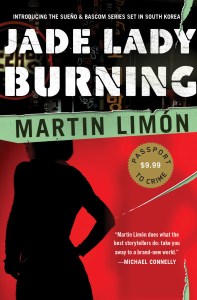
—Jade Lady Burning by Martin Limón

—Murder in the Marais by Cara Black

—Eye for an Eye by Frank Muir

—Converging Parallels by Timothy Williams

—The Boy in the Suitcase by Lene Kaaberbøl and Agnete Friis

—Rock, Paper, Tiger by Lisa Brackmann

—Wobble to Death by Peter Lovesey

—Chinatown Beat by Henry Chang

—The Ghosts of Belfast by Stuart Neville

—White Sky, Black Ice by Stan Jones

What to Read When It’s Insanely Hot: Emma Cline’s The Girls & Barbara Trapido’s Temples of Delight

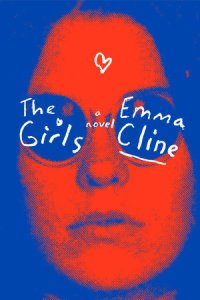
The Girls Cline 9780812998603Wednesday, June 15, 2016.  It’s insanely hot, so I’ve been doing my summer reading because:

  1.  Reading is sweat-free .  Even diehard bicyclists like me drink TWO BOTTLES OF WATER per fifteen miles when it’s 95 degrees and stop for a LEMONADE halfway through the ride.  And we’re still dehydrated.
  2. You can’t garden till night!  because it’s so hot that if you water the flowers in the heat they’ll steam.
  3. Books take you away from your garden-variety internet addiction.  (We’ve all been there.) 

I predict that two novels I recently read, Emma Cline’s The Girls and Barbara Trapido’s Temples of Delight,will one day be considered women’s classics.  Am I right?

Emma Cline

Emma Cline

First up:  Emma Cline’s The Girls.   If you loved Donna Tartt’s eerie first novel, The Secret History, this may well be your favorite novel of the summer.

Told from the point of view of Evie Boyd, a middle-aged woman who at 14 was involved with a Manson-like cult in the Bay area, the narrative shifts back and forth between Evie’s present as an unemployed home aide house-sitting for a friend and her memories of the summer of 1969 when she was a lonely upper-class adolescent with a crush on Suzanne, one of the cult leader Russell’s girls.  Evie did not kill anyone, but she is haunted by her memories.

Cline’s style is hypnotic as she captures Evie’s dreamy passivity.  Evie’s rock-and-roll-inspired dreams of sex and Haight-Asbury make her vulnerable.  She is alone most of the time:  her father has left her mother for a younger woman, her mother is dating, and she and her best friend, Connie, a chubby girl who “swore I could pass for sixteen,”  are growing apart.

Cline knows how to set a mood, and The Girls is more about mood than action.

She writes,

It was the end of the sixties, or the summer before the end, and that’s what it seemed like, an endless, formless summer. The Haight populated with white-garbed Process members handing out their oat-colored pamphlets, the jasmine along the roads that year blooming particularly heady and full. Everyone was healthy, tan, and heavy with decoration, and if you weren’t, that was a thing, too—you could be some moon creature, chiffon over the lamp shades, on a kitchari cleanse that stained all your dishes with turmeric.

Later, when she is in college, Evie recognizes that many girls are nostalgic for the sixties.  But Evie cannot be nostalgic beause of the massacre. She became involved with the cult after she saw a group of girls who held hands and seemed very close.  When she sees them dumpster-diving for food, she is fascinated by Suzanne, a dark-haired beauty.  The next time she sees her, Suzanne is being kicked out of a store as a potential shoplifter.  Evie runs after her and offers to “lift’ the toilet paper, though actually she pays for it.  On another occasion, when her bike breaks down on a country road, the cult’s van stops and one of the girls invites Suzanne to the ranch.  Suzanne tries to discourage her, obviously protective,  but Evie wants to go. She loves the dope and the partying, and occasionally spends the night, sleeping with Suzanne.  She likes the leader, Russell, a persuasive guy who has a reputation for seeing into people’s souls, has sex with all the girls, and believes he will get a record deal because of a friendship he has cultivated with a Gold Record-winning musician.  But she always prefers Suzanne.

Surveys natasha Stagg 9781584351788In the present, Evie  is lonely and friendless.  She almost feels she doesn’t exist because no one ever sees her.  Then there is a “break-in” at the house, which fortunately is only her host’s son, Julian, a drug dealer, and his teenage girlfriend, Sasha, who have come to crash.  Worried about Sasha, she remembers her experiences with the cult.

This fascinating novel reminds me of an equally brilliant debut novel published by a small press, Surveys by Natasha Stagg, which I wrote about here.  In Stagg’s book, the narrator, Colleen, has a job at the mall in a marketing office giving surveys, and loses herself at home in online life.  The internet connects her with a man who used to be famous, and they meet and fall in love and become a famous internet couple.  The narrators of both novels are passive, drifting young women. Perhaps the psychology of this praticular kind of woman is accurate, but don’t you miss confident heroines? Think Margaret Drabble, Alice Adams, Bobbie Ann Mason, or Barbara Trapido.

On to Barbara Trapido!

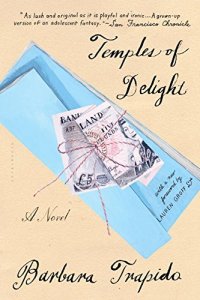
Barbara Trapido Temples of Delight 51qblUAPYWLBarbara Trapido’s Temples of Delight (1990),  shortlisted for the Sunday Express Book of the Year Award, is one of the most charming novels I’ve ever read. Think Dodie Smith’s I Capture the Castle, with a touch of Nancy Mitford and Nora Ephron. Trapido’s sharp, witty novel centers on Alice Pilling, a bright young woman who eventually studies classics at Oxford.  But the main event of her life is her teenage friendship  with  Jem McCrail, who shows up  one day in Miss Aldridge’s  Silent Reading Hour at school.   Jem’s unusual stories about her eccentric family, her ability to recite poetry, and her habit of scribbling her own very good novels in notebooks, make her a star who inspires love and hate equally among the students.
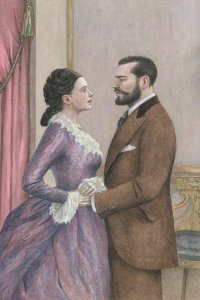
Alice is fascinated by Jem’s quiet comical rebeillion against Miss Aldridge. She does not even skim the book Miss Aldridge gives her.

Jem, Alice noticed, had cast a jaundiced eye over the spine of the Cromwell biography.  She waited for Miss Aldridge to proceed down the aisle before coolly extracting from the toolbag a battered paperback entitled The Leopard, by one Giuseppe Lampedusa.  This she placed  deftly within the covers of the Cromwell biography and soon appeared lost in its pages.

So very funny! It’s one sentence after another like that.

But back to the plot: After Jem disappears (she doesn’t get the scholarship she needs) Alice is lonely.  At Oxford, she likes classics and likes her fellow students but is more or less taken over by Roland, a teacher at a boys’ school whom she meets when he accidentally knocks her over on a tow path.  Roland is very sweet but patronizing toward women, so we’re all happy when she rents a room in the house of an eccentric family who are worthy of Jem’s own stories (and the teenage daughter reads them, because Alice sill has Jem’s notebooks).  Then one day she hears from Jem again.

Just a brilliant book!

By the way, Bloomsbury has been reissuing Trapido’s books.   Last summer I read Brother of the More Famous Jack (winner of a Whitbread special prize for fiction), and I am looking forward to her other books.

The Winner of Anna Karenina Is…

Congratulations, Jean!   Please send your address to mirabiledictu.org@gmail.com

Better luck to the rest of you next time!  It’s all about pulling the name out of the hat.:)

Gosh, It’s Hot! & a Giveaway of the Folio Society Edition of Anna Karenina

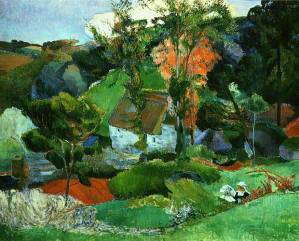
A landscape by Gauguin.

A landscape by Gauguin.

I love the Gaugin-like colors of summer. A couple of weeks ago the scene was as idyllic and golden-green as I’ve ever seen it.  Then the temperature climbed.

Gosh, it’s hot!  It has been in the nineties for almost a week.  But life goes on, and I still bicycle for transportation.

You don’t need to dress up on a bicycle:  shorts and a t-shirt will do. My face is lined and craggy and no nips and tucks will happen so I do automatically put on light makeup before I go out.

And then…

Like the Wicked Witch of the West,  I was melting in the heat. “I’M MELTING, MELTING.”  Well, she melted in water, and I melted in makeup.

As the makeup melted, it produced a strange powdery effect.  I could SMELL the powder.  Ugh. I didn’t feel dehydrated, but I stopped and drank half a bottle of water.

Then I went into the store.  The air conditioning felt good.  But as I was handing over my credit card, sweat broke out on my hands and arms. This is the second time this has happened when I go from the outdoors into air conditioning.  SO EMBARRASSING.

And what’s with that anyway?  Is it a sign of dehydration?  I drank a glass of water before I left home.  How many glasses of water do we have to drink when it’s 92 degrees?  And why does this happen when I go from the heat into air conditioning?

Well, I’m home, and no more sweating issues.

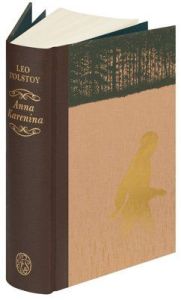
anna karenina folio society 146b1ee977ccb45d7987003937251524A GIVEAWAY OF THE FOLIO SOCIETY EDITION OF ANNA KARENINA.

Last year I bought a used edition of the 2012 Folio Society edition of Anna Karenina (the Maude translation).  The book is very beautiful, and I love the illustrations, but it is simply too big to read lying down.   I prefer a paperback!

The giveaway of this beautiful book is open to Americans or Canadians.  (Alas, the postage is too high to send it farther.)  Leave a comment or email me (mirabiledictu.org@gmail.com) with a sentence or two about why you want it.  There is never a lot of competition here!  And if you want to help with the postage, I’ll accept it, but even that is not necessary.  You’re doing me a favor because this takes up the space of at least two books.

Here’s the Folio Society description:

Translated by Louise and Aylmer Maude
Quarter-bound in buckram with cloth sides blocked and printed with a design by Angela Barrett
Set in Ehrhardt with Bulmer display
Frontispiece and 14 full-page colour illustrations
768 pages
Book size: 9½” × 6¼”

Here is an illustration:

602_p.tif

Poets in Exile: The Tale of Genji, Ovid’s Tristia, and Gilbert Highet’s Poets in a Landscape

tale of genji dennis washburn 51lpKmqt3yL._SX331_BO1,204,203,200_Tonight I’m writing about three books:  Murasaki Shikibu’s The Tale of Genji, Ovid’s Tristia (Sad Things), and Gilbert Highet’s Poets in a Landscape. Don’t worry:  I shall connect them!

First, The Tale of Genji.  I skipped last week’s post on Genji. Sorry.  It is not that I’m not enjoying this eleventh-century romance  (often referred to as a novel) about court life in Heian Japan.  Quite the contrary.  It has vivid characters, and an intriguing, if rambling, plot:  Genji the womanizer has a lot in common with many literary seducers:  Vronksy (Anna Karenina) , Tom Jones, Byron, Count Dracula, and Ovid’s persona in his love elegies.

But most important, this long prose narrative was written by a Japanese woman at the Heian court.

Though women dominated the literature of the mid-Heian period in Japan (who knew?), Murasaki’s Genji is “the supreme prose masterpiece of Japanese literature,” says translator Edward G. Seidensticker.  I  am alternating between Edward G. Seidensticker’s  graceful translation (Knopf, 1976)  and the scholar Dennis Washburn’s solid, readable  one, which has excellent footnotes (Norton , 2015).

Shikibu’s long narrative is easy reading, once you get the hang of it (and a few hundred footnotes!).  She tells the story of Genji, the beautiful, brilliant son of the emperor’s favorite concubine.  Genji is a talented poet and musician who wins competitions in these arts at court.  Everyone respects him.  If only Obama would institute poetry contests in the U.S. government (though most of those senators don’t look too poetic)!

But, alas, Genji is not just a poet:  he is also the immoral seducer of innumerable women.  The love of his life is Fujitsubo, his own father’s consort (yes, astonishing! and isn’t that incest?).  She gives birth to Genji’s son,  and has no choice but to pretend the baby is the emperor’s. The stress and Genji’s badgering after she ends the affair drives  into a nunnery to escape his  attentions after the Emperor’s death.

As you can imagine, Shikibu, a woman writer, admires Genji’s charm but does not  approve the consequences for many of the women. (Heartbreak, pregnancy, trauma, infrequent visits or unwanted visits.)  Some of this is drama, some of this is satire.  There are occasional authorial comments, and she also allows us, in the course of a mostly impartial narrative, a few windows into the women’s minds.

The plot rambles wildly.  In one chapter, the narrative descends into a ghost story!  One of Genji’s most elegant but neglected girlfriends, the Rokujo lady, possesses the spirit of Genji’s sick wife.  A tale of possession!  Genji recognizes her spirit and communicates with her.  And his wife dies!  The Rokujo lady knows things have gone too far, and she follows her priestess daughter out of the city to a temple, despite Genji’s protestst of love.

And then it happens.  Genji is exiled!  Well, it is the result of a court intrigue, and not for anything serious, but he has always gotten away with everything.  He is having an affair with Oborozukiyo, the sister of the spiteful Kokiden, who is the wife of Genji’s late father and is the mother of the new emperor, Suzaki. Kokiden hates Genji and views him as a threat to Suzaki.  She uses his immorality as an excuse to bring him down.  She bullies her son, into stripping Genji of his rank.  Humiliated, Genji goes into exile at Suma.  Shikibu  describes  Suma as a site

 …in ancient times…where the nobility had built villas and estates. He heard, however, that it was now a desolate, deserted backwater dotted with a scattering of fishermen’s huts. He no longer wanted to stay on in a residence where throngs of people bustled in and out, and yet he knew he would certainly be anxious about his household affairs should he go far away from the capital. His predicament left him confused and indecisive.

Ovid the poems of exile 41PN5KVZB3L._SX307_BO1,204,203,200_As a classicist, I was also  reminded of Ovid’s Tristia, a long poem he wrote after he was exiled to an uninhabitable small island by the Emperor Augustus, who was trying to legislate morality,  for carmen et error (a poem and an error).  The island of Tomis was far wilder and unforgiving than Genji’s Suma.  The poem for which he was banished is thought to be Ars Amatoria, The Art of Love, a guide to seduction.

In Gilbert Highet’s brilliant book, Poets in a Landscape, he observes, “Immoral Ovid was, but he had high standards of art.”  Even Augustus laughed at Ovid’s humorous poems about love.  But suddenly…

Ovid was accused of high treason and sent ln to exile for the rest of his life. Aged fifty, he was banished to the remote frontier post of Tomis, now Constanta, on the Romanian coast of the Black Sea.   He lingered there for nearly ten years, writing pathetic letters home, begging the emperor for mercy, protesting his partial innocence; then he died, still unforgiven.  No one to this day knows why the most popular and distinguished poet in Rome was suddenly arrested and expelled from life.  He himself knew, but did not dare to say.

Here is an excerpt from Ovid’s Tristia, III. X, translated by A. S. Kline and posted online.

If anyone there still remembers exiled Ovid,

if my name’s alive in the city now I’m gone,

let him know that, beneath the stars that never

touch the sea, I live among the barbarian races.

The Sarmatians, a wild tribe, surround me, the Bessi

and the Getae, names unworthy of my wit!

While the warm winds still blow, the Danube between

defends us: with his flood he prevents war.

And when dark winter shows its icy face,

and the earth is white with marbled frost,

when Boreas and the snow constrain life under the Bears,

those tribes must be hard-pressed by the shivering sky.

Snow falls, and, once fallen, no rain or sunlight melts it,

since the north wind, freezing, makes it permanent.

So another fall comes before the first has melted,

and in many parts it lingers there two years.

The power of Aquilo’s northern gales is such

it razes high towers, and blows away the roofs.

Men keep out the dreadful cold with sewn trousers

and furs: the face alone appears of the whole body.

Often their hair tinkles with hanging icicles,

and their beards gleam white with a coat of frost.

Wine stands exposed, holding the shape of the jar,

and they don’t drink draughts of mead, but frozen lumps.

Shall I speak of solid rivers, frozen by cold,

and water dug out brittle from the pools?

The Danube itself, no narrower than lotus-bearing Nile,

mingling with deep water through many mouths,

congeals, the winds hardening its dark flow,

and winds its way to the sea below the ice:

Feet cross now, where boats went before,

and horses’ hooves beat on waters hard with cold:

and across this new bridge over the sliding flood

barbarous wagons are pulled by Sarmatian oxen.

I’ll scarcely be believed, but since there’s no prize

for deceit, the witness should be given due credit:

I’ve seen the vast waters frozen with ice,

a slippery shell gripping the unmoving deep.

Seeing was not enough: I walked the frozen sea,

dry-shod, with the surface under my feet.

NOTE:  Alas, Genji got to go home, but Ovid had to stay at Tomis for life


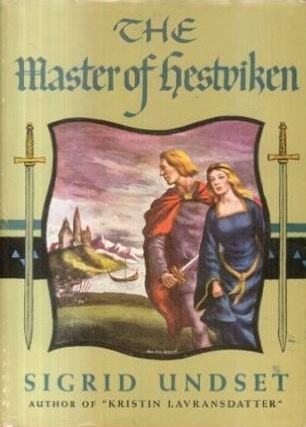
Sigrid Undset’s The Axe, the First Volume of The Master of Hestviken

the master of hestviken undset 983079

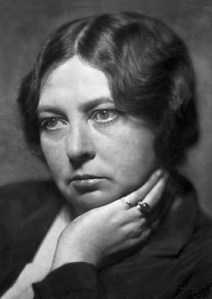
We were at the Waffle House when an artist friend recommended Sigrid Undset, a Norwegian writer who won the Nobel for Literature. Between teaching and studies I had little leisure in graduate school, and I laughingly wondered if Undset (1882-1949) might be too modern for a reader who spent her days with the Presocratics, Cicero, and Bradley’s Arnold.  He teased me because I was a fiction junkie who crawled into bed every night at eight with Dickens or Mrs. Gaskell.  He thought I needed to venture beyond the nineteenth century in my reading.  He was a wild artist.

Sigrid Undset, 1928

Sigrid Undset, 1928

Summer came, and I was free, if exhausted.  Bleary-eyed and insomniac, I found a copy of Undset’s trilogy, Kristin Lavransdatter, at a used bookstore.  I  felt a special bond with Kristin, a brilliant and practical but troubled Catholic heroine in the Middle Ages.  These gorgeously-written novels, The Bridal Wreath, The Mistress of Husaby, and The Cross, published in the 1920s, chronicle Kristin’s life from childhood through old age.  Kristin’s difficulties with many different kinds of love (filial, marital, maternal, religious) resonate with so many of us.  In 1928 Undset won the Nobel Prize for literature, “principally for her powerful descriptions of Northern life during the Middle Ages,” says the Nobel Prize website.

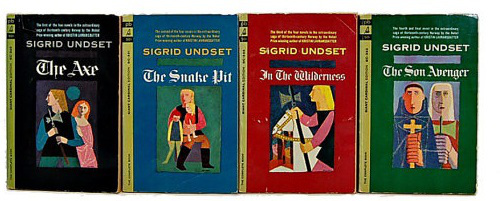
After a recent rereading of Kristin, I wanted to go back immediately and start it again.  But I decided instead to reread Undset’s tetralogy, The Master of Hestviken, also set in medieval Norway.  It is stunning, though its characters are less sympathetic.

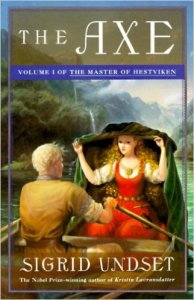
Originally published between 1925 and 1927, it follows the fortunes of Olav Audunsson and Ingunn Steinfinssdatter.  In The Axe, the first volume, they are betrothed as children at a banquet.  But the loves and crimes of Ingunn’s parents, Steinfinn and Ingebjorg, rock the future for the next generation and threaten to obstruct the marriage. The entire family is living in a kind of Golden Age paradise and blissfully ignorant of what lies in store for them.  Ingunn, a tomboy, plays outdoors with her brothers and Olav (Stienfinn’s foster son) while her lovely younger sister prefers the duties and pursuits of women.

undset set masterThen violence interrupts their idyll.  Year ago, when Steinfinn fell in love with Ingebjorg, she was already betrothed to Mattias.  When Ingebjorg’s father rejects  Steinfinn’s suit because of this betrothal, Steinfinn  didn’t take the rejection seriously and the next year “abducted” the willing Ingjborg.  The two lived as if married, but could not legally marry, even though they had children.   When Ingbjorg was pregnant with her third child, the Queen intervened so the couple could marry..  But seven years later, Mattias, the man  originally betrothed to Ingebjorg, invaded their house with an armed band of man and took his revenge, tying up naked Steinfinn and holding Ingebjorg on his lap.  He stops just short of rape.

As you can imagine, violence brings more violence.  Steinfinn eventually takes revenge, and before his death there is a question of whether the children  are really betrothed: Steinfinns suggests it was a joke as a party.  But Olav and Ingunn are already lovers and feel quite desperate.  They consult the bishop, who is on their side, but then hot-headed Olav kills a man in the bishop’s house and is exiled.  Later the bishop is exiled.  Then Ingunn is sent to live with her aunt and spends her days caring for her beloved grandmother, who has Alzheimer’s.  But this is no life for her, and she simply spends years waiting for Olav.  Everyone agrees that he will returne once he is absolved, and then they will be married .

the axe undset new edition 51gayU-j-9L._SX320_BO1,204,203,200_Neither character is as likable as Kristin Lavransdatter or her noble slacker husband Erlend, but I do feel a special sympathy for Ingunn.  Here is a young woman with nothing to do, who lacks the talents and skills of Kristin.  She spends her days dreamily sewing and fantasizing about weddings and imagining being a mother of many children.  Finally her aunt takes her to a wedding.

At the great wedding she had been made to wear bright-colored clothes, a silver belt, and floating hair. At the time she had only been shy and confused.  But it left its mark in her.  When she was back in her grandmother’s room at Berg, new images floated before her mind–she saw herself walking with Olav, jewelled and glorious–it might be in the palace of some foreign king; this seemed to compensate for all these years she had sat in the corner.

Poor Ingunn!  She is completely, tragically powerless, a woman who needs to be married to fulfill herself.  Not at all like Kristin, but then few are.  She  flirts with a young scribe she met at a wedding.  Then he date-rapes her and she is broken.  Her pregnancy changes her relationship with Olaf, who is a decent man, but there is a double standard here.    This is a feminist novel:  Undset portrays the tragedy of a woman who has few rights and no control over her future.

Not for Classicists: Ann Patty’s Living with a Dead Language

living with a dead language Ann patty 41FjSV93iyL._SX336_BO1,204,203,200_

I am militantly outspoken.  And that’s why I seldom request review copies.

But I could not resist a review copy of a new book with the title Living With a Dead Language:  My Romance with Latin. I am a classicist and former Latin teacher.

Unfortunately, this account of a former editor’s study of Latin is riddled with errors.  (I  pray someone caught them before the publication date,  June 14.).

I felt my blood pressure go up as I read this poorly-edited book (there are more Latin errors than I used to see on my average students’ exams) and finally flung it aside.  Should I write about it or ignore it?  This is not a review but a heads-up:  you would be more likely to want to read Latin if you read Vigil’s Aeneid, a stunning epic poem, or Gilbert Highet’s beautifully-written, scholarly Poets in a Landscape, an eloquent book about the relationship of Catullus, Virgil, Propertius, Horace, Tibullus, Ovid, and Juvenal to the Italian landscape.

So what is the point of this new Latin memoir?  The author, Ann Patty, an editor who discovered the best-selling writer V. C. Andrews (whom I haven’t read) and acquired the rights for Yann Martel’s Life of Pi  (which I have read), was a savvy figure in her field:  she even had her own imprint.   After she was forced to retire (she says 100 people were laid off in a single day)  the days seemed very long.  So she decided to audit Latin classes at Vassar and Bard.

It’s an interesting concept for a book:  it’s a pity it’s so poorly executed.  Well, Patty enjoyed Latin, though at first she wasn’t very good at it.  She got a 6 out of 10 on her first quiz and an 85 on her first test.  When a student offered a tip that flashcards were the key to learning a language,  the willful Patty bought index cards but devised her own system. And I gathered that is typical of Patty.

Always being a thrifty sort, I did not make them, as Camilla did, one word per card, Latin on one side, English on the to her, but rather squashed three words with translations on each card.  I left the back blank, figuring I would need it later.

Such inefficiency!  Tsk, tsk.  The point is to look at the English side of the card, say the Latin to yourself and/or write it down, then check the answer and spelling on the flip side. Later, you repeat the cards with Latin to English.

But that is nought compared to the errors in her exegesis of Latin grammar.

I’ll spare you a course in Latin, but just a few things:

Patty does not understand what is meant by the “mood” of a Latin verb.  She says there are three.  No,  there are four.

The four moods of the Latin verb (a verb is a word that describes an action or state of being) are:

1. the indicative –  states a fact.  EXAMPLE:  “She runs, she praises, she sings, she dances, etc.”

2. the subjunctive:  states a possibility.  EX.: “He may run, might run, would run, etc.”

3. the infinitive:  states the action of the verb without a subject. EX.: “To run, to praise, to sing, to dance, etc.”

4. the imperative:  a command.  EX.: “Run!” “Sing!”  “Dance!”

Patty claims there are only three Latin verb moods, but then hedges her bets with five add-ons:  she identifies  “indicative, subjunctive, imperative, plus the infinitive, participle, gerund, gerundive, and supine.” The last four are not verbs or moods of verbs:  the  participle and gerundive are verbal adjectives, and the gerund and supine are nouns.

All right, that’s enough grammar for you guys today!  But the editors needed a classicist to  proofread it.  She does say in the acknowledgements that “the Latin teacher Curtis Dozier: saved the  book from being a a mess of errors,”  but it is unclear whether he read the book, because she  also refers to him as summum magistrum (accusative case) rather than summus magister (the correct nominative case).

I don’t know whether she’s more naive or pompous.  Bits of autobiography are mixed haphazardly into the narrative.  Her observations on Roman literature are so pedestrian I was embarrassed.  I am shocked (yes, I’m a schoolmarm) that she uses SparkNotes to help her with Catullus.  And her tedious sections on etymology need editing, though I gather this is what interests her.

In short, this book needed much more work.  David Denby’s stunning Great Books, an account of his return to Columbia to study literary and philosophical masterpieces in core humanities classes, would have been a good model.

If any of you read it, please let me know what you think.  Perhaps if you don’t know Latin…?

The Summer Reading Kit & Three Literary Links

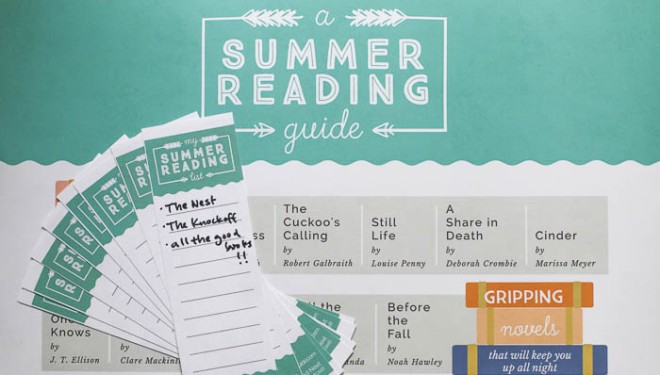
Mrs. Modern Darcy's Summer Reading Kit

The Modern Mrs. Darcy’s Summer Reading Kit

Do you long to spend your vacation in a hammock catching up with Daniel Deronda or The Tale of Genji?   Though summer reading has a reputation for being dumbed-down, many of us love to combine a classic with mysteries and pastel-colored beach books.

And there are plenty of recommendations on the net, because. as the critics like to say, everybody’s a critic.  If you’re looking for down-home suggestions, some serious, some light, visit the blog Modern Mrs. Darcy and sign up for her Summer Reading Kit.

“Mrs. Darcy” has designed the Summer Reading Kit for librarians and “bookish enthuisasts.”

She writes,

To inspire your patrons in their reading journey, I’ve created a summer reading poster (sized 18×24) that lets patrons see 30 absorbing, high-interest titles at a glance. These titles are from the Summer Reading Guide (which many librarians are already using as a summer reading resource), and they’re organized by category so readers can easily see what books will appeal to them.

I’ve also created summer reading bookmarks that double as a reading list. Patrons can jot down titles they hear about from you or anyone else so they don’t have to agonize over what to read next after they finish a great book.

I certainly would love those bookmarks.

THREE LITERARY LINKS

hold still by strong 256228941.  There is a fascinating interview at The Rumpus with Lynn Steger Strong, author of the novel Hold Still, in which the main character, Maya, is obsessed with Virginia Woolf.

Filgate writes,

As soon as I was introduced to Lynn, we immediately bonded over our shared love for running and Virginia Woolf. When I found out that her debut novel Hold Still has to do with both, I moved it up to the top of my gigantic to-be-read pile, and I’m so glad I did. Hold Still is about an English professor who has to reckon with a terrible mistake her daughter made, one that tests their already shaky relationship. But trying to sell the book on the plot alone takes away from the true backbone of this novel. Open it for the story; read it for the sentences that stay with you like a gift.

2. Nan at Letters from a Hill Farm writes about leaving Facebook.

Some of my readers may have noticed me around the blogging world a little more often recently. That’s because I quit Facebook on Saturday April 23. I initially joined two years ago just so my kids wouldn’t have to bother to send me text photos of pictures they had posted on Facebook. But it grew and grew. You know how it goes. Someone asks to be your friend, and you think of people you ought to send a friend request to, and boom you’ve got a whole bunch of Facebook friends. There were very occasional requests that I did not accept. But I still ended up with some friends that I barely knew or had never met. I’m not the kind of person to ‘unfriend’ so I’d keep getting information from them. I connected with some high school friends, and just like when I was actually in high school, there were some people I liked and others not so much. A lot of my friends were younger, Margaret’s friends, who so very kindly welcomed me. At first it was loads of fun but then it was not fun anymore. There were too many notifications and too many items in my feed. It was too busy, too quick.

all fall down image003.  At A Penguin a Week, Adam Gee writes a guest post about James Leo Herlihy, a writer best known for Midnight Cowboy.

Gee writes about his debut novel, All Fall Down.

When I pick up an old Penguin I’m hoping for a surprise – something off-beat, long neglected, out of left field, a lost gem. ‘All Fall Down’ delivered.

It’s the first novel from the Detroit writer who went on to write ‘Midnight Cowboy’ five years later in 1965, James Leo Herlihy. It’s a coming of age story in the heritage of ‘The Catcher in the Rye’, a decade in its wake. It follows the growth of Clint Williams from an isolated, uncommunicative 14 year old to an emerging adult with the capacity to care and love.

I hope to find a copy one day!