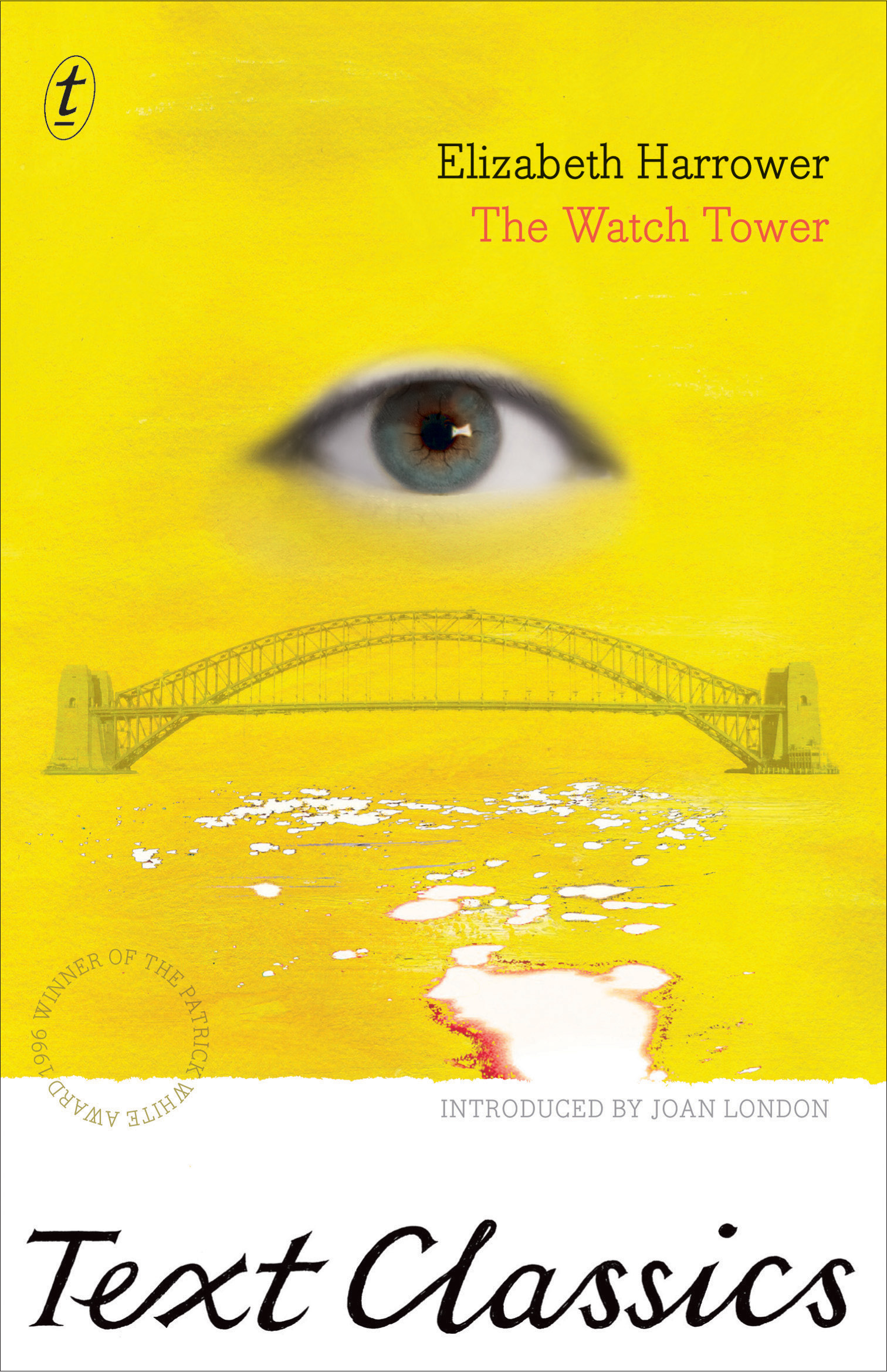
Elizabeth Harrower’s The Watch Tower

harrower the watch tower text 9781921922428Last fall I added the Australian writer Elizabeth Harrower to my TBR list after reading James Wood’s fascinating essay in The New Yorker, “No Time for Lies:  Rediscovering Elizabeth Harrower.”  Her critically-acclaimed books, published in the 1950s and the ’60s, have been reissued by Text, an Australian publishing house, along with her never-published novel, In Certain Circles, which she withdrew before publication in 1971.  I recently read In Certain Circles (the e-book is on sale for $2.99), and found it beautifully-written, if a little stagey.  But the novel I want to write about is The Watch Tower (1966), deemed her best book by Wood.

The Watch Tower is riveting and suspenseful.  Harrower’s crystalline prose is sharp and precise. It begins like one of those Rumer Godden novels in which children observe dark adult intrigues and only gradually put together the pieces of the puzzle.  Stella Vaizey, the mother of Laura and Clare, is yanking them out of boarding school.  In the headmistress’s office, she announces, “Now that your father’s dead, the three of us are going to live together in Sydney.”  Miss Lambert, the headmistress, hopes to keep Laura on a scholarship, but  Mrs. Vaizey is firm.  She does not value education.  What she does value is her leisure.

In their small flat in a suburb of Sydney, she does absolutely nothing.  She lies in bed while the children attend school and do housework, the shopping, and the cooking.  Laura is sent to secretarial school so she can support their mother:  she gets a job at a box factory.  When the fees are too high for Clare’s not-very-good school, Mrs. Vaizey suggests that Clare should go to an even worse school nearby.

The girls are completely isolated and know no one. They know from devouring books that other people have friends.   One day Clare wants to know why they can’t speak to strangers.  The sad thing is that it is not strangers they need to fear:  it is the ones they know and love. Responsibility has killed Laura’s liveliness and curiosity.  Clare is the one who questions their way of life.

It was true.  If you knew no one, Laura thought, and were not allowed to speak to someone till you knew him or her, how would you ever get to know anyone?  Because you were unknown yourself, and could not be approached either.
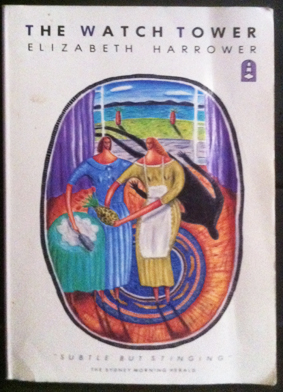
the watch tower old copy harrowerThen at the beginning of World War II, the worst thing that can happen happens.  Their  mother announces she is moving to England without them.  Laura must now support Clare.

If you are deserted by a parent (my father, who had custody of me, moved to another town to live with his girlfriend when I was 16) , you find yourself announcing at random that you need someplace to live.  There are good people (Doris Lessing took in the writer Jenny Diski when she was a teenager, though this wasn’t bliss) and bad people (the ones who expect you to have sex with them).  One of the things you learn is that you never talk about this period of your life to anyone.  “I think I’ve got my virginity back,” a friend who also was on her own in high school anxiously told me.  Like me, she was secretive about her past, and like me, she was studying classics at the university. Ovid was banished to an island for carmen et error.  We feared that we, too, would be banished if anyone knew about our teenage years.

In The Watch Tower, Laura’s very odd, middle-aged boss, Felix, offers to marry Laura and pay Clare’s school fees when he hears about their mother’s departure.  Like children in a fairy tale, Laura and Clare are enchanted by his beautiful big bungalow with the garden.  It will be their house.

But living with Felix is an even a worse trap than living with their mother.  Felix is abusive, misogynistic, sadistic, and often drunk.  Every time he gets rich, he sells his business at a loss to whatever man he has a crush on, and takes it out on Laura  because the man deserts him after the sale.  Clare iescapes into Russian novels; she eventually gets a job in a government office, and has more freedom than Laura.  But Laura is forced to spend all her time with Felix, at the office by day, going over the accounts at night.  He calls her names and viciously crushes her self-respect.  Sometimes he is violent.    She does not believe she could leave Felix and find a job.

Who could break out?  Who could do more than marvel dully at survival?  Who had energy and initiative now to spare for what was merely reasonable?  What promise had the world held out ever that there was anything to escape to?  What was there to desire in this nightmare but the cessation of strain?

Is there a way out?  Clare thinks there is.  And when they take in a young man, Bernard, who collapses at the factory, Felix calms down for a while.  But Laura, the abused and battered woman, behaves much as abused and battered women do.  She is now a quiet, mousy wreck, dependent on Felix, though she is also a brilliant businesswoman.    Her home is the only thing she believes she has.  She does not want to leave her home.

This is a great, brilliant classic, and I look forward to reading Harrower’s other books.
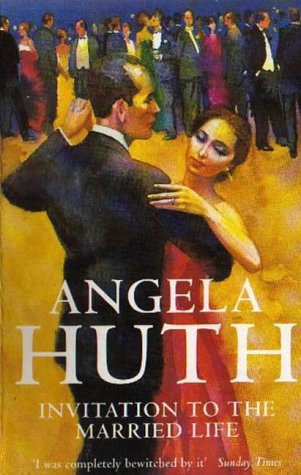
Angela Huth’s Invitation to the Married Life

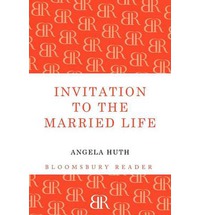
Invitation to the Married Life huth 516137F8QKLThere are some books I read again and again:  Monica Dickens’ The Winds of Heaven, Pamela Dean’s Tam Lin,  Margaret Drabble’s The Garrick Year, and Dodie Smith’s I Capture the Castle. Sometimes a small perfect book can give as much pleasure as a classic.

Angela Huth’s Invitation to the Married Life is another of my favorite rereads.  In this charming novel, which has the feel of a Shakespearean comedy, Huth explores the changing face of love in middle age.  She tells the story of four married couples, two of whom are contented, two wretched.  As they receive invitations to a ball in Oxford to be given by the wealthy Fotheringoes (perhaps the novel’s least happy couple)  in four months, their reactions tell us about their relationships.

Rachel Arkwright, my favorite character, a neglected wife and mother of two grown children, opens the invitation at breakfast while she is waiting for her irritable husband, Thomas, to go to work. She must open letters quietly and turn pages slowly so as not to disturb him, but is so excited about the invitation she forgets.

There he was, a caricature of a husband, almost completely hidden–guarded against her–by the Daily Telegraph (he had presently switched from The Times).  Two pinkish blobs of fuzzy-backed hands held the pages wide open.

When she opens the invitation and asks Thomas if she should accept, she is suffused with joy when he ungraciously says,

I suppose so.  You obviously want to go.  Though what the middle-aged want to give balls for I can’t imagine.  A more ridiculous way of spending money–“

Invitation to the Married Life huth Rachel has a secret life:  she sleeps every afternoon in her beautifully-refurbished bedroom with its soft bed and expensive linens.  She has a degree in law, but here is a woman who has her priorities right. The nap rejuvenates her, and makes her happy.

Thomas thinks parties for the middle-aged are absurd because he does not find middle-aged women attractive:  he is fixated on younger women, and has no idea that he has grown fat and less attractive to the young.  Planning to break up with his current girlfriend, he wanders into an art gallery and falls for an etiolated young woman who rejects his advances.  But  she is the daughter of the artist, R. Cotterman, whose paintings he buys, and she sends him to her mother’s house.  He is determined to fall in love with Rosie Cotterman before he even meets her.

Mary and her husband Bill, a retired naval man obsessed with time tables, are busy with the upkeep of their country house and the woods.  They are happy with their quiet life, and Mary is not excited about the party.   But Bill insists that she must go to London for a new dress, and reminds her that they can stay at their  daughter Ursula’s in Oxford. When Bill dies and Mary attends the party with her neighbor, Rosie, everyone supposes she must be devastated. But Mary is still happy and peaceful, and is relieved to know that she can continue living happily on her own.

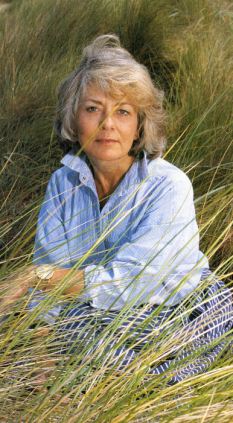
Angela Huth

Angela Huth

The gorgeous Ursula needs the party less than anyone.  She has a perfect life:  she is madly in love with her husband, Martin, an Oxford don,  is the mother of two charming children, and has a friend, Ralph, who believes he is in love with her. Ursula likes her work as a garden planner, though she must compromise with clients who know nothing about nature.   There is just one flaw in her happiness: she hates living in Oxford, and her husband, who works there, sees no reason to move. And then she is often annoyed by Ralph’s lovesick puppy-dog manner.  She teases Ralph,

You know why I think Frances has these parties?  Apart from something to do?  Her real reason is so that she has a chance to dance with you.”

No man and woman can be less compatible than Toby and Frances Fotheringoe. Toby is a computer genius and a nature lover who watches badgers at night in the woods. Frances is a very lonely woman who plans parties to have something to do and to be noticed.  She pays almost no attention to her daughter.  She wants very badly to find some kind of work, perhaps as a designer in the theater.  But at the party itself, she will hook-up with the band leader, who thinks he can find her work as a party planner.  And as for Toby…well, we don’t see that coming.

Who belongs with whom?  Some of the answers are quite surprising.  A ball in middle age shakes people up just as much as it does in youth.

Well, I don’t actually know.  I’ve never gone to a ball, have you?  But I do like Rachel’s reaction.  She finds a bed in a spare room and curls up and goes to sleep.

Rachel has a chance of happiness…

Your True Self Fries Away

Facebook is crack.”–Henry Higgins (John Cho) on Selfie, a cancelled TV show


Karen Gillan and John Cho in "Selfie" (a canceled sitcom)

Karen Gillan and John Cho in “Selfie” (a canceled sitcom about social media addiction)

In a recent review in The Washington Post of the scientist Susan Greenfield’s new book, How Digital Technologies Are Leaving Their Mark on Our Brains,  I was fascinated by her thesis that the internet ruins lives.  She cites a Korean couple whose baby starved while they pursued video gaming.

Although the reviewer Matthew Wisnioski is not a fan of Greenfield, I felt a pang of recognition as I read his recap of some of her evidence. He begins the review:

This is your brain on digital technology. A flick of the thumb sparks a pale glow. You wait for the dopamine rush of an incoming message. Like a pathological gambler, you check again. And again. You feed your narcissistic impulses with tweets. Lacking face-to-face cues, you knock a “friend” down a peg on Facebook. Keeping loneliness at bay, you “like” a few others. Hours of catapulted birds later, you finger the off button. Repeat the cycle. You hardly notice as the synapses of your true self fry away.

How well I know this feeling.   I do not tweet and I do not do Facebook, but  I have certainly been an internet addict. When I first went online the ’90s, I found a site that was rather like Goodreads, except people wrote much longer posts and  IMed constantly.

That addiction, however, was nothing compared to my blogging addiction. When I began Mirabile Dictu a few years ago, I resolved to post every day. Why? I still don’t know. I enjoyed the project for the first year. I enjoyed it less last year. And then I found I was reading less because I posted so much. And that’s frightening, because posting is not, in my opinion, the same thing as writing.

Has blogging ruined my writing? It certainly ruined my reading.  When I discovered that I was reading less, I decided to cut back on blogging.

And so I am carefully measuring out my time online.  Thank God, I have managed to read one book a day this year.  Because that’s who I am, you know?  A reader.

The internet can be a good thing or a bad thing.  Blogging is a wonderful opportunity to express our love of books, and I have become acquainted with several bloggers and generous writers who agreed to be interviewed here.  .And yet lurking at the back of our minds is the knowledge that many critics and writers mock bloggers.

Didn’t I tell you about the time Lynne Sharon Schwartz plagiarized a passage from my blog?

Her last novel, Two Part Invention, was a story of plagiarism. Based on the story of Joyce Hatto and her husband William Barrington-Coupe, a recording engineer who snitched musical phrases from other artists and synced them into his wife’s recordings, the novel is a sympathetic take on the couple’s strange enterprise, with names and details changed. The characters don’t quite come to life, the writing is flat, I was ready to put the book down, and then I came to the part where she “borrowed” an incident from my blog.

I had posted about trying to get ice for my mother at the nursing home, and noted that I could push but not too hard because I  didn’t want anyone to hold it against her as a patient. I added a few lines about my mother’s former pushiness when I was in fourth grade.  I wrote,

It’s like the time in fourth grade when she complained to my teacher when I got a B instead of an A in geography. For the rest of the year, the teacher humiliated me by asking, “Are your grades good enough for your mother?”

In Schwartz’s novel:

Her quarterly report card gave him nothing to reproach her with. Until, in the fourth grade, she presented a report card to him as usual for his signature… He gave the report card a cursory glance, a small folded four-sided document on stiff paper that attempted to look official. He was searching for his fountain pen, when he noticed the B+ in geography.

Christ, she didn’t even bother to change fourth grade to another grade .

All right!  I’m over it.

Except for a few little things.

Such as that it’s immoral.

Merriam-Webster tells us that plagiarism is:

  • to steal and pass off (the ideas or words of another) as one’s own
  • to use (another’s production) without crediting the source
  • to commit literary theft
  • to present as new and original an idea or product derived from an existing source

In other words, it is unethical.

I like to get credit for my own work.

It must be quite a blog if sleazeballs think they ought to plagiarize it.

Are they high-fiving each other?

And what on earth must their creative writing students endure if their teachers feel free to plagiarize?

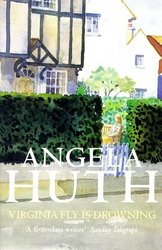
Angela Huth’s Virginia Fly Is Drowning

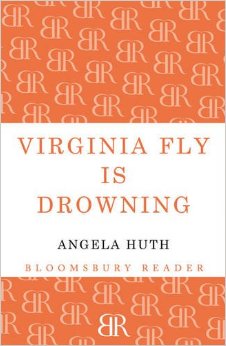
Virginia Fly Is Drowning angela huth 51Hj6TSxrvL._SY344_BO1,204,203,200_One  of the perks of having an e-reader is access to e-books from Bloomsbury Reader, which publishes middlebrow classics by Monica Dickens, Lettice Cooper, and Norman Collins.

And so I have been bingeing on Angela Huth’s charming novels.

Huth is best-known for Land Girls, a delightful novel about three young women who work as land girls on an English farm as part of a program to replace male farm laborers who are away fighting in World War II.

Some of Huth’s novels are even more entertaining.  I especially enjoyed Virginia Fly Is Drowning, a brilliant comedy about a 31-year-old virgin.

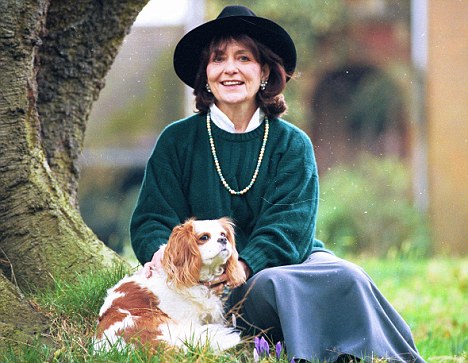
Angela Huth

Angela Huth

Virginia Fly, a teacher at a girls’ school, lives with her parents and is still a virgin at age 31.  Although she is reasonably attractive, she has little social life and few prospects of meeting men. Occasionally she goes to concerts with an elderly music professor.  She also has an American pen friend named Charles, who has promised to visit England.

Meanwhile, she has wild fantasies about meeting a beautiful young herdsman in a field of buttercups.  He tears off her clothes and they have to hurry, because the cows are about to go into the road.

And when a researcher for a TV show wants Virginia to represent virgins on an interview show about modern love, she agrees.

The whole interview is very funny.  Virginia is practical and in control.

…Virginia sensed that she disappointed Mr. Wysdom.  Was she happy in her virginity?  Yes, she was.  He looked a trifle downcast.  Was there no private, promiscuous being within her trying to get out?  No, there wasn’t.  Then how was it, in this day and age–he was a master of the softly spoken cliche–that she maintained her unusual state?  Simply, that, believe it or not, Mr. Wysdom (she refused to call him Geoffrey, though he kept calling her Virginia) the occasion for ending that state had never arisen.  No one had ever asked her.

Although we’re thinking, Poor Virginia!  we’re also laughing.  She isn’t doing too badly for herself.

Virginia Fly hardcover 510E6JE79KL._UY250_But the TV interview does help her in a way.   Rita Thompson, a 50-year-old widow and a former courtesan, whom we first meet dressed as a  fairy godmother as she comes home  from a volunteer performance of Cinderella at the old folks’ club, sees Virginia on TV and  writes her a letter.  When Virginia comes to visit, Mrs. Thompson takes her to a bar and introduces her to a handsome salesman.

Virginia’s  life is at times comical, at other times very painful.  After her brief encounter with the salesman, she looks forward to  meeting  her pen friend from Utah.  Then there is the professor, who pities her after seeing the TV interview.

The ending is darkly comic–life isn’t a fairy tale for former virgins.    And what Cinderella might have settled for isn’t quite what Virginia hoped for.

Stop in the Name of Love

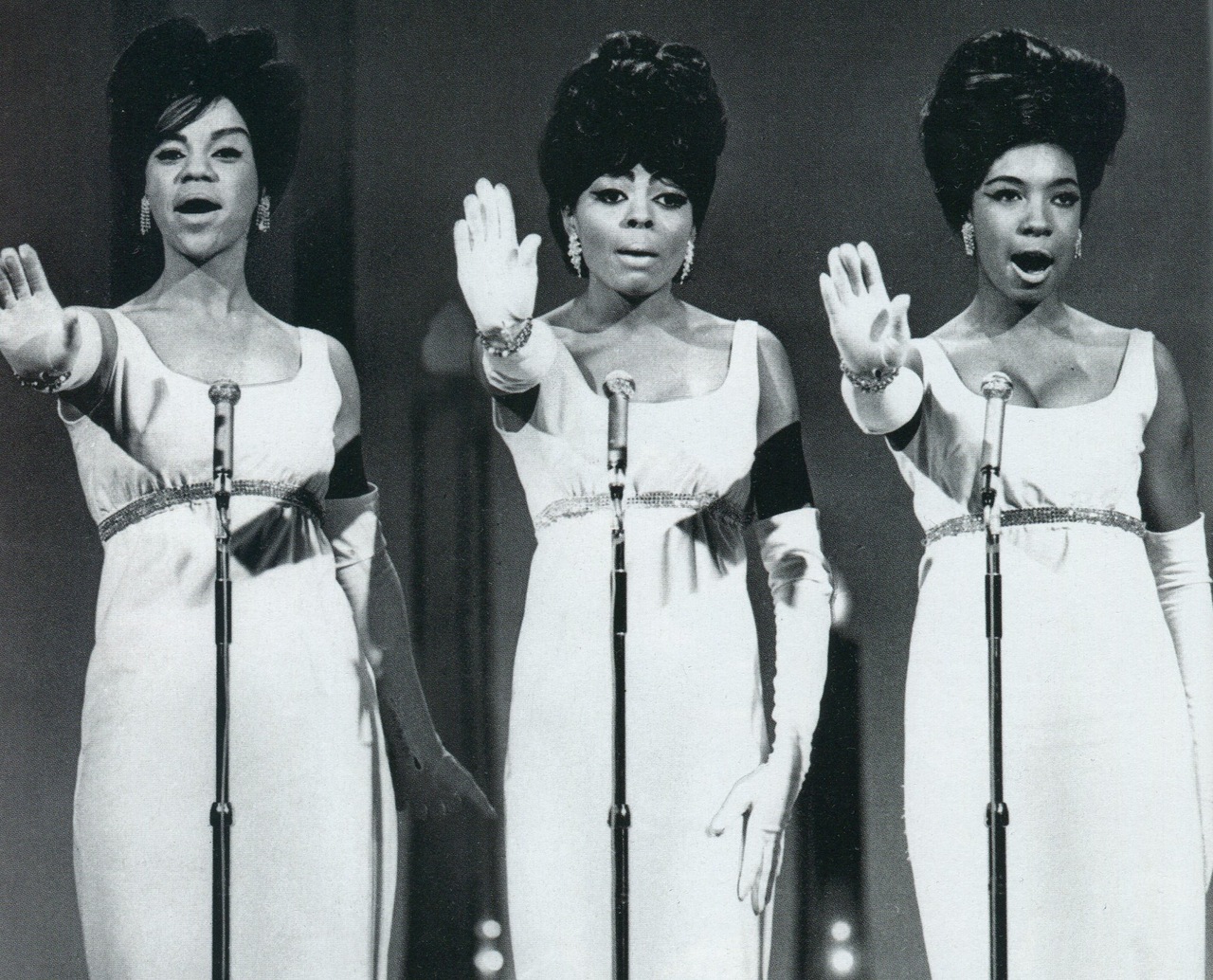
At a gay dance in the ’70s, I first heard the Supremes’ plaintive, witty song, “Stop in the Name of Love.”

supremes stop in the name of love tumblr_mcvq2czhrm1ridow9o1_1280The dance was fun, as these things go.  A  group of women were doing a line dance, waving their arms in a traffic sign to “Stop in the Name of Love.”  Some were wearing men’s suits and hats, which baffled me and seemed vaguely anti-feminist:  perhaps it was a radical lesbian’s parody of the butch/femme culture.

And now all these years later gay life is legal and accepted and I hope they all found happiness.

On Valentine’s Day, as I do laundry, vacuum, and clean pee off the toilet, I wonder if lesbian romance would have been simpler.  You could wear each other’s clothes, there might have been less fuss about red satin teddies, and you could watch “The Lake House” together (the most romantic movie ever).

I was thinking of the Supremes’ lyrics today when my husband gave me my third Valentine’s Day gift in three days.  I was puzzled, because I wasn’t wearing a red teddy..  But there are roses on the kitchen counter, a heart-shaped box of candy, and I am looking forward to reading my new copy of Persuasion.

“Why all the gifts?”

“Awwww!”  you’re saying.

But it’s not really an “awww” thing.

It seemed he wanted to go to a ski race today, and he thought he had to bribe me.

Heavens, of course he could go to a ski race.  I’m not into the greeting card holiday scene.  But my attention was so focused on Valentine’s Day because of all the gifts that my solitary day was depressing.

And I had to give him a fall-back gift:  the Amazon gift card!  It’s always sexy and romantic, don’t you think?

But before you overwhelm your lover with Valentine’s Day gifts,

Stop in the name of love
Before you break my heart.

Would You Like a Cup of Tea, Luv? or How to Send a Package to England

In yourself right now is all the place you’ve got.”–Wise Blood by Flannery O’Connor

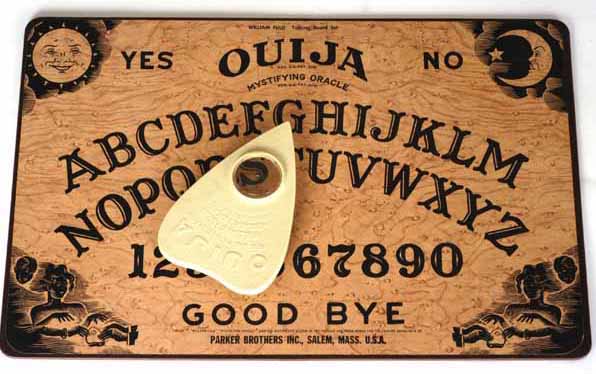
My cousin drove me to the post office.  I had to mail a package to England.  It contained a Lanz flannel nightgown, a ouija board, turquoise flatties, a box of Valentine candy, and my old Little Women doll (Jo).

“It will definitely cheer her up,” says my cousin, who had egged me on to buy the ouija board.

VARIOUS - 2006 ouijaIn the middle of the night had come the phone call :  not a death, thank goodness, but our American friend wailing that she does not fit in in the UK.  When someone she works with says that her father died, she says, “I’m sorry for your loss.” Then someone else says, “Can I make you a cup of tea, luv?” And the two go off to a corner of the lounge and ignore her.

“At least someone at the British Museum didn’t say you were immense,” I remind her.

“Nobody says anything to me.”

Try the British Museum.

Anyway, back to the package:  the line at the post office was long, and my cousin had a hypomanic moment:. “Let’s go to the UPS. store. Our time is valuable.”

“Isn’t that expensive time?”

A phone number is required on the customs form.  I write 666 and some random numbers and dashes.

It cost, err, a staggering amount.

“Good God!”  My cousin said when she handed over her credit card.

But what did we care? We’re Americans!  We get paid!  If you spend money,  you should spend a lot of money. We went to the mall and bought our own flannel nightgowns on sale.  I kind of wanted a Ouija board, too.

And now I know why the narrator in Eudora Welty’s  “Why I Live at the P.O.” lives at the P.O.

Nothing in Common: Conrad Richter’s The Light in the Forest & Virginia Woolf’s Orlando

This is a catch-up post about two classics with nothing in common.

1.  Conrad Richter’s The Light in the Forest (1953)

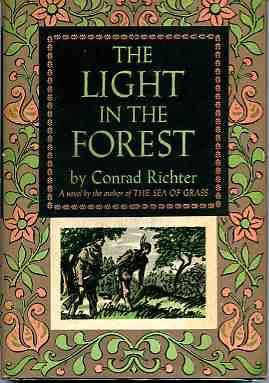
Richter pretty cover LIGHT_IN_FORESTSo many of us read The Light in the Forest in school.  Does it hold up?

Yes, it is an American classic.  Richter, who won the Pulitzer for The Town and the National Book Award for The Waters of Kronos, is famous for his novels about life on the frontier in Pennsylvania and Ohio.

In The Light in the Forest, set in the eighteenth century, Richter relates the story of a white boy captured in an Indian raid in Pennsylvania.  Cuyloga, a warrior of the Lenni Lenape tribe, adopts John and renames him True Son.  He lives blissfully with his new family.  Ten years later, a treaty is signed, saying all the captives must be returned to their white families.  True Son is cruelly torn from his Indian family.

Richter movingly depicts True Son’s attachment to the beauty of the forest and the Lenni Lenape way of life.

He could see the great oaks and shiver-bark hickories standing over the village in the autumn dusk, the smoke rising from the double row of cabins with the street between, and the shining, white reflection of the sky in the Tuscarawas beyond.  Fallen red, brown and golden leaves lay over roofs and bushes, street and forest floor.  Tramping through them could be made out the friendly forms fo those he knew, warriors and hunter, squaws, and the boys, dogs and girls he played with.

On the long march, guarded by soldiers, True Son is accompanied by his  friend Half Arrow.  Little Crane, who walks with his white squaw (who will also be returned to her white family), reminds them that the Great Spirit made the Indians, with their black hair and dark eyes and skins. On the other hand, the whites, who are light, dark, or in-between, are “a mixed breed.” He says, “The reason they act so queer is because they’re not an original people.  Now we Indians are an original people.”

True Son, aka John, is unable to adjust to life with his white family. When John’s uncle murders White Crane, who has come in peace with Half Arrow to visit True Son, he and Half Arrow run away and take refuge in the forest.  Their time there  is idyllic:  “Abundance supported them.  Completeness was for the taking.  Days unfolded, rich and inexhaustible.”

But nothing is simple:  violence begets violence.   When the boys return to the Lenni Lenape, some insist on revenge for White Crane’s death, and Cuyloga, True Son’s father, reluctantly agrees.  Neither the whites nor Indians are completely innocent, though Richter leans towards the culture of the Indians.

A fascinating, heart-rending little gem of a book.

1.  Virginia Woolf’s Orlando:  A Biography (1928)

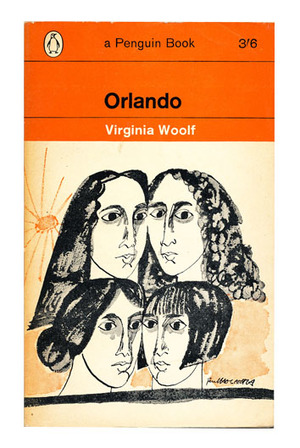
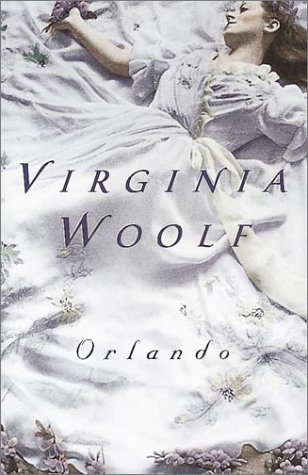
Woolf penguin Orlando+coverWoolf’s comic novel, Orlando, was a surprise when it was published in 1928 after To the Lighthouse.

Orlando is one of Woolf’s lightest books, dedicated to Woolf’s lover, Vita Sackville-West.  In Alexandra’ Harris’s Virginia Woolf, a wonderful short book about Woolf’s life and work, she says that Woolf’s teasing novel is a a fanciful biography of Vita Sackville-West, with a tip of the hat to her ancestors.  And it had the tone of Woolf’s playful letters to Sackville-West. The hero, Orlando,  is a beautiful androgynous man, a courtier, and an aspiring poet.  He lives for more than three centuries, first as  a man and then as a woman.

Harris quotes Elizabeth Bowen, who In her 1960 preface to Orlando remembered,

This Orlando–we did not care for the sound of it. The book was, we gathered, in the nature of a prank, or a private joke; worse still, it was personal.”

Virginia woolf orlandoSome fans of Woolf’s abstract novels were put off by her whimsical portrait of Orlando, whom we first meet as a 16-year-old in the Elizabethan age .  “He–for there could be no doubt of his sex, though the fashion of the time did something to disguise it–was in the act of slicing at the head of a Moor which swung from the rafters.”  Slicing and beheading is not the usual way to begin a book, and in this first chapter there are many references to slicing and heads: Orlando’s father had struck the head from the shoulders of a pagan. And when Queen Elizabeth visits, the first thing she notices is Orlando’s head.  While his head is bowed, she strokes it.  And she invites him to her court.

As a  young man at Elizabeth’s court, Orlando has a doomed love affair with a beautiful Russian princess, whom he calls Sasha.  After a long winter festival, with Woolf’s fantastical descriptions of festivities and ice palaces on the frozen Thames, Sasha stands him up during a thaw and sails away on her ship with the gritty sailor she really loves.  Orlando, crushed, returns to his estate and works on his poem, “The Oak Tree.”   And when he invites Greene, a poet and comrade of Shakespeare and Marlowe, to visit and talk about poetry, Greene lambastes all the writers of his day.

Just as writers worry that Amazon will influence publishing, so Greene blames the booksellers for bad writing.  The Elizabethans cannot live up to the Greeks, he says.

Now all young writers were in the pay of the booksellers and poured out any trash that would sell.  Shakespeare was the chief offender in this way and Shakespeare was already paying the penalty.  Their own age, he said, was marked by precious conceits and wild experiments–neither of which the Greeks would have tolerated for a moment.  Much though it hurt him to say it–for he loved literature as he loved his life–he could see no good in the present and had no hope of the future.  Here he poured himself a glass of wine.

Greene also satirizes Orlando’s poem and deeply wounds him. Orlando decides to go to Constantinople as an ambassador.  While there, he magically falls into a coma and becomes a woman.   Now she is Lady Orlando, and when she returns to London, there is a lawsuit to see whether she is indeed entitled to her property.  (It goes on for centuries.)  She is a hostess who entertains Pope and Dryden, though their wit seems dry, pursues her own poetry, adjusts to changes of weather in the nineteenth century and finally publishes her  poem, “The Oak Tree.”   In the twentieth century she has become a wife and mother.  And, after all this time, she is only 36.

I enjoyed this literary fantasy, which reminds me of some of Sylvia Townsend Warner’s whimsical novels, particularly The Corner That Held Them, a comic novel about a convent in the 12th century.

A Mystery Binge: Amanda Cross’s The James Joyce Murder & Edmund Crispin’s The Case of the Gilded Fly

Case of the Gilded Fly edmund crispin 41MKNKVM8PL._SY344_BO1,204,203,200_

Occasionally we put on our thickest glasses to read Cicero’s De Senectute or peruse an article in Classical World, “Prostitutes, Plonk, and Play: Female Banqueters on a Red-figure Psykter from the Hermitage.”

Sometimes it is amusing, sometimes it is not.

And so we balance it with a genre book binge weekend.

This weekend I lolled on the couch and read mysteries by Edmund Crispin and Amanda Cross.

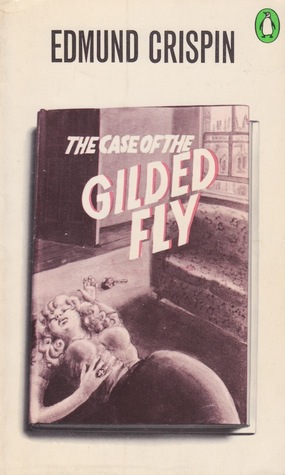
The case of the gilded fly crispin penguin 2692951If you like Golden Age Detective fiction of the ilk of Margery Allingham and Ngaio Marsh, I recommend Edmund Crispin.   Although I am not a huge fan of his most famous book, The Moving Toyshop, I  immensely enjoyed The Case of the Gilded Fly, the first of his Gervase Fen mysteries, published in 1945.  Fen, an amateur sleuth, is an eccentric English professor at Oxford whose wit and brilliance are slightly  reminiscent of Albert Campion or Peter Wimsey.

Every Golden Age mystery writer writes a novel set in the theater.  In The Case of the Gilded Fly, the premise is that a successful playwright, Robert Warner, has come to Oxford to try out his new play in a repertory theater. The actors, musicians, journalists, stage manager, and hangers-on are a congenial lot, with one exception. Everyone hates Yseut Haskell,  a  manipulative, promiscuous actress who was Robert’s mistress years ago.

So when she is found murdered in the rooms of an infatuated musician,  there are so many suspects that it is hard to keep them straight. Fortunately we have Fen to sense of everything.   This is a very entertaining mystery, and if the writing is a bit  uneven, it is, after all, Crispin’s first book.

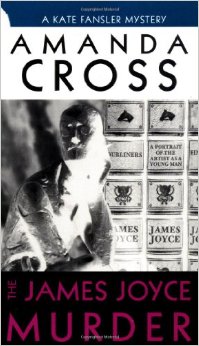
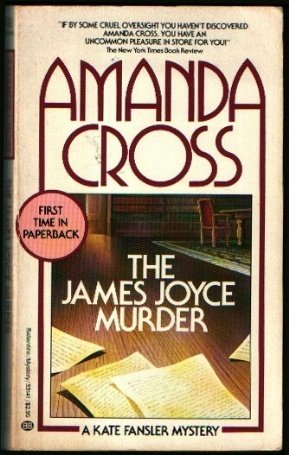
amanda cross james joyce 51hqUh4nIXL._SY344_BO1,204,203,200_Amanda Cross’s Kate Fansler mysteries are, in my opinion, American classics.  Yes, put her in the Library of America!  I’m in favor.  Cross is the pseudonym of Carolyn G. Heilbrun, the feminist critic known for Writing a Woman’s Life and The Last Gift of Time: Life Beyond Sixty.  She was the first tenured woman in the English department at Columbia University.  She wrote mysteries under a pen name to protect her academic career. Her sleuth, Kate Fansler, is a brilliant, witty English professor, often assisted by her assistant D.A. boyfriend, Reed Amhearst.

In The James Joyce Murder, published in 1967, Kate has become  the temporary custodian of the literary correspondence between James Joyce and Samuel Lingerwell, an American publisher.  She is not a Joycean, but is a friend of Lingerwell’s daughter.  She hires Emmett, an Austen scholar, to deal with the letters, because she knows a Joyce fanatic might attempt  to hijack bits for articles.  She has also hired William, a graduate student to tutor her nephew, Leo, and all are living in a country house..

amanda cross jamesjoycemurderThen one morning Mary Bradford, a gossipy farmer’s wife much hated by everyone in the neighborhood, is shot dead by William. All summer Leo and William have had target practice every morning with an empty gun.   Someone put a bullet in the gun, and everyone is a suspect.  Could it have something to do with James Joyce?

Fascinating, clever, and very good argument for gun control.

Is Joey in “Friends” Qualified to Review a Book on Alcott’s Little Women?

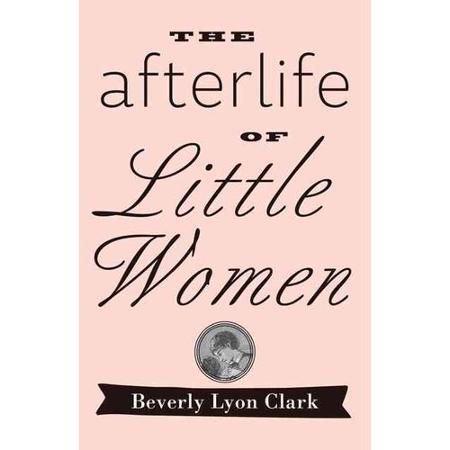
Clark The Afterlife of Little Women k2-_e2c95994-a61e-4453-afed-e85121e2cf8f.v1In the Feb. 6 issue of the TLS, there is a review of Beverly Lyon Clark’s new book, The Afterlife of Little Women (Johns Hopkins University Press), a history and analysis of the reception of Louisa May Alcott’s novel from 1868 to the present.

Clark, a feminist critic and an English professor at Wheaton College, is an Alcott scholar and an expert on children’s literature.  She was also a co-editor of Little Women and the Feminist Imagination: Criticism, Controversy, Personal Essays.

It sounds fascinating.

And then I read the review in the TLS.

Samantha Ellis, the reviewer, is not a fan of Little Women.

I am a fan of the TLS, but I have a question.

How did Samantha Ellis, an English playwright who mocks and misreads Little Women, land a plum assignment to review a book about the reception of an American classic? There are surely many Alcott scholars, among them Susan Cheever, author of Louisa May Alcott: A Personal Biography and American Bloomsbury: Louisa May Alcott, Ralph Waldo Emerson, Margaret Fuller, Nathaniel Hawthorne, and Henry David Thoreau: Their Lives, Their Loves, Their Work, and editor of the second volume of Alcott’s works for the Library of America, who are much better qualified to review this.

How can we trust Ellis on the effectiveness of a book on a book she does not esteem?

The editors must have deemed Ellis an expert on children’s literature because she is the author of a new book that The Guardian calls “a warm-hearted biblioautobiography,” How to Be a Heroine.

Ellis blithely denies that Little Women is a feminist novel. She says that Clark’s reading is “unusual.”

As for [Clark’s] own response to the book, she writes that, growing up int the 1950s, Little Women allowed her to “dream of having it all—family and career.” This is a very unusual reading. Notoriously, none of the four heroines grows up to have it all. Meg (who doesn’t want a career, marries and devotes herself to family life, Beth (who has no ambitions for career or family) dies, Amy marries Laurie, who is fabulously rich, and decides that instead of being an artist she wants to be a lady philanthropist—and there’s Jo. Like most of Alcott’s readers, Clark identifies most with Jo, the misfit who wants to write. But, again, her response is singular; she did want Jo to marry Laurie, “but not passionately so.”

Heavens, the reviewer’s response to Little Women is extremely eccentric.   Jo does have a family and career.  What is this bit about “notoriously” none of the characters “have it all?”  “Have it all” is an expression that none of us takes literally.

Women raised on Alcott, as I have always maintained, are different.  We value our creative talents from an early age, believe in the equality between men and women (Marmee and Father are equals), understand the importance of charity and social justice, and that there is no shame in working at honest if unprestigious jobs since most of us women need an income.

The four girls in Little Women are clearly role models.  They are not only creative but help support their poor family at jobs they dislike:  Jo works  a companion for Aunt March, and Meg as a governess.  With the exception of Meg, the March girls are artistic.  Jo loves to write and later sells her stories to help support the family.  In the sequels, Little Men and Jo’s Boys, she and her husband run an experimental school for indigent boys.  (Ellis thinks the school, founded by Jo and her husband with a legacy from Aunt March, is a comedown for a writer, but many of us value education.) Amy sketches and paints.  Beth is musical, an excellent pianist.  Meg is domestic, and what is wrong with that?

Little Women is not only realistic, but extremely entertaining.

And, yes, Alcott wrote this autobiographical novel for money, but that does not preclude its brilliance.

By the way, did you ever see the episode of Friends in which Joey hears that Beth dies?  He and Rachel swap favorite books and quarrel over spoilers for  Little Women (Rachel’s favorite book) and The Shining (Joey’s favorite).

Perhaps Joey could review The Afterlife of “Little Women”!

Here is the clip from Youtube.

The Amazon sample from Clark’s The Afterlife of “Little Women” is beautifully-written.  In the introduction Clark writes:

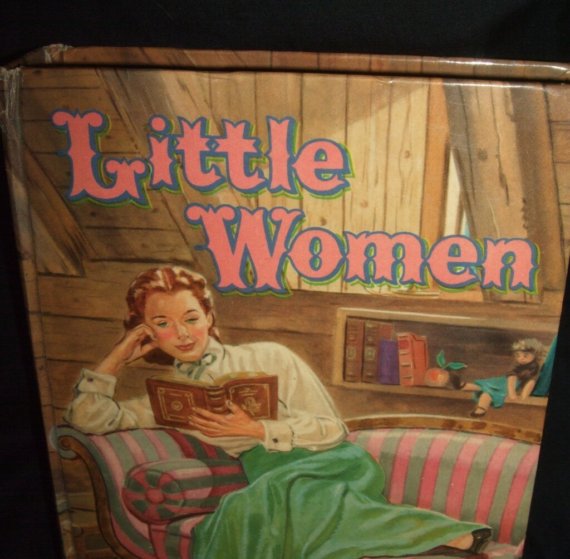
I hold my childhood copy of Little Women.  A solid, tangible object.  Unchanging, it would seem, except for the yellowing of its pages and the peeling of its laminated cover.  Unchanged, I assumed when I first read it, from what Louisa May Alcott had originally written–or at least I had assumed a kind of authenticity.  Yet what appears to be solid and unchanged is not.

For what I read was abridged–“A Modern Abridged Edition,” it says on the title page.  But back then I didn’t scrutinize title pages.

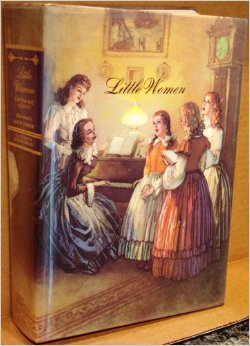
Little Women il_570xN.150449237I had that same abridged edition (albeit with a different cover).  Later, I spent my allowance on a nicer Grosset and Dunlap edition (unabridged).

The Grosset and Dunlap edition.

The Grosset and Dunlap edition.

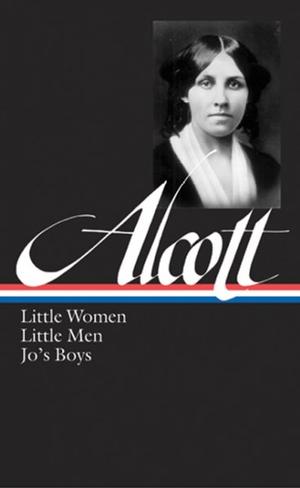
Now I have the Library of America edition.

little women library of america 1931082731.1.zoomI am willing to take a chance on Clark’s The Afterlife of Little Women.

The great thing about the TLS is that one learns about books that haven’t been reviewed in the more popular papers.

But whether Clark’s book is good is good or bad, it was a mistake to assign it to Ellis.  I have seldom read a lazier, more superficial review.

Conrad Richter’s The Waters of Kronos

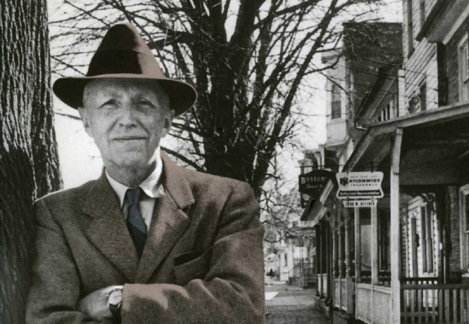
Conrad Richter

Conrad Richter

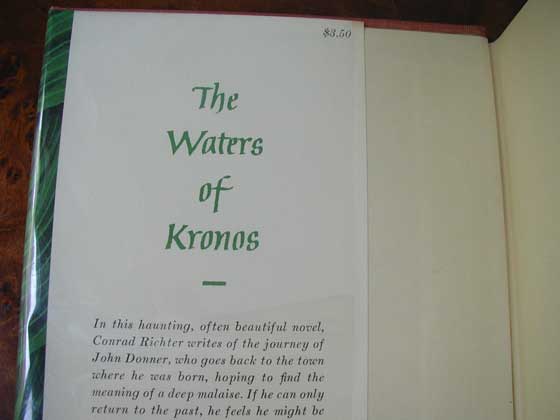
I recently discovered Conrad Richter’s The Waters of Kronos, the winner of the National Book Award in 1961.  This little gem of a novel is a dazzling example of katabasis (a descent to the underworld):  the hero’s trip to his hometown turns into a mythic, revelatory descent to the past.

My mother read Richter’s elegiac novel during my rare periods of sleep, if I ever slept, which she said I did not.  Richter’s books were  popular with her  generation, and her cronies all gave us copies of The Light in the Forest, his  beautifully-written novel about a  boy captured in a raid and raised as an American Indian, who, under terms of a treaty, is forced unwillingly to return to his white family years later. Richter earnestly chronicled the lives of Americans in small towns and on the frontier in different periods of history.

In The Waters of Kronos, the hero, John Dalton, a famous novelist, longs to revisit the past, as so many of us do as we get older.   He cannot in reality visit his hometown, because a dam was built years ago and Unionville is buried under a lake.  And so he drives from his home in Albuquerque to Pennsylvania to visit the cemeteries that were removed from the town before it was flooded

In simple, lyrical prose, John describes the terror of loss of place when he first views the dam and the lake.  The dam breast was “like the white end of a colossal burial vault…”  He reminds himself that he had known this was what he would see.

And yet he couldn’t shake off the feeling that under his feet he had come upon something frightening.  He had had a glimpse, small as it was, into an abyss whose unfathomable depths were shrouded in mist, a bottomless chasm that he had known existed, if only in the back of his mind and in the back of everyone else’s mind, but which he had never seen face to face or directly looked down into before.  Perhaps one had to be old as he to recognize what one saw, to understand first how man had struggled up so painfully and so long, and then with that sad knowledge to come upon one’s own once living, breathing and thinking people swallowed up in the abyss, given back to primordial and diluvial chaos.

This is eerily resonant. It is what we all experience as time passes, but it is twice as bad. As we age, our hometowns change:  the downtowns disappear, trees are cut down, and old buildings are demolished to make room for condos.  In my hometown, a tornado destroyed a church and floods have destroyed many university buildings, which have not yet been rebuilt.   It is as though they never existed. And so we understand why John is shocked and angry that the government decided to build the dam and destroyed a way of life and the environment.

He thought of all he had once known and loved buried at the sunless bottom of the dark water–the red roofs and green trees, the life and talk and tender thought that went on under them; the brave brick schoolhouse and its white belfry…

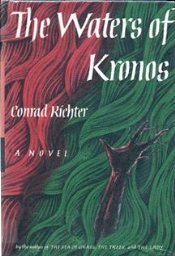
waters of kronos richter 41bnktvHo0L._SL256_The cemeteries are meaningless:  bodies moved from the town and buried under identical white stones, as in a military cemetery.  He drives a little further and finds the road to Unionville known as the Long Stretch.   He knows it will end in water, but fantastically the road is real.   He knows he must be ill , but when he sees a wagon he hitches a ride and descends into Unionville.  “John Donner had the feeling he was descending from where he could never return.”

Is John hallucinating?  Was Richter influenced by knowledge of the testing and experimentations with LSD in the 1950s and ’60s?  Was he reading the Beats?  I think it is more to do with the literature of katabasis, Virgil’s Aeneid, Dante’s Inferno, etc.  In Unionville, John has the eerie experience of seeing the town as it was when he was a child  He sees the people he loved:  he stands outside his father’s store, and is sure that his father, singing behind the counter, must know he is there.  But his father is 35, and does not recognize John, who is an old man.  None of his family members recognize him, except for a great-aunt, who mistakes him for hisgrandfather, who has just died.  He has arrived the day before  Pap-pa’s funeral, and all are busy.

conrad richter 03TheWatersOfKronosThe person he most frantically longs to see is his mother.  He keeps glimpsing her from afar, under a black veil, or with her face turned away.

Occasionally Richter is a bit heavy-handed, but that is in a way part of his  charm.  Yes, he is a little corny sometimes, but that is a part of American culture, and sometimes a part of American regional literature. It is very difficult to describe these little pockets of a lost way of life without sentimentality.  But I absolutely loved this book.  I highly recommend it.

I wonder if this is partly autobiographical (well, obviously not the descent).  Richter (1898-1968) grew up in Pennsylvania, lived in Albuquerque for a time, and then returned to Pennsylvania.

Oh, and I should tell you that “kronos” means “time” in Greek.  (I’m sure most of you know that.)

Richter is most famous for The Town, which won the Pulitzer in 1951, and was the third of his trilogy, The Awakening Land, about the Ohio frontier.