The Winner of the Lehmann Giveaway Is…

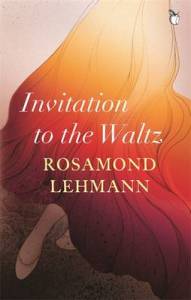
Elaine has won the giveaway of Lehmann’s Invitation to the Waltz.  I’m sure she will enjoy this charming book.

Better luck next time, the rest of you!  The scientific method of selection consisted of picking a name out of a paper bag.

There will be future weeding…

Best,

Kat

Is It Philanthropy? Weeding My Viragos

In the 1980s, I discovered Virago Modern Classics. The American editions had black covers, not green, but the cover art was identical.

As a feminist, I was thrilled to find these reprints of lost women’s novels, though Dial Press, Virago’s American publisher, published only a few.  One of my first Viragos was Rosamond Lehmann’s The Weather in the Streets:  the attractive cover showed a fascinating detail from Still Life at Bedtime by Barbara Balmer.  In this skillful, engrossing novel, first published in 1936, Lehmann describes the desolation of a young woman painfully in love with a married man.

The impoverished heroine, Olivia Curtis, a low-paid assistant to a photographer, is separated from her husband but does not bother to get divorced.  She lives in London in a room in her cousin Etta’s flat, and has many artistic, interesting friends. Sometimes she goes hungry, but she tries to be cheerful.  One weekend, traveling home on the train to visit her sick father, she meets a former neighbor, Rollo, who is now a wealthy, unhappily married man working in the City. He says he’ll telephone her.

Of course we recognize this syndrome:  Will he call?  There are echoes of Dorothy Parker’s short story, “A Telephone Call,” in Olivia’s interior monologue.  But Lehmann is more remote, writing from a third-person point-of-view.

The telephone rang, faint to her ears:  someone inquiring, Kate would answer.  It couldn’t be Rollo:  not yet.  Not ever, of course.  Rollo would think about ringing up, sometime tomorrow maybe; and then he wouldn’t do it.  Because nice men don’t like to get mixed up…. Rollo was undoubtedly in the category of nice men, broad-minded.  They are on their guard….

Rollo becomes all to Olivia, but Olivia is not all to Rollo.  It does not end well for Olivia.

I related to Oliva–at least in my imagination.  Like Olivia, I was cheerfully poor, though Bloomington was unlike London, a city I imagined to be impossibly glamorous.  (Bloomington is more charming–really.)  I sometimes had to sell books so I could buy tampons.   A humanist friend who needed distractions from finishing her dissertation invited me to live with her after my boyfriend dumped me.  And she had too much humor to let me wallow in my misery: she sent me out on a date with a guy who rode a motorcycle.  Everyone loved him except me–he wasn’t “Rollo.”

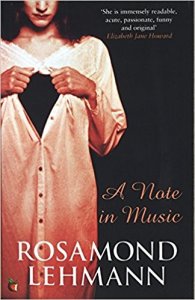
On a second reading of The Weather in the Streets a few years ago, I admired it less. Lehmann captures the mood of frustrated love, but there are a few purple patches.  It is, I think, a book for younger grown-ups–women in their twenties and thirties!   My favorite Lehmann is  A Note in Music, which I described at this blog as “the best novel I have ever read about women in their thirties”  (here.)

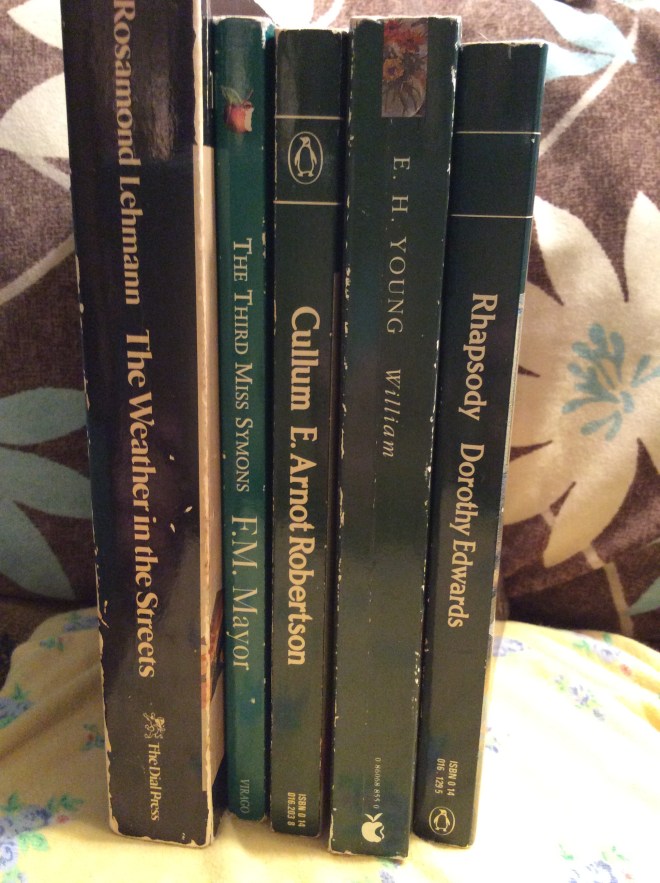
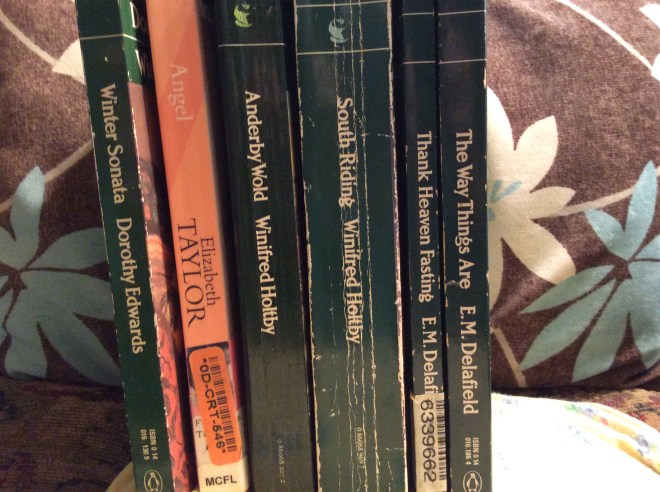
For many years I have collected Viragos at used bookstores, library sales, and the Planned Parenthood Book Sale.  And a decade ago some woman donated her Viragos to the Planned Parenthood Book Sale.  You can imagine how thrilled I was.  And now I am at that same crossroads of life, passing on books I have read and keeping only books I have not read.    Mind you, I’m hanging on to my favorite Viragos.  But I am surprised at how many I am giving away:  my Winifred Holtbys, even some of my Elizabeth Taylors.  Do you think the Planned Parenthood Book Sale will like them?

Below are photos of the Viragos I’m weeding. I have read all of these, and there is not a bad book in the bunch, but I don’t need them.

And here are some more:

How do you feel about collecting books?  Do you keep all your Viragos?  Something about green spines.  These are the only books I have kept together as a color-coded collection.

One More Virago Giveaway: Rosamond Lehmann’s “Invitation to the Waltz”

One More Virago Giveaway:   Invitation to the Waltz by Rosamond Lehmann.  A good book, beloved by Virago fans.  I wrote here in 2015, “Rosamond Lehmann’s brilliant novel, Invitation to the Waltz (1932), is reminiscent of Virginia Woolf’s Mrs. Dalloway.   Both Lehmann and Woolf use stream-of-consciousness, write exquisitely, and master the compression of time.  And both novels center on preparations for a party.”

This is a Virago hardcover edition.

Leave a comment if you would like it!  You are still eligible even if you won one of the other Viragos!

This is a case of, as they say:  EVERYTHING MUST GO.

Winners of the Virago Giveaway!

This could not have turned out more perfectly!  There is one book for each commenter.  Email me your address at mirabiledictu.org@gmail.com

The winners are:

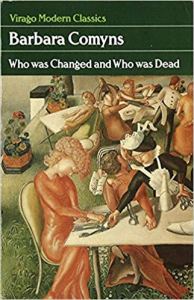
Elaine (Pigeon) – Comyns’s Who Was Changed and Who Was Dead

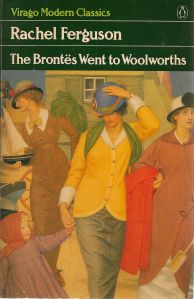
Lorraine – Rachel Ferguson’s The Brontes Went to Woolworths

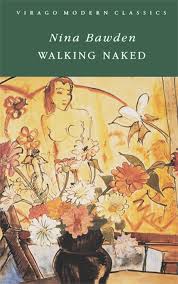
Melissa – Bawden’s Walking Naked

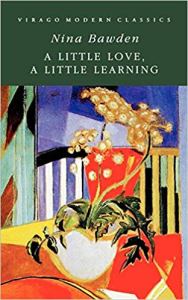
Nancy – Bawden’s A Little Love, A Little Learning

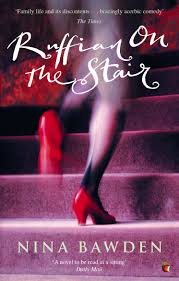
Julie – Bawden’s Ruffian on the Stair

Cynthia – Bawden’s The Birds on the Trees  

Ann – Bawden’s The Ice House

A Virago Giveaway: Nina Bawden, Rachel Ferguson, and Barbara Comyns

Are you ready for a Virago giveaway?  Five by Nina Bawden, one by Rachel Ferguson, and one by Barbara Comyns.  You know what to do: leave a comment telling me which you want.  And go for all seven if you want them!

The books are:

Nina Bawden’s The Birds on the Trees.

Nina Bawden’s Ruffian on the Stairs.

Nina Bawden’s A Little Love, a Little Learning.

Nina Bawden’s Walking Naked.

Nina Bawden’s The Ice House (a hardcover, not the Virago pictured below).

Rachel Ferguson’s The Brontes Went to Woolworths.

Barbara Comyns’s Who Was Changed and Who Was Not.

The Luxury of Long, Slow Reads

On the internet, we hustle to meet our goals. We participate in the Goodreads challenge (we “promise” to read a self-imposed number of books  and Goodreads tracks our progress), learn the speed of our reading on Kindles (can we speed up?), and keep pace with innumerable book groups.

Sometimes we forget the luxury of long, slow reads.   My computer calendar pops up to dictate my reading progress, but not even the calendar gods could convince me to finish Hermann Broch’s The Death of Virgil.   Before the distractions of the internet, I would have slogged through it anyway because I expected less amusement. In those days I was able to finish War and Peace in a week and Trollope’s six-book Palliser series in six weeks.  I have reread these brilliant, unputdownable classics with pleasure, but now the experience is different because electronic devices split my attention and I tend to read multiple books in the same time period.  Pity the poor blogger who writes that he/she has given up long books because they get in the way of reviewing a set number of books at his/her blog.  That strikes me as very wrong.

And so I was very interested in Erin Bartnett’s article in Electric Literature, “Reading a Book Takes Time—Deal With It.”  She criticizes the start-up companies that tailor books to  your commute time.  She writes,

Serial Box turns the book into a quick, consumable, commute-sized commodity: each “episode” in the serial season is set up so it only takes about 40 minutes to read, in order to line up with the average back-and-forth commute time. As Molly Barton, one of the founders of Serial Box, told Vox: “I was aware that for many people, reading a book can feel rather slow and daunting compared to other media forms at this point. It’s harder to fit into your life.”

I say malarkey. You only have 40 minutes to read a book? Get a bookmark! Don’t worry — the book will still be there when you get back. Reading is supposed to be slow. And it’s okay if it’s daunting. Books take a long time to write, and the good ones deserve more than a morning commute time to fully digest and understand. Books also have the capacity to take you out of time and space and make you miss your subway stop, and that’s a good thing, too. The right story gives us permission to get lost when we need to. Indeed, Constance Grady reported the Serial Box books she’s read did not enchant: “I couldn’t lie on the beach and lose myself in it because it actively did not want me to do so.” Is our obsession with hurrying up getting in the way of our having fun?

Serial Box is an outrageous attack on the art of reading, and, yes, hurrying up does get in our way.   I agree with Bartnett:  get a bookmark!

The long read is still alive, I learned from Alex Clark’s brilliant essay in The Guardian, “I’m going back to Proust this August. The truly long read is a summer treat.”  She writes,

Another summer, and another assault on the unscaled mountains of literature. Having woefully failed at 2017’s attempt on Henry James, who fell foul of a sudden addiction to his sleuthier cousin PD, I’m once again preparing to tackle Proust, courtesy of a 50th birthday present of a beautiful boxed set of In Search of Lost Time. Thank God I shan’t be doing it alone, but in the company of novelist Susan Hill, who explained in last week’s Spectator Diary that, having got so far and no further on multiple previous occasions, she too was going back in. She is now on Book 5, and I salute her.

What a wonderful summer reading plan!

I declared the summer of 2018 my summer of science fiction but it has been the summer of Trollope and P. G. Wodehouse. And I wouldn’t trade this summer for my original plan.

Have you met your goals this summer?   Have you changed them?  And are you reading long or short?

Angela Thirkell, Snob and Comic Genius

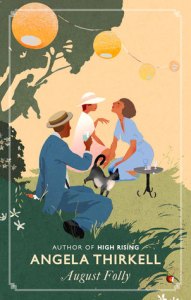
I have an ambivalent relationship with Angela Thirkell.  She is very, very funny; she is also very snobbish. My favorite of her novels is August Folly, which I described here in 2016 as “a hectic comedy in which a bossy village matriarch directs a summer production of Hippolytus in her barn.”

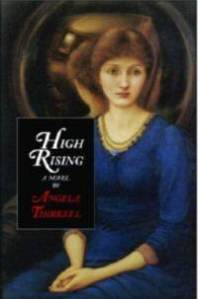
In her nonsensical Barsetshire series (yes, she borrowed Barsetshire from Trollope), Thirkell populates a ridiculously upper-class imaginary world with distracted widows, charming headmasters, smart headmistresses, eccentric lords, lovesick vicars, lonely secretaries, and obnoxious, silly schoolboys.  Thirkell wrote a book a year:  the first in the series, High Rising, was published in 1933, and the last, Three Score and Ten, in 1961.  One of the pleasures of the series is following the careers of recurring characters.  I am very fond of Mrs. Morland, a writer whose hairpins fall out as she plots her popular thrillers;  the unpunctual Lady Leslie and her constant dropping of prayer books; and Lydia Merton, whose muddled classical allusions make me chortle.

Some of her books are much better than others.   It can be wearisome to read about the characters’  attitudes toward “inferiors,” “the Empire,” and eastern European refugees. On the other hand, they volunteer for the Red Cross and care for the evacuees. They have good morals and values.  If only all snobs were like that!

I prefer the interwar novels of the 1930s, but her more rambling books of the 1940s are an invaluable source of history, as she more or less documented English civilian life.  I think of her as a comic Nella Last.

Still, Thirkell occasionally irritates me with her silliness and superciliousness.  Evelyn Waugh is much funnier about the war.   Waugh’s Put Out More Flags, a satire which features a family of evacuees so destructive that people pay money in order not to billet them, does not strike me as snobbish, because Waugh is a more skillful writer.

The Thirkell revival is in some ways surprising.  She was nearly forgotten  In 2005 when Robert McCrum, in an excellent essay about literary societies, wrote,

Who, for example, reads Angela Thirkell these days? Yet there is a society devoted to her memory which organises group outings, promotes group discussion, and – I’ve no doubt – in the nicest possible way, gives Thirkell’s publishers hell about out-of-print titles.

All press is good press–and the Angela Thirkell Society organized an e-mail campaign to change McCrum’s mind.  If I remember correctly,  McCrum menitoned in a later article that he intended to try some Thirkell over the holidays.

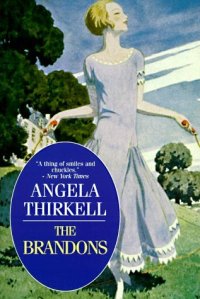
N.B.  The Virago Modern Classics group at LibraryThing is sponsoring a monthlong reading of Angela Thirkell.  My Thirkell of the month is The Brandons, parts of which are brilliant, though it is not my favorite. I do find it very funny when Mrs. Brandon has to pretend to be interested in the vicar’s reading of his paper on Donne.  He is in love with her.  Fortunately, there are so many interruptions that he doesn’t make it past the first sentence.

The Absurdity of Celebrity Book Clubs & Book Imprints

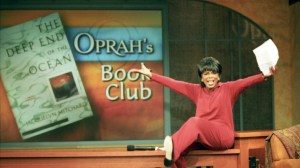
I was not an Oprah fan until she founded her book club in 1996.  As a passionate reader and reviewer, I loved the idea of a celebrity promoting books. And I admired her choices, among them Wally Lamb’s I Know This Thing Is True, Barbara Kingsolver’s The Poisonwood Bible, Jeffrey Eugenides’s Middlesex, and Jane Hamilton’s A Map of the World. 

Oprah chose a certain kind of issue-oriented literary fiction.  Novels had to deal with schizophrenia, adultery, incest, or some other daytime talk-show issue.  Not everyone applauded the book club.  A friend with a Ph.D. asked me why Oprah should choose our reading.  She believed a PR person selected the books (possibly true) and that people bought but did not read them. She thought I was too gullible;  I thought she was too serious.

When Oprah tired of contemporary novels, she started a classics book club.  Do you remember the summer of Faulkner?  I heard the boxed set of three Faulkner novels did not sell well.  No PR person would have been happy with that summer choice!

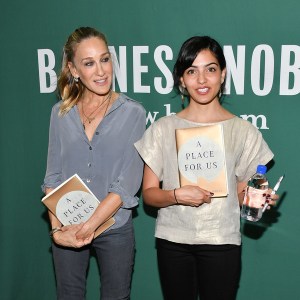
Now we have a glut of celebrity book clubs and celebrity book imprints.  Sarah Jessica Parker has her own imprint at Hogarth, SJP, and this summer published her first book, A Place for Us  by Fatima Farheen Mirza (which has garnered rave reviews).  The highly intelligent actress/writer Lena Dunham and producer/director Jenni Konner have their own imprint at Random House, Lenny Books.  And then there are the celebrity book clubs:  Reese Witherspoon has a book club, Hello Sunshine; Emma Watson has a feminist book club, Our Shared Shelf; Emma Roberts has a book club, Belletrist; and Sarah Jessica Parker has SJP Picks at ALA Book Central.

Sarah Jessica Parker and  novelist Fatima Farheen Mirza.

This PR trick sells thousands of books, but it also speaks to our times. Are we so shallow that we want beautiful actresses to run our book clubs?  There are thousands of book clubs, some run by experts, others by enthusiasts.  I have belonged to both kinds, but the best leaders are experts in their subject.

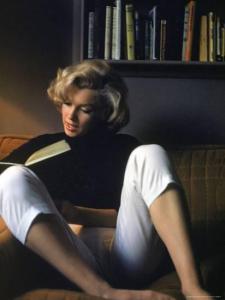
Marilyn Monroe

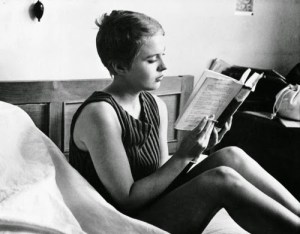
Would Marilyn Monroe, who read widely, run a book club now?   Would Jean Seberg, a reader and a radical, have published her own book imprint?

Jean Seberg

These are very strange times.

Five Books to Read after a Biking Breakdown

Yesterday I took a bike ride.

I It was 88 degrees, but it has been so hot that it felt cool.  Although the trees have that frumpy end-of-summer look, it’s lovely to pedal through the woods.  But then, despite frequent breaks to guzzle water, I registered that I was riding unusually slowly. And so I took a coffee break in an air-conditioned cafe.  All better, I thought as I walked into the heat.  But I was so exhausted on a steep hill that I got off my bike and walked.  That NEVER happens.

It was a biking breakdown, obviously. Too hot, too long.   Once home, I sat on the couch and drank water for two hours. My husband went off to buy me a huge bottle of Diet Coke.  Did I get off the couch at all?  No, except to make dinner–just to prove I was not defeated.

I spent hours reading, but I discovered that you don’t want to read anything too demanding after an exercise breakdown.

So here’s a list of

FIVE  BOOKS TO READ AFTER A BIKING BREAKDOWN!
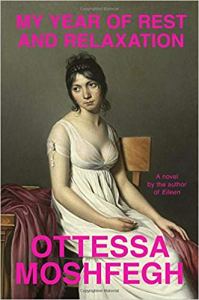
1.  My Year of Rest and Relaxation by Ottessa MoshfeggOblomov meets Gogol in this dark comic novel about a young woman who decides to sleep for a year.

The narrator is beautiful, blond, and smart.  Everyone does her bidding because she is always the prettiest one in the room. Her best friend says she looks like Kate Moss.   But  her parents have died, her boyfriend doesn’t love her, she disdains her only friend,  and she has a ridiculous job as a receptionist at an art gallery.  When she inherits money, she decides she wants to sleep in her expensive Manhattan apartment for a year. A psychiatrist prescribes many drugs for her “anxiety,” most of which make her sleep.

The narrator is unsympathetic, but the book is very, very funny; at the same time horrifying and sad.  One of the drugs causes blackouts during which she wakes up to find she has shopped (where did she get the white fur coat?), gone to clubs, and ordered Thai food.  Things get darker, darker, and darker.

A very fast read by the winner of the PEN/Hemingway award for her first novel, Eileen.
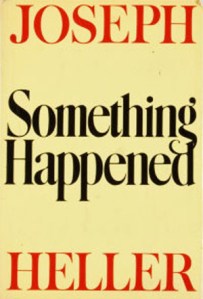
2.  Something Happened by Joseph Heller.   Who can ever forget Catch-22, the satiric American classic about World War II? (If you like Evelyn Waugh’s Sword of Honour trilogy, you should enjoy Heller’s novel.)  But I used to swear that Heller’s second novel, Something Happened, published in 1974, was even better.  Was I right?

Heller satirizes the discontent of an  American middle-aged man, Bob Slocum, who is living a life of quiet desperation but at least has a sense of humor about it.   He would rather be at his horrible office than at home with his family, and isn’t that the American way?  Fans of Mad Men will love the atmosphere, but I have to warn you, NOTHING HAPPENS. It is essentially a monologue by the narrator Bob Slocum.  Kurt Vonnegut wrote in The New York Times in 1974:

“Something Happened” is so astonishingly pessimistic, in fact, that it can be called a daring experiment. Depictions of utter hopelessness in literature have been acceptable up to now only in small dose, in short-story form, as in Franz Kafka’s “The Metamorphosis,” Shirley Jackson’s “The Lottery,” or John D. MacDonald’s “The Hangover,” to name a treasured few. As far as I know, though, Joseph Heller is the first major American writer to deal with unrelieved misery at novel length. Even more rashly, he leaves his major character, Slocum, essentially unchanged at the end.
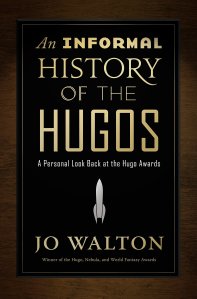
3. An Informal History of the Hugos:  A Personal Look Back at the Hugo Awards, 1953-2000 by Jo Walton.  The Hugo Award is the only fan-voted and fan-administered science fiction award.  If you’re a literary award junkie, you will devour this even if you’re not an SF fan.  Walton, a brilliant writer, critic, and Hugo Award-winning SF writer, has an unusual approach to analyzing the process of nominations.  She criticizes not only the winners but looks at many great books that might have been equally deserving.

She writes in the introduction:

I don’t think the best novel always wins. I think it’s very hard to say what the best book of the year is. Most years, there’s no single obvious best. It’s much easier to say what the top five are. I thought it might be interesting to take a historical look at the individual years and consider what was nominated and what won, to look at what else could have been nominated and wasn’t, and how well the selected books have stood the test of time. I wanted to look at the nominees to see whether the Hugos were picking the best five books, not only at the winners. It’s easy to find consideration of Hugo winners. I wanted to do something different—to revisit the winners and nominees in context.
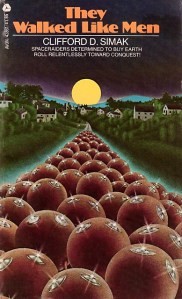
4.  They Walked Like Men by Clifford D. Simak.  To my knowledge, no one on Earth (maybe on Mars) ever reads this science fiction classic.  Originally published in 1962, it has been out of print since  1979.  This radical satiric novel questions the wisdom of urban sprawl, the cynical practices of real estate czars, and suburban flight to…well, nowhere.  Everybody should have a copy of They Walked Like Men. You never know when Earth will be taken over for its real estate.
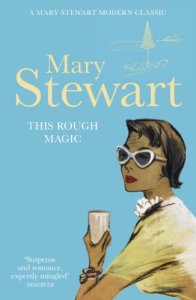
5. This Rough Magic by Mary Stewart.  Set in Corfu, this brilliant Gothic is a homage to The Tempest. The narrator, Lucy,  an unemployed actress, decides to join her pregnant sister, Phyllida, the wife of a rich banker, on vacation at a villa in Corfu.  There is beautiful scenery but many strange events:  the maid’s son drowns on a boat trip with an English photographer, someone shoots at a dolphin while Lucy is swimming near it in the sea, and the moody behavior of a composer, Max, who lives in a villa up the hill, seems strange:  does he have something to hide?  But Max’s father, a retired actor she has always worshiped, is charming.  When Lucy learns about a smuggling ring, she makes some very smart decisions.  But are they smart enough?

Magic Realism or Horror? The Third Hotel by Laura van den Berg

Laura van den Berg’s haunting new novel, The Third Hotel, defies classification.  Is it magic realism?  Is it horror?  It doesn’t quite matter:  this poetic, genre-crossing novel is eerily gorgeous. And it is more sophisticated than her  first book, Find Me, a beautifully-written dystopian novel about a plague of forgetfulness (which I wrote about here).

In The Third Hotel, the heroine, Clare, a widow, no longer understands the meaning of her life. She has been numb for some time, and is now mourning the loss of  her husband.  In December, she flies to Havana for the Festival of New Latin American Cinema he’d planned to attend.  Cuba is not her kind of place:  she is an elevator sales rep whose favorite state is Nebraska, because of the blandness and flatness. But her husband, Richard, killed in a hit-and-run accident in New York, was a scholar of horror films, and she wants to meet the director of the first horror film made in Cuba, Revolución Zombie.

Cuba is gorgeous, hot and disturbing:  dazed by beauty and unmarked streets, Clare keeps getting lost.  She calls her hotel the “Third Hotel,” because she had to ask concierges of two other hotels for directions before she found it.  Clare travels often for work and is usually at home in hotels, but she has seen some bizarre things. Once she found a human fingernail in a drawer–and that haunts her.

Van den Berg researched horror films exhaustively, and her analyses of the meaning of such films is enlightening.  Clare attends screenings, parties, and a panel discussion on a “zombie school.”  And then suddenly she catches sight of her husband, or thinks she does.  But what is she seeing?  It is easier for her to see it as a film through Richard’s eyes than to stop and wonder.

Screens were vehicles for the subjective, he had once written. No eye was objective and thus no lens could be either. In turn, the viewer’s response to the images became the third subjective eye, an invisible revelatory force. Screens and images revealed the viewer as much as they revealed to the viewer.

We’re not sure if he is the real Richard, a ghost, or a zombie.  As she follows him through the steamy streets, we feel that we are watching a film, and indeed she takes pictures with a camera.  Their eventual meetings are puzzling yet at the same time provide closure for Clare and the reader.  Van den Berg is a brilliant writer, and I admired this novel.  Supernatural meetings?  Maybe.  A lyrical, offbeat book.