Outrageous Criticism

Everyone's a Critic 43060641_b3494810a6

I am in Book Review Limbo these days. I still subscribe to The New Yorker, but I recently canceled my subscriptions to the TLS and LRB because  (a)  I was only interested in coverage of classics, which was diminishing;  (b) Mary Beard’s free blog was obviously the go-to place for classics; and  (c) I decided I’d rather blow a couple of hundred dollars on jeans.

So where do I read reviews?  Blogs partially fill the gap.  I like the voices in personal blogs, whether polished or rough, because we get to know the individual writers.  Their voices are usually much tamer and diluted in blog/webzines, alas, but Bookslut was the best of these.   So I was sorry to hear that Jessica Crispin, the writer, critic, and editor of Bookslut, shut down her book blog/webzine, which covered mostly small press books. She says she got tired of it, and my guess is she doesn’t need it anymore, now that she has published two books.  Bookslut always seemed a little young to me, but I liked to know it was there.

So why am I writing about Bookslut if I didn’t spend much time there?  Because The Guardian sucked me in with the title of an article,  “Jessica Crispin “We’re Not Allowed to Say the Paris Review Is Boring.”

It’s so much fun to read a quote like that.  We all love an outrageous critic.  She is an outsider–she started Bookslut while she was working at Planned Parenthood in Texas–and what she learned about the New York publishing industry didn’t impress her.  I actually like The Paris Review, and used to buy it at Borders, which is no longer an option.  I still have a decades-old copy with an article about someone who went looking for J. D. Salinger.

The author of the Guardian article writes about Crispin,

In fact Crispin’s long run at Bookslut, where she did basically what she wanted, gave her a vision into the world of publishing that made her ill. She would open Bookforum, for example, she said, and find it reviewing only a certain set of books. “As things get kind of more chaotic for publications,” she said. “They get narrower and narrower and more elite and nepotistic.” It bothered her that the industry thought of itself as being intellectually honest when it was obsessed with “money and celebrity”.

I know very little about the New York publishing industry, but I have gleaned from years of reading reviews  and seeing the same few books and authors boosted in every bookstore and every review publication  that  writers who get reviewed have (a) Ivy League connections, (b) graduated from an MFA program,  (c) or, as in Hollywood…well, we can’t say that.    As for English publishing, it seems miraculous that anyone who didn’t go to Oxford or Cambridge would ever  get a gig.

By the Way, The Paris Review has published a response to Crispin’s words.

The Secret’s Out: We’re BORINGASFUCK
May 9, 2016 | by The Paris Review

Subscribe now and receive 10 percent off with the promotion code BORINGASFUCK.

Better get crackin’, guys, because that offer is finite!

Wear Your Love Like Heaven, Mom! & Five Novels About Motherhood

"Wear Your Love Like Heaven," Mom!

“Wear Your Love Like Heaven,” Mom!

Mother’s Day is a national holiday.  Too bad for moms it’s not on a Monday so they can have a day off from work.

I loved my mom, but I had problems with Mother’s Day. It’s a greeting card holiday. The whole point is to buy Mom a nice present, right? You want to be a perfect daughter, but what does Mom want?

“Anything,” she always said brightly. Or, if pressed, “Nothing.”

Oh, dear. We were both collectors, but did not have the same taste. With me it was always books (and dust); with her it was the bounty from Hobby Lobby, sidewalk sales, Gifted, and craft fairs.  I tried giving “anything”:  embroidered handkerchiefs from Woolworth’s a la Little Women (we didn’t believe in sewing on buttons, let alone embroidering), and the much-advertised Yardley’s Eau de Love spray, with its signature Donovan song (“Wear Your Love Like Heaven”), not quite aimed at women of my mother’s age.  Later I got better at gifts:  decorative playing cards (she was a bridge fiend), pantsuits ordered from catalogues (sometimes they fit, sometimes not)  and studio photos of me in the pre-selfie century ( though I hated having my picture taken).  I also sent flowers as a desperate gesture of filial love.

She didn’t like flowers much.  In fact, she didn’t like the outdoors much.  She complained that her neighbor’s wild flowers were “weeds,” bringing down the price of her property. (Later she and the gardener became friends.)   Her knickknacks filled the house and caused me much embarrassment as a child.  My best friend laughed hysterically over the JFK bust, and her highbrow parents, who didn’t know any knicknack collectors, referred to me as “the normal child in the Addams family.”  Well, I always thought Morticia Addams, the mother of the monstrous TV family, was very pretty, and come to think of it Mom’s hair was rather like that!  So maybe it was a backhanded compliment.

I often wish my life were like Mom’s. Life to death in the same town, seeing the same neighbors and friends from childhood to old age. Women of my generation were gypsies and left town to find work. As a young woman she and her friends worked in offices and went to dances and vacationed in Clear Lake and Chicago, where they stayed at the Palmer House.  She met my father in Clear Lake, which was, as far as I can figure out, a resort then.

There were some rocky periods when  she found out I lived with a boyfriend.  What a lecture I got! But it all smoothed out eventually.   We learned to keep it light and went to brunches and the mall.  And we became close at the end of her life.

So, Happy Mother’s Day, Mom, and I hope the Yardley Eau de Love spray, obviously not marketed at women in their thirties, is finally appropriate in Heaven!

And here are a few excellent motherhood novels I’ve blogged about.  Great summer reading!

  1. mother and two hardback gail godwin516P2u0ym5L._SX353_BO1,204,203,200_Gail Godwin’s A Mother and Two Daughters, the story of three women entangled by family ties and daily conflicts that make it hard to see one another clearly. It is told from alternating points of view and in distinctive voices: Nell Strickland, a happily married woman who lives with her husband, Leonard, a lawyer, in a house with a view of the mountains in North Carolina; Cate, her wildly rebellious daughter, is an English professor at a college in Iowa, who has been married twice and is ending an affair with the Resident Poet; and Lydia is the dullest, a 36-year-old housewife and mother of two who leaves her husband for two reasons: (a) to take a lover and (b) to go back to school.
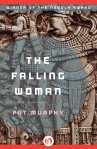
  2. falling woman pat murphy 91fN01GqVsLPat Murphy’s The Falling Woman (1986), which won the Nebula Award and was billed as SF, reads like literary fiction, with a touch of mysticism. The setting is an archaeological dig on Mexico’s Yucatan peninsula. There are two heroines: the chapters alternate between the viewpoints of Elizabeth Butler, an archaeologist and expert on Mayan civilization, and her daughter, Diane, who was raised by her father but after his death shows up unnanounced at Elizabeth’s dig.
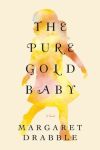
  3. Drabble The Pure Gold BAbyMargaret Drabble’s The Pure Gold Baby revolves around Jess Speight, an unmarried anthropologist whose child, Anna, has developmental problems. After Anna’s birth, Jess switches her focus in anthropology from Africa to England and embarks on a career of freelance journalism so she can care for Anna at home.  The narrator, Nelli,e is fascinated by Jess’s refusal to tell the father, possibly a married anthropology professor, if indeed he is her lover, because Nellie is not sure whether he exists or whether Jess made him up. Anna is an easy baby, but when her developmental difficulties become evident and Jess must take counsel from a doctor, we are reminded of Drabble’s early novel, The Millstone, in which the unmarried narrator, a scholar, has a baby who needs surgery, and she must navigate the health system, eventually playing the upper-class card so her baby will get good care.
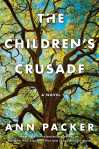
  4. ann packer the-childrens-crusade-9781476710457_hrAnn Packer’s The Children’s Crusade, a brilliant novel about five decades in the lives of the Blair family, Packer asks questions about the American family: is the “bad mother” responsible for all her children’s woes? Is she even necessary when her husband, a saintly pediatrician, is the perfect parent? The women at the group are no-holds-barred angry about the artist Penny Blair’s withdrawal from her family. Having seen many styles of parenting, some much worse than Penny’s, I suggest that Bill, who responds to every crisis with caring questions and psychoanalytical language, is also part of the problem. But censure of Penny is the order of the day.
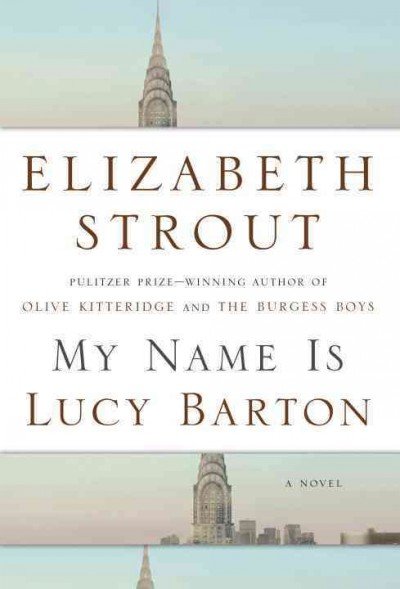
  5. Pulitzer Prize winner Elizabeth Strout’s My Name Is Lucy Barton a gorgeous, lyrical novel about a complicated mother-daughter relationship. The narrator, Lucy Barton, escaped a harrowing, impoverished childhood through a college education. She reinvented herself as a wife, mother, and writer in New York.  During a hospitalization, her mother visits her and they reconcile.  And this has a huge effect on Lucy’s writing.  Possibly this is the best book published in 2016.strout my name is lucy barton 9781400067695_custom-3102f059730b66633fef44e3287ef91337c0495f-s400-c85

The Dessie Question: The Popularity of D. E. Stevenson & Why I Love “Katherine Wentworth”

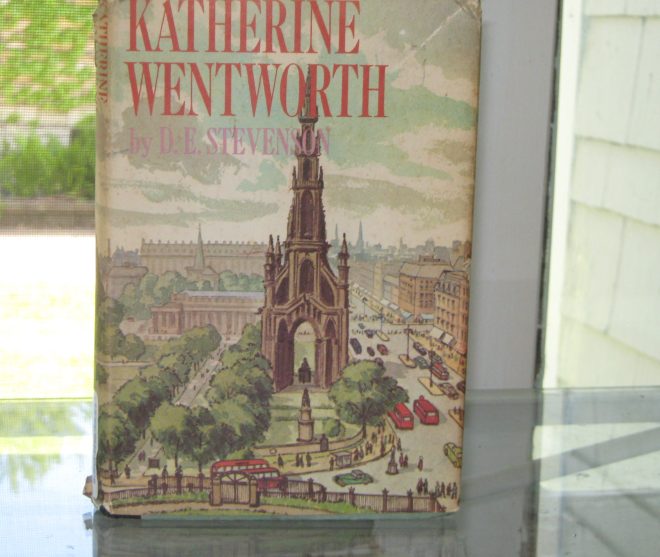
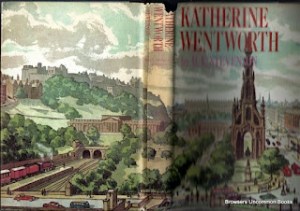
IMG_3630 D. E. Stevenson Katherine WentworthD. E. Stevenson (1892-1973) has hundreds of fans.  There are 345 members of the Dessie group at Yahoo.  Although some categorize her books as light romances, I consider them domestic fiction.  Stevenson is far too discerning and humorous to write a typical love story.

Most of her books are out of print, but several have been reissued in the last decade.  My favorite is Mrs. Tim of the Regiment (Bloomsbury Reader), a comic novel written in the form of a diary  of the wife of an Army officer.   It is based on Stevenson’s own diary.  And Persephone Books has reissued two more and  Sourcebooks has reissued eight.

I am unwilling to pay $25-$50 for an out-of-print DES, but I recently picked up a cheap edition at a sale of Katherine Wentworth,  one of her most captivating books. The atmosphere if not the content falls somewhere between Dodie Smith’s I Capture the Castle and  Richmal Compton’s slightly more wobbly middlebrow novels. You sink immediately into the warmth and stability of Stevenson’s narrative.  Her style is simple and straightforward, getting the job done.  It is her  life-like characters and warm, vivid observations of life that make one read her addictively.

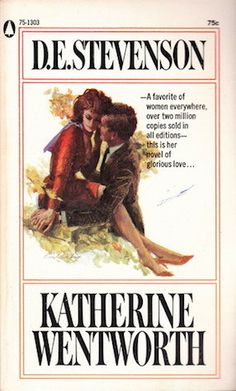
One of the mass-market covers (oh dear!)

One of the mass-market covers (oh dear!)

This charming book is narrated by Katherine Wentworth, a pragmatic, observant widow with a sense of humor. She is struggling to raise her twins and her teenage stepson alonesince the death of Gerald, her archaeologist husband.  The family lived happily in Oxford before; now they live in a small flat in her hometown, Edinbugh.  She is very busy.

Then one day she is walking down the street and an old friend recognizes her.  Katherine has no idea who she is.

The speaker was a woman in a mink coat and a smart green hat with a feather in it; her ace was pale and fine-drawn; her hair, which lay in smooth waves beneath the green hat, was yellow.  I had a vague sort of feeling I had seen her before, but when and where…

Don’t you love her description of fashion?  There are a lot of tweeds in her books, but her women are as fond of clothes as E. M. Delafield’s Provincial Lady and Jan Struther’s Mrs. Miniver.  Zilla is obviously going for a stylish effect.

It turns out that  Zilla went to school with Katherine.  Katherine remembers her as an older girl who was good at games (so was Katherine). And Zilla is heartbreakingly lonely, never married, but  lives with her brother and socializes with shallow rich people.   Zilla insists Katherine come to tea, but has a very possessive nature.   She is annoyed by her brother Alec’s attraction to Katherine, and tries to keep them apart.  Katherine doesn’t care much:  she is busy with the children.

Alec soon becomes a part of the Wentworths’ lives, taking them out for drives and later, when they borrow Zilla’s house in the country for a cheap vacation, he drives them there. Zilla is always having hysterics about his seeing Katherine, so he tries to hide the fact that he is seeing her.  Katherine likes him and is amused by him, but he can she really fall in love with a man who’s afraid of Zilla?  She helps him learn to confront her.

There is an odd romantic plot twist:  Katherine’s late husband left his family, refusing to stay home and manage their estate.  The family has never met Katherine or the children.  Suddenly Simon becomes the heir, and Katherine must visit them.

Well, nothing turns out the way you think it will!  And that’s why I like DES.  The book is a bit uneven, but while you’re reading it you don’t notice.

And that’s why I am a huge fan of Stevenson (though I must admit that not all of her books are good).  Sometimes a comfort read is necessary.

“Girlitude” Week: Tillie Olsen’s Yonnondio

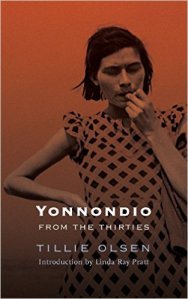
Yonnondio olsen 51QIefHk7XL._SX336_BO1,204,203,200_

It’s Girlitude Week!  It’s my women’s lit binge–last time I called it Gal Up! Week– and I am off to a good start with TILLIE OLSEN’S YONNONDIO:  FROM THE THIRTIES. 

Olsen (1912-2007) was an American feminist writer, best known for her award-winning short story,”Tell Me a Riddle.” She was a powerful presence at a reading, and those of us who attended were mesmerized by her charm and eccentricity.  She wrote only three books, Tell Me a Riddle,  a brilliant collection of four short stories (“I Stand Here Ironing” is widely-anthologized); Silences, a study of why writers (often working-class, women, or people of color) fall silent; and Yonnondio, an unfinished novel.

I procrastinated reading Yonnondio (written in the ’30s, published in 1974), since I am not a fan of unfinished lit. But lo and behold!  it s is Olsen’s best work, a tour de force, the powerful story of a working-class family trying to survive during the Depression. Her lyrical style combines stream-of-consciousness and naturalism:  it is like Dreiser and Harriette Arnow high on Faulkner and Walt Whitman.

Olsen, a union activist who worked for low wages as a maid, packinghouse worker, and factory worker while raising four daughters, lived for many years in poverty.  In this harrowing portrait of the Holbrook family trying to get by on starvation wages, they fall lower and lower down the ladder of the American class system.  The Fourth of July means nothing to weary Anna Holbrook, who is annoyed when her husband spends money on fireworks:  the celebration of freedom has nothing to do her family.  Jim works like a slave in a coal mine, then as a tenant farmer, and then in the slaughterhouse.

In the beginning, when he is a coal miner in Wyoming, it is a stark life.  How could it get starker? we wonder.  The miners are brutal and often drunk, while the woman  try to protect the children and help them get an education.  There are shades of D. H. Lawrence’s Sons and Lovers in Yonnandio, though Lawrence’s Morel family is more refined than the Holbrooks.

yonnondio bison books 51xLzDkJdnL._SX311_BO1,204,203,200_Olsen sketches the family with a harrowing simplicity.

For several weeks Jim Holbrook had been in an evil mood.  The whole household walked in terror.  He had nothing but heavy blows for the children, and he struck Anna too often to remember.  Every payday he clumped home, washed, went to town, and returned hours later, dead drunk.  Once Anna had questioned him timidly concerning his work; he struck her on the mouth with a bellow of “Shut your damn trap.”

But Anna doesn’t stand up to the situation as well as Lawrence’s better-educated Mrs. Morel.

Anna too became bitter and brutal.  If one of the children was n her way, if they did not obey her instantly , she would hit at them in a blind rage, as if it were some devil she was exorcising.  Afterwards, in the midst of her work, regret would cramp her heart at the memory of the tear-stained little faces.  “‘Twasn’t them I was beatin up on.  Somethin just seems to get into me when I have something to hit.”

And the mines are dangerous:  there are explosions, and Jim is lucky to survive.  And after a schizophrenic man tries to throw their daughter Maizie down a mine because he thinks it is hungry, Jim decides to move.

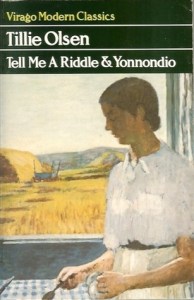
tillie olsen virago 21140689They live on a tenant farm in South Dakota, where they grow their own food and at first are very happy. The children thrive on the land and finally have a chance to go to school. This is Anna’s dream for them:  she wants them to go to college.  Mazie, the oldest child, is especially quick, imaginative, and  creative.  She invents stories about nature for her brother (myths about the wind, leaves, and stars).  But Anna is constantly pregnant and sick, having and losing babies.  Maizie is traumatized when her father leaves her alone on the farm with her mother in labor, and her mother is furious that he takes the other children and leaves the little girl.  As soon as Jim comes back with a woman from the farm,  Maizie runs and hides and covers her ears.  She doesn’t quite understand what is happening, but she knows it is terrible.

The bank owns the farm but the bank and takes all the money, so they move to Omaha, where Jim slaves in a slaughterhouse.  VIolence, brutality, and the stink of dying cattle and the meat processing dominate their lives and make them sick.

What a stunning book!  And what a shame that we lost all those years of Olsen’s work.  But who can write when she must work round the clock at a job and raising children?  In the early ’70s Olsen found four complete chapters of the book and some fragments.  She says she began it in 1932 in Fairbault, Minnesota, and worked on it until 1937, as she moved around the country.  She cobbled it together and polished it.

She writes,

Judgment had to be exercised as to which version, revision or draft to choose or combine; decision made whether to include or omit certain first drafts and notes; and guessing as to where several scenes belonged.  In this sense–the choices and omissions, the combinings and reconstruction–the book ceased to be solely the work of that long ago young writer and, in arduous partnership, became this older one’s as well.

I loved it, and it’s one of the best books I’ve read this year.  It is available from  Bison Books, an imprint of University of Nebraska Press.

The Spring Giveaway: Natasha Stagg’s Surveys & Conrad Richter’s The Trees

Surveys natasha Stagg 9781584351788It’s the Spring Giveaway!  I’m clearing space on my bookshelves again.

richter robert-mcginnis_the-trees_ny-bantam-1975Would anyone like my copy of Natasha Stagg’s stunning novel, Surveys, about a down-and-out college graduate stuck in a job giving surveys at the mall?   (I wrote about it here.)  And I also am giving away a mass-market paperback edition of Conrad Richter’s   The Trees,  the first in The Awakening Land trilogy.  This lyrical novel tells the story of a pioneer family settling in the woods of Ohio.  Sayward, the oldest daughter, must take responsibility for her siblings as one tragedy after another afflicts them  (I wrote about this remarkable novel  here:  Richter won the Pulitzer Prize for the third in the series.)  I recently replaced this 1970s paperback with a $1.50 first edition hardback.  (The beauty of the Planned Parenthood Book Sale!)

Leave a comment if you would like one or both.  The giveaway is open to Americans and Canadians (the postage is, alas, too high to send “abroad).”

And tomorrow back to my “Girlitude Week” posts!

“Girlitude” Week! When You Just Have to Read Women’s Lit

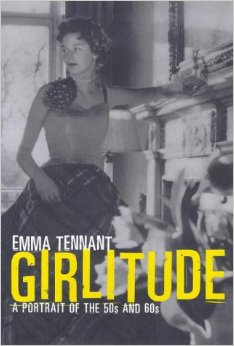
Girlitude tennant 41EAVSQVDPL._SY344_BO1,204,203,200_Why is it Girlitude Week?

It’s a whim.  I’ve long meant to read Emma Tennant’s memoir, Girlitude:  A Portrait of the 50s and 60s. I very much enjoyed her comic science fiction novel,  The Crack, in which a group of very colorful Londoners try to survive when a large crack appears in the Thames. Tennant has also written “sequels” to Jane Austen and Charlotte Bronte, which I assume pay the bills.

And I feel like a general binge on women’s books anyway, so I went to a suburban library   to check out a few novels by D. E. Stevenson.

Yes, we’re going to be thoroughly womanly around here.    My cousin the librarian, who very much sports “grrrrl-attitude,” also plans to participate in “Girlitude Week,” even though we just invented it today. She is reading Diana Gabaldon’s Outlander, a time travel-romance and loving it. And she doesn’t see why I don’t read Gabaldon too.  I have tried.  It’s very enjoyable, but…  Someday.

katherine wentworth stevenson 9f420818217a6ff62d0f455954538605SO WHAT AM I READING NOW?  I amdeeply engrossed in D. E. Stevenson’s charming, magical novel, Katherine Wentworth.  Katherine, a widow, struggles to raise her teenage stepson Simon and twins Deni and Daisy in Edinborough after their father dies.  Everything is going along very well until Simon gets a letter from his grandfather informing him that he is his heir.. Since he  has never acknowledged his late son Gerald’s family, Katherine distrusts him. She doesn’t think Gerald would have approved.  She is very uncomfortable on a visit to his house, and I am, too.  Katherine would rather see Simon go into business with his school friend, as he had previously planned to.  But everything will come out all right:  that is the joy  of D. E. Stevenson.

IMG_3627


MOVING FROM LEFT TO RIGHT.

Yonnondio olsen 51QIefHk7XL._SX336_BO1,204,203,200_Tillie Olsen’s Yonnondio: From the Thirties. Olsen, one of the most lauded American writers of the twentieth century, is the author  two other brilliant books,  Tell Me a Riddle, a stunning short story collection (“I Stand Here Ironing” is often anthologized), and Silences, a study of one-book authors.  She began writing Yonnondio in the 1930s and put it together from scraps of manuscript in the 1970s.  According to the jacket copy, it “follows the heartbreaking path of the Holbrook family in the late 1920s and the Great Depression as they move from the coal mines of Wyoming to a tenant farm in western Nebraska, ending up finally on the kill floors of the slaughterhouses and in the wretched neighborhoods of the poor in Omaha, Nebraska”

Laurie Colwin’s Passion and Affect, a collection of short stories.  Colwin was brilliant and funny and wrote some of the wittiest comedies of manner I have read, including Family Happiness, which I wrote about here, and her cookbook, Home Cooking, a collection of her columns from Gourmet magazine.  I reread her books at least once a year.  They are brilliant literature as well as comfort reads.

Passion and Affect Laurie Colwin 51qvYK5nAuL._SY344_BO1,204,203,200_

Janet Kauffman’s Collaborators. You are in for a great treat if you’ve never heard of Kauffman.  She won the PEN Faulkner Award for her beautifully-written  short novel, Collaborators.

Andrea is proud of her mother, a not-too-devout Mennonite, but everything changes when the mother suffers a stroke.

collaborators kauffman 9780224026130-usAnita Desai, who has been shortlisted for the Booker Prize three times,  is one of my favorite writers, I am eagerly looking forward to reading better copy desai fire on the mountain $_35Fire on the Mountain.    Alas, it is the only one I haven’t read.

The jacket copy says,

Gone are the days when Nanda Kaul watched over her family and played the part of Vice-Chancellor’s wife. Leaving her children behind in the real world, the busier world, she has chosen to spend her last years alone in the mountains in Kasauli, in a secluded bungalow called Carignano.

Until one summer her great-granddaughter Raka is dispatched to Kasauli and everything changes. Nanda is at first dismayed at this break in her preciously acquired solitude. Fiercely taciturn, Raka is, like her, quite untamed. The girl prefers the company of apricot trees and animals to her great-grandmother’s, and spends her afternoons rambling over the mountainside. But the two are more alike than they know. Throughout the hot, long summer, Nanda’s old, hidden dependencies and wounds come to the surface, ending, inevitably, in tragedy.

And I am already halfway through Maureen Howard’s complicated Rags of Time, the fourth novel in her Seasons quartet .  Stunning writing, the complicated relationship between an aging writer and the characters in her books, whom we have met in the earlier books. Intriguing and beautifully written.

rags of time howard8197912

I’ll let you know how it works our.  Expect six or more Women’s Lit posts in the next week!

Natasha Stagg’s Surveys

Surveys natasha Stagg 9781584351788

I never wrote in a diary anymore. That type of soul-baring was now reserved for the Internet, and it was packaged in many different ways not as painfully direct.”– Surveys by Natasha Stagg

Natasha Stagg’s stunning first novel, Surveys, is the Emily Books selection for April. You haven’t heard of it because (a) it will never be a Barnes & Noble Discovers pick ; (b) your independent bookstore doesn’t carry it; and (c) the author doesn’t have a Wikipedia page.

Unfortunately it is unlikely that an obscure novel published by  Semiotics(E), an imprint of MIT Press, will sell a lot of copies.  Still,  this is a very accessible novel about outsiders in the tradition of Ann Beattie’s Chilly Scenes of Winter, Jay McInerney’s Bright Lights Big City, Madame Bovary, Tamara Faith Berger’s Maidenhood, with  just a dash of the canceled TV show “Selfie” and Lena Dunham’s  “Girls.”

Real life is not  satisfying for the down-and-outer. How can it be? The narrator,  Colleen, is a 23-year-old college graduate who can’t find a job in her field (psychology).  She works at a marketing firm office at the mall, giving surveys to people who  earn a couple of dollars for answering questions about products like a new Britney Spears perfume.  And then Colleen and her co-workers must fake the results, because the marketing firm wants big numbers of people saying they like the product.

Stagg’s style is elegant but her prose is never showy.  The straightforward narrative is interspersed with pessimistic but realistic analyses of consumer society. Colleen is critical of our lives as commodities. She sees  society in the context not only of useless jobs but of products at the mall.  She tells us: “I’d applied at Victoria’s Secret, Hot Topic, Charlotte Russe, Sweet Factory, The Gap, Banana Republic, Guess, Express, The Limited, J. Crew, The United Colors of Benneton, and all the department stores, and only Forever 21, which had about fifty employees, called me back before this place did.”

Her personal life is as empty as her job.  She lives alone in a cheap apartment next door to an old man who sends her flowers and handwritten vignettes written on newsprint and then photocopied.  He writes of his love and her beauty.  He is a good prose writer, but turns out to be a peeping tom.

She observes of the first of her neighbor’s letters:

The biggest motivation of Internet communication is trying to find out what people think of you.  Everyone in the world has always wanted to know how they are perceived, and I have particularly always wondered how I appear to neighbors, since they are around me more than friends, but they are oblivious to my social life.  And here was an account, possibly written with the intention of only the writer as his audience, now copied and displayed for the person it described.  Had I somehow asked for this?

Like impecunious people everywhere, she entertains herself with drinking, drugs, and the internet.  She goes to clubs with a drug dealer, and accepts money for sex.  They think it’s funny, but the truth is she gets off on it.  And anyway she cannot afford the products the society presses her to buy. What is there for her?

The scenes of office life are vivid and fascinating, but her online life becomes more real to her as the weeks pass. She stays up all night updating her social media.  And then  she falls in love with Jim, a “semi-famous person” she meets online.  She flies from Arizona to  L.A. to meet, him  and they become suddenly a famous couple, because of their exchanges on social media platforms, which they begin to manage and plan together.  They have more and more followers every day.  And they are paid for hosting parties at clubs, being paid to stand behind the DJ at these parties in cities all over the world.

And life continues to be meaningless:  parties, hotel rooms,  drinking, and drugs.  But now she has Jim.  They finish each other’s sentences.  She is so happy.  They are  famous, in love, and have money, because their being a couple in love has been marketed to the masses online.

Online love is different from real love, as you can imagine, and they quarrel over his brief affair with Lucinda, a famous blogger/journalist whom Colleen constantly Googles.  Colleen is jealous, because she wants to be Lucinda, who is famous for her writing about women and celebrity.

Stagg’s book is edgy and brilliant and well-written. But I’ve noticed that the heroines of these smart young women’s novels are confused, directionless, lost, and even masochistic. They do not really own their  sexual identity –sex with men is usually surprisingly bad and they don’t have orgasms– yet they don’t feel they can accomplish anything of value on their own. It’s easy to see why Fifty Shades of Gray throve in this depressive culture.    Thank God I grew up during the years of Second Wave Feminism and Erica Jong’s sexual empowerment (Fear of Flying and its sequels), Doris Lessing’s fierce criticism of society and her heroines’ determination to define their own lives, Shulamith Firestone’s quite weird critique of women’s lives and sexist society, The Dialectic of Sex, and all the didactic poetry by Adrienne Rich and Robin Morgan.

Every generation has its own culture, and these small press books convey a sense of what young women feel they are missing today. Surveys is the best of these novels I’ve read.  Staggs is brilliant and talented:  I hope she writes more.

The Great, the Good, & the Light: Conrad Richter’s The Trees, Sybille Bedford’s A Compass Error, & Margery Sharp’s The Nutmeg Tree

richter the trees

Love this kitschy cover!

My reading is nothing if not eclectic.  I have recently read (a) a neglected American classic about pioneer life by Conrad Richter; (b) a well-crafted novel by the English/European writer Sybille Bedford; (c) and a light romance by Margery Sharp.

The Trees Conrad Richter s-l300CONRAD RICHTER’S THE TREES (1940).   This is the first novel in Richter’s lyrical  trilogy, The Awakening Land.  He won the Pulitzer for the last book in the series, The Town, and the National Book Award for The Waters of Kronos (which I wrote about here). Alas, the trilogy is out of print in book form, but an e-book is available.

Richter’s beautifully-written novel is reminiscent of Willa Cather’s pioneer stories.  it unfolds in a simple, third-person narrative, sometimes omniscient, other times from a single character’s point of view.  It begins with the Luckett family’s difficult  journey from Pennsylvania to the woods of Ohio.

It was the game that had fetched the Lucketts out of Pennsylvania.  Months before the chestnut burrs had begun to sharpen, Worth Luckett looked for a woods famine.  It would be like nothing since the second winter after Yorktown, he claimed. He spent so much time in the woods with nobody to talk to but Sarge, his old hound, that when he opened his mouth Jary had learned to pick up her ears and listen.  For a month he had been noticing sign.  The oaks, beeches and hazel patches would have been slim mast for bears and pigeons this year.  Deer paths lay barer than any time he could recollect of fresh droppings.  And now the squirrels were leaving the country.

This family is smart, tough, and barefoot.  Nobody ever complains.  Worth Luckett is an adventurer, and his family has to put up with it.  Jary, his sociable wife, has cancer and hates living under “an ocean of leaves” in the thick forest with no neighbors.  Sayward, the oldest daughter, is smart and quiet, the one who takes responsibility when multiple tragedies occur.  ( I’m still  recovering from a couple of the traumas.)   Genny, the second daughter, is an attractive girl who  marries an abusive man.  The middle daughter, Achsa is treacherous, wanting what Genny wants.   Wyatt, the only son, longs to grow up and go hunting like his daddy; and Sulie, the toddler,  is hilariously optimistic. After visiting a general store, she declares, “We mought even git rich and have shoes!”

When they find a place to live, Worth takes off.  He is too busy exploring and hunting  to build a cabin, and they are camping out in a lean-to.  The leaves begin to fall, and at least Jary can see the sky then.  Then she presses Worth to build the house.  They can’t winter outside in the woods of Ohio.

The “ocean of leaves” can be claustrophobic.

Down in Pennsylvania you could tell by the light.  When a faint white drifted through the dark forest wall ahead, you knew you were getting to the top of a hill or an open place.  You might come out in a meadow or clearing, perhaps even in an open field with the corn making tassels and smelling sweet in the sun.  But away back here across the Ohio, it had no fields.  You tramped day long and when you looked ahead, the woods were dark as an hour or a day ago.

Gorgeous writing, and he uses dialect in the dialogue.  Is that the difference between Cather and Richter and why readers prefer her?  Richter explains in the acknowledgements that he tried to recreate the pioneers’ “mode of speech and thought” from  research, interviews and conversations, and his own memories of descendants and neighbors of pioneers in the mountains of Pennsylvania.

A great book!  At Goodreads several reviewers say this is their favorite book, and I can see why.  I especially love Sayward, the stable center of the house in the woods.

a compass error sybille bedford 9781582431598SYBILLE BEDFORD’S A COMPASS ERRORThis sequel to A Favourite of the Gods is a good read but very uneven.  Approximately sixty pages are devoted to the heroine Flavia’s retelling of the action in A Favourite of the Gods to her lover, Therese.  Why oh why didn’t I skip thosepages?  The book was not improved by Flavia’s synopsis.

But I love the character.  Young Flavia is  alone, studying for Oxford entrance exams in a town in France, while her mother, Constanza, a divorcee, travels with her lover, Michel, a writer.  They are waiting for his divorce from his first wife, who has not lived with him for years. Constanza is excited about marrying a man she loves.  (Her first marriage was unhappy.)

Meanwhile, Flavia reads and writes essays.  And because she wants solitude, she deceives both Constanza and their friend Mr. James, writing letter that imply that she is not alone.  She has a tight routine, until an artist’s wife, Therese, notices her eating alone in a restaurant and decides it is inappropriate.  Therese invites Flavia to eat dinner with her family every night.  They become lovers.

But that is innocence, though perhaps not quite what Flavia’s mother would want.  Then  a femme fatale comes to town and seduces Flavia, and we all want to say, “No! NO!”  I won’t tell you what happens, but it is devastating.  It’s not the lesbianism, mind you; it’s the purely evil character of this seducer.

Parts of this are very good, but it is just a good read, and disappointing after A Favourite of the Gods.

margery sharp the-nutmeg-treeMARGERY SHARP’S THE NUTEMEG TREE.  Is it possible to be too light?  Sharp’s light romances have been much praised by many bloggers, but my reaction is, Why?

Several of her light comedies have recently been reissued as e-books by Open Road Media.  They are definitely fluffy airplane reads:  if only I had had Martha in Paris (which I wrote about here) on my trip to London.

The Nutmeg Tree is charming and witty, but  D. E. Stevenson and  Angela Thirkell are deep and dark in comparison!  The beginning of The Nutmeg Tree is very, very funny. Julia is singing in the bathtub, while in the other room the bailiffs are rattling the doorknob and pleading with her to pay the five pounds she owes.  Eventually she sends them to fetch a pawnbroker she knows; he buys some of her stuff as a favor and she antes up to the bailiffs.  She has just enough money to travel to France to visit her daughter, Susan, whom she hasn’t seen in many years (Susan has been raised by her grandmother).  Susan has written to her about a young man she is engaged to, whom her grandmother doesn’t approve of.  And so Julia is off to give advice.

Julia reads The Forsyte Saga, so she’ll seem like an intellectual, not understanding that it is middlebrow fiction!  And as a former actress, she can’t help being impressed by a handsome trapeze artist she meets on the boat.  Fred’s mother is seasick, so Julia takes her place in the night’s performance.

And then she is off to see her daughter’s, and there is much romance and comedy.

It’s great fun, but…there’s not much here.

Just so you know what you’re getting…it’s more an entertainment than a novel.  And that certainly has its place.

Book Sets & Why We Love Them

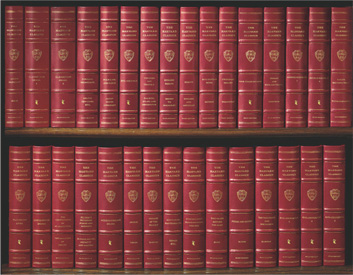
harvard classics

A 1910 liberal arts education!

Do you like book sets?

I’ve been laughing over Josh Hanagarne’s article  at Book Riot, “The Bookseller Who Saved My Collection.”   He  decided  to become a scholar, so he majored in philosophy for a semester and then “gave up immediately after finals.” But he still wanted to appear erudite, so he asked his parents for  a 1910 set of the Harvard Classics for Christmas. He writes,

On Christmas morning, I opened up the two massive boxes and looked down at the dusty, crinkled green spines as a cloud of dust billowed out.

No one was jealous of my gift, but my siblings were philistines, not at all interested in appearing to be serious scholars.

The idea with the 51-volume set was that it contained, according to Dr. Eliot, “A liberal education.” I started looking at the titles on the spines. I even recognized some of the names, like Plato. I had no idea who Benvenuto Cellini was, and I didn’t know what I Promessi Sposi was, but 51 volumes of knowledge!

Better yet, there were 52 weeks in a year, so I’d be done with my liberal education at the rate of slightly less than one book per week.

Well, it didn’t quite work out. He read a few and got bored.  And later when he tried to sell the set, the bookseller refused because he saw Josh hesitating.

I, too, have a weakness for sets.  Some are nice, some were just cheap, and I ‘ve replaced most with paperbacks over the years because I needed scholarly introductions to the books.

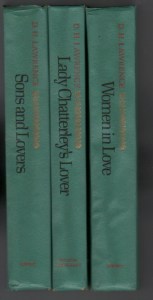
d. h. lawrence book club editions 026410

A Lawrence three-pack!

1 The Literary Guild classics.  I worked briefly at a bookstore where women were ghettoized as cashiers.  A charming colleague with a college degree (also stuck as a cashier) persuaded us to join the Literary Guild book club, which offered classics in sets of three.  She emphasized how much fun it was to receive books in the mail (long before Amazon, and she got free books for signing us up) .  I became  fond of these cheesy book club editions, though we must have been out of our minds since we could have bought nicer editions at a discount at the store.  But we were secretly radical:  we didn’t put our money back into a sexist bookstore.

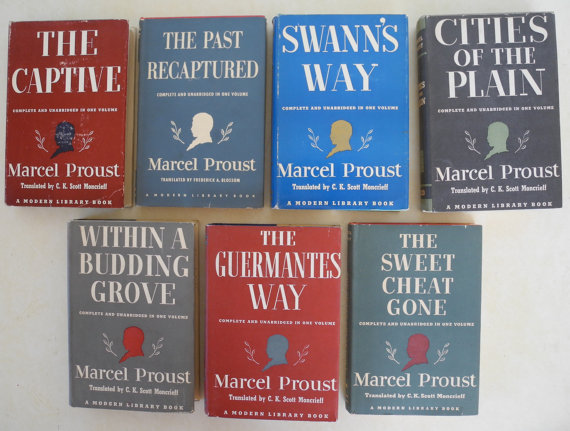
2 Proust’s Remembrance of Things Past.  We were waiting for a Greyhound bus in Iowa City and stopped at The Haunted Bookshop, a used bookstore. I was thrilled to find a musty set of Modern Library editions of Proust.   I eventually replaced them  with a paperback set with D. J. Enright’s corrected translation, but the original Moncrieff  may well have been good enough.

proust set il_570xN.808961634_tfet

Mine didn’t have dust jackets!

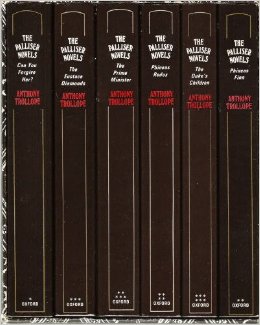
3 Trollope’s Palliser books.  I originally read these in mass market paperbacks, but for my second read bought a used set of these Oxford editions.

Oxford pallisers novels set trollope 51lFtqDxc-L._SX258_BO1,204,203,200_

A set of the Pallisers books.

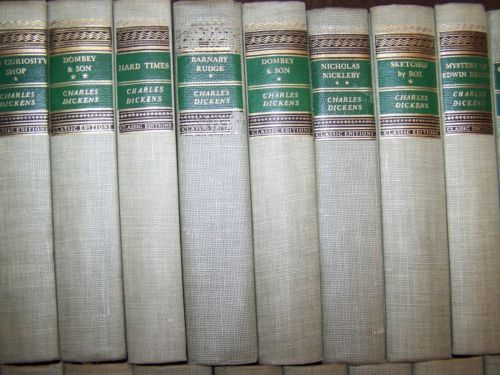
4. The Dickens set.  I bought an almost complete book club set of Dickens (Walter J. Black) when I was a teenager.  The down side?  They have no introductions, so  I later supplemented them with Penguins.  Nowadays these hardbacks (two volumes for each title) are convenient because they have big-ish print.  But I had to lug them home in two trips!  None of us had a car back then.

lot-of-21-charles-dickens-walter-j-black-inc-mint-green-w-guilt-lettering-hard-0797d44a4d61b0b8f02bd1ff6641ac01

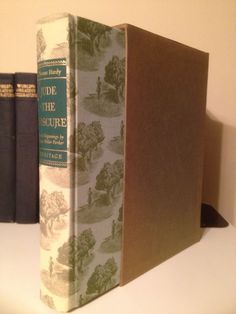
Thomas Hardy (Heritage editions).  I love these Heritage Book Club hardbacks of five of Thomas Hardy’s most famous novels. They come in boxes and have great illustrations! Here’s a copy of Jude the Obscure.

Thomas Hardy heritage e23cfba15680805062fb890ed8560ae1

A Heritage Book Club “Jude the Obscure.”

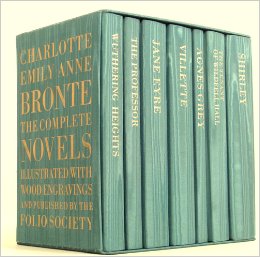
6.  The Bronte set.  I really don’t know what got into me.  This illustrated Folio Society set of the Brontes  was cheap and looked very nice in the picture at eBay.  Well, it is nice in a way, but the covers are silk, which wasn’t clear to me, and you have to be careful not to stain them with tea.  The best thing I can say about it is that I finally have an illustrated copy of Villette.

bronte folio society 61eXAuaf5BL._SL500_SX258_BO1,204,203,200_

If only they weren’t silk!

Have any of you gone mad for a set?  Loved it or regretted it?

Why Book Chat Is Hard & Four Literary Links

ANNA KARENINA ROSAMUND BARTLETT 51Xm9EOXctL._SX315_BO1,204,203,200_

Why is it so hard to talk about books?

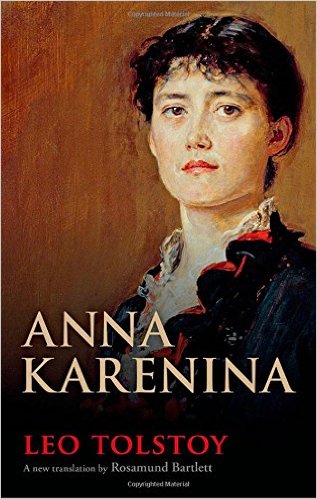
The first time I read Anna Karenina, I wanted to share it with someone. I dragged my huge paperback copy to work and to restaurants and read it in hallways between classes, but none of my friends had read it.   I kept up with Cicero and Homer but bluffed my way through German and chemistry until I turned the last page of Anna.  I was swept away by life in nineteenth-century Russia.  I empathized with beautiful, kind, intelligent Anna, who leaves her husband and son to live with her lover, Vronksy, whom she meets, ironically, on a visit to fix the marriage of her brother Stiva and  sister-in-law Dolly, who is shattered when she learned of Stiva’s  affair with the governess.

“This is such a brilliant book,” I told my then boyfriend.  He sat smoothing his moustache and staring at a cup of coffee, because he was extremely hung over.  He was a big-time partier, a guy who told stories about getting kicked out of the Peace Corps because of his antics at a fiesta. It is a sign of my tremendous immaturity that I thought this anecdote funny.

And so I had to talk to other people about Anna Karenina. I needed a book group!  A friend and I occasionally got together at Grace and Rubie’s, a women’s club in Iowa City, for book talk. I chatted earnestly about Levin and Kitty, my favorite romantic (though not very romantic) couple in the book, and between my blathering she talked  about Rilke’s Letters to a Young Poet.  It was cross-talk, since neither of us had read the other’s books, but it is comforting for readers to spend time with each other.

Is it hard for you to chat about books?  I can put down on paper what I cannot express in talk.

That’s one reason blogs are so nice.  I find it easier to share my enthusiasm on paper, though still not very easy.

AND NOW 4 LITERARY LINKS.

  1. crowley engine-summer2At Tor’s science fiction blog, Caitlyn Paxson writes about finding the right book at the right time.

She begins:

I spent my 16th year as an exchange student in France, living with a French family, attending a French school, and being completely immersed in the language—which I barely spoke a word of when I arrived. Even though I was an obsessive reader, I left my books at home. The whole point, I’d reasoned, was to forsake English for a year while I learned a different language. I rapidly realized my mistake—I was forlorn without books that I could understand.

So I wrote a letter to my Great Aunt Joan. In my reading life, my Aunt Joan was the Gandalf to my Frodo, the Merlin to my Arthur. She was responsible for most of the great literary loves of my childhood: the Moomins, Oz, the Dark is Rising series—all of them came from her. I wrote to her and I told her how forsaken I felt without any books that spoke to my heart.

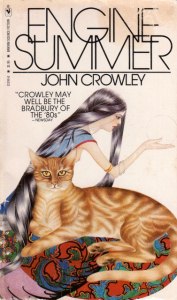
The book was John Crowley’s Engine Summer.

Amanda Peet

Amanda Peet

2 At Lenny, the actress Amanda Peet writes about drawing the line at plastic surgery.

It’s painfully obvious, but I’m still ashamed to admit this: I care about my looks. How else can I explain my trainer, stylist, and Barney’s card? I’ve bleached my teeth, dyed my hair, peeled and lasered my face, and tried a slew of age-defying creams. More than once, I’ve asked the director of photography on a show to soften my laugh lines. Nothing about this suggests I’m aging gracefully.

Yet for me, it would be crossing the Rubicon to add Botox and fillers into the mix. I want to look younger (and better), trust me. The only reason I don’t do it is because I’m scared.

We hear you, Amanda.  I  look like a witch now but still wouldn’t consider Botox or plastic surgery.

3. The blogger Kate MacDonald writes amusingly about Dorothy Sayers’s Murder Must Advertise.

4 And at the Picador blog, you can read a list of Ten Books about Cults.  (The only one I know is Marisha Pessl’s Night Film, which I wrote about here.)