The Art of Taking Notes: Just Write Everything Down!

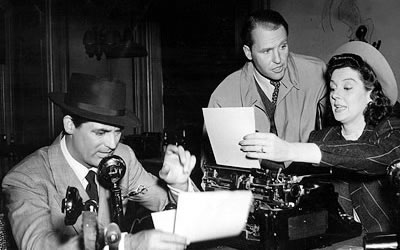
Rosalind Russell doesn't have time to take off her hat when she's typing her notes in "The Front Page."

In “The Front Page,” ace reporter Rosalind Russell doesn’t even take off her hat when she’s typing.

There is an art of taking notes. Simply Write Everything Down.

It is not the best secret, but it is mine. How will I know what I want to remember later?  And so I have been known to scribble down entire lectures by favorite professors, quotes from Oprah, and intros to music on public radio.  (I had forgotten all about Santana, hadn’t you?)   I am your go-to person if you want to know what  Professor X said in 1980 about eye disease in Aristophanes’ comedies.  (He was making a joke about the prevalence of eye infections and myopia in Greek comedy, but then decided it would make a good article.  Did he ever write it?)  Kelsey Grammer told Oprah how much he loved Steinbeck’s The Grapes of Wrath during one of her book club sessions.  Alas, I fear I’ve thrown out the notes about the reunion of Oprah and Jonathan Franzen.

image

A pile of notebooks.

When I worked as a freelance writer, I interviewed chefs, fly fishermen, and dancers.  If you’re an outline person and you’re interviewing someone fascinating, you won’t go far.   Try writing A, a1, a2, B, b1 when you’re trying to understand the mad art of fly tying. I had to explain I couldn’t thread a needle or I’d still be sitting on that stool trying to figure out how to use a bobbin.

You’ll want to catch every word when the poet James Dickey is bored on a book tour. He’s trying to draw you out because he’s already given this interview to ten other reporters, and you’re trying to talk about his 683-page experimental novel, Alnilam, which you have not finished because the editor gave it to you yesterday.  (You can read my interview with Dickey here.)  When he focuses on the book, you want to record every word.   I wouldn’t have wanted to miss the following gems:

One of the things I wanted most to do with this book is to restore the true sense of flight. I just came up here on an airline, but being on an airline is like being in a hotel at 35,000 feet. Man has been capable of true flight for less than 100 years, and these frail little trainers (planes) that these boys are in give the body the true sense of being caged in the air.

image

My Chinese diary!

Do I take notes now?  Yes, eclectically.  It’s a pity I don’t take notes on my reading, because it would make blogging easier.  But blogging is fun!  That is my motto.  I’m not going to take notes for fun.

Still, I do take notes eclectically in my many notebooks.   See this adorable leather and silk diary I bought at Things and Things and Things in Iowa City when I was 20?   I scribbled down quotes from Anna Karenina.  I felt a great affection for Levin, a landowner who is devastated when  Kitty rejects his proposal.

“Yes, there is certainly something objectionable and repellant about me,” thought Levin after leaving the Shcherbatskys, as he walked toward his brother’s lodgings. “I do not get on with other people.  They say it is pride!  If I had any pride, I should not have put myself into this position.”

I put aside a Brazilian modernist novel, Jorge Amado’s Gabriela, Clove and Cinnamon, when I flew to London last fall.  When I returned, I had to make a long list of characters because I couldn’t keep their names straight.   Why is everybody called Colonel, I wondered..  (It’s a courtesy title:  corrupt landowners,  politicians, and other rich thugs are neither military nor quite respectable.  A stunning novel, but hard to write about it when you’re on the four-months-between-start-and-finish plan.
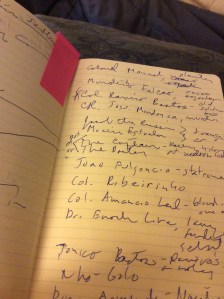
image

Good luck with reading this!

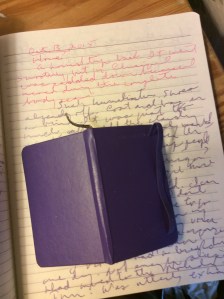
When I traveled to London last fall, I took two notebooks:  one for lists and one for a diary. Loved the trip, but there were some hitches coming back.  Naturally I wrote it up at the Chicago airport (in colored pens from Paperchase).

A horrid trip back.  It went smoothly, but in Chicago I was patted down because I moved during the complete body scan.

Such humiliation.  Shoes already off.  Coat and bag in bin.  It was  too much after all the standing in line, nothing clearly marked, no ropes to mark off lanes…  I have to say they’re more organized in London.
image

The London Lists and Diary

And so there they are!  Notes and notebooks, for all the good they’ll do me.  But they give me a sense of accomplishment.

Do you have a note-taking system? Hundreds of notebooks?  Special lucky pens? Comments are open for this post!
What to Read After Ferrante: Gail Godwin’s A Mother and Two Daughters

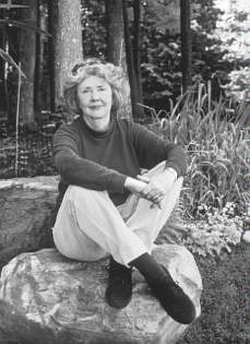
Gail Godwin

Gail Godwin

Women love Elena Ferrante’s Neapolitan Quartet, her hugely enjoyable pop-literary novels about a tumultuous friendship lasting from childhood through old age.

Many reviewers have asked, “What do I read after I’ve finished Ferrante?”

I have the answer.  If you like Ferrante…

Try Gail Godwin, a Southern writer who has been a finalist for the National Book Award for The Odd Woman (1975), Violet Clay (1980) and A Mother and Two Daughters (1983).  She is the author of 14 novels, two short story collections, three non-fiction books, and ten libretti.  Godwin is  both literary and popular:  she  knows how to tell a gripping story, and how to dig deep for psychological truths.  She worked as a journalist, earned a master’s from the Iowa Writers’ Workshop and a Ph.D. from the University of Iowa, and taught at various universities.  Her beautifully-written  novels explore the difficult relationships between women and their families.  Her characters are well-read and sometimes intellectual: I look forward to their discussions about Nathanael Hawthorne, George Gissing, George Eliot, and Montaigne.

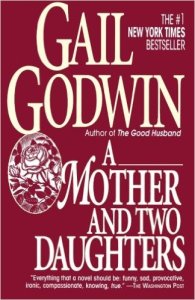
gail godwin a mother and two daughters 51xHfXMjvbL._SX322_BO1,204,203,200_My favorite of her novels is A Mother and Two Daughters, the  story of three women  entangled by family ties and daily conflicts that make it hard to see one another clearly.  It is told  from alternating points of view and  in distinctive voices:  Nell Strickland, a happily married woman who lives with her husband, Leonard, a lawyer, in a house with a view of  the mountains  in North Carolina; Cate, her wildly rebellious daughter, is an English professor at a college in Iowa, who has been married twice and is ending an affair with the Resident Poet; and Lydia is the dullest, a 36-year-old housewife and mother of two who leaves her husband for two reasons:  (a) to take a lover and (b) to go back to school.

Nell is in the middle.  She can see the strengths of wild Cate, who doesn’t care what others think, and of traditional Lydia.  Seeing them at the same time can, however, be trying.

The three come back together after Leonard Strickland, their calm, intellectual, Montaigne-reading husband and father, dies of a heart attack while driving home from a party:  Nell has a broken rib.

After Lydia picks up Cate at the airport, they drop by the house.  They sit in the living room in the house where they grew up.  The description of the room tells so much about all three of the women.

The early-winter sunset was filling the room with shadows. So much family history had happened here.  Cate had petitioned to be allowed to drop out of convent school and go to public high school.  In this room, Lydia, hardly able to contain her triumph, had made hasty wedding plans so she could accompany Max to his new job in London.  every six months, Nell Strickland would declare the room off-limits the night before it was her turn to hostess the Book or Bridge Club.  In the southwest corner, next to the huge Magnavox console, their father would sit on Saturday afternoons, upright and motionless as a Pharaoh…as he gave himself up to his operas via earphones.

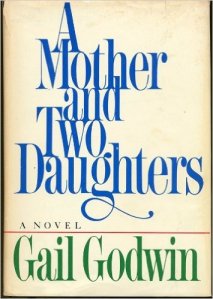
mother and two hardback gail godwin516P2u0ym5L._SX353_BO1,204,203,200_Life doesn’t stand still after the funeral.  Back at school, Cate is asked to take over a theater class after the drama teacher had “suddenly” to leave, i.e., was fired because he had made a gay pass at a student.  And so Cate meets Roger Jernigan, the father of one of her students,  known as the Pesticide King, who lives in a castle on the bluffs. Amazingly, they click.  They enjoy  their talk and are attracted.  He visits her flat in a condemned building, and she visits his castle on the bluffs.  Inevitably, Cate gets pregnant. She knows she cannot keep the child.  Ironically , her godmother, has just taken in a pregnant girl, obviously to take Cate’s place.

Godwin speaks about A Mother and Two Daughters  in an interview at nationalbook.org

The nearest I can get to the theme is expressed by “Cate”, when her mother is about to host a meeting of the Book Club on The Scarlet Letter. She says that the main thing to remember about that book is that it asks a very crucial question: Can the individual spirit survive the society in which it has to live? Paradoxically, the more completely you develop your own character, the more useful you are to society. But you can’t just be a free spirit; you have to give and blend and become part of a whole that’s larger than yourself

Really a stunning book!  Treat yourself.

A Coin Toss at the Caucuses!

At the Iowa caucuses on Monday night,  Hillary and Bernie had a “virtual tie.” Early Tuesday morning, it was determined that Hillary had won by 0.3 percent (according to CBS).   In some precincts, a coin toss decided the winner because supporters of Hillary or Bernie refused to budge.  My husband and I could not visualize this, but here is a fascinating video of a coin toss in tiny Hardin Township.  There were 29 people for Hillary and 29 for Bernie. They were very smart to film this.  (Bernie won.)

Giveaway: F. M. Mayor’s The Squire’s Daughter & Aldous Huxley’s Point Counter Point

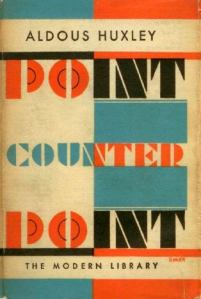
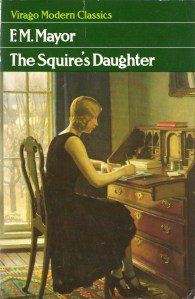
HuxleyPoint1932.bigMayor, F. M. - The  Squire's Daughter coverAnother giveaway!  I recently gave away two boxes of books to the Planned Parenthood Book Sale, but thought some of you might  be interested in  F. M. Mayor’s The Squire’s Daughter (Virago)  or Aldous Huxley’s Point Counter Point (Modern Library: it is Huxley’s masterpiece). The giveaway is open to readers in the U.S. or Canada.  Alas, the postal are now outrageous outside of North America.

Leave a comment if you’d like one or both of these, or email me at mirabiledictu.org@gmail.com.

Here is a little information about the books.

  1. Aldous Huxley’s Point Counter Point, a brilliant 1920s satiric novel about Bright Young Things, with a huge cast of characters, writers, artists, scientists, anarchists and suicides. So many miserable love affairs!  This is a Modern Library hardcover, sans book jacket.
  2.  F. M. Mayor’s The Squire’s Daughter begins at the turn of the century, a Golden Age for the aristocracy. Fast forward 30 years, and Carne, the DeLaceys’ Jacobean mansion, is too expensive, the servant problem is shocking, and the Squire is faced with selling it. His two daughters gad about London, and his son is a dilettante who socializes with arty types. But then there is their golden cousin, Rex, a brilliant, strong, attractive, athletic man (like Jamie in Diana Gabaldon’s Outlander book–Jamie, Jamie!–I must try to finish Volume 1!). If only Rex were the heir! Sir Geoffrey thinks….

The Iowa Caucuses & A Reverie on Prescription Medication

The Capitol in Des Moines.

The Capitol in Des Moines.

The Iowa caucuses are over!

For the last week, presidential candidates have zoomed around Iowa making speeches and glib promises. The media have been here.  David Muir anchored the ABC news in front of the Capitol building in Des Moines.  He was charming, relaxed, well-informed, and uncondescending.  We switched to ABC from CBS, where Scott Pelley grumbled and said that Iowa didn’t matter.

I don’t know about that.  Bernie and Hillary are tied in Iowa. That means something.

I always vote in the election, but did not attend the caucus last night.  I do not really care to stand in a gym for two hours and raise my hand for a candidate. I also had  divided loyalties.  I had planned to caucus for Hillary in memory of my mother, who idolized her and even kept her Caucus for Hillary kit from 2008.  My mother, however, also disliked the caucuses, ande only attended onece, for Ted Kennedy.

But I had a revelation.

I love Hillary, but Bernie represents the vision of America held by my deepest, truest self.  I have always called myself a socialist, and I never thought a socialist would get this far.  I was raised in Iowa City, where I breathed the air of feminism,  pacifism, whole-wheat bread, and Our Bodies, Ourselves.  I can’t forget who I am.  It’s time to go back to my (slightly) radical roots.

If I had gone to the caucus, I would have supported Bernie.

There was a record turnout for the Democrats in our precinct:  662.

And Bernie won in our precinct!  Here are the numbers:

Bernie:  52% of the votes, 342

Hillary:  42%, 280

O’Malley:  not viable:  6%, 42 votes

In Iowa Bernie and Hillary are virtually tied.

Now they’re gone:  we’ll see them in the fall maybe, but they’ve got other states to woo!

…………………………………

A brief meditation on health care.

I was horrified to learn that one of my medications would cost $1,000 a month without insurance.

I am not very political, but I know about sickness.

Every American deserves health insurance.  The creation of “Obamacare,” or the Affordable Care Act (ACA), is a miracle in our conservative country. What will happen with next year with a new president? Check the records:  Hillary and Bernie have strong records on health care, while the Republicans say they want to revoke Obamacare.

I tend to be too personal, but I will just tell you: multiple medications kept my mother alive, she lived long, and she was not ready to die when she died.  I am still middle-aged, but I, too, need  medications.  What happens to people who slip through the cracks and cannot buy the drugs they need?  Obviously, many die.

In an article in The American Scholar, “Medication Nation,” Philip Alcabes, a professor of Allied Health at the School of Nursing at Adelphi University and Director of the Public Health Program in Adelphi’s Center for Health Innovation, writes about America’s dependence on drugs. He believes drugs are over-prescribed , and cites some interesting statistics.

According to the Kaiser Family Foundation, Americans filled more than four billion prescriptions in 2014. On average, about half of all Americans use at least one prescription medication in any given month. The U.S. Food and Drug Administration reports that more than 300,000 legal nonprescription (over-the-counter, OTC) medications are also available. Eighty percent of us use OTC drugs as the first response to minor ailments.

Although I don’t doubt that many doctors overprescribe drugs, I wonder about the politics of articles like this.  They undermine the fact that many Americans do have serious health problems and desperately need medications.

Not everyone in sparsely-populated Iowa has access to  health care.  There are bleak rural areas with no doctors.   Even in the cities, there have been severe cuts to health care services.  In 2014 in Des Moines,  8,000 pyschiatric patients lost their doctors when Mercy Medical Center closed its psychiatrict hospital for adults and outpatient services.

As a consumer, I am grateful to my health care givers.  Where would we be without them?  But I was on a rocky road for a couple of years. After an excellent doctor retired, one of his/her partners proved incompetent. You may remember my account of a painful pelvic exam.

Even after you switch doctors, there are ripple effects from treatment by  incompetents.  Are you ready for this?  He/she had miscalculated the dosage of my thyroid pills.  In fact, that gave me a new disease:  my HYPOthyroidism turned into HYPERthyroidism.  (It is under control again now.)

So we need good health care as well as affordable health care.  I am very happy with my health care now!

I am very, very serious about the importance of health care.  Let me just quote our two tied Democratic candidates.

Bernie

“My view is simple: health care is a right, not a privilege. We spend far more than any other country on health care, but 29 million Americans remain uninsured and millions more are under-insured. That is unacceptable. The time has come for a Medicare-for-all universal health care system that provides every American with affordable, quality care.”

Hillary

“I’ve fought for quality, affordable health care my entire career. As president, I’ll defend the Affordable Care Act, build on its successes, and go even further to reduce costs. My plan will crack down on drug companies charging excessive prices, slow the growth of out-of-pocket costs, and provide a new credit to those facing high health expenses.”

At the Library

My stack from the library!

My loot from the library!

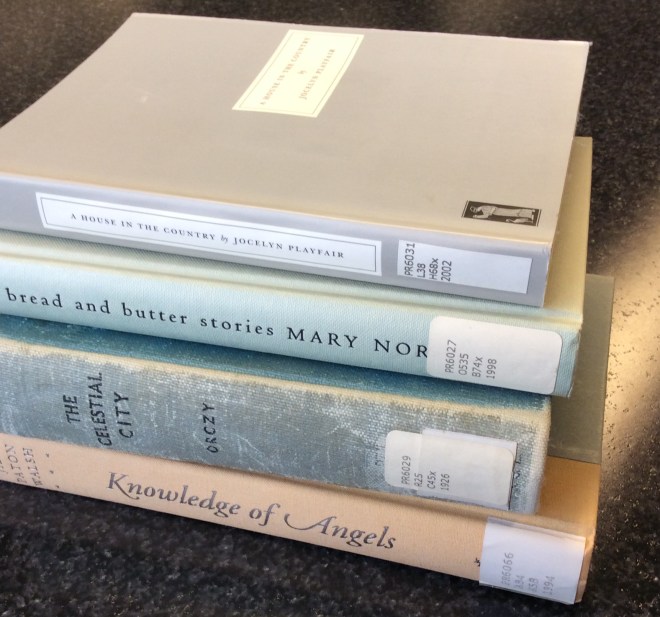
Once or twice a year we go to a university library.  We must if we want something even slightly obscure, because we can’t buy  all of our books, and these superb libraries are open to the public for a small fee.  We look for vintage mysteries, letters and autobiographies of historical figures,  quirky 1960s feminist  books, and the humorous stories of George Ade.  Today I came home with a very good haul:  Mary Norton’s Bread and Butter Stories (Virago), Jocelyn Playfair’s A House in the Country (Persephone),  Jill Paton Walsh’s Knowledge of Angels (a Booker Prize finalist from the ’80s), and a tatty out-of-print 1925 novel, The Celestial City, by Baroness Orczy.

I never made it out of the British lit section.

image

Great collection, but the fluorescent lights are terrible!

I love browsing.  Look at the photo of these wonderful stacks of British and Canadian literature.  They fill a large, long room on the top floor.  The American literature and the foreign languages were recently transferred to the basement because of a mould problem.  There are also two floors devoted to what I call “tech books.” When desperate, you can check out something with math in it, or teach yourself organic chemistry.

I hate the flourescent lighting, which turns everything a weird yellow. I wish they would update it.   But you can sit in the lovely reading areas, alcoves with natural light.  And I have seen worse.  In the beautiful town of Bloomington, Indiana, the university library has an astonishing collection but no windows above the second floor.  We used to read in a glassed-in smoking lounge for the natural light, though we didn’t smoke.  No one was all that upset about smoking in those days.

There are some stunning public libraries in the midwest, but ours is not one of them.  It is good for the newest books,  but they have discarded so many, many wonderful old books that I despair.   All the books by Angela Thirkell have been weeded.  I checked them out regularly, but they are still gone.  You will seldom, if ever, find a Virago, a Persephone, a Europa, or university press book.  I did persuade them to order a few NYRB titles, and I give them credit for that. They are open to suggestions.   But they have moved all the books by early twentieth-century writers Ruth Suckow and Bess Streeter Aldrich, both born in Iowa, to the non-circulating Iowa stacks.  I am bewildered by that.  Heavens, there is a Ruth Suckow Memorial Association and  her birthplace in Hawarden, Iowa, is  a museum.

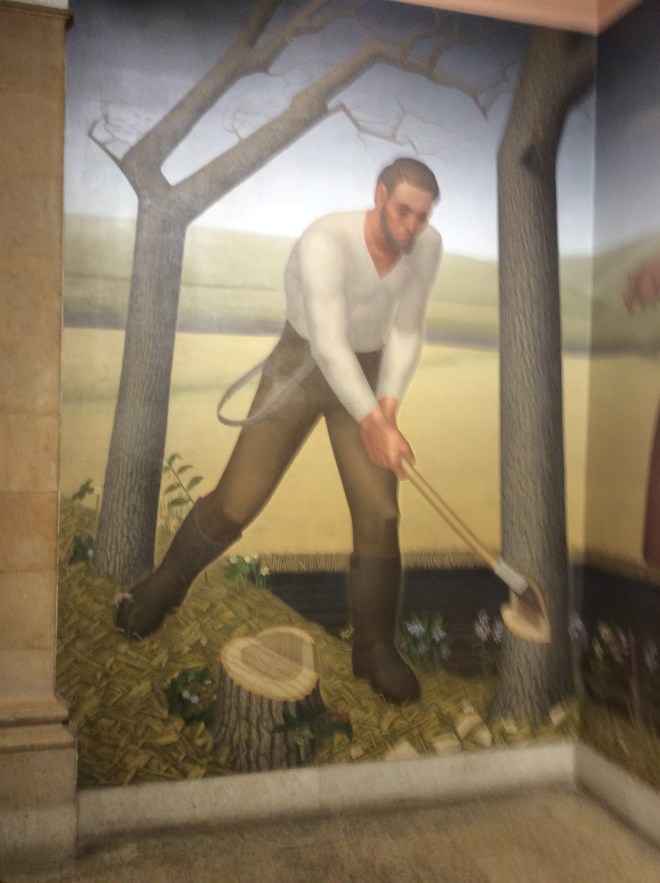
Oh, well, I digress.  Back to the university library!  We looked at the Grant Wood murals, commissioned by the Iowa State University Library in the 1930s.

Grant Wood (1892-1942), the regionalist artist best known for American Gothic,  planned and coordinated this series of WPA murals.  He was  appointed head of the Public Works of Art Project for Iowa, a federal program providing work for unemployed artists.  Wood designed the murals, while other artists did the enlargements and the painting.  The theme was  inspired by the following quote by Daniel Webster:  “When tillage begins, other arts follow. The farmers, therefore, are the founders of human civilization.”

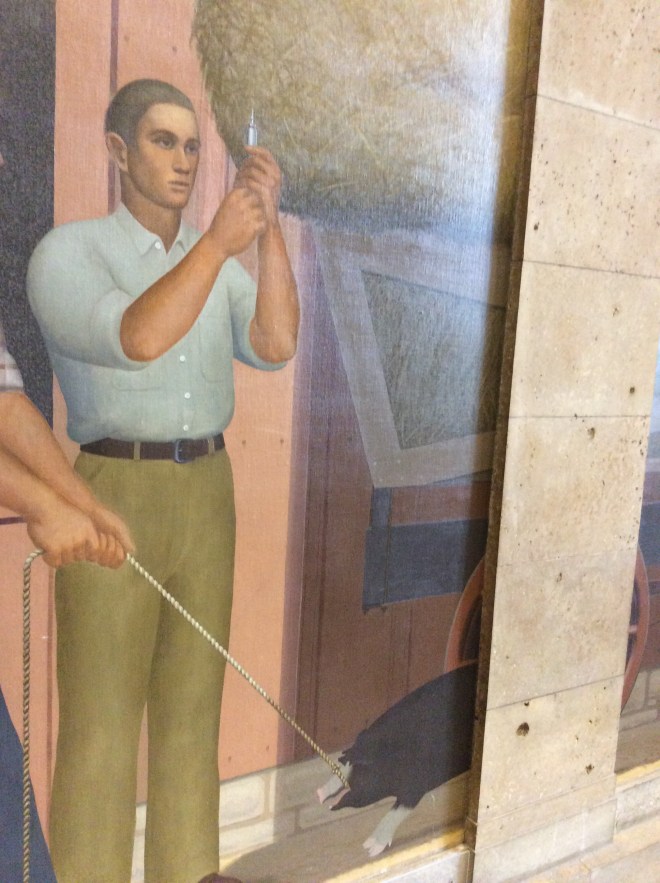
imageAbove is a painting of a veterinarian getting ready to give a shot to a pig!  There is a school of agriculture and a veterinary medicine school.  (N.B.: It is sometimes known as Moo U.)  And, by the way, you should read Jane Smiley’s Moo, a satire of a school like Iowa State, where she used to teach.

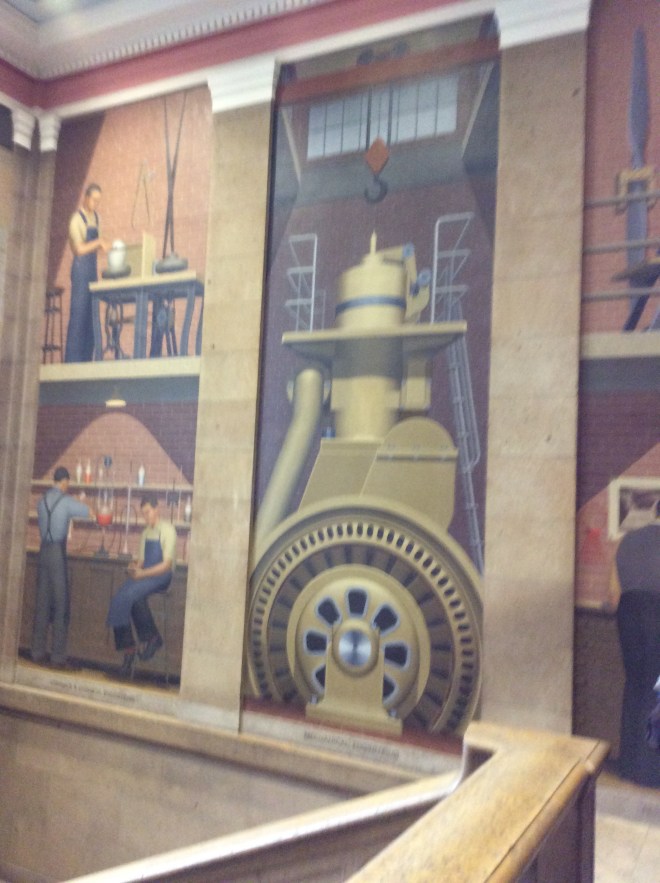
imageIn the middle panel is a very cool machine–doing something! and on the right and left people are doing scientific experiments.  (Sorry, the right panel didn’t show up here, but you can see it below.)

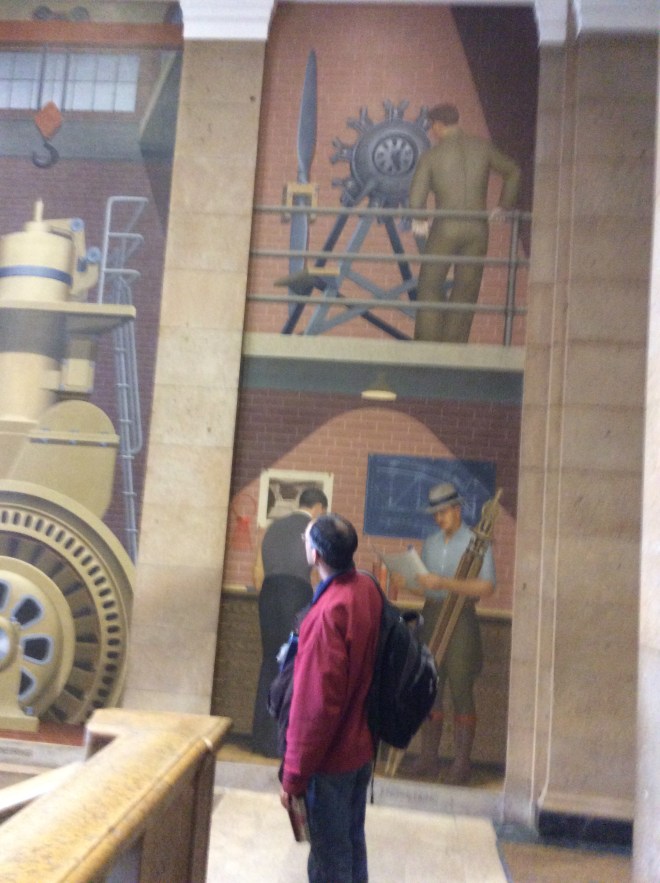
imageThe only REAL person in the photo above is the man in the red jacket.  The others are oil paintings!

image

This man chopping wood is a detail from another mural.

Who knew you could have so much fun at a library!

Concerts Instead of Caucuses!

Obama and Bruce Springsteen in Iowa, Nov. 5, 2012

How I wish I’d seen Obama and Bruce Springsteen in 2012!

The presidential candidates have descended upon us.  It’s a bit like being visited by Zeus, Athena, and the other gods.   Iowa always has the first caucuses (Feb. 1 this year). The candidates woo us for six months to a year before the caucuses: they give speeches in August at the State Fair , which I last attended in 2001  for a Bob Dylan concert, and at rallies I never hear about till afterwards. This year I missed Hillary and Katy Perry, whose music, I must admit, I do not listen to.  I also missed Lena Dunham, author of Not That Kind of Girl, campaigning for Hillary. A few year ago I missed Obama and Bruce Springsteen. So many celebrities!  But we were swept away by a Bernie commercial with a Simon and Garfunkel soundtrack: it’s like Woodstock without mud or drugs (the best kind of concert).

Music counts!

Hillary with Kate Perry and Bil.

Hillary with Katy Perry and Bill.

I have not seen a politician speak live since McGovern in 1972. “I am pro-Choice and I vote,” as we used to say when I was a volunteer at NARAL (National Abortion Rights Action League), but nowadays I attend writers’ readings instead of politicians’ speeches.  I will  vote for the Democratic candidate next November, whoever it may be.   That said, we are a Hillary family.  I received my Hillary caucus guide in the mail today.  I also received a Bernie flyer and, later, found an O’Malley card slung over the door handle.

I saw five political ads during a rerun of “The Big Bang Theory.” Hillary’s are practical; Bernie is a visionary.  I can’t tell any of the Republicans apart, except Trump and Jeb, the least extreme.  There were a couple of Trump-bashing ads by the Republicans that make him look liberal by their standards and set him apart from the Christian rednecks and would-be Ku Klux Klanners.  I must admit, I burst out laughing when I saw Trump on the news at the State Fair and he said he wanted to build a wall along the Southern borders. I thought he was joking.  He was not. That said, he’s less crazy than the others.  Michael Moore says Trump does performance art. Welllllll…..

Anyway, if you’re in Iowa, this is How You Survive the Canvassing & the Caucuses.

1 Never open the door to a canvasser.  The canvassers are all impossibly beautiful and handsome but they are not like you and me:  they have been exported from the coasts to woo us. It’s hard to align Hillary and Bernie with a beautiful woman whose shade of blonde cannot be found in a salon anywhere in Iowa, but she knocked on my door and I answered because I thought it was UPS.    Botticelli’s Venus? Perhaps. In 2004 when I I answered the door to a canvasser, I ended up caucusing for Howard Dean, who became famous for the “Dean scream,” which, by the way, did not happen.  The  “scream”shown on the network news was two seconds of an ordinary speech out of context.

2. Bring your phones or tablets to the caucuses so you can play discreet online scrabble, because you will be there a while.   The caucuses are vaguely reminiscent of junior high pep rallies. They are held in school gyms, auditoriums, churches, libraries, and other sneaker-smelling public buildings.  You sign in and then  sit (or stand if there are no chairs) in your candidate’s section. There is milling and thronging, sitting idly on bleachers or folding chairs, important people trying to persuade others to change sides (sometimes a candidate is not viable, because he has too few supporters), and finally, a couple of hours later, a head count is taken of the various candidates’ supporters.  The results are tallied in all the counties, and determine the “win, show, place” positions of candidates and the number of delegates for each candidate at the convention.  It is a long process!

Rah rah rah!  I wish we had concerts instead of caucuses.  It would be so much more fun to vote for  Hillary at a Chrissy Hynde concert, or Bernie with Simon and Garfunkel, etc.  You’d get a better turnout, too.  If you’re going to be there a while, why not listen to music?

And now I want to go listen to Simon and Garfunkel’s “America.”  What a great song.

Tired: Sleep Disorders in Literature

Take one and call me in the morning!

I was flat-on-my-back tired today.  I read and stared at the ceiling.  I’m not hallucinating, or at least I don’t think I am, but the living room ceiling looks high–higher than the kitchen ceiling. So I took a nap. I got up in time for a doctor’s appointment, where I apologized for seeming slow and tired.  The doctor says I don’t seem slow and tired.  Whew!  What a relief. When I came home, I drank coffee.  The ceiling looked normal.   I’m getting a cold.  I thought I was seriously tired, but it’s just a cold.

While I was sleepy,  I began to think about sleep disorders in literature, because colds are so unromantic.

Here is a Short List of Sleep Disorders in Lit

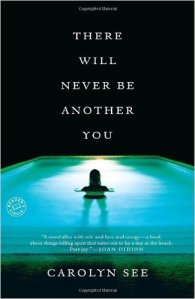
There will never be another you 418OyfanR7L._SX323_BO1,204,203,200_1 In Carolyn See’s There Will Never Be Another You, set in a post-9/11 near future shaped by paranoia about terrorism, teams of doctors are trained to deal with chemical or biological attacks. Edith’s son is one of the doctors, but she doesn’t care about this aspect of life right now.  She  is grieving over her husband’s death, and takes an Ambien every time she wakes up, so she can sleep round the clock.

Edith says,

I woke up on the couch, where I’d been sleeping for the last two months. I was alone.  I looked at the ceiling for quite a long time. and then I said, “Let me just keep my eyes open.”

The insomnia, pills, and grief are a small part of a very complicated novel. See’s strange, lively, brilliant novels are always surprising and beautiful.

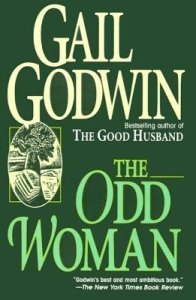
the odd woman gail godwin 97803453899162 Gail Godwin is excellent on insomnia in her 1974 novel, The Odd Woman.  The heroine, Jane, an English professor at a Midwestern university, has insomnia, and, no wonder! Her life is a mess! She is having an affair with a married man, she realizes she cannot give failing grades to the scatty papers turned in by a hippie draft dodger and a black student from the ghetto, and then her grandmother dies.  Jane’s mother has serious insomnia.

Her mother, Kitty, a veteran insomniac of many years, read spiritual guides.  She had a large collection of them in different languages, spanning the centuries from Boethius to Thomas Merton, and she kept them stacked, according to a private rotating section, on the tray table next to her side of the bed which she shared–after almost 25 years–with Jane’s stepfather, Ray. … When the malady grew more challenging,… she resurrected her Latin or went into the tongue of her father’s forebears.  And recnetly–as if she anticipated further demands on her nights–she had been teaching herself Italian with a dual-language edition of La Vita Nuva.

the-lathe-of-heaven3 Ursula K. Le Guin’s The Lathe of Heaven.  Le Guin, an  award-winning science fiction writer, is always compelling, but I have never returned to this terrifying novel.  The hero, George Orr, has dreams that alter reality, and takes drugs to try to control it, then consults a manipulative psychotherapist who does not have his best interests at heart.

4 Gabriel García Márquez’s The Hundred Years of Solitude. If you like magic realism, you’ll love this mythic novel. At one point, a mythical Latin American town, Macondo, is struck by a plague of insomnia.  The insomniacs no longer remember the names of objects, plants and animals, and have to label them.

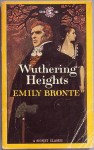
wuthering heights signet blogger-whEmily Bronte’s Wuthering Heights. There is more than one dream in Wuthering Heights, a story of doomed love.  Catherine Earnshaw and Heathcliff, an orphan, are reaised together and are soulmates.   After Catherine’s father dies, her brother, Hindley, turns  Heathcliff into a farmhand, and Catherine ditches him for the refined Edgar Linton, Before she marries Edgar, she has  dream in which she goes to heaven and gets thrown out because she weeps  to “come back to earth.” She knows that she should not marry Linton, because Heathcliff is her other half.

It would degrade me to marry Heathcliff now; so he shall never know how I love him: and that, not because he’s so handsome, Nelly, but because he’s more myself than I am. Whatever our souls are made of, his and mine are the same; and Linton’s is as different as a moonbeam from lightning, or frost from fire.”

6. Last but not least, here is a beautiful “Ode to Sleep” by Statius, translated by Kathleen Coleman.  POETRY WILL CURE YOUR INSOMNIA!

What is the charge, young god, what have I done
Alone to be denied, in desperate straits,
Epitome of Calm, your treasure, Sleep?
Hush holds enmeshed each herd, fowl, prowling beast;
The trees, capitulating, nod to aching sleep:
The raging floods relinquish their frim roar;
The heavy sea has ceased and oceans curl
Upon the lap of land to sink in rest.
The moon has now in seven visits seen
My wild eyes staring; seven stars of dawn
And twilight have returned to me
And sunrise, transient witness of distress,
Has in compassion sprayed dew from her whip.
Where is the strength I need? It would defeat
The consecrated Argus, thousand-eyed,
Despite the watch which one part of him keeps,
Nerves taut, on guard relentlessly.
On Sleep, some couple, bodies interlocked,
Must shut you from their night-long ecstasy;
So come to me. I issue no demand
that you enfold my eyes’ gaze with your wings —
Let all the world, more fortunate, beg that.
Your wand-tip’s mere caress, your hovering form
Poised lightly on tiptoe; that is enough.

What to Read When It’s Cold: Herman Wouk’s The Winds of War, Sarah Vincent’s The Testament of Vida Tremayne, & Books on My Nightstnd

snow ankeny 2016 12540976_10154036935910757_7959800093464746786_n

             A light snow.

It’s snowing.  Just a light snowfall.

But our house is very cold.  And so I am sitting under one blanket and four comforters.  I am drinking Mellow Moments herbal tea.  A cat is sitting on my feet.  Another cat is sitting under the top comforter. We are keeping warm as best we can.

Since I (very slightly) neatened the bedroom, we are down to 10 books on the bookstand.  Classics, literary fiction, best-sellers, genre books–you name it.

In winter you can read something heavy, or something light.  Any literary distraction is welcome.  Here’s what I’ve been reading, some still in progress, followed by a list of books on my nightstand.

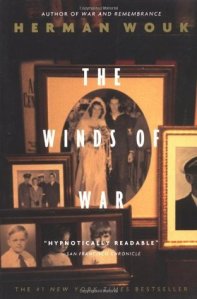
The Winds of War Herman Wouk 214841. Herman Wouk’s The Winds of War.  At the age of 100, Herman Wouk, who won the Pulitzer for The Caine Mutiny, is in the news:  he has written a memoir.  I have long meant to read his critically-acclaimed novels about World War II,  The Winds of War and its sequel, War and Remembrance.  And so I downloaded The Winds of War on the e-reader

Let me just say The Winds of War is gripping.  I tore through 270 of 886 pages, and can’t wait to tear through another 270 pages.  Wouk writes very smoothly and intelligently, and he tells a good, no, a great, well-plotted story.  This well-crafted historical novel revolves around the Henry family:  in 1939,  just before the German invasion of Poland, Victor “Pug” Henry, a naval officer, has been offered the position of US Naval attaché in Berlin and reluctantly accepted it.  (He prefers to be on a ship.)  His beautiful wife, Rhoda, who is used to moving around with her husband, prefers a city to a naval base.   Their oldest son, Warren, is a naval officer, their daughter Madeleine is a student who makes herself indispensible at a rradio station, and their other son, Byron, rebelliously refuses to go into the Navy and, works as a secretary for a Jewish writer in Italy, where he falls in love with Jastrow’s niece, Natalie Jastrow.  Then, despite all the rumors about Hitler,  he and Natalie go off on a wild jaunt to Poland, to visit her ambassador boyfriend in Warsaw and iattend  a family wedding in a Polish village.  Then the Germans attack, and  on a dangerous car trip back to Warsaw with the wedding party, Byron is wounded, his passport is taken away, but they continue on, because he knows it’s a very bad idea to stick around the Germans.  In Warsaw they meet more danger and deprivation, but to Byron it is an adventure and to Natalie an opportunity to volunteer as a nurse at the hospital.

Here is an example of Wouk’s crystalline prose.

It took them two days to go the ninety-five kilometers.  While it was happening it seemed to Byron a saga that he would be telling his grandchildren, if he lived through it.  But so much happened afterward to him that his five-day trip from Cracow to Warsaw soon became a garbled memory.  The breakdown of the water pump that halted them for half a day, on a deserted back road in a forest, until Byron, tinkering with it in a daze of illness, to his astonishment got it to work; the leak in the gas tank that compelled them to take great risks to buy more; the disappearance of the hysterical bride from the hayfield where they spent one night and the long search for her; the two blood-caked boys they found asleep by the roadside, who had a confused story of falling out of a truck and who rode the last thirty kilometers to Warsaw sitting on wooden slats on the sizzling hood of the Fiat–all this dimmed.  But he always remembered how ungodly sick to the stomach he was, and the horrible embarrassment of his frequent excursions into the bushes…

If you’re not up to War and Peace, which is my favorite book, try Wouk’s best-seller, which he considered his War and Peace. 

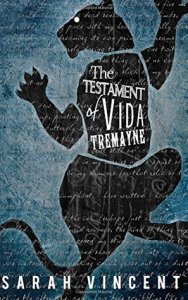
The Testament of Vida Tremayne by Sarah Vincent 235837702. I admired and enjoyed Sarah Vincent’s The Testament of Vida Tremayne,  a 2014 novel I discovered by accident–I had mixed it up with another book.   It is utterly fascinating, the convoluted story, told partly in a journal, partly in a traditional narrative, of the thorny relationship between Vida, a writer, and her successful, materialistic, non-literary realtor daughter, Dory.  The two women also must examine their sudden intense  friendship with a mad, mysterious fan, who writes to Vida and then insinuates herself into the house.  The book turns on a dime from a cozy realistic literary novel into  literary horror.

Vida is a  blocked writer whose literary novels no longer sell; her publisher wants her to start writing vampire novels. She loved her country house, named “The Gingerbread House,” after her cricially-acclaimed novel of the same title, but after her husband leaves her, she finds the house too quiet.  Her daughter Dory, who hates leaving London to visit her mother in the country, finds Vida collapsed in her kitchen .  Vida falls into a catatonic state in a mental hospital and is diagnosed with post-traumatic stress disorder. When Dory goes back to the house, she finds that a woman, Rhiannon, who claims to be living there, is back from London.   Dory is amazed by how quickly Rhiannon, her mother’s fan, becomes her friend, too:  there is lots of looking into eyes and sympathetic responses.  But Dory reads Vida’s journal, and learns about Rhiannon’s scatty program for removing blocks to creativity.  Don’t sign up unless you like starvation, incense, scrubbing floors, no reading or writing, meditation, and pumas.

BOOKS ON MY NIGHTSTAND!

1. Homer’s Iliad (in Greek)

2. Caroline Alexander’s new translation of Homer’s Iliad, the first by a woman.

3. Angela Thirkell’s Wild Strawberries

4. The Julian Symons Omnibus

5. Ovid’s Fasti

6. The Collected Stories of Jean Stafford (magnificent!)

7. Elizabeth Bowen’s The House in Paris

8.  The Diary of Anais Nin

9. Emily Kimbrough’s So Near and Yet So Far

10. Chekhov’s short stories (Folio Society four-volume set)

SO MANY GREAT BOOKS!  What to read next?

Sheila Kaye-Smith’s The End of the House of Alard

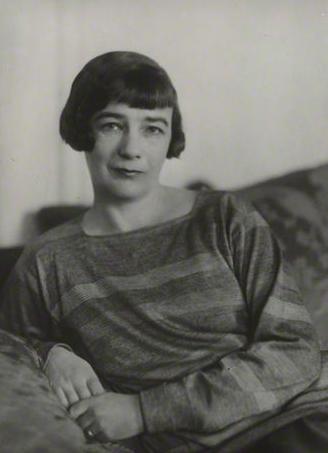
Sheila Kaye-Smith

Sheila Kaye-Smith

I began to read Sheila Kaye-Smith after the writer Charlotte Moore recommended her in a “Books of the Year” article in The Spectator. 

Last year I very much enjoyed Joanna Godden, Kaye-Smith’s intriguing, if inelegant, novel about a woman sheep farmer.  And recently I found a free copy of The End of the House of Alard at Internet Archive. Published in 1923, it is the absorbing story of the fall of the aristocratic Alard family.  It begins by sketching the history of the Alards, from their earliest ancestor in  the Crusades to the present squire, Sir John, in the twentieth century.  The Alards still have their estate at the end of World War I,  but no money, partly because of Sir John’s bad investments, mostly because of the war.

end of the house of alard sheila kaye-smith 2119983_150814173718_IMG_1970This  is a departure from Kaye-Smith’s early rural novels, which Stella Gibbon satirized in Cold Comfort Farm, along with books by Mary Webb and D. H. Lawrence  But it is easy to see why The End of the House of Alards was a best-seller.  She fascinatingly portrays the consequences of the war and the changing culture.  The Alard veterans of the Great War are still harnessed by tradition, while the younger Alards question social class as they fall in and out of love or seek meaningful work.   The oldest son, Hugh, was killed in the war, but two other sons survived:   Peter, the new heir, will manage the estate, while George, a clergyman, holds the family living.

The return of the heir is the impetus of the novel, almost a satire of other such returns of heirs.  In the second chapter, the family is excited as they await Peter’s homecoming.  His mother barely recognizes him out of uniform; he has become much  heavier and more stolid.  Even the writing here is a bit heavy-handed, I’m afraid.  (But I loved the book).

Here is how the house looks to Peter.

The drawing room was just the same as it had always been….The same heavy dignity of line in the old walls and oak-ribbed cieling spoilt by undue crowding of pictures and furniture.  Hothouse flowers stood about in pots and filled vases innumerable… a water-colour portrait of himself as a child faced him as he came into the room.

Although Peter is conventional, he has been changed by the war. For one thing, he is untraditional in love.  He is in passionately love with the doctor’s sexy, intelligent Catholic daughter, Stella Mount.  (Yes, I noticed that name, too.)  Their idyll is vaguely reminiscent of love affairs in D. H. Lawrence’s novels, though Peter doesn’t have a Lawrentian mind.  He lets himself be talked out of marrying  middle-class Stella, and marries a rich Jewish woman for her money. (An anti-Semitic portrait of his wife:  write it off to the times. The point is not the woman, but that he sold out.)

Mary, the only married daughter, is also unhappily married.  She leaves her rich husband to live on her own and he divorces her on fallacious grounds of adultery.  Her father forces her to defend the suit, and there is a scandal.  Finally she goes quietly away

The youngest brother, Gervase, a Catholic convert, has broken with the old life –to an extent that shocks even his most liberal sisters, Mary and Jenny.  Reverend George is crushed when he realizes the Catholic church offers more comfort and ritual to Gervase than his own Anglican church and good works.

And Jenny, who cannot meet an appropriate man, consciously decides to chase the rich farmer to whom she is attracted, Godfrey who has bought land from the Alards.

On the morning when she first goes to flirt with him,  she thinks of Stella.

She remembered once being a little shocked by Stella Mount, who had confided that she liked making love herself just as much as being made love to….  well, Jenny was not exactly going to make love, but she was going to do something just as forward, just as far from the code of well-bred people–she was going to show a man in a class beneath her that she cared for hm, that she wanted his admiration, his courtship…

The oldest sister, Mary, is a hysterical spinster, devoted to her parents, and envious of the young.  The youngest Alards have the best chance of happiness, because they reject the past.

This novel is much better-written than Joanna Godden, and I look forward to reading more of Kaye-Smith’s novels.