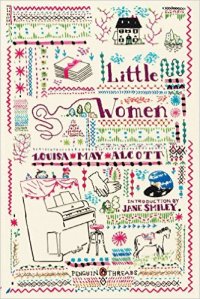
Does Reading Shape Moral Vision? Little Women and Don Quixote

My generation of women was raised on rock music and Louisa May Alcott. And the two are not as different as you think: they turned us into resistors of the status quo.  Alcott’s writing is more polished and pointed than rock lyrics, though:  Little Women is a transcendentalist classic, the first book I read that articulated issues of moral philosophy.  I loved it when I was seven, and I love it equally now.

Alcott’s best-selling 19th-century children’s classic is a brilliant, lively, and often riotously funny autobiographical novel about the coming-of-age of four sisters in the Civil War era.  She traces their history from girlhood through marriage, careers, and motherhood, and delineates the development of their ethics as well as character.  She lightly comments on moral philosophy, materialism, the role of women, education, etc., usually in a few lines of breezy dialogue.

Louisa, the daughter of the philosopher Bronson Alcott, came of age in Concord, Mass., where her neighbors were  Waldo Emerson, Henry David Thoreau, on whom she had a crush, Nathaniel Hawthorne, and Margaret Fuller. As Susan Cheever points out in her book American Bloomsbury, “the Transcendentalists…were the original hippies.”  She adds, “The Concord group of Transcendentalists was part of a wave of liberalism and a passion for freedom that seemed to be sweeping through the new United States.”

And that liberalism and passion for freedom are reflected in Little Women.  Like the Alcotts, the four March sisters, Meg, Jo, Beth, and Amy, grow up in an impoverished household, where, encouraged by Marmee, they learn to value  social justice and charity.  In the second chapter, they reluctantly agree to give away their Christmas breakfast to Mrs. Hummel, a poor woman with a newborn baby and six children in a house with no fire or food.  And  the appalling poverty makes them glad they have done it.  That night, they merrily put on a play Jo has written, which is both entertaining and characteristic of their self-expression, complete with sword fights, forgotten lines, and,  at one point, the collapse of a makeshift tower.  Their friends shriek with laughter, and afterwards they eat ice cream, sent to the Marches by the wealthy man next door, who had heard about their charity to the Hummels.

But the four sisters struggle with poverty.  Charming Meg hates her job as a governess for a wealthy family, because it makes her envious of their leisure and beautiful clothes. Jo, an aspiring writer, wishes she were a boy, whistles, and says she hates “affected, niminy-piminy chits!”  She is equally dissatisfied with her day job as a companion for Aunt March.   Beth is sweet and agoraphobic, good at housework and the piano, too shy to go to school.  And Amy, who is as strong-willed as Jo, has a talent for art and is popular at school…until the pickled limes incident.  (You must read the book.)

Some bloggers (many seem to be British; maybe because our cultures are so different?) complain about Alcott’s “morals” and “preachiness.” This startles me, since I can’t think of any children’s classics that don’t explore moral issues: Frances Hodgson Burnett’s A Little Princess, E. Nesbit’s The Wouldbegoods, E. B. White’s Charlotte’s Web, Elizabeth George Speare’s The Witch of Blackbird Pond, John Verney’s Friday’s Tunnel,  and the list goes on.  For me, who read Alcott’s books as a child, these were as stimulating as I would later find Plato’s dialogues.

Years ago, a teacher friend and I agreed we were “raised on Louisa May Alcott.”  We thought it had made us see the world differently.  But did our students read her?  One day we did an informal poll in our classes:  who had read Little Women?  In my five classes of approximately 125 students, only three had read it.  In my friend’s four classes of approximately 100 students, two had read it.  That’s 2.2222222222222223 percent.  Isn’t that sad?  And I can only imagine it would be less today, in the day of Y.A. literature.

Does the reading of Little Women change you if you read it as a girl?  Well, perhaps.  My friend and I were both creative types who resisted the social trends and pressures.  Perhaps different generations of readers take different things from the classics?

God only knows.  But it is always good to read the classics!

WHO READS DON QUIXOTE?   A friend who teaches a non-credit grammar course at a community college recently tried to give away a copy of her favorite book, Don Quixote.  There were no takers.

Well, that’s teaching.

Then she asked if anyone would give a brief talk on a favorite book, and the answer was No.   Did anyone read books?  No.  Did anyone have books at home?  No.  Were they sure they didn’t want her extra copy of Don Quixote?  Yes.

Teaching remedial classes for students with deficiencies can be discouraging.  But, as I told her, you might as well keep your standards high, because this class is the only place they’ll ever hear of the Don.
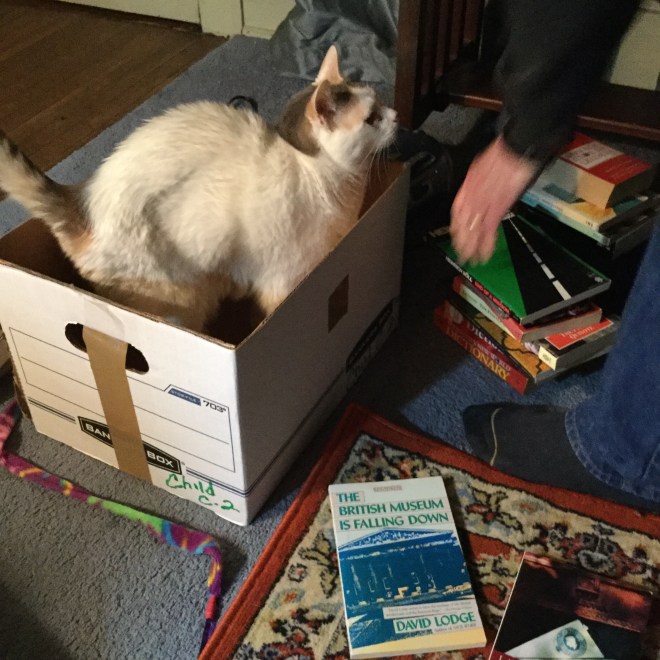
The Planned Parenthood Book Sale, Spring 2018

The cat and my husband have a bookish moment.

Tonight we went to the Planned Parenthood Book Sale, which takes place twice a year in Des Moines at the 4-H Building on the Iowa State Fairgrounds. (This one runs from April 19-23).

We are efficient sale-goers:  we no longer need a map of the building (45,000 sq. ft of space!).

I quickly ascertained that they had no new Cathy Guisewite cartoons. Do I have the complete set of Cathy comics? Why doesn’t Guisewite write a new comic strip?

We browsed in the classics and fiction sections.

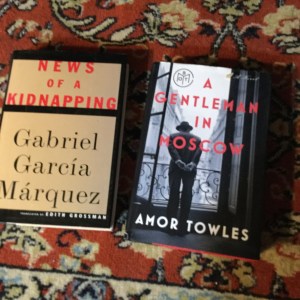
“Look for A Gentleman in Moscow,” I said.  (This is highly recommended by Karen and Cynthia.)

“Look for German books,” he said.

Astonishingly, I did find a copy of A Gentleman in Moscow, by Amor Towles ($9, the most expensive book I’ve bought at the sale, but it is still cheaper than a new paperback).  My husband found a Heinrich Boll and some other German novels.

We found a copy of News of a Kidnapping, by Garcia Marquez.

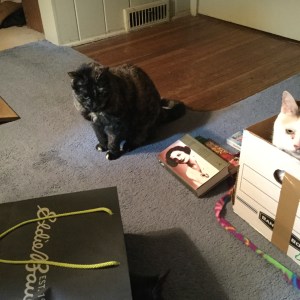
The cats go mad.

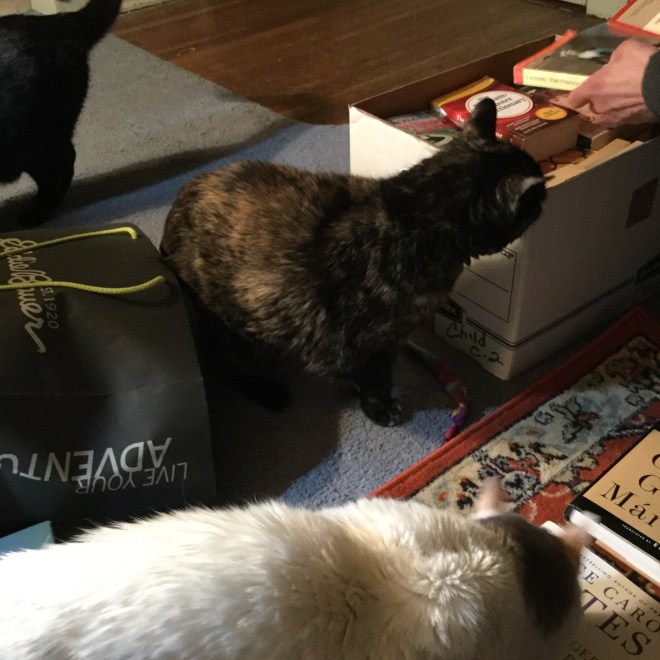
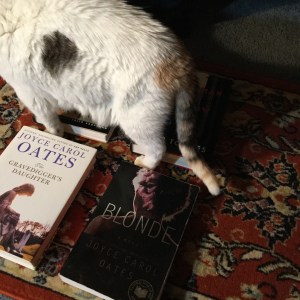
The two elder-cats love the unpacking of the books.  The tortoiseshell expresses interest in the Oxford paperback of The Female Quixote, while the white cat checks out Joyce Carol Oates.

I found two by Joyce Carol Oates, The Gravedigger’s Daughter and Blonde.

I am happy to have a hardcover edition of Nancy Mitford’s The Pursuit of Love & Love in a Cold Climate.

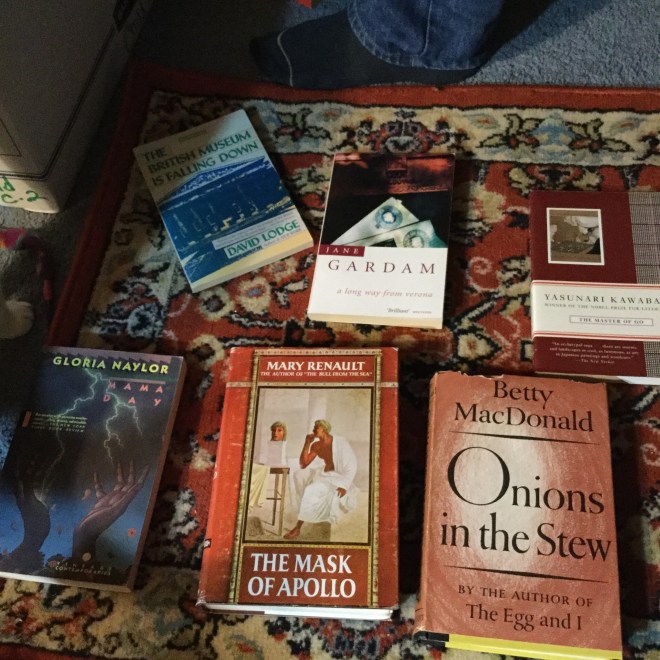
Arrayed here are:  David Lodge’s The British Museum is Falling Down, Jane Gardam’s A Long Way from Verona, Kawabata’s The Master of Go, Mama Day by Gloria Naylor (who died in 2016), Mary Renault’s The Mask of Apollo, and Betty MacDonald’s The Onions in the Stew.

I also found:

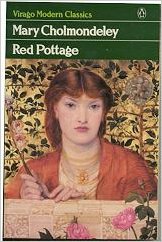
Mary Cholmondeley’s Red Pottage (Virago)

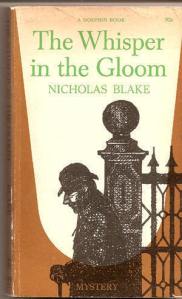
The Whisper in the Gloom by Nicholas Blake (C. Day-Lewis’s pen name for the Nigel Strangeways mystery series)

Anatole France’s Thais & Sylvestre Bonnard

The cheapest books were Onions in the Stew and The Mask of Apollo–each 80 cents.

A very good sale!

How to Find a Good Read: Janet Fitch’s “The Revolution of Marina M.”

Is the American novel in a slump? Are the British novelists losing their drive?  Contemporary fiction seems ultra-light and slight after reading Dostoevsky’s The Demons and Nikolai Chernyshevsky’s What Is to Be Done?  Yes, you may laugh:  what doesn’t seem slight after Dostoevsky?  But after returning to the classics for a decade, it is tough to find a worthwhile new novel.

I have a new strategy, and so far it works. Avoid the books that are touted in every review publication simultaneously, because promotional frenzy has clouded critical judgment.  Instead, go directly for the odd, interesting novels that exasperate cranky reviewers.  They might not be great books, but they might be more compelling than the latest tidy  little “literary” novel.

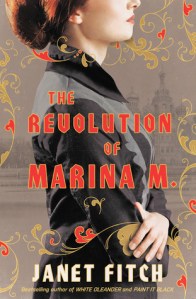
Janet Fitch’s The Revolution of Marina M. is such an underrated book. Mainstream reviewers were curmudgeonly, complaining that at 816 pages the book was as long as War and Peace or Infinite Jest (actually, it is not!).  Hm, I thought.  Would it be long enough for me?

I  am so glad I picked it up. This beautifully-written, well-researched historical novel, set during World War I and the Russian Revolution, is one of the smartest books I’ve read this year.  It is the story of Marina, an intense young poet who hopes to escape the constraints of her aristocratic family life and mingle in the society of  her favorite poets,  Blok, Anna Akhmatova, and Marina Tsvetaeva.

The worker’s rallies, political riots, and the starvation wrought by war postpone Marina’s dreams. She is caught up in the revolution, encouraged by her Bolshevik friend, Varvara, who actually incites a riot in a bread line.  After Marina is expelled from her family, she lives in squalor with her lover, a poet, and several of his friends in one room. She works in a knitting factory and learns to clean and delouse beds.   But soon she also becomes savvy about the corruption of the various revolutionary parties, and  when she tries to support her starving mother and old nurse in one room of their formerly luxurious apartment, she descends into hell as neighbors turn on neighbors to find food and fuel.

I have read 65% of the book, and it is a very good read.  Are there some Perils of Pauline moments?  Yes, and so what?  It’s a wonderful read.

And the writing is often gorgeous. When Marina briefly finds refuge with a former lover who is  involved with the black market, she relaxes..

I hadn’t realized how tired I was. Tired of queues and district soviets and frozen potatoes, tired of the communal squalor of the Poverty Artel, tired of the daily terrors and having to be a grown-up every day, tired of thinking and fighting and waiting my turn, while the real me was left unknown. I sat on the fragrant bed and watched the snow fall outside the windows. I should go and tell Genya what had happened. The knowledge tugged at me, but it seemed too far away. As any child can tell you, you must not leave an enchanted place or it will be lost to you forever. All that will remain will be a ribbon or a slipper, an enameled bracelet on your arm, the smell of honey and Floris Limes in your hair.

Am really loving this, and apparently a second volume is to be published.  I can’t wait!

And here is a link to a rave review in The Los Angeles Review of Books.

The 1977 Club: Marilyn French’s “The Women’s Room”

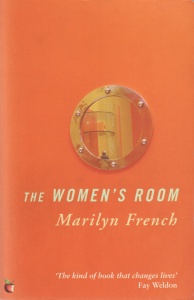
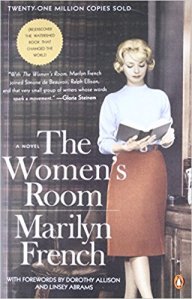
In 1977, Marilyn French’s novel The Women’s Room was a huge hit.  And the award-winning novelist Anne Tyler helped put it on the charts with a rave review in The New York Times.

She wrote,

In order to appreciate the fine writing in The Women’s Room, you should do your best to forget any recent books you may have read about women’s liberation. It’s not, after all, Marilyn French’s fault that others before her have gone on and on about the same subject. Pretend you’re from Mars, you haven’t heard a word, and you want to know something about the lives of certain women in midcentury America.

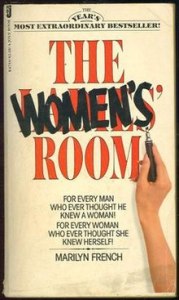
I remember picking up the paperback at Howard’s Books (I lived above the store) and devouring the book in a few evenings.  The vulgar cover appealed to me:  I had written political graffiti on restroom walls in my teens. And so I have decided to reread The Women’s Room for The 1977 Club, a week-long event devoted to reading books published in 1977.  (You can learn more about the event from Karen at  Kaggsy’s Bookish Ramblings.)

Several novels in the 1960s and 1970s were (at least partly) inspired by Second Wave feminism, among them Erica Jong’s Fear of Flying, Margaret Atwood’s Lady Oracle, and Alix Kates Shulman’s Burning Questions (which I wrote about here). But The Women’s Room was different, a compelling mix of narrative, sociology, history, and even literary history.  Marilyn French, a housewife-turned-Harvard Ph.D., wrote not only novels but scholarly books, including the four-volume From Eve to Dawn: A History of Women.  

In The Women’s Room, French chronicles four decades in the life of a heroine who eventually escapes from a bad marriage, though she does not ascend to a much happier state.  We first meet Mira hiding in the ladies’ room in the basement of Sever Hall at Harvard.  Mira is in her thirties, a housewife who has gone back to school in the 1960s.  Everything is alien to her, including the political graffiti on the restroom walls.

There is also a first-person narrator, who we learn later is Mira in the 1970s.  The narrator lives alone in Maine, where she unhappily teaches the dull classes so often assigned to women at community colleges, grammar and elementary composition.  And so she often interrupts the traditional narrative to analyze the historical, sociological, and political events of the twentieth century that shape the lives of Mira, and of men and women of the post-war society.

Early on, the narrator compares Virginia Woolf’s “a room of one’s own” to the women’s room in the basement at Harvard.  Is the women’s restroom as close as Mira will ever get to a room of her own?  The narrator loves Woolf, but she wonders if Woolf’s method of narration could really describe the menstrual blood, pregnancies, dirty diapers, male disapproval and lack of privacy that define Mira’s life?

The narrator reflects,

Virginia Woolf, whom I revere, complained about Arnold Bennett.  In a literary manifesto, she attacked his way of writing novels.  She thought he placed too much emphasis on facts and figures, grimy dollars–or pounds–or exterior elements that were irrelevant to the dancing moments that were a person.  That essence shone, she felt, through my accent, through ten-year-old winter coats and string bags laden with vegetables and spaghetti, shone in the glance of an eye, in a sigh, a heavy if enduring trudge down the steps of a train and off into the murky light of Liverpool. One doesn’t need a bank statement to see their character.  I don’t care much for Bennett, and I love Woolf, but I think his pounds and pence had more to do with her Rhoda and Bernard than she would admit.   Oh, she did know.  She understood the need for five hundred pounds a year; and a room of one’s own.  She could envision Shakespeare’s sister.  But she imagined a violent, an apocalyptic end for Shakespeare’s sister, whereas I know that isn’t what happened….  I’m not saying it doesn’t happen.  I’m only saying it isn’t what usually happens….  And there are much easier ways to destroy a woman.  You don’t have to rape or kill her; you don’t even have to beat her.  You can just marry her.  You don’t even have to do that.  You can just let her work in your office for thirty-five dollars a week.

French rants on about this for a page.  It’s fascinating, whether you agree with it or not.  And, as the book goes on, she also dissects class in post-war America.  Sometimes the lectures fit, sometimes they are too much.

There is lots of gritty, naturalistic detail–more Bennett and Dreiser than Woolf.  Mira, one of the smartest girls in school, is promoted up so many grades and so much younger than her peers that she is friendless. She reads constantly but loses her confidence in college, when a boyfriend pressures her to have sex and then drops her; and she later narrowly escapes being gang-raped by him and his friends, but one of them tips her off and locks her in a room to protect her. The room again:  this time locked.

Traumatized, she needs male protection. She drops out of school and gets married.  The marriage isn’t happy, but for years she is absorbed in her children, and has friends among the women in her neighborhood.

It is a long book, and I’m not even into her life at Harvard yet.  There’s a lot of housewifery so far, a phase I didn’t go through  myself, though certainly my mother did.

It’s a naturalistic novel, with commentary. Is it great? No. But it is historically important, and details the influence of Second Wave feminism on mid-century America.

Do Awards Matter? Musings on Joan Silber’s “Improvement” & the Man Booker International Prize Shortlist

Do awards matter? I gloried in winning the college Latin Prize, but in my thirties I was blasé about winning awards for freelance articles.  There were two good things about grown-up award ceremonies:  (a) I always bought a new dress, and (b) there was always a catered dinner.

Book award ceremonies probably proceed along the same lines.  I depend on Margaret Drabble for details:  in the opening chapter of her brilliant novel The Sea Lady, the heroine, Ailsa, who is the chair of a panel of judges for a science book award, buys a new silvery mermaid dress, which coincidentally matches the fish theme of the winning book.  And she describes the venue, if not the menu, of the awards dinner.

The venue of the dinner might also shortly be observed to be something of a happy accident.  The diners were seated at elegantly laid round tables beneath a large grey-blue fiberglass model of a manta ray which hung suspended above them like a primeval spaceship or an ultra-modern mass-people-carrier.  They could look nervously up at is grey-white underbelly, at its wide wings, at its long whip-like tail, as though they were dining on the ocean floor….  The dominant theme of fish had prevailed by chance.

I wish I could write about  book award dinners, but alas!….   Still, I’m game to write about the awards.  Let me start with Joan Silber, who won two prizes this year, the National Book Critics Circle Award and the PEN/Faulkner Award, for her novel, Improvement.  She must have attended two dinners, but did she have two dresses?

I have long been a fan of  Silber, but I am 10 years behind on her books. (That’s because I don’t keep up with new fiction.)   I recently read Improvement, which I missed when it was published last year.   It is not quite a novel: it is really a collection of linked stories. Think Elizabeth Strout’s Anything Is Possible.  At a stretch, think George R. R. Martin’s A Game of Thrones.

Silber is always graceful and witty, astute and entertaining.  And her characterization is spot-on.  My two favorite characters are linked by kinship: Reyna, a single mother in Harlem whose boyfriend is in prison for selling five ounces of weed, and her aunt Kiki, a former classics major who went to Istanbul in 1970 and stayed after she fell in love with Osman, a rug seller. In the first chapter, Reyna muses about Kiki,  who eventually left Osman and returned to the U.S.    Reyna recalls her surprise that Kiki was so normal.

Everybody wondered what she would look like when she arrived. Would she be sun-dried and weather-beaten, would she wear billowing silk trousers like a belly dancer, would the newer buildings of New York amaze her, would she gape at the Twin Towers? None of the above. She looked like the same old Kiki, thirty-one with very good skin, and she was wearing jeans and a turtleneck, possibly the same ones she’d left home with. She said, “God! Look at YOU!” when she saw her brother, grown from a scrawny teenager to a man in a sport jacket. She said, “Been a while, hasn’t it?” to her dad.

Silber is an excellent stylist. I love the anaphora in the second sentence of that passage, the repetition of “would” at the beginning of three clauses.

And she is insightful about a broad range of characters.  Kiki, who reads Marcus Aurelius, couldn’t be more different from Reyna, a high school graduate who seldom reads.  But Reyna and Kiki become closer after Hurricane Sandy, when Reyna’s father calls her and tells her to check on Kiki, who has lost power.  It’s a long walk for Reyna and her son Oliver, but Kiki is fine:  she’s rereading The Greek Way by Edith Hamilton, and and she wins over Oliver by feeding him melted chocolate ice cream.   And she agrees to babysit for Oliver while Reyna visits Boyce in prison.  She encourages Reyna to read and travel, trying to encourage her to change her life.  Reyna realizes Kiki doesn’t approve of her life-style, but she is mad about Boyce.

Kiki is right to be concerned about Reyna, whose life takes a dark turn after Boyce gets out of prison.  Boyce and his friends form a cigarette-smuggling gang.  Reyna disapproves, but Boyce and his ne’er-do-well friends are so happy with money!  And Reyna, a receptionist for a vet, enjoys the money, too,  and realizes that neither she nor her friends are qualified for good-paying jobs.  She relaxes her standards, and is briefly persuaded to drive them to Virginia on a smuggling trip, but backs out sensibly at the last minute.  And when the foolish young man who drives has a tragic accident and dies, she is blamed by Boyce and his friends.  It makes no sense, but that’s the way it is.

What happens?  Well, I hoped to keep reading about Reyna and Kiki, but Silber switches to other characters affected by the accident, a home health aide in Richmond, VA, who dated the driver, and the truck driver who survived the accident.

And I admit I found the transitions jarring.  I felt the same way when I read George R. R. Martin’s A Game of Thrones, and he’d switch from one group of characters to another, just as I became interested in one group.  So I was relieved when Silber returned to Kiki, and we learned about her experiences in Turkey, how  Osman lost his business and they moved to the family farm,  where Kiki was so miserable that she became fascinated by three Germans who smuggled antiquities out of Turkey.  (She briefly considered traveling with them, because she loved the amphora and old coins so much.)  Kiki, too, has the sense not to do it. But later we also meet the daughter of two of the smugglers, who now establishes the provenance of art at the Met.

And so everybody is linked together.

What struck me about this deceptively simple book was Silber’s humor. Even in the depths of despair, she has a positive outlook:  her characters are never quite down and out.

There is a flow to the book that we don’t see much in contemporary fiction.  If you like linked stories, this is as good as it gets–better, I think, than Elizabeth Strout’s Anything Is Possible.

THE MAN BOOKER INTERNATIONAL PRIZE.

I haven’t read any of the books on the Man Booker International Prize shortlist, but Tony at Tony’s Reading List has.  Is he impressed with the shortlist?  Not particularly.  He writes,  “Well, without wanting to give too much away, let’s just say that there was definitely a raise of the eyebrow when I saw the list.  There are several big names there, but are they big books?”

Tony is a member of the “Shadow Panel of Judges,” a group of  bloggers reading and writing about this award list. Another of the Shadow Judges is the excellent blogger Beauty is a Sleeping Cat.

Have you read Silber’s book or the Man Booker International Prize shortlist?  Do awards matter?

On Not Wanting to Read Madeline Miller’s “Circe”

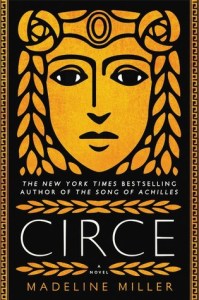
Last summer I became aware that Madeline Miller’s new novel, Circe, a retelling of the Circe myth from the Odyssey, would be published this month.   Netgalley, a site where reviewers and bloggers can request e-galleys, posted a picture of the beautiful cover, along with the tantalizing news that the book was not yet available for request.

It’s just as well that it was not available, since I was behind on Netgalley books.  (The last one I read was Isabelle Allende’s In the Midst of Winter in October, and it may be October 2027 before I read the others.)

Last week I almost bought Circe, carried away by the excitement of reviews.  Then I remembered something.  I did not finish Madeline Miller’s first novel, The Song of Achilles.

I wrote in 2012:

Madeline Miller won the Orange Prize for her first novel, The Song of Achilles, a retelling of the story of Achilles and Patroclus.  She is a classicist, a teacher and tutor of Latin, Greek, and Shakespeare to high school students.

So of course I like her, because I’ve never met a Latin teacher I didn’t like.

I haven’t read The Song of Achilles, but it’s on my Nook.

My guess is you’d be less critical of the book if your background is not in classics, but I gave up on page 130.  I was put off by the clichés (“I watched him hang on the other man’s words”) and hackneyed pseudo-poetic dialogue (“Your honor could be darkened by it.”  “It’s darkened.”)

Nonetheless, I am dying to read Circe.  Will Miller’s second novel be the charm? And yet I’m saying NO to myself.  I have a couple of retellings of the Odyssey to read first:  Zachary Mason’s The Last Books of the Odyssey and Patrick Dillon’s Ithaka.

Meanwhile, here’s an excerpt from Margaret Atwood’s Circe Mud/Poems.

I made no choice
I decided nothing

One day you simply appeared in your stupid boat,
your killer's hands, your disjointed body, jagged
    as a shipwreck,
skinny-ribbed, blue-eyed, scorched, thirsty, the usual,
pretending to be-what? a survivor?

Those who say they want nothing
want everything.
It was not this greed
that offended me, it was the lies.

Nevertheless I gave you
the food you demanded for the journey
you said you planned; but you planned no journey
and we both knew it.
You've forgotten that,
you made the right decision.
You're having a good time here,
the trees bend in the wind, you eat, you rest,
you think of nothing,
your mind, you say,
is like your hands, vacant:

vacant is not innocent.

In Which Juvenal & Dostoevsky Lampoon Poets

Writers love to lampoon poets.  They’re easy targets:  the disheveled hair, heavy drinking, unconventional manners, and thrift-shop tweeds…  Are the stereotypes true?

Horace thought so. He caricatured pretentious poets in Ars Poetica (The Art of Poetry). (You can read my posts here and here.)  And I was astonished this week to find similar observations about poets in Juvenal’s Satires and  Dostoevsky’s Demons.

I’ll start with Juvenal, who wrote in the second century A.D.

He explains in his first poem why he writes satire. He begins by mocking poetry readings in Rome:  he wants to get revenge after sitting through so many bad ones.  He criticizes hackneyed poems about mythical heroes, Theseus, Telephus, and Orestes.  He writes (this is my rough prose translation):

Will I always be in the audience? Will I never get revenge, after being tormented so many times by the Thesiad of hoarse Cordus? Will one poet have recited dull comedies, another elegies, and go unpunished? Will a poet have wasted my whole day by reciting his great Telephus or Orestes, which he scrawled in the margins and then continued unfinished on the back of the book?

I have been to a few readings like that.  And Juvenal is so funny!

Dostoevsky also raves and rants in his novel Demons about bad poets, who he says flourish in times of social unrest.  He wrote Demons partly to respond to what he regarded as romantic portrayals of the nihilists in Turgenev’s Fathers and Sons and the revolutionaries in Chernyshevsky’s What Is to Be Done?

Dostoevsky fulminates about the times and the mores.

Yet the most worthless fellows suddenly gained predominant influence, began loudly criticising everything sacred, though till then they had not dared to open their mouths, while the leading people, who had till then so satisfactorily kept the upper hand, began listening to them and holding their peace, some even simpered approval in a most shameless way.

He then lists many, many different kinds of people who offend him, the military, the lawyers, the divinity students, and the feminists, and here’s what he says about writers and poets.

People like… Gogol’s Tentyotnikov, drivelling home-bred editions of Radishtchev,….poets of advanced tendencies from the capital, poets who made up with peasant coats and tarred boots for the lack of tendencies or talents…—all these suddenly gained complete sway among us and over whom?

At a literary fete, the pompous Karmazinov, a caricature of Turgenev, gives a long, monotonous reading from his new bad book.  This is followed by an incendiary speech by a liberal humanist of the older generation, and then a revolutionary poem by a drunken madman.

Watch out for those literary readings!

A Pop-Literary Wallow: Nancy Hale’s The Prodigal Women

If you know my blog, you know I am a great rereader.

My mother and I shared a propensity for rereading.  She wallowed in Gone with the Wind, her favorite book:   it was her fount of personal wisdom.  She advised me when I was breaking up with a boyfriend “not to let him go!  There must be some way!”  It wasn’t bad advice: it is a quotation from Scarlett O’Hara.

Nancy Hale’s 1942 bestseller, The Prodigal Women, has become my favorite pop wallow.  After reading a short story by Nancy Hale in an old volume of Best Stories from The New Yorker, I went on a Hale bender.  A few years ago I described  The Prodigal Women  as “a fusion of Mary McCarthy’s The Group, Dreiser’s An American Tragedy, and Jacqueline Susann’s Valley of the Dolls.”   Set between 1922 and 1940, it is the story of three women whose interests diverge as the years go by but whose lives remain entwined.  And though it is melodramatic, I certainly recognized these characters.

The first part of the novel is the most readable, because it is so resonant of women’s lives:  we  have a literary language to describe the problems of loneliness and friendship. Leda March, the intellectual daughter of a well-to-do Boston family,  is friendless and longs to fit in with other girls:  she is victimized first at the Country Day School in Hampton and later at a girls’ schools in Boston.  Her life changes when the Jekylls, a Southern family, move to Massachusetts because Mrs. Jekyll wants culture:  the youngest daughter, Betsy, takes Leda under her wing, they spend hours giggling and putting on makeup, and both adore Betsy’s lovely older sister, Maizie, who is surrounded by men.  Maizie is their role model.

As the book goes on, the women grow apart and fall into dysfunctional relationships for which literary language seems inadequate.  Leda becomes a successful, and very snobbish, writer in New York, but the nice Jekyll girls don’t fare so well.

Maizie falls in love with Lambert, an artist who is  sadistic in his treatment of this Southern belle. When Maizie gets pregnant she refuses to have an abortion:  Lambert agrees to marry her, though he says she is ruining his life. She is thrilled to marry him, under any circumstances.  But on a cruise to South America he is so  cruel that she agrees to have an abortion. And then the abortion is botched, and her health breaks down completely.  So does her mental health.  And yet Lambert continues to badger her.

Here is an example of the dialogue between Maizie and Lambert.

“Oh, darling, I just can’t bear to have you talk like that.  I’ll be well so soon, now.  It was only for a short time, all this…. You don’t think I’ve enjoyed being sick, do you?”

“I know damned well you’ve enjoyed it.”

“No, I haven’t.  I hate feeling old, and tired, all the time.  I’m young, and I hate not feeling young.  The only way I can stand it is to realize that if I’m careful I’ll be well soon and then everything will be lovely.”

“Hell, you’re too optimistic.  You aren’t going to get well.  You’re a born invalid.  You’ll be sick all the rest of your life, and I’ll take care of you.  That’s the schedule.”

And on and on it goes.  Can you imagine?  Poor Maizie!  What a son of a bitch that Lambert is.

Not how I pictured the prodigal women…

At this point in my rereading,  I wondered, Do I want to reread this whole book?  (I’ve decided to skip the saddest parts.)  Maizie never recovers her health, and spends time in a mental hospital.  Cold, self-centered Leda has an affair with Lambert–they are very alike in their artistic ruthlessness–and coolly sets out to steal him from Maizie, until a socially prominent quasi-friend accuses her of adultery.  Leda marries a doctor she doesn’t love, but she and Lambert eventually become involved again.

Of the three women, Betsy is the most level-headed, happily working for a fashion magazine in New York and going out every night, but she becomes involved with a man who is sometimes violent.  And she sticks by him, because she understands his mental health problems.  We all know about abusive relationships, and know the women should leave as they do in magazine articles and made-for-TV movies.  But does the “should” always happen?  Hale shows that, unfortunately, it doesn’t.

Hale went in this novel where few women dared to go in the 1940s.  And when I think about it, not many women dare to now.  We all prefer something less melodramatic–or do I mean less real?  The ends are not tied up neatly here, but it is a great out-of-print pop literary novel.

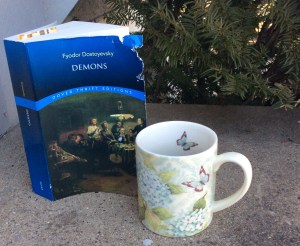
Dostoevsky in the Springtime

Imagine a town of wretched winter-blitzed people!  It has been a very cold April, and we were relieved to see signs of spring today.

I planned to sit outside and read Dostoevsky.

But alas!

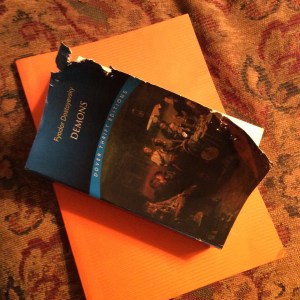
The cat objects to Dostoevsky.

Shocking, isn’t it?  The cat did it. She has no idea that chewing books is forbidden.  She’s sweet, but clueless.  And apparently she does not like Dostoevsky.

I cannot read a book in this condition.

I’m disappointed.

I was thoroughly enjoying Demons (also called The Possessed, or Devils).  I started reading it after I finished Chernyshevsky’s What Is to Be Done?, because the translator Michael R. Katz wrote that it is partly Dostoevsky’s response to What Is to Be Done? and to Turgenev’s Fathers and Sons. (There are also references to other books by Turgenev.)

Demons is a milder psychological novel than, say, Crime and Punishment.  Set in a provincial town, Demons has an almost Turgenev-like atmosphere at first:  much  tea is drunk, characters discuss poetry and politics, and the jockeying for social power is constant.  But then the revolutionaries arrive, and beware!

As in Turgenev’s Fathers and Sons, there is a conflict between a father and son:  Stepan Trofimovich Verkhovensk, a liberal humanist of the 1840s generation, has long been a tutor and hanger-on in the household of the wealthy Varvara Petrovna Stravrogin.  His son, Pyotr Stepanovitch, who has been raised by relatives, is a nihilist–only with none of the nobility of Turgenev’s Bazarov.  And when he shows up at Varvara Petrovna’s, his father does not at first recognize him.

At the same time, the moody, gorgeous Nikolai Vsvelodovich Stravrogin arrives to visit his mother, Varvara Petrovna.  She adores him, but there is gossip about him and a mad woman…and is any of it true? Meanwhile Pyotr Stepanovitch is sowing dissension as part of the revolutionary plot.

The social rivalry and political tension increase as Pyotr Stepanovitch destroys reputations.  There is much decadence–a group of young people go into a hotel room to look at a suicide–and Pyotr Stepanovitch discredits a local politician.

Stepan Trofimovich, who tries to keep up with modern culture,  reads Fathers and Sons and What Is to Be Done?  He (and the cranky Dostoevsky) find Bazarov a completely unbelievable character.

There is a huge cast of characters, and it is a page-turner.  It rambles a bit, but maybe it will all come together in the end.

I found an old Oxford paperback, Devils, to replace the Dover, so I will be able to finish the book.

I swear I used to have a copy called The Possessed, and I think that’s a better title.  Probably less accurate…

The Infantilization of Women: Meg Wolitzer’s “The Female Persuasion”

When a book is hyped as “ultra-readable” by Vogue, we know the reader is in trouble. When it is lauded by People as “equal parts cotton candy and red meat,”  the reader is in more trouble.

And yet I bought a copy of Meg Wolitzer’s The Female Persuasion, even though I had doubts.  I wanted to tune out mindlessly for an entire freezing-cold April Sunday by escaping into a book, and why not the latest must-read best-seller?

Mind you, The Female Persuasion is hailed as  the novel that represents the #MeToo movement, which at our house we call#WhoHasn’tBeen?  Yes, sexual harassment is a terrible thing, but  #MeToo has resulted in the mass infantilization of American women.   Rather than organize assertiveness training, self-defense classes, and lobbying to change laws, sniveling on Twitter is the new vogue. Do you feel that you’re living through the Russian Revolution?  (I’ve been reading Janet Fitch’s stunning novel, The Revolution of Marina M.)

Wolitzer is usually a very smart writer, but The Female Persuasion is uneven and sometimes preachy.  We meet the heroine, Greer, when she is a whiny college freshman.  One of the two smartest students at her high school (the other was her boyfriend, Cory), she got into Yale but received no financial aid, because her stoner father hadn’t known how to fill out the application properly and left parts blank.  She ends up at Ryland College with a full scholarship, disappointed and angry.  It’s  like the Gilmore Girls, when Rory doesn’t get into Harvard and has to go to Yale instead as a legacy student.  Except the fictional Ryland College is really nowhere, I guess.  Life is hard!  As Greer sulks and fumes, I figured out what no reviewer told me: THE FEMALE PERSUASION IS A CHILDREN’S BOOK!

The first chapter starts well, as Wolitzer, with her trademark wit, reveals that a Gloria Steinem-style feminist named Faith Frank gives a lecture at the college and is impressed with Greer when they chat afterwards. But then Wolitzer backpedals away from adulthood, and we spend 100 pages stuck in an adolescent novel, where sulky Greer, who has no social skills and mopes in the lounge on Saturday night, has an epiphany at a frat party when an obnoxious frat boy, Darren, gropes her.

She is drunk, she tells Darren that she was supposed to be at Yale instead of Ryland, he thinks she’s joking, and then he runs his hand up her shirt and encircles her breasts.  When she jerks away and says No,  he tweaks her breasts painfully.  And she is stunned, because no one has ever touched her like this.

And Darren, the nasty groper, goes on to grope other women as the semester progresses, and eventually assaults a woman.  The college does not deal with this satisfactorily, in the women’s eyes–he must attend some counseling session–and Greer and Zee try to keep a movement going to expel him.  The girls make T-shirts with pictures of Darrell but everybody except Greer and Zee have moved on:  only five people accept the free t-shirts.

The feminist Faith Frank gives Greer the advice I would have given.

“It sounds like you already did what you could. You made your point. If you seem to be hounding this person, then sympathy will redound to him. It’s too much of a risk to take.” She took a second. “And also, what about the other women who are involved? Do they want this revisited?”

“Two of them said they definitely don’t,” Greer admitted. She hadn’t thought about this much, but now she remembered what Ariel Diski had said. “They just want to forget about it and move on.”

“Well, they get a say, don’t they? Look, there’s a whole world out there. Lots to see, lots to be angry about and cry about and do something about, well beyond the bounds of this campus.”

And then, instead of going forward, Wolitzer retraces Greer’s career in elementary school and  high school. (We’re really in Y.A. territory.)  In elementary school, the teachers  tell the boys to use their “inside voices,” not their “outside voices”  in the classroom.  Greer says she has never had an “outside voice.”

But here’s the thing. It is difficult to understand how a college student who has stoner parents, who has never been coddled, and who is has been sexually active since she was 17, can be so naive. Greer claims she has no outside voice, but this is untrue:   she does have a very strong voice and impresses Faith the famous feminist.  In retrospect, I wonder why young women today are portrayed as less powerful than we felt in the late 20th century.  Who told us it was dangerous for women to go to frat parties?  How did we know this?  Hip feminists simply didn’t want to go to frat parties!  So I have to think this part of the book is didactic: (a) don’t go to frat parties! and if you do (b) file a complaint.

Throughout much of the novel, the issues get in the way of the narrative.   Wolitzer outlines the plot and tell us what to think, instead of developing characters and painting sharp, vivid scenes. (In the “show-don’t-tell” universe, she favors telling rather than showing.)

At the beginning of Part 2, Greer is on her way to interview for a job at Faith’s magazine, which Greer considers outdated. I immediately predicted rightly that Greer would  (a) break with Faith, and (b) develop her own style of feminism.  And I knew somehow  that nasty Darren would be back.  Yes, he is.

Greer writes a best-selling book called Outside Voices.  Can anything be more infantilizing than that title?

As I read this, knocking back a Scotch, I was reminded of Verena Tarrant in Henry James’s The Bostonians.  Verena is the protegée of a feminist, Olive Chancellor. there is a tug of war for her soul between Olive and her cousin Basil Ransom, a handsome man who falls in love with Verena.  The two books aren’t much alike, because James satirized feminism, but  Greer is so naive that she is a kind of Verena.

After finishing The Female Persuasion, I found  myself wanting to revisit college novels about grown-up women:  Mary McCarthy’s The Group, Pamela Dean’s Tam Lin, and Susan Choi’s My Education.

I do think The Female Persuasion would appeal to the Y.A. crowd!  But I wonder how much of this novel was rewritten to fit the #MeToo movement.  I really have enjoyed Wolitzer’s other novels, especially The Interestings.