Literary Fantasy Parcel, #1: Books for Bohemians

crowley-benson-comyns-christmas-parcel

Literary Fantasy Parcel, # 1

It is Small Business Saturday, or Civilized Saturday, as some call it. In past years Obama has shopped at an independent bookstore to buy Christmas presents.

I am fascinated by his bookstore trips, because I used to live in D.C.  I loved Kramerbooks & Afterwords Cafe at Dupont Circle.  The book selection was superb and I would have loved to quit my professional job and work there, except the low wages would have meant sharing a house with half a dozen strangers in Rockville, Maryland, which was my idea of a nightmare.  (It’s the Rockville of the R.E.M. song, “Don’t Go Back to Rockville.”)

Obama sent a cabinet member shopping today:  very disappointing.  Although I didn’t go shopping myself (that will be later), I planned the gift parcels of two-to-three books I like to give my bohemian friends.  I put together a “theme” parcel and package it in canvas or cotton bookstore bags.  (I have two Skoob bags, a Waterstones bag, a Prairie Lights bag, and two Barnes & Noble bags, so I’m ready to go).

This year my theme is LITERARY FANTASY.  And so I have put together some very odd artsy books, all of which are slightly bohemian.

christmas-parcel-benson-comynscrowley

These are not traditional fantasy novels:  Barbara Comyns is a literary writer, published by Dorothy, Virago, and NYRB, Stella Benson is literary and weird beyond, and John Crowley is highly acclaimed both in the SF/fantasy community and by critics.  I first learned about his books from the critic Michael Dirda.

who-was-changed-and-who-was-dead-comyns-97809844693141. Barbara Comyns’ Who Was Dead and Who Was Changed (Dorothy, a Publishing Project).  Comyns is one of my favorite writers:  I recently posted about Our Spoons Came from Woolworths here.  Born in 1909 in England, she went to art school, became a novelist and a painter, and did various odd jobs to support her painter husband and two children (she was an antique dealer and apartment renovator, among other occupations).

Each of her beautifully-written novels is lyrical and pitch-perfect.  Fans of her charming novel,  Our Spoons Came from Woolworths, the story of a young woman married to a painter and their trials and tribulations after she has children, may be puzzled by  the strange, unpredictable, fantasy/fable, Who Was Dead and Who Was Changed.

This strange, dreamy novel begins with a flood:

The ducks swam through the drawing-room windows.  The weight of the water had forced the window open; so the ducks swam in.  Round the floor they sailed quacking their approval; then they sailed out again to explore the wonderful novel that came in the night.

Gorgeous, poetic  sentence follows gorgeous, poetic sentence. I could read Comyns forever just for her word choices.  Her elegant fantasy is set in the ordinary life of an upper-middle-class family. Floods are a fact of life for the Willoweed family, who row a boat through the water and see a squealing pig, drowned peacocks, and a white beehive with the bees still buzzing around.    Ebin Willoweed, a former journalist, still hopes to find a dead body in the flood.  Like all journalists, he is curious and thinks in terms of stories. Fired after a libel case, he returned 10 years ago to the country with his three children, Emma, Dennis, and Hattie (who is black: Ebyn can’t figure out where his late wife found a black lover).  Their house is owned by Grandmother Willoweed, who is truly the grandmother from hell.  Emma looks after the younger children:  she daydreams by the river while they play with paper boats and run through the woods.  And the maids, Norah and Eunice, also have a close sibling relationship, but these sisters are often verbally abused by Grandmother Willoweed.  They  find love on their days off.

The flood is nothing, however, compared to the plague of madness that soon strikes human beings in the village.  What doom will strike whom next?  In this rapt fairy tale about life, death, coming of age, love, ambition, and betrayal, nothing is what it seems.

this-is-the-end-benson-221511182.  Stella Benson’s This Is the End (Michael Walmer).  About a decade ago, I accidentally discovered Stella Benson’s Living Alone at Project Gutenberg.   I fell in love with this strange World War I fantasy,  in which a middle-class conventional woman’s life is changed by a witch who runs a boarding house for people who want to live alone.

I recently discovered that two of Benson’s novels have been reissued in paperback by the Australian publisher Michael Walmer (and are available in the U.S.). I loved This Is the End, her second novel, published in 1917.  Benson is a peculiar writer, with a gift for whimsy and enchanting questing characters.  If her prose isn’t consistently elegant,  she wins you over with her originality and clever blend of fantasy and philosophy.

In this strange little novel, set in World War I,  the quixotic heroine, Jay, has run away from her middle-class home to work as a bus conductor in London. She doesn’t feel it’s fair to be comfortable during th war when so many are poor. When her brother Kew, a soldier on leave, tracks her down, he is dismayed to find her working in a uniform.  Her  letters to her stepmother, Mrs. Gustus,  a writer of popular sentimental novels , are fantastic invented fantasies of  living in a house by the sea.  In her real life, she spends her free time in this fantasy world where she has a Secret Friend.

Mrs. Gustus tells Kew and their visitor Mr. Russell  that she has a letter from Jay with a clue.  They must drive along the coast to find her house in Mr. Russell’s car, Christina.

Jay and Kew are orphans and understand Mrs. Gustus, whom they call Anonyma, well.

Mrs. Gustus had no gift of intimacy.  She was reserved about everything except herself, or what she believed to be herself.  The self that she shared so generously with others was, however, not founded on fact, but modelled on the heroine of all her books. She killed her heroine whenever possible–I think she only once married her,–and yet still the character remained immortal in everything that did not seem artistic.  Her notebook was a tangle of self-deceptions.  The rest of the Family knew this.  They never pretended to believe her.

It is entertaining, very strange, riddled with verse, sometimes beautiful, occasionally clumsy, and there is tragedy as well as comedy.  Is it ever right to give up our dreams?

Virginia Woolf wrote in her diary:  “A curious feeling, when a writer like Stella Benson dies, that one’s response is diminished.  Here and now won’t be lit up by her:  it’s life lessened.”

A peculiar book!
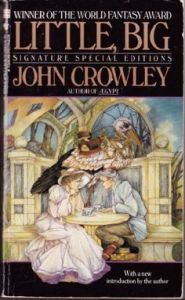
little-big-crowley-c3fc1ada18b22bc1610dd0b852173ce53. Little, Big by John Crowley, winner of the Award in Literature from the American Academy and Institute of Arts and Letters and the World Fantasy Award.  I am an enormous fan of his Aegypt tetralogy.  I have not read Little, Big , but find it is always good to include one book you haven’t read in a parcel.  Here is the description at Goodreads.

John Crowley’s masterful Little, Big is the epic story of Smoky Barnable, an anonymous young man who travels by foot from the City to a place called Edgewood—not found on any map—to marry Daily Alice Drinkwater, as was prophesied. It is the story of four generations of a singular family, living in a house that is many houses on the magical border of an otherworld. It is a story of fantastic love and heartrending loss; of impossible things and unshakable destinies; and of the great Tale that envelops us all. It is a wonder.

Hope you’re all having a good Thanksgiving weekend!  I am, except that I ruined the turkey (long story), and my husband had to buy some at the deli at the Hy-Vee.
Post-Traumatic Best Book List Syndrome, or If I Don’t Know You, I Don’t Care What You Recommend!

Catching up on the 2015 list!

I enjoy Best Books of the Year lists.

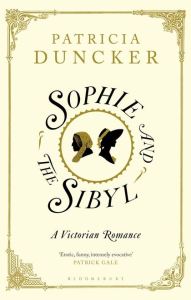
But how many did I read from the Best of 2015 lists?  One-third of Jonathan Franzen’s Purity.  The one I intend to read is Patricia Duncker’s Sophie and the Sibyl, a novel about George Eliot.

Though my own taste is usually for older books and classics, I do read the lists over the holidays. And I am already agog  and overwhelmed by lists, as I flap through newspapers, skim the Dover catalogue, and scroll own the online Best of lists before giving up and heading to the mall.

Mind you, I’m banned from the 100 Notable Books list at The New York Times because I already read my 10 free articles, err, forty free (I read 30 more on various e-devices) during the election.  I’m waiting for the daily critics to post their lists in December.  I recognize and respect the unique voices of Michiko Kakutani and Dwight Garner.

I also recommend The Washington Post book list, though at first it looked tame and  predictable.  That’s because only the top of the page had loaded, and it took forever.  Scroll down…keep scrolling…scroll some more… then wait… and eventually the entire article appears, with links by genre to other recommendations.

By the time  I got to the TLS  Books of the Year list,  I was struck by hilarity and what I call “If I Don’t Know Who You Are, I Don’t Care What You Recommend” syndrome.  I rather think this is my brain on pumpkin pie.

One reviewer (sorry, didn’t write down his/her name) called a book “an assured product of cosmopolitan high culture,” so I had to pass.   Another  recommends new translations of Homer’s Iliad, and what a good idea: he especially liked Caroline Alexander’s translation,  which I read and very much enjoyed.   Mary Beard recommends museum exhibition catalogues, her favorite being the catalogue for the British Museum exhibition, Sunken Cities: Egypt’s lost worlds, edited by Franck Goddio and Aurélia Masson-Berghof, but must skip since I’m shopping for fans of Amelia Peabody and Mara Daughter of the Nile.

I  skipped over the pieces by reviewers  I didn’t know, though  perhaps I missed the best. I sometimes lingered over phrases like “surreal fantasist”and “meticulous mosaics of clustered hues”out of context.  I enjoyed the “Best of”s by  Joyce Carol Oates, Hilary Mantel, Margaret Drabble,  D. J. Taylor, William Boyd, and Michael Dirda.

And, yes, I agree with Edmund Gordon (no idea who he is) that Olivia Laing’s The Lonely City is “gorgeously written.”  It’s the perfect gift for anyone. My God, if you winter in What Cheer, Iowa, or Lone Tree, you’re living in “the lonely city.”

SO HAPPY BEST OF LISTS TO ALL AND GOOD NIGHT!

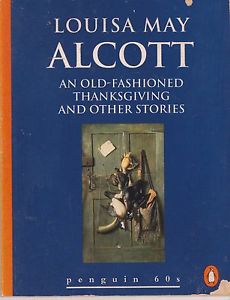
Louisa May Alcott’s “An Old-Fashioned Thanksgiving”

old-fashioned-thanks-giving-alcott-penguin-s-l300 You’re ready to roast the turkey…you’ve added mushrooms, onion, and chestnuts to the Pepperidge Farm stuffing…the pies are on the counter…and then you get a phone call from your cousin, who has been committed to the mental hospital.  To riff on a phrase from Little Women, Thanksgiving won’t be Thanksgiving without her!

In Louisa May Alcott’s “An Old-Fashioned Thanksgiving,” an unexpected  illness also disrupts Thanksgiving.

At the beginning, Mrs. Bassett is cozily preparing the feast the day before the holiday.

“I do like to begin seasonable and have things to my mind. Thanksgivin’ dinners can’t be drove, and it does take a sight of victuals to fill all these hungry stomicks,” said the good woman, as she gave a vigorous stir to the great kettle of cider apple-sauce, and cast a glance of housewifely pride at the fine array of pies set forth on the buttery shelves.”

And then a stranger brings bad news.  Mrs. Bassett’s mother is “failn’ fast.” She and her husband drop everything, promise the children a feast later, and take the sleigh to Gram’ma’s.

The older girls, Prue and Tillie, decide to make the dinner themselves.  They’ve seen Ma do it many times. If you’ve read Little Women, you know the cookery may be iffy.  Jo’s salt instead of sugar in the strawberries doesn’t begin to cover it.

I can’t pretend this one of Alcott’s better efforts, but she is one of our very best American writers, and I have read An Old-Fashioned Girl (my favorite), Little Women, Work (her adult Little Women), and Hospital Sketches many times. I am now breezing throuhg Aunt Jo’s Scrap-Bag, which you can download it free on the internet.

I do wish we had cider apple-sauce at our house.

And I love Alcott’s dialogue (and occasional dialect)!

Tilly Bassett, whatever made you put wormwood and catnip in your stuffin’?” demanded Ma, trying not to be severe, for all the rest were laughing, and Tilly looked ready to cry.

Happy Thanksgiving!  I hope all is well with you and your family.

Protests & Petitions

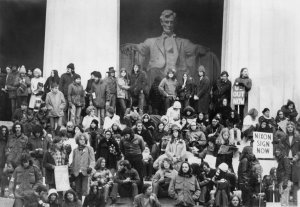
I’ve heard something like “Not My President” before.  Slogans were more direct in the ’70s:  “Impeach Nixon!”

It’s been years since I attended a protest or political rally, but the photos of then and now are similar.  These days I prefer signing petitions and sending letters to senators and representatives.  Still, I’m glad to see the protesters doing their job.

My assumption from reading the news was that the young wouldn’t step up, and, indeed, it was hard to get the Millennial vote out. In an  All Things Considered story,  “Young Voters In Pennsylvania Weigh In On Why Clinton Failed To Win State,”  a student at Lafayette College admitted he hadn’t even registered to vote. “It was more of a lazy thing, and I didn’t really like either candidates. And I should have upheld my civic duty, but I didn’t. So I kind of regret it now.”

And so we urge everybody to get ready NOW for the midterm elections. (Register to vote.)  And you might want to visit Bernie Sanders’s Our Revolution website to find out what the progressives are up to or  sign this petition at MoveOn.org to abolish the electoral college.  

Protest if and where you will. There have been peaceful protests in front of Trump Tower in New York and Chicago:  I love the photo below of bicyclists protesting at Trump Tower in Chicago.

Bicyclists protest Trump Tower in Chicago, Nov. 18

And even I may turn out for a protest on Inauguration Day.  The big one will be in Washington, D.C., but it’s a big country, and you can find one in your own town.

Some protests are taking strange forms, though, and indeed I thought a theatrical political intervention well-intentioned but inappropriate.  When vice-president-elect Pence attended Hamilton on Friday night,  the actor Brandon Victor Dixon, who plays Aaron Burr, addressed a few remarks directly to Pence at the end of the play. It was a lovely, short, polite statement, co-written by written by the show’s creator, Lin-Manuel Miranda, director, Thomas Kail, and the lead producer, Jeffrey Seller, with input from cast members.  An excerpt:

“We, sir — we — are the diverse America who are alarmed and anxious that your new administration will not protect us, our planet, our children, our parents, or defend us and uphold our inalienable rights.  We truly hope that this show has inspired you to uphold our American values and to work on behalf of all of us.”

Who couldn’t love it?  Very sweet.  But I have my doubts:  was it necessary?  Doesn’t the play say all that better?  And then  Trump went nuts on Twitter and demanded an apology for Pence, who said he wasn’t offended and didn’t want an apology.  Thank goodness!

Trump is “not my president,” as the kids say.  I am a Bernie Sanders supporter who voted for Hillary Clinton, who won the popular vote in the election.   But unless Trump goes to jail for fraud, he WILL be OUR president, so “not my president” is a technicality.  And that’s why progressives must seriously organize, figuring out how to reach all age groups with the Democratic party issues that are helpful to all classes (I still can’t believe the white male vote went for Trump!) and to find candidates who can inspire them.

At times like this we turn to Obama, who can give Trump, protesters, and everybody a few tips.

According to  Politico, Obama said at a news conference in Berlin with German Chancellor Angela Merkel last Thursday:

“I’ve been the subject of protests during the course of my eight years.  And I suspect that there’s not a president in our history that hasn’t been subject to these protests. So, I would not advise people who feel strongly or who are concerned about some of the issues that have been raised during the course of the campaign, I wouldn’t advise them to be silent.”

Yes!

Virago Weekend: Dorothy Baker’s Cassandra at the Wedding & Barbara Comyns’ Our Spoons Came from Woolworths

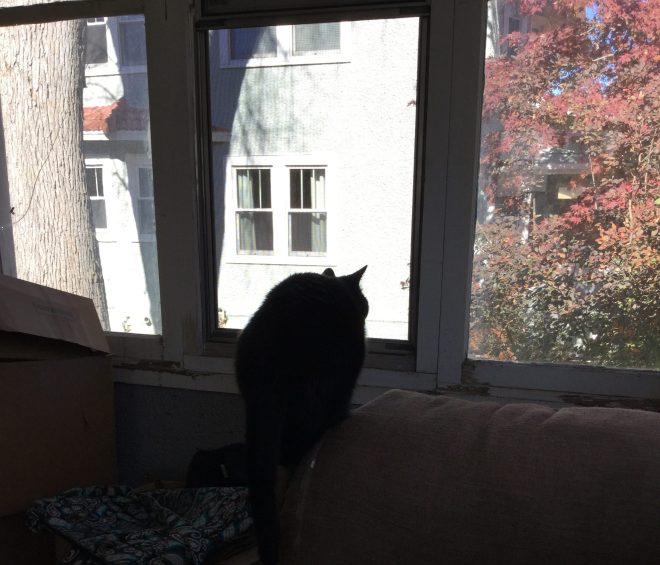
cat-on-a-porch-fall-afternoon

                   Hanging out on the porch in November.

It’s never fun to have strangers ripping up your walls, and when our tiny house was disrupted during a recent black mold scare, I  stayed home with the cats. We could have gone to a hotel, but the cats prefer their own environment, to the point that I rarely travel and once stayed home with them during a bomb scare.  I did not believe our neighborhood would blow up, nor did it.

The cats are fine after the black mold removal, but I am exhausted.  And so I went on a binge:  a Virago-and-Diet-Coke binge.

My addiction to Viragos started in the 1980s when an eccentric bookshop owner may or may not have been illegally selling British editions of books. My two favorite Virago writers are  among the first I read: Barbara Comyns and  Dorothy Baker.

cassandra-at-the-wedding-baker-e39765fc9b9e7d5873d6f4a9ffba9610The American writer Dorothy Baker‘s masterpiece Cassandra at the Wedding (which I wrote at length about here)  has been reissued both by Virago and NYRB.  In  this remarkable novel about twins, sexuality, and depression, the narrator, Cassandra, a suicidal graduate student, drives from Berkeley to the family ranch for her twin sister Judith’s wedding.   Judith, a musician, plans to marry Jack, a medical student.  Only Cassandra, their father, and grandmother, and a few of their grandmother’s friends will attend the private ceremony. Cassandra has been fragile since their mother, a writer, died of cancer. She tries to talk Judith out of getting married:  she says Jack is redundant and the sisters belong together. After Judith disagrees, disaster ensues.

I wish I could say all of Baker’s books were equally wonderful, but they are not, and perhaps that’s why Virago only reissued this one.   Trio is a pulp menage a trois novel, in which a lesbian relationship is threatened by a young man’s attentions to the younger woman: it is slightly reminiscent of D. H. Lawrence’s The Fox.    Young Man with a Horn, reissued by NYRB,  based on the life of jazz musician Bix Beiderbecke, lacks the star quality of Cassandra.  I tracked down a copy of Our Gifted Son, and have attempted to read it twice.  Oh, dear, all I can say is that it’s set in Mexico.  I WANT to love her  books, but why did she write so little?  Why was only one truly great?  What on earth happened to her?

Cassandra at the wedding viragoBarbara Comyns, on the other hand, is a reliable writer.  She didn’t write one great book, but several. Her narrators are charming and original, people you’d want for your  friends, but their lives are not always happy:   they deal with abusive fathers, unfulfilling affairs and marriages, and poverty.  Sometimes there are happy endings, sometimes not.

Our Spoons Came from Woolworth’s is one of my favorite novels.  I put it in the same class as Dodie Smith’s I Capture the Castle and Lynne Reid Banks’ The L-Shaped Room.  The captivating, gentle narrator, Sophia, tells us the tragicomic story of her first marriage to a self-centered but charming artist, Charles Fairclough, whose selfishness plunges them into poverty and makes her ill.  He won’t work, they are very poor, and the description of poverty is detailed:  we feel the cold.

But they are very happy when they are engaged.   You have to read her comic prose to know how charming this is.

Charles and I were both twenty when we met, and as soon as we were twenty-one we decided to get married secretly.  There was a church next door to the house where I had a bed-sitting-room, so we went there to ask the priest to put the banns up.  We dared not ring the bell at first, we felt too shy.  Charles said they would ask us in and give us a glass of sherry and some funeral biscuits.  We stood on the doorstep rehearsing what to say and the priest must have heard us, because he suddenly opened the door though we hadn’t rung the bell.  He took one look at us with his deepset eyes and said “Banns” in a shouting kind of voice.

Then she gets pregnant, and their little boy Sandro gets some kind of milk allowance from the clinic, but Sophia and Charles don’t always eat.  When she goes back to work full-time at an artists’ studio, she has to leave Sandro with some very mean-spirited relatives of Charles. Then they have a daughter, and  Charles tells her he doesn’t want a family and they must leave.  The consequences are tragic.

And yet Sophia’s gentle, observant tone gives the narrative almost a fairy-tale atmosphere.  We cry for Sophia but she doesn’t cry for herself.  She courageously makes a new life for herself.  There is a slow transformation, after she goes off on her own.  She has to keep going.  She is that kind of person.  And she has second and third chances.

our-spoons-came-from-comyns-virago-1818286

There is a happy ending.

And that is a relief after the black mold week I’ve had.

Black Mold and Books

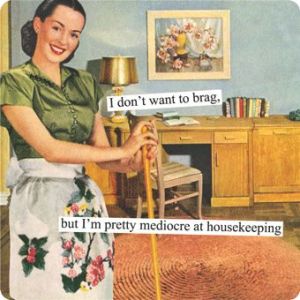
anne-taintor-mediocre-housewife-96c747f821c900499927d681b20890f5What a dreadful week this has been!

We found black mold in our study.  Don’t worry: it won’t kill you.   That’s an urban legend. We hired someone to take care of it.

The Centers for Disease Control website explains,

There is always some mold everywhere – in the air and on many surfaces. Mold has been on the Earth for millions of years. Molds grow where there is moisture and they can flourish in damp, warm, and humid environments….

A link between other adverse health effects, such as pulmonary hemorrhage among infants, memory loss, or lethargy, and mold, including a black mold (e.g. Stachybotrys chartarum (S. chartarum)) which has been associated with heavy and constant water damage in buildings, has not been proven.

It’s not a big deal,  but it has been chaotic and depressing. We had to move our bookcases, desk, etc., into the living room, dining room, and bedrooms.  If you like the used bookstore look, this “cutting-edge” house now  belongs in Martha Stewart’s magazine.

HERE’S WHAT YOUR SCHEDULE IS LIKE WHEN YOU HAVE BLACK MOLD:

1. Your day starts at 7 a.m. because you don’t know when they’ll arrive.   Maybe at 7:30, maybe at noon. There are phone calls. You’re tired, you don’t usually get up till 10,  you drink two cups of coffee, and then you vacuum, because every woman’s house should look like your mother’s, circa 1965.

2 Social skills.  It’s at times like this that you realize you might as well pretend you’re Holly Hunter in The Piano.  If only you had  your mother’s social skills.  She supervised all work done in the house, while chatting the whole time. How do you make friends with your work crew if you’re not chatty?    Should you give them food?   Your Melitta coffeepot makes only one cup of coffee at a time, so you can’t offer coffee to a crew. Should you have baked cookies? You mean to be nice, but  there doesn’t seem to be room for all these people in your house.

3 Your cats are freaked out.  The cats are very well-brought-up, but they’re not used to strangers.  The elderly cats disappear like the hipster doofuses they are into their “private apartments.”  The  frisky cats are shut in the basement so they don’t get in the way, because they think THE BLACK MOLD CREW is here to play with them.  (NOTE:  at the end of the day, the cats  get treats!)

4 Eventually you rush out of the house.  You need to get out.  But where? Anywhere.  The mall!  The bookstore! The coffeehouse!  But it is very boring.    Okay, at the coffeehouse you have a cappuccino and read.  Then you have a coffee and read. And then you wonder if you should have another coffee but you’re coffeed out.  And then you go to the mall and wonder if you need Snoopy sheets and a wicker cornucopia.  And do you need a Thanksgiving tablecloth? And  should you get your hair cut?

5 This goes on  for days.  Finally you don’t bother to get up till 9.  If they’re here, they can call you on their phones! Anyway, you’re always up before they arrive. Everybody is on a late schedule.   You stop vacuuming  because they’re family now. (The family you never talk to.)  If they want to vacuum, they can do it themselves!  You bang around the kitchen and don’t think about offering them your  toast. They can get it themselves.  They’re all using your bathroom, and you keep changing the towels maternally. You also squirt that special Clorox spray around and clean the sink, especially the handles!   Maybe they could clean the mold on the grout while they’re here, but then I would lose my bathroom. Finally they put back the wainscotting and repainted it.  They did a good job,  I praise their work, bye-bye, and now we just have to move all the books back.

TIME TO BUY A BOOK SHED!

Jhumpa Lahiri’s The Clothing of Books

We don’t live in a world in which a cover can simply reflect the sense and style of the book. Today more than ever the cover shoulders an additional weight. Its function is much more commercial than aesthetic. It succeeds or fails in the market.
–Jhumpa Lahiri’s The Clothing of Books

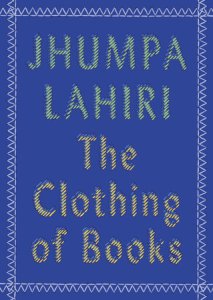
jhumpa-lahiri-the-clothing-of-books-9780525432753No one writes more exquisitely about the Indian-American experience than Jhumpa Lahiri, who won the Pulitzer Prize for her first collection of short stories, Interpreter of Maladies. Since then she has written a second collection of stories, two novels, and a nonfiction book, In Other Words, about moving to Rome and writing in Italian.   She has won many awards, including a 2014 National Humanities Medal presented by President Obama.

Her short new book, The Clothing of Books, is about book covers, a subject few of us readers can resist. God knows I have bought many books for their covers, or avoided those with ugly covers.  In this intelligent, charming little book,  Lahiri looks at the role of the book cover and   the negligible role of the author in choosing the design. Written in Italian as the  keynote speech for the Festival degli Scrittori in Florence, The Clothing of Books was translated into English by her husband, Alberto Vourvoulias-Bush.

She writes of the book cover as the clothing of books.  She begins by musing about her own ambivalence to fashion as a girl in the U.S.   She envied the uniforms of her cousins in India, because it gave them an identity and they didn’t have to worry about what to wear. Her mother, who still wears traditional Indian clothing,  picked out the wrong American clothes for Lahiri.  They did not understand American clothing.

However simple and functional, I found my cousins’ uniforms splendid, fascinating. On the street, on buses and trams, I was struck by this visual language, thanks to which one could identify and classify thousands of students in such a large and populous city. Every uniform represented belonging to one school or another. Each of my peers in Calcutta enjoyed, to my eyes, a strong identity and, at the same time, a sort of anonymity.

For Lahiri, the cover is a bit like fashion.  Sometimes it represents her and her words well, sometimes not.  For Lahiri, the cover signifies the end of writing a book, rather than the beginning, as it does for most of us.  She writes, “It represents a collective reading by the book designer and various people at the publishing house; it matters how they see the book, what they think of it, what they want from it.”

Jhumpa Lahiri

Jhumpa Lahiri

Her input as a writer in the book design is minimal, and she has never talked to a designer of a cover for her book.  Sometimes the editor listens to her criticism, but they decide the design without her.

It was different for Virginia Woolf, who founded Hogarth Press with her husband Leonard.  Virginia talked to her sister, the artist Vanessa Bell, about what she wanted in the design.  Bell did not necessarily read Woolf’s books first. They collaborated on the design.

Lahiri, the daughter of a librarian, misses what she calls “naked books.”  She has read many hardcover library books whose jackets were removed, because they are easily damaged in libraries. Lahir misses the days when she could read books with no summaries, autor bios,  blurbs, or other jacket copy.  (Personally I miss that smell of old book smell, from the special library binding.)

Lahiri’s fascinating new book is one of my favorites of the year.  I can’t imagine any reader not enjoying it.

It’s All Bad News, So Make a Balzac Rolodex

The good news?

There is none.

The Guardian: “Bannon appointment deepens fears of racism.”

The New York Times:  “President-elect Donald J. Trump’s transition plunged into disarray with the abrupt departures of aides who had handled national security and foreign policy matters.”

Well, I’m going to chill.  I voted for Hillary Clinton, and she won the popular vote. Did my vote count?  I suppose.  Some of my candidates got elected, and that’s the best I could do.

Thank God I don’t have to go through that election again.

GOOD BOOKISH NEWS!

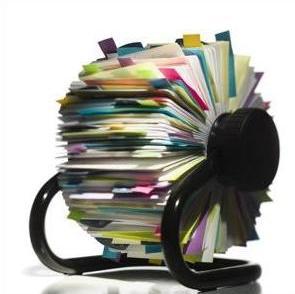
A couple of days ago I wrote about how I needed a Balzac rolodex to  keep track of the recurring characters.  My rolodex arrived in the mail today!  It is so much fun to write this information on cards.  So much more fun than spreadsheets, and like the old card catalogues, more efficient once it’s done.

The rolodex would work for any long series.  God knows who all those characters are in George R. R. Martin’s Game of Thrones.

And I  bought a letter opener to  cut the pages of an old edition of Clara Bell’s translation of Modeste Mignon.  Much easier than cutting the pages with index cards!

I hope you’re having a good Tuesday night!

Stuck! Margot Livesey, Uncut Pages in Old Books, & Post-Election Grief

margot-livesey-jacket-mercuryI’m stuck!

I said I would read one new book a week.

I’ve rejected two in five days.  I’ll write about one today.

I slogged through 208 pages of Margot Livesey’s Mercury,  then skipped to the end.   My conclusion?  Fire the editor.

Livesey is a skillful, likable writer, and at her best she has an extraordinary imagination and a gift for moving a story vigorously forward. In the past her complex characters have included a modern Jane Eyre, an amnesiac, and a heroine with invisible companions.

You can almost see the outline of Mercury.  Like so many novels today, it lacks depth. Livesey’s unobtrusive style usually supports the unfolding of her narrative, but in this case the writing is leaden.

There is a coherent structure, but the narrative seems rushed.  Divided into three parts, the first and third parts of Mercury are narrated by Donald, an unhappy Scottish ophthalmologist in private practice who no longer does surgery.  The  middle part is narrated by his wife Viv, who left a corporate job to co-manage a local stable with her best friend, Claudia.

Donald and Viv’s marriage is disintegrating because their values have changed:  under the influence of a wealthy new friend, Hilary, Viv is pressing to send their son to a private school ($30,000 a year). Donald and Viv have always supported the public schools in their Boston suburb. He resents her neglect of the family as she works longer and longer hours at the stable.

And Viv’s narrative is even sketchier than Donald’s.  She didn’t achieve her goal to be a corporate CEO, so she quit her job in mutual funds.  Now at the stable she behaves like a CEO,  obsessed with training a horse named Mercury, covering up problems from her partner, and focused on winning competitions.  She becomes increasingly paranoid.

I’m not a horsey person, but this plot-oriented novel is not in the same class as Enid Bagnold’s National Velvet, mentioned here, Dick Francis’s thrillers, or Jane Smiley’s Horse Heaven. It is a weird marriage of literary and pop.  So disappointing, because Livesey is usually so good.

Do you think it a coincidence that two of the characters are named Donald and Hilary?  Well, yes, I do!

uncut-620UNCUT PAGES IN OLD BOOKS.

When pages are uncut in an old book, what do you do?

Online booksellers say to use an index card. Scissors work better for me. How about a letter opener?

Any suggestions?

POST-ELECTION GRIEF

I’m still living
in the dream we had,
For me it’s not over…
—Neil Young, “Big Time”

On Day Five after the election, I am still grieving.  It can’t be true…this is my country.

I rattle my pill bottles. Do you think Advil or Clariton would help?  (Homemade vegetable soup was the solution)

People are sad.  People are protesting. And people are desperately signing up for Obamacare before the Affordable Care Act is revoked.  According to Newsweek, more than 100,000 Americans signed up on Wednesday after Donald Trump won the election.

Live through the Nixon years, the Reagan years, and the Bush years, and you realize every generation has to fight over and over for human rights.  It is never over.  We signed the “I’m  Pro-Choice and I Vote” postcards 30 years ago and we still sign them.

One senses a certain Schadenfreude abroad.  Even in London, where I knew no one at all, I encountered anti-American feeling.  A chatty young clerk informed me  that the American governemnt was the worst in the world and that Obama had accomplished nothing. Not only was I the fattest person in the UK, but I had to be an American ambassador. I smiled, briefly praised Obama, and said Clinton would be the next president of the U.S.

Hillary Clinton did win the popular vote.  It’s a very precarious time, but all we can do is hope for the best. Let us hope the Republicans will reach across the aisles…work together with others…  I always have such beautiful dreams.

We can’t give up.

In a 1989 comic strip called “Point the Finger,” R. Crumb compared Donald Trump to Trimalchio, the vulgar millionaire in the Roman novel, Petronius’s Satryricon (which I wrote about   here).

As Crumb said, “And isn’t this a nutty kinda country where you can draw any irreverent, degrading thing about the most powerful people and nobody cares! You don’t get jailed. You don’t get persecuted. They just ice you out of the marketplace.”

All right, peace!  Here are four frames of the comic strip.  Laughter is good for us.

The Balzac Rolodex & a Few Notes on The Chouans

Where's my Balzac rolodex?

Where’s my Balzac rolodex?

I need a Balzac rolodex.

Yes, I am a Balzacian.  I went through a Balzac phase in 2013, and now I’m in another.

I need a rolodex to keep track of the hundreds of characters in Balzac’s La Comédie Humaine, a cycle of approximately 95 novels, stories, and novellas.

Recently I have inhaled  three of the books:   Pere Goriot (a masterpiece:  I wrote about it here), The Chouans (a sentimental historical novel), and A Daughter of Eve  (an entertaining novella in which a megalomaniac journalist exploits the infatuation of a countess and his mistress-actress to found a newspaper).

The same characters often pop up in more than one novel.  Rastignan, whom we first meet in Pere Goriot as a poor law student intent on clawing his way up the ladder of high society through a love affair and connections, has a cameo role in A Daughter of Eve as the friend of the obnoxious journalist, Raoul Nathan. And Hulot, the smart Republican commander of  The Chouans, also appears in Cousin Bette (my favorite Balzac). (N.B. Both Rastignac and Hulot appear in other novels, too.)

There is a very helpful Balzac site, https://balzacbooks.wordpress.com/author/madamevauquer/, created by Dagny (Madame Vauquer), to support the reading of the complete works by a Balzac group at Yahoo.    She has posted an excellent list of recurring characters, but one has to scroll down and down and down.   A rolodex would be easier and quicker: one major character per card and the titles of the books in which he/she appears.  So like graduate school, no?

Am I reading the books in order?  No.  Some of the books are masterpieces, others are very slight (at least in translation.)   Start with one of the classics, like Pere Goriot, Cousin Bette, or Lost Illusions.

A FEW NOTES ON THE CHOUANS, THE FIRST IN THE HUMAN COMEDY.

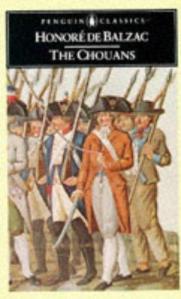
the-chouans-balzac-9780140442601-usA few years ago I found a 50-cent Penguin copy of The Chouans  at the Planned Parenthood Book Sale.   I finally knuckled under and read this novel of the French Revolution, set in 1799.

Marion Ayton Crawford translated several volumes of Balzac for Penguin, including my favorite, Cousin Bette.  But  her translation of this 1829 historical novel  is very awkward.   Perhaps Balzac’s prose is rough in this early novel–I don’t read French.  And the influence of the romantic historical novels of Sir Walter Scott  may or may not be a plus for you.  (It was not for me.)

Balzac can be brilliant and polished, or lose himself in exposition.   That is the case in  the opening of  The Chouans,  where he devotes two and a half pages to descriptions of the costumes of the peasant royalists who have risen up in Brittany against the Republicans.

Here is an excerpt:

Some of the peasants, the majority indeed, went barefoot and were clad each only in a great goatskin, which reached from neck to  knees, and breeches of very coarse white cloth, whose rough badly-trimmed yarn was evidence of the region’s lack of  interest in industrial skills. Their long lank locks seemed part and parcel of the hair of their goatskins and hid their downcast faces so completely that at a first glance it was easy to imagine the goatskins to be their own pelt, and confuse these wretches with the animals that clothed them.

It’s not Vogue!

Balzac explains the peasants are nicknamed the  Chouans because they copy the hoots of barn-owls (Chuins) as warnings of ambush.  They are led by a French aristocrat, the Marquis de Montauran. He is a bit of dandy, but the men love him.

I find Napoleon’s Republicans more sympathetic than the Chuans–because of their clothes! (No, I made that up.)  I adore Hulot, the commander of the Republicans.  He is a smart, savvy soldier with a deep knowledge and experience of military strategies.  He immediately figures out that something is wrong when a  peasant named Marche-a-Terre shows up and dawdles in the middle of nowhere.

But most of the novel is devoted to a romance.  Marie de Vermeuill comes from Paris with a letter giving her command over Hulot, who temporarily resigns.   She is on a special mission to… Well, I won’t give it away. But at an inn she meets Marquis de Montauran (in disguise) and his companion Madame du Gua (who poses as his mother).  Marie and Maontauran fall in love… and the rest of the book is SO silly.

Moderately entertaining, but so badly written/translated!

Don’t start with this. You will be very disappointed.  And yet so much of Balzac is so very, very good.

I will write soon on A Daughter of Eve, which I much preferred.

Balzac is great escape reading.  If you’re depressed after the election, do read him.