A Caffeinated Readathon: Louisa May Alcott’s Eight Cousins, Eve Babitz’s Eve’s Hollywood, David Means’ Hystopia, and Jonathan Franzen’s Purity

alcott loa work, rose in bloom, etc. 41hRjni4-DL

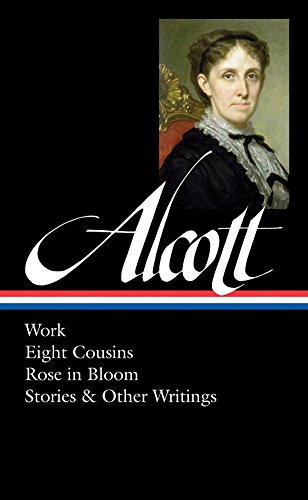
The Library of America edition.

I had a caffeinated readathon on Sunday. Too little sleep, too much coffee, and I read parts of four books, but finished only my comfort book, Louisa May Alcott’s Eight Cousins.

It  started when I woke up on Sunday at 3:45 a.m.  I thought it was near dawn, and realized I would be up in time to watch the men’s Olympic marathon.

AND THEN I LOOKED AT THE CLOCK.

WHY WAS I AWAKE?  The marathon didn’t start till 7:30.  There was no possiblity that Bob Costas was working at 3:45, even Brazil time.

So I got up and I played String with the cats–this involves swinging a string , and my cats are so lazy that after a while they lie on the floor and bat at it.  (They learned this from the oldest cat, who is their street-wise role model in all things).

Then I read for several hours.  Here’s what I’ve been reading:
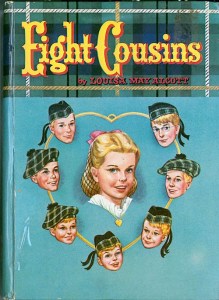
Whitman Classics edition, with cover illustration by Robert

My original Whitman Classics edition from the ’60s!

Louisa May Alcott’s Eight Cousins.  A few years ago I bought a Library of America volume of Louisa May Alcott’s work, edited by Susan Cheever, one of Alcott’s biographers.  This is a superb collection of Alcott’s children’s and adult writing, and includes the novels Work (known as “the adult Little Women”), Eight Cousins and Rose in Bloom, and “Stories and Other Writings.”

Alcott is witty and  her dialogue is rambunctious, her best books are so fast-paced they can be inhaled, and her female characters are never,  as Jo says in Little Women, “affected, niminy-piminy chits.”  In Eight Cousins, the heroine, Rose Campbell,  an orphan, is a bit “niminy-piminy” at first, when fresh from boarding school, she is living on the “Aunt Hill,” with her great-aunts Plenty and Peace Campbell, both spinsters, who don’t  how to raise a teenager.  In the neighborhood live four other aunts, three of whom are the mothers of Rose’s seven male cousins, and each has her own ideas about bringing up girls.  Aunt Myra, a gloomy hypochondriac whose daughter Caroline died as a child (poor Myra and poor Caroline!), is convinced Rose is not long for this world and doses her with pills. Fortunately, Rose’s guardian, Uncle Alec, a charming doctor, returns from sea and  throws out the pills and forbids Rose to drink the  coffee which was supposed to calm her nerves.  He has brought back a chest of gifts from the exotic East to bribe her with, though that word is never used:  Soon she is drinking fresh milk in a special wooden cup that is supposed to make everything taste better,  substituting colorful sashes for the tight fashionable belt, wearing beautiful loose dresses,  running (the Olympics marathon next?),  gardening, and even camping (God help her!).  Endearingly, she befriends and “adopts” the teenage maid, Phebe, who was raised at an orphanage. And the girls have fun together and prove to be equal in intelligence, as we learn when Rose later helps her with her writing.  (Phebe surpasses her in arithmetic, due to keeping accounts.)

Alcott understands boys so well, yet she had only sisters.  When Uncle Alec arrives unexpectedly, a “warning” is sent to the Campbell boys to prepare them for Uncle Alec’s presence at church.

It was evident that the warning had been a wise one, for, in spite of time and place, the lads were in such a ferment that their elders sat in momentary dread of an unseemly outbreak somewhere.  It was simply impossible to keep those fourteen eyes off Uncle Alec, and the dreadful things that were done during the sermon will hardly be believed.

My favorite of the cousins is Mac, the bookworm, and when he strains his eyes, has to wear an eye shade, and cannot reads, Rose is the best “nurse”:  she spends hours reading to him and entertaining him.  (Mac plays a big role in the sequel, Rose in Bloom. when they grow  up, but I won’t breathe a word about it.)  Anyway, Rose learns to hold her own with the boys:  when Charlie (known as Prince) and Archie stop speaking to each other–both have fallen into bad company, the one drinking too much, the other in debt for betting–Rose sets a good example and mediates.  They have an easier time talking to a girl about their problems than to each other.

Alcott moralizes more overtly in Eight Cousins than in Little Women or my favorite, An Old-Fashioned Girl. but Rose is not perfect, thank God.  When her fashionable frenemy, Annabel Bliss, tempts her to have her ears pierced, Rose cannot resist, even though she knows Uncle Alec will disapprove..  It hurts like hell–there is no numbing with ice cubes–and she plans to keep it secret for a while–but she has forgotten that her six-year-old cousin, Jamie, and his little friend Doodie were witnesses:  they were playing in the corner!  And they tell!  ( I couldn’t resist getting my ears pierced either, though, alas, I have a metal allergy!  No jewelry for this girl…)  Uncle Alec gives Rose a break, and she does wear little gold earrings/
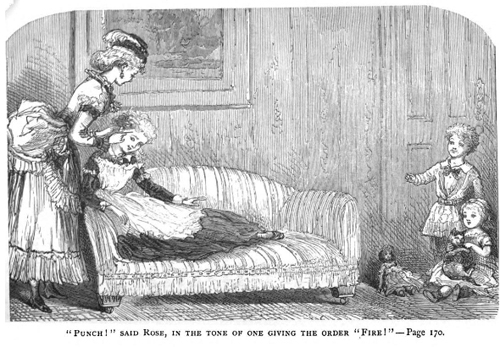
pierced ears eight-cousins-annabel-bliss-and-rose-chapter-15

THE OTHER THREE BOOKS I’M READING.

Eve's Hollywood 41LfGk35RaL._SY344_BO1,204,203,200_2. Eve Babitz’s Eve’s Hollywood, which I learned about this from Jacqui Wine’s blog. Babitz’s autobiographical novel about coming of age in L.A. is witty and hilarious!

As a fan of Dancing with the Stars, I especially enjoyed the chapter about ballroom dancing in gym class.  When it rains,  Eve and the other girls are thrilled, because instead of changing into smelly gym clothes, they get to dance to records by Chuck Berry, etc.  They love it, but the  best dancers are the tough, cool Mexican girls.  Here is a description of one of their dances.

The Choke was a Pachuco invention. The Pachucos were what we called kids who spoke with Mexican accents whether they were Mexican or not and who lived real lives. The Choke looked like a completely Apache, deadly version of the jitterbug only you never thought of the jitterbug when you watched kids doing the Choke. There was no swing in the Choke, it was staccato. It was Pachuco, police-record, L.A. flamenco dancing.

3. Jonathan Franzen’s Purity.  What can I say?  It’s Jonathan Franzen, and it’s addictively readable.  I’m fascinated by the characters living in a squat, but it unfortunately breaks up when a wife leaves her husband.  I’ve only read 100 pages so far, but much more on this later.

4. David Means’ Hystopia, nominated for the Man Booker Prize.  So far I love it: it is reminiscent of Samuel R. Delany’s very weird post-modern SF classic, Dhalgren.   Hystopia is an alternate history of the ’60s in which Kennedy survived the assassination attempt and is in his third term, Detroit and the rest of Michigan are burning because of fires that started in riots  in Detroit, and Vietnam vets are treated with a combination of drugs and reenacting their traumas that “enfolds” their traumas  and sometimes cure them but also causes amnesia.  Some rogue Vietnam vets  have not submitted to treatment or have not responded to it and are raising hell…  (Very well-written. So far this seems Booker-worthy!)

Going to Omaha for the Books!

We live in a small, beautiful city on the prairie.  Nobody knows it’s here; nobody understands why we live here. It’s not glam, but it’s Paradise in the summer, and  has livable urban neighborhoods near shops, almost no traffic, and everything you need to be a well-adjusted 21st-century American.   A woman who moved here from California observed  in line at Starbucks,  “I can live anywhere there’s a Starbucks and Target!”

But we do lack bookstores, except for B&N, so today we headed to Omaha, the nearest big city, to browse at Jackson Street Booksellers, a huge used bookstore, and The Bookworm.

Jackson Street Booksellers, Omaha

Jackson Street Booksellers, Omaha

First up:  I found an  irresistible Library of America volume with three of William Dean Howells’ novels, The Minister’s Charge, April Hopes, and Annie Kilburn.  Have you heard of these?  We have not, but I love Howells!

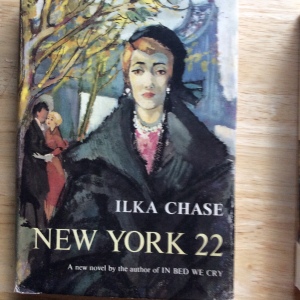
Ilka chase new york 22 bought in omahaAnd now for ’50s pop!  I could not resist this cover.  According to Kirkus, Ilka Chase’s 1951 novel New York 22 is “a chaise longue coverage of marital friction, feminine calculation and upper bracket racketing, this should have good rentals on the distaff side; and substantial sales to the gilded glamor fringe.”

There is very little about Chase online.   The daughter of Edna Woolman Chase, the editor of Vogue from 1914-1952, Ilka was a member of the Smart Set and an actress who starred in many Broadway plays, including the original Broadway version of The Women.  Ilka adapted her novel In Bed We Cry, the story of a self-made career woman in the cosmetics business.  And she had  her own  TV show called Fashion Magic!

I’ll be happy if this novel is readable in the style of a trashy pageturner like Faith Baldwin’s Skyscraper or Susann’s  Valley of the Dolls (a truly great trash classic!).  There’s hope:  The characters are drinking cocktails, and the heroine, Georgiana, leaves her husband and daughter  to chase a writer who is 12 years younger than she.

Here’s a quote chosen at random:

Georgiana sat in her office at Tang, her desk spread with manuscripts and correspondence waiting her attention, but she ignored them.  She was engrossed in reading the first review of Reams’s book, The Shadowed Path.  Reams had sailed according to schedule, but Barnstable had published it that week and Georgiana read the clippings with a sense of triumph and a sinking heart.  As she had expected, Reams was accepted into high company.  Thomas Wolfe,Hemingway, Faulkner, in reference and comparison–the great names dotted the columns.

I may save this for Thanksgiving:  I like to read old pop novels while the turkey is roasting.

C by Maurice Baring omahaNext up:  Maurice Baring’s C (1924).  I’ve never heard of it, but I do love a good novel about Edwardian house parties.  Goodreads says, “Baring’s homage to a decadent and carefree Edwardian age depicts a society as yet untainted by the traumas and complexities of twentieth-century living. With wit and subtlety a happy picture is drawn of family life, house parties in the country and a leisured existence clouded only by the rumblings of the Boer War. Against this spectacle Caryl Bramsley (the C of the title) is presented – a young man of terrific promise but scant achievement, whose tragic-comic tale offsets the privileged milieu.”

Last but not least,  Tama Janowitz’s A Certain Age.  I loved Janowitz’s new memoir, Scream (which I wrote about here), and look forward to reading this  modern retelling of Edith Wharton’s The Age of Innocence.

janowitz a certain age 1769009474

I bought nothing at the Bookworm today, because I had exceeded my limit at Jackson Street Booksellers.

And, by the way, here’s the sky  snapped from the car as we tooled down the highway:

Western Iowa off the highway

Review of Two Elizabeths: Elizabeth Hardwick’s Sleepless Nights & Elizabeth Berridge’s Tell It to a Stranger

elizabeth hardwick sleeplessnights

It is my favorite time of the summer:  if only it could always be August!  I love the light, the rushing of the creek, and the yellow leaves crackling. And for some reason  I always read many short books in August.  I have recently read:

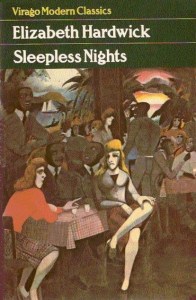
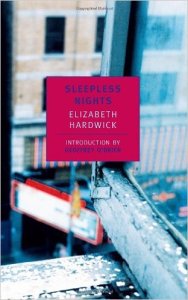
Hardwick sleepless nights nyrb 51nPJb1iUtL._SX310_BO1,204,203,200_1. Elizabeth Hardwick’s Sleepless Nights.  Although I read the NYRB edition, this graceful autobiographical American novel is also published by Virago.  It counts as participation in the All Virago/All August event, yes?

Hardwick, a critic, essayist, fiction writer and co-founder of The New York Review of Books, was best known for her stunning essays, which often interweave  criticism with intimate observations.

Her 1979 novel, Sleepless Nights, seems experimental by today’s standards.  It  is divided into short, beautiful vignettes:   she sketches her growing up in  Lexington, Kentucky (this is the best part of the book, I think), her mother who had nine children, her studies at Columbia and early years in New York; sharing an apartment with a gay man, an experience not unlike a marriage,  and living alone in other apartments and houses in New York, Boston, Connecticut, and Maine.   She also writes about her friend Billie Holiday,  bag ladies, an amorous Dutch doctor, and the anxiety of  working women in boarding houses.  Hardwick’s language is both minimalist and poetic, in a ’70s style that I used to adore. But this time through?  Gorgeous writing, and I loved parts of the book, but occasionally found Hardwick’s point of view affected.  It just goes to show:  books seem entirely different at different times of life.

A  passage from the first page:

If only one knew what to remember or try to remember. Make a decision and what you want from the lost things will present itself.  You can take it down like a can from the shelf.  Perhaps.  One can would be marked Rand Avenue in Kentucky and some would recall the address at least as true.  Inside the can are the blackening porches of winter, the gas grates, the swarm.

berridge tell it to a stranger 995602._UY400_SS400_2. Elizabeth Berridge’s Tell It to a Stranger.  I am very fond of Berridge’s novels, some of which I’ve acquired in Faber Finds paperbacks.  I loved Rose under Glass (and wrote about it here).

Berridge’s collection of short stories, Tell It to a Stranger:  Stories from the 1940s  (Persephone), is brilliant and engrossing.  The first story, “Snowstorm,” is set in winter in a maternity clinic outside of bombed London, where  women are bused to have their babies.  The woman doctor is emotionally cold and wintry, but her detachment and conventional ideas about motherhood are  threatened by a scornful, unmaternal young woman.

Yes, people seem to hate you for having anything on your mind,’ came the voice from the bed. ‘Calm motherhood, that’s the idea, isn’t it?  The most beautiful time of a woman’s life, preparing for a stranger–‘–her whole face twisted suddenly, but whether with pain or disgust the doctor could not make out.

Berridge does not define women by domesticity, and the twist in this story is completely unexpected.

In “Firstborn,” the heroine, Ruby, a new mother, walks across the common to her mother’s house and  is rebuked for not taking a taxi.  All attention is focused on the baby rather than Ruby, who is already tired of being an appendage to the newborn baby.  Her mother and aunt imply that she is making mistakes and does not know how to care for him.   Then she walks to her mother-in-law’s and is again confronted with being only a mother.  She is furious when her mother-in-law calls him “a real Cradock” and says she should be proud. Ruby has no intention of giving birth to a lot of  Cradocks.  Only when she goes home to her husband is she suddenly happy, reminded of who she is.

My favorite is the title story, set during World War II.  The heroine, Mrs. Hatfield, who has left London to live in a hotel in Belvedere, makes one of her periodic trips to her house in London, only to discover that it has been ransacked.  On the train trip back to Belvedere, she plans what she will say to the other residents of the hotel.  She has never been happier than she is in Belvedere.  But a strange twist prevents her telling the story.

These eleven stories are rich and varied–a great read!

The Back Cover!

What’s going on with book covers this summer?

Have you noticed the “back” cover art trend?  Why so many portraits of the back?

1. The cover photo of the comedian Amy Schumer’s back on her new memoir, The Girl with the Lower Back Tattoo, does her book no favors:  it’s  a riff on a scandi crime title, but also a celebrity’s overly-optimistic decision to display her back.  Did she know backs are the latest fashion in cover art when she agreed to this?  Well, probably not.  N.B. I have heard only good things about Schumer’s work, and one day will get around to seeing Trainwreck.  But think Nora Ephron’s “A Few Words about Breasts” (no photos, just words!).  And her work is still pertinent.

amy shumer the girl with the Ch3O3p8WUAAQLc8.nocrop.w529.h848

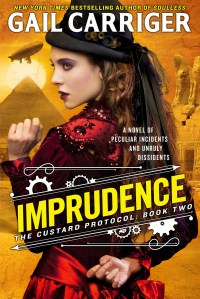
2.  The colorful cover of Gail Corriger’s SF novel, Imprudence, shows “back” attitudeIsn’t this fictional woman’s pose remarkably similar to Schumer’s?

Carriger_Imprudence-HC

(By the way, here’s the Goodreads description of the book:   “Rue and the crew of The Spotted Custard returned from India with revelations that shook the foundations of the scientific community. There is mass political upheaval, the vampires are tetchy, and something is seriously wrong with the local werewolf pack.”)

3 The designer of the cover of  E. Ardell’s new science fiction novel,  The Fourth Piece (Order’s Last Play #1), had the same idea of the back portrait as the the two above:  Here is an illustration of a tattooed back.  Goodreads says, “Life is great when you’re good-looking and popular…so long as no one knows you’re a vulatto. Being half-alien gets you labeled “loser” quicker than being a full vader. So it’s a good thing Devon, Lyle, and Lawrence can easily pass for human—until the night of the party.”

Ardell the fourth piece 29058267

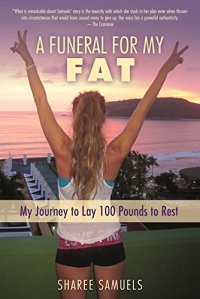
4.  Why is there a woman’s back  on the cover of Sharee Samuels’ A Funeral for My Fat: My Journey to Lay 100 Pounds to Rest? Why not proudly face us?

A Funeral for my fat sharee samuels 51u23z2WRkL

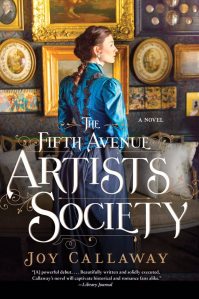
5  The pretty cover of Joy Calloway’s The Fifth Avenue Artists Society shows “back. ” Actually, I am tempted to buy this because of the comparison to Edith Wharton, but I haven’t looked at it yet.  The Goodreads description says:  “An enthralling Edith Wharton-meets-Little Women debut about a family of four artistic sisters on the outskirts of Gilded Age New York high society that centers on the boldest—an aspiring writer caught between the boy next door and a mysterious novelist who inducts her into Manhattan’s most elite artistic salon.”

the-fifth-avenue-artists-society-by-joy-callaway-cover

6.  Here’s another back on the cover of a mystery, Anna Lee Huber’s As Death Draws Near (Lady Darby Mystery #5).  Goodreads says “Lady Kiera Darby and Sebastian Gage [are entangled] in a dangerous web of religious and political intrigue.”

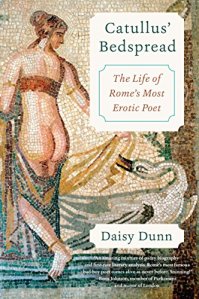
As Death Draws Near Anna Lee Huber 261777287 .  And there’s no denying we’ve got ancient”back art” on the cover of Daisy Dunn’s Catullus’ Bedspread: The Life of Rome’s Most Erotic Poet.  Catullus' Bedspread 61nE1tim0bLSo what is this trend about?

In Which I Imagine Myself as a Gothic Heroine/Detective: Mary Stewart’s Thunder on the Right & Peter Lovesey’s The Last Detective

Bike 'n' Read

Equipment for a Bike ‘n’ Read (or a Collapse ‘n’ Read!)

It’s not the heat, but the humidity, they say.  Halfway through a bike ride the other day, I collapsed on a bench, whether because of the heat or the humidity I couldn’t say.  As I guzzled from a water bottle, I felt as wan as the heroine of a Gothic novel after a hard day preventing a murder in the French Pyrenees.   You know the Gothic formula:  You arrive at a convent in France to visit your cousin before she takes her vows, only to find she is dead, and then your questions are deflected by a Spanish nun impersonator who lives at the convent but has not been allowed to become a nun, and eventually you’re running through the woods and nipping down gullies  in a storm…

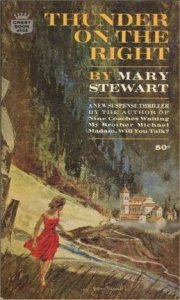
thunder on the right stewart old paperback 13414472That’s how things go for Jennifer Silver, the artist heroine of Mary Stewart’s Thunder on the Right I love Stewart’s Gothic novels of the ’50s and ’60s, which in recent years have been called “romantic suspense.” (What is “romantic” suspense?) Although Stewart’s Gothics are not available as e-books (the most portable books for a bike trip), I have a small nifty paperback that fits in my bag.

Stewart (1916-2014) was a brilliant writer of elegant novels about bright, witty young women  (actresses, veterinarians, artists, secretaries, etc.), who,  usually while traveling abroad, stumble upon a mystery, and  fall in love with a dashing man.  My favorite of her books is This Rough Magic: Lucy, an actress, visits her sister in her villa on Corfu, and not only rescues a beached dolphin with the help of a surly musician, but discusses the origins of Shakespeare’s The Tempest with his father, a famous actor who believes Corfu is the setting.  And of course there’s a crime or three to solve…

Thunder on the Right (1957), her third novel, may not be her best, but it is a page-turner.   The heroine, Jennifer,  is very smart and literary: immediately upon arrival at the creepy convent, she wryly is reminded of Mrs. Radcliffe’s Gothics.  The nun impersonator Dona Francisca’s story of Gillian’s death from pneumonia after a car accident doesn’t make sense. Why didn’t Gillian contact Jennifer after the accident? Why didn’t she tell them she had family?  And why do the nuns say the gentian was Gillian’s favorite flower because she admired the deep blue, when Gillian was color-blind? And, yes, Jennifer’s ex-boyfriend, Stephen, shows up miraculously at the hotel in France and helps her figure out what happened, but Jennifer does most of the sleuthing on her own. And that’s why we like Stewart’s heroines.  They are smart and independent.  Of course they want (and get) romance as well.

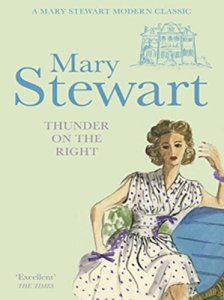
thunder on the right stewart hodder 51y4TO2Ya+LGothic novels are for girls (I’m going for alliteration), but police procedurals are for everybody.  I recently discovered Peter Lovesey’s Peter Diamond series, and began with The Last Detective, the first book in the series.  As Louise Penny says in the introduction to the Soho Crime edition, “Peter Lovesey plays with perspective, with the trustworthiness of the narrator, with your loyalties as a reader.  And he does this by engaging not just your head, but your heart.  What is crime fiction, after all, without caring?”

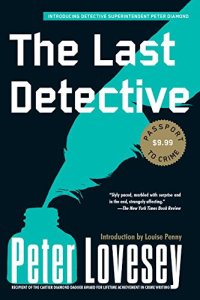
Peter Lovesey The Last Detective 51OOXqg8dPLDetective Superintendent Peter Diamond is not particularly likable:  he  is fat and surly, there has been an inquiry about one of his investigations, he is exasperated by technology, and he is unhappy with his position with the Bath Regional Police.  He and the Assistant Detective, John Wigfull, have different philosophies:  Diamond goes for hunches, interviews, and confessions, while Wigfull is a believer in technology, technology, technology.  When the corpse of a woman is found in a lake, it takes weeks to discover her identity, despite technology.

When we first meet Peter, he is napping in the morgue after a long night.  Lovesey explains,

Peter Diamond was entitled to put his feet up. Ever since the phone beside his bed at home in Bear Flat, near Bath, had buzzed shortly after 1 a.m., he had been continuously on duty. By the time he had got to the scene at Chew Valley Lake and viewed the body, the local CID lads had set the wheels in motion, but there had remained decisions only Diamond could make, strings that only the man in charge could pull. He’d pulled more strings than Segovia.

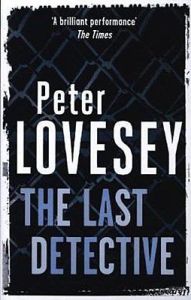
Lovesey the last detective british $_1Finally, the corpse is identified as Geraldine Snoo, a “washed-up” soap opera actress. Geraldine’s  husband, Gregory Jackman, an English professor, had not reported her missing, though he had not seen her in three weeks.  Did he kill her, or did they just have marital problems?  The other suspect is Dana, an attractive chauffeur whose son Gregory had saved from drowning.  The two have become friends, but say they are not lovers.

Not only does Lovesey describe the workings of the jaded detective Peter Diamond’s mind, but he also details the work habits of the two suspects.  Lovesey  changes t point of view to give us a window first into Gregory’s first-person narrative (a kind of interview soliloquy), and later  Geraldine’s.  Gregory  has been harried by his department chair into organizing a Jane Austen exhibition about her life in Bath–and he is not a fan of the Janeites or of the biographical approach to literature. His attention has been on the exhibition rather than on his mentally unstable wife, who spends much of her time visiting friends.  Dana, a former taxi driver  is  a chauffeur for a CEO. The job was a godsend:  she has struggled as a single mother to pay for her son’s private school, and her boss also lets her drive the car after hours, so long as she logs the miles.  As her friendship developed with Gregory, she tracked down some letters by Jane Austen (as yet inauthenticated) for him as a gift. The letters have disappeared, and Geraldine is dead.

Fascinating!  Either Gregory or Dana could have done it and…

An excellent read!  Mysteries are so good in the summer…

Quotation of the Week: Tama Janowitz on Ironing in “Scream”

Tama Janowitz (right)

                                               Tama Janowitz (right)

I am enjoying Tama Janowitz’s entertaining new memoir, Scream, which has a lot in common with stand-up comedy.  Janowitz is best known as a Brat Pack writer in the ’80s (along with Jay McInerney and Bret Easton Ellis) who became famous overnight for her short story collection, Slaves of New York, which was later adapted as a Merchant Ivory film.  But life wasn’t always easy:   She was raised in semi-poverty by her mother, the poet Phyllis Janowitz, because her father, a pothead psychiatrist,  wouldn’t pay child support.  Janowitz grew up smart and stylish:  she went to Barnard College in New York, spent a junior year abroad in London, where she failed to recognize the talent of the Sex Pistols,  studied with Elizabeth Hardwick both at Barnard and in the MFA program at Columbia,  and finally publishesd by submitting a  story to The Paris Review under a male pseudonym, Tom A. Janowitz.

Janowitz scream u34+1F!EVWH7ngw7NLVXIcKIKW2pmYA+Gl!w8rbMsYH!BRIAG5OUet9tcq9F2XjffXkZsjELHH1dotzfe59Az2vNK7LiZyZN+sBWsKtMX1WWsW1OYzkgsRAdZgmVYczuShe also felt she was following in the footsteps of Sylvia Plath in 1977  when she won a contest to be a guest editor at  Mademoiselle, as Plath had done in the ’50s.  Janowitz expected her experience to be like Esther’s  in The Bell Jar.  Unlike Plath, she is sent to a photoshoot,  where she is commanded to iron a white satin blouse, “much nicer than anything I had ever had or seen.” How on earth do you iron a satin blouse?   Janowitz gamely tries, but she burns the blouse.

Would this have happened to Sylvia Plath?  She had been a guest editor and went to dance with Yale men on the roof of the St. Regis hotel during her time at the magazine.  There was no mention in The Bell Jar of being sent out to iron.  But if she had been, she would have ironed beautifully, I am sure.  My life and my future career possibility  were over.

Later, she is unable to get even an entry-level job at Conde Nast, so she  goes home to “Mom’s bleak little tract house by the interstate highway outside of Boston.” Her mother comforts her .

My mother was indignant that my job had been to iron.  “You’ve never been able to iron!”  But she suggested I write a letter to the editor apologizing and explaining how this terrible incident had occurred.  We wrote it together.  It started out reasonably, and then, as the two of us perfected it, became a masterpiece easily equal to Eudora Welty’s “Why I Live at the P.O.”

And the letter is truly hilarious.  You’ll just have to read it!

Obama’s Reading List & New Books by the Brat Pack

obama_2016_sticker_bumperThe other day we saw a bumper sticker: OBAMA 2016.

Yes, we laughed, but we’re going to miss him.  Could we write him in on the ballot?

And then yesterday I saw Obama’s summer reading list.  I love reading lists!

Barbarian Days william finnegan 51+9Q4THKRL._SX336_BO1,204,203,200_He’s at Martha’s Vineyard with the following  books.

“Seveneves” by Neal Stephenson
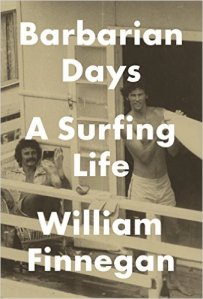
“Barbarian Days: A Surfing Life” by William Finnegan
“The Underground Railroad” by Colson Whitehead
“H is for Hawk” by Helen Macdonald
“The Girl on the Train” by Paula Hawkins

And so I went to a bookstore to look at some of these books.  I read a few pages of William Finnegan’s Pulitzer-winning memoir, Barbarian Days:  A Surfing Life, but it must be said I’m not much of a surfer–I’m NOT a surfer!  Colson Whitehead’s new novel, The Underground Railroad, an Oprah Book Club pick, interests me more than the others, but I did not buy that, either.

Why?

bright, precious days mcinerney BN-PE464_JAYjpg_MV_20160729171322Because two Brat Pack writers of the ’80s, Tama Janowitz and Jay McInerney, have new books out!

Was I happiest in the ’80s?  Well, happy, who knows? But I loved 1980s literature.  Although Janowitz’s and McInerney’s partying life-style did not appeal to me, I enjoyed reading about it in Janowitz’s humorous collection of short stories, Slaves of New York, and McInerney’s witty novel, Bright Lights, Big City.

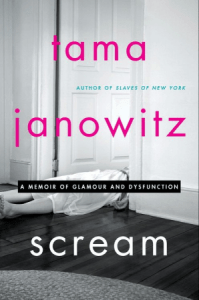
Naturally I bought Janowitz’s new memoir, Scream:  A Memoir of Glamour and Dysfunction, and McInerney’s new novel, Bright, Precious Days, the third in a trilogy.

Janowitz scream u34+1F!EVWH7ngw7NLVXIcKIKW2pmYA+Gl!w8rbMsYH!BRIAG5OUet9tcq9F2XjffXkZsjELHH1dotzfe59Az2vNK7LiZyZN+sBWsKtMX1WWsW1OYzkgsRAdZgmVYczuI haven’t kept up with all of their work, but these two seem to be underrated these days. There are fashions in writing.  And yet  McInerney’s The Good Life is the best 9/11 novel I read, and I also loved his short story collection, How It Ended.  Janowitz is always witty–I laughed and laughed at The Male Cross-Dresser Support Group— but one reason I’m drawn to this memoir is that not only does she examine the excitement of her social life in New York in the ’80s but adjusting to marriage, motherhood, and ordinary life in upstate New York.  She also describes the care of her aging mother, who had dementia and ended up in a nursing home.  (I went through something like this a few years ago with my mother.)

NOTE:  Aug. 9 was the third anniversary of my mother’s death.  I thought about writing a post, but it is hard to write about the life of a very ordinary person.  Her favorite activity, as she coolly told the recreation advisor of the nursing home, was watching TV. And let me tell you, she settled in front of her TV and refused to go to the dining room or do crafts! I despaired but she would not play Bingo.  (I wonder:  would I?)  But I appreciate her stubborn eccentricity and dwell less on  her death these days.  In fact, I forgot the anniversary of her death until I read Karl Ove Knausgaard’s brilliant novel, My Struggle, Book 1,  in which he writes about his father’s terrible death.  That’s progress!

And now I can cheer myself up with two good books.

Quotation of the Day: Karl Ove Knausgaard’s My Struggle, Book 1

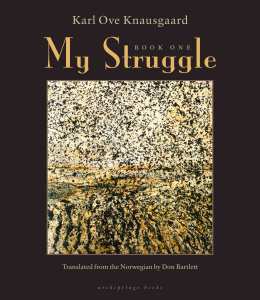
knausgaard hardback MyStruggle_cvrforwebIt is hard to imagine a better novel than Book 1 of Karl Ove Knausgaard’s My Struggle, the first of a critically-acclaimed autobiographical sextet.  I have spent the last few days alternating watching the Olympics with reading Knausgaard. Who is better:  Gold Medal-winning gymnast, Aly Raisman, or the Norwegian novelist?

The narrator is the writer, Karl Ove, who describes in detail the real events of his life, or perhaps a fictional reflection of events.  This is a bildungsroman so realistic and exhaustive that his father’s family threatened a lawsuit before the publication.

He has been compared to Proust, and even the smell of Ajax cleanser can serve as his madeleine. He describes thoughts and feelings so intensely that  if we haven’t thought and felt them, we think and feel that we have.

In the first part of this unsentimental coming-of-age novel, Karl Ove explores his relationship with his alcoholic father, an English teacher obsessed with suicide who spends his last few years living in squalor at his mother’s house and drinking himself to death. Karl Ove’s older brother Yngve says their father destroyed his self-esteem, but Karl Ove was less hurt by him.  As Karl Ove looks back at his boyhood, he remembers good and bad moments, and captures the  pathos :  he also evokes the hours of boredom that constitute the life of the typical adolescent.

Knausgaard my struggle book 1 51maejxEQlL._SX331_BO1,204,203,200_Karl Ove is a dreamer:  he loves rock music and he and his friends form a band.  Only lack of talent stands in their way:    they don’t realize that until their audience winces at a mall and the manager forbids them to play.   He occasionally has girlfriends and is frequently in love.   On a freezing New Year’s Eve, he and a friend take a seemingly never-ending  trip to a party out of town, which involves lying to parents, hiding illicitly-obtained liquor in a ditch,  hitchhiking,  and drinking at a bus stop. They make it to the party, but Karl Ove doesn’t get the girl.

Karl Ove is sometimes depressed, but he is ultimately optimistic.   As a student and young writer,  he drinks too much, studies creative writing at the university in Bergen, spends much time at clubs and rock concerts with his brother, since he has trouble making friends, and interviews famous writers for the student newspaper.

In one of my favorite scenes, which is both painful and hilarious, Karl Ove interviews the poet Olav H. Hauge with two of his friends.  Since Hauge is expecting only Karl Ove, he won’t let them in at first, and then he is grumpy.  But they hang around forever, and watch a TV team interviews Hauge, and then he finally loosens up.  He even reads them a few poems, but Karl Ove spaces out and experiences what inevitably happens to me at poetry readings.

Standing there on the drive and looking down at the ground while he read, I was thinking that this is a great and privileged moment, but not even this thought had time to settle, for the moment occupied by the poem, which its orginator read in its place of origin, was so much greater than us, it belonged to infinity, and how could we, so young and no brighter than three sparrows, receive it?  We could not, and at any rate, I squirmed as he read.  It was almost more than I could endure.  A joke would have been apposite, at least to lend the everyday life in which we were trapped some kind of form.  Oh, the beauty of it, how to deal with it?  How to meet it?

And then, disastrously, not one of them has taken notes, and when Karl Ove tries to write it, he has nothing.  Hauge wanted to see the article before publication–never, never agree to that, guys!–and Karl Ove sends it to him.  Hauge hates it and tells him not to publish it.  Karl Ove suffers:  he had loved meeting Hauge, and now he is humiliated.

Knausgaard makes us want to look at boxes of cleaning products with a list and simple descriptions.  After their father dies in 1998 , Karl Ove and his brother clean up two years of their father’s destruction of their grandmother’s house:  piss and shit everywhere, moldy piles of stinking clothes, food-clotted plates.  It takes them days.  As he cleans, he thinks of the products.

The smell of Klorin and the sight of the blue bottle took me back to the 1970s, to be more precise, to the cupboard under the kitchen sink where the detergents were kept.  Jif didn’t exist then.  Ajax washing powder did though, in a cardboard container, red, white, and blue.  It was a green soap.  Klorin did too; the design of the blue plastic bottle with the fluted, childproof top had not changed since then.  There was also a brand called OMO.  And there was a packet of washing powder with a picture of a child holding the identical packet, and on that, of course, there was a picture of the same boy holding the same packet, and so on, and so on.  Was it called Blenda?

And then they have to figure out the care of their now senile grandmother.

The second book is also great:  I read them out of order, and wrote about Book 2 here.

I do look forward to reading the others!

Good Sportsmanship, Reading Calendar for August, & Literary Links

2016 Rio Olympics - Swimming - Final - Women's 200m Freestyle Final - Olympic Aquatics Stadium - Rio de Janeiro, Brazil - 09/08/2016. Katie Ledecky (USA) of USA and Sarah Sjostrom (SWE) of Sweden celebrate

Good sportsmanship:. Katie Ledecky (USA)  and Sarah Sjostrom (SWE) embrace.

“Go, go, go, go!”

Yes, we yell at the Olympics on TV.  We are Olympics-crazy!  And how could they win without our yelling?  After Katie Ledecky won the Gold Medal for  the 200-meter women’s freestyle tonight, we approved the sportsmanlike embrace between Ledecky and Swedish Silver Medalist Sarah Sjostrom.   Some athletes prefer one-upmanship to sportsmanship:  we saw clips of South Africa’s Chad le Clos’s repeatedly taunting Michael Phelps. Then  Phelps won his 20th Gold Medal for the Men’s 200-Meter Butterfly and Cahd le Clos came in second, so let’s hope that nonsense is over.

BLOGGERS’ LITERARY EVENTS !

Summer is prime time for enjoyable online reading events, with many bloggers and readers coming together to read books in a designated category.

A Virago: it has the green spine!

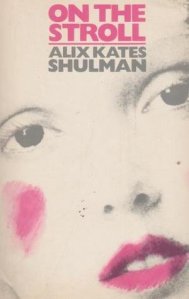
First up:   All Virago/All August.  This was founded by the LibraryThing Virago Modern Classics group.  My choice?  A Virago I found in London:  American writer Alix Kates Shulman’s On the Stroll, a little-known novel about a pimp, a runaway, and a bag lady who has visions.   I loved Shulman’s Memoirs of an Ex-Prom Queen and her 1995 memoir Drinking the Rain, so I’ll give this a try.

Second up:  Women in Translation month.  Here is a link to an article at PEN America about the genesis and progress of Women in Translation Month.

In May 2014, blogger Meytal Radzinski, a student of biophysics in Israel and an avid and insightful reader, announced the first Women in Translation month, to be held that August. Her goals, she wrote, were simple:

1. Increase the dialogue and discussion about women writers in translation

2. Read more books by women in translation

And, by the way, I have already finished a book in translation,  Colette’s The Pure and the Impure, a  collection of essays about gender and sexuality, possibly shocking in her time, doubtless politically incorrect in our time.

the pure and the impure colette 89848LITERARY LINKS.

1. At The Guardian,  Alex Clark’s article on women’s friendship in fiction is worth reading.

2  At Salon, Dan Green complains about Little Free Libraries. Here is an excerpt:

Little Free Library has a seductive marketing slogan that’s carved into the top of every unit: “Take a Book; Return a Book.” Such a simple equation. And such wishful thinking. Take? Oh, absolutely. People are, in fact, really good at that part. For example there was the young mom who lifted her toddler up to the box, watching uncritically as he scooped up “Imaginary Homelands,” Salman Rushdie’s collection of criticism and essays. Which I’m sure he enjoyed.

When it comes to returning, people mean well. For example, I don’t doubt the sincerity of that young mom when she told her greedy little urchin, “We have to remember to come back soon and give them some books.” The problem is that, to borrow my favorite report card phrase, remembering, for most people, “remains an area of growth.” It’s not that I blame my (mooching) neighbors. Indeed, I, myself, seldom return books to the public library on time. And they fine you if you don’t. But since I don’t punish people (unless you count silent, withering judgment), I’ve got no leverage. The truth is laziness is just part of human nature. It’s what separates us from the beavers.

3  And at Literary Hub, Daisy Dunn, author of Catullus’ Bedspread, writes that her longest relationship is with the dead poet Catullus.

Catullus' Bedspread 61nE1tim0bL

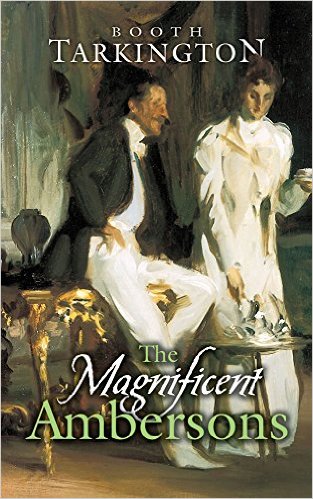
The Magnificent Ambersons by Booth Tarkington

tarkington dover magnificent Ambersons

They had one supreme theory: that the perfect beauty and happiness of cities and of human life was to be brought about by more factories; they had a mania for factories; there was nothing they would not do to cajole a factory away from another city; and they were never more piteously embittered than when another city cajoled one away from them.
― Booth Tarkington, The Magnificent Ambersons

Since moving back to the Midwest, I have read many early 20th-century Midwestern writers.  You probably know the Pulitzer Prize-winning novelist Willa Cather, a peerless chronicler of loneliness in small towns (A Lost Lady, The Professor’s House), the struggles of aspiring musicians and artists  (Lucy Gayheart, The Song of the Lark, Youth and the Bright Medusa), and the hard lives of immigrant farmers (My Antonia, O Pioneers!).

But there are many neglected Midwestern Pulitzer Prize winners.  All but forgotten is Booth Tarkington (1869-1946), born in Indianapolis, a once popular writer who won the Pulitzer for two excellent novels, The Magnificent Ambersons in 1919 and Alice Adams in 1922.

The Magnificent Ambersons is a small masterpiece. It’s not so much the style, which is very plain, as the development of the parallel themes of the decline of a wealthy  family who dominated a midwestern town with  the rise of the automobile and urban sprawl.   It very radically connects the popularity of the car to the desertion of once wealthy neighborhoods in the inner city.

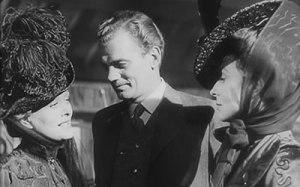
Tarkington begins with a sketch of the Amberson family.  Major Amberson, the patriarch, made a fortune in 1873, when others were losing theirs, and his family not only owns the town, but dominates society.   And a lovely society it was for the rich, with much parading on sidewalks and in buggies.  In Orson Welles’s excellent film version, it starts  with Welles’s narration of a paragraph on the opening page.

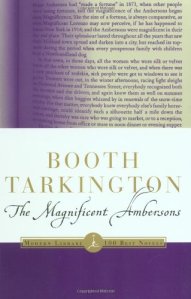
In that town, in those days, all the women who wore silk or velvet knew all the other women who wore silk or velvet, and when there was a new purchase of sealskin, sick people were got to windows to see it go by. Trotters were out, in the winter afternoons, racing light sleighs on National Avenue and Tennessee Street; everybody recognized both the trotters and the drivers; and again knew them as well on summer evenings, when slim buggies whizzed by in renewals of the snow-time rivalry. For that matter, everybody knew everybody else’s family horse-and-carriage, could identify such a silhouette half a mile down the street, and thereby was sure who was going to market, or to a reception, or coming home from office or store to noon dinner or evening supper.

Dolores Costello, Joseph Cotten and Agnes Moorehead in The Magnificent Ambersons

Dolores Costello, Joseph Cotten and Agnes Moorehead in The Magnificent Ambersons

The  gracious, charming Ambersons live idyllic lives and set the bar for manners and hospitality in the thriving town.  But time passes.  Businesses come and go and new generations are born.  The birth of the anti-hero, Major Amberson’s grandson, George Amberson Minafer, marks the beginning of a stagnancy among the upper classes.  This arrogant rich boy,  even while still dressed in Little Lord Fauntleroy ruffles and long curls, is rude to adults and  beats up any boy who challenges his preeminence.    A boy hanging on a fence sees Georgie on his white pony and yells jealously,

“Shoot the jackass!  Look at the girly curls!  Say, bub, where’d you steal your mother’s ole sash!”

“Your sister stole it for me! ” Georgie instantly replied, checking the pony.  “She stole it off our clo’es-line an’ gave it to me.”

“You go get your hair cut!” said the stranger hotly.  “Yah!  I haven’t got any sister!”

“I know you haven’t at home,” Georgie responded.  “I mean the one that’s in jail.”

magnificent ambersons tarkington new modern library 51WEepB+5XLBefore the encounter is over, Georgie beats up “the stranger.”  He has no regrets.  His mild mother, Isabel, admires him so much she doesn’t discipline him.  Uncle Jack Amberson, a congressman,  is half-amused, half-exasperated, claiming he was not unlike him as a boy but grew out of it.  Unfortunately  Georgie shows no sign of growing out of it.  He grows up to be a monster.

Why does Isabel dote on and coddle Georgie?  Perhaps because of her marriage.  Everyone thought she would marry the lively, brilliant Eugene Morgan, but he blew his chances when he drunkenly serenaded Isabel with a band and walked through a bass viol.  (As one of the town gossips points out, it wasn’t the drunkenness that caused the breakup but the fact that he made a fool of Isabel.)  Isabel married the quiet Wilbur Minafer instead.

Tarkington’s models and favorite writers were Thomas Hardy, Henry James, and George Meredith.  I see the influence of  Meredith.   Georgie grows up to be a tyrant, and is not unlike the arrogant Sir Willoughby from Meredith’s The Egoist.  Conceited Georgie falls in love with  beautiful, bright Lucy Morgan, but she can’t bear his idleness. He tells her he has no interest in studying law or going into business.  He is a gentleman with money, a graduate of an Ivy League school, and he intends to be, not do.

Lucy’s father, Eugene Morgan (Isabel’s old boyfriend),  has worked his way up in the world through enthusiasm for the automoile, inventions, and tinkering.  He has returned  to town to start an automobile factory.  Since Georgie is strictly a “Get a hoss!” man, you can imagine what he thinks of Eugene.  And after he hears gossip about Eugene and his mother,  Georgie loses everyone’s sympathy.

I am fascinated by novels that treat contemporary issues like pollution, and this seems very modern.  Eugene’s factory thrives, other factories come to the city, the car replaces the horse, and the pollution is so intense that people must leave their now smutty, smoky homes for the suburbs. The Ambersons try to hang on, but the Major makes some bad business decisions and loses money.  He doesn’t understand the new century.

Much as I love Eugene and Lucy, Tarkington hints that Eugene’s factory is the first of many that wrecked a gracious way of life.  The dirt of the smoky city creates the flight to the suburbs.

What they meant by Prosperity was credit at the bank; but in exchange for this credit they got nothing that was not dirty, and, therefore, to a sane mind, valueless; since whatever was cleaned was dirty again before the cleaning was half done. For, as the town grew, it grew dirty with an incredible completeness. The idealists put up magnificent business buildings and boasted of them, but the buildings were begrimed before they were finished. They boasted of their libraries, of their monuments and statues; and poured soot on them. They boasted of their schools, but the schools were dirty, like the children within them. This was not the fault of the children or their mothers. It was the fault of the idealists, who said: “The more dirt, the more prosperity.” They drew patriotic, optimistic breaths of the flying powdered filth of the streets, and took the foul and heavy smoke with gusto into the profundities of their lungs. “Boost! Don’t knock!” they said. And every year or so they boomed a great Clean-up Week, when everybody was supposed to get rid of the tin cans in his backyard.

We are lucky that our small Midwestern city is about 10 years  behind big American cities. For a long time, we hoped urban sprawl might pass us by. Until a few years ago, we had a viable downtown.  Unfortunately, the demise of downtown often means the demise of the city. But a developer is trying to build a downtown mall:  fingers crossed!

Loved The Magnificent Ambersons, which is the second of his Growth trilogy.