A Best Books of the Year List in a Month of Best Books of the Year Lists

Pile-of-BooksDon’t you love Best Books of the Year lists? Every book page publishes a fascinating list.  One of our holiday traditions is betting on when the New York Times daily critics will post their lists:  these cool critics wait till after the Black Friday rush. (It was Dec. 10 this year.)

Dwight Garner of the NYT made a traditional list, but also wrote  a good alternative-to-lists article, “Reading Is About the Lines That Leap Off the Pages.”

He writes,

When I think about the outstanding things I read this year, however, what comes to mind isn’t a stack of “best books.” Instead, I recall a flickering series of moments I’ve been unable to shake: killing jokes and stolen kisses and fleeting glimpses; scenes and ideas and sleights of hand.

I also admired an unconventional “Best of” article at The Guardian, “Winners and losers: publishers pick the 2015 books they loved, missed and envied.”

And now I’ve made my list and left out many favorites,  but at least I’ve arranged it by categories!

Best New Novel:

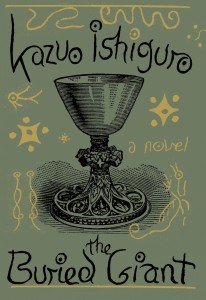
Kazuo Ishiguro’s The Buried Giant caused controversy last summer:  was it literary fiction or fantasy?  Was Ishiguro writing genre fiction? (No.)  Set in a post-Arthurian mythic post-war England, this gorgeous novel is the story of  Britons and Saxons living in a mist of forgetfulness.  The two protagonists, Axl and Beatrice, an elderly married couple, cannot remember what happened yesterdays, let alone during the wars in King Arthur’s time. On a journey to find their son, they discover the causes of their amnesiac culture.
The Buried Giant Ishiguro.BG.jacketBest Overlooked New Novel:

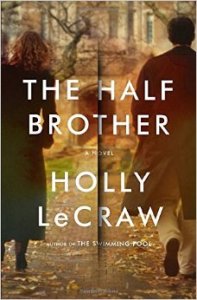
Holly LeCraw’s The Half Brother. The hero of this brilliant, lyrical novel is Charlie, a dedicated private-school teacher who inspires his students to love English literature. Raised in the South, where all dark deeds happen, he ends his relationship with the headmaster’s daughter after he learns a family secret. When  his charismatic half-brother, a veteran of the Afghanistan war, arrives to teach at the school, all is truly fucked-up!
the half brother by Holly LeCraw 51TRuQcPgjL._SY344_BO1,204,203,200_


Best Novels in Translation:

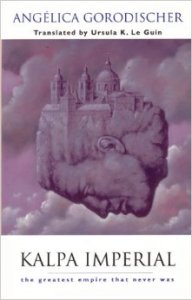
1 Angelica Gorodischer’s Kalpa Imperial, translated by Ursula K. Le Guin.  First published in 1983 in Argentina and in 2003 by Small Beer Press in the U.S., it is a stunning mix of realism and the surreal.  Her work has been compared to Borges and Calvino. This strange little novel about “an empire that never was” is a collection of legends, geography, and (invented) stories of emperors and common people. It also borrows from Homer, and at one point mischievously satirizes the Iliad and the Odyssey.  Each story begins with a storyteller who knows, or at least shapes, the story. The storyteller will say, “I’m the one who can tell you what really happened, because it’s the storyteller’s job to speak the truth even when the truth lacks the brilliance of invention…”  You can read my post here.
Kalpa Imperial Angelica Gorodischer 41ltT36E3JL._SY344_BO1,204,203,200_

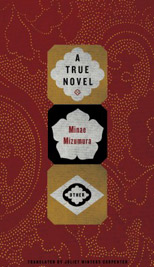
2 Minae Mizumura’s A True Novel, translated by Juliet Winter Carpenter, is a brilliant modern Japanese retelling of Wuthering Heights, and won the Yomiuri Prize For Literature in 2002. The author, Minae Mizumura, reflects in the long prologue (one third of the first volume) on “how to take ‘a story just like a novel’ and turn it into a novel in Japanese.”  She ponders the difficulty of transferring an English novel to Japanese culture. The novel is based on an oral tale of doomed romance related to her by a young Japanese man, Yusuke Kato, who heard it from Fumiko, a maid at the summer cottage of Taro, a Japanese billionaire.  The frame story reflects the structure of Emily Bronte’s masterpiece.
true-novel-mizumura

Best Classic Novel:

Charlotte Bronte’s Villette is Jane Eyre for adults, and is Bronte’s most autobiographical novel.   Lucy Snowe, the narrator, finds a job teaching English at a girls’ school in Belgium, excels in the classroom but is depressed by the drudgery, doesn’t attract the doctor she loves, is pursued by a rather ridiculous misogynistic male teacher (her only real friend after a while),  sees ghosts, and is high on laudanum at a summer night’s festival!  Charlotte taught in Brussels, fell in love with the married headmaster, but did she see ghosts?  I’m not sure.
villette-charlotte-bronte-paperback-cover-artBest Reissued Novel: 

Brian Kiteley’s Still Life With Insects.  Reissued by Pharos Editions, this masterly, stunning, layered novel is written in the form of an amateur entomologist’s journal.  Elwyn Farmer, a “cereal chemist” for a flour company, makes spare, detailed notes about insects on his travels, but also describes scenes at work and home. Each brief entry is headed by a note with the date and place of the insect finding.


Still Life With Insects Brian Kiteley 51nH+eMjhNL._SX331_BO1,204,203,200_Best Rediscovered Novel:

Conrad Richter’s The Waters of Kronos.   This little gem of a novel won the National Book Award in 1961. The  hero’s trip to his hometown turns into a mythic, revelatory descent to the past.  John Dalton, a famous novelist, travels to the site of his hometown, which no longer exists because the government built a dam and buried the town under  a lake. He describes the terror of loss of place when he first views the dam and the lake. A classic katabasis (descent) in the tradition of Dante’s Inferno and Book VI of Virgil’s Aeneid, it describes his drive down a road that should end in water but eerily  takes him back to the town he knew as a child.  Perhaps Richter had been reading the Beats!  This is one of the most stunning novels I’ve read this year.
waters of kronos richter 41bnktvHo0L._SL256_

Best Narrative Poem: 

Pushkin’s Eugene Onegin, translated by Stanley Mitchell.   In this brilliant novel in verse, Pushkin tells the story of Eugene Onegin, a rakish Byronic hero who, bored by carousing, wine, women, song, writing, and even books, moves from St. Petersburg to the country after inheriting an estate. He befriends a young poet, Lensky, to whom he is very devoted, but thoughtlessly wrecks their friendship by flirting at a dance with Olga, Lensky’s fiancée. The fiasco results in a duel with Lensky. (Eugene doesn’t want it, and yet somehow he doesn’t say no.) And the whole thing is complicated by Eugene”s rejection of Olga’s sister, Tataina, who writes a love letter to him.
Eugene Onegin Pushkin 56077-largeBest Mysteries: 

Women Crime Writers: Four Suspense Novels of the 1940s, edited by Sarah Weinman (Library of America).  Did you know women in the ’40s wrote noir fiction? This volume includes Vera Caspary’s masterpiece, Laura, Helen Eustin’s The Horizontal Man, Dorothy B. Hughes’s In a Lonely Place, and Elizabeth Sanxay Holding’s The Blank Wall.  All four are fabulous, but I especially loved Laura, a psychological suspense novel revolving around the murder of an advertising executive.
Women Crime Writers Four Suspense Novels of the 1940s 51KoYBh1+5L._SY344_BO1,204,203,200_

Best But Strangely Neglected SF Novel:

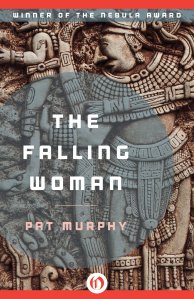
Pat Murphy’s The Falling Woman (1986). It was published as SF and won the Nebula Award, but reads like literary fiction, with a touch of mysticism. The setting is an archaeological dig on Mexico’s Yucatan peninsula. The chapters alternate between the viewpoints of Elizabeth Butler, an archaeologist and expert on Mayan civilization, and her daughter, Diane, who was raised by her father but after his death shows up unanounced at Elizabeth’s dig.  Elizabeth, who spent time in the mental hospital as a housewife, finds that madness has  helped her make discoveries: she sees Mayan ghosts in temples and villages as she walks around the excavation sites. Her relationships with ghosts, and a casual friendship with her archaeologist colleague, Tony, are sufficient for her.   The ghosts become threatening when her daughter appears.
falling woman pat murphy 91fN01GqVsLBest Memoir/Nature Writing: 

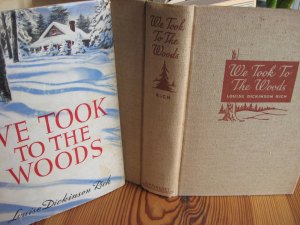
We Took to the Woods by Louise Dickinson Rich. This classic memoir (1942) is a delightful record of the Rich family’s life in the backwoods of Maine in the 1930s and ’40s. After years of living in cities, Louise and her husband, Ralph, both writers, moved to the woods with their son. They bought a property with several buildings, originally built as a fishing camp.  This book records the beauty and the humor of life in the woods.  Louise does not miss civilization: she has time to read all the books she never read (she reads all of Proust and doesn’t think much of him); listens to music on the radio; and gets her news from Time once a week.
we took to the woods rich il_fullxfull.457237985_k3ls

Best Short Story Collections:

1 Jonathan Lethem’s Lucky Alan and Other Stories.  I loved this book!  Lethem’s flamboyant writing is laced with humor, his verbal pyrotechnics are incomparable, and his stories utilize elements of fantasy and magic realism. In the surreal story, “Procedure in Plain Air,” the umemployed hero, Stevick, sees two men in jumpsuit uniforms jump out of a truck, dig a hole, and lower a bound-and-gagged man wearing a jumpsuit into the hole. After Stevick complains it will rain on the prisoner, they hand him an umbrella. Holding the umbrella becomes, in a way, his job. In “Traveler Home,” a dark fairy tale, the hero deals with snow, wolves, and a foundling. But the most dazzling story in the collection is “Lucky Alan”: the narrator, Grahame, an actor, gets acquainted with Blondy Sigmund, the “legendary” theater director, because they both go to the movies every day . When Grahame realizes Blondy has left the neighborhood, he tracks him down to find out why he left his rent-controlled apartment. It all centers on a nerdy neighbor named Alan.

Lucky Alan Jonathan Lethem 41UjiHnZr5L._SY344_BO1,204,203,200_2 Karen E. Bender’s Refund, shortlisted for the National Book Award.   The stories are linked by the theme of money. In “Reunion,” a woman with a failing home appliance repair business has an affair with a con man. In “The Third Child,” the financial responsibility of raising the two children is more than enough for a struggling couple: the heroine. a freelance editor, decides to have an abortion. In the title story, two artists dream of sending their child to an expensive pre-school, but 9/11 gets in the way of the easy money of subletting their New York apartment.

Karen E. Bender Refund book-refund-stories

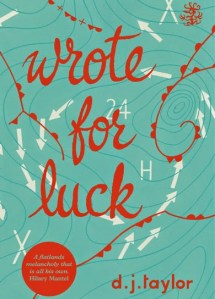
3. Wrote for Luck, by D. J. Taylor, was published in the UK by Galley Beggar Press. Taylor, an English novelist, biographer, and critic, is perhaps best known for his historical novel, Derby Day, shortlisted for the Man Booker Prize, but his short stories are equally witty and percipient. Some of Taylor’s best stories deal with the workplace. In “The Blow-Ins,” a couple struggles to keep their bookstore afloat when tourist season is over. In “Teeny-Weeny Little World,” an exasperated teacher must justify teaching poetry to a new headmaster. In “Jermyn Street,” a down-and-out employee at an antique shop is exasperated by his boss’s daily fights with his wife. In “To Brooklyn Bridge,” set in Chicago, a young woman escapes her job sewing in a sweatshop in Chicago to go to college; on the beach she recites Hart Crane’s poem “To Brooklyn Bridge”to her boyfriend, a salesman who does not understand.
DJ-Taylor--Wrote-For-Luck-FrontboardBest Literary Criticism: 

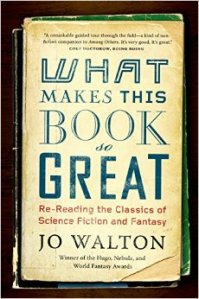
Jo Walton’s What Makes This Book So Great won the Locus Award for Best Non-Fiction.  This lively book, subtitled “Re-Reading the Classics of Science Fiction and Fantasy,” is the best book I have ever read on rereading. (Critics, eat your heart out!) In these short essays, originally a series of blog posts written for Tor.com, Walton, an award-winning SF writer,  not only analyzes the greatest SF and fantasy books, but also where Doris Lessing goes wrong (Shikasta) and where Michael Chabon goes right (The Yiddish Policemen’s Union).
What Makes This Book So Great Jo Walton 51nh5hxMgRL._SY344_BO1,204,203,200_

Reflections on the Eve of Christmas Eve

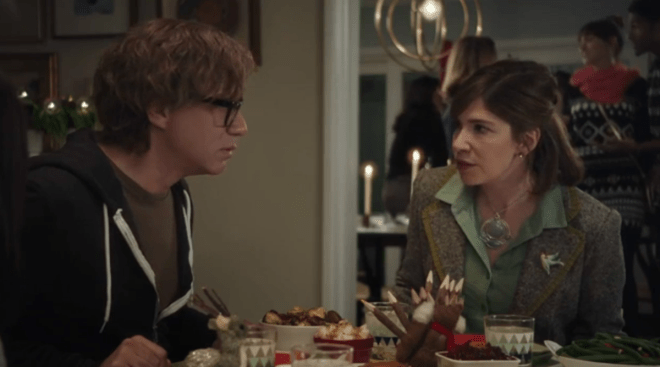
Fred and Carrie Brownstein in Old Navy commercial

Fred Armisen and Carrie Brownstein in Old Navy commercial suddenly realize they need new clothes!

Christmas is a difficult time.

What have we got? Irony!  What do we need?  Christmas sweaters, the ones drab Fred Armisen and Carrie Browstein want in the deadpan Old Navy commercial.

It’s a jolly holiday if you go to a potluck with friends; less so if you spend it with your dysfunctional family.

Some years I have brightly done my duty, and traveled hither and thither to visit family members. We eat festive dinners of turkey, mashed potatoes, and homemade pie.  I have little to say; my scant social skills dry up. My smile is plastered on. One cousin is dying of cancer, plugged into oxygen, and my father thinks it is AIDS. The old people reminisce about their Mother’s Way with Chickens. When the football game starts, we women are doomed to dishes and gossip. A cousin doles out leftovers to everyone except the hostess, who is almost in tears. I’m usually a woman of action, but I say nothing.  What is wrong with us on the holidays?

This year I am grieving the death of an aunt and a friend.  I was also saddened by a visit to the hospital, shocked by the frailty of a relative I hadn’t seen since my mother’s funeral.  Looking at this paper-thin man, I remember him as a strong freckled man who drove home from the farm for lunch, shedding his dirty overalls at the back door, and on one icy day insisted on driving us to the movies. I have to push aside this sentimentality:  he is on antibiotics and is feeling better, and that is what matters.  Age doesn’t mean much to him and my pity means nothing:  he still has intrigues, still goes to various clubs,  and supports Hillary.  He does karaoke. He has a more active social life than I do.  When he told me the last of my aunts died in November, I was devastated.  Why he didn’t call at the time?  Did he forget? That is probable, I realize now. I am sure he is depressed.  One of the aunts once said,  “How will you feel if he dies and you don’t see him again?”  And now I am really feeling that. We can’t talk.  It’s just the way we are.

Next year's Christmas tree!

Next year’s Christmas tree!

Thank God Christmas distracts us from the sadness. It rained all day, then the rain turned into slanting wet snow, but we closed the drapes,  were warm under blankets,  and were drinking tea and reading.   I was like Sigourney Weaver in Alien, thinking she’s escaped the alien and  is alone, when it’s actually in the spaceship.

My husband dragged our artificial tree, the alien in my life out of the basement!

NOOOOOOOOOOOOO!

Oh, lord.  This is one of those holiday traumas.  The plastic tree from a box store was okay for a year.  It was very well-loved by the cats, who bent it up a little.  Now half the branches turn up, then there is a gap, and the rest of the branches point down. I may joke about Roseanne’s “White Trash Christmas,” but I can’t have it in my living room.

So I promise I will find a tree for Christmas if he just takes this one back down downstairs.

I don’t feel like riding the bus in the rain, then walking to a box store, then dragging a tree back to the bus, but I have an idea.  I go to work on the internet.  Are those cute small spruce trees with L.E.D. lights  available for one-day delivery? They are not!

And so I order a big evergreen centerpiece and a Christmas bouquet from a florist.  And my God!  It’s the nicest Christmas decoration we’ve ever had.

So all these years we could have had great decorations if I hadn’t done it myself?

Yes!  We’re finally in the Christmas spirit!

Radio Four’s “Blood, Sex & Money” and Zola’s The Fortune of the Rougons

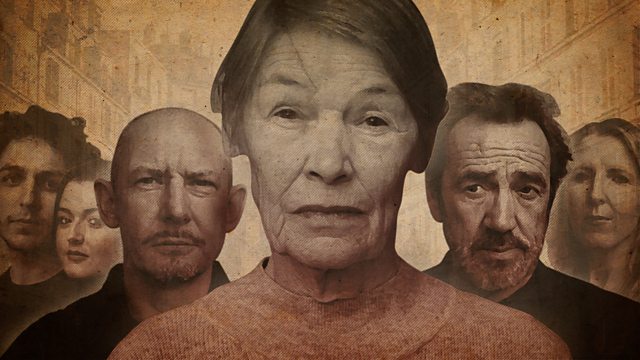
Zola's "Blood, Sex & Money," starrtng Glenda Jackson

                      Zola’s “Blood, Sex & Money,” starring Glenda Jackson

Radio Four’s “Blood, Sex, and Money,” an adaptation of Zola’s Rougon-Macquart series, will send you running for the books:  the acting is superb, with Glenda Jackson starring as Aunt Dide (Adelaide), the matriarch of the family, and the writing is riveting.  Sure, a few liberties are taken with the plot, but the spirit is there.

A decade ago, I went through a mad Zola phase:  I read most of the books in this fascinating series, which chronicles five generations of the Rougons (the offspring and descendants of Dide and her husband, Rougon ) and the Macquarts (the offspring and descendants of Dide and her lover,  Macquart). Several of the novels are in print by Oxford and Penguin, but I had to eke them out with 19th-century translations in print-on-demand editions.  Now they are available as e-books.

It is an understatement to say Dide’s children don’t turn out well: they range from alcoholics to up-and-coming bourgeois speculators to beggars to corrupt priests to politicians to prostitutes.   Balzac was Zola’s inspiration, but I’ve met readers who find Zola excessively ribald and crude.  (I love both writers, but prefer Zola.)

In his naturalistic novels, Zola wanted to explore the link between heredity and history.  Along with the family history, Zola documents the France of Napoleon III’s Second Empire.

My own view is that you s should jump right into Zola’s masterpieces, like The Ladies’ Paradise (the story of the first department store in Paris) or Nana (the story of a prostitute-actress who rises from the gutter to become a mistress of powerful men).  The early books ramble quite a bit and actually work better as background than as novels.

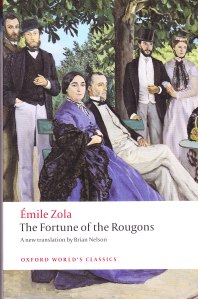
zola the fortune of the rougons rougonBut I recently read and very much enjoyed Brian Nelson’s new translation of The Fortune of the Rougons (Oxford World Classics, 2013), the first translation since the late 19th century.  Nelson vividly manages to bring cohesion to Zola’s racy but chaotic narrative.  It is the first novel in the series.

Set in Plassans, a fictitious town in Provence, it weaves a tangled web of the first generations of the family. The Rougons and Macquarts are politically divided on the eve of Louis-Napoleon Bonaparte’s  coup d’état in 1851.   But the initial focus is on a  pastoral romance between Dide’s radical teenage grandson, Silvere, a cart-maker who lives with Dide, and his girlfriend, Miette, the daughter of a convicted murderer.  The two meet every morning on opposite sides of a wall at a well where they can only see each other’s reflections.   (Yes, the wall reminds us of Pyramus and Thisbe.)  Because Dide’s uncle is so strict, they cannot see each other during the day:  they sneak out at night for walks, but are innocents sexually.  When Silvere decides to join the army of working-class insurgents,  Miette insists on accompanying him.  The men make rude remarks about her father, but she stands up to them and ends up carrying the banner.  She and Silvere are wildly excited, and too naive to anticipate the meaning of violence.  (In the radio adapation, they agree it is “awesome.”)

Then Zola changes tack and describes the origins of the family. Dide’s husband, Rougon, dies while weeding a bed of carrots (one of those ironic details Zola loves!)  and she must raise their son Pierre alone. Dide becomes wildly, erotically involved with an alcoholic smuggler, Macquart, who lives in a shack nearby, and she gives birth to two children by him, Ursule and Antoine.  She is considered mad by the neighbors to get involved with this beggar.  She lets the children run wild.  Eventually, there is resentment between Pierre and the two Macquarts.

In a few pages, Zola covers a lot of territory.

For nearly twenty years they all lived there following their fancies, the children like the mother.  absolute freedom reigned.  As she grew older, Adelaide retained the strangeness which had been taken for shyness when she was fifteen; it was not that she was insane, as the people of Faubourg said, but there was an imbalance between her blood and her nerves, a disorder of the brain and heart which made her lead a life out of the ordinary, different from that of everyone else.

And he gives us details of the division of the family through Pierre’s theft of money:  he gets his mother to sign a paper handing it all over to him while she is alive, thus cheating Ursule and Antoine of their share.  Ursule is happily married and doesn’t care, but Antoine, a soldier, returns to Plassans intending to live off the money.  Pierre and Antoine have opposite politics as well as the money quarrel: Pierre is a Bonapartist, while Antoine supports the republican resistance.  Antoine and his brilliant wife, Felicite, darkly scheme to win political favor and money.

The history is complicated, but there are excellent notes in the Oxford edition.  I cannot say this is a really excellent novel:  do read one of the others first!  But I am intrigued by the family history.  And I must say Zola’s theories on heredity have gone in and out of style a couple of times since he wrote it!  I think he is pretty much spot-on in the days of Prozac!

Good Girl Genes & Literary Links

igiveandgive taintor

This afternoon my good girl gene kicked in.  We visited a Very Old Relative in the hospital.

We talked about duplicate bridge (which I’d never heard of), and I reminded him/her that my mom and her best friend used to belong to a court whist club.

“She’s an idiot,” the relative said of Mom’s friend.

“She was nice,” I say.

My husband affirms that she was nice.

It’s unclear if the Relative knows the friend is dead.  We didn’t want to share Too Much Upsetting Information.

On the other hand, the Relative said so many inappropriate things in one hour that it probably didn’t matter.

Such as:  the Relative can’t stand to sleep in the same room as his/her spouse anymore;  he/she is cheating on said spouse; and he/she is expecting the cheatee to visit any minute.

“What?”

“It’s part of life.”

“What?”  Maybe if you’re immoral…

We don’t want to meet the cheatee, so we get out of there.

He/she is very old and needs to get back together with his spouse.  (I can’t arrange that!)

And how have your Holidays been going?

LITERARY LINKS. 

1. There are many Best Books of the Year lists, but I especially loved this article in The Guardian, in which publishers name the book that made their year; the book that deserved to do better; and the book they wished they’d published. 

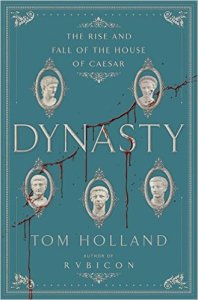
Richard Beswick, publisher of Little, Brown and Abacus Books, speaks of the brilliance of Tom Holland’s “magnificently erudite and entertaining Dynasty: The Rise and Fall of the House of Caesar.”

I agree.  It is gossipy, witty, spicy, and as fast-paced as a novel!

dynasty tom holland 51ODkof-fHL._SX327_BO1,204,203,200_

2. Tom Cunliffe’s great blog, A Common Reader, is back in business!  I enjoyed his fascinating post, “All Hail Wikipedia.”  

He writes:

wikipedia Nohat-wiki-logoI get tired of people complaining about Wikipedia and saying how inaccurate it is. If a politician or a celebrity is accused of sneaking through an edit in their favour (almost invariably to be found out later) some journalist will make some clever comment about “of course, Wikipedia is full of this sort of thing”. They ignore (or are ignorant of) how much effort Wikipedia put into monitoring edits to the pages of people in the public eye.

3 In the latest issue of the TLS (Dec. 18, 2015), Lesley Chamberlain reviews Wendy Pollard’s Pamela Hansford Johnson: Her life, works and times. Unfortunately, the TLS article is not online, but you can read my interview with Wendy here.

wendy pollard Pamela-hansford-Johnson-web4 Joyce Maynard has an article in the New York Times magazine (Dec. 16, 2015) about visiting Pablo Neruda’s three homes in ChileLa Chascona, La Sebastiana and Isla Negra.

Enjoy the links!

Holly Jolly Voicemail

feliznavidadAll across America, we are psyched for the Jolly Holiday Competition  of Who Has the Worst Family!   Ever played it?  It’s so much fun. There’s drinking and “Truth or Dare.” We were going to skip it this year, but we just recovered the dysfunctional spirit!

A message from an elderly relative arrived in voicemail:  “I’m in the hospital, Kat, and call me if you feel like it.”

Oh, good. It’s been a few years since we spoke.

There were some very bad scenes with this relative when I was growing up.  He/she once beat me up for going on a  25-mile Hike for Hunger with hundreds of others on a Sunday. The brilliant theory was that I had been out with a boy. Very brilliant, since I walked all 25 miles and had blisters on my feet and was hanging out with my usual group of giggling girlfriends.  I was so upset by my relative’s violence that I never collected the money for the charity from my sponsors.

Torn between duty and a 10 on the Richter Scale of dysfunction, I maturely decide to do my duty.  He/she is old now.  You have to assess his/her health.  He/she has alienated a lot of people.  You care because…he/she has no one else.

The problem is we have no idea where he is.  He/she didn’t leave much information.   We don’t know the name of the hospital. We don’t know if it’s here or in “Snowbird country,” i.e., Florida, where he/she sometimes winters.   We don’t have his/her cell phone number and he/she doesn’t have  a landline.

So we begin the comedy of errors. We call an area hospital.  No, there is no patient of that name. The switchboard volunteer kindly gives me the number of the other hospital.   No, he/she is not there either.

Then we call a relative who might know his/her number, but her voicemail is full!

Okay, he/she is probably in Florida.  There are a lot of hospitals in  Florida.  We call three.  And it’s complicated getting the no’s.  Once I reached some huge complex of hospitals and they wanted to know what building he/she was in.  “Pneumonia?”  I said.  “Pulmonary?”  Was this a game show?  I sounded like a crazy person.  Once I start saying, He left a message and we don’t know what state he’s in, I might just as well have hung up.

Finally my husband found a number on his cell phone with the right area code.  Thank God he never deletes anything!

And it was the right phone number!

And so we chat on the phone.

He/she didn’t go a-snowbirdin’ this year.  He/she got sick when my aunt died, when the cousin who was driving them to the funeral got lost on gravel roads and drove into a ditch.  They  waited an hour and a half for a tow truck.  He/she was coughing and tried to get the hospital to admit him but they would not.

And now I’m hearing for the first time that my aunt died late in November.  The last of the aunts died and I wasn’t notified.  You see, this is true dysfunction.  So I’m damned if I will cry.  (I cry after I get off the phone.)

He/she found a hospital that would take him for a few days.  And so he here’s my over-the-phone diagnosis (with a few tears in my eyes):

  1. bad cold, bronchitis, or walking pneumonia – but possibly doesn’t need hospitalization.
  2. loneliness
  3. depression

Well, let’s hope we can straighten everything out.

Anyway, Merry Christmas!  It is, in fact, just like Christmas!  Feliz Navidad!

Good Things in Threes: Edward Carey’s Heap House, Colette’s The Innocent Libertine, & Dorothy Sayers’s The Unpleasantness at the Bellona Club

Good things come in threes!  I thoroughly enjoyed three feather-light classics this month, Edward Carey’s Heap House, Colette’s The Innocent Libertine, and Dorothy Sayers’s The Unpleasantness at the Bellona Club.

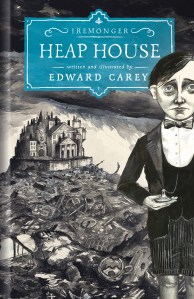
Edward Carey HEAP-HOUSE1. While reading Heap House, written and illustrated by Edward Carey, I thought, “It’s ‘Upstairs Downstairs’ meets Edward Gorey and Mervyn Peake!” This eerie fantasy, the first of the Iremonger trilogy, is set in an alternate nineteenth century. The extended family of the Iremongers lives in a huge mansion, Heap House, built on “the heaps,” i.e., hills of trash and rubble collected from London.  Servants toil in the heaps, wearing gas masks and tied to human anchors as they salvage valuable objects.

Heap House is told in two alternating narratives.  The first narrator is 15-year-old Clod,  a  brilliant, sickly orphan with a special gift:  objects speak to him.  Each Iremonger is presented with  an object at birth:   Clod’s is a bath plug; his cousin Pinalippy has a doily; and an aunt a brass door handle.  The owners must carry their birth objects at all times.  When Clod enters a room, objects speak their names to him.  His bath plug says, “James Henry Hayward.’

Lucy Pennant, an orphan recently brought to live at Heap House, relates the story of  the servants downstairs.  After she arrives, the objects, ranging from utensils to furniture, start acting strangely. She meets Clod while cleaning the fireplaces upstairs and they share information and form an alliance.

I loved this book!  which was praised by Kelly Link and Eleanor Catton.  And it is one of the best novels I’ve read this year.  (And I have two to go.)

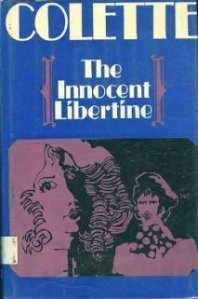
Colette innocent libertine 1323302. Colette’s The Innocent Libertine. Colette explains in the preface that this slight novel was intended as a short story, but her first husband, Willy, saw the commercial value and insisted that she pad it.  Then she wrote a sequel. Later she welded the two stories into one novel, but fears “that this definitive edition itself fails to… reconcile me completely to the first aspects of my career as a novelist.”

It is charming but feather-light, not up to Colette’s usual standard.  In Part I, she introduces the heroine, Minne, a  schoolgirl who pores over sensational newspapers while she pretends to do schoolwork.  She is fascinated by a column called”Paris at Night”:  she loves the stories of a gang of brigands living in the boulevards of Paris. She thinks the gang is romantic:  she likes their names,Copper-nob, the Moth, the Viper, and Curly.  She fantasizes that a young man she has seen sleeping in the park is Curly.  When she sneaks out one night, she discovers the world is not like “Paris at Night.”

In Part 2, Minne is unhappily married to her handsome cousin, who had a crush on her as a teenager. She is unfulfilled and wonders what other women find in love.  Her ideas of sex and romance are as naive as her girlhood vision of the gangs of Paris.  Will she ever find love?

When you’ve read all of Colette, read this.

3. I’ve always wanted to join a stuffy club where men lounge in comfortable chairs and smoke cigars.  (Are women still barred?) In Dorothy Sayers’s The Unpleasantness at the Bellona Club (1928), the fifth novel in the Lord Peter Wimsey series, the amateur detective hero, Wimsey, is at his wittiest and most dashing as he solves a puzzle plot full of red herrings and twists.

It opens at the club:   Captain George Fentiman, a shell-shocked, unemployed veteran of World War I, tells Wimsey that he would resort to crime if he could.

Wimsey gently, humorously reins in his friend, who is on the verge of a breakdown.

“Oh, I wouldn’t do that,” said Wimsey lightly.  “Crime’s a skilled occupation, y’know.  Even a comparative imbecile like myself can play the giddy sleuth on the amateur Moriarty.  If you’re thinkin’ of puttin ‘ on a false moustache and lammin’ a millionaire, don’t do it…”

the unpleasantness at the bellona club sayers 192887Then George’s grandfather, General Fentiman, is found dead in the club’s library, in an advanced state of rigor mortis.  The time of death is important to quarreling heirs, because the general’s sister also died that morning:   if she died first,  her fortune belonged to the general, and would go to George and his brother, Robert.

Wimsey examines timetables, romps through Europe, and interviews artists (one of whom half jokingly proposes to him:  he sweetly refuses).

Really a great read!  One of Sayers’s best!

Willa Cather’s A Lost Lady

a lost lady cather vintage 1972 51nRiPWgiIL._SX298_BO1,204,203,200_

“Money is a very important thing.  Realize that in the beginning, face it, and don’t be ridiculous in the end, like so many of us.”–Marion Forrester in A Lost Lady

Year ago I discovered Willa Cather’s A Lost Lady, attracted by the pretty cover of a Vintage paperback (see above).  I have read this classic many times.

In 2007, we traveled to Willa’s hometown, Red Cloud, Nebraska, the headquarters of the Willa Cather Foundation.  On a splendid  tour of the pretty small town, we saw the house of the original models for two of the main characters in A Lost Lady, Captain Silas Garber, founder of Red Cloud and of the town’s bank, and his wife,  Lyra, a charming, pretty woman from California. In the novel, the couple are called Captain and Mrs. Forrester.

Red Cloud rekindled my interest in A Lost Lady.  It is a complicated novel, told in the form of a frame story. The narrator, Niel Herbert, depicts Marion Forrester through the lenses of idealization and disillusion. She and Captain Forrester are the aristocrats of the town.  They live part of the year  in Sweet Water, Nebraska, but winter in Denver.  Marion brings sophistication to Sweet Water.   She and the Captain are not only charming to Niel’s uncle, Judge Pomeroy, but also entertain bank presidents and railroad magnates who are traveling from Denver to Chicago.

Marion’s delicate charm  makes me think of a watercolor painting. When she gives Niel and the other boys permission to fish in the creek, Niel is the first to spot her bringing them a plate of cookies for lunch.  He sees

…a white figure coming rapidly through the grove, under the flickering leaf shadows,–Mrs. Forrester, bare-headed, a basket on her arm, her blue-black hair shining in the sun. It was not until years afterward that she began to wear veils and sun hats, though her complexion was never one of her beauties.  Her cheeks were pale and rather thin, slightly freckled in summer.

Mrs. Forrester/Mrs.Garber meant a great deal to Willa. In Mildred R. Bennett’s fascinating biography, The World of Willa Cather (University of Nebraska Press), she quotes a 1925 interview Cather gave to The New York World.  Cather said,

A Lost Lady was a woman I loved very much in my childhood.  Now the problem was to get her not like a standardized heroine in fiction, but as she really was, and not to care about anything else in the story except that one character.  And there is nothing bu that portrait.  Everything else is subordinate.

I didn’t try to make a character study, but just a portrait like a thin miniature painted on ivory.

willa-cather-a-lost-ladyIt takes time for Niel to realize that no one can live in an ivory portrait, any more than on a pedestal. He learns Mrs. Forrester is having an affair with one of her husband’s friends.  And after Captain Forrester loses his money by reimbursing the customers of  the failed bank, he has a stroke. Marion is  stuck in Sweet Water year-round, with no money for hired help. And she frenetically entertains young men from Sweet Water who are far beneath her in class, including Ivy Peters, a corrupt lawyer.

Hermione Lee observes in Willa Cather:  Double Lives that A Lost Lady signifies a new kind of writing for Cather:

There is a crucial change, now, from the early pioneering novels. The focus has shifted from the immigrants to the American ‘aristocracy’; and from female heroism to femininity. These heroines are ‘ladies,’ socially adept, self-conscious, sophisticated, decorative. They have no children, they are separated from their family roots, they have no independent occupations, and they define themselves in terms of their relation to men. They are confined and thwarted, not expansive and self-fulfilling. Their energies are poured, not into something impersonal and bigger than themselves–the shaping of the land, the making of an art–but into personal feelings and self-expression. They are much more elusive and less reliable than the pioneering women-heroes.

I pity Marion Forrester, living in Sweet Water, a small, dying town, losing population and wealth. After the Captain dies,  she is very lonely and  poor, and switches her legal business from respectable Judge Pomeroy to the hustler Ivy Peters. Niel loses all respect for her.  But when he  learns years later that she escaped from Sweet Water, he relents.  Her words on money (see epigraph to this post) look cynical, but Marion needed to leave Nebraska.  Ivy Peters found her the money; Neil and his uncle could not.  Is it ever right to stoop to the level of Ivy Peters?

I don’t know.  But Marion had to get out–under any circumstances.

This short, perfect book would make a perfect gift, by the way.  It’s spare, taut, and lyrical, and the new Vintage Classic edition also has a lovely cover..

Carpe Diem!

carpe diem IZvk9M7DI do not mind getting older. I had a Big Birthday last summer.

It was a shock to turn 30, but subsequent decades have been illuminating.

Health?  Good.  Activities? The same.  Loss of looks?  F– that.  Menopause? No hot flashes.

And I am still laughing at The Who’s “My Generation” (1965), written when they were twentyish.

I hope I die before I get old
(Talkin’ ’bout my generation)

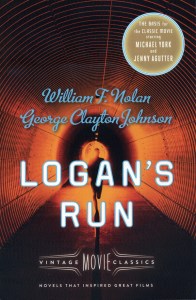
logans-run-vintage-books-2015“Don’t trust anybody over 30,” said Jack Weinberg during the Free Speech Movement at Berkeley in 1964. Psychologist Timothy Leary advised us to “tune in, turn on, and drop out.”  Logan’s Run, the 1967 dystopian novel by William F. Nolan and George Clayton Johnson, examined authority from a different angle. Set in a future with a population control law requiring people to die at 21, it is the story of Logan, a Sandman/law enforcer who hunts and kills “runners” who try to evade the law.  Then he becomes involved with activists on an Underground Railroad escape route and changes his politics.  (The book and movie are a bit like Fahrenheit 451, though not as good.)

Now I have never believed in mortality.  This decade has taught me about it.

I did not believe my mother would die.  I thought she had another decade.  She died a few years ago.

Horace said, Carpe diem.  (Seize the day.)

And getting older is about that.

I’m not one of those people who will travel to India to find myself.

What I notice with each birthday is that I am pickier about the books I read.  How many times will I be able to reread Madame Bovary?  I hope many. How about Jane Gaskell’s Atlan quintet?  Well,  yes, I still have  time.

Ian McEwan wrote in The Guardian in 2013 about his loss of faith in literature. (He got it back.)  His  description of the loss is fascinating.

I’m 64. If I’m lucky, I might have 20 good reading years left. Teach me about the world! Bring me the cosmologists on the creation of time, the annalists of the Holocaust, the philosopher who has married into neuroscience, the mathematician who can describe the beauty of numbers to the numbskull, the scholar of empires’ rise and fall, the adepts of the English civil war.

I don’t feel the urge to read the cosmologists, but I did gave up on Sara Paretsky’s latest mystery.  It wasn’t bad.   I just don’t have time.

I am not yet a “Senior Citizen,” but it is closer…  Have you ever noticed that powerful old people are not called “seniors?”    What a term for old age!

Six Series to Lose Yourself in Over the Holidays: Balzac, Durrell, Ferrante, Burgess, Gabaldon, & Le Guin

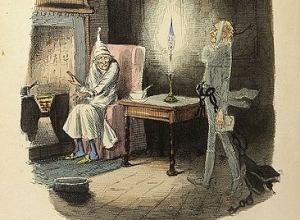
"Marley's Ghost"

           “Marley’s Ghost”

I do not like Christmas books.

One year at a posh friend’s, we listened to Dickens’s A Christmas Carol on public radio. Luv ya, public radio, but the reader’s enunciation was excessive!  Everybody looked glazed and drank a lot of wine. I don’t drink.  And I have never cared for A Christmas Carol.

So what do I do to escape the holiday madness?  I dive into trilogies, quartets, quintets, long series…and come up for air next spring.

Here are Six Series You Can Lose Yourself in over the Holidays.

1 Balzac’s La Comedie Humaine (The Human Comedy), a series of approximately 90 novels, short stories, and novellas in which Balzac portrays French society during the 19th century period of Restoration and July Monarchy. The plots are racy and the characters memorable.   Several are available from Penguin and Modern Library, and  most are available free in nineteenth-century translations at Project Gutenberg.  Personally, I prefer the newer translations, but Lost Illusions  and Cousin Pons are good in any form.   And here is a link to an excellent Balzac blog.

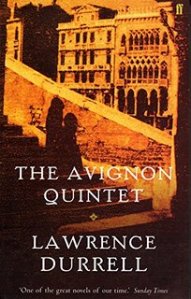
Lost Illusions Modern Library2 Lawrence Durrell’s The Avignon Quintet.   This year I devoured Durrell’s modernist masterpiece,  The Alexandria Quartet, and Prospero’s Cell, a  travel memoir.  And now I’m reading his odd metafictional  Avignot Quintet, consisting of Monsieur, Livia, Constance, Sebastion, and Quinx.   This labyrinthine series questions the nature of reality and love, authors and their characters. Not until the end of the first novel,  Monsieur,  do we discover the characters are characters in a novel written by  the bitter character Blanford.  And then in the next books Blanford weaves together his stories with those of his  fictional characters.  He even has telephone conversations with Rob Sutcliffe, the novelist in his own novel.  Intriguing but weird.

durrell avignon quintet 51GoOSphbOL._AC_UL320_SR204,320_3 Elena Ferrante’s Neapolitan series: My Brilliant Friend,The Story of a New Name, Those Who Leave and Those Who Stay, and The Story of the Lost Child.   These pop literary pageturners are about two difficult women who are friends from childhood to old ag,.  They are entertaining, beautifully-written, and  I swear  as popular as Gone with the Wind.   I have read the first two, and they are very good indeed, though, honestly?   The hype about them is too much.

ferrante neapolitan series quartet lctpnk325gzcumijtsdc4 Anthony Burgess’s The Complete EnderbyInside Mr. Enderby, Enderby Outside, The Clockwork Testament, and Enderby’s End.  The hero, Enderby,  is a Kingsley Amis-ish character who writes poetry while sitting on the toilet, farts a lot, and is shocked to receive a literary award.  Winning the award is his downfall, though he is up and down throughout the books.  Inside Enderby  is hilarious, but there are actually some startling serious bits that I didn’t remember.   An excellent reread of the first book, and hope to get to the others.

the complete enderby anthony burgess 51Y8C7CHQNL._SX316_BO1,204,203,200_5 Diana Gabaldon’s Outlander series.  I hope to lose myself in this popular series of time travel romances someday, because friends love them and assure me that they are entertaining and erotic.  There is also an Outlander coloring book, DVDS of the Outlander TV series (which I’ve heard is good), and totebags.  Do you think Outlander is Game of Thrones for women?

outlander gabaldon 1322638297Outlandertpb3wide

6 Ursula K. Le Guin’s Earthsea series: A Wizard of Earthsea, The Tombs of Atuan, The Farthest Shore, Tehanu, Tales from Earthsea, The Other WindNow that I’ve read David Mitchell’s the introduction to the new Folio Society edition of A Wizard of Earthsea in The Guardian, I would like to go back and reread the series.  Plus there were only  four books when I read it:  it has grown!

wizard of earthsea le guin 8504013716

Off to read one of my series books!