Truth in Wine, Part II: Horace’s Ode to a Wine Jar

I do hope Livia (Sian Phillips) is drinking wine, not poison (I, Claudius)

Yesterday I posted a piece called “Truth in Wine?  On Not Drinking Wine & Reading Ancient Poetry.”  As promised, I am posting my literal translation of Horace’s “Ode to a Wine Jar,”  Book III.XXI.  And I have an extra  treat: John Conington’s translation, 1882.  Mine will give you the gist, while Conington provides the poetry.

FIRST TRANSLATION

“Ode to a Wine Jar  (Horace III.XXl, translated by Kat)

O born with me in the consulship of Manlius,
Whether you bear lamentations or jokes,
whether strife and insane loves,
Or easy sleep, O sacred wine jar,;

For whatever purpose you keep
Fine Massic wine, worthy of a festival,
Climb down from the storeroom when Corvinus orders
me to bring mellower wines.

Although austere Corvinus is
Steeped in Socratic conversations,
He does not neglect you:
It is said that often with unmixed wine
The virtue of Cato the Elder was warmed,

You bring a gentle compulsion
to generally unresponsive genius;
You take care of wisdom and reveal
arcane counsel while Lyaeus* jests (* Bacchus, the god of wine)

You bring back hope to anxious minds
And give strength and the horn* to the pauper (*the horn is a symbol of power and confidence)
who trembles neither at the angry crowns of kings
Or the weapons of soldiers, after you.

Bacchus and, if she is happy,Venus, will be there
and the Graces slow to loosen the knot
And burning lamps will shine
Until returning Phoebus routs the stars.

*******************************************

SECOND TRANSLATION

Horace’s “Ode to a Wine Jar,” translated by John Conington’, 1882

O born in Manlius’ year with me,
Whate’er you bring us, plaint or jest,
Or passion and wild revelry,
Or, like a gentle wine-jar, rest;
Howe’er men call your Massic juice,
Its broaching claims a festal day;
Come then; Corvinus bids produce
A mellower wine, and I obey.
Though steep’d in all Socratic lore
He will not slight you; do not fear.
They say old Cato o’er and o’er
With wine his honest heart would cheer.
Tough wits to your mild torture yield
Their treasures; you unlock the soul
Of wisdom and its stores conceal’d,
Arm’d with Lyaeus’ kind control.
‘Tis yours the drooping heart to heal;
Your strength uplifts the poor man’s horn;
Inspired by you, the soldier’s steel,
The monarch’s crown, he laughs to scorn,
Liber and Venus, wills she so,
And sister Graces, ne’er unknit,
And living lamps shall see you flow
Till stars before the sunrise flit.

Truth in Wine? On Not Drinking Wine & Reading Ancient Poetry

Jack Lemmon in Days of Wine & Roses

In vino veritas (there is truth in wine)

Is there truth in wine?

My first boyfriend was an alcoholic, and there wasn’t much truth in wine for him.  He did the things that alcoholics do:  he conducted his social life in bars, drank on the job, lost his job, passed out on lawns, fraternized with bar owners, and was warned by our doctor that he would die if he kept it up.

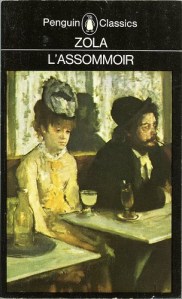
I left him, dear Reader, many years ago, but it did affect my attitude toward drinking. I avoided wine, because every night he downed bottle after bottle with friends who slurred their words as they deluded themselves about the possibility of sex with beautiful women, or laughed about wild parties where someone did something inbecilic, hence hilarious.  This drunken revelry was not for me: I  sat in the bedroom, doing homework and, on occasion, reading Zola’s L’Assommoir. 

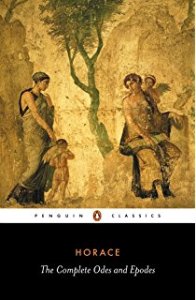
So why do I love ancient poems about wine? Well, wine humanizes the poets, whether you drink wine or are a teetotaler: the ancients drank a lot of wine, and the lyric poets don’t seem falling-down-drunk types.  The  witty Catullus may have written the first comical “Bring Your Own Bottle” poem (a dinner invitation in which he tells a friend that he will dine well if he brings the dinner, wine, and wit).  And Horace wrote many poems about wine:  my favorite is his ode to a wine jar, in which he informs the jar of his appreciation “whether you bring lamentations or jokes, whether strife and insane love, or easy sleep.” And he adds that his serious philosophical friend Corvinus, though “steeped in Socratic dialogues,”  appreciates the fine Massic wine:  even Cato the Elder did!

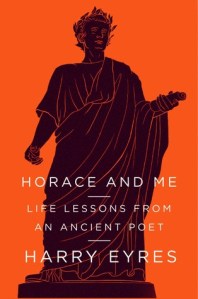
In addition to Horace, I have been reading Harry Eyres’s light, charming, intelligent book Horace and Me: Life Lessons from an Ancient Poet.  Though I didn’t go to Eton, and  enjoyed Horace at a university, Eyres and I have something in common.  Like me, he is returning to Horace after many years and is overjoyed by the discovery of the layers of meaning in each measured poem

Eyres is also a wine merchant’s son.  He writes,

You could say there is nothing more central to Horace’s poetry, and philosophy than wine… The centrality of wine often passes relatively unnoticed, or is overlooked because “it is just a convention” or because wine is surely not serious as a subject.

The prominence of wine in Horace’s poetry was not overlooked by me, for good and obvious reasons.  I was the son of a wine merchant; I grew up among bottles and boxes of the restorative fluid.  Wine was central to our family economy and to my father’s philosophy. Wine was also what drew me to Horace in the first place, what forged a connection I couldn’t miss.  Though there was much I couldn’t and didn’t understand about Horace, I immediately understood what he felt and expressed about wine, how he grasped wine’s deeper power even as he also relished different vintages and crus as a Roman connoisseur.

I also am very much enjoying Eyres’ translations of Horace.  They are not quite translations–rather, they are modern versions–in which he updates the classical references to, say, the war in Iraq, or, instead of using the Roman name Corvinus, he substitutes the common name Jim.   It’s a little strange at first, but effectivel Too often the literal English translation cannot be  understood without many looks at the Latin, and that wreaks havoc of the point of translation.

I will try to post one of my translations or one of Eyres’ translations in the next few days.

Meanwhile, Carpe diem! (Seize the day!) Nunc est bibendum. (“Now it must be drunk…”)

Look for poetry another day….

Balzac’s “Letters of Two Brides” and “A Daughter of Eve

An 1898 copy of Balzac’s A Daughter of Eve and Letters of Two Brides

In the introduction to the 1898 edition of Honoré de Balzac’s novel Letters of Two Brides, the critic George Saintsbury assures us it is not the best of Balzac.

It is far, far from his best.  Nonetheless, it has been reissued by NYRB,  in a new translation by Jordan Stump, under the title The Memoirs of Two Young Wives.  After reading a sample online of the new translation, which didn’t seem very different from my 1898 copy (translated by R. S. Scott), I stuck with the old:  and  chips of paper littered the floor as I cut the pages.  And that’s a reason to read the new!

Written in the form of letters between two best friends, this slight epistolary novel explores women’s attitudes toward marriage.  Two women of very different social strata went to convent school together.  Louise, intended by her aristocratic family to be a nun, is rescued from the convent by her Carmelite aunt’s knowledge that Louise is “in a decline.” Once she is home in Paris, her mother dolls her up in splendid clothes, she thrives at social events, and she is a belle. But Louise falls in love with her Spanish tutor, who turns out to be a former duc (exiled) but is still, I think, a count–or maybe the opposite–and let me say this romanticism is completely unlike Balazc.

I find Renee more sympathetic than Louise, because there’s none of this hanging from the balcony/hiding in a tree business–that’s what Louise and her lover (later her husband) go in for.  On the other hand, Renee’s family always intended her to marry. Once home in the country, she agrees to marry a traumatized war veteran, former prisoner-of-war, and landowner.  She doesn’t love him, but she wants a family.  And, though I’m surprised by this, her practicality is much more sympathetic than Louise’s drama.

Eventually, I became intrigued–especially by Renee, who is a philosopher.  And the two brides are so different that they bicker back and forth:  Louise tells Renee her marriage to the tutor is one long passion fest, and she pities Renee for not being in love. (Louise later has a second passionate marriage).  Renee tells Louise that she can’t expect the madly-in-love thing to last forever and needs to think about what will last.  Guess who wins in the end?

This book is very slight, and actually a bit gushy as well as romantic.   I am baffled as to why it was reissued.   Saintsbury, who writes the introduction to the 1898 translation,  doesn’t admire it either:  he thinks French writers don’t know how to write about women.   I simply thought it was a lesser work of Balzac.

If I were to reissue one of Balzac’s out-of-print novels about women, I would choose A Daughter of Eve, an entertaining novella in which a megalomaniac journalist exploits the infatuation of a countess and his mistress-actress to found a newspaper.  It is published in the same edition (1898 Gebbie Publishing Company) as Letters of Two Brides. After panning Letters of two Brides, Saintsbury writes, “There are, however,… considrable condolences and consolations in “Une Fille d’Eve.”   I agree.

A Daughter of Eve is engaging, if slight, and I thoroughly enjoyed it.  Two virtuous sisters who have led a sheltered life grow up in total innocence and are shocked when it comes time to marry.  Marie Eugenie marries a rich banker, Mr. Nucinigen, and Marie-Angelique marries a count. They thrive for a number of years–it’s better than living alone– until one day, after years of virtuous marriage,  Countess Marie de Vandenesse  takes a lover, the journalist Raoul Nathan.  And this becomes a problem, because soon everybody, especially Nathan, will need money.  Will the rich lose all their money?

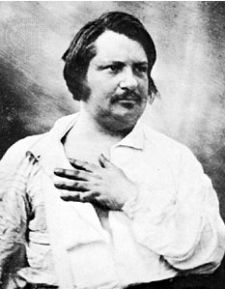
Balzac

I’ve never met a novel I didn’t like in Balzac’s La Comédie Humaine (The Human Comedy), a series of  approximately 95 novels and stories.  But Letters of Two Brides/The Memoirs of Two Young Wives is not especially memorable, so I would skip right to A Daughter of Eve.

Peace & Pillage: Pax Romana by Adrian Goldsworthy

The Roman empire was once the hub of the world .

It is still the hub for me sometimes. After a particularly bad-news day, I like to read Latin literature.  What can be saner than the odes of Horace (65 B.C. to 8 A.D.), who often in his lyric poetry celebrated wine, love, and even the Pax Romana (Roman Peace), which was first established by Augustus after years of civil war?  And Seneca’s letters, which are essays on Stoicism?

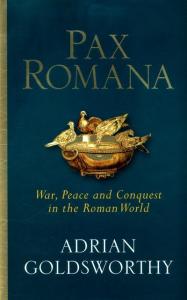
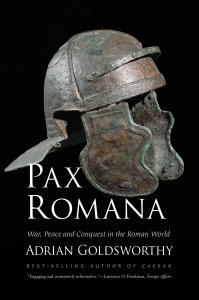
And Roman history, too, enlightens us:  I recently read Adrian Goldsworthy’s brilliant history, Pax Romana:  War, Peace, and Conquest in the Roman World, a study of the remarkable achievement of Pax Romana (the Roman Peace first established by Augustus).  But he also writes about the paradoxes:  there was widespread peace in Rome and most of its provinces (rebellion was rare), while war was always waged elsewhere, as soldiers expanded the empire.

Although there are many comparisons between Rome and the U.S. (and of course the former British empire), the Roman Peace is no longer regarded as highly or romantically as it was in the 18th century when Edward Gibbon wroteThe Rise and the Fall of the Roman Empire.  Attitudes toward empire have changes.  Goldsworthy explains,

Peace is almost as rare today as it was for Gibbon and his contemporaries, and if the Romans truly did create a long period of peace over such a wide area then this deserves to be explained.  Praise of peace was commonplace for authors in the ancient world, Greek as well as Roman, but they also readily accepted that war would be frequent.  The word pax came to mean something very close to our “peace” by the first century B.C.  Peace was celebrated by  poets and often held up as the most desirable state.  Roman emperors boasted of preserving peace, and sometimes the expression “Roman peace’ was used when speaking of the good brought by the empire.  They also spoke a good deal of the glory of victory.  Imperator, the word from which we get our “emperor,” meant “victorious general,” and an emperor’s reputation was badly damaged if his troops suffered serious defeats, whether or not he was personally in command.

Goldsworthy’s writing is lucid, and though he is not as famous as Mary Beard, his books are just as readable.  Like Beard, he consults on documentaries for the History channel, National Geographic, and the BBC.  I very much admire the organization of the book: It is arranged not just chronologically, as in a traditional general history, but also by subject. In chapters like “How much did you make?–Government,” “Provincials and Kings,” “Rebellion,” “The Emperors,” “Life under Roman Rule,” and “Garrisons and Raids,” he describes trends, customs, and attitudes over a period of centuries.  And because he raises points about so many subjects, our favorite Roman characters,  Caesar, Cicero, Ovid, Trajan,  Paul (of the New Testament), Pliny, and even Pontius Pilate (the most famous governor) make many appearances.

The government of the empire was unique.  There were Roman governors, their small staffs, and garrisons in the provinces, but the provincial cities, villages, and other local groupings did much of the governing. And the expansion of the empire was, of course, for Roman profit. Provinces paid taxes, and commerce thrived;  aristocrats and the maddest of emperors, Caligula, Nero, and Domitian, liked their bangles as well as blood.

Goldsworthy reminds us that the Roman peace lasted till the fifth century, and did not disappear overnight.  He writes, , “Though the  Romans were very aggressive and well-armed, and were primarily interested in profit, there actually was a Roman peace, especially for those who lived in Rome.”

Travels to the Moors: “Wuthering Heights” by Emily Bronte

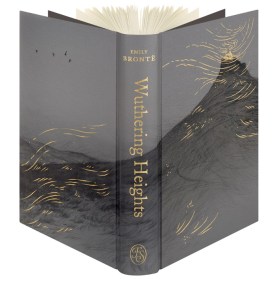
The Folio edition of Wuthering Heights

Oh, dear, I’m behind on bookish posts. I’ve been musing about the mortality of classicists and wishing poets and novelists would write satire.

But you might want to know if I’ve read anything.  This week it’s been Emily Bronte’s hair-raising Gothic, Wuthering Heights.

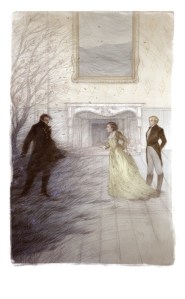
An Illustration by Rovina Cai (Folio Society edition)

Wuthering Heights was my favorite Bronte novel until I switched in early middle age to Charlotte’s fierce spinster novel, Villette.  But I still  love Wuthering Heights:.  It transports me to the moors, which I’ll never probably see, and to a kind of love I haven’t, thank God, experienced in decades.   In 2014 I said of this gorgeous, intriguing novel about doomed love:  “It is a short, perfect novel, with lyrical yet muscular prose, brilliantly narrated by two unreliable narrators:   Lockwood, who rents Thrushcross Grange, spends a harrowing night at Wuthering Heights with his moody landlord, Heathcliff, after he is caught in a blizzard; and Nelly Dean, Lockwood’s housekeeper, tells him the story of Heathcliff.”

Bronte also describes the ramifications of the intense love between Heathcliff and Catherine Earnshaw, with whom he was brought up at Wuthering Heights.  The consequences of their separation after  Catherine’s marriage to mild Edgar Linton are tempestuous.  And Heathcliff’s rage affects the next generation, too.

So imaginative, wild, and terrifying!  Emily was a force unto herself.
It is Emily’s 200th birthday on July 30.  You’d better get a nice hat ad dress so we can mosey down to the bar to watch the ceremony.
Oh, wait.  That’s the Royal wedding.

Prudery & Promiscuity: In Which Juvenal & Comedians Take on the World

The Folio Society edition, translated by Peter Green & introduced by Simon Callow

“It is difficult not to write satire,” Juvenal wrote.

Yes, but where is it?  Who’s writing it?

Satire is rapidly vanishing in the U.S.  There’s not exactly censorship, but there has been a weird suppression of stand-up comics and comic actors:  flocks of them have been accused of sexual harassment or sexual misconduct and  banned from their careers.  And where are all the modern satiric poets and novelists? Are they banned, too? Are the publishers rejecting satirists? The pressure to quell voices has come from both the Left and the Right: if a book triggers a sob or a bad memory, if a comedian offends (and which doesn’t?), if a point of view is unpolitically correct, you must shut up the babblers. 

The poet Juvenal, who was exiled during Domitian’s reign of terror, began to publish his outrageous satires in 110 A.D.  In the introduction to the Folio Society edition, the actor Simon Callow writes about Juvenal’s outrageous stand-up comedy.  He writes,

I have a rather unusual qualification for introducing this edition of the Satires of Juvenal: I’ve been him.  This surprising manifestation occurred on the London stage, in 1976, in a one-man show called Juvenalia, and it proved to be the surprise sensation of the Fringe season that year, lauded with rare unanimity by all the major national newspapers.  The triumph was essentially Juvenal’s.  His scabrous commentary on his own times was perceived as startlingly pertinent and laugh-out-loud funny, filthy and deeply, gloriously unpolitically correct, even for 1976, when the concept had yet to be articulated.

Juvenal is hysterically funny in his unpolitically correct lampoons of Roman life.   He satirizes the decadence and depravity of Rome, pretentious poets, the allure of breads and circuses, the nouveau riche, the ubiquity of Greek immigrants, houses collapsing because of bad construction work, transvestites, eunuchs getting married, women who poison their husbands, homosexuality, legacy hunters, lawyers… Is there anyone or anything he didn’t satirize?

There must be an American Juvenal:  I don’t know him or her.  No, so instead I will make observations about two comedians.

Amy Schumer in “I Feel Pretty”

Critics are fond of the comedian and comic actor Amy Schumer, or so I’ve heard. But why are throngs of male critics bashing her silly summer movie, I Feel Pretty?  Having seen the trailer, I know it’s the kind of trifling entertainment you watch in an air-conditioned cineplex when it’s 90 degrees–not the kind of film to be reviewed in The New Yorker.

But this goofy satire of male-defined beauty has infuriated male critics.   Richard Brody at The New Yorker censures Schumer and writer-directors Abby Kohn and Marc Silverstein for wasting their talent.  He hates the plot, which centers on an overweight woman who, after falling down at spinning class and bumping her head,  hallucinates that she’s actually beautiful.  Naturally, she becomes more confident.  He writes,

It’s easy to see how the stereotypical view of beauty that’s satirized in “I Feel Pretty,” which Renee faces and then overrides, could have meshed with the persona, and the themes, that Schumer has developed on her own, but Kohn and Silverstein aren’t sufficiently lucid about the implications of the comedic premise. Schumer should simply be writing her own movies—and working with directors whose artistry matches her own.

Peter Bradshaw at The Guardian manages to demolish the film in three paragraphs.  No, it doesn’t work for him, and the third paragraph tells us why.

Actually, Schumer is pretty, and the casting wouldn’t work otherwise, but despite the disconnect between how she is portrayed and how she feels, she is never really abashed and there is no comic friction. In fact, it is more a parable of how celebrities like Schumer, on becoming successful, suddenly get an inkling of how beautiful people have always felt. I Feel Famous would be an alternative title.

Ouch!  So he says Schumer cannot satirize male-defined beauty because she’s pretty–and then he stabs her in the back and says she only feels famous.  Bitchy, Mr. Bradshaw.

Aziz Asani in “Master of None”

At our house we are fans of Aziz Ansari.  His brilliant Netflix comedy, Master of None, is not only hilarious but insightful: in one episode, he explores the issue of racism against Indians (his American-born Indian character is  offered acting roles in which he must play an Indian with an accent) ; in another episode, he delightfully satirizes The Bicycle Thief (his phone is stolen in Italy, and the episode is even filmed in black and white). But after Ansari won a Golden Globe for lead actor in a comedy, he was accused of “sexual misconduct” by an adult woman who said she felt uncomfortable about having had mutual oral sex with Ansari.  All I can say is:  At least you didn’t get pregnant!  Because it is harder to get an abortion than you think these days.  (And don’t date celebrities, and especially don’t go home with them on dates, if you feel it’s going too fast!).

If all the comedians and satirists  must shut up because they (a) make us uncomfortable, (b) they are nasty people, or (c) they are too raunchy, where will we be?  This is America, where we have free speech. Do you think Lenny Bruce or Joan Rivers were nice people? Lighten up, people

Meanwhile, I’m rereading Juvenal’s satires.   They are funny.  Try Peter Green’s translation, in the Penguin or the Folio Society editions.

Horace and the Death of a Professor

Google is a two-edged sword.  Sometimes the news is good, other times it depresses us.  And when we learn a friend or colleague of the older generation has died, it is painful.

Eleanor Winsor Leach

I was saddened to learn that Eleanor Winsor Leach, a classics professor at Indiana University, died last winter at the age of 80.  She was a Virgilian scholar whose graceful writing took my breath away.  She kept teaching till the very end, a Ms. Chips of the 21st century.  According to the IU newspaper, students loved her parties on Horace’s birthday (Dec. 8), at which time they also decorated her Christmas tree.

I tried to find a poem to celebrate her life and was deep into Horace’s Ode 2.XIV before I realized it was inappropriate.  Horace’s attitude to death is not comforting, not what I wanted to read after learning about her death alone in her house, found six days after her death.  But here goes anyway:  it is a tribute to Leach’s generation that we are still reading the Roman poets.  Here is my  translation:

This ode is addressed to a man named Postumus.

Ah, Postumus,
the fleeting years glide by, and piety will
not delay wrinkles, or
old age, or indomitable death;

Not if you sacrifice
three hundred bulls a day, my friend,
to pitiless Pluto, the god who confined
three-bodied monster Geron and Tityon

with the Stygian wave, the water certain for us all
who enjoy the gifts of Earth;
the waters must be crossed, whether
we are kings or poor farmers.

In vain we will escape bloody war
and the crashing waves of the Adriatic;
in vain we will fear the illness the South wind
brings in autumn.

We must behold the black wandering river
Cocytus, and Danaus’s infamous daughters,
and Sisyphus condemned to long labor,

The earth and home and your
lovely wife must be left, and none of the trees
you fostered will follow their short-lived master
except the hated cypresses.

A “worthier” heir will drink the Cacuban wine
you locked up with a hundred keys, and he will
stain the floor with unmixed wine
superior to that served at the haughty
banquets of priests.

What Does It Mean to Be Well-Read?

In a “Book Clinic” column at The Guardian, the critic Robert McCrum recently addressed the question, “What does it mean to be well-read?”  And he does not bow to pop fiction or internet poetry as he lays out the tenets of the canon.

He writes,

I’d suggest that three kinds of reading define the well-read mind. First, I’d want to include the immortals from the classics of Greece and Rome: Homer, Plato, Aeschylus, Aristophanes, Euripides, Virgil, Plutarch, Ovid, Juvenal and Sappho…

Next, from the Anglo-American literary tradition, we can’t forget Shakespeare, Milton, Donne, Byron, Austen, Keats, Dickens, Twain, Thoreau, Dickinson, Hawthorne, Melville, Whitman, Eliot, Pound, Auden, Fitzgerald, Hemingway, Spark, Beckett, Woolf… and certainly another score of contemporary greats, including Baldwin, Pinter, Morrison, Miller, Bellow and Naipaul.

Finally, and this is where it gets contentious, there’s great writing in translation, from Proust, Freud, Fanon and Bulgakov to Grass, Márquez, Kundera and Levi.

I am always lost in a book, and the canon has powerfully affected my life, to the extent that I have lugged The Collected Poems of Adrienne Rich in a bike pannier and perused Virgil in coffeehouses.  But I do have a few criticisms of the list, as I do of all lists.  Why so heavy on the Greeks when Roman literature had the greater influence?  Let me add the readable Roman writers Apulieus, Suetonius, and Seneca.

McCrum has chosen a superb collection of Anglo-American writers, but he is light on “women’s work,” so let me recommend the Brontes, George Eliot, Elizabeth Bishop, and Caroline Gordon.

Judging from the translation category, he needs to read more in translation (I’m being flippant!  He’s well-read.).  But since the following are not on his short list, let’s add Machiavelli, Dante, Stendhal, Pushkin, Tolstoy, Flaubert…and somebody please add some women!

Yes, reading and rereading the canon shapes us and changes us.  What I love about this list is that the recommended classics are readable without academic intervention. (Perhaps there should be a Penguin “Well-Read” kit?)   But does being well-read mean different things to different people? Let me hazard that…

…for professional book reviewers, it means reading the latest books; and they must know, or feign to know, Karl Ove Knaussgard, Rachel Cusk, Jhumpa Lahiri, Julian Barnes, Marilynne Robinson, and perhaps, as their wild card, George R. R. Martin. (British male writers have lauded Martin in the Guardian, the LRB, and the TLS.)

…for university professors, it means reading the classics according to their narrow specialty, whether that is ancient Greek drama or modernist poets, as well as every book of criticism on the subject.

…for bloggers, it means writing emoticon-heavy blurbs about romance novels; long personal responses to  Victorian novels; short reviews of the soon-to-be-forgotten best books of the month; or even learned essays on, say, the influence of Péter Nádas on European literature.

We women writers and bloggers have much work to do now on important  issues like saving abortion rights and reversing global warming (there’s not much time left!), but,  in our free time, let’s add great women writers to the canon.

My Summer Reading Project: Which SF/Fantasy Epic Should I Read?

I do not read beach books in the summer, unless they are literally beach books:  I recommend the Odyssey, Virginia Woolf’s To the Lighthouse, Mary Stewart’s This Rough Magic, and Gail Godwin’s Grief Cottage.

For summer reading projects I prefer classics, the kind for which you need an introduction and footnotes.  One summer my husband and I read Juvenal’s satires (at a coffeehouse called Cafe Diem).  We pored over Roman phrases, trying to decipher the slangy meanings our Lewis and Short dictionaries were unprepared to reveal.  And we found a little of Juvenal’s obscenity goes a long way…

The summer we read Juvenal…

For six summers I comically tried to finish Hermann Broch’s novel, The Death of Virgil, a German classic which, via stream-of-consciousness, portrays Virgil’s dying.  I started it, abandoned it, and restarted it every summer… and after 100 pages I crossed it off my list as unreadable.  The sentences, which may be beautiful in German, go on for pages, Virgil grotesquely has an eye for the boys as he’s dying (one accompanies him from the ship to Augustus’s palace), and starting around page 100 Broch decides to arrange some clumsy sentences in verse. My guess is the lack of an introduction and footnotes is due to the unpopularity of the English translation.

Usually I enjoy my summer projects I loved The Histories of Herodotus, The Tale of Genji, and Durrell’s Alexandria quartet.

But this summer I am thinking of reading an SF/fantasy epic instead of a literary classic. Why?  Because I say SF is my preferred genre, and yet I’ve read remarkably little SF in the last few years.

Critics seem to be crazy about George R. R. Martin’s A Song of Fire and Ice series.  At The Guardian John Mullan wrote,

Any connoisseur of narrative drive who crosses that divide will surely be caught up by the sheer energy and inventiveness of Martin’s multi-viewpoint story. His is a peculiarly unidealising variant of AU (alternative universe) fiction. In the land of Westeros, a chivalric yet brutal pre-industrial world, warring kinship groups struggle for power. In the adjacent land of Essos – more primitive, even more thoroughly Hobbesian – a young woman descended from the ancient rulers of Westeros plots and struggles to lay claim to the land from which she is exiled. JRR Tolkien, who may not have invented AU fantasy but certainly was its most influential exemplar, gave weight to his imagined world with invented languages, legends, genealogies, poetry. Martin provides some of this, but devotes most of his energies to convincing the reader of the entirely human fears and ambitions of his leading characters. Tolkien gave us hobbits, orcs, elves and dwarves. Martin deals in men and women.

I am a “connoisseur of literary drive,” but there are 5,216 pages in the series.  Perhaps I don’t have to read all the books?

Should I read Ursula K. Le Guin’s Hainish novels, available in two Library of America volumes? But do I want to immerse myself in the Hainish cycle?  Some are great (The Left Hand of Darkness), some are mediocre (The Word for World Is Forest).  I have read a lot of Le Guin over the years.

How about Frank Herbert’s Dune series?  But I’ve heard the series went downhill after the first book (which I loved and wrote about here)… and then there are so many in the series, several written by someone else.

And  C. J. Cherryh?  I read her stunning, angst-ridden novel, Downbelow Station.  (and wrote about it here).  One of the best SF books I’ve ever read.  But she has written so much–a novel a year, I think.  Where do I start?

Please recommend your favorite SF and fantasies!

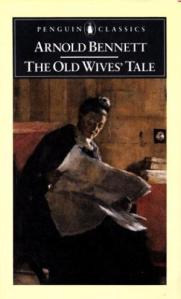
The Old Wives’ Tale by Arnold Bennett

I love the novels of Arnold Bennett, one of the most prolific and enjoyable writers of the early twentieth century. Does anyone read Bennett?  Only five of his books are in print, Clayhanger, Anna of the Five Towns, The Old Wives’ Tale, The Card, and Grand Babylon Hotel.   I try to read a Bennett novel every year: a few years ago I made my way through the Clayhanger trilogy, set in the Five Towns, which are based on the six towns in the Potteries district of Staffordshire, where Bennett grew up; and then Anna of the Five Towns, a novel about the daughter of a miser-factory owner.

But the best by far is The Old Wives’ Tale, published in 1908.  I have now added it to my Favorites of All Time list.  It is reminiscent of  Balzac’s realistic novels, with their interweaving of character studies, the mundane details of life and work, and the panorama of historical events:  in The Old Wives’ Tale, the action is concurrent with the Great Exhibition, the Siege of Paris, the Dreyfus Affair,  and the Federation in the Potteries.  John Wain writes in the  introduction to the Penguin edition: “It is one of the most successful attempts, if not the most successful, to rival in English the achievement of the French realistic novel from Balzac down to Flaubert, Zola, and Maupassant.”

Bennett’s tour de force centers on two sisters, Constance, who inherits the family drapery shop in Bursely (one of the Five Towns), and Sophia, who moves to Paris and first runs a boarding house and then a hotel.  It begins in the 1860s, and follows the lives of the Baines sisters from their teens till death.  Bennett brilliantly divides the book into four different chronological tales, beginning with the sisters’ roots in Book I,  called “Mrs. Baines” (who is their mother); Book II, “Constance,” and Book III, “Sophia,” detail  their work and relationships through middle age;  and Book IV, “What Life Is,” their old age and deaths.

The two sisters are completely unlike:  Constance, the conventional sister, doesn’t mind smoky Bursley, home of pottery factories, and finds it a pleasure to work in the shop.   But restless, pretty Sophia becomes a teacher (which is a step down from trade, in her mother’s eyes), and is successful at the local school until she develops a crush on a flashy traveling salesman, Gerald Scales. Then she foolishly quits her job and goes to work in the shop on the chance of seeing him.  She runs away with him to Paris.  And so the sisters are separated, one in Bursley, one in Paris.  And their worlds could not be more different.

In Book II, Bennett describes Contance’s life in Bursley, which is often monotonous, but with the rewards of marriage and family.  As a young woman, Constance and Mr. Povey (Samuel), the manager, become friends and shyly fall in love.  Samuel’s innovations at the shop seem lower-class to Mrs. Baines:  first he puts up a sign–even Constance thinks that’s going too far–and then, with Constance’s help, organizes a sale (never done before!), and they write out the fancy sale tickets together.  Mrs. Baines objects to their marriage at first, but  yields, mainly because she needs Samuel to manage the shop.  And so Mrs. Baines leaves the house and business to Constance and Samuel.  And how does Constance feel about the routine?  Bennett describes her security beautifully.

Was Constance happy? Of course there was always something on her mind, something that had to be dealt with, either in the shop or in the house, something to employ all the skill and experience which she had acquired. Her life had much in it of laborious tedium–tedium never-ending and monotonous. And both she and Samuel worked consistently hard, rising early, ‘pushing forward,’ as the phrase ran, and going to bed early from sheer fatigue; week after week and month after month as season changed imperceptibly into season. In June and July it would happen to them occasionally to retire before the last silver of dusk was out of the sky. They would lie in bed and talk placidly of their daily affairs. There would be a noise in the street below. “Vaults closing!” Samuel would say, and yawn. “Yes, it’s quite late,” Constance would say. And the Swiss clock would rapidly strike eleven on its coil of resonant wire….

But life takes a strange turn–Samuel’s brother is accused of murdering his wife (it was an accident), and after he is hanged, Samuel’s cold turns into pneumonia, and he dies. Constance loves their son Cyril dearly, but he is out of control after his father’s death, and she finally admits to herself that he is not a good son.

Is Sophia’s life better in Paris? Not at all–her husband Gerald is a rake and a spendthrift, and exposes her to horrors that no Baines woman should live through–and yet she won’t go home.  She sees Gerald’s ghoulish morbidity when he insists on traveling to see the execution of a man. Although Sophia stays in the hotel, hundreds of people sit on roofs or hangout windows of the hotels to see the execution.  Sophia, too, sees everything.  And she understands she has married a coarse man.

There are other parallels between the sisters’ lives. Sophia, too, succeeds in business.  After Gerald leaves her, she  becomes the landlady of a boarding house (formerly run by a prostitute), and later she buys  a hotel. She is busy from dawn to dusk, doing much of the work and cooking herself, and even becomes a bit of a miser.

What a remarkable novel!  Honestly, one of the best I’ve read this year.