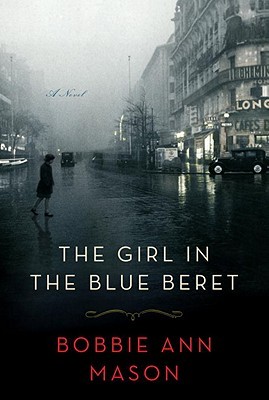
Bobbie Ann Mason’s The Girl in the Blue Beret

girl in the blue beret mason 10178343

I have long been a fan of Bobbie Ann Mason, whose fiction I discovered in the ’80s when I was a perpetually exhausted teacher.  Reading was my weekend rehab, and after devouring one of Mason’s early stories in  The Atlantic, I rushed from  bookstore to bookstore to bookstore (it took three!) to find a copy of her first book, Shiloh and Other Stories, winner of the PEN/Hemingway Award.  She has an elegant, simple style, and skillfully captures the voices of smart working-class  and lower-middle-class characters  who mostly live in her native Kentucky.

The Girl in the Blue Beret, published in 2011, is a beautifully-written novel that reflects her empathy for war veterans suffering from post-traumatic stress disorder. It is not set in Kentucky:  based on her father-in-law’s World War II experiences,  it is the story of Marshall Stone, a recently retired airline pilot and widower who has been too absorbed by his family and job–he loves flying– to think about the crash of his B-17 bomber in Belgium and the members of the Resistance who saved his life.  Before he retired, on his last flight as a pilot to Europe, he visited the crash site.  Angry that he has been forced out of a job and at loose ends in his house in New Jersey, he invites his unemployed son to housesit while  he goes to Paris to search for  the members of the Resistance who risked their lives to save him from the Nazis after the plane crash.

Mason cleverly interweaves the past with the present:  Marshall in his sixties shares many of the regrets of Marshall as a cocky young Air Force pilot in England, going on bombing missions.  Young Marshall was frustrated to be discharged after his ordeal in France;  he wanted to continue bombing the Nazis.  The Marshall of the present feels cheated that he has been forcibly retired only because of age.

Robert theoretically knew the Resistance took risks to  help allied pilots like himself. Still, he has never quite understood it.  Marshall is shocked to learn that a man named Robert had  became somehow fractured after the war: he even had two families, one with his wife and one with his mistress. Robert’s estranged daughter (by the mistress) tells him about Robert’s gradual descent into alcoholism and mental illness.  Marshall cannot imagine what happened. (Later we learn.)

The image that has always stayed with him over the years  is that of the girl in the blue beret, a  lively, confident teenage girl who who  guided him through Paris. Her family sheltered him in their apartment until it was safe to leave.  Eventually he left France through the Pyrenees.

Mason has a gift for creating lively, natural dialogue.  Annette’s Nazi ballerina image make me laugh.

He remembered her laughing.  She was standing by the window, half hidden by the lace curtain, with springy spools of brown hair dangling beside her cheeks.  She said, “Don’t look, but there are two German officers down there.  Their uniforms are so silly!  They look like ballerinas in those big pleated coats.  Oh, I can’t say this, it’s too embarrassing, but they were walking where the neighbor’s dog was walking and one of them–oh, his boots!”  She laughed.  “They deserve that!”
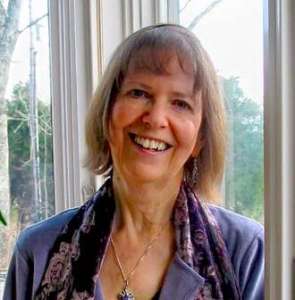
Bobbie Ann Mason

Bobbie Ann Mason

His reunion with Annette, a widowed farmer, is especially moving. She is still sparkling, with a sense of humor, even though she has suffered.  The war was terrible for Annette’s family.  Her story is shattering.  Yet she and Marshall help each other find peace. .

Part of what I love about this book is Mason’s description of Paris. I have never been a Francophile, but now I want to go to Paris.  I want to walk miles around the city  and sip aperitifs and eat langoustines at a posh restaurant.  (At a restaurant, Robert’s daughter suggests they order langoustines).

“Sure,” he said, wondering–and not caring–if langoustines might be pig snouts, or some obscure organ meats. They were the most expensive item.

Like Robert, I had never heard of langoustines.  They are small lobster claws.

At times I am slightly reminded  of her 1986 novel, In Country, a story of the long-term consequences of the Vietnam War on a family in Kentucky.  This is a different war, of course:

Mason did a vast amount of research.  The character Annette is based partly on Michele Moet-Agniel, an escort for Allied airmen shot down in Occupied Europe who saved Mason’s father-in-law. Mason also read the diary of Virginia d’Albert Lake, a survivor of the slave-labor camp in Occupied Poland.

A very moving book:  I loved it!
A Giveaway of Mary Hocking’s The Very Dead of Winter, A Short Review of Elizabeth Strout’s My Name Is Lucy Barton, & Three Literary Links

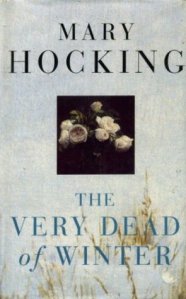
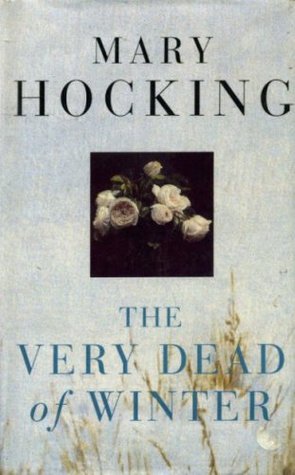
The Very Dead of Winter Mary Hocking 657931The blogger Heaven Ali has done the improbable:  in a one-woman e-mail campaign, she persuaded Bello Pan to reissue Mary Hocking’s out-of-print novels.    Next week, Bello will publish Hocking’s first 12 books in e-book form. I have enjoyed four of Hocking’s absorbing novels, which are vaguely reminiscent of the work of Penelope Lively and Elizabeth Jane Howard.  (Here is a link to my post about Hocking’s Good Daughters and A Particular Place. )

In the spirit of revival, I am giving away a copy of Mary Hocking’s The Very Dead of Winter.   If you would like it, leave a comment or write to me at mirabiledictu.org@gmail.com

The giveaway is only open to Americans or Canadians. (Sorry, the postage rates are just too high to send to Europe!)

A BRIEF REVIEW of Elizabeth Strout’s My Name is Lucy Barton

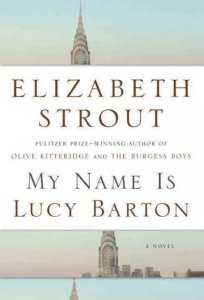
I recently read and loved Pulitzer Prize winner Elizabeth Strout’s My Name is Lucy Barton, a gorgeous, lyrical novel about a complicated mother-daughter relationship.  The narrator, Lucy Barton, escaped a harrowing, impoverished childhood through a college education.   She reinvented herself as a wife, mother, and writer in New York.

strout my name is lucy barton 9781400067695_custom-3102f059730b66633fef44e3287ef91337c0495f-s400-c85The book opens with Lucy’s reminiscence of a hospitalization many years ago.  She teeters on the brink between life and death after a routine appendectomy. “No one could isolate any bacteria or figure out what had gone wrong.  No one ever did.”

She looks out the window:  Life  passes her by outside the hospital.

It was May, and then June, and I remember how I would stand and look out the window at the sidewalk below and watch the young women–my age–in their spring clothes, out on their lunch breaks; I could see their heads moving in conversation, their blouses rippling in the breeze.  I thought how when I got out of the hospital I would never again walk down the sidewalk without giving thanks for being one of those people, and for many years I did that–I would remember the view from the hospital window and be glad for the sidewalk I was walking on.

Unexpectedly, Lucy’s mother shows up and stays with her in the hospital for a week.  They have had little to do with each other since Lucy left home.   They were so poor when she was growing up in a small town in Illinois that they lived in her uncle’s unheated garage. Her  parents could not afford a babysitter:  they locked her in a truck for hours while they worked on a farm.  She screamed for hours when she saw a snake was curled up on the seat.

This reconciliation with her mother is necessary to her recovery from the operation.  And  she manages to write a novel about this relationship.

Love it, loved it, loved it! This is the first I’ve read by Strout, and I look forward to her other novels.

THREE LITERARY LINKS.

Here are three links to outstanding literary articles.  There are so many good ones!

1. Sarah Lyall’s excellent interview with Elizabeth Strout at The New York Times inspired me to read My Name Is Lucy Barton.  Lyall begins by  quoting the narrator Lucy’s writing teacher, who tells her students not to blur the line between life and fiction and that it’s not her job “to make readers know what’s a narrative voice and not the private view of the author.”

Lyall explains,

She’s speaking to her own fictional audience, and possibly to us, too. But who knows which voice reflects whose view in the deceptively simple but many-layered world of “Lucy Barton”? On the surface, the story is about a woman trying to recover from an illness and make peace with her mother. But, like all of Ms. Strout’s generous-hearted, deeply insightful novels, it is really about a great deal more: a terribly troubled past, a present that is slowly imploding, the yawning spaces between even the closest of people, our frequent inability to see what’s in front of us.

I loved the book!  One of the best I’ve read this year.

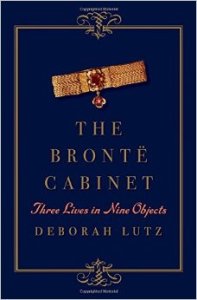
2. Bronte fans will be intrigued by Samantha Ellis’s eloquent review at the TLS of  Deborah Lutz’s The Brontë Cabinet: Three Lives in Nine Objects, which has been shortlisted for the PEN/Jacqueline Bograd Weld Award for Biography. In this review, Ellis also writes about Lutz’s  book about post-mortem Victoriana, Relics of Death in Victorian Literature and Culture.

bronte cabinet 41vRhzaC1qL._SY344_BO1,204,203,200_

3 Michael Dirda entertains us with a review of Jack Lynch’s You Could Look It Up: You Could Look It Up:  The Reference Shelf From Ancient Babylon to Wikipedia at The Washington Post.

The Art of the Comment, or What Would Dorothy Parker Say?

Dorothy Parker

What would Dorothy Parker say?

“Luv ur blog!” someone once wrote at Mirabile Dictu.   I was grateful, but the schoolmarm in me demands full sentences.

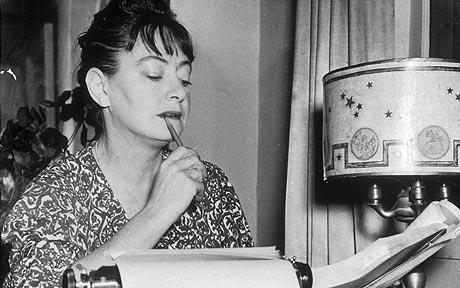
There is an art of writing comments. Do I have it? No. I am neither a master of the brevity of wit, nor of the repartee practiced by Dorothy Parker and the Algonquin Round Table.   If Dorothy Parker were alive, I doubt she would have blogged. But she might have chortled and left witticisms and wisecracks in comments.  Blogs would become famous for her scintillating wit.

We’re not Dorothy Parker, but it is good manners to comment occasionally.   After reading a smart post by a book blogger toiling in anonymity on the Great Plains, or a Guardian book club essay by Sam Jordison on Caroline Alexander’s elegant new translation of  Homer’s Iliad, I  should leave a hearty, appreciative comment. That blogger in Deadwood, South Dakota, really could use some praise, and Jordison is taking risks with the Iliad.

The trouble is, I can’t think of a thing to say. I can think of two things, but not one. And if I write two things, it will take too long.  When I finally do scrawl a hasty comment, it looks fulsome.  They will think I’m a  blogger in search of a pingback.

Which brings me to the point: are commenters sincere? Or are we just looking for a pingback?  (Sorry, I love that word “pingback.”)

The Roman poet Catullus had his own thoughts on comments.  He  wrote about it in Carmen 70, only I must admit he was writing about love and  I am substituting the word “commenter” for “woman” and “blogger” for “ardent lover”:

but what a commenter (woman)  says to a blogger (ardent lover)
should be written in wind and running water.

See, Catullus knew!

One of the reasons I turned off my comments three months ago was my inability to write comments.  I am cautiously thinking of turning them back on and seeing how it goes.

This means I will have to write some comments. If only I had a template!  But here are some brief notes to myself on how to write a comment if one has little to say.

Do’s and Don’t for Comments, or What Would Dorothy Parker Say? 

1. Do be brief.  It’s a comment, not a master’s thesis.  One  complete sentence is sufficient. As Dorothy Parker said, “Brevity is the soul of lingerie.”

2. Don’t hit the “like” button.  It is a temptation to “like,” but complete sentences are a mark of civilization.  As Dorothy Parker says.  “I hate writing, I love having written.”

3. Do compliment bloggers on their work.   There is an interdict in the midwest against flattery or bragging–the reticence of culture reflects the flatness of the landscape.   Don’t agonize:  you’re not obsequious of you leave a nice comment once a year.   As Dorothy Parker said, “And there was that poor sucker Flaubert rolling around on his floor for three days looking for the right word.”

4. Don’t attack the blogger.  Think twice before you voice your dissent.  Is it worth it?  If you go ahead with it, for God’s sake, say something positive about another point in the blog first.  Rude or venomous comments will be deleted.  As Dorothy Parker said, “Friends come and go but I wouldn’t have thought you’d be one of them.

A Post-Valentine’s Day Reverie & Literary Links

forgot valentine's bear 1297507894897_4033155Greeting card holidays are not my thing.

I used to enjoy Valentine’s Day.  Why?  Candy!  And in the days of local bookstores, we bought each other books.  I recently found my copy of Margaret Atwood’s Life After Man, which my boyfriend (now husband) gave me on Valentine’s Day, 1979.  He charmingly put a heart sticker on an endpage.

Valentine’s Day is Date Night.  It is a girls’ holiday. I know all about it:  I have written  features on “100 Things to Do on Valentine’s Day.”  No, writers do not wear lingerie while gathering information on calories in chocolate body paint and fixed-price dinners for two.  After collating data and desperately inventing Thing # 100, a walk through the tropical plants in the Botanical Gardens followed by Caribbean-theme cocktails and coconut shrimp, we just want to wear sweatpants and watch Cary Grant movies.  A romantic dinner?  Maybe with fast food!  A night of hot sex in a fancy hotel?  Please!  We spent our honeymoon night at a Holiday Inn in Frederick, Maryland, after getting married in Rockville (of the R.E.M. song) and loading our U-Haul for a move to the Midwest.

I love love, but on Sunday morning I had no idea it was Valentine’s Day.

Then at breakfast my husband gave me a chocolate-covered marshmallow and a Road Runner card from the Hy-Vee.  The Road Runner jumps out of the card  on a spring. The cats and I love it.

Thank God for the internet.  A minute later I printed out a Top Cat picture and scrawled, “Happy Valentine’s Day:  You’re the Top Cat!”

Oh my God! I could have done much better. Next year I’ll be prepared.

FOUR LITERARY LINKS

1. Nicholas Lezard writes at The Guardian about Anthony Briggs’ new translation of Pushkin’s novel in verse, Yevgeny Onegin (Eugene Onegin).  I love Eugene Onegin and have enjoyed Briggs’ translations of War and Peace, Resurrection, and Tolstoy’s short stories.  The problem?  It’s not available yet in the U.S.  It is published by Pushkin Press, a small publisher that specializes in literature in translation.  (Last year I wrote here about the Penguin translation by Stanley Mitchell.)

pushkin yevgeny onegin getimage249-761x1024.aspx2. I may have missed Valentine’s Day, but I enjoyed Ceridwen Christensen’s essay on science fiction romance, “Of Love and Robots,” at the Barnes and Noble blog.

3. Michael Dirda writes at The Washington Post about Melville House’s new series of interviews with authors, The Last Interview and Other Conversations.

4. Beiger Vanwesenbeek’s “Reading Madame Bovary in the Provinces” in the L.A. Review of Books helps us celebrate the 160th anniversary of its publication this year.

madame bovary lydia davis 515JL42NLCL._SX329_BO1,204,203,200_

E. Nesbit’s Dormant

dormant e. nesbit 13509277644

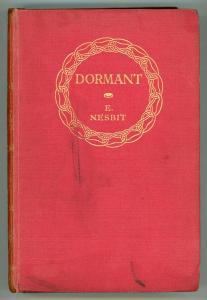
The hardback is $350!  Thank God for the e-book.

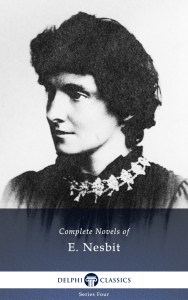
E. Nesbit was my favorite writer as a child, and I especially loved The Enchanted Castle. One of the pleasures of having an e-reader has been discovering E. Nesbit’s out-of-print adult books.    Who knew that this brilliant writer of fantasy classics also penned eight adult novels?  I found only a couple of her adult novels at Project Gutenberg before I purchased the Delphi classics e-book,  The Complete Novels of E. Nesbit ($2.50).

Last year I read The Lark, a charming comedy about two orphaned young women, Jane and Lucilla, struggling to make a living selling flowers from their garden. (I posted about it here.)  It is also a comic riff on the romance between Jane Eyre and Mr. Rochester. Yes, Jane meets a Mr. Rochester, sans mad wife.

Delphi complete novels of e. NesbitRecently I read Nesbit’s strange, uneven, but compelling novel Dormant, which begins charmingly as a comedy about a group of struggling, mostly impecunious,  young people: an artist, a chemist, an editor, doctor,   a journalist, a dressmaker,  and a young man who lives off his father’s pesticide money.  They call themselves the Septet and eat, drink, and debate capital punishment  and women’s suffrage over tea.  The heroine, Rose Royal, is a likable, kind, pretty artist with a small private income.  In London She rents Malacca Wharf, where she inhabits a dilapidated house and rents a decrepit warehouse to her chemist friend Anthony.  She quells some poor children, furious that they are shut out of Malacca Wharf,  with a smile when they throw stones at her house and invites them inside.   Every weekend she invites them to “biscuit parties.”

But there is a hitch in her seemingly perfect life.  She is in love with Anthony, who is not in love with her.  On his birthday, she buys him a science book that dates back to the Renaissance, written in cipher, but with his name and coat of arms in it.  The book belonged to one of his ancestors. The subject is a form of alchemy.

I do love the dialogue.  Here is part of Rose’s conversation with the bookseller.

“I do like the smell of your shop,” she said, reaching out her hand for the book he now held; “ it’s not only the old leather, it’s something that’s like a dream of a dream.”

Later, when she arrives an hour early for tea with the Septet at William Bats’ house (Bats is an editor without much work who is in love with Rose), he jokes about the way everyone is in love with her.

“You remember,” he said, turning the pages of the book, “that the Septet was formed on the distinct basis of our all being as disagreeable as we liked to each other, and I’m the only one who has ever tried to live up to the old ideal. All the others merely grovel before you, wormlike. How you can stand it, I can’t think!”

And here’s one of Nesbit’s authorial comments about Rose’s beauty.

Rose had been the reigning beauty of the Slade, but then quite ugly girls have been that. She was the leader in her set, but then charm is not always of the essence of a leader. She had received from two to five offers of marriage every year since she was seventeen, and at least twice as many offers of platonic friendship; declarations of impermanent adoration at various temperatures …

E. Nesbit

E. Nesbit

Suddenly the novel morphs into a feminist horror retelling of Sleeping Beauty  crossed with Mary Shelley’s Frankenstein. The bookseller had predicted Rose’s future:  if her beloved inherited money, it would be a disaster.   Anthony inherits money, a title, and an estate, he proposes to Rose.  But money, and a mysterious laboratory in his house, change him.  It seem Anthony’s ancestor had worked on the elixir of life in the laboratory.  The dead body of a girl named Eugenia is found in the laboratory.  When Anthony brings her back to life, is she grateful to be awake?  Not very. She knows she is a different species.  She is terrified.

This fascinating novel rambles along and doesn’t quite hold together. Nevertheless, I liked it. If you are a  Nesbit fan, you will admire her grip on this comedy-cum-horror novel.  Nesbit wrote horror and ghost stories for adults, so I wasn’t completely surprised by this.

What would Angela Carter have made of it, I wondered.

Surely E. Nesbit is some kind of foremother of retold fairy tales and horror!

Edith and her husband, Hubert Bland, were socialists and members of the Fabian Society. To support her husband and five children, Nesbit wrote children’s books. She also supported her best friend, Alice, who had an affair with Hubert, had two children by him, and became Edith’s housekeeper and secretary. A. S. Byatt’s wonderful novel, The Children’s Book, is based on E. Nesbit and her circle.

Nesbit  can be entertaining, graceful, and brilliant.  In her adult books, her plots do tend to wander. Her children’s books are seamless.

But Dormant is worth checking out.  I’ll probably reread it and decide it’s a work of genius.

How Many Sun Salutations…? and What to Read When You Ache

Apparently I did the "Not This!"

Apparently I did the “Not That!”

I ache-e-e-e-e!

My wrist hurts!

Isn’t Beginning Yoga enough to keep me flexible?

In an attempt to improve my rendition of the Downward Dog, which is oft-repeated in a sequence of exercises known as the Sun Salutation, I stretched my arms too far back  from my wrists.  My left wrist aches like a son of a bitch.  Pain in the wrists from the Downward Dog is common, according to yoga web sites. How many Sun Salutations does it take to perfect the Downward Dog (or do I mean change a light bulb)?

I have temporarily suspended yoga and frequently apply bags of frozen vegetables (our ice packs) to my wrist.  But I do miss my yoga!

Here’s What to Read While You Ache:   Humor or a Mystery!

1 Angela Thirkell’s Wild Strawberries.  I love Thirkell’s humorous novels, which are a bit like Barbara Pym crossed with P. G. Wodehouse.    In this whimsical novel, the disorganized Lady Emily Leslie has a house party.  She frequently loses her glasses and bag,  her husband can’t think of a thirkell wild strawberries 26760Spanish name beginning with “R” for  a bull he plans to sell to an Argentine rancher (“I had thought of Rackstraw, or Richmond…. But they don’t sound Spanish enough to me”), a French guest falls in  unrequited love with the Leslies’ beautiful married daughter, Agnes, who barely notices him except when he scoops one of her children out of a shallow pond, and a distant cousin, Mary, falls for their charming dilettante son, David, who has inherited money and whiles away his time in London applying for BBC jobs he doesn’t want, going to plays,  trying to write one, and flirting with women in restaurants, while their oldest son, John, falls for Mary.

I love Thirkell’s hilarious scenes in church.   Mr. Leslie, Lady Emily’s husband, tells her not to dawdle because they are late and “poor old Bannister is dancing in the pulpit.”  Lady Emily, however, insists that the “question of communion is important,” and arranges her family in the pews according to those who want “to escape” (they must sit on the edge of the pew) and those who want to go to communion, who must sit inside “to make less fuss.”

A fun read, and it not necessary to read Thirkell’s Barsetshire series in order, though it doesn’t hurt. This is the second.

I love the cover of this old edition!

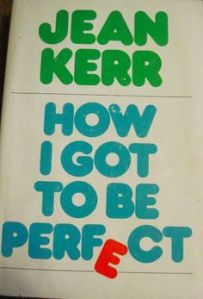
jean kerr how i got to be perfect 0a5756adddddbd45766440e15c6032902 Jean Kerr’s How I Got to Be Perfect.   Jean Kerr, the author of the Tony Award-winning play, King of Hearts, and the wife of  drama critic Walter Kerr,  was  one of the most amusing domestic columnists of the ’50s, ’60s, and ’70s.   How I Got to Be Perfect (1978) includes the best of three previous collections, Please Don’t Eat the Daisies, The Snake Has All the Lines, and Penny Candy, and a few “new essays.”  In “Marriage:  Unsafe at Any Speed,” she says that “Till death do we part”worked  in the Middle Ages when life expectations were short due to the plague, but she advises a written marriage test in our “enlightened age” of longevity.  I love her questionnaire.  In “As I Was Saying to the Geranium,” she writes about her bad luck with house plants.  In  “The Kerr-Hilton,” she describes their hilarious search for a bigger house after the birth of their fourth son.

For months and months we followed happy, burbling real estate agents through a succession of ruins, which, as the agents modestly conceded, “needed a little paint and paper to make them happy.”   These homes invariably had two small dark living rooms and one large turn-of-the-century kitchen–and I don’t mean the nineteenth century.

Eventually they go see a huge brick castle in “a style that Walter was later to call neo-gingerbread,” with  clock towers, cupolas, and  a courtyard that “strongly resembled an MGM set for Quo Vadis.”  Walter leans on some oak paneling and briefly disappears into a secret closet.  But they buy it because it’s the right size for their family and the layout gives them space from their four sons.

It’s really very funny.  I keep laughing.

3 Julian Symons’ The Man Who Killed Himself (1967).   I have a Penguin omnibus of three novels by Symons, a crime writer, editor, poet, and literary historian, and this well-written, fast-paced mystery is the first of his I’ve read.  Arthur Littlejohn, the hero–but is he the hero?–is a timid man, bullied by his wife.  No one would think he leads a double life, but he has another identity, as the roguish Major Eastonby Mellon, and a second wife, who believes he is frequently absent because he is spy. When he plans to murder his first wife,  let’s just say it gets noirishly out of hand.

julian symons omnibus 51sWRuzvBoL._SL500_SX324_BO1,204,203,200_Short posts are the best, but I must cut this short because I ache again!  More ice.

The Zen (or Non-Zen) of Book Groups: Ann Packer’s The Children’s Crusade and Carolyn See’s The Handyman

book group women Study-GroupI walk into a meeting.

Not AA, not NA, nothing exciting.

It is the first meeting of a book group for fifty-plus women, or, as I call it, the Post-Menopausal Grrrls.

I’m expecting to find a cadre of wild white-haired bibliophiles, the female equivalent of  the quixotic dreamers in my  SF/fantasy book group.  The SFers are endearingly knowledgeable about eBay deals on first editions of Alfred Bester’s The Stars My Destination and engineering problems in The Martian.  I always enjoy the unexpectedness of their dialogues.

Who will the fifty-plus-ers be?

Book groups in my city tend to be small.  And so I am not surprised to see there are only six women.  No one with white (bike) helmet hair (like mine); all are professionally dyed and coiffed. The kind leader, who gives me a nametag,  tells me there’s coffee in the urn.  I tell her I love coffee, but only fresh-ground from whole beans.

How I’d love to be a member of this group.  But it’s not what I expected.  These pleasant women are all grandmothers, poring over pictures of grandchildren on their phones.   Even after menopause, they can’t stop talking about reproduction.

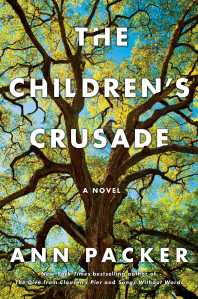
ann packer the-childrens-crusade-9781476710457_hrFinally we discuss Ann Packer’s The Children’s Crusade, a classic “bad mother” novel.

In this brilliant novel about five decades in the lives of the Blair family, Packer asks questions about the American family: is the “bad mother” responsible for all her children’s woes? Is she even necessary when her husband, a saintly pediatrician, is the perfect parent?  The women at the group are no-holds-barred angry about the artist Penny Blair’s withdrawal from her family.  Having seen many styles of parenting, some much worse than Penny’s, I suggest that Bill, who responds to every crisis with caring questions and psychoanalytical language, is also part of the problem.  But censure of Penny is the order of the day.

Some book groups have it, some don’t.  This particular group responds emotionally to parts but not the book as a whole.   The SFers would have  a more interesting take on it.

At the end of the meeting, I recommend Carolyn See.  Has anybody read her? (My SF group likes her novel Golden Days.)

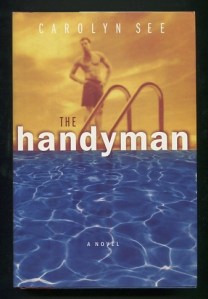
Carolyn See the handyman 17850Carolyn See, the American novelist, memoirist, and critic, is one of my favorite authors.  She writes with uncanny clarity,  interweaving brilliant insights about modern American life with graceful descriptions of the quotidian.  I recently reread  The Handyman, the story of an artist who finds his vision while working as a handyman.

See cleverly frames the story with a Guggenheim application in 2027 by an art historian, Peter Lauce, who wants to study the early and intermediate period of Robert Hampton’s art.  Then it segues from the application to  the events of the summer of 1996, when Hampton abandons his plan to live in Paris for a year and turns around and flies home to L.A..

Robert wonders gloomily, Does an artist have to live in Paris?  Can art be made in L.A.?  He thinks of Anthony Hernandez and Carlos Almaraz.

He posts his handyman flyers.  Desperate people hire him to bring order to their lives. He cleans the houses of depressed housewives,  arranges help for a young man from Ohio trying to care for his lover dying of AIDS, clears out a beautiful widow’s husband’s belongings and becomes her friend (and more), and paints the cement around a rich family’s swimming pool cerulean blue. Suddenly he notices a toddler  curled up on the bottom of the pool with his thumb in his mouth.   He saves the drowning child’s life, and is forever bonded with Angela, Tod’s mother. She is a simple, charming, honest woman, living on a different plane from her abusive rich husband.  Her philosophy of life is  immediate and mellow.

She tells Robert,

“I’ve never had any ambition.  I just want, like what we have today.  Like…that time in the day when nothing’s happening.  As if it were three in the afternoon, on a weekday. Or four. Everything’s in order. You don’t have to start dinner for a couple of hours.  And you’re out in the backyard. Or on the porch.”

Don’t we all live for those mellow hours?  She influences Robert more than he realizes as they become friends.  No wonder he falls in love with her.

Love makes art!  (I think.) Or something like that!

Voting for Utopia

Bernie and Hillary in debate.

        Bernie and Hillary in debate.

As I clean the kitchen, I listen to NPR.  I am scrubbing pots and pans as they chat about Trump and the Republicans. Finally they speak about the Democrats. I am pleased to hear Bernie Sanders is ahead in the polls in New Hampshire.

I admit, I was leery about this year’s election.   The Democrats and Republicans seem to alternate every eight years.  I had that listless burned-out feeling  that it would not matter whom I voted for.  The Democratic race between Bernie and Hillary has perked me up. A Democratic Socialist   for president?  Yes!

No one is much surprised when I say I’m voting for Utopia.  We haven’t had a candidate like Bernie in a long time.

There has been a recent uproar among Hillary supporters trying to attract young women voters.  According to The New York Times,  Madeleine Albright, the first female Secretary of State, said at a Hillary rally that the true “revolution” would be electing the first female commander-in-chief.  Okay, I see her point.  But she also reportedly said, “There’s a special place in hell for women who don’t help each other!”

Very disconcerting. No, there is not a hell for women who prefer Sanders, a Democratic Socialist, to Clinton, the Establishment candidate.  Women can help each other even if they vote for a man who supports women’s issues.

Gloria Steinem

    Gloria Steinem

Hillary Clinton had trouble attracting young women voters in Iowa, and is allegedly behind in the polls with women of all ages in New Hampshire. And so older feminists are speaking to the young on her behalf.   The New York Times reported that Gloria Steinem said in an interview with Bill Maher last Friday that women became radical when they get older.   “When you’re young, you’re thinking, ‘Where are the boys?’ The boys are with Bernie.”

As a girl  I was influenced by the savvy Steinem, and this doesn’t sound like her.  Perhaps it was quoted out of context.

Certainly life was different in my girlhood in the ’60s and ’70s when Steinem became a famous political activist.  It was intense:  irony and indifference were not trendy. I am quite sure I would  have voted for women of either party had I been able to vote in my teens. Perhaps it’s good I didn’t have that power then.   In 1972, when I heard Shirley Chisholm, the first African-American woman to be elected Congresswoman and to run for the Democratic party presidential nomination, speak in a crowded auditorium, I thought the revolution  was here.  (It was a moot point, since I wasn’t old enough to vote).

And I wasn’t a revolutionary for long.  I became absorbed in my personal life, dropped in and out of college, and finally committed to Latin and ancient Greek.  That was pure; that was enough.   I had no intention of voting the year I was finally eligible. Then an activist  from the county Democratic party headquarters offered me a ride to the polls. That was how I learned my civic duty as a voter.

And I can’t help thinking that it’s encouraging that young women are voting, whether for Bernie Sanders or Hillary Clinton.  I am not, of course, quite so happy if they’re voting for Republicans.  Are Democrats getting out the vote?  Driving people to the polls?  Believe me, it makes a difference.

There’s a long way to go before the election.  The count that will really count will be at the Democratic convention in Philly.

Meanwhile, no one can tell you whom to vote for in the primaries and caucuses.

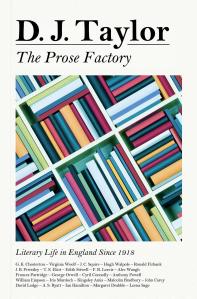
D. J. Taylor’s The Prose Factory

dj taylor The Prose Factory“What is ‘literary culture’?  And what is ‘taste’?” asks D. J. Taylor in his immensely readable new book, The Prose Factory: Literary Life in England Since 1918.

The result is a compelling history of a century of writing, brokering, publishing, marketing, reviewing, shaping of taste, and selling of books in England.

I love reading books about books, and I admit I am partial to the list-making possibilities of reading such books.  While reading The Prose Factory, I made a long list of writers to read, among them Theodora Benson, Julia Strachey, Francis King, Julian MacLaren-Ross, and Julia Darling. What I love about this book is Taylor’s  balance between highbrow and middlebrow authors. Taylor, an award-winning novelist and biographer, knows how to tell a story, and thus has the advantage over many critics.  His story is about the impact of middlebrow fiction as well as classics, and how writers of all genres make a living.

One chapter is even entitled “Highbrows, Lowbrows, and Those In-Between.”  Taylor begins by sketching the mass readership of best-selling books in the 1920s.    He writes,

…J. B. Priestley’s The Good Companions sold so many copies at Christmas 1929 that a fleet of vans had to be laid on to deliver fresh stock to booksellers.  Simultaneously there lurked a suspicion that this new army of readers, whether clerks looking to be edified or housewives looking to be entertained, was potentially traitorous, all too ready to be lured away by the blandishments of radio, cinema and, as the interwar era wore on, television.  Even here, in an age where a six-figure copy sale of a novel that captured the public’s imagination was not unusual, it was feared that the book might soon revert to its former status as a minority interest, one among a dozen contending leisure activities, always likely to lose out in the race for novelty or to be swept away by the latest fashionable gadget….

D. J. taylor 4774

                                    D. J. Taylor

Taylor tells us how Priestley’s Angel Pavement, the story of a group of sad lower-middle-class people who work in an office, influenced Norman Collins’s London Belongs to Me, centered on a group who rent rooms and apartments in the same house, and Monica Dickens’s The Heart of London, centered on a lower-middle-class neighborhood.  (I have read and enjoyed all three of these novels.)

There is also a chapter about Hugh Walpole, a writer of popular novels who was not satisfied with popularity.  Walpole tried to court writers and reviewers, even writing letters to reviewers who trashed his work.   His attempts to charm and make friends backfired.  W. Somerset Maugham destroyed his reputation in his satire of an opportunist writer based on Walpole in Cakes and Ale.

I am very interested in middlebrow novelists, and there is a lot about them.  But Taylor is equally at home writing about Anthony Powell (whom he also writes at length about); Virginia Woolf and T. S. Eliot; George Orwell (the subject of Taylor’s award-winning biography);  the critics F. R.  Leavis, John Carey, and James Wood; the Angry Young Men movement; and women writers of the ’60s, including Margaret Drabble, Nell Dunn, and Edna O’Brien. Did you know the  Booker Prize created a market for a new kind of literary fiction?  And that the  1980s was a particularly fruitful time for literary fiction?  There is an entire chapter on A. S. Byatt’s Fredericka Quartet.  He even writes about Paul McCartney  lyrics for “Eleanor Rigby.”  He also writes about the effect of the internet on publishing.

A brilliant book, and very enjoyable.  You can read it form cover to cover, or browse around.  It is a good read, or a reference book.

I have read several of Taylor’s books, and have written about them here and here.